
Key Takeaways
- Framing starts on day one once the trailer or foundation is level. Accurate layout of bottom plates, studs, and openings determines how easily everything fits later.
- Planning is essential. A scaled floor plan, framing plans, and load paths must be complete before you start framing exterior walls, interior walls, or roof framing.
- Tiny houses typically use 2×4 or 2×6 lumber. Advanced framing at 24” on center can reduce weight and improve insulation without sacrificing structural integrity.
- The build sequence matters: prep trailer, subfloor, framing walls, roof framing, add sheathing, then weatherproof. Check for square at each step.
- Careful detailing around wheel wells, bottom plates, and tie-downs is critical on a tiny house on wheels, especially if you plan to travel frequently.
Introduction: Why Framing Matters in a Tiny House
Framing is the skeleton of your tiny house. It dictates strength, safety, and how well your interior layout works. Get it wrong, and you face twisted walls, windows that won’t fit, and a structure that flexes dangerously on the highway.
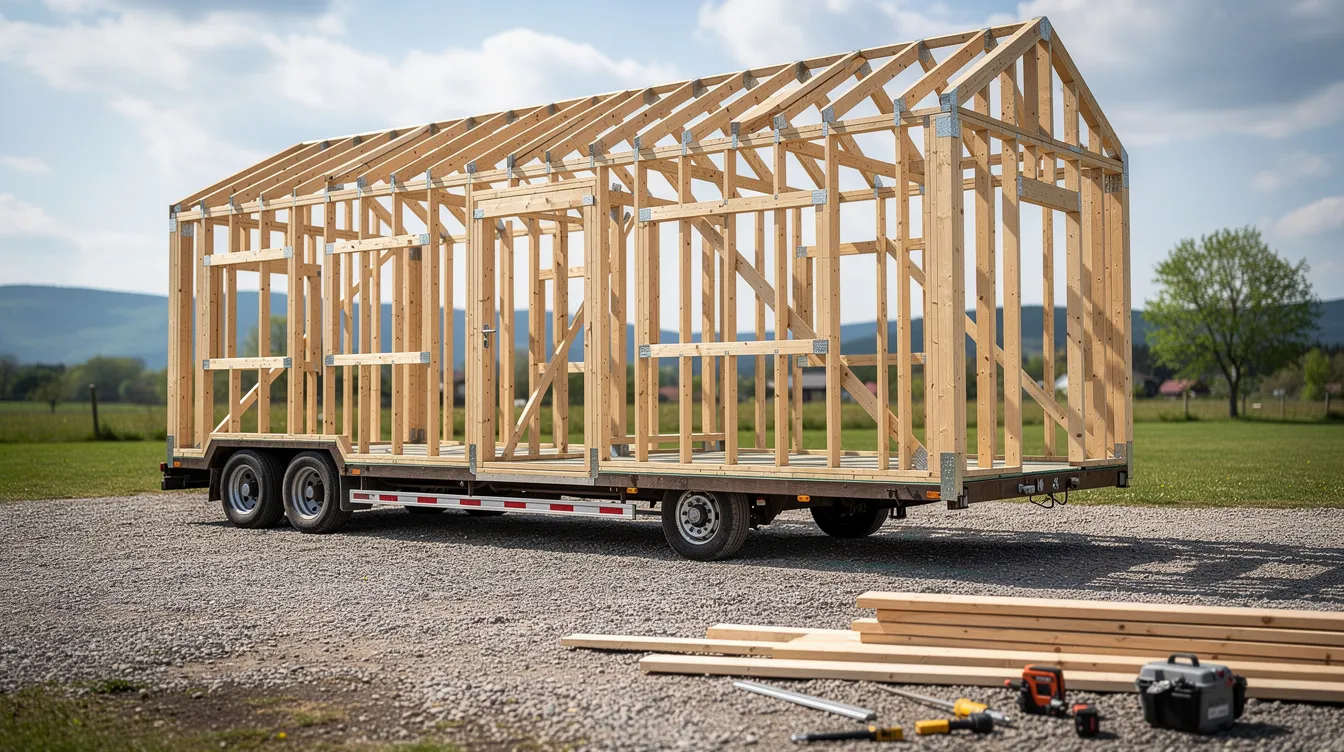
This tiny house framing guide covers the floor system, exterior walls, interior walls, window openings, and roof framing. For tiny homes ranging from 16 to 30 feet long on trailers, you face unique constraints. Weight limits matter. Highway height caps at 13’6” and width at 8’6” in the U.S. And the whole thing must survive towing at 55-65 mph without rattling apart.
Planning is crucial before starting the framing of a tiny house, as it affects the strength, style, and speed of the build. This guide walks you through each step, from tiny house plans that fit your life to standing walls and tying in the roof structure. We assume you know how to use a saw. We focus on sequencing, layout, and the decisions that matter.
- Step 1: Plan Before You Start Framing
- Step 2: Choose Materials and Framing Style
- Step 3: Build and Square the Subfloor
- Step 4: Layout and Frame Exterior Walls
- Step 5: Frame Interior Walls and Lofts
- Step 6: Roof Framing Options for Tiny Houses
- Step 7: Sheathing, Bracing, and Weatherproofing the Shell
- Step 8: Advanced Framing Techniques for Tiny Homes
- Step 9: Common Mistakes and How to Avoid Them
- Step 10: From Framed Shell to Interior Layout
- FAQ
Step 1: Plan Before You Start Framing
Most framing mistakes come from rushed planning, not bad hammer skills.
Start with a scaled floor plan showing wall locations, door swings, window sizes, and loft lines. A well-thought-out tiny house floor plan is essential for determining the placement of doors and windows, which impacts the overall design and functionality of the tiny house.
When creating framing plans, mark these details:
- Stud layout at 16” or 24” on center
- Rough opening sizes for every window and door
- Header sizes above openings
- Where interior walls intersect exterior walls
Check legal limits early. For a road-legal tiny house on wheels in North America, your total tiny house maximum height from road to roof peak cannot exceed 13’6”. Maximum width is 8’6”. These numbers drive every framing decision.
Make early decisions about wall thickness. Will you use 2×4 or 2×6 exterior walls? Where will loft joists bear? Which walls carry roof and loft loads? Coordinate these choices with the best foundation for your tiny house so loads transfer cleanly to the ground or trailer.
Define your load paths in plain language. Weight moves from roof rafters through wall studs to floor joists to the trailer frame. When framing a tiny house, it is important to be conscious of the weight being added with each step, as every pound matters in a tiny home and your overall tiny home budget.
Step 2: Choose Materials and Framing Style
Traditional framing uses 16” on center stud spacing with doubled top plates and extra studs at corners. Advanced framing uses 24” spacing with fewer studs and single top plates. Both work for tiny houses, but each has trade-offs.
Common lumber choices:
- Kiln-dried SPF 2x4s for most walls
- 2x6s for exterior walls in cold climates or high snow load roofs
- Pressure-treated lumber for bottom plates contacting steel or concrete
When framing walls for a tiny house, it is common to use 2x4s for interior non-load bearing walls and 2x6s for exterior walls to provide better insulation and structural integrity.
Frame material options:
Wood framing is affordable, insulating, and easier for beginners to work with, making it a traditional choice for tiny house construction despite its susceptibility to thermal bridging. Steel framing is light, strong, and resistant to pests and moisture, making it a popular choice for mobile tiny homes due to its ability to handle travel stresses better than wood. However, metal framing costs 2-3 times more than wood.
Using advanced framing techniques, such as spacing studs 24 inches on center, can reduce material use and increase insulation space, making it a more efficient option for tiny house construction. You use fewer studs overall, which means less thermal bridging and more room for foam insulation.
A typical tiny house that is 8 feet wide by 20 feet long will cost between $300 and $800 to frame, excluding additional costs for sheathing, windows, and doors, as one part of the broader process of building a tiny house.
Step 3: Build and Square the Subfloor
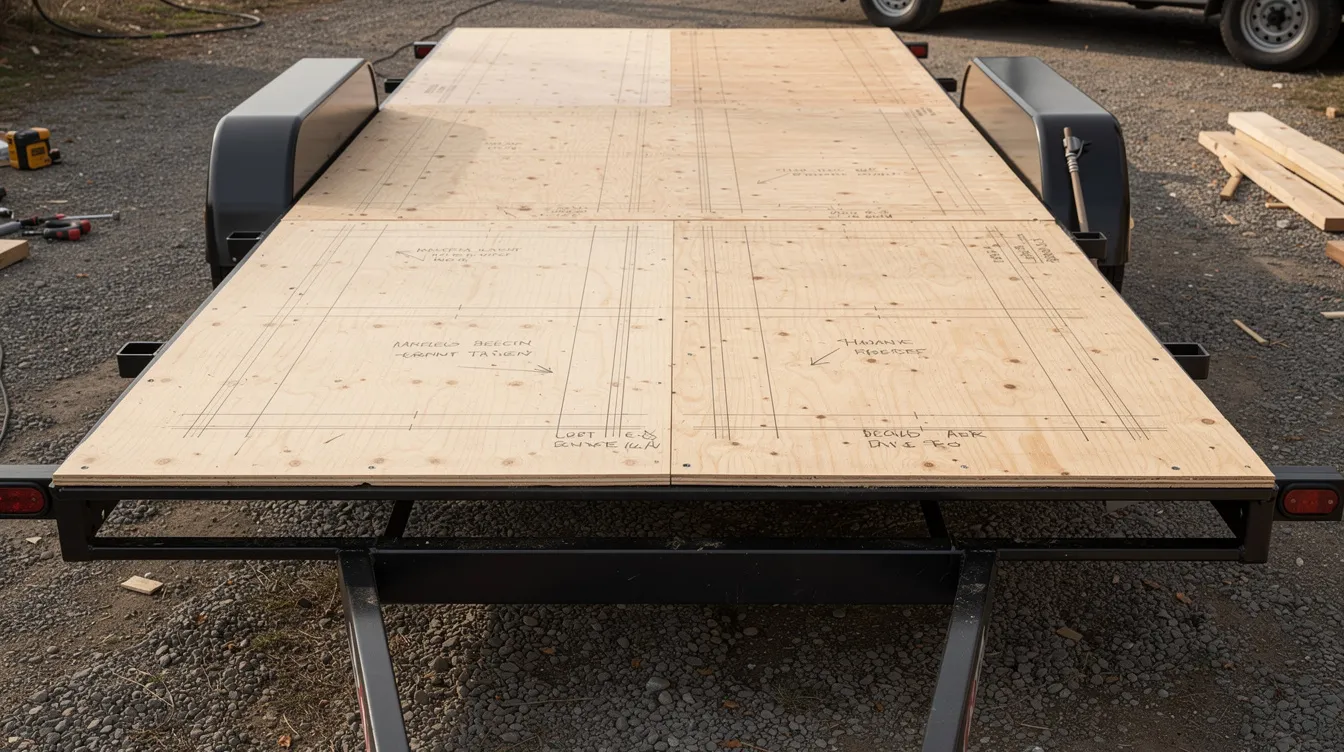
The tiny house floor is the platform everything else depends on. On a tiny house trailer, subfloor framing must be precise or every wall you build will inherit its errors.
Prep your trailer:
- Remove rust and apply primer
- Check and torque all bolts
- Level the trailer on jack stands to within 1/16” over 20 feet
Floor joists typically run 2×6 or 2×8 at 16” on center. Attach them within or on top of the trailer frame using structural screws or weld plates.
Install insulation between floor joists. Options include:
- Rigid foam (2” XPS gives R-10)
- Mineral wool
- Spray foam for irregular spaces
Seal cold bridges by applying sealant along metal joists and around penetrations before the sub floor sheathing goes down. This prevents squeaks and air gaps later.
Install tongue-and-groove plywood or OSB subfloor with adhesive and screws. Use 8” spacing near edges and 12” in the field.
Framing walls should be done with attention to squaring the structure by pulling diagonal measurements to ensure that the walls are straight and plumb before adding sheathing. For a 10×20’ rectangle, diagonals should measure about 22.36 feet. Adjust with clamps until both diagonals match within 1/4”.
Once you confirm square, mark centerlines and wall locations on the subfloor with pencil or chalk. This level surface makes wall layout faster and more accurate.
Step 4: Layout and Frame Exterior Walls
Exterior walls control your outside dimensions. Layout accuracy here matters more than anywhere else in the entire build.
Mark wall lines on the subfloor with a chalk line. Account for wall thickness (3.5” for 2×4 framing) and corner positions. This determines the space inside your finished home.
Cut and assemble the top and bottom plates for each exterior wall. Mark stud positions, window centers, and door openings on these plates before cutting studs.
Stud spacing considerations:
- Traditional framing: 16” on center
- Advanced framing: 24” on center
- Align spacing with sheathing sheet widths to avoid awkward cuts
To frame a window opening, it is essential to include jack studs to support the header, which should be three inches wider than the rough opening to ensure proper support. Add cripple studs above and below openings as needed.
The bottom plate connects wall framing to the subfloor or trailer. It provides alignment for studs and is where anchor bolts or structural screws tie into the base.
Framing around wheel wells:
On trailers, frame around wheel wells with raised headers and blocking. Leave an air gap for drainage to prevent moisture buildup. Headers should sit 4-6 inches above the deck for tire clearance.
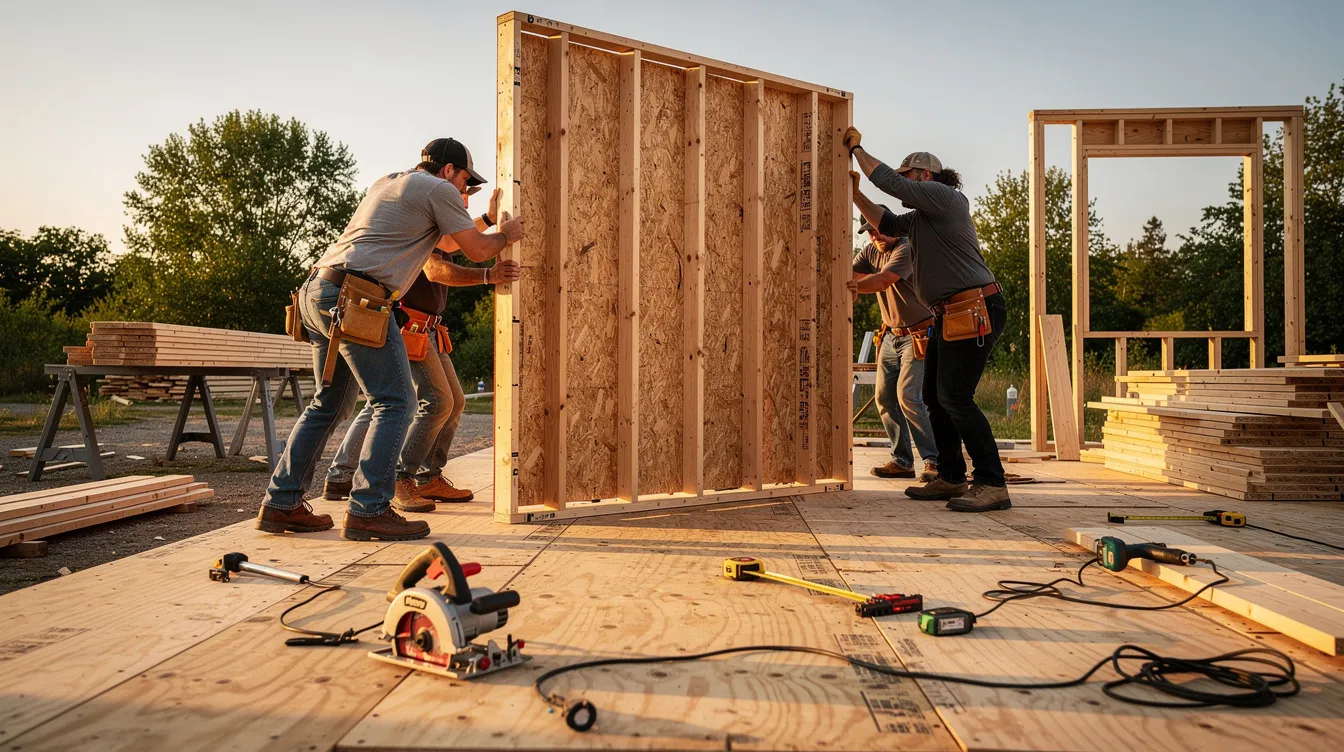
Assemble walls flat on the deck. Crown studs in the same direction, then nail or screw into the top plate and bottom plate. When started framing the first wall, many builders find this flat assembly method faster.
Raise walls with help, add temporary corner bracing, and check plumb with a 4-foot level. Anchor each wall before moving to the next.
Step 5: Frame Interior Walls and Lofts
Interior walls in a tiny house serve double duty. They divide space and often carry structural loads for lofts and beams.
Non-load-bearing interior walls:
- 2×3 or 2×4 studs work fine
- Single top and bottom plates
- Simple door openings without heavy headers
Align interior walls under loft beams or roof beams whenever possible. This stacking improves structural integrity by creating direct load paths.
Loft framing options:
- 4×4 or LVL beams set into side walls
- 2×6 or 2×8 joists hung with joist hangers
- Loft framing that doubles as collar ties for roof stability
For walls carrying lofts, use full-height studs and beefed-up headers or ledgers where loft joists bear. Metal connectors add strength at critical points.
Plan rough openings in interior walls for pocket doors or barn doors. Add extra width blocking for track hardware since drywall alone won’t hold it.
Make sure interior wall positions match your floor plan exactly. Pay attention to plumbing walls or utility chases where larger pipes must pass. Using 2×6 studs in plumbing walls allows 2” ABS pipe runs vertically without hassle.
The room layouts you planned earlier now become real walls. Double-check measurements against your tiny home plans or any cute tiny house designs you’re drawing inspiration from before nailing anything permanent.
Step 6: Roof Framing Options for Tiny Houses
Roof framing determines your ceiling height and loft comfort. Common options include shed roofs, simple gables, and combinations.
Determining roof pitch and height:
Measure from trailer deck to finished roof peak. Factor in 18-24” trailer deck height. Your total must stay under 13’6” for road legality. For example, 7-foot walls plus a 6-foot rise on a 20-foot span works for most travel configurations.
Framing the roof of a tiny house often involves complex angles and measurements, especially when dealing with dormers or bump-outs, making it one of the more challenging aspects of the build.
Roof framing basics:
- Roof rafters bearing on top plates
- Ridge boards or beams connecting rafters at the peak
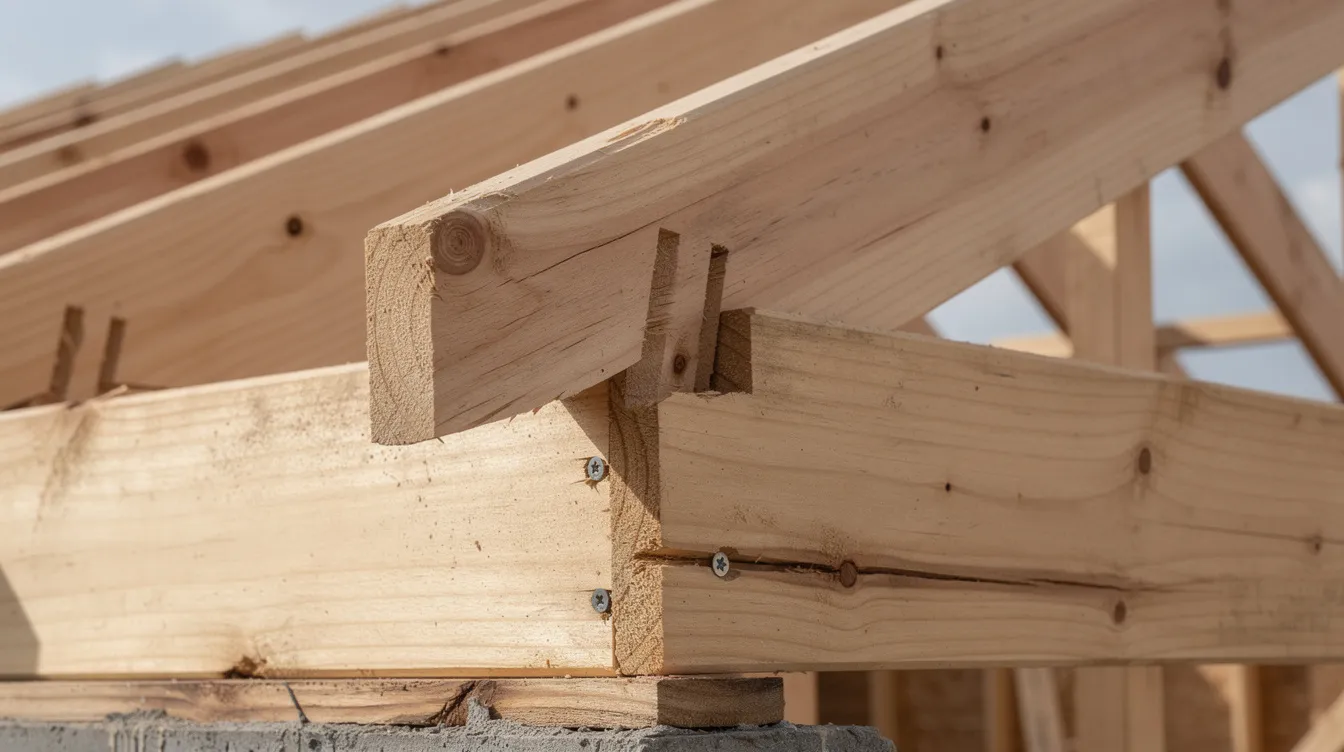
- When cutting rafters for a roof, builders often create ‘birds mouths’, which are notches that allow the rafters to rest securely on the top plate of the walls
Match rafter spacing to wall stud spacing when using advanced framing. This supports roof sheathing and handles snow load requirements for your climate.
For heavier snow regions (50+ psf), use 2×8 or 2×10 rafters with structural ridge beams. Add hurricane ties for uplift resistance in windy areas.
For A-frame tiny homes, the rafters serve as both the walls and the roof, requiring precise angles to ensure structural integrity and proper load distribution.
Build a rafter template from scrap before cutting the full batch. This ensures every rafter is identical and saves roofing material by preventing errors.
Step 7: Sheathing, Bracing, and Weatherproofing the Shell
Adding sheathing transforms a loose frame into a rigid box. This step is critical before towing or facing strong wind.
Selecting sheathing materials:
Material | Thickness | Pros | Cons |
|---|---|---|---|
OSB | 7/16” | Affordable, good racking strength | Swells with moisture |
Plywood | 1/2” | More moisture resistant | Higher cost |
ZIP-R | Various | Integrated insulation and air barrier | Highest cost |
Sheathing for a tiny house can add an additional $800 to $1,000 to the framing costs, depending on the materials used. |
Start sheathing exterior walls while flat when possible. Nail patterns should follow studs and plates. OSB nailed at 6” edges and 12” field provides rated shear strength.
Overlap wall sheathing past the bottom plate to lap over the rim joist or trailer edge. This improves racking resistance and weather protection.
If sheathing can’t be installed immediately, add temporary diagonal bracing for corner bracing to keep the frame square while ceiling framing and roof framing goes in.
For roofs, run panels perpendicular to rafters. Stagger seams and use H-clips between panels where required for strength.
After sheathing, tape seams on panel systems. Add house wrap, and flash windows and doors once openings are cut. The cost of windows for a tiny house can range from $60 each to several hundred dollars, while doors typically range from $300 to $2,000.
Step 8: Advanced Framing Techniques for Tiny Homes
Advanced framing isn’t just theory. For small, mobile structures, it delivers real weight savings and better thermal performance.
Key techniques:
- 24” on center spacing instead of 16”
- Single top plates with studs single aligned under rafters
- Two-stud corners with drywall clips instead of three-stud corners
- Insulated headers only where actually needed
Advanced framing techniques utilize 24-inch on-center spacing instead of the traditional 16 inches, which reduces the number of studs needed and allows for more insulation to be added, improving energy efficiency.
Using single or insulated headers in advanced framing can significantly reduce material use and thermal loss, contributing to a more efficient building structure. Instead of solid doubled headers everywhere, use foam-filled headers at non-load-bearing openings.
Comparison for 8×20’ tiny house walls:
- Traditional 16” o.c.: approximately 90 studs (450 board feet)
- Advanced 24” o.c.: approximately 60 studs (300 board feet)
- Weight savings: 200+ pounds in lumber alone
Advanced framing techniques can lead to a lighter structure overall, which is particularly beneficial for tiny homes built on trailers, as it helps to maintain the weight limits for mobility.
The trade-off: less redundancy means following framing plans precisely. You cannot improvise stud removal later without affecting structural integrity. This method works best when coordinated with complete plans showing exact window, door, and loft locations.
For a tiny house build in high-wind areas, consult an engineer before using advanced framing. Traditional framing may be more appropriate when building permits require specific redundancy.
Step 9: Common Mistakes and How to Avoid Them
Most DIY builders can frame successfully if they know what pitfalls to watch for.
Frequent layout errors:
- Forgetting sheathing thickness at corners (adds 7/8” per corner)
- Mis-sized rough openings causing $200-500 window returns
- Misaligned studs at panel joints creating weak spots
Square and plumb problems:
- Failing to check square at each stage
- Not verifying plumb before anchoring walls
- Twisted walls leading to difficult window installs
Under-framing or over-framing:
- Too few anchors to trailer (structure shifts while towing)
- Too much unnecessary blocking (adds weight without strength)
- Standard travel trailer expectations don’t apply to tiny houses
Ignoring mechanical runs:
- Not leaving cavities for plumbing and electrical
- Forcing awkward holes through structural members later
- Weakening construction waste of time and materials
Pre-move checklist:
- ☐ Diagonals equal within 1/4”
- ☐ Walls plumb within 1/8” per foot
- ☐ All connectors torqued properly
- ☐ Alignment verified against floor plan
Step 10: From Framed Shell to Interior Layout
Once the shell is framed, focus shifts to preparing for utilities and interior finishes. This connects all the materials and labor you’ve invested to the livable space inside.
Add blocking while framing is open:
- 2×4 nailers at 16” spacing for cabinets (holds 200 lbs per side)
- Loft guard attachment points
- Stair or ladder connection points tied into studs
Frame interior walls with electrical boxes and plumbing routes in mind. Include extra stud bays where larger pipes must pass. Going back later means drilling through finished walls.
Connect framing decisions to your original floor plan. Ensure doors swing without hitting furniture. Confirm loft openings match ladder locations. Verify windows land at comfortable heights for views and ventilation.
The most space efficient designs account for these details during framing, not after. Days ago you were planning. Now you’re building. The transition from framed shell to finished tiny home depends on the foundation you’ve laid.
Next steps after framing:
- Rough-in for electrical, plumbing, and ventilation
- Insulation installation
- Interior wall finishes
- Built-ins and cabinetry
Start building with confidence knowing your structurally sound frame supports everything that follows, whether you’re going for a modern look or a more traditional Amish tiny house aesthetic.
FAQ
How long does it typically take to frame a tiny house shell?
For an 8×20’ to 8×28’ tiny house, two people with basic skills can usually frame the subfloor, exterior walls, roof, and sheathing in 2-4 weeks of part-time work. This assumes all the materials are on site and plans are complete. Weather delays, limited tool access, and complexity like dormers or multiple rooflines can stretch this to 6-8 weeks for first-time builders. More detail in your planning phase means faster building later.
Can I frame my tiny house with 2×3 or 2×2 studs to save space?
2×3 studs may work for some interior non-load-bearing walls where you want extra width in tight spaces. However, most exterior walls and roof-bearing walls on a mobile structure need at least 2×4 framing for strength and insulation depth. 2×2 framing is generally reserved for small interior partitions or furring strips, not for structural exterior walls or anything carrying roof or loft loads. Save money elsewhere, not on structural members.
Do I need an engineer to approve my tiny house framing plans?
If your tiny house will travel regularly, carry heavy snow loads, or be permitted as a dwelling on land, having an engineer review your framing plans is strongly recommended. Engineered details are especially important for tie-downs to the trailer or foundation, loft supports, and unconventional roof designs. Engineering stamps typically cost $1,000-3,000 but protect your investment and satisfy building permits requirements.
Should I use nails or screws for tiny house framing?
Structural framing is traditionally done with ring shank nails because they handle shear well and drive quickly. Structural screws work better for critical connections to steel trailers or where removal and adjustment may be needed. A practical approach: use framing shank nails for studs and plates, and certified structural screws or bolts for trailer attachments, ledger boards, and major beams. Traditional houses use similar approaches.
When should I add sheathing: before or after standing the walls?
Many builders sheathe exterior walls while flat on the subfloor. This keeps walls straight, speeds nailing, and makes raising them easier with built-in bracing. On solo builds or windy sites, it may be safer to stand and brace walls first, then add sheathing in place. Choose the method that offers better control and safety. Either way, sheathing must be installed before the structure faces wind loads or travels.