

Building or buying a tiny house on wheels is exciting. But before you dream about your perfect trailer and cozy living space, you need to understand one critical factor: weight rating.
Get this wrong, and you risk blown tires, warped frames, and dangerous towing situations. Get it right, and you’ll enjoy peace of mind every time you hit the road.
Key Takeaways
- The tiny house trailer weight rating (GVWR) is the absolute maximum safe weight of the trailer plus your tiny home. Exceeding it causes axle, tire, and frame failure.
- Most tiny houses on wheels end up between 8,000–18,000 lbs. Look for tiny home trailers with GVWR in the 10,000–21,000 lb range depending on size.
- Tongue weight should be 9–15% of total tiny house weight. Incorrect distribution is a leading cause of sway and unsafe towing.
- Every component (axles, tires, safety chains, coupler, brakes, frame) must have ratings meeting or exceeding the trailer’s stated gross vehicle weight rating.
- Weighing your tiny house at a certified scale and matching it to your tow vehicle’s towing capacity is the easiest way to confirm safety and legal compliance.
- Understanding Tiny House Weight and Why It Matters
- Key Weight Rating Terms for Tiny House Trailers
- Typical Tiny House Weights and Trailer GVWR Ranges
- Factors That Drive Tiny House Weight Up or Down
- How to Match Tiny House Trailer GVWR to Your Build
- Safe Tongue Weight and Load Distribution for Tiny Houses
- Legal Weight Limits and Towing Rules for Tiny Homes in the U.S.
- How to Weigh Your Tiny House and Verify Compliance
- Choosing the Right Tiny House Trailer Type and Capacity
- Designing and Building for a Manageable Tiny House Weight
- Best Practices for Towing a Tiny House Safely
- FAQ: Tiny House Trailer Weight Rating and Safety
- How much GVWR do I really need for a 24 ft tiny house?
- Can I upgrade the weight rating of an existing tiny house trailer?
- Is it safe to live full-time at the top of the trailer GVWR?
- Do I need a special license to tow a heavy tiny house?
- What’s the best way to keep tiny house weight under control over time?
Understanding Tiny House Weight and Why It Matters
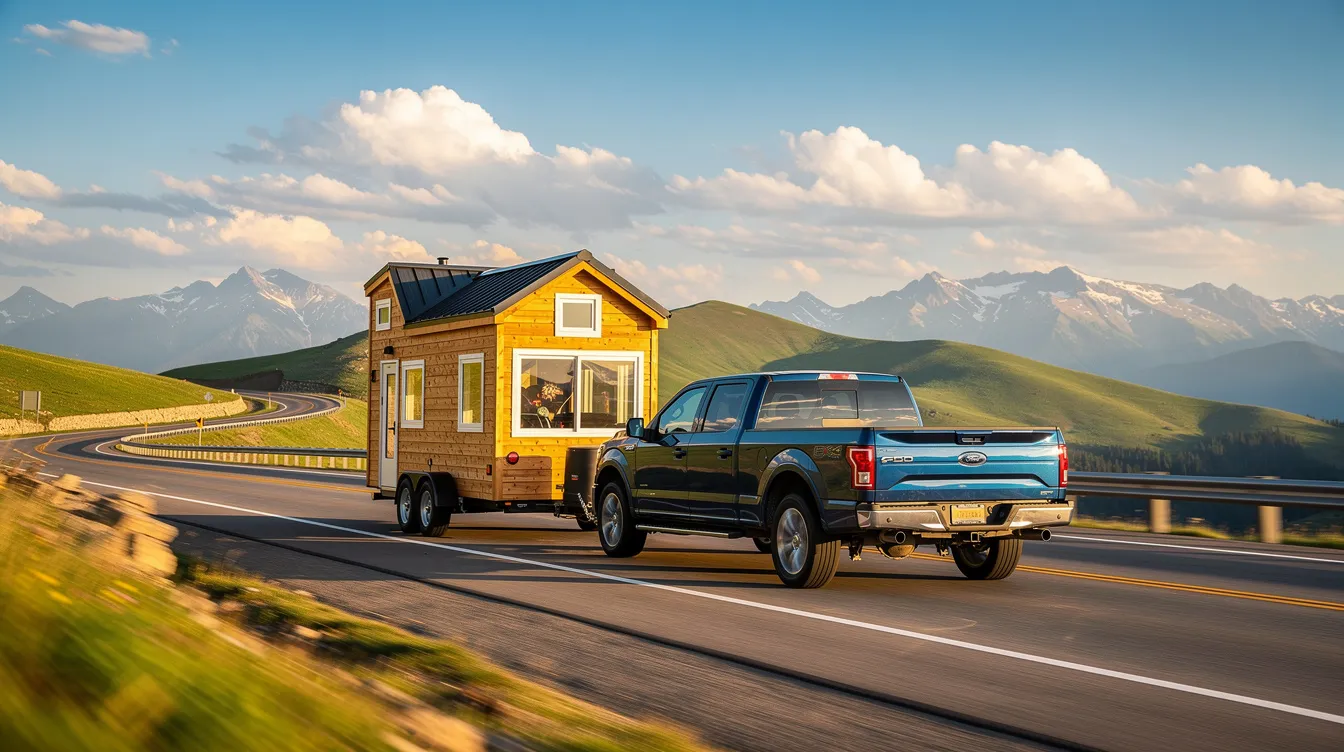
Tiny houses on wheels are legally treated as trailers. This means weight rating is the foundation of safe mobility and insurance compliance. The weight of a tiny home on wheels typically falls between 3,000 to 15,000 pounds, with an average weight around 10,000 pounds.
Here’s the crucial distinction:
- Tiny house: The structure and contents
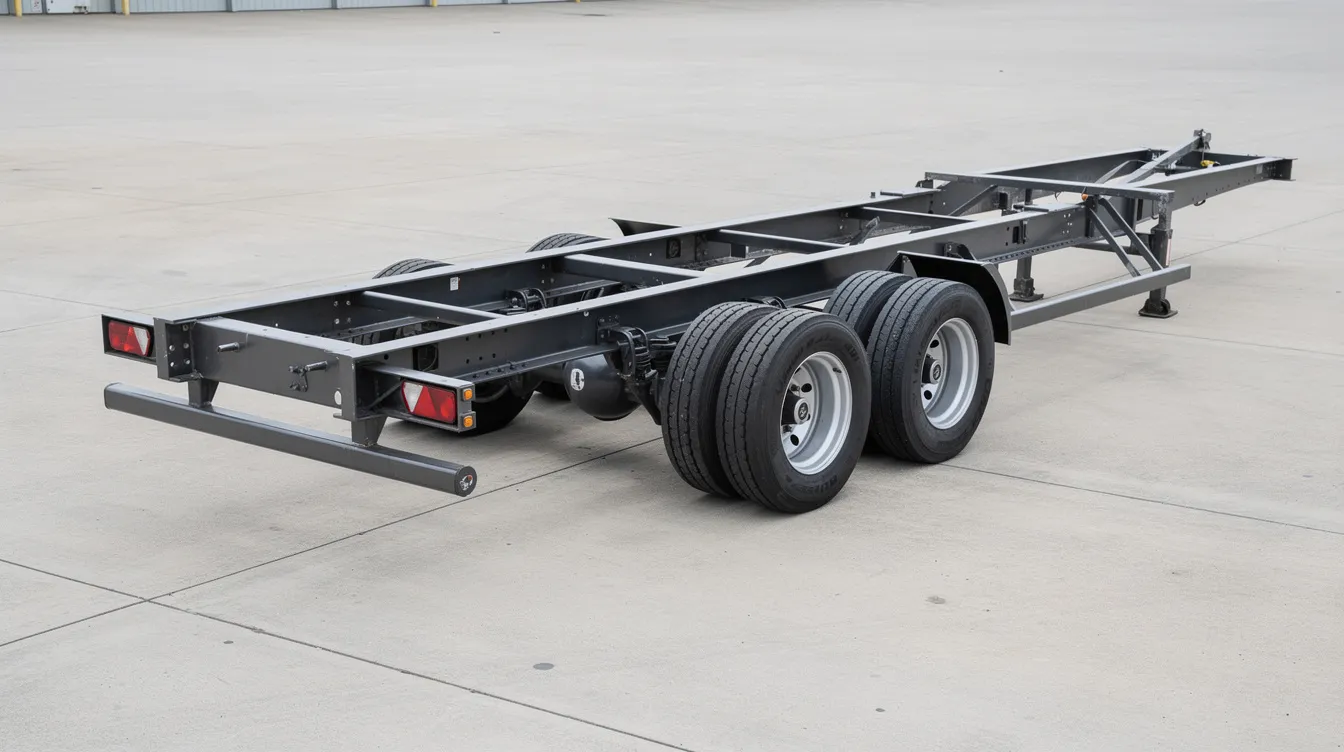
- Tiny house trailer: The chassis that carries it
- Both combine into one legal vehicle on the road
Your tiny house weight impacts where you can tow, what kind of truck you need, and whether you’ll face weigh stations in many states when over 10,000 lbs.
Example numbers:
- A 24 ft tiny home may weigh 10,000–13,000 lbs finished
- A 30–32 ft tiny house can easily reach 14,000–18,000 lbs fully loaded
Underestimating weight leads to blown tires, poor braking, and in extreme cases, rollover on highways and mountain passes. Whether you’re DIY building from scratch or following a step-by-step guide on how to build a tiny house, understanding weight is equally critical.
Key Weight Rating Terms for Tiny House Trailers
Before you shop for a trailer or finalize your build plans, learn these essential terms:
- Gross Vehicle Weight Rating (GVWR): The maximum allowed weight of the trailer plus the tiny house and all cargo/fluids. Your tiny house’s total loaded weight must never exceed this number. The GVWR of tiny house trailers typically ranges from 9,900 to 25,900 pounds, depending on construction and intended use.
- Trailer curb weight (empty trailer weight): The weight of the bare tiny house trailer with no house or cargo. Subtract this from GVWR to find usable payload.
- Payload capacity: GVWR minus trailer curb weight. This is the maximum weight of the structure, furnishings, water, and belongings the trailer can safely carry. For example, a 14,000 lb GVWR trailer with 3,000 lb curb weight has 11,000 lbs of payload.
- Gross Combined Weight Rating (GCWR): The maximum total weight of tow vehicle plus trailer plus tiny house plus occupants and cargo. The GCWR includes the combined weight of the tiny home, trailer, furniture, and occupants, and must comply with road and highway regulations. This rating comes from the truck manufacturer.
- Gross Axle Weight Rating (GAWR): The maximum weight each axle can support. Tiny home trailers often use dual 5,200–7,000 lb axles for total axle capacity of 10,400–14,000 lbs.
- Tongue weight: The downward force the coupler puts on the hitch ball. The ideal range is 9–15% of total trailer weight. A 12,000 lb tiny house should have 1,100–1,800 lbs of tongue weight.
Each term matters for sizing the right trailer, choosing an appropriate tow vehicle, and staying within legal and mechanical limits.
Typical Tiny House Weights and Trailer GVWR Ranges
Trailer length correlates roughly with total weight. Here’s what to expect:
Trailer Length | Typical Finished Weight | Recommended GVWR |
|---|---|---|
16–20 ft | 6,000–9,000 lbs | 10,000–12,000 lbs |
22–26 ft | 9,000–13,000 lbs | 12,000–14,000 lbs |
28–32 ft | 13,000–18,000 lbs | 14,000–21,000 lbs |
A good rule of thumb: plan for 500–550 lbs per linear foot of trailer or about 55–60 lbs per square foot of living space. This includes the trailer frame, framing, finishes, and typical furniture. |
Always build in a safety buffer. Select a tiny home trailer with at least 10–20% more GVWR than your anticipated weight. Heavy design choices like tile, stone countertops, and large water tanks push weights toward the upper end.
It is crucial to ensure that the tiny house’s dry weight does not exceed the GVWR of the trailer to maintain safe towing conditions. To calculate the tiny house dry weight, which is the weight of the structure alone, it must not exceed the gross vehicle weight rating of the trailer.
Factors That Drive Tiny House Weight Up or Down
Weight isn’t just about trailer length. Materials, systems, and even tiny house floor plans that prioritize efficient layouts can swing your total weight by several thousand pounds.
Construction materials:
- Wood framing is standard and lighter
- Steel frame adds weight but increases strength
- SIPs can reduce tiny house weight for the same R-value
Exterior finishes:
- Lightweight corrugated metal or engineered siding saves pounds
- Brick veneer or thick cedar cladding adds significant weight
Interior finishes:
- Tile showers: 15–25 lbs/ft²
- Fiberglass units: much lighter
- Solid hardwood vs. laminate flooring
- Full staircases vs. ladders (300–500 lbs difference)
Systems and utilities:
- Water tanks: 8.3 lbs per gallon (50 gallons = 415 lbs full)
- Off-grid batteries: 100–200 lbs per 100Ah
- Wood stoves: 150–300 lbs
Furniture and belongings: Sofas, books, tools, and seasonal clothing easily add 800–2,000 lbs beyond shell weight.
**Trailer type: Gooseneck tiny home trailers often start heavier than flatbeds but create extra interior space for more living space. Choosing the right type of trailer for a tiny home significantly impacts the home’s weight, layout, height, and mobility, so match it carefully with tiny house plans that fit your life.
Keep a running weight log during your build to stay within the planned weight rating.
How to Match Tiny House Trailer GVWR to Your Build
Picking the right trailer up front is cheaper and safer than upgrading axles or gutting your house later. Follow this process:
Step 1 – Estimate finished weight: Use 500–550 lbs per linear foot, plus extra for heavy features. A 28 ft design with tile shower and deck: plan for 15,000–16,000 lbs.
Step 2 – Choose sufficient payload: Subtract trailer curb weight from GVWR. Ensure payload exceeds your estimate by 10–20%.
Step 3 – Check axle ratings: Axle GAWRs must sum to meet or exceed GVWR. Dual 7,000 lb axles = 14,000 lb capacity.
Step 4 – Verify component ratings: Brakes, tires, safety chains, tongue jack, and coupler must each be rated at or above the trailer’s GVWR.
Step 5 – Consider future upgrades: Leave room for solar batteries, an extra loft, or heavier furniture you may add later.
Real-world scenarios:
- 24 ft build: 12,000 lb estimated weight → Choose 14,000 lb GVWR dual-axle trailer
- 30 ft gooseneck: 17,000 lb estimated → Choose 18,000–21,000 lb GVWR triple-axle
Safe Tongue Weight and Load Distribution for Tiny Houses
Even if you stay under GVWR, poor weight distribution makes a tiny home dangerous to tow.
The rules:
- Tongue weight should be 9–15% of total trailer’s weight
- Too little tongue weight causes rear sway
- Too much overloads your truck’s rear axle
The 60/40 rule: About 60% of the tiny house’s mass should sit ahead of the trailer axles, 40% behind. This typically produces proper tongue weight naturally.
Practical advice:
- Place heavy items (kitchen, bathroom, water tanks, battery banks) closer to centerline, over or slightly forward of axles
- Use a tongue weight scale, Weigh Safe ball mount, or public scale to measure actual tongue weight before long trips
- For very heavy tiny houses, a weight-distributing hitch and dually truck significantly improve control
Legal Weight Limits and Towing Rules for Tiny Homes in the U.S.
Regulations differ by state, but common thresholds exist:
Key weight limits:
- 10,000 lbs: Many states require weigh station stops above this threshold
- 26,000 lbs combined: Often requires special licensing in many states
What to know:
- States may have stricter brake requirements and speed limits for heavy trailers
- Non-commercial users typically face GVWR limits under 26,000 lbs before needing a commercial license
- Check with your state’s Department of Transportation before towing across state lines, especially if loaded weight exceeds 12,000–14,000 lbs
The cost of exceeding limits: Exceeding trailer weight rating or tow vehicle capacity can void insurance coverage in accidents and lead to fines or being pulled from service at roadside inspections. Save yourself money and trouble by staying compliant.
How to Weigh Your Tiny House and Verify Compliance
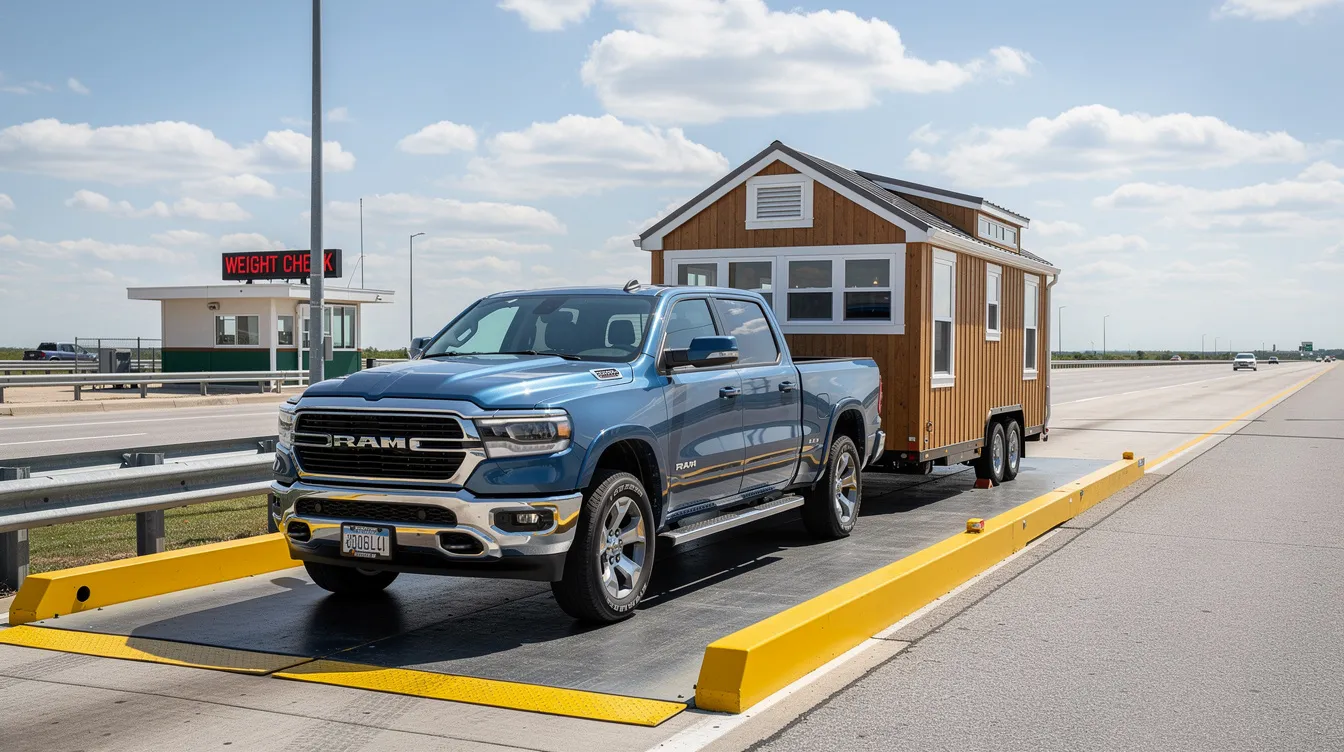
Weighing is the only way to know your real home’s weight and whether you’re under the weight rating.
The process:
- Find a public certified CAT or truck scale
- Drive onto the scale with truck and tiny house trailer connected
- Get a printout of axle weights
Simple formula: Tiny House Weight = (Truck + Trailer total) – (Truck-only weight)
Example:
- Truck + trailer on scale: 22,000 lbs
- Truck alone: 10,000 lbs
- Tiny house total weight: 12,000 lbs
Calculate tongue weight: Compare truck rear axle weight with trailer attached vs. truck alone. The difference approximates tongue weight.
When to weigh:
- After shell is complete
- After major systems installed
- Once fully furnished and road-ready
Keep weight tickets with your registration and build documentation for future resale value and proof of compliance.
Choosing the Right Tiny House Trailer Type and Capacity
The perfect trailer is both structurally appropriate and correctly weight-rated for your specific tiny home design.
Flatbed tiny house trailers:
- Bumper-pull hitch connection
- Common for 16–28 ft tiny homes
- Typically rated 7,000–14,000 lbs GVWR
- Flatbed trailers are the most popular option for tiny homes, providing a large, flat surface that maximizes floor space and is easier to tow with standard vehicles
Gooseneck tiny house trailers:
- Connect over the truck’s rear axle
- More stable towing for larger builds
- Rated 14,000–21,000+ lbs
- Gooseneck trailers offer unique advantages for larger builds, creating extra interior space that can be used for dedicated bedrooms or lofts, but they typically require specific towing vehicles
Deck-over and low-profile options:
- Low-deck designs provide more interior height within legal limits
- Deck-overs trade lower profile for more under-floor structure
Which fits your build:
- Short tiny homes (16–22 ft): Flatbed, 10,000–12,000 lb GVWR
- Mid-length (22–28 ft): Flatbed or gooseneck, 12,000–16,000 lb GVWR
- Large builds (28–32+ ft): Gooseneck, 14,000–21,000+ lb GVWR
Tiny house trailers should be constructed with sturdy materials and heavy-duty features to ensure safety and durability during transport.
Designing and Building for a Manageable Tiny House Weight
Design for weight from day one. Prioritizing affordable tiny house designs and builds that use lighter materials and smart layouts is easier than trimming pounds later by removing favorite features.
Target dimensions: Keep movable tiny houses between 185–295 square feet, which often correlates with staying under 9,000–13,000 lbs for easier towing with a ¾-ton or 1-ton truck, especially if you opt for custom tiny homes optimized for weight and space.
Lightweight material choices:
- Engineered framing lumber
- Metal roof
- Composite siding
- Efficient insulation balancing R-value and weight
Avoid overusing heavy finishes:
- Thick stone countertops
- Extensive tile work
- Oversized solid wood cabinetry
Weight-saving example: Choosing fiberglass shower units, lighter cladding, and compact appliances can collectively save 1,000+ lbs on your tiny house weight.
Plan water and power systems realistically. Oversized tanks and battery banks add thousands of pounds to a tiny house trailer’s total weight, which is especially important if you’re considering tiny house kits from big-box retailers like Home Depot as a starting shell.
Best Practices for Towing a Tiny House Safely
Even a perfectly weight-rated tiny house trailer requires thoughtful towing practices.
Tow vehicle selection: Choose a vehicle with towing capacity clearly exceeding the tiny house weight. A 14,000 lb tiny house should pair with a 1-ton truck rated 16,000–20,000 lbs or more.
Braking system requirements: Trailer brakes on all axles are essential for tiny homes above 5,000–7,000 lbs, plus a properly adjusted electric brake controller in your tow vehicle.
Pre-trip checklist:
- Tire pressures (truck and trailer)
- Lug nut torque
- Lights function test
- Brake function test
- Safety chain attachment
Driving habits:
- Lower speeds than posted limits
- Increased following distance
- Earlier braking
- Extra caution on steep grades, crosswinds, and rough roads
Route planning: Avoid low bridges, tight urban corners, and weight-restricted roads. For very heavy or long tiny homes, hiring a professional licensed hauler or working with experienced tiny house builders in regions like New York may be the safest choice for major relocations.
Following strict regulations and safe towing practices keeps you, your tiny house, and everyone else on the road safe, whether you’re traveling cross-country or settling into small and tiny home communities in places like Washington State.
FAQ: Tiny House Trailer Weight Rating and Safety
How much GVWR do I really need for a 24 ft tiny house?
Most 24 ft tiny houses land between 9,000–13,000 lbs loaded. A trailer GVWR of 12,000–14,000 lbs provides a comfortable safety margin. Run a quick estimate using 500–550 lbs per linear foot, then select the next higher standard GVWR from the trailer manufacturer.
Can I upgrade the weight rating of an existing tiny house trailer?
You generally cannot legally re-rate a trailer above the original GVWR without significant engineering modifications and recertification. Upgrading axles, tires, and springs alone doesn’t change the legal GVWR—the frame and coupler may still be limiting factors. Consult a qualified trailer fabricator before assuming any increase is possible.
Is it safe to live full-time at the top of the trailer GVWR?
While structurally acceptable if properly designed, operating constantly at maximum GVWR accelerates wear on axles, tires, and suspension. Leave at least 10–15% margin below GVWR for long-term comfort and inevitable accumulation of stuff over time.
Do I need a special license to tow a heavy tiny house?
License requirements depend on total combined weight and your state. Some states require upgraded licenses if combined weight exceeds 26,000 lbs or if the trailer alone exceeds 10,000–15,000 lbs GVWR. Check with your state DMV about your specific situation.
What’s the best way to keep tiny house weight under control over time?
Adopt a “one in, one out” mindset for belongings. Re-weigh every few years or after major changes like new appliances or solar upgrades. Track additions in a simple weight log so you always know how close you are to the trailer’s GVWR. This is the best place to start for tiny house owners who want to maintain safe towing conditions throughout their tiny life.