

Finding the best mini split for tiny house living can feel overwhelming. But here’s the good news: mini split systems are ideal for tiny homes because they consist of ductless units that allow for individual temperature control, making them space-efficient and flexible in installation.
Traditional hvac system options fall short in small spaces. Window units steal precious floor space. Wood burning stoves require ventilation and constant fuel. Space heaters lack efficiency. Central air conditioning demands ductwork that simply won’t fit.
Mini split systems solve these problems. They operate efficiently by using an INVERTER-driven compressor that adjusts energy usage based on the required temperature, which can lead to lower energy costs. They’re designed for area-focused or zoned cooling, making them ideal for smaller spaces like tiny homes, where conventional ac systems may be too powerful and inefficient. Plus, they absorb heat from indoors during summer and reverse the process for tiny house heating in winter.
- How We Chose the Best Mini Split Systems
- Top 5 Mini Split Systems for Tiny Houses
- Quick Comparison of the Best Mini Split Systems
- How to Choose the Right Mini Split for Your Tiny House
- Which Mini Split Is Best for You?
- Final Thoughts
How We Chose the Best Mini Split Systems
We evaluated each mini split ac against criteria specific to tiny home needs.
Key factors included:
- BTU capacity: The size of a mini-split system is typically measured in BTUs, with most units ranging from 9,000 BTU to 24,000 BTU, suitable for spaces from about 350 to 550 square feet depending on room features
- Installation flexibility: These systems can be installed quickly, often in just a day, and are available in various styles including wall-mounted, floor-mounted, and ceiling cassette options
- Energy efficiency: SEER2 ratings above 22 and HSPF2 above 10
- Cold climate performance: Operation down to -13°F or lower
- Noise levels: Under 25 dB for peaceful tiny living
- Compact design: Indoor unit width under 30 inches
- Reliability: Brands with documented low failure rates
- Warranty: Minimum 5-year coverage on compressors
- Value: Balance of upfront cost and operating savings
Top 5 Mini Split Systems for Tiny Houses
1. MrCool DIY 12000 BTU Mini Split
This unit delivers easy installation benefits with 12000 BTU capacity. DIY mini-split systems can be installed quickly, often in just a day, without the need for ductwork, making them a convenient option for homeowners.
Why It Stands Out
The MRCOOL DIY mini-split system features a pre-charged lineset, allowing for easier installation without the need for specialized tools or training. No vacuum pumps. No brazing. Two people can complete the install in 2-4 hours.
Best For
Ideal for tiny houses 350-550 sq ft. Perfect for DIY enthusiasts who want to save $1,000-$2,000 on professional installation costs.
Key Strengths
- Pre-charged Quick Connect linesets up to 25 feet
- SmartHVAC app with Alexa and google assistant support
- SEER2 23.4 rating for exceptional energy efficient operation
- 52% energy savings over window units
Possible Limitations
- May cause short-cycling in spaces under 300 sq ft
- Limited professional support network compared to established brands
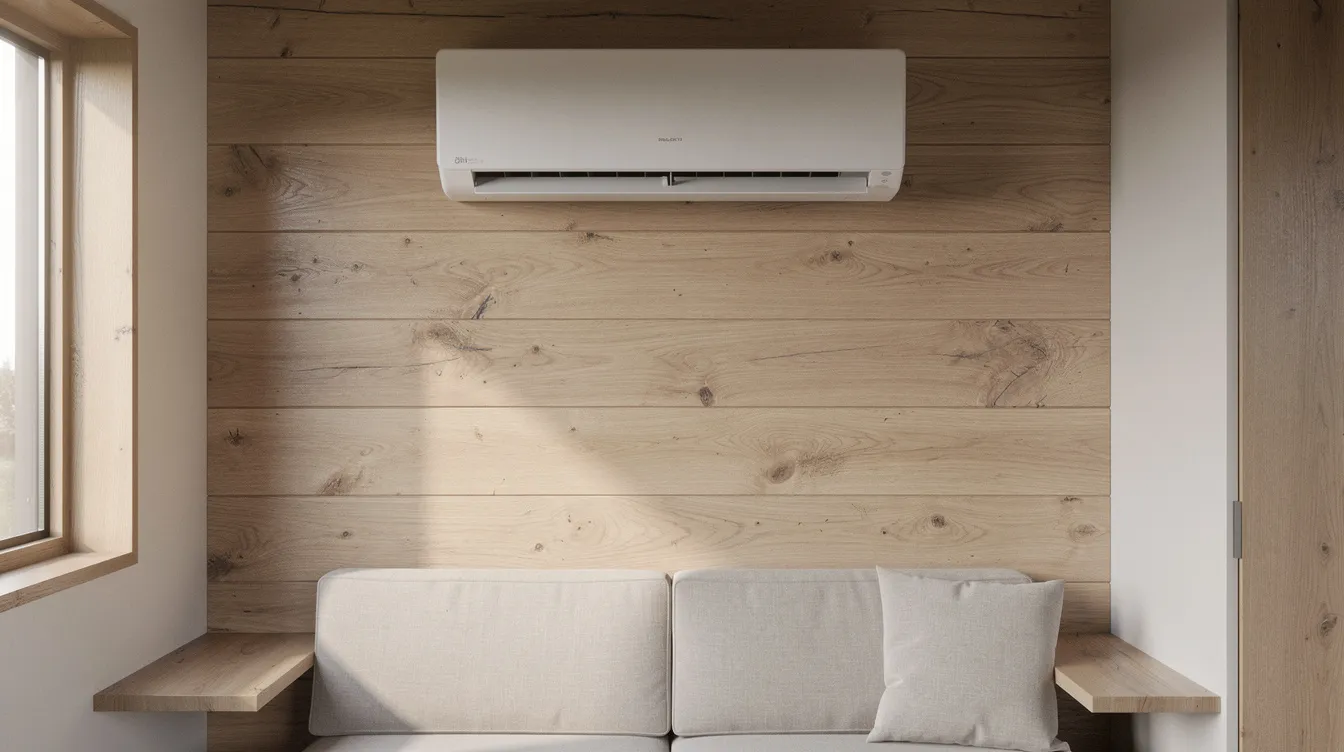
2. Mitsubishi Electric Hyper-Heating 9000 BTU
This heat pump dominates cold climate performance with 9000 BTU capacity and H2i technology.
Why It Stands Out
Delivers 100% heating capacity at 5°F and maintains operation down to -13°F. The swing compressor technology achieves COP above 2.0 at low temperatures—double the efficiency of standard units.
Best For
Tiny houses in cold climates and well-insulated spaces 200-400 sq ft. Eliminates need for backup heating indoors.
Key Strengths
- Superior cold weather performance without auxiliary heat
- Ultra-quiet 21 dB operation
- INVERTER technology maintains ±0.5°F temperature control
- SEER2 26.0 for market-leading efficiency
Possible Limitations
- Higher upfront cost ($2,000-$2,800)
- Requires professional installation adding $800-$1,500
3. Fujitsu 9000 BTU Wall Mount Mini Split
This ductless mini split offers exceptional reliability and compact wall-mounted design.
Why It Stands Out
The indoor unit measures just 27.2 inches wide and 7.9 inches deep. At 19 dB operation, it matches library quietness. Data shows less than 0.5% service calls in the first 5 years.
Best For
Tiny houses prioritizing minimal visual impact and whisper-quiet operation. Great for single rooms requiring unobtrusive cooling and heating.
Key Strengths
- Extremely compact design saves wall space
- Excellent build quality with documented long-term reliability
- Advanced apple-pickle filtration system for air quality
- SEER2 24.3 with flexible mounting options
Possible Limitations
- Premium pricing at $1,800-$2,200
- Professional installation adds approximately $1,200
4. LG Dual Inverter 12000 BTU Mini Split
This mini split system leverages dual inverter technology for rapid temperature adjustment in hot climates.
Why It Stands Out
Twin rotary compressors deliver 40% faster cooling than single-compressor units. The system reaches setpoint 30% quicker per manufacturer testing.
Best For
Tiny houses in hot climates needing rapid temperature adjustment on hot days. Covers 350-550 sq ft efficiently.
Key Strengths
- Dual inverter technology for 40% faster cooling
- Gold Fin anti-corrosion coating extends lifespan 5x in coastal environments
- Smart ThinQ app enables AI learning for 20% additional savings
- Operation up to 115°F outdoor temperature
Possible Limitations
- May be too powerful for spaces under 350 sq ft
- Smart features require stable WiFi connection
5. Daikin 9000 BTU Ceiling Cassette Mini Split
This ceiling-mounted unit solves unique installation needs while maximizing space.
Why It Stands Out
Flush 22×22 inch ceiling mount preserves 100% of wall space. Uses R32 refrigerant with 75% lower global warming potential than R410A.
Best For
Tiny houses with loft designs or limited wall space. Excellent for maintaining even temperature distribution across open floor plans, especially when paired with tiny house interiors that maximize every square foot.
Key Strengths
- Flush ceiling mount maximizes floor and wall space
- Four-way air distribution eliminates hot spots via 360° swing
- Minimal visual impact on interior design
- SEER2 22.5 with quiet 28 dB operation
Possible Limitations
- Complex installation requiring ceiling access
- Higher installation costs ($1,500-$2,500 professional)
Quick Comparison of the Best Mini Split Systems
Model | Best For | BTU | SEER2 | Install |
|---|---|---|---|---|
MrCool DIY | DIY installation, mid-size tiny houses | 12000 | 23.4 | DIY |
Mitsubishi H2i | Cold climates, superior performance | 9000 | 26.0 | Pro |
Fujitsu Wall Mount | Minimal visual impact, quiet operation | 9000 | 24.3 | Pro |
LG Dual Inverter | Hot climates, rapid cooling | 12000 | 25.0 | Pro |
Daikin Ceiling | Unique installations, space optimization | 9000 | 22.5 | Pro |
How to Choose the Right Mini Split for Your Tiny House
Choose Based on Tiny House Size
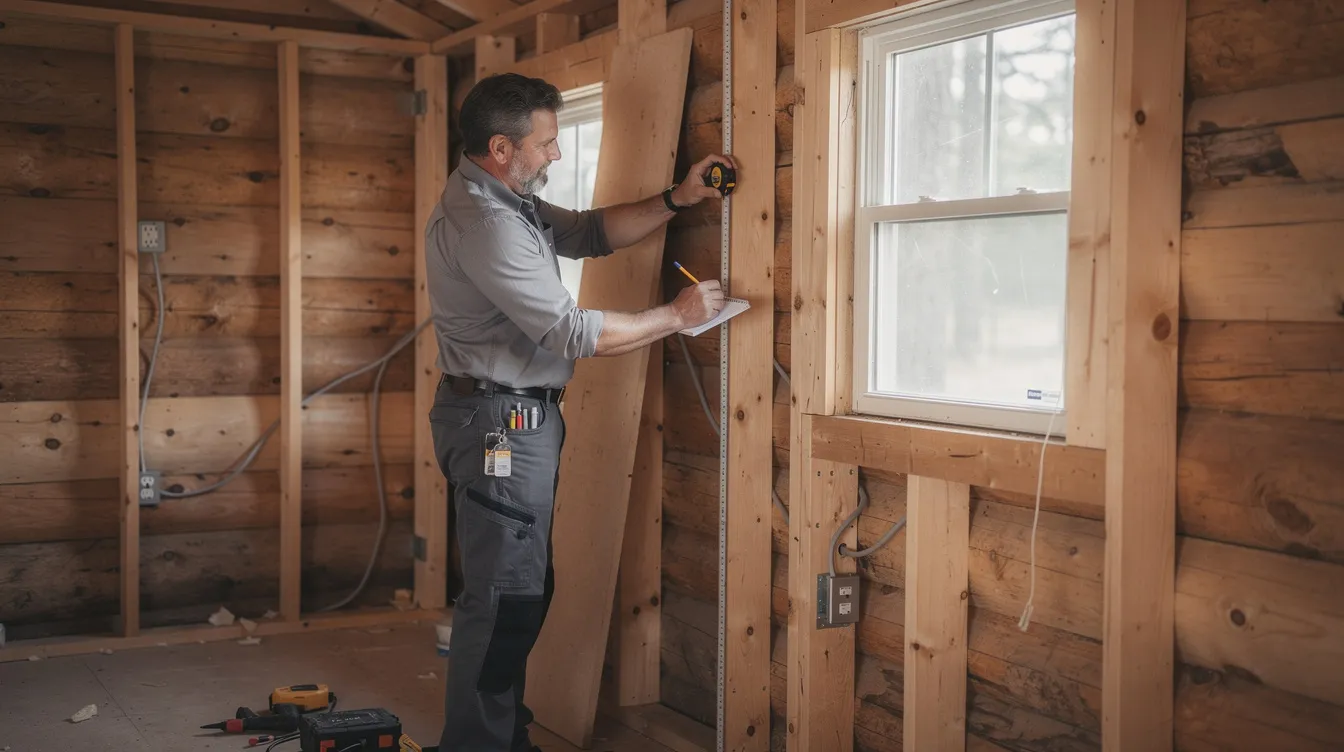
Your choice of BTU capacity should match not just square footage but also how your tiny house floor plans that work for you distribute heat and airflow.
To determine the appropriate BTU for a mini-split system, a basic formula is to multiply the area of the space in square feet by 20, adjusting for factors like additional occupants or kitchen-heavy spaces.
General guidelines:
- 9000 BTU for spaces 200-400 sq ft
- 12000 BTU for spaces 350-550 sq ft
- Sunny south-facing windows? Add 10-20% capacity
- Heavy insulation (R-20+)? Standard sizing works
Warning: Oversizing causes short-cycling where the unit runs brief bursts, spiking electricity use 15-25% and creating humidity problems with excess moisture.
Choose Based on Climate
Cold climates (winters below 20°F): Choose Mitsubishi H2i or similar hyper-heating technology. Standard units lose efficiency rapidly below freezing, which is especially important for Swedish tiny houses designed for cozy living.
Hot climates (summers above 95°F): LG’s dual inverter handles rapid cooling demands. Look for high EER2 ratings.
Moderate climates: Standard efficiency units from any manufacturer provide good value. Save money on specialized features you won’t need.
Choose Based on Installation Preference
If you’re planning a highly personalized build, many owners integrate HVAC decisions early while designing custom tiny homes for small-space living.
DIY installation saves $1,000-$2,000 but requires comfort with electrical work and mounting. Best for mobile tiny houses where professional install voids mobility benefits.
Professional installation ensures warranty coverage and proper refrigerant line handling. Required for ceiling cassette options and recommended for grid-tied systems requiring permits.
Mounting options: Wall mounts suit most tiny houses. Ceiling cassettes work for lofts. Floor mounted units offer alternatives when wall and ceiling space is limited.
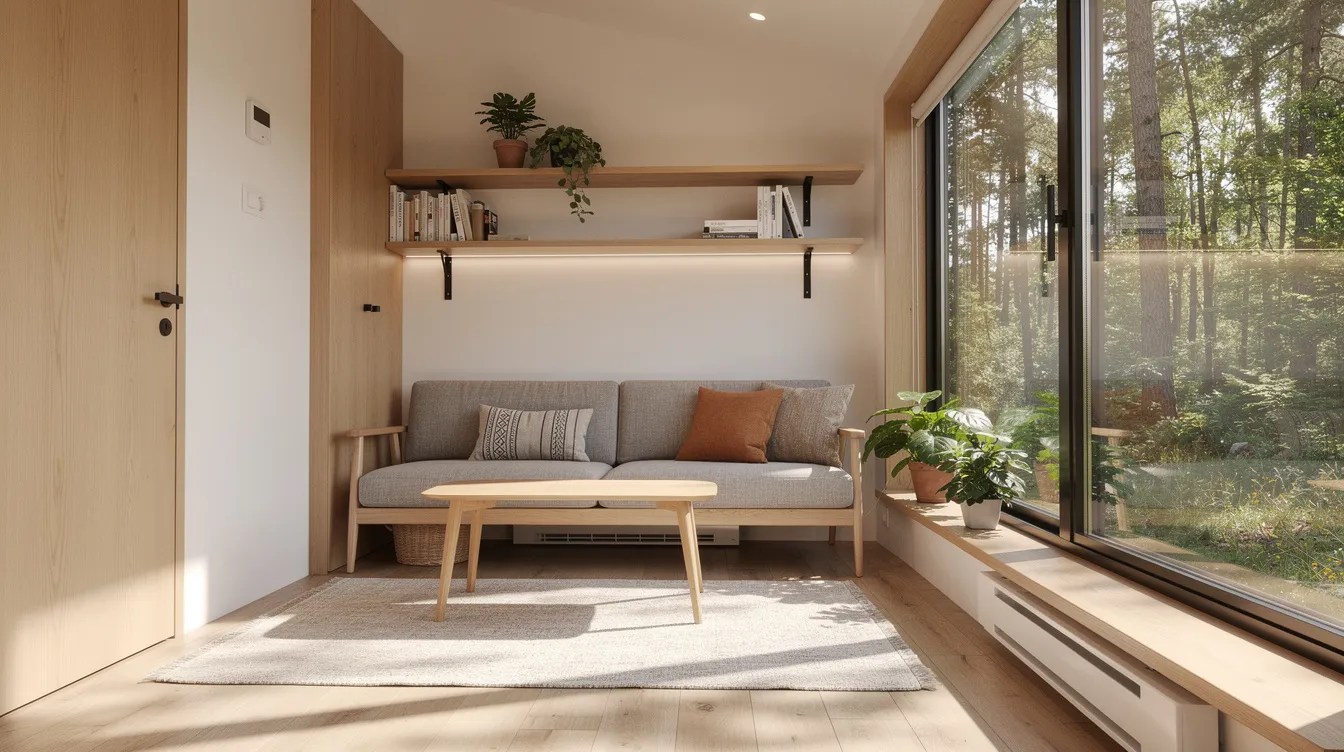
Thoughtful climate control becomes even more important as you explore the best tiny house designs for modern living, where glazing, ceiling height, and layout all influence heating and cooling loads.
Which Mini Split Is Best for You?
Here’s the simple breakdown:
- Choose MrCool DIY if you want to save on installation costs and enjoy hands-on projects. The purchase includes everything needed for completion.
- Choose Mitsubishi if you live where winters drop below 20°F and need reliable heating without backup support
- Choose Fujitsu if you prioritize whisper-quiet operation and rock-solid reliability over decades, complementing many elegant tiny homes that redefine modern living
- Choose LG if you need rapid cooling in hot climates with smart home integration
- Choose Daikin if you have limited wall space, loft ceilings, or prefer invisible climate control — a great match for tiny house plans that fit your life where wall space is reserved for storage, windows, or decor
Mini-split systems are designed for area-focused or zoned cooling, making them ideal for smaller spaces like tiny homes, where traditional systems may be too large and inefficient.
Final Thoughts
Ductless mini splits represent the best ac solution for tiny house living.
They save floor space.
They cut energy bills 40-60% versus alternatives.
They provide both cooling and heating from one unit.
But proper sizing matters most. An oversized air conditioner short-cycles. An undersized unit runs constantly. Match your space to the right BTU capacity using the 20 BTU per square foot formula, then adjust for your climate and insulation quality.
All five recommended options deliver excellent value. The best choice depends on your specific house size, climate conditions, and whether you prefer diy installation or professional setup.
Shop smart. Maintain your system annually. And enjoy year-round comfort in your tiny house.