
Key Takeaways
- Tiny house wind turbine setups only work well on windy, open rural or coastal sites with average wind speeds of at least 10-12 mph measured at tower height. Many suburban and sheltered locations simply lack enough wind for viable energy production.
- Most tiny homes need 1-3 kW of continuous power generation, and a well-sited 1-5 kW home wind turbine can cover 40-90% of this demand when combined with proper battery storage.
- Proper siting matters far more than turbine brand. Your tower should place the turbine hub at least 30 feet above any obstacle within 300 feet to avoid turbulence that can slash power output by 25% or more.
- Installation costs for tower, wiring, and permits usually exceed the turbine sticker price. Expect $8,000-$25,000 total for a complete 1-3 kW system, but long-term savings can be significant in high-wind areas.
- Combining residential wind with solar panels and batteries is usually the most cost effective way to generate enough electricity for year-round off grid tiny house living.
Introduction: Can a Wind Turbine Really Power a Tiny House?
Tiny houses typically range from 150-400 square feet.
They use far less electricity than standard homes.
This makes them prime candidates for small wind energy systems, especially for people who are planning to build a tiny house specifically for off-grid or low-energy living.
A properly designed tiny house wind turbine setup can provide enough power for lights, laptops, a mini-fridge, and basic appliances. Full electric heating is usually off the table. But for modest loads, wind turbines work surprisingly well in the right location.
Here are some numbers to consider:
- A typical tiny house uses 5-12 kWh per day
- The average American home uses about 10,649 kilowatt-hours of electricity per year
- A 1-3 kW turbine in a good 11-12 mph average wind speed site can cover 40-70% of a tiny home’s needs
For context, home wind turbines and residential wind power systems range from a few hundred watts to around 10 kW. For tiny homes, the sweet spot falls between 400 W and 5 kW. Anything larger is overkill. Anything smaller struggles to produce enough electricity for basic daily needs.
Wind power can be a viable option for homeowners under specific conditions, such as having a property with adequate wind resources, being located in a rural area, and having high electricity usage. Tiny houses check many of these boxes due to their modest energy demands.
This article walks through:
- How much energy you actually need
- How much a small turbine can produce
- Installation basics and tower options
- Real costs and payback periods
- When hybrid systems with solar power make sense
Let’s start with the foundation: understanding your actual power needs.
Estimating Tiny House Energy Needs (How Much Power Do You Really Use?)
Sizing any renewable energy system starts with one question.
How much energy does your tiny house actually need per day and per month?
This number drives everything else. Get it wrong, and you’ll either overspend on equipment or find yourself short on power when you need it most.
Typical Load Breakdown
Here’s what a minimalist off grid tiny house might consume daily:
Device | Wattage | Hours Used | Daily kWh |
|---|---|---|---|
LED lights | 20W | 5 hours | 0.1 kWh |
Laptop | 100W | 4 hours | 0.4 kWh |
Phone charging | 10W | 3 hours | 0.03 kWh |
12V water pump | 50W | 1 hour | 0.05 kWh |
Efficient mini-fridge | 50W | 10 hours | 0.5 kWh |
Induction cooktop | 1000W | 0.5 hours | 0.5 kWh |
Total: roughly 1.6-2 kWh/day for basics |
Add entertainment, a small electric heater used sparingly, or more cooking, and you’re looking at 3-5 kWh/day for minimalist setups and 8-15 kWh/day for comfort-focused tiny homes.
Power vs. Energy: Why It Matters
Here’s a distinction worth understanding:
- Power (kW) = rate of electricity use at any moment
- Energy (kWh) = total electricity consumed over time
Your turbine has a rated power (say, 1 kW). But what you care about is how much energy it generates daily and monthly. A 1 kW turbine doesn’t produce 1 kWh every hour. It depends entirely on wind speed and consistency.
Average daily kWh consumption is your key number for system sizing. Track your usage for a week or two before investing in any energy system. Small changes in habits can shift your needs dramatically.
Are Wind Turbines Suitable for Tiny Homes? (Site and Wind Requirements)
Here’s the hard truth about residential wind.
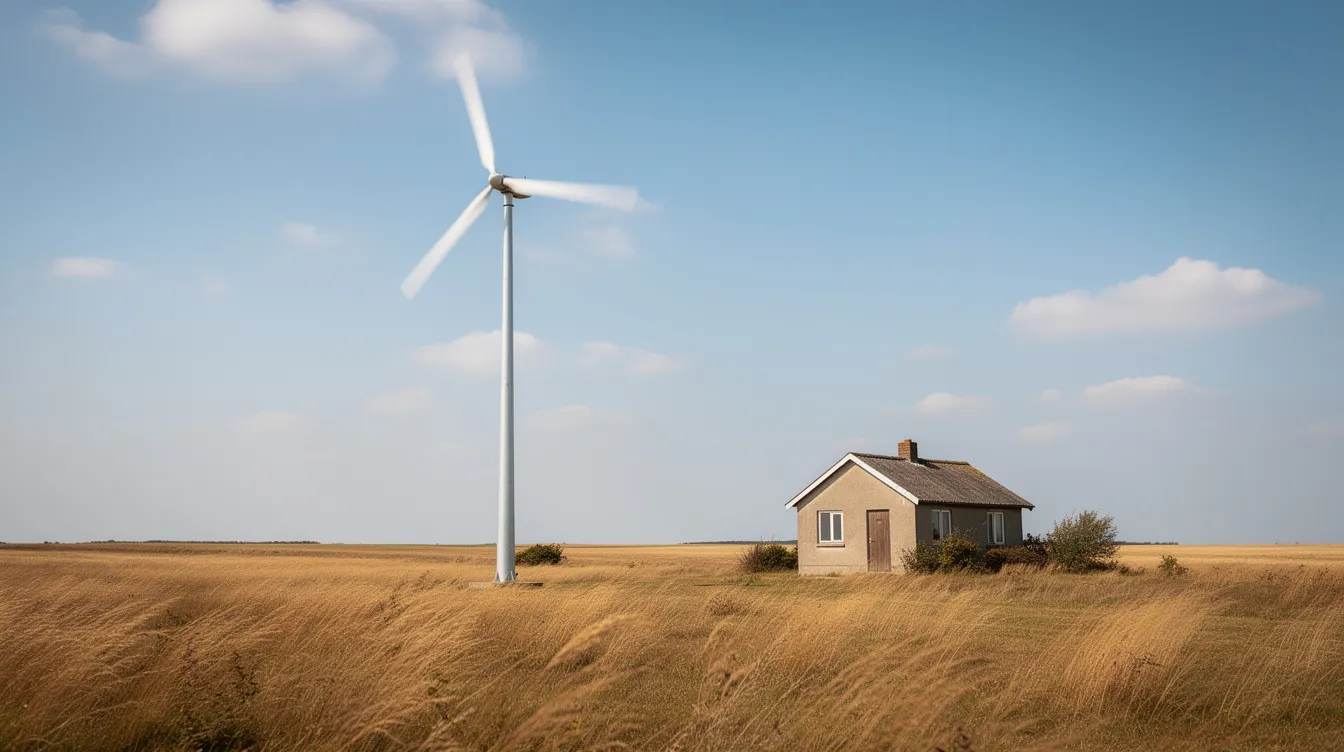
It’s highly site-dependent. Many locations simply don’t have enough consistent wind for cost effective energy production. Before spending a dollar on equipment, you need honest answers about your site’s wind resources.
Minimum Wind Speed Requirements
Tiny house wind turbines generally require:
- Average annual wind speeds of at least 10-11 mph (4.5-5 m/s) measured at your planned tower height
- Ideally 12+ mph for strong year-round power output
- The average wind speed at a site should be at least 10-11 mph for a wind turbine to be effective in generating electricity
Below these thresholds, your turbine output drops dramatically. A site averaging 8 mph might produce less than half the energy of a 12 mph site with the same turbine.
Where to Find Wind Data
Check these resources before investing:
- NREL’s WINDExchange and 2025-2026 online wind atlases
- Global Wind Atlas for site-specific estimates
- Local airport weather records (adjust for tower height using logarithmic profiles)
- Small anemometer kits for on-site measurement over several months
Critical Siting Rules
The turbine hub should be at least 30 feet (about 9 m) higher than any obstacle within 300 feet (about 90 m). This keeps the spinning blades in smooth, laminar airflow rather than chaotic turbulence.
For a residential wind turbine to be effective, it should be installed at least 30 feet above any nearby obstacles to avoid turbulence that can significantly reduce power output. Wind turbines should be installed at least 30 feet above any obstacles within 300 feet to avoid turbulence that can reduce power output by 25% or more.
Best locations are:
- Hilltops or ridges
- Open fields sited upwind of obstructions
- Coastal areas with consistent onshore/offshore patterns
- Properties with at least one acre of open, unobstructed land
The Suburban Problem
Residential wind power is most feasible in rural areas where properties are large enough (typically 1 acre or more) to accommodate wind turbines and where average wind speeds exceed 10 mph annually.
Residential wind power is generally not suitable for suburban areas due to zoning restrictions and the presence of obstacles that can impede wind flow, making it more viable for rural properties with high electricity usage.
For most tiny houses on small suburban lots, residential wind simply won’t be practical. Trees, neighboring buildings, and limited setback distances create too much turbulence. Rural or coastal sites with open terrain are far more promising for small wind systems, and your choice of tiny house foundation needs to work with those site conditions and tower requirements.
To install a wind turbine that significantly contributes to residential electricity needs, a property should have at least one acre of unobstructed land.

Choosing the Right Tiny House Wind Turbine Size and Type
Tiny house wind turbine systems fall into two main categories:
- Micro turbines: under 1 kW
- Small wind turbines: 1-10 kW
Small wind turbines are categorized into micro (under 1 kW), small (1-10 kW), and mid-size (10-100 kW) systems, with small turbines being the most suitable for typical residential applications.
Most off grid tiny homes use turbines in the 400 W-3 kW range. A 5-15 kW system would be overkill for the modest loads of a well-designed tiny dwelling, so it’s smart to start with tiny house plans that fit your life and expected energy use before choosing a turbine size.
For comparison, a wind turbine rated between 5 to 15 kilowatts is typically required to make a significant contribution to the average American home’s demand of over 10,000 kWh annually. Tiny houses need far less.
Horizontal-Axis vs. Vertical-Axis Wind Turbines
Horizontal axis wind turbines (HAWTs):
- Most common and efficient design
- Power coefficients up to 0.4-0.45
- Horizontal-axis wind turbines are the most common type of residential wind turbine, featuring two or three blades that rotate around a horizontal shaft, and are generally more efficient than vertical-axis designs
- Require proper alignment with wind direction
- The vast majority of residential installations use this type
Vertical axis wind turbines (VAWTs):
- Rotate around a vertical shaft
- Can capture wind from any direction without yaw mechanisms
- Vertical-axis wind turbines rotate around a vertical shaft and can capture wind from any direction, but they are typically less efficient and more expensive per kilowatt-hour produced compared to HAWTs
- Lower efficiency means more wind needed for same output
- Sometimes preferred for urban or turbulent sites, but rarely outperform HAWTs
Sizing for Your Needs
Turbine Size | Typical Application | Rotor Diameter |
|---|---|---|
400-600 W | Weekend cabins, minimal loads | 1.5-2 m |
1-2 kW | Full-time tiny homes, moderate use | 2.5-3 m |
3-5 kW | Higher loads, winter heating assist | 3.5-5 m |
The rotor swept area strongly influences turbine output. A 1 kW HAWT typically has a 2.5-3 meter diameter, with swept area directly scaling power through the physics formula. |
Certification Matters
Look for certified small wind models where possible. Certifications from bodies following IEC standards indicate:
- Tested performance curves matching real-world conditions
- Realistic power ratings (not inflated marketing claims)
- Expected 20+ year durability when maintained properly
Don’t trust nameplate ratings alone. A wind turbine rated at 1 kW achieves that output only at high wind speeds like 25-30 mph. Most sites never see those speeds consistently.
How Much Energy Will a Tiny House Wind Turbine Produce?
Here’s the fundamental physics of wind energy.
Power output depends strongly on wind speed cubed. Small differences in average wind speed translate to massive differences in how much power and how much energy you get.
The Power Formula (Simplified)
The kinetic energy captured follows: P = 0.5 × air density × swept area × power coefficient × wind speed³
What matters for sizing:
- Swept area: Larger rotor blades capture more wind
- Power coefficient: HAWTs max around 0.4, VAWTs around 0.25-0.3
- Wind speed cubed: Double the wind, get 8x the power
This cubic relationship explains why site selection dominates turbine choice. A mediocre turbine on an excellent site beats a premium turbine on a poor site every time.
Real-World Production Examples
Average Wind Speed | 1 kW Turbine Monthly Output | Notes |
|---|---|---|
12 mph (5.4 m/s) | 100-200 kWh | Good site |
10 mph (4.5 m/s) | 70-120 kWh | Marginal site |
8 mph (3.6 m/s) | 40-70 kWh | Poor economics |
Annual production rules of thumb: |
- Class 3 winds (6.4-7 m/s): 1,200-2,500 kWh per kW rated annually
- Class 2 winds (5-6.4 m/s): 800-1,500 kWh per kW annually
A 1 kW HAWT with 2.5-3m rotor diameter might yield 1,500-2,000 kWh annually at 12 mph average, covering 40-50% of a medium tiny house’s needs.
Don’t Trust Nameplate Ratings
Manufacturers’ rated power reflects output at high wind speeds (25-30 mph). Real-world capacity factors for small turbines run 15-25% even in good sites. Your actual energy system performance should be estimated from annual wind data, not the nameplate rating.
When the wind blows consistently at moderate speeds, production is steady. But wind is variable. Calm periods mean zero generation regardless of equipment quality.
Designing a Tiny House Wind Energy System
A tiny house wind turbine setup involves more than just the turbine itself.
Here’s the complete energy system breakdown:
Essential Components
Component | Purpose |
|---|---|
Turbine | Converts kinetic energy to mechanical power to electricity |
Tower | Elevates turbine above obstacles |
Wiring | Transfers power (use appropriate gauge to minimize wire resistance losses) |
Charge controller | MPPT type for variable wind output |
Battery bank | Stores energy for calm periods |
Inverter | Converts DC to AC for standard appliances |
System Configurations
Off-grid systems:
- Most common for tiny houses
- Require battery storage for 2-3 days autonomy
- Need backup plan for extended calm periods
Grid tied systems:
- Connect to utility grid
- Net metering programs may credit excess power
- Requires utility company approval and interconnection agreement
- Less common for mobile tiny houses
Hybrid systems:
- Combine wind, solar power, and sometimes generator backup
- Most reliable for year-round off grid living
- Reduce battery storage capacity needs by 30-50%
Battery Sizing
For off-grid tiny homes, aim for 2-3 days of autonomy:
- Daily use: 5 kWh
- Autonomy needed: 15 kWh storage
- At 48V: roughly 310 Ah capacity
- Account for depth of discharge (use 80% for lithium, 50% for lead acid batteries)
System Voltage Selection
Choose voltage based on system size:
- 12V: Very small systems only (under 500W)
- 24V: Small to moderate systems (500W-2kW)
- 48V: Larger setups (2kW+), reduces I²R losses over cable runs
Keep voltage drop under 3% on DC runs. Higher voltage means smaller wire gauge for same distance.
Safety Requirements
Every installation needs:
- Properly rated disconnects
- Overcurrent protection (breakers/fuses)
- Grounding per local regulations
- Surge protection (especially in exposed, windy locations)
- Compliance with local regulations and electrical codes
Mounting and Tower Options for Tiny House Wind Turbines
Tower design and height often dominate residential wind performance.
They also drive installation costs. For small dwellings like tiny houses, getting the tower right matters more than agonizing over turbine brands.
Tower Types for Tiny Houses
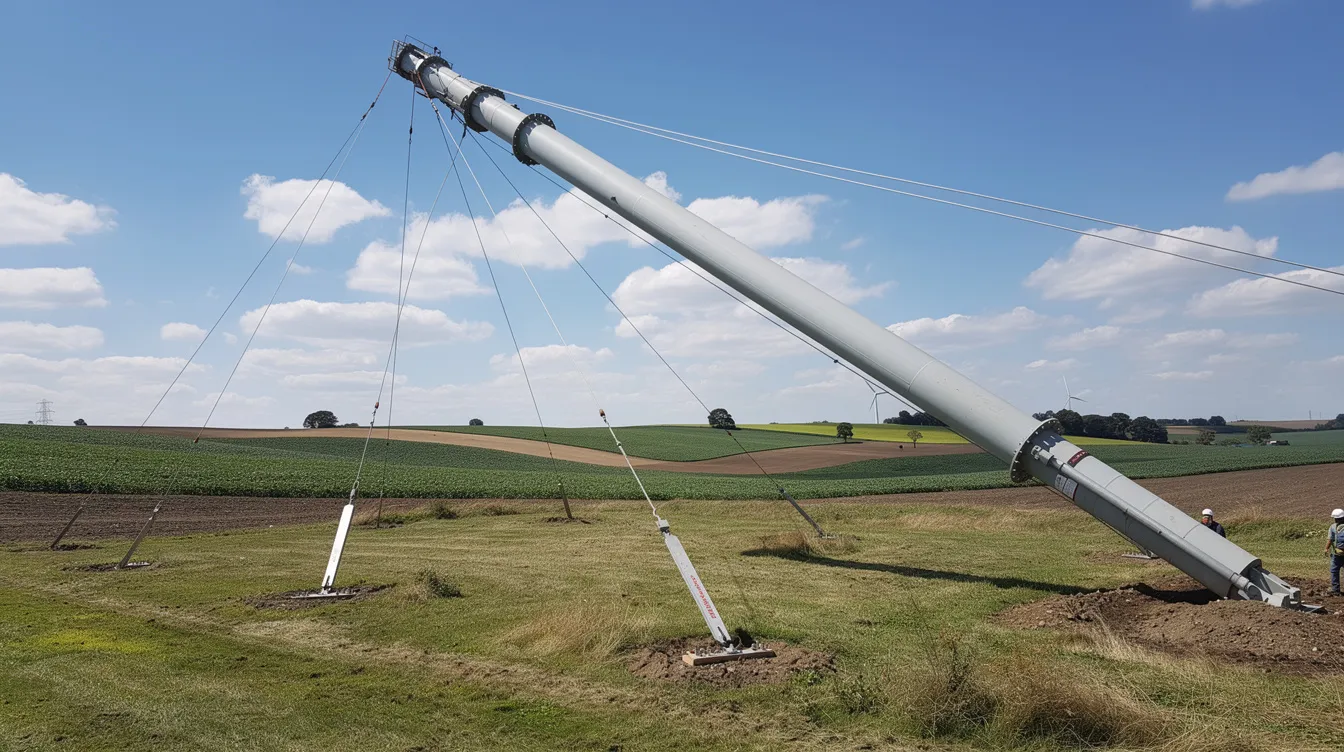
Tilt-up guyed towers:
- Easiest maintenance (lower for service)
- 30-60 feet typical height
- Require concrete anchors and guy wire clearance
- Best balance of cost and accessibility
- One Instructables build used 3-inch galvanized pole (218 inches total) with 1.5-inch schedule 40 pipe, bolted with rubber dampers, under $1,000 in materials
Freestanding monopoles:
- No guy wires needed
- Higher cost and engineering requirements
- May require crane for installation
- Better for constrained sites
Roof-mounted systems:
- Almost always a bad choice for tiny houses
- 50-70% output loss from turbulence
- Vibration and noise transfer through lightweight structures
- Amplifies 40-60 dB sound inside living space
Recommended Heights
Tower Height | Application | Notes |
|---|---|---|
30 feet | Minimum viable | Only if no obstacles nearby |
40-50 feet | Good balance | Most tiny house installations |
60+ feet | Best performance | Every 10m increase boosts speed 10-20% |
Tall towers mean smoother, faster wind and more power. The cost increase often pays back quickly in improved generation. |
Foundation Requirements
Guyed towers:
- Concrete anchor points at 50-80% of tower height radius
- Typical: 4 anchors plus center base
- Can often be DIY with proper engineering guidance
Freestanding:
- Substantial concrete foundation required
- Professional engineering essential in high-wind regions
- Higher cost but smaller footprint
Maintenance Access
Plan for regular maintenance before installing:
- Tilt-up or hinged bases allow lowering for inspection
- Avoid designs requiring climbing or lifts for routine checks
- Consider local rental availability for equipment if climbing required
Costs, Installation, and Long-Term Economics
Let’s talk money.
Wind turbines aren’t cheap. Understanding true costs helps set realistic expectations, just like using a tiny home cost calculator does for the rest of your build budget.
Cost Breakdown
The cost to install a small wind turbine typically ranges from $3,000 to $5,000 per kilowatt of generating capacity, meaning a 5 kW system could cost between $15,000 and $25,000, while a larger 15 kW system could reach up to $75,000, so pairing wind with affordable tiny house buildings is often the key to keeping overall project costs manageable.
For tiny house scale (400W-3kW):
System Size | Equipment Cost | Installed Cost |
|---|---|---|
500W-1kW | $1,500-$4,000 | $4,000-$10,000 |
1-2 kW | $3,000-$8,000 | $8,000-$23,000 |
3-5 kW | $6,000-$15,000 | $18,000-$40,000 |
Installation costs for residential wind turbines can vary significantly, with estimates ranging from $15,000 to $100,000 or more, depending on the size and complexity of the system. |
The total cost of a residential wind turbine system includes not only the turbine itself but also the tower, electrical components, permitting, and professional installation, which can add significantly to the overall expense.
Hidden Expenses
Don’t forget:
- Permits and engineering: $1,000-$5,000
- Crane or winch rental: $500-$2,000
- Battery bank: $3,000-$8,000 for lithium systems
- Annual maintenance: $200-$500
- Bearing replacement (every 5-10 years): $500-$1,500
- Insurance considerations
Payback Estimates
At $0.20/kWh electricity savings:
Annual Production | Annual Savings | Simple Payback (on $15k system) |
|---|---|---|
1,500 kWh | $300 | 50 years |
2,500 kWh | $500 | 30 years |
4,000 kWh | $800 | 19 years |
These numbers improve significantly in high-wind sites and with incentives. |
Available Incentives
The 30% Residential Clean Energy Tax Credit remains available through at least the mid-2030s. A $15,000 system could see $4,500 back in federal tax credits.
Check these additional sources:
- State renewable energy programs
- Rural energy for America Program (REAP) grants
- Local utility incentives
- Distributed wind energy association resources for program lists
Post-incentive, a well-designed system in a windy location can achieve 10-15 year payback while providing decades of energy independence.
Hybrid Systems: Combining Wind Turbines with Solar for Tiny Houses
Here’s why hybrid systems dominate the off grid tiny house world.
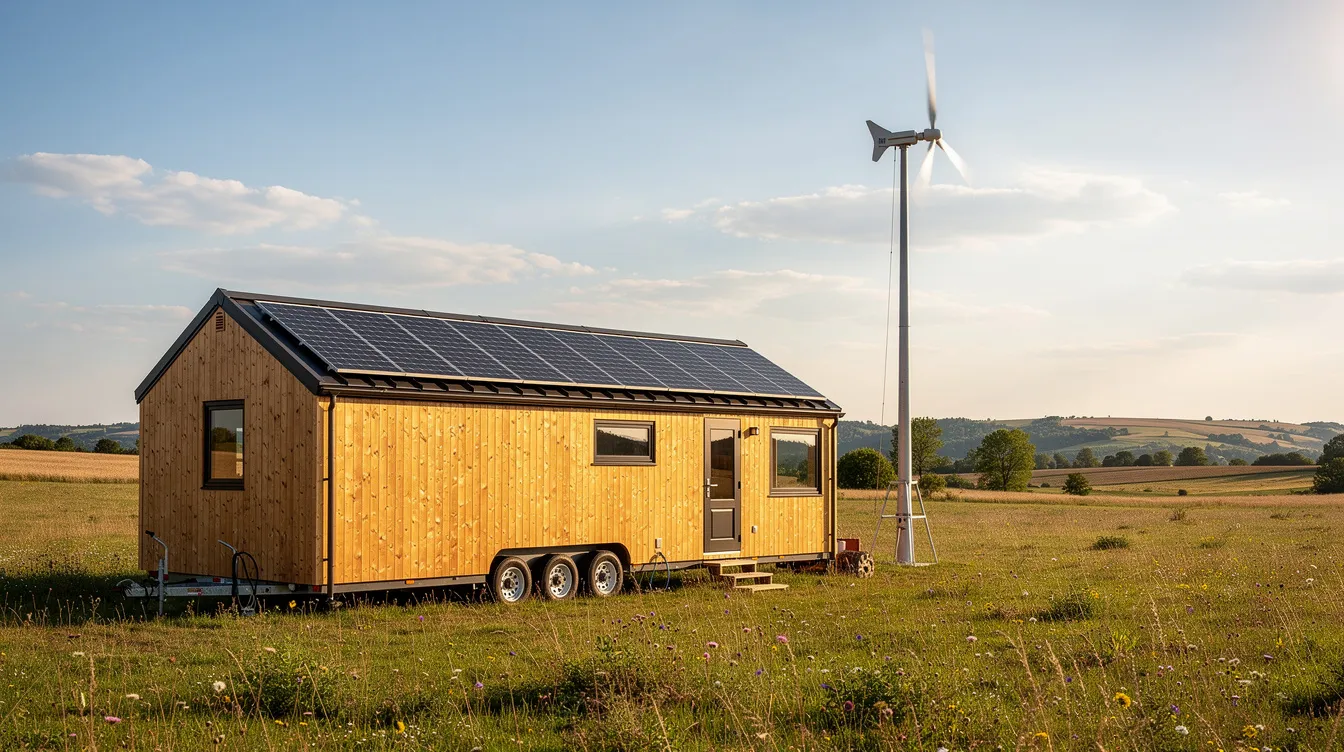
Wind often blows hardest at night and in winter. Solar power peaks on clear summer days. Combined, they deliver more consistent year-round energy production, especially in self contained tiny homes for modern off-grid living that also integrate water and waste systems.
Why Hybrid Makes Sense
- Wind complements solar seasonally and daily
- Reduced battery storage capacity needs (30-50% smaller banks)
- Less generator runtime for backup
- More cost effective than oversizing either source alone
In the vast majority of cases, solar power is a better financial option for homeowners compared to wind power, with the average cost for solar installation in the U.S. being around $2.86 per watt, while a comparable wind system can cost significantly more.
While wind turbines can outperform solar panels in certain scenarios, such as in areas with high wind resources, solar panels are generally more customizable and easier to install for most residential properties.
The answer? Use both.
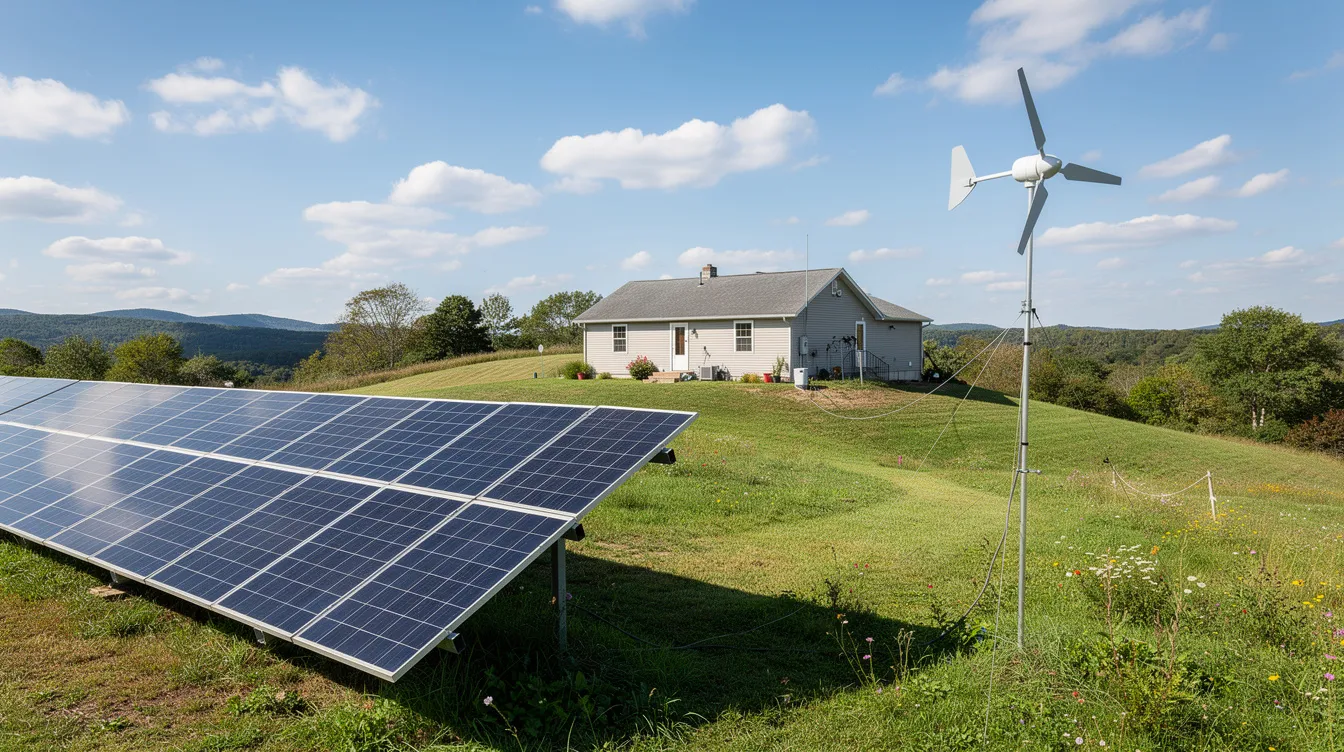
Typical Hybrid Configuration
A balanced tiny house hybrid system might include:
- Solar: 1-3 kW rooftop or ground-mounted panels
- Wind: 500W-2 kW turbine on 40-60 foot tower
- Batteries: 10-20 kWh lithium bank (shared)
- Controllers: Separate MPPT controllers or hybrid unit
- Inverter: 2-3 kW pure sine wave for AC loads
Seasonal Performance
Season | Solar Contribution | Wind Contribution |
|---|---|---|
Summer | High (long days) | Low to moderate |
Winter | Low (short days) | High (stormy weather) |
Spring/Fall | Moderate | Variable |
When the sun shines, solar carries the load. When storms roll through, the wind generator picks up. This complementary pattern means more wind and solar together exceed what either provides alone during tough periods. |
Example Setup
A coastal tiny smart home in 2026 with:
- 1.5 kW solar array
- 1 kW wind turbine on 50-foot tower
- 15 kWh battery bank
This configuration can produce electricity averaging 10-12 kWh/day across seasons—enough electricity for comfortable full-time living with typical tiny house loads.
Noise, Aesthetics, and Neighbor Considerations
Tiny houses often sit close to property lines.
This makes noise and visual impact from residential wind turbines important factors to address early, especially when you’re also working within tiny house maximum height guidelines for both the structure and nearby towers.
Sound Levels
Small turbines typically produce:
- 40-55 dB at 50 meters (quiet conversation level)
- Increases with wind speed and turbulence
- Blade design affects pitch and character of sound
For perspective:
- 40 dB: Quiet library
- 50 dB: Moderate rainfall
- 60 dB: Normal conversation
Minimizing Disturbance
- Choose quieter certified models with tested sound ratings
- Mount turbines on proper towers (30+ feet minimum)
- Site away from sleeping areas and property lines
- Never mount directly on tiny house structures
- Consider prevailing wind direction when positioning
Regulatory Concerns
Many regions have specific requirements:
- Noise limits at property boundaries (often 45-55 dB)
- Height restrictions for towers
- Setback requirements (often 1.5x tower height from property lines)
- Visual impact reviews in some jurisdictions
Check local regulations during planning. A call to your planning department can save expensive surprises.
Neighbor Relations
Proactive communication helps:
- Explain renewable energy and environmental benefits
- Share expected noise levels with comparison to common sounds
- Discuss 20-30 year system lifespan and property value impacts
- Address concerns about perceived safety risks
Most neighbors accept properly designed systems after understanding the technology. Resistance usually comes from uncertainty, not informed opposition, and showing them thoughtful tiny house designs for modern living alongside your energy plans can help ease visual-impact concerns.
Maintenance, Reliability, and Safety for Tiny House Turbines
Unlike solar panels, wind turbines have moving parts.
The rotor blades spin, bearings turn, and yaw mechanisms orient to follow wind direction. This mechanical power conversion requires regular attention.
Routine Maintenance Schedule
Quarterly:
- Visual inspection from ground
- Listen for unusual sounds
- Check guy wire tension
Annually:
- Lubrication per manufacturer schedule
- Bolt torque checks
- Blade inspection for cracks, erosion, UV damage
- Electrical connection inspection
- Guy wire tension adjustment
After major storms:
- Full visual inspection
- Check for ice damage
- Verify all fasteners remain secure
Common Failure Points
Component | Failure Rate | Typical Lifespan |
|---|---|---|
Yaw bearings | ~20% of failures | 10-15 years |
Blades | Ice/UV damage | 15-20 years |
Slip rings | Wear item | 5-10 years |
Tower connections | Corrosion | 20+ years with maintenance |
Choose reputable manufacturers with available spare parts. A cheap turbine with no parts availability becomes expensive fast. |
Safety Essentials
Every wind energy installation needs:
- Braking system: Mechanical or electrical method to stop turbine during high winds or maintenance
- Lock-out procedures: Prevent accidental startup during service
- Proper grounding: 8-foot ground rods per NEC requirements
- Surge arrestors: Protect electronics from lightning-induced surges
- Personal protection: Harnesses when climbing, never work during storms
Grounding and Lightning
Any tall tower can attract lightning. Proper protection includes:
- Grounding each tower leg or pole
- Appropriately sized conductors to earth
- Ground rods per local electrical code
- Bonding all metal components
- Surge protective devices on DC and AC lines
Consult an electrician familiar with distributed wind energy association guidelines for code-compliant designs.
Case Example: Off-Grid Tiny House Wind Setup in Practice
Let’s look at a realistic 2025 installation.
The Setup
Location: Rural Great Plains, consistent 12+ mph winds Tiny house: 280 square feet, full-time residence
System components:
- 1.5 kW horizontal axis wind turbine (3m rotor)
- 50-foot tilt-up guyed tower
- 1.2 kW rooftop solar array
- 12 kWh LiFePO4 battery bank
- 3 kW pure sine inverter
- Dual MPPT charge controllers
Annual Production
Source | Annual kWh | Percentage |
|---|---|---|
Wind | 2,500 | 58% |
Solar | 1,800 | 42% |
Total | 4,300 | 100% |
Daily average: 11.8 kWh—covering about 90% of the home’s 4 kWh/day loads with significant excess power for battery charging. |
Seasonal Performance
Winter months see wind produce 70% of energy needs when shorter days limit solar. Summer flips the ratio. The hybrid approach means consistent power year-round without generator dependence.
Costs and Lessons
Installed cost: $24,000 pre-incentives Post 30% ITC: $18,000 net
Key lessons learned:
- Adding 10 extra feet of tower height boosted wind output 25%
- Slightly oversized batteries eliminated stress during calm periods
- Quality charge controllers prevented system damage during voltage spikes
- Tilt-down tower saved $800 versus crane service calls for maintenance
What they’d do differently:
- Start with more wind monitoring before committing
- Budget for battery expansion from day one
- Install lightning protection before first storm season
The owners report a significant portion of annual energy needs met without grid connection, achieving true energy independence in their tiny dwelling.
Frequently Asked Questions
This section answers common questions not fully addressed above, focusing on practical details tiny house owners often worry about. Answers are based on typical tiny house use cases and 2025-2026 technology. Local codes, climate, and technology options may require adjustments for your specific situation.
Can a tiny house rely on wind power alone without solar?
In theory, a well-sited turbine could meet all loads. In practice, most tiny houses achieve better reliability and cost-effectiveness with hybrid systems combining wind, solar power, and sometimes a small backup generator.
Seasonal calm periods and maintenance downtime make a single-source wind power system risky unless heavily oversized with large battery storage. During extended calm spells, you’d have zero energy production regardless of equipment quality.
Most off grid tiny homes pair even a modest solar array (400-800 W) with wind to smooth out variability and ensure enough electricity year-round. This approach typically costs less than oversizing batteries to handle wind-only variability.
Is mounting a wind turbine directly on my tiny house roof a good idea?
Roof mounting on a tiny house is almost always a bad choice.
The problems compound quickly:
- Turbulence near rooflines slashes turbine output 50-70%
- Vibrations transmit directly through lightweight tiny home construction
- Noise levels become intolerable inside the living space
- Structural stress can damage the building over time
A separate tower sited upwind of the tiny house and positioned high above nearby obstacles is the preferred approach for residential wind. The extra cost of a proper tower pays back quickly in improved performance and livability.
What is the minimum property size for a tiny house wind turbine?
While a tiny home itself uses little land, a safe and efficient wind turbine typically needs room for tower setbacks and guy wires.
For towers in the 30-60 foot range, most installers prefer at least half an acre to an acre of open space. This allows proper guy wire anchoring and maintains safety distances.
Consult local regulations, which may specify minimum setbacks equal to tower height or more. Many 2025-2026 updated ordinances specifically address small wind installations with clear property size requirements.
How do I protect my tiny house wind system from lightning?
Any tall metal tower can attract lightning. Small wind systems need proper grounding, surge protection, and bonding to reduce risk.
Essential protection includes:
- Each tower leg or pole grounded to earth with appropriately sized conductors
- Ground rods installed per local electrical code (typically 8-foot copper rods)
- Surge protective devices on both DC and AC lines entering the tiny house
- Bonding all metal components into a unified grounding system
An electrician familiar with renewable energy systems can design code-compliant protection. This isn’t a place to cut corners—lightning damage can destroy your entire energy system in one strike.
Can I move my wind turbine easily if I relocate my tiny house?
While tiny houses are mobile, wind towers and foundations are not designed for frequent relocation.
Tilt-up guyed towers are somewhat easier to disassemble and move than heavy freestanding monopoles. But even these require:
- Specialized tools
- Careful planning
- Sometimes machinery for transport
- New foundation work at each site
For nomadic tiny house owners, portable solar solutions and smaller, modular micro-turbines (like 400W foldable units) often make more practical sense than large fixed towers. If you relocate more than once every few years, factor this into your own wind turbine planning and consider whether a custom tiny home layout could better integrate portable power gear.
A tiny house wind turbine setup isn’t for everyone.
But for the right site—rural, open, consistently windy—it can provide decades of clean, reliable power with minimal ongoing costs.
The key is honest assessment of your wind resources before investing. Check wind atlases. Measure your site if possible. Calculate your actual loads. And consider hybrid systems that combine the best of wind and solar for year-round energy independence.
Start with research. End with a system that actually works.