
Key Takeaways
- Yes, you usually can put a tiny house on your property in Washington—but only if you meet the Washington State Building Code, International Residential Code Appendix Q (Appendix AQ Tiny House), and your local zoning regulations.
- Most Washington counties allow tiny houses either as a primary residence or as an accessory dwelling unit, but details vary significantly between places like King County, Clark County, and Grays Harbor County.
- Tiny homes built on permanent foundations are treated as dwellings under state law, while tiny houses on wheels are often classified as recreational vehicles and face much stricter limits on private land.
- You will need building permits, and possibly Labor & Industries (L&I) approval for tiny houses built offsite, plus electrical and plumbing work permits and zoning approval.
- Contact your local building department early—they are the final authority on what’s allowed on your specific parcel.
- Introduction: Tiny Houses in Washington State
- Are Tiny Houses Legal on Private Property in Washington?
- Key Rules That Decide If You Can Put a Tiny House on Your Lot
- Tiny House Types Washington Recognizes
- How Local Zoning Affects Your Tiny House (With County Examples)
- Tiny Houses as Accessory Dwelling Units (ADUs) in Washington
- Washington Building Codes for Tiny Houses (IRC & Appendix Q)
- Permanent Foundation vs. Tiny House on Wheels on Your Property
- Permits, Inspections, and L&I Insignia
- County Snapshots: Can I Put a Tiny House on My Land Here?
- Practical Steps to Find Out If YOU Can Place a Tiny House
- FAQ
- Can I live in a tiny house on wheels full-time on my Washington property?
- Is there a minimum size for a tiny house in Washington?
- Do I always need permits to put a tiny house on my land?
- How much does it cost to permit and set up a tiny house in Washington?
- Can I use a composting toilet or off-grid systems in my tiny house?
Introduction: Tiny Houses in Washington State
Tiny house living has exploded in Washington State. With median home prices exceeding $600,000 in urban areas like King County, people want affordable housing alternatives, similar to how tiny homes are revolutionizing urban living in Washington, DC. Recent house bill updates and building code changes have made tiny homes more feasible than ever.
So what counts as a tiny house here? Washington State lawmakers passed House Bill 5383 in 2019, establishing a formal definition: tiny houses are dwellings no larger than 400 square feet (excluding lofts), including a kitchen, bathroom, and living area. They can be built on wheels or permanent foundations.
Washington uses the International Residential Code and Appendix Q—sometimes called Appendix AQ Tiny House locally—to set construction standards. Local zoning regulations then decide where you can place one.
This article focuses on putting a tiny house on private land—whether as your own house or as an accessory dwelling unit in even a back yard.
Are Tiny Houses Legal on Private Property in Washington?
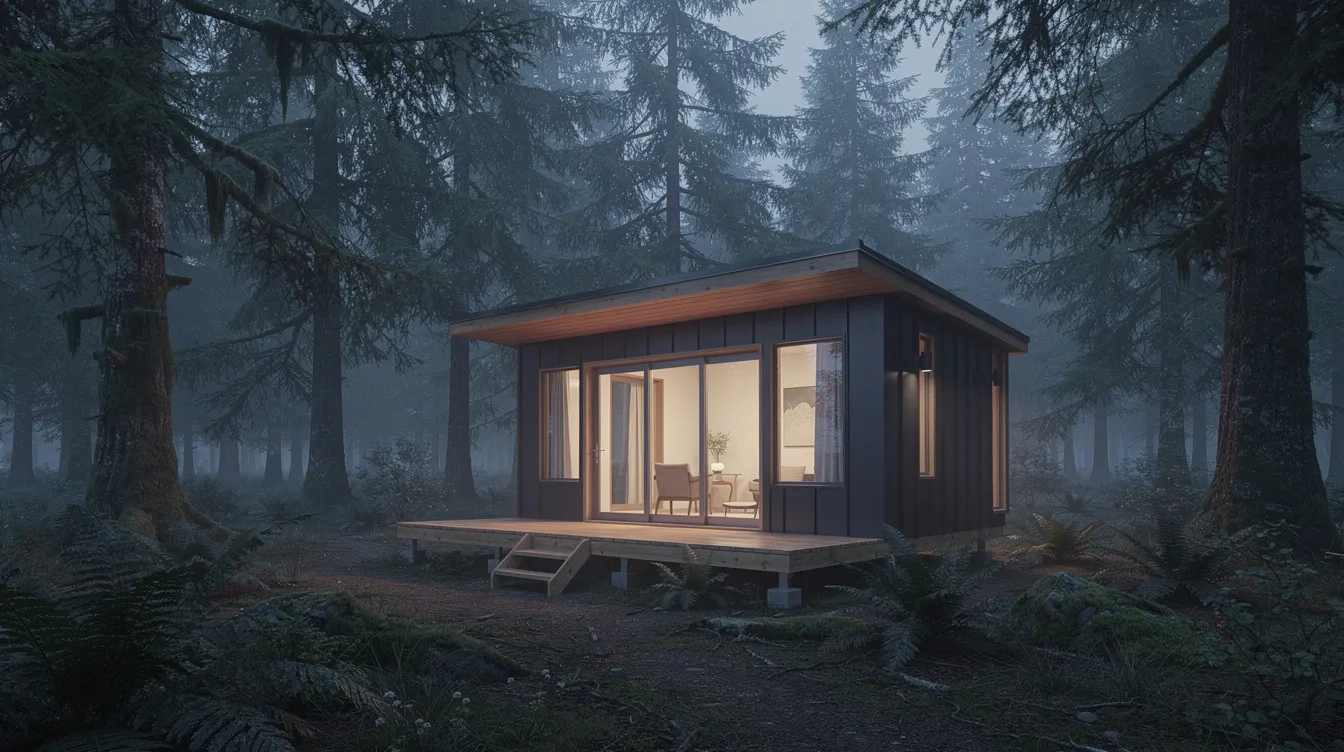
Yes, tiny houses are legal in Washington—but with conditions.
Washington State officially legalizes tiny houses as permanent residences, with regulations varying based on foundation type and local jurisdiction. The state’s legislature supports tiny homes, allowing them in mobile home communities and setting construction standards for units under 400 square feet.
Here’s what happened:
Washington State has adopted Appendix Q of the 2018 International Residential Code, effective July 1, 2021, which sets specific building standards for tiny houses built on permanent foundations, including a maximum size of 400 square feet. The State Building Code Council later delayed the full 2021 Washington codes to March 15, 2024 to give local governments transition time.
But here’s the catch: counties and cities apply these rules differently.
Jurisdiction | Tiny House Treatment | Key Notes |
|---|---|---|
King County | Allowed as dwellings on foundations | ADUs widely permitted; THOWs treated as RVs |
Clark County | Allowed as ADUs in urban zones | Rural zones more restrictive |
Grays Harbor County | 400 sq ft tiny homes recognized | Requires L&I approval for factory-built |
Pacific County | Effectively prohibited | 410 sq ft minimum dwelling size |
Some treat tiny homes as single-family dwellings. Others only allow them as accessory dwelling units. Some require they be placed in RV parks or tiny house communities. |
Pacific County is a notable outlier. Zoning regulations there require a minimum dwelling size of 410 square feet, which blocks most standard “code tiny homes.”
Key Rules That Decide If You Can Put a Tiny House on Your Lot
Three main gates determine whether your tiny house project can proceed:
Building Codes
Tiny houses in Washington must comply with the Washington State Building Code, which includes adherence to the International Residential Code and specific amendments such as Appendix Q, addressing aspects like ceiling heights and mechanical systems.
Key building code requirements:
- Minimum 70 square feet for habitable rooms
- No room dimension less than 7 feet
- Specific ceiling heights (reduced to 6’8” in lofts)
- Emergency egress from sleeping areas
- Guardrails at least 36 inches high
Local Zoning
Local zoning regulations decide where a tiny house can go. You might be allowed to use one as:
- A primary residence in rural zones
- An accessory dwelling in single-family zones
- A dwelling in a mobile home park or tiny house community
Zoning laws in Washington state vary significantly by county and city, affecting the placement and use of tiny houses. Always check your parcel’s zoning designation.
Utilities and Health Rules
Most counties require:
- Approved water supply (wells must yield minimum 5 gpm)
- Wastewater disposal via sewer connection or permitted septic
- Safe electrical service meeting the National Electrical Code
Composting toilets may be approved case-by-case if NSF-41 certified. Off-grid systems must still be permitted.
Important: HOA rules can override everything. Even when local authorities allow tiny homes, CC&Rs in subdivisions may prohibit them or set minimum sizes exceeding 1,000 square feet.
Tiny House Types Washington Recognizes
How your tiny house is built and classified changes everything about where you can place it.
Foundation-Built Tiny Houses
A foundation based tiny home is treated as a standard dwelling under the IRC and Appendix Q. It sits on a permanent foundation—slab, crawlspace, or engineered piers, and choosing the best foundation for a tiny house depends on your soil, budget, and mobility needs.
Foundation-built tiny houses must meet local building codes and zoning regulations, similar to traditional homes. This means they can serve as a main house or accessory dwelling in many zones.
Benefits:
- Easier to legalize as full-time dwelling
- Treated as real property for financing
- Standard home insurance available
Tiny Houses on Wheels (THOWs)
Tiny houses on wheels are regulated as recreational vehicles or park models in Washington. This limits them significantly on private land, but many people still explore modern tiny house designs that can be adapted to either foundations or wheels.
Many counties restrict the use of THOWs as permanent residences on private property to temporary occupancy, typically ranging from 30 to 60 days.
Where THOWs can typically go:
- RV parks
- Tiny house communities
- Mobile home communities (with proper hookups)
But there’s good news. Under SB 5383, cities and counties cannot ban certified THOWs from being used as primary residences within manufactured or mobile home communities, provided they meet occupancy standards.
Park Model RVs vs Tiny Homes
Park model recreational vehicles under 400 square feet follow ANSI A119.5 and Washington WAC 296-150P. They’re designed for recreational or seasonal use.
Park model RV homes are designed for temporary living and are built on a single chassis with wheels, while tiny houses on permanent foundations are intended for long-term living and must comply with residential building codes.
Factory-Assembled Structures
If your tiny home is built off site, the Washington State Department of Labor & Industries handles plan approval and insignia. Off-site built tiny homes must have Washington State L&I certification to be considered legal dwellings.
This affects your options but doesn’t override local zoning.
How Local Zoning Affects Your Tiny House (With County Examples)
Every county and city applies its own local zoning regulations. The same tiny house could be approved on one parcel and denied on another just miles away.
Before you buy or build, look up:
- Your parcel’s zoning designation
- Whether tiny houses are allowed as a primary dwelling
- Whether they’re permitted as an accessory dwelling unit
King County
King County requires tiny homes to be constructed on permanent foundations and comply with specific building codes for health, safety, and energy efficiency.
- Tiny homes allowed as dwellings if they meet 70 sq ft minimum living space with 7-foot ceilings
- ADUs permitted with size, parking, and placement limits
- Tiny houses on wheels treated as RVs with time limits on private land
- Setbacks typically 5 feet side/rear
Clark County
Clark County commonly allows tiny homes as accessory dwelling units in most urban zones.
- Detached ADUs up to 800 square feet with 4-foot setbacks in zones like UR-10
- Attached vs detached ADUs have different rules
- Rural zones like R-5 often restrict to attached ADUs or temporary dwellings
- Flood plain concerns along Columbia River affect some areas
Grays Harbor County
Grays Harbor County recognizes tiny homes up to 400 square feet under the Washington State Building Code.
The approval process includes:
- Plan submittal and review
- L&I approval for factory-built units
- Manufactured Home Installation Permit
- Fire Safety Permit
- 5-foot setback requirements
Permitting costs for tiny homes in Washington can vary, with some inspections costing around $1,500 if approved on the first attempt.
Columbia County
Columbia County embraces tiny homes as an affordable housing tool but requires compliance with Washington State Building Code and Appendix AQ Tiny House on permanent foundations.
Tiny houses may be placed in:
- RV parks
- Campgrounds
- Tiny house communities
- Private property with proper permits
Tiny Houses as Accessory Dwelling Units (ADUs) in Washington
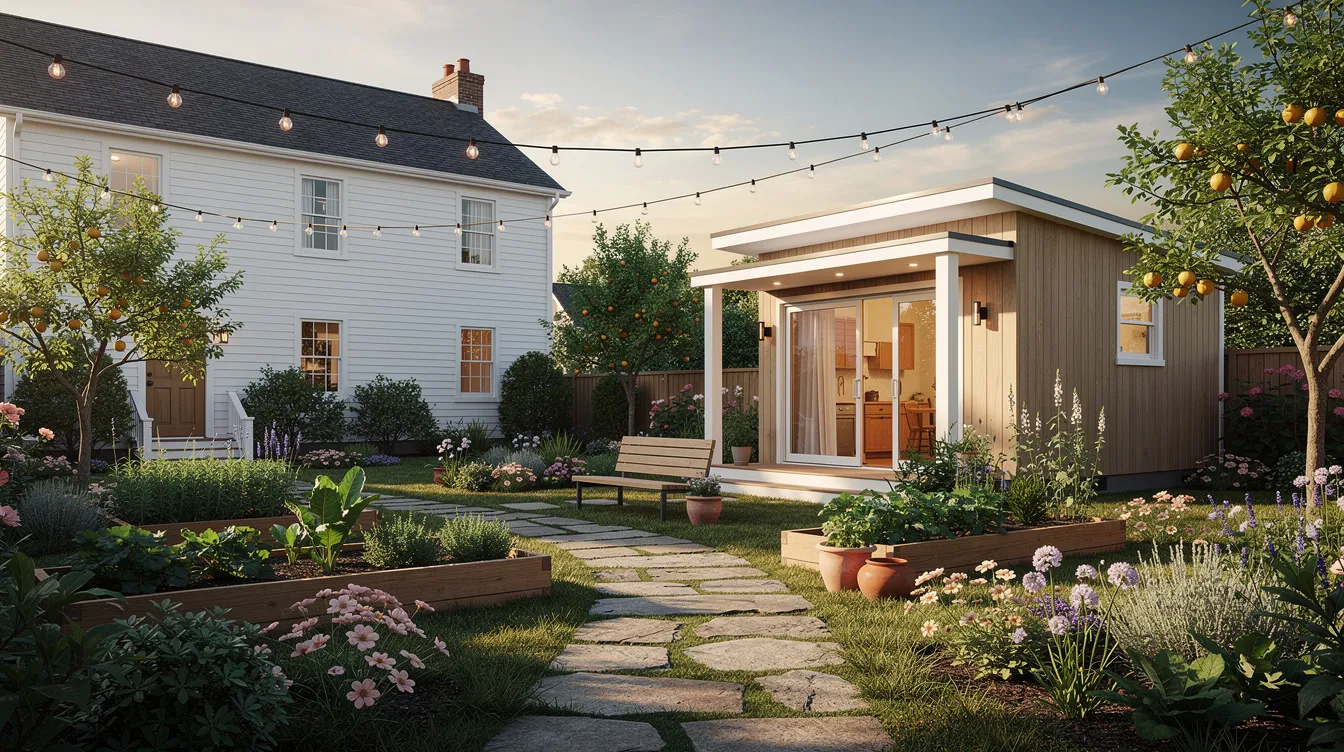
Using a tiny home as an accessory dwelling unit is the most common legal path on developed residential lots.
An accessory dwelling is a smaller, self-contained living unit on the same lot as a main house. Think backyard cottage, in-law suite, or secondary suite.
Recent legislation changed the game. House Bill 1337 pushed cities and urban growth areas to:
- Allow at least two ADUs per lot (one attached, one detached)
- Eliminate off-street parking requirements near transit
- Remove owner-occupancy requirements
Seattle alone reported over 1,200 ADU permits issued from 2020-2025, many fitting tiny home profiles, reflecting the broader growth of small homes in Washington State.
Typical ADU rules include:
- Maximum size caps (often 800-1,200 square feet)
- Must be on same lot as primary dwelling
- Height, setback, and design limits
- Utilities must connect to approved systems
Many jurisdictions allow tiny houses as accessory dwelling units, particularly in residential zones. Zoning for tiny houses often allows them as ADUs but primarily depends on local regulations.
Check your local code for terms like “accessory dwelling unit,” “accessory dwelling,” “mother-in-law apartment,” or “secondary suite”—the concept is the same even if terminology differs.
Washington Building Codes for Tiny Houses (IRC & Appendix Q)
Building codes answer “how” you build. Zoning answers “where” you build.
Tiny houses in Washington must comply with the Washington State Building Code, which includes adherence to the International Residential Code and specific amendments such as Appendix Q, which outlines standards for tiny homes of 400 square feet or less, so selecting tiny house plans that fit your life should account for these requirements.
Core Appendix Q Requirements
Requirement | Standard |
|---|---|
Maximum size | 400 square feet (excluding lofts) |
Minimum habitable room | 70 square feet |
Minimum room dimension | 7 feet |
Ceiling height (main) | 7 feet |
Ceiling height (lofts) | 6 feet 8 inches |
Loft access | Alternating tread stairs or ladders |
Guardrail height | 36 inches minimum |
Baluster spacing | 4 inches maximum |
Tiny houses must include permanent provisions for living, sleeping, eating, cooking, and sanitation, and must be built in accordance with the state building code to qualify as permanent residences in Washington; lofts often require safe access solutions like the best ladder for a tiny house loft. |
Plumbing and Electrical
Systems must comply with:
- Washington State Plumbing Code
- National Electrical Code as adopted
Electrical work often requires a registered general contractor depending on scope. Some homeowner exemptions exist for work on your own property, but check with your local building official.
The State Building Code Council delayed the effective date of the 2021 Washington codes to March 15, 2024. Verify which code cycle your jurisdiction currently enforces.
Permanent Foundation vs. Tiny House on Wheels on Your Property
A tiny house on a permanent foundation is usually much easier to legalize for full-time dwelling than a tiny house on wheels, which is an important consideration when you plan how to build a tiny house from the ground up.
Foundation-Built
- Treated as single-family dwellings or ADUs
- Must sit on approved foundation (slab, crawlspace, or engineered piers)
- Designed for local soil, seismic, and snow conditions
- Can be treated as real property
- Easier financing through traditional mortgages
- Standard homeowner’s insurance ($800-1,500/year)
Tiny houses built on permanent foundations must comply with the Washington State Building Code and local zoning regulations, which may include obtaining a building permit and passing inspections.
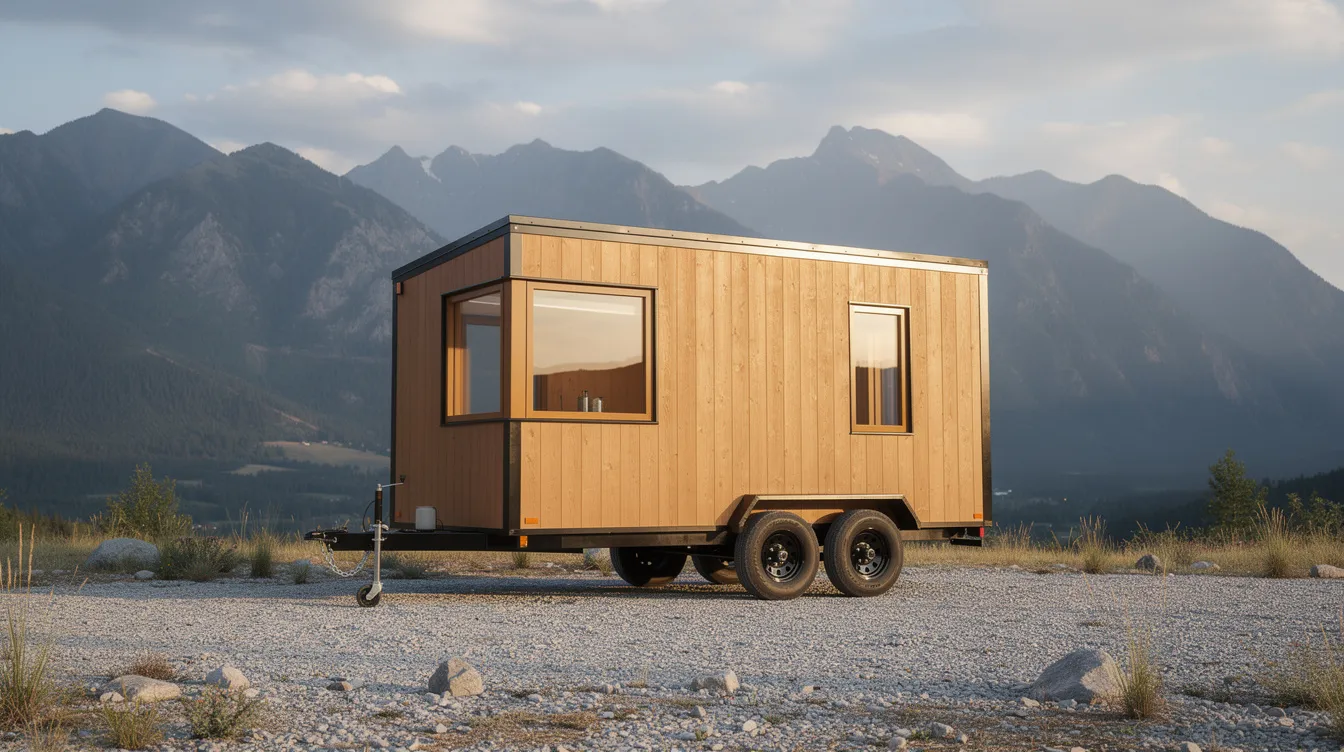
Tiny House on Wheels
- Regulated as RVs or park model in most counties
- Limited to RV parks, campgrounds, or mobile home park locations
- Private lot stays often limited to 30-180 days per year
- Financed as RV loans (higher rates, 7-10%)
- Insured as personal property
Pierce County allows tiny houses under 400 square feet on foundations but treats THOWs as temporary.
However, SB 5383 prohibits cities from banning THOWs as primary residences within manufactured or mobile home communities, if they have proper utility hookups. This creates a legal path for full-time THOW living in approved communities.
Financial Comparison
Factor | Foundation Tiny | THOW |
|---|---|---|
Financing | Traditional mortgage possible | RV loans (7-10% rates) |
Insurance | Home insurance | Personal property/RV |
Property status | Real property | Personal property |
Resale | Tied to land value | Separate from land |
 |
Permits, Inspections, and L&I Insignia
Any legal tiny house on your property will require permits, inspections, or both.
Local Building Permits
Your city or county building department issues permits for:
- Foundation work
- Installation and placement
- Electrical and plumbing connections
To obtain a permit for a tiny house in Washington, you must submit detailed plans for review, which include structural integrity, energy efficiency, and integration with existing infrastructure.
You’ll need:
- Construction plans (engineered/stamped)
- Site plan showing setbacks, parking, utilities
- Permit fees ($1,000-$5,000 typical)
Labor & Industries (L&I) Role
For tiny houses built offsite, the Washington State Department of Labor & Industries oversees the plan approval and inspection process, requiring detailed plans and multiple inspections at various construction stages before issuing a state insignia for compliance.
L&I acts as the local building department for factory-assembled structures and residential modular buildings.
Key L&I steps:
- Download the Tiny House Information Packet (updated 2021)
- Submit Plan Approval & Insignia Request form (F623-039-000)
- Submit Notification to Local Enforcement Agency form (F623-013-000)
- Send applications electronically with 3 stamped PE/architect plan sets
- Wait for review (4-6 weeks typical, up to 12 weeks during peak periods)
- Receive insignia proving code compliance
An inspection request form initiates the on-site verification process.
Licensing Requirements
Electrical and plumbing work often require licensed professionals. A washington state licensed residential contractor may be needed unless homeowner exemptions apply.
Check with your local building official or L&I’s electrical programs for specific requirements.
County Snapshots: Can I Put a Tiny House on My Land Here?
Here’s how rules differ across popular Washington counties:
King County
- Foundation tiny homes allowed when meeting building codes
- Minimum 70 sq ft living space with 7-foot ceilings required
- ADUs widely permitted under recent house bill changes
- THOWs treated as RVs with time limits on private land
- One of the most permissive urban counties
Clark County
- Tiny houses commonly allowed as ADUs in urban zones
- Attached vs detached ADUs have different requirements
- Rural counties and zones often restrict to attached ADUs only
- Time-limited temporary dwellings possible in some areas
- Check flood plain designations near Columbia River
Pierce County
- Pierce County allows tiny houses under 400 square feet on foundations
- THOWs treated as temporary, not permanent residences
- ADU rules apply in most residential zones
- Contact building department for parcel-specific guidance
Grays Harbor County
- Tiny homes up to 400 sq ft accepted under state code
- L&I inspections required for off-site builds
- Inspection fees around $1,500 for first-pass approval
- Small non-habitable accessory buildings have simpler thresholds
- Setbacks of 5 feet required
Columbia County
- Tiny homes supported as affordable housing option
- Must comply with state building codes and Appendix AQ Tiny House
- Allowed in tiny home communities, RV parks, private property
- Proper permits and inspection sign-offs required
Other Notable Counties
- Chelan County: Allows tiny houses as permanent dwellings, regulated by the Washington State Residential Code (Appendix Q)
- Cowlitz County: Requires adherence to International Building Code and Appendix Q, with permits needed for foundation and installation
- Benton County: Tiny house communities allowed in areas zoned R-3M Residential Manufactured Home Park District
- San Juan County: Check island-specific regulations
- Pacific County: Not tiny house approved—410 sq ft minimum effectively prohibits standard tiny homes
Cost Expectations
The cost of building or purchasing a tiny home in Washington typically ranges from $30,000 to over $100,000, depending on various factors such as features, materials, and land costs, especially if you focus on affordable tiny house designs.
In Washington, the total expenses for a tiny home can include additional costs for permits and foundation work, which can significantly affect the overall budget. Foundation work alone can run $5,000-$15,000, and septic installation $10,000-$25,000.
Practical Steps to Find Out If YOU Can Place a Tiny House
Follow this checklist to determine what’s possible on your specific parcel.
Step 1: Identify Your Jurisdiction
Determine whether you’re in:
- An incorporated city (city rules apply)
- Unincorporated county area (county rules apply)
This matters because different local governments enforce different standards. Check your property tax statement or use your county’s GIS mapping system.
Step 2: Look Up Zoning and ADU Rules
Find your parcel’s zone on your city/county GIS map (King County has a Parcel Viewer). Then read the zoning code section for:
- Permitted uses
- Single-family dwelling requirements
- Accessory dwelling unit rules
- Any “tiny house” definitions
Local zoning for accessory dwelling units varies significantly by city and county.
Step 3: Confirm Building Code Requirements
Contact the local building department or check their website to confirm:
- Which IRC version they enforce
- Whether Appendix Q is adopted
- Foundation requirements for tiny homes
- Local building department criteria for plan review
In Washington, placing a tiny house on your property requires compliance with local zoning, health, and building codes.
Step 4: Ask About Tiny Houses on Wheels
If you want a movable tiny home, specifically ask:
- How are THOWs classified? (RV, park model, or dwelling)
- Is full-time occupancy allowed on private property?
- What are the time limits for temporary placement?
- Can wheels be removed to reclassify as permanent?
Step 5: Talk to Utilities and Health Department
Verify options for:
- Water connection or well permit
- Sewer connection or septic approval
- Power service and meter installation
- Any special rules for composting toilets or graywater systems
Many rural counties require septic systems designed for 300 gallons/day capacity for tiny homes.

FAQ
These questions address common concerns not fully covered above.
Can I live in a tiny house on wheels full-time on my Washington property?
In most Washington jurisdictions, tiny houses on wheels are regulated as RVs or park models, not dwellings. This means they typically aren’t allowed as permanent residences on standard residential lots.
Some cities and counties allow long-term stays in mobile home park locations or specific tiny house communities. Private-lot occupancy is often limited to 30-180 days unless you remove wheels and convert to a permanent foundation.
Confirm with your local planning department whether a movable tiny house can legally serve as a primary residence on your parcel. Remember that under SB 5383, manufactured or mobile home communities cannot ban properly certified THOWs with utility hookups.
Is there a minimum size for a tiny house in Washington?
Washington defines tiny houses as 400 square feet or less for Appendix Q purposes, but the practical minimum comes from the IRC’s 70 square feet minimum habitable room size and ceiling height requirements.
Some counties impose larger minimums. Pacific County requires 410 square feet minimum, effectively excluding standard tiny homes. Always check both state requirements and local building codes for floor-area standards in your zoning ordinance.
Tiny manufactured home standards may also apply depending on construction type.
Do I always need permits to put a tiny house on my land?
Yes. If the tiny house will be used as a dwelling—whether primary home or ADU—local building permits and inspections are almost always required. You’ll also need electrical, plumbing, and septic/sewer permits.
Very small non-habitable structures (storage sheds under certain thresholds) may not need permits, but they cannot be legally occupied.
Skipping permits can result in fines (up to $500/day in some jurisdictions), denial of utility connections, or orders to remove the structure. Always verify requirements with your local building official before starting construction.
How much does it cost to permit and set up a tiny house in Washington?
Expect building and land-use permits, utility connection fees, and inspections to total several thousand dollars. Urban counties like King County typically charge more than rural counties.
Rough cost breakdown:
- Building permits: $1,000-$5,000
- L&I plan review and insignia (off-site builds): $1,500+
- Foundation work: $5,000-$15,000
- Septic installation: $10,000-$25,000
- Utility connections: Varies widely
Ask your jurisdiction for a fee schedule early in planning. The permitting process timeline can extend 4-12 weeks depending on backlog.
Can I use a composting toilet or off-grid systems in my tiny house?
Some Washington counties approve composting toilets and graywater systems on a case-by-case basis. They must meet state and local health department standards—typically NSF-41 certification for composting toilets.
Being “off-grid” doesn’t exempt your tiny house from sanitary or building code requirements. Solar systems must meet NEC Article 690, and all designs require review and permits like any other dwelling.
If you’re interested in off-grid setups, speak with both your building department and local health district before finalizing plans. Encourage single units that integrate approved alternative systems from the start rather than retrofitting later.
Ready to start your tiny house journey?
Your first step is always the same: contact your local building department. They have the final say on what’s possible on your specific parcel. Grab your property address, look up your zoning, and make that call. Washington has opened doors for tiny homeowners—now it’s time to walk through yours.