
Key Takeaways
- An earthship tiny home is an earth-bermed, off-grid structure of 25–50 m² that differs from conventional tiny houses through permanent foundations and autonomous systems
- Earthship construction integrates thermal mass, passive solar design, and rainwater catchment so a small home can operate with minimal external utilities
- Even a compact earthship tiny house can support interior food production, treat its own waste water, and rely on solar energy produced on-site
- Current 2024–2026 cost ranges run USD $40,000–$120,000 depending on location, finish level, and DIY involvement
- Getting started requires understanding design considerations, permits, and learning resources like courses and visitor centers
Introduction: What Is an Earthship Tiny House?
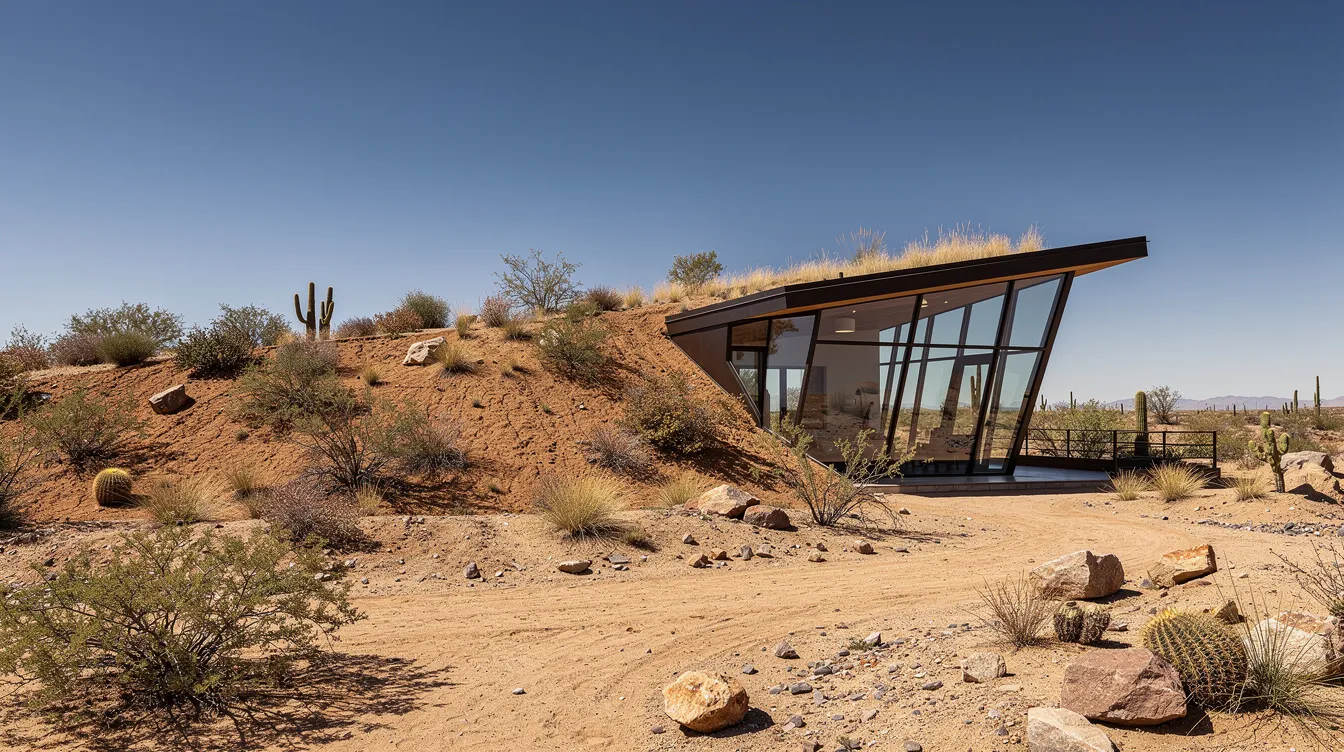
An earthship tiny home merges radical sustainability with compact living. These structures typically measure 20–50 m² and combine earthship architecture principles with tiny house minimalism. Unlike standard tiny houses on wheels, earthship structures are permanent, earth-bermed buildings with integrated autonomous systems.
The concept originated with Michael Reynolds in Taos, New Mexico during the late 1960s. Reynolds pioneered Earthship Biotecture, developing homes that function independently from municipal utilities. By 2024–2025, these designs have been adapted into tiny formats worldwide, from Australia to Canada.
This article walks you through design choices, systems, and trade-offs for creating your own earthship tiny house design. Whether you’re seeking sustainable living or simply want to save money on utilities, understanding these principles is essential.
- Core Design Principles of an Earthship Tiny Home
- Site Selection, Orientation, and Climate Adaptation
- Floorplan & Space Planning for an Earthship Tiny House
- Earthship Construction Basics for Tiny Homes
- Materials: Turning Waste Into Structure
- Passive Solar, Thermal Mass & Natural Ventilation
- Off-Grid Power: Energy Produced On-Site
- Water Catchment, Storage & Use in a Tiny Earthship
- Greywater, Blackwater & Waste Water Treatment
- Interior Food Production in a Tiny Footprint
- Comfort, Health & Everyday Living in an Earthship Tiny Home
- Budget, Costs & Timeline (2024–2026)
- DIY vs. Professional Help: Designing Your Own Earthship
- Visiting and Learning: Earthship Communities & Visitor Centers
- Step-by-Step Roadmap to Your Own Earthship Tiny House
- FAQ
Core Design Principles of an Earthship Tiny Home
Earthship homes address six human needs through integrated design. Earthships incorporate passive solar design principles, which include using large windows and thermal mass to maintain comfortable indoor temperatures without relying on external energy sources. Here’s how each scales for a tiny house:
- Passive solar heating and cooling: South-facing glass windows capture winter sun while roof overhangs block summer heat
- Thermal mass: Compacted earth in tire walls stores heat by day, releasing it at night, maintaining 18–24°C in moderate climates
- Off-grid power: Solar panels and batteries generate and store electricity on-site
- Water catchment: Roof systems collect rainwater for all household needs
- On-site waste water treatment: Greywater feeds indoor plants; blackwater is treated separately
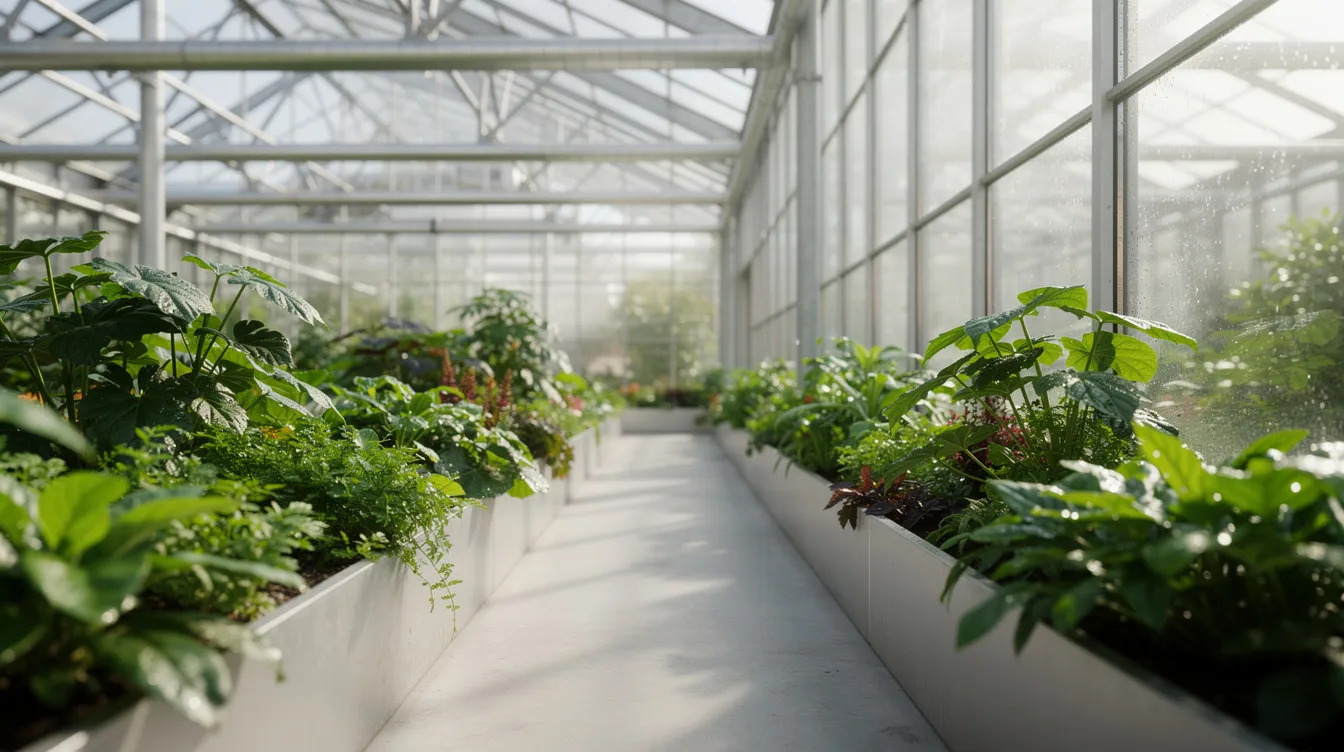
- Interior food production: Greenhouse corridors grow food year-round
Even at 30–40 m², tiny earthship homes maintain the characteristic U-shaped layout with a fully glazed, sun-facing greenhouse corridor. The system can be fully off grid or semi-autonomous with grid-tied solar and backup municipal water, making it comparable to other Earthship tiny home options for sustainable living.
Site Selection, Orientation, and Climate Adaptation
Choosing the right site makes or breaks your earthship design. The orientation of an earthship is crucial for maximizing solar gain; the structure typically features large south-facing windows to capture sunlight for heating and to support indoor food production.
Key site requirements:
- Solar access: Unshaded south exposure (Northern Hemisphere) or north exposure (Southern Hemisphere)
- Slope: Moderate grade allows earth-berming and proper drainage
- Drainage: Good water run-off prevents moisture issues in walls
- Wind patterns: Understanding prevailing winds helps with ventilation design
Climate adaptations vary:
- Cold regions (Canada, Scandinavia): Deeper berms, thicker insulation, backup wood stoves
- Hot humid areas (Queensland, Florida): Enhanced ventilation, external shading, earth cooling tubes
- High rainfall zones: Robust waterproofing, drainage layers, possibly partial berming
Regarding zoning in 2024–2026, rural areas typically offer easier approvals. Suburban lots of 600–900 m² can work with careful placement. Check local greywater legality and whether “alternative materials” permits apply.
Floorplan & Space Planning for an Earthship Tiny House
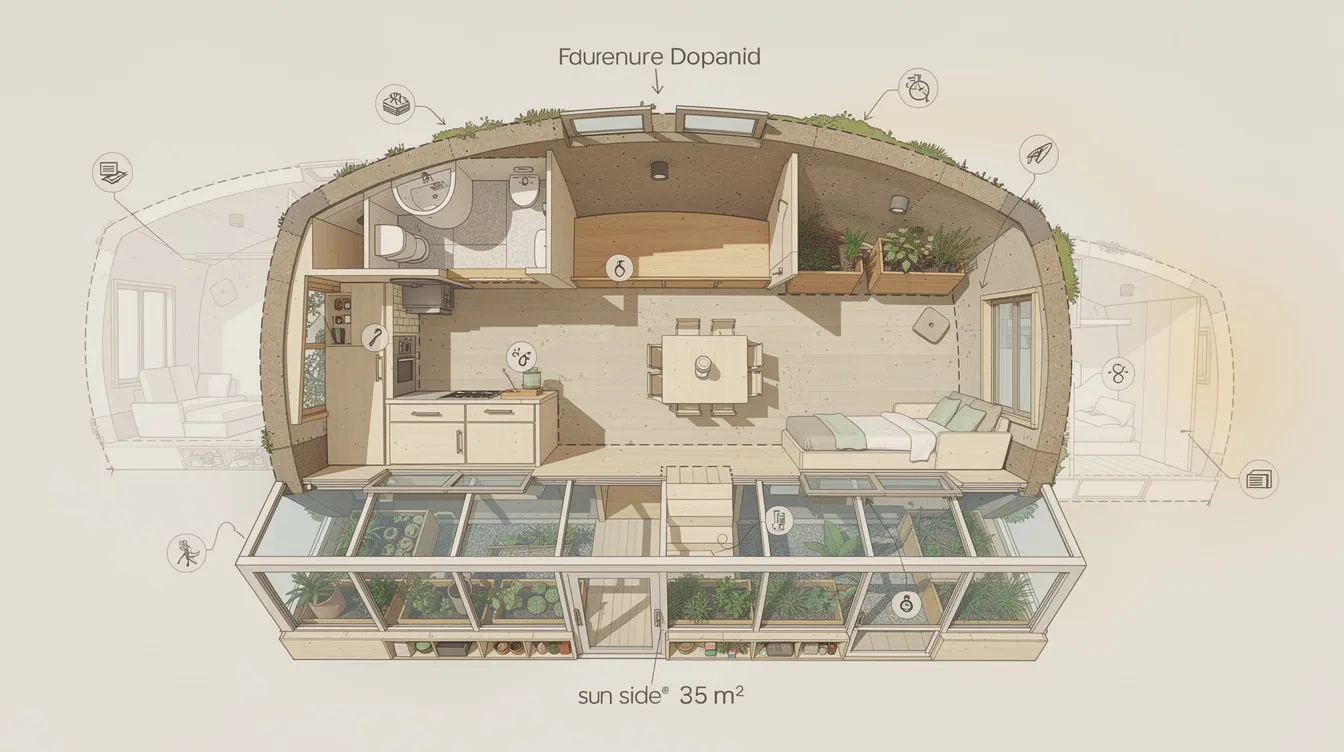
Typical earthship tiny homes range from 25–45 m² (270–480 square feet). Layout patterns include one-bedroom studios, open-plan designs with sleeping lofts, or micro guest suites, and benefit from carefully considered tiny house floor plans that maximize function.
Function zones along the greenhouse corridor:
- Sun side: Planters and main entry with natural light flooding in
- Center: Kitchen and living areas positioned for optimal heat distribution
- Back wall: Thermal mass wall providing temperature stability
- End zones: Bathroom tucked to one side, sleeping at the cooler back
Space-maximizing strategies:
- Built-in benches against thermal walls double as storage
- Under-window planters serve as both growing space and storage
- Convertible bed/sofa systems maximize floor area
- Continuous planter beds along glazing replace bulky furniture
Future expansion remains possible. Modular additions like a second greenhouse bay or extra bedroom wing can be added without compromising thermal performance, similar to how many of the best tiny house designs for modern living plan for flexible growth.
Earthship Construction Basics for Tiny Homes
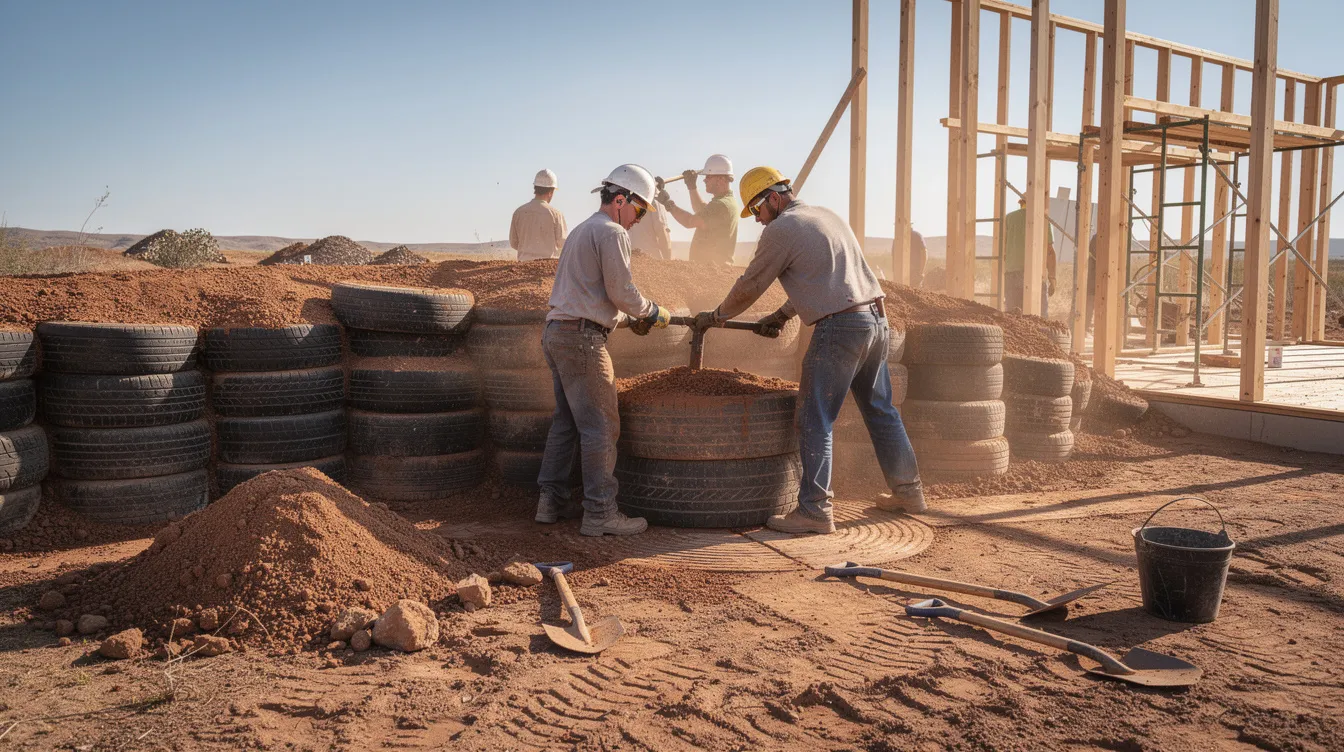
The main load-bearing walls of earthships are typically made from earth-packed tires, which provide thermal mass and insulation, allowing the homes to maintain comfortable temperatures without conventional heating or cooling.
Wall options for tiny earthships:
- Earth-rammed old tires: Classic choice, excellent thermal mass, labor-intensive
- Earthbags: Similar principle, easier for beginners
- Compressed earth block: More uniform, can be manufactured on-site
- Strawbale hybrids: Good insulation, requires careful moisture management
Typical construction sequence for 30–40 m² build:
- Site excavation and grading
- Tire wall construction (pounding dirt into tires)
- Roof framing and structural elements
- Waterproofing membranes and vapor barriers
- Glass windows and greenhouse glazing
- Interior walls and finishes
- System installation (solar, water, wastewater)
Realistic 2024–2026 build times: 3–6 months for intensive DIY projects, 6–9 months with part-time owner-builder involvement, especially if you follow a clear step-by-step guide to building a tiny house.
Materials: Turning Waste Into Structure
Earthships are constructed using a variety of recycled materials, including old tires, glass bottles, and cans, which contribute to their sustainability and unique design. Approximately 50% of an earthship’s construction consists of recycled or upcycled materials, emphasizing the use of natural and reclaimed resources and aligning closely with minimalist tiny houses focused on sustainable living.
Core recycled and reclaimed materials:
- Car tires: Hundreds per structure, filled with compacted earth for thermal mass walls
- Glass bottles and cans: Create non load bearing walls with artistic light-catching mosaics
- Reclaimed timber: Framing, window frames, interior finishes
- Salvaged windows: Reduce glazing costs significantly
Bottle-and-can walls offer creative interior design opportunities. These partitions work well for bathrooms, hallways, and room dividers while letting natural light filter through colored glass.
New materials still required:
- Structural beams meeting code specifications
- Roof waterproofing membrane
- Safety glass (double-glazed, tempered)
- Electrical components (UL-listed)
- Cement for plastering and finishing
Passive Solar, Thermal Mass & Natural Ventilation
Earthships are designed to utilize thermal mass, which helps to naturally regulate the interior temperature by absorbing heat during the day and releasing it at night, reducing the need for conventional heating and cooling systems. The thermal mass of earthship walls, made from earth-packed tires, naturally regulates internal temperature.
How the thermal battery works:
- Orientation and glazing angle control seasonal sun entry
- Thick walls (0.5–1 meter) store heat during sunny hours
- Interior adobe or cob plasters increase heat storage capacity
- Concrete or earth floors contribute additional thermal mass
- Heat releases gradually during cooler nights
Ventilation elements:
- Earth cooling tubes: Underground pipes pre-cool incoming air
- Operable skylights: Create stack-effect ventilation
- High/low vent placement: Hot air exits high, cool air enters low
In temperate climates like New Mexico or southern Europe, properly designed earthship homes maintain 18–24°C without active heating systems. Think of the walls as a thermal battery—charging during sunny periods, discharging when temperatures drop.
Off-Grid Power: Energy Produced On-Site
Earthships are designed to be entirely off-grid, generating their own electricity primarily through solar panels and wind turbines, which are stored in deep-cycle batteries. This allows owners to produce their own electricity independently, much like other self-contained tiny homes for modern off-grid living.
Typical solar setups for tiny earthships:
- Array sizes: 1.5–4 kW depending on usage
- Battery storage: Lithium-ion (longer life) or lead-acid (lower upfront cost)
- Inverter sizing: Matched to peak appliance loads
Earthships utilize a Power Organizing Module (POM) to convert stored DC electricity from batteries into AC electricity for household use, allowing for the operation of standard appliances without relying on external power sources.
Energy budget for 1–2 person tiny home:
- LED lighting throughout
- Super-insulated efficient fridge
- Induction cooktop
- Low-draw water pump systems
- Daily usage: approximately 5–15 kWh
According to research, an earthship home can save the typical U.S. household nearly $6,000 per year on living expenses by eliminating utility costs.
Water Catchment, Storage & Use in a Tiny Earthship
Earthship homes are designed to collect water from rain, snow, and condensation, which is then stored in cisterns for household use. Each inch of rain collected per square foot yields approximately 2/3 gallons of water, which is funneled into a cistern for storage and use.
Calculating your catchment:
- A 40 m² roof in 500 mm annual rainfall: ~16,000 liters annually
- Double that figure in 1,000 mm rainfall climates
- Collection efficiency: approximately 80–90%
Cistern specifications:
- Placement: Behind or beside the berm wall (underground or partially buried)
- Typical storage: 5,000–15,000 liters
- Materials: Plastic, ferrocement, or concrete
The four-use water cascade:
- Potable use: Drinking, cooking, showering from filtered cistern water
- Greywater: Used water flows to botanical treatment cells
- Toilet flushing: Treated greywater reused here
- Outdoor irrigation: Final use before water returns to earth
Filtration stages include leaf screens, first-flush diverters, sediment filters, carbon filters, and optional UV treatment.
Greywater, Blackwater & Waste Water Treatment
Separation matters. Greywater (sinks, shower, laundry) differs significantly from black water (toilets) in treatment requirements and legal classifications.
Greywater treatment in small earthships:
- Indoor botanical cells filter water through gravel, soil, and plants
- Treated greywater is reused for flush toilets
- Living plants create natural purification
Greywater, which is water that has been used in sinks and showers, is treated and reused in earthship homes primarily for flushing toilets.
Outdoor finishing options:
- Lined evapotranspiration beds with wetland plants
- Reed beds for additional treatment
- Conventional septic tanks where code requires
Compact solutions for tiny homes:
- Composting toilets: No water use, produce dry waste, require odor management
- Low-flush toilets with small septic: More conventional, requires treatment system
Check 2020s greywater regulations in your area—some jurisdictions permit reuse while others restrict it entirely.
Interior Food Production in a Tiny Footprint
Earthships are designed to incorporate mini-hydroponic planters that can grow vegetables, herbs, and fruits indoors, allowing for year-round food production. The greenhouse section of an earthship is typically located near the front windows to maximize sunlight exposure for growing food.
What grows well:
- Herbs (basil, mint, oregano)
- Salad greens (lettuce, spinach, arugula)
- Tomatoes and peppers
- Dwarf fruit trees
Layout strategies:
- Continuous planter beds along glazing
- Vertical trellises for climbing crops
- Hanging planters for strawberries and trailing herbs
Earthships utilize greywater from household activities to irrigate indoor gardens, creating a closed-loop system for food production and water reuse. This integration makes the greenhouse a working component of your waste management system and demonstrates how innovative tiny homes can redefine small-space living.
Realistic expectations:
- Enough salad greens for 1–2 people most of the year
- Fresh herbs year-round
- Supplemental vegetables, not complete food self-sufficiency
Comfort, Health & Everyday Living in an Earthship Tiny Home
Beyond average temperatures, real comfort matters during heatwaves or cold snaps. Backup systems may include:
- Small wood stoves for extreme cold
- Mini-split heat pumps (powered by solar)
- Ceiling fans for summer air movement
Indoor air quality benefits:
- Natural materials (earth, adobe, wood) have low off-gassing
- Fresh air exchange via passive ventilation
- Managing humidity from planters requires attention in small spaces
Acoustic advantages:
- Thick earth walls muffle outside noise
- Creates quiet, cave-like sleeping areas
- Significant noise reduction compared to conventional housing
Psychological considerations:
- Storage solutions essential for tiny living
- Earth-sheltering creates sense of security
- Some may experience feelings of confinement initially
- Decluttering becomes a lifestyle practice
Budget, Costs & Timeline (2024–2026)
Building an earthship home can cost anywhere from $10,000 to $1,000,000, with an average cost of about $150 to $225 per square foot. For tiny earthships specifically, expect USD $40,000–$120,000 depending on location, finish level, and DIY involvement.
Cost breakdown by category:
- Excavation and earthworks: 10–15%
- Structure and roofing: 25–30%
- Glazing (windows, greenhouse): 15–20%
- Solar and batteries: 20–25%
- Water and wastewater systems: 10–15%
- Interior finishes: 10–15%
Earthship homes typically cost more upfront than conventional homes, but they can lead to significant savings on monthly utility bills due to their self-sufficient design, similar to many affordable tiny house designs that balance cost and efficiency.
Owner-builder savings:
- DIY labor can reduce costs 20–40%
- Trade-off: Extended build timeline
- Workshops provide hands-on training
Financing challenges:
- Traditional mortgages difficult for unconventional builds
- Construction loans require detailed plans
- Personal loans offer flexibility but higher rates
DIY vs. Professional Help: Designing Your Own Earthship
Realistic DIY components:
- Tire pounding (labor-intensive but learnable)
- Non-structural bottle walls
- Interior finishing (painting, flooring)
- Landscaping and outdoor work
Professional requirements:
- Structural engineering for roofs and retaining walls
- Electrical system design and installation
- Plumbing system design
- Waterproof membrane installation
- Permit documentation
Approach options:
Approach | Pros | Cons |
|---|---|---|
Fully DIY | Maximum savings, deep learning | Longest timeline, highest risk |
Hybrid | Balance of savings and expertise | Coordination required |
Turnkey | Fastest, least stress | Highest cost |
Workshops and build camps (available through 2023–2026) let owner-builders gain hands-on experience before starting their own home, while some choose to collaborate with top micro house builders offering modern, customizable units or explore alternatives like shipping container tiny house designs for modern living. |
Visiting and Learning: Earthship Communities & Visitor Centers
Visit existing earthship homes before building your own:
- Taos, New Mexico: Original earthship community and visitor center
- Nightly rentals let you experience living in one
- Guided tours explain thermal mass, water systems, and food production
- Self-guided exhibits provide hands-on learning
Online learning options (mid-2020s):
- Virtual courses and webinars
- Design consultations with earthship experts
- The Earthship Academy offers comprehensive training
When visiting, document temperatures, light levels, condensation patterns, and space use. This data informs your own earthship tiny house design choices.
Step-by-Step Roadmap to Your Own Earthship Tiny House
- Define goals: Clarify motivations, family size, comfort expectations, budget
- Research codes: Contact local building department, understand permit requirements
- Choose site: Evaluate solar access, slope, drainage, soil conditions
- Sketch floorplan: Start with proven tiny earthship plans, adapt to your needs
- Choose construction system: Tires, earthbags, or hybrid based on skills and materials
- Engineer review: Engage professional for structural verification and permits
- Submit permits: Allow 2–12 months depending on jurisdiction
- Build: Execute construction with ongoing inspections
- Commission systems: Test solar, water, and wastewater before occupancy
Pro tip: Build a small prototype first—an earthship garden shed lets you practice techniques before the main project.
FAQ
Is an earthship tiny house cheaper than a regular tiny house?
Construction costs per square foot can be similar or slightly higher than standard tiny houses because of custom systems. However, recycled materials reduce some costs while solar, batteries, and water systems increase upfront investment. Long-term utility savings are substantial—potentially $6,000 annually. Total costs often end up comparable to well-equipped off-grid cabins of similar size.
Can I build an earthship tiny home in a cold or very wet climate?
Yes, but adaptations are essential. Cold regions need extra insulation, careful drainage, and supplemental heating for sub-zero periods. High rainfall areas require robust waterproofing, drainage layers, and possibly steeper roofs or partial berming instead of full earth-sheltering. Look for local examples and work with professionals experienced in your climate zone.
Do earthship tiny houses have to be completely off grid?
No. Many owners choose grid-tied solar, backup municipal water, or conventional septic while still using thermal mass and passive solar design. This “hybrid autonomy” approach designs for self-sufficiency but retains grid connections for resilience and easier permitting. Tailor your autonomy level to budget, risk tolerance, and local regulations.
How long does it take to learn the skills needed to build one?
A focused owner-builder can acquire basic earthship construction skills in a few months through workshops, books, and hands-on practice. Specialized systems like electrical, plumbing, and structural engineering still typically require licensed professionals. Start education 6–12 months before breaking ground to allow time for design iterations and permit preparation.
Will an earthship tiny home hold its resale value?
Resale markets for alternative homes are smaller and more location-dependent than conventional houses. Well-designed, permitted earthship homes in desirable areas have sold successfully, though buyers are often niche and informed. Document all permits, engineering details, and system specifications to reassure future buyers and appraisers.