If you’re seeking a tiny house on wheels that you can legally park in campgrounds, insure without headaches, and finance through traditional RV lenders, RVIA certification is the credential you’ll encounter most often. This guide breaks down exactly what it is, what it costs, and whether it’s the right path for your project.
Key Takeaways
RVIA certification is a voluntary safety and quality standard for tiny homes on wheels, governed by NFPA 1192 and ANSI A119.5 codes. It classifies your unit as a recreational vehicle rather than a permanent dwelling, which has major implications for zoning, taxes, and where you can legally park. RVIA certification ensures compliance with safety and construction standards covering electrical systems, plumbing, fire safety, and structural integrity.
Individual DIY builders generally cannot get RVIA certified. The program operates exclusively through manufacturers who maintain documented quality control, submit to unannounced inspections, and build to over 500 safety codes. To obtain an official RVIA seal, you must buy from or partner with an RVIA certified manufacturer.
The concrete benefits include easier access to RV parks and campgrounds nationwide, better odds of securing insurance and financing, simplified registration and titling, and stronger resale value. RVIA certified homes typically have better resale value because buyers trust documented compliance. Major insurers prefer RVIA certified models over uncertified homes, ensuring better coverage options.
- RVIA certification costs range from $995 to $2,995 at the technician training level (RVTI programs), while manufacturer membership dues start at $2,040/year and scale with revenue
- Alternatives like NOAH certification and IRC Appendix Q serve readers whose priority is permanent residential use rather than mobility
What RVIA Certification Means for a Tiny Home
RVIA certification is a voluntary industry program run by the Recreation Vehicle Industry Association. Its purpose is to verify that tiny homes on wheels and park model RVs meet national safety standards before they reach buyers. A tiny home carrying the RVIA seal is legally treated as an RV, not a permanent dwelling. That distinction shapes everything from property taxes and zoning regulations to where you can park or live full-time.
RVIA certification requires adherence to NFPA 1192 construction standards for recreational vehicles and RVIA certification follows ANSI 119.5 standards for tiny homes classified as park model RVs. Together, these rigorous federal codes cover electrical systems, plumbing, heating, fire safety, and frame integrity. Every component-from propane fittings to smoke alarms-must be listed by a recognized testing agency like UL or CSA.
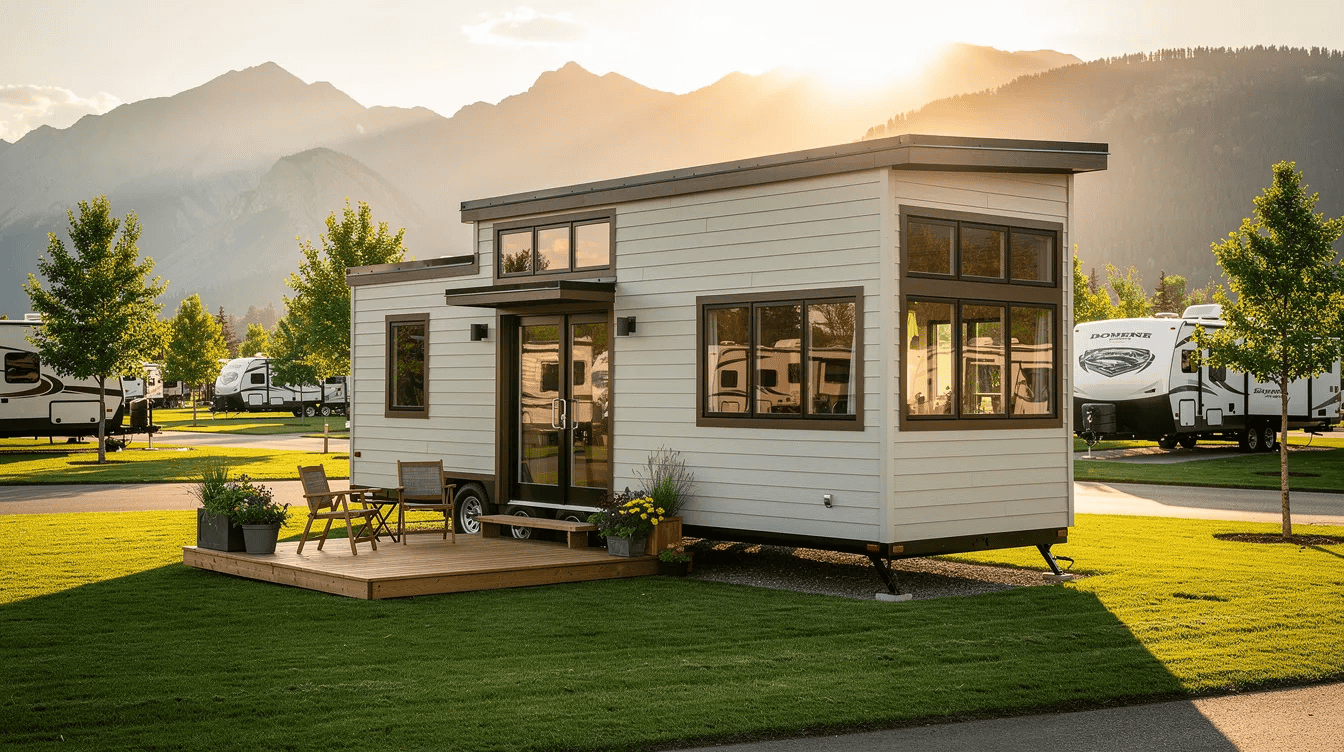
Here’s a concrete example: a 2026 RVIA certified 400 sq ft park model tiny home built on a chassis can typically enter RV resorts in states like Florida, Arizona, and Texas, where many RV parks refuse uncertified DIY tiny homes. However, RVIA certified tiny homes are designed for temporary or recreational occupancy. If you’re seeking full-time residency, that legal classification can create conflicts with local regulations-something we’ll address below.
RVIA Certification for Manufacturers and Builders
RVIA works primarily with companies, not individual owners. If you want to build tiny homes that carry the RVIA seal, you need to operate as a manufacturer member. The certification process in 2026 follows these steps:
- Apply for manufacturer membership – submit build plans, facility details, and financial information
- Pass an initial plant inspection – independent inspectors conduct unannounced inspections of manufacturing facilities to ensure compliance
- Correct any deviations – issues are classified as Class A, B, or C, with serious or repeated violations risking probation
- Receive authorization to affix the RVIA seal to each individually compliant unit
Ongoing obligations include maintaining a documented quality control program, tracking serial numbers and VINs, and allowing audits roughly every 90 days. Certified builders must follow over 500 safety codes for tiny houses, and technicians often train through the RV Technical Institute. RVIA conducts regular inspections to ensure compliance across all production facilities.
Consider a small Pacific Northwest builder specializing in 26-foot tiny homes on wheels. To sell across the country-particularly into RV parks in Arizona and Florida-they apply for park model RV status under ANSI A119.5, retrofit their production line, and submit to multiple RVIA audits per year. The result: units that carry recognized credibility nationwide.
RVIA Certification for Owners: Benefits and Trade-Offs
From Explore Tiny House’s perspective, the practical question is simple: should you buy an RVIA certified tiny home? Here’s what the certification delivers for owners:
- RV park access – RVIA certification allows access to RV parks and campgrounds that commonly refuse uncertified builds
- Utility hookups – RVIA certification simplifies utility hookups for tiny homes, making electrical, propane, and sanitation connections more predictable
- Insurance – insurance companies prefer RVIA certified homes for coverage, and RVIA certification is essential for insurance and financing options
- Financing – RVIA certified tiny houses are treated like traditional travel trailers by banks, easing loan processes through RV lenders and credit unions
- Registration – RVIA certification simplifies registration, titling, and legal towing of tiny houses across state lines
- Resale – certified tiny homes have better resale value than non-certified homes, giving buyers confidence in safety and compliance
The trade-offs are real. RVIA certification does not override local zoning laws for tiny houses, and some municipalities restrict full-time residency even in certified units. Custom or unconventional designs may be difficult to certify. That said, cities that restrict permanent tiny homes often allow RVIA certified tiny houses under RV regulations, which can serve as an easy way around certain zoning hurdles.
Understanding RVIA Seals, Park Model RVs, and “Certified Tiny” Units
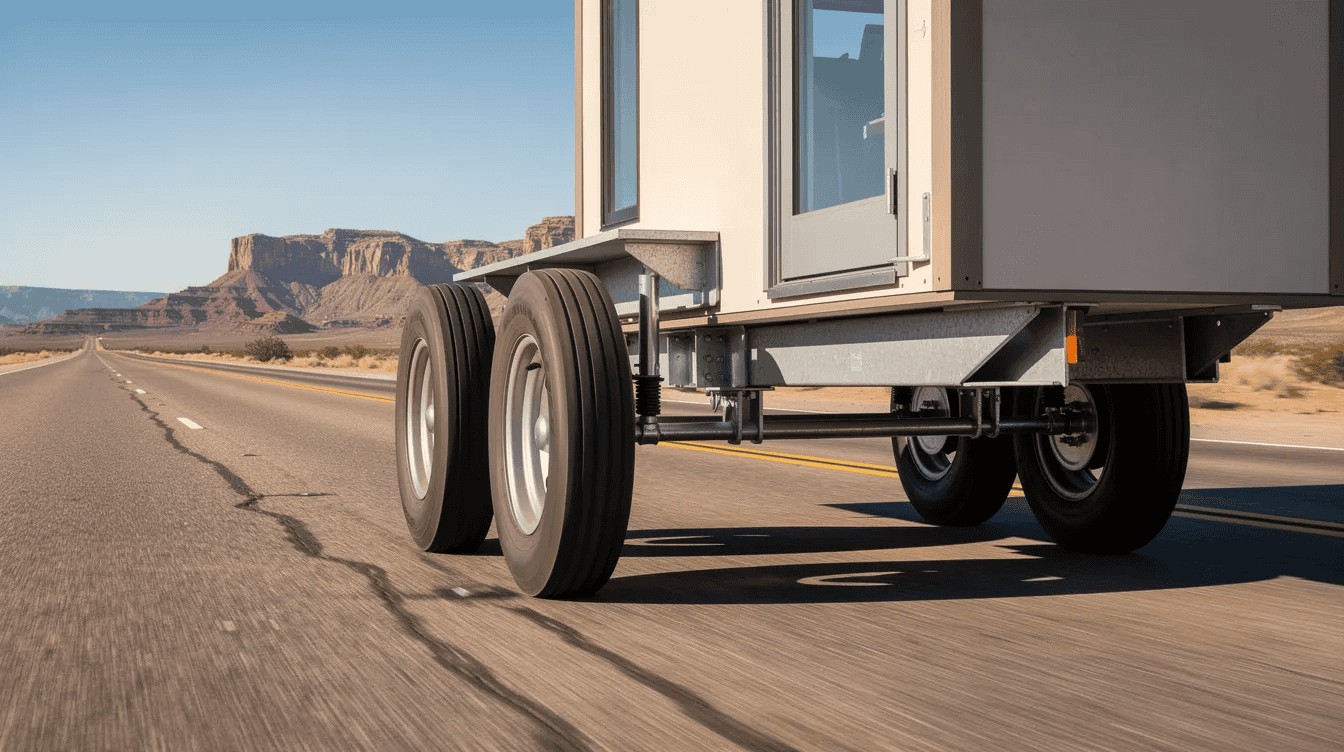
The world of small RVs includes travel trailers, fifth-wheels, park model RVs, and tiny homes on wheels. Many RVIA tiny homes fall into the park model category-units built on a single chassis with wheels, transportable, and capped at 400 sq ft in setup mode under ANSI A119.5.
The RVIA seal is typically a silver or blue decal placed near the entry door. It identifies the manufacturer, serial number, and confirms adherence to RV standards. In 2026, the term “certified tiny” is used informally by dealers and builders to describe tiny homes carrying recognized credentials-whether RVIA, NOAH, or state modular approval.
If you’re standing on a dealer lot, here’s your checklist:
- Locate the RVIA seal near the entry door
- Ask for the manufacturer’s name and verify it against the RVIA membership directory
- Confirm the paperwork categorizes the unit as a park model RV or travel trailer
- Request the certificate number or build sheet for your records
RVIA Certification Cost and the Certification Process in 2026
There is no single RVIA certification cost. Fees differ for manufacturers, dealers, and technicians, and buyers don’t pay RVIA directly. Here’s how costs break down:
Cost Category | 2026 Range |
|---|---|
RVTI Level 1 training | ~$995 |
RVTI Level 2 training | ~$2,995 |
Individual RVTI subscription | ~$663/year |
Company location subscription | ~$1,650/year |
Manufacturer membership dues | From $2,040/year (scales with revenue) |
Manufacturers also invest in engineering reviews, chassis upgrades, listed appliances, and plant modifications to comply with NFPA and ANSI requirements. RVIA certification involves passing inspections and maintaining records throughout the production life of every model.
For buyers: while you don’t write a check to RVIA, these certification costs are baked into the purchase price. This is one reason RVIA certified park model tiny homes cost more than equivalent non-certified DIY builds. Think of it as an assurance premium for quality, safety, and recognition.
Alternatives to RVIA: NOAH Certification, IRC Appendix Q, and Other Paths
RVIA is mobility-first. If your priority is permanent residential use or a one-off custom build, two alternatives deserve attention.
NOAH certification (National Organization of Alternative Housing) is tailored to tiny homes on wheels, including DIY projects. NOAH certification includes video inspections for tiny homes at multiple build stages, and NOAH standards have been updated to NOAH+ as of 2023. Pricing for a single domestic as-built inspection runs about $2,750, with additional seals around $500 each. Some insurers accept NOAH certified units, making it a viable path for builders who cannot meet RVIA’s manufacturer-only structure.
IRC Appendix Q applies to permanent residential tiny houses on foundations under 400 sq ft. It relaxes ceiling height, stair, and egress requirements for lofts, but only works in jurisdictions that formally adopt it.
The bottom line ties back to Explore Tiny House’s mission: choose RVIA for tiny homes on wheels and park model RVs when you want mobility and campground access. Choose NOAH or Appendix Q when your life centers on long-term, code-recognized housing.
How to Decide if RVIA Certified Tiny Homes Are Right for You
Before you decide, run through these questions:
- How often do you plan to move your home?
- Will you live full-time in RV parks or prefer private land?
- Do you need traditional financing or insurance that requires an RVIA seal?
- Are you comfortable with your home being legally classified as a vehicle?
If campground access, hassle-free insurance, and strong resale value are your priorities, an RVIA certified builder is the straightforward choice. If maximum design freedom and permanent placement matter more, explore NOAH certification plus local zoning approval, or a site-built tiny house under IRC Appendix Q.
One final piece of guidance: document everything-plans, invoices, inspection reports, and certification numbers-regardless of which path you choose. This paperwork protects you during future resale, refinancing, and compliance checks. Drop any questions in the comments below, and explore more tiny house guides on our site.
FAQ: RVIA Certification for Tiny Homes
Can my existing DIY tiny home on wheels be retroactively RVIA certified?
In most cases, RVIA will not certify a one-off DIY build directly because the program requires manufacturer membership and ongoing production compliance. However, some RVIA manufacturers may agree to take over a partially built unit, re-engineer it to meet NFPA 1192 and ANSI A119.5 standards, and then apply their RVIA seal. Tiny homes must be built on a trailer to qualify for RVIA certification, and the rebuild process typically involves substantial cost and design changes. This is not an easy way to gain certification, but it remains a possible path for owners committed to achieving recognized compliance.
Is RVIA certification legally required for tiny homes in the USA?
RVIA certification is not a federal legal requirement. It is a voluntary industry standard. However, many RV parks, campgrounds, insurers, and RV lenders strongly prefer or require an RVIA seal before accepting a tiny home. The practical effect is that without certification, your options for parking, coverage, and financing narrow significantly in many parts of the country.
How do I verify that a tiny home is truly RVIA certified in 2026?
Physically locate the RVIA seal near the entry door of the unit. Confirm that the manufacturer’s name on the data plate matches an active member in the current RVIA directory. Request written documentation from the seller, including the certificate number or build sheet. If the seal is missing or the manufacturer is not listed, the unit may not be genuinely certified regardless of what a seller claims.
What is the difference between an RVIA certified park model and a small manufactured home?
An RVIA certified park model RV is treated as a vehicle for regulatory purposes, limited to 400 sq ft, and inspected under NFPA and ANSI RV standards. A HUD-code manufactured home is a permanent dwelling regulated by federal HUD rules, often larger, and typically installed on a foundation. The difference affects taxes, zoning, financing, and where the structure can legally be placed.
Can I live full-time in an RVIA certified tiny home or park model RV?
Federal standards like NFPA 1192 do not regulate how long you occupy a unit. Whether you can live full-time depends entirely on local zoning, HOA rules, and park policies. Some RV communities welcome year-round residents while others enforce seasonal limits. Always check city and county regulations before committing to full-time residency in any RVIA certified tiny home.