
Why Albuquerque Residents Choose Tiny House Villages
Albuquerque’s housing costs continue to push residents toward alternatives that cost less and deliver more community connection. Tiny house villages across the metro area fill that gap with two distinct models: transitional programs for individuals experiencing homelessness, and private tiny home communities for people choosing a smaller footprint by design.
The Bernalillo County Tiny Home Village, located in southeast Albuquerque near Zuni and Texas Streets, operates 30 tiny homes as transitional housing. Residents do not pay rent or utilities. At the other end of the spectrum, private communities like River Edge Tiny Home Community in Rio Communities offer lot leases for people who own or want to purchase a tiny house. Between these two models, the Albuquerque area covers a range of needs, from crisis intervention to intentional downsizing.
The village reached full capacity of 30 residents in 2023, and officials from Santa Fe, Rio Arriba, and San Miguel counties have visited the site to explore replicating the model. Demand outpaces supply; applications now go through a referral-based system, and waitlists are common.
Key Facts About Albuquerque Tiny House Villages
Detail | Bernalillo County Tiny Home Village |
|---|---|
Total units | 30 tiny homes |
Unit size | 120 square feet each |
Capital cost | Nearly $5 million |
Annual operating cost | ~$1.24 million |
Cost per person/month to exit to stable housing | ~$2,658–$2,717 |
Maximum stay | 18–24 months (average exit: 4–6 months) |
Resident cost | $0; no rent, no utility fees |
Capacity reached | 2023, all 30 units occupied |
Each tiny home includes basic furniture and no individual running water. The “Village House” includes communal kitchens, communal bathrooms, and lounges for residents. Outdoor amenities include a community garden and BBQ grills. The facility is staffed 24 hours a day. |
For private communities, lot rent varies. At River Edge, homes range from ~$25,000 for a 140-square-foot moveable unit to ~$150,000 for a 391-square-foot park model with full kitchen, full bath, and queen sized bed. By comparison, lot rent at manufactured home parks like Four Hills in SE Albuquerque runs $655–$775 per month, excluding utilities.
What Makes Tiny House Villages Popular in Albuquerque
The population of people searching for affordable housing in Albuquerque, NM continues to grow. Tiny house community models appeal because they address specific financial and social pressures traditional housing does not.
- Direct cost reduction. Residents in Bernalillo County’s transitional village pay nothing. Private tiny home lots cost a fraction of conventional rent. A 391-square-foot home at River Edge lists at $150,000, compared to median home prices in Albuquerque exceeding $300,000.
- Shared resources lower individual burden. Communal kitchens, showers, laundry, and a community garden reduce what each household needs to maintain on its own. The layout of tiny home villages promotes interaction and cooperation among residents.
- Smaller environmental footprint. A 120-square-foot unit uses less energy for heating and cooling than a standard apartment. Property is designated for tiny home communities to accommodate minimalist tiny houses for sustainable living and environmentally conscious lifestyles.
- Flexibility across life circumstances. Transitional villages serve individuals going through a tough time and working toward permanent housing. Private communities serve retirees, remote workers, and anyone choosing to live with less overhead, often attracting people who are actively embracing tiny house living with practical tips and ideas.
Types of Tiny House Villages in Albuquerque
Three models operate in and around Albuquerque, each designed for different populations and goals.
Transitional Housing Villages
Bernalillo County’s Tiny Home Village is a transitional housing program lasting 18–24 months. It serves adults (age 18+) experiencing homelessness or precarious housing. The Tiny Home Village has 30 tiny homes for residents, each 120 square feet with a bed, desk, shelving, and porch. Tiny homes at Bernalillo County’s village include basic furniture and no individual running water.
Residents participate in weekly case management sessions and must attend at least two group sessions weekly. The village offers therapy for substance-use disorders; 80% of residents have experienced substance use disorders. Residents must complete chores and attend weekly case management. Strict codes of conduct are enforced regarding substance use and community participation. On-site social services and employment training are provided in the Tiny Home Village. Shared community agreements are mandatory for residents to promote collaboration.
Applications are accepted through a referral-based system only. Community providers must submit applications for residents. The sobriety requirement that originally demanded 30 days clean before entry has been removed; residents now commit to working toward sobriety rather than arriving sober.
Permanent Community Villages
Albuquerque’s 2025 IDO update expands zoning allowances for cottage court development and accessory dwelling units. Albuquerque allows accessory dwelling units to promote additional small home constructions. These code changes open the path for more permanent tiny house community developments on larger lots in suitable zones.
Cottage court models cluster small homes around shared outdoor space, with each unit on a permanent foundation. Lease arrangements in these communities tend to run 12 months or longer, with residents responsible for their own utilities, and many prospective residents look for inspiration and resources for creating personalized tiny homes before committing.
Private Tiny Home Communities
River Edge Tiny Home Community in Rio Communities (south of Albuquerque) operates as a private lot-rent community. Residents either bring their own tiny home or purchase one on site. Lots include water, sewer, electric, and natural gas hookups, with enough space for two vehicles, a garden, and a shed.
Lease terms are 12-month or month-to-month. Some homes in the community are listed as short-term rentals. Community rules govern site maintenance, home standards, and neighborly conduct. Tiny home communities typically feature lower maintenance costs and enhanced community engagement compared to conventional subdivisions, and New Mexico hosts several of the best tiny house communities in the state for small-scale living.
The Gateway Recovery Micro-Community is a specialized tiny-home community for individuals with substance use disorders. The Gateway Recovery operates with a capacity for 50 residents, making it a distinct model from both the county’s transitional village and private lot-rent communities.
How to Join a Tiny House Village in Albuquerque
The application process differs depending on the village type; transitional programs involve referrals and screening, while private communities follow a standard lease application.
Step 1: Research and Identify Suitable Villages
Start by clarifying what you need. Transitional housing through Bernalillo County serves individuals experiencing homelessness and requires engagement with case managers and services. Private communities like River Edge serve people who already own or plan to buy a tiny home. Many tiny home villages prioritize privacy for residents and restrict casual public tours, so your search will depend more on published information and direct contact than site visits.
Consider proximity to Albuquerque services, transportation access, and whether the village model fits your housing timeline.
Step 2: Application and Approval Process
For the Bernalillo County Tiny Home Village, applications are accepted through a referral-based system only. Community providers must submit applications for residents; you cannot apply directly as an individual. Screening criteria focus on willingness to participate in community life, case management, and goal-setting. The village has been at full capacity since 2023, so expect a waitlist.
For private communities, the process resembles a standard rental application: proof of income or home ownership, background check, and agreement to community rules. River Edge offers both lease and purchase options.
Step 3: Move-In and Community Integration
Nicholas Atencio lived in a tent for three years before moving into the Bernalillo County Tiny Home Village. Residents often struggle to sleep on their first night. The transition from unsheltered living to a structured community with a schedule, chores, and group sessions takes adjustment.
In transitional villages, residents receive a unit with a bed, desk, and shelving. They gain access to shared kitchens, communal bathrooms, showers, and laundry. Participation is mandatory: villagers complete weekly chores, attend case management, and engage in at least two group sessions per week. Village staff provide orientation and ongoing support to help residents set goals toward independence and permanent housing.
In private communities, move-in follows a standard process: securing the lot, connecting utilities, and meeting neighbors. Community expectations around property upkeep and shared spaces apply from day one.
Benefits of Tiny House Village Living
Cost savings are concrete. Residents in Bernalillo County’s village pay $0 per month. The county absorbs operating costs of ~$1.24 million per year across all 30 units, which works out to roughly $2,658–$2,717 per person per month to exit to stable housing. Compare that to the cost of emergency room visits, law enforcement responses, and shelter cycling that the same population would otherwise generate.
Community support replaces isolation. Albuquerque’s tiny home village model emphasizes communal infrastructure for social reintegration. Residents in transitional villages benefit from intensive case management towards achieving stable housing. Case managers help with employment, healthcare access, and housing applications. The average stay of 4–6 months before transition to permanent housing suggests the program creates forward momentum.
Maintenance drops. A 120-square-foot unit requires less upkeep than a conventional apartment or house. Shared facilities spread the burden of kitchen, laundry, and bathroom maintenance across the community. Community donations are coordinated through local organizations to support housing programming in Albuquerque, which supplements the county’s operating budget.
Environmental footprint shrinks. Less square footage means less energy for heating and cooling. Shared resources reduce duplication. The community garden and outdoor gathering spaces replace private yards that consume water in New Mexico’s arid climate, similar to many tiny house nature retreats that emphasize simple living outdoors.
Resident Experiences
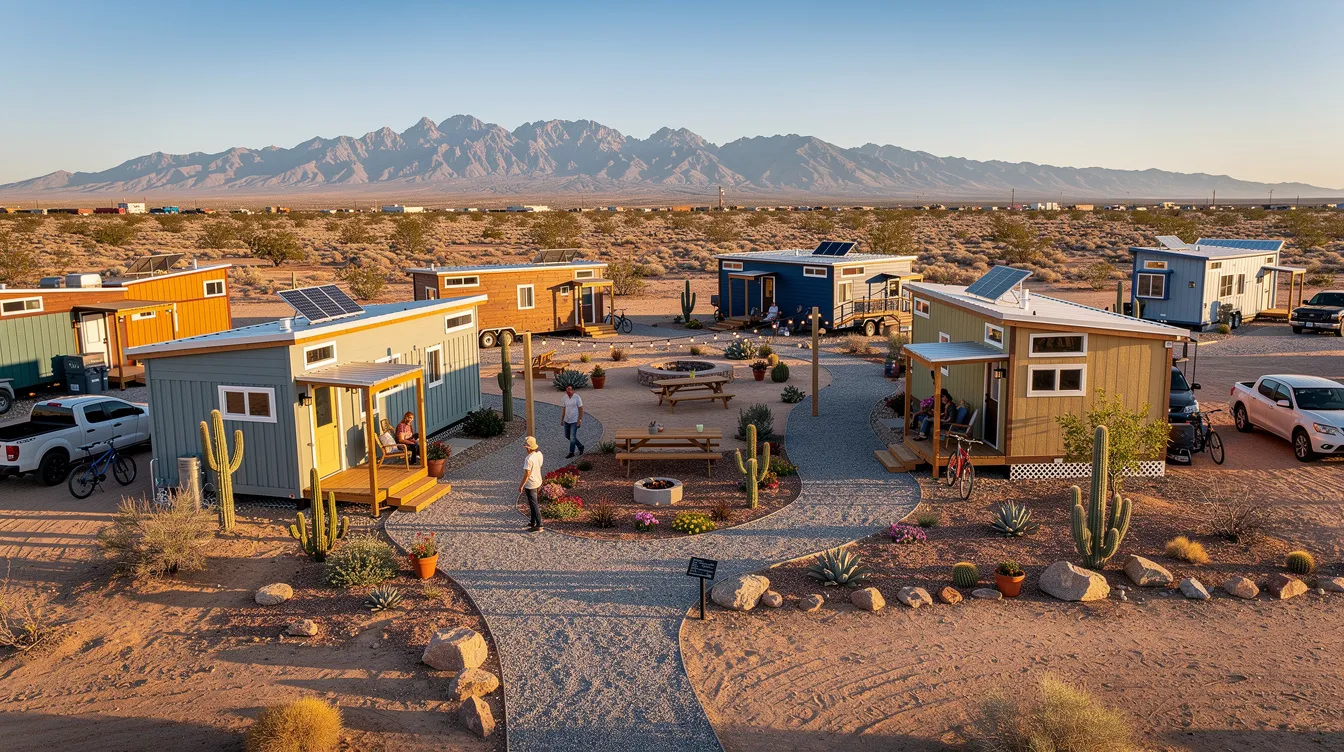
Tiny house villages address the complexities of homelessness with supportive case management services, and individual stories illustrate how that plays out in practice.
Nicholas Atencio lived in a tent for three years before moving into the Bernalillo County Tiny Home Village. His experience reflects a common pattern: residents often struggle to sleep on their first night in a unit with a bed, a desk, and four walls after years without them.
The village has maintained low eviction rates. Only 3–4 villagers have been asked to leave over the program’s history, mostly for violations involving substance use or threats. For most residents, the combination of structured community life, weekly case management sessions, and group therapy creates a path toward self-sufficient living.
Albuquerque features initiatives for tiny house villages for unhoused individuals, and the effectiveness of these programs can be measured in exits to stable housing, even as interest grows among downsizers inspired by top tiny house designs that redefine small living. The average resident transitions out within 4–6 months. The program’s challenge is scale: with only 30 units and consistent demand, the effectiveness of tiny home villages can be impacted by limited supply and high demand.
Tiny House Village Locations in Albuquerque Area
Bernalillo County Tiny Home Village is located in southeast Albuquerque on property near Zuni and Texas Streets. The site covers about 1.5 acres across ten parcels zoned Mixed Use-Transition (MX-T). The county originally leased land from the Albuquerque Indian Center, then purchased 1.06 acres plus an additional 0.13 acres across the street for approximately $575,000 in 2022. The village is accessible to Albuquerque transit and services in the surrounding neighborhoods.
River Edge Tiny Home Community is located in Rio Communities, roughly 30 miles south of Albuquerque along I-25. This private community offers lot leases with full utility hookups and homes for sale ranging from $25,000 to $150,000.
Planned and developing projects include a proposed pallet home campus in Northeast Albuquerque, which would use smaller, semi-portable homes for transitional housing at a lower per-unit cost. The county has also explored expanding the existing village site. Officials from Santa Fe and other New Mexico counties have visited the Bernalillo County project to assess whether the model can be replicated in their communities.
No other tiny home village in the Albuquerque metro area matches the Bernalillo County project’s scale or service model as of mid-2026, though individual homeowners sometimes opt for futuristic tiny homes with advanced sustainable features on suitable sites.
Frequently Asked Questions
What are the monthly costs for tiny house village living?
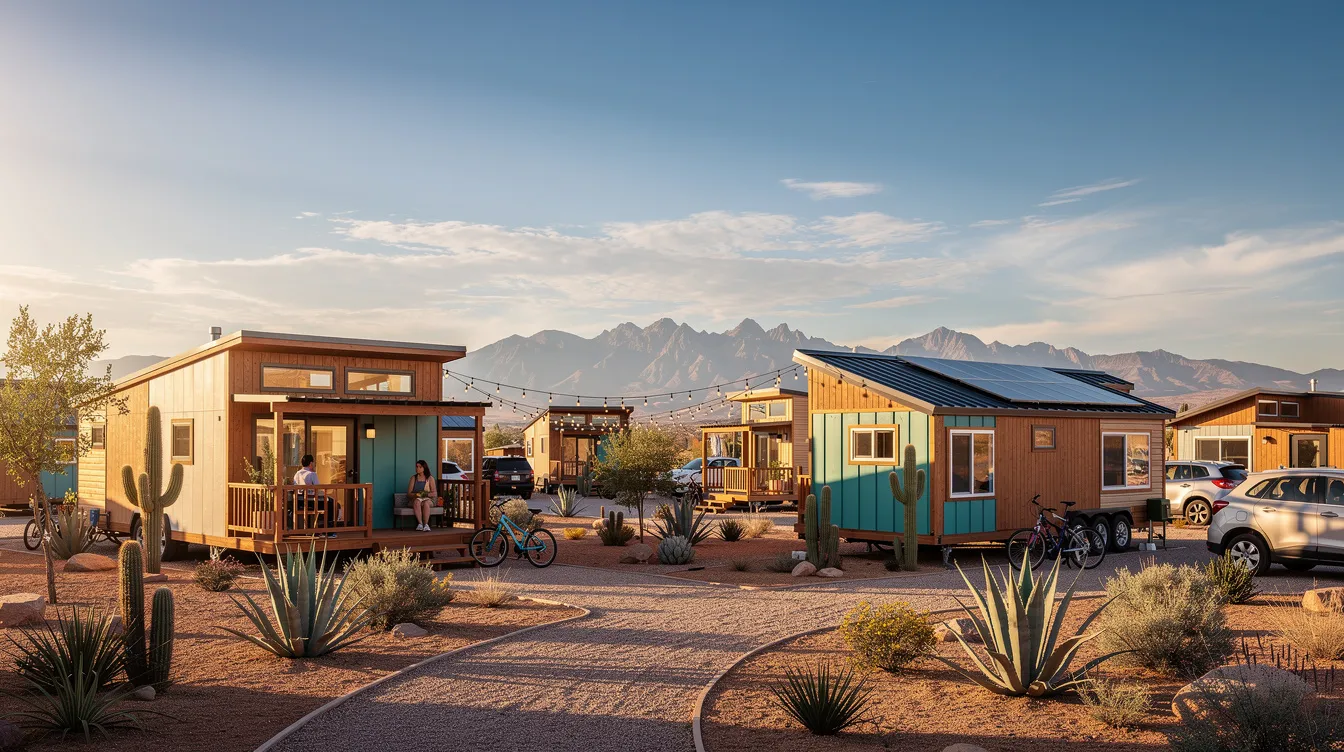
At the Bernalillo County Tiny Home Village, residents do not pay rent or utilities. The county originally charged a $30 monthly utilities fee, which was later removed. All housing, shared facilities, and services are provided at no cost to residents.
Private tiny home communities charge lot rent. River Edge in Rio Communities offers 12-month and month-to-month leases; lot rent and utilities are separate. For comparison, manufactured home park lot rent in SE Albuquerque ranges from $655 to $775 per month at sites like Four Hills.
Can I bring pets to a tiny house village?
Pet policies vary by village. Transitional housing programs like the Bernalillo County village may restrict pets due to shared living spaces and communal facilities. Private communities set their own rules; check with the specific community before applying. If pets are a priority, confirm the policy before signing any lease or commitment.
How long can I stay in a tiny house village?
The Bernalillo County Tiny Home Village is a transitional housing program lasting 18–24 months. Most residents exit to permanent housing within 4–6 months. Private communities like River Edge offer ongoing leases with no fixed end date; residents can stay as long as they meet lease terms.
What amenities and services are typically provided?
The Bernalillo County village includes communal kitchens, communal bathrooms, showers, laundry, a community garden, BBQ grills, meeting rooms, and a communal “Village House” with lounges. On-site social services and employment training are provided. The facility is staffed 24 hours a day for support, and residents have access to therapy for substance-use disorders.
Private communities typically provide utility hookups, common outdoor spaces, and sometimes shared amenities like gardens or gathering areas. Some residents also invest in tiny smart homes that integrate technology for efficient living, but these communities do not provide case management or social services.
Getting Started with Tiny House Village Living
If you are experiencing homelessness or housing instability in Albuquerque, contact a community provider or Bernalillo County to inquire about referral to the Tiny Home Village. Applications are accepted through a referral-based system only; community providers must submit applications for residents.
If you are exploring tiny house living as a lifestyle choice, research private communities like River Edge and review Albuquerque’s current zoning rules for tiny homes on permanent foundations. Tiny homes on wheels are classified as recreational vehicles under New Mexico code and are not permitted as permanent residences in Albuquerque.
Check whether your preferred site is zoned for the type of dwelling you want. Albuquerque’s IDO governs where cottage courts, accessory dwelling units, and tiny home communities can be built. The 2025 IDO update expanded allowances for cottage development housing in several zones, creating new opportunities for folks interested in permanent tiny home living in the Albuquerque area.