
Wyoming’s average home value sits at roughly $372,526 as of mid-2026, and in places like Jackson Hole, that number climbs far higher. For many people across the state, traditional homeownership feels out of reach – especially when you factor in the long heating seasons, remote locations, and the sheer cost of building on rugged terrain. If you’ve ever thought there must be a simpler, more affordable path to owning a home in WY, you’re right.
The problem is that most tiny homes on the market weren’t designed for this state. They’re built for mild climates with modest snow loads of 30–50 PSF and minimal insulation. Drop one of those units at 6,500 feet in Natrona County, where roof snow loads jump to 100 PSF with no pitch deductions, and you’re looking at structural failure, frozen plumbing, and heating bills that erase every dollar you saved.
Tiny homes in Wyoming need to be different. A proper Extreme Weather Package means roofs engineered for 150 PSF snow load ratings or higher, insulation that meets or exceeds R-19 walls and R-38 ceilings (with many locations requiring R-60 in attic spaces), radiant heat systems that keep living space warm at subzero temperatures, and freeze-protected plumbing designed for a 42-inch frost depth. These aren’t upgrades – they’re baseline requirements for year-round tiny house living in this state.
The result is faster, easier homeownership without fighting traditional construction timelines or qualifying for a massive mortgage. Tiny homes are legal in all counties of Wyoming, and the average cost of a tiny home in Wyoming ranges from $30,000 to $100,000 – a fraction of what conventional housing demands.
Why Wyoming Tiny Homes Work
Here’s why tiny living works better in Wyoming than almost anywhere else in the country:
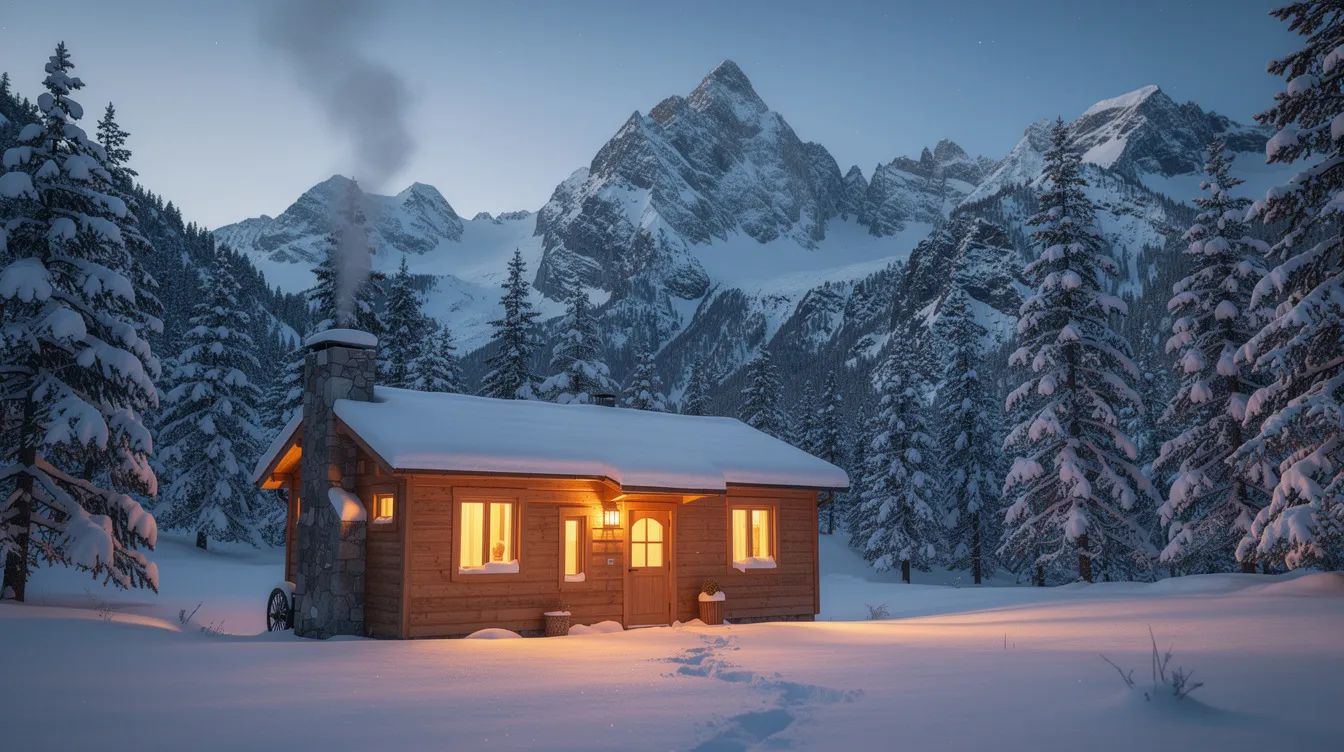
- Winter-ready construction from day one – Every Wyoming-ready tiny home includes cove radiant heat, superior insulation rated for Climate Zones 6 and 7, and structural framing built for heavy snow and high winds. No retrofitting, no guesswork.
- RVIA and NOAH certifications that simplify placement – Wheeled tiny homes are often classified as Recreational Vehicles in Wyoming. With proper NOAH certification (minimum 50 PSF roof snow load, 130 mph wind rating) or RVIA certification, your tiny house meets the standards that counties and lenders recognize.
- Dramatic cost savings – New manufactured homes in Wyoming average around $107,300. A well-built tiny home sits within or below that range, compared to the statewide average home value of $372,526. Tiny homes can significantly reduce housing and living costs without sacrificing comfort or quality.
- Simple placement on private land – Wyoming has low land costs and minimal population density. Many rural counties in Wyoming permit tiny houses without strict building codes. Counties like Sublette have no adopted residential building code but still encourage snow load compliance. This means fewer regulatory hurdles for homeowners placing certified units on their own property.
- Low maintenance for remote living – Living in a tiny home simplifies life and reduces maintenance. A tight building envelope, quality roofing, and proper skirting mean less upkeep than a sprawling older home battling Wyoming’s elements. High quality materials and thoughtful engineering translate to durability that lasts.
- Faster timelines – Factory-built or specialist-built tiny homes cut months off traditional construction schedules, and fewer permits in many rural jurisdictions mean you can move from dream to move-in day faster.
How It Works
Getting into a Wyoming-ready tiny home doesn’t require navigating a maze of complexity. The process is structured around three clear steps.
Step 1: Choose Your Wyoming-Ready Design
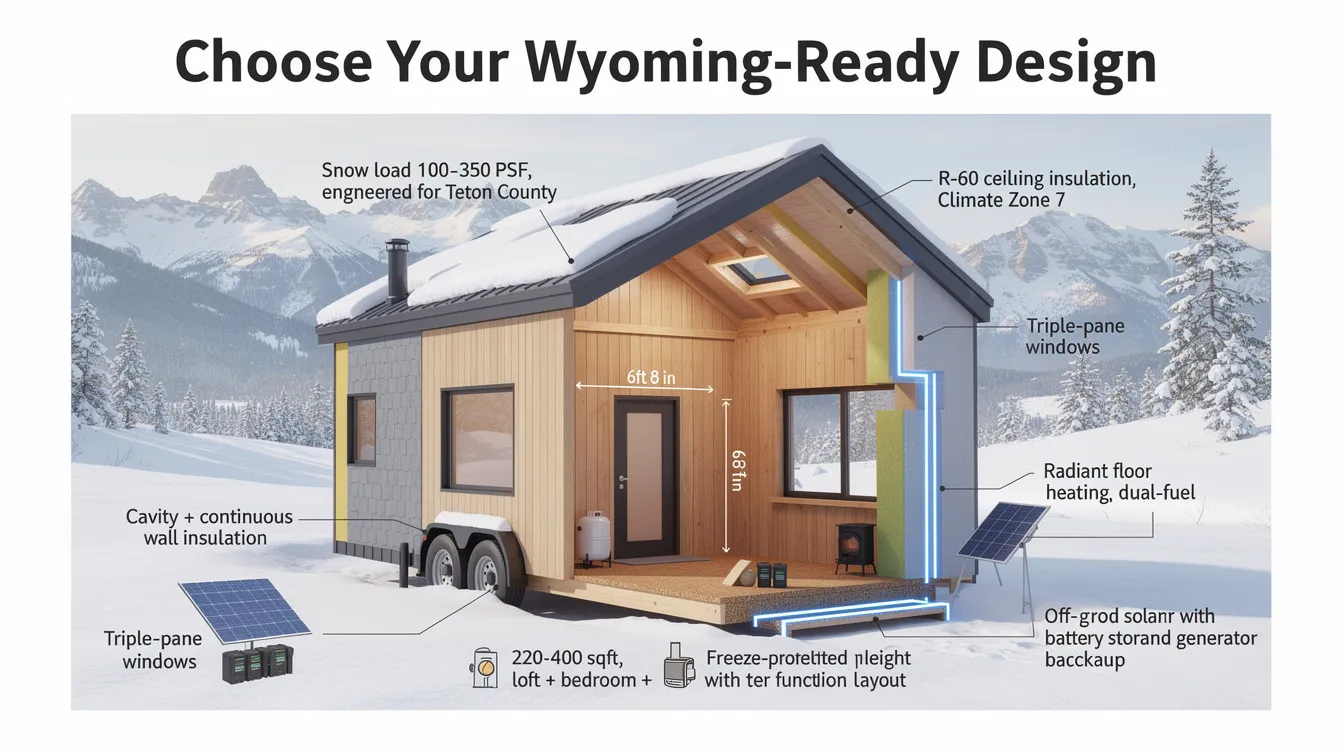
Start by selecting a design that’s been engineered for Wyoming’s specific demands. This means verifying the snow load rating matches your location – for example, Teton County’s ground snow loads range from 100 PSF at lower elevations up to 350 PSF above 8,500 feet. Insulation selections should align with IECC requirements for your climate zone: Zone 7 areas typically require R-60 ceiling insulation and robust wall assemblies combining cavity and continuous insulation.
Tiny homes must have a minimum ceiling height of 6ft 8in, and tiny homes in Wyoming can be as small as 220 sq ft of living space, though many buyers explore sizes between 220 and 400 sq ft to accommodate a loft, bedroom, and functional room layout.
Customization options let you tailor your home for Wyoming’s climate and lifestyle:
- Radiant floor heating with dual-fuel backup (propane, wood stove)
- Off-grid solar with battery storage and generator backup inspired by self-contained tiny homes for off-grid living
- Freeze-protected plumbing with heat trace lines
- Roof pitch optimized for snow shedding
- Triple-pane windows for efficiency and comfort
- Interior finishes suited for cold, dry conditions – solid wood, cork flooring, tight seals that still align with affordable tiny house design principles
Tiny homes can be built as park model homes or custom tiny home designs depending on your priorities, budget, and whether you want mobility or permanent placement.
Step 2: Site Preparation and Delivery
Wyoming’s terrain varies dramatically – from the high plains north of Cheyenne to mountain slopes west of Sheridan to the valleys of Star Valley. Site preparation must account for this diversity.
Foundation or anchors need to reach below the frost depth, which is typically 42 inches across most Wyoming counties. Skirting installation protects the understructure from snow buildup and cold wind penetration. Soil assessment determines whether piers, a slab, or an alternative foundation system is appropriate for your specific location.
Delivery logistics for tiny homes on wheels require compliance with road width, height, and weight restrictions. Remote locations may need road access improvements before transport. Utility connections depend on your site: grid electricity where available, otherwise solar plus generator; water from municipal supply, well, or spring; septic or alternative waste systems for rural and unincorporated areas.
Obtaining building permits may be required even in less regulated areas. Natrona County requires a permit for tiny homes. Albany County requires a zoning certificate for tiny homes. Tiny homes on wheels are regulated as manufactured homes in Carbon County. The permit and inspection process varies – Teton County has formally adopted the 2024 IRC including Appendix BB Tiny Houses, while other counties have lighter requirements. Always verify local regulations before delivery.
Tiny homes must connect to local utilities in most areas, though off-grid configurations are common and often permitted on private land in unincorporated counties.
Step 3: Move-In and Enjoy Wyoming Living
Final setup includes precision leveling, anchoring to foundation or piers, hooking up all utility connections, and installing skirting to seal the understructure.
All Wyoming winter features activate immediately: radiant heating systems are tested, plumbing lines are confirmed insulated or heat-traced, window seals are verified, and backup heating sources are ready for the first cold snap. You don’t wait until November to discover something doesn’t work.
Local municipalities establish specific zoning and building requirements, so occupancy permits, septic approvals, and classification (RV, park model, or manufactured home) all depend on your county. Some rural counties don’t issue formal occupancy permits for certain structure classifications.
Ongoing maintenance in Wyoming conditions includes monitoring roof snow accumulation (or confirming your roof design sheds snow effectively), maintaining skirting integrity, keeping backup heating fuel stocked, and protecting plumbing against freeze during extended cold periods. A well-built tiny home makes all of this manageable rather than overwhelming.
What Makes Wyoming Tiny Homes Different
If you wonder how building tiny homes for Wyoming compares to other states, the differences are substantial:
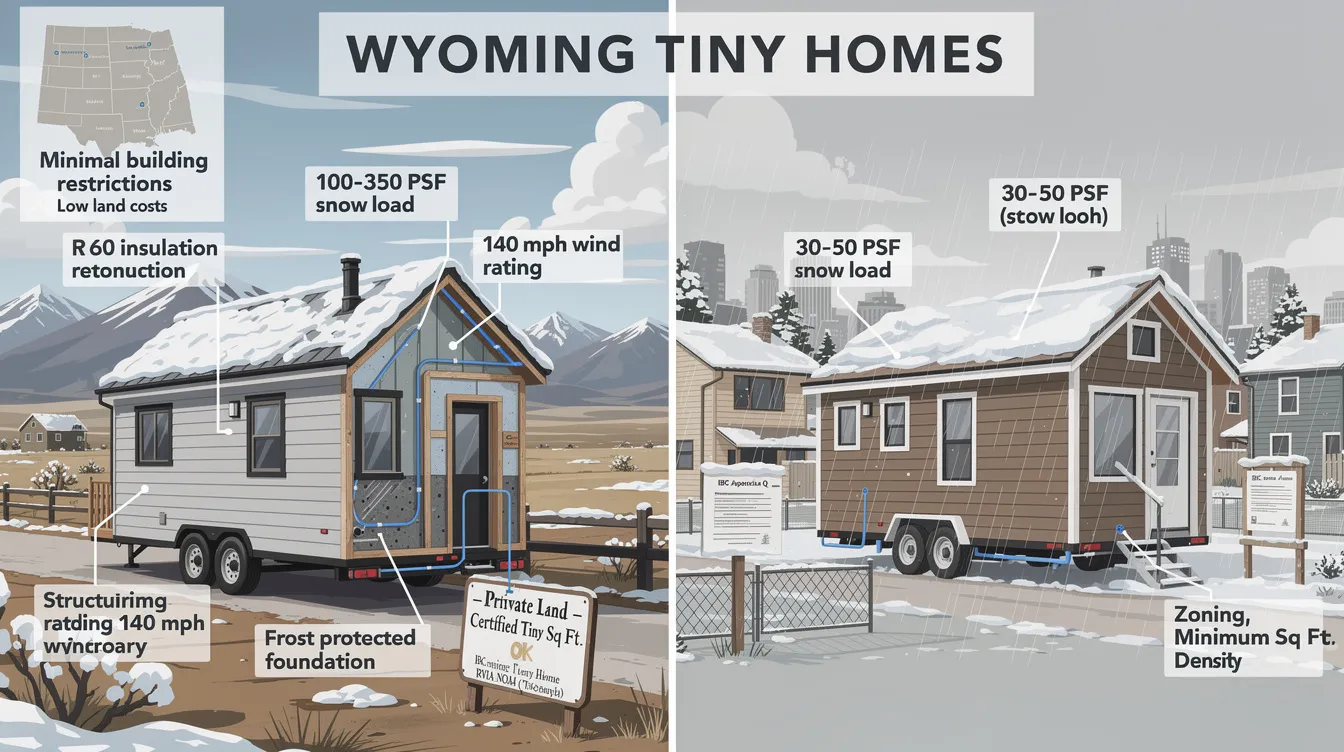
- Snow load specifications set Wyoming apart – Many Oregon or Washington builds use 30–50 PSF roof snow loads. In Wyoming, counties routinely mandate 100 PSF or more above certain elevations, and Teton County loads can reach 200–350 PSF. Extreme weather packages may be needed for tiny homes in Wyoming that would be unnecessary elsewhere.
- Wyoming’s minimal building restrictions outpace restrictive states – Compare Wyoming’s regulatory landscape to California or New York, where zoning rules, minimum square footage laws, and density restrictions make tiny house placement extraordinarily difficult. Many counties in Wyoming do not have county-wide building codes. The International Building Code Appendix Q provides guidelines for tiny homes, and Teton County’s adoption of Appendix BB creates a clear legal framework, but the overall regulatory environment remains far more open than in heavily urban states.
- Low land costs and abundant space – Wyoming’s vast, undeveloped land means placement options that simply don’t exist in densely populated states. You can discover locations across the state where land prices make tiny home ownership genuinely affordable, not just less expensive.
- Simple rules for certified homes on private property – With RVIA or NOAH certification, placing a tiny home on private land in many Wyoming counties involves fewer regulatory steps than almost anywhere else in the country. Legal placement for tiny homes can be challenging due to zoning laws in some cities, but the rural majority of the state offers real flexibility.
- Specialized winter construction is non-negotiable – States in the south or along coasts don’t need frost-protected foundations, R-60 ceiling insulation, heat-traced plumbing, or structural framing rated for 140 mph wind gusts. Wyoming does. This focus on cold-climate engineering means every component – from the subfloor to the roofing – is built with durability and temperatures in mind. It costs more upfront, but it’s what separates a home from a liability.
Proof That It Works
Real people are already living the tiny home lifestyle in Wyoming’s harshest conditions.
Ariel McGlothin has lived off-grid in a tiny house on wheels in western Wyoming at roughly 6,000 feet elevation since 2014. Her home endures subzero temperatures below –30°F and weeks of continuous snow. With spray foam insulation, a wood-burning stove as primary heat, backup propane, and a composting toilet, she demonstrates that well-designed tiny house living in extreme cold is entirely sustainable. Her emphasis on layered heating, proper insulation, and system redundancy provides a proven blueprint.
Another documented example: Alice, a young professional in her late 20s, lives in a 220 sq ft tiny home on a ranch outside Jackson, WY, parking her Tumbleweed tiny house in exchange for services. After being denied a traditional bank loan, she secured financing through an RV-certified loan from a credit union. She’s lived in it for over two years, proving that financing options for tiny homes can differ from traditional home loans but are still accessible with the right certification.
The numbers reinforce the case:
- Natrona County codifies roof snow loads of 30 PSF below 6,000 ft and 100 PSF at or above 6,000 ft, with minimum wall insulation of R-19 and ceiling insulation of R-38
- Lander, WY mandates roof snow load of 40 PSF, ground snow load of 57 PSF, wind speed of 115 mph, and frost depth of 42 inches
- Statewide average home value: ~$372,526. Average new manufactured home: ~$107,300. A winter-ready tiny home: $30,000 to $100,000. The cost savings speak for themselves.
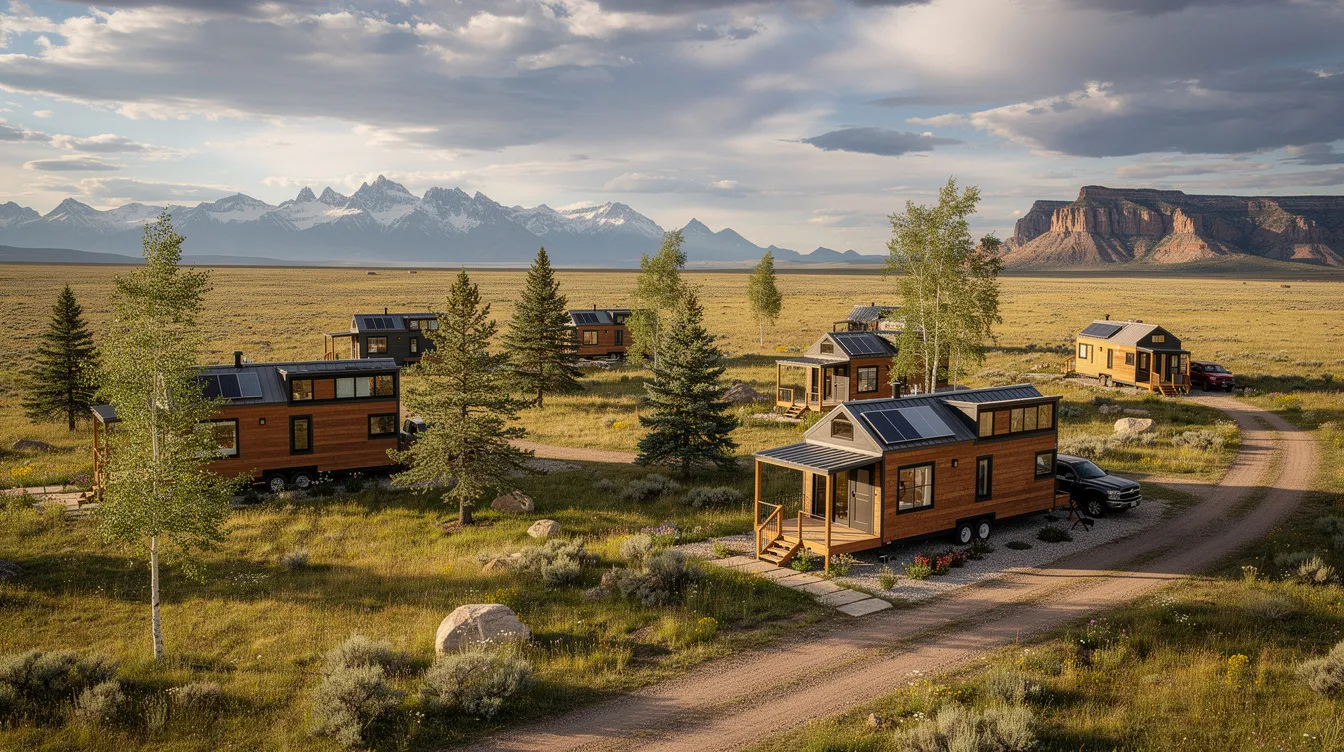
Tiny home communities in Wyoming offer amenities and support systems for those who prefer a shared living arrangement, and interest in communities near Yellowstone and Grand Teton areas continues to grow as more people discover the lifestyle and draw inspiration from cozy Swedish tiny house living.
Who Wyoming Tiny Homes Are For
Tiny homes in Wyoming serve a wide range of people, each drawn to the state for different reasons:
- Retirees seeking affordable Wyoming retirement – Fewer stairs, smaller footprint, lower maintenance, and proximity to world-class outdoor recreation. A tiny home near national parks or forests lets you live the retirement you imagined at a fraction of what a conventional home would cost.
- Young professionals priced out of housing – In Jackson, Cody, Cheyenne, and other cities where rental costs squeeze budgets, tiny homes offer a real ownership path. Tiny homes are popular in Wyoming for minimalist living, and for young workers, they represent independence rather than compromise.
- Hunting and fishing enthusiasts – Wyoming is legendary hunting and fishing country. Tiny cabins and THOW-style retreats provide robust, winter-ready shelter during season without the cost or commitment of a full cabin build. Park model tiny homes work especially well as seasonal base camps.
- Investors and vacation rental operators – Tiny homes near national parks and scenic Wyoming areas can command premium nightly rates with lower upfront investment. Park model homes classified appropriately offer regulatory flexibility for short-term rental use.
- Remote workers choosing Wyoming for lifestyle – People who love wide open spaces, mountain views, and genuine quiet are moving to Wyoming and choosing tiny living as their long-term housing strategy. With reliable internet connectivity expanding across the state, full-time remote work from a tiny home is increasingly practical.
Tiny home living encourages a minimalist lifestyle, and for all of these groups, the appeal is the same: own more of your life by owning less house.
Wyoming Tiny Home Options and Investment
Essential Wyoming Package – Winter-Ready Basics
The entry-level path to Wyoming tiny living starts with every feature that matters for surviving and thriving through harsh winters.
Core specifications include structural engineering rated for local snow loads (minimum 50 PSF per NOAH standard, higher as your county requires), wall insulation at R-19 minimum with ceiling insulation at R-38 or greater, double-glazed or triple-pane windows, and a tight building envelope with proper vapor barriers. Heating comes from an efficient cove radiant system or heat pump with propane or wood stove backup. Frost-protected foundation piers, insulated plumbing, and cold-weather skirting complete the package.
Some counties in Wyoming have minimum square footage requirements for homes, and tiny homes in Niobrara County must be at least 264 sq ft, but homes can start at 220 sq ft where local regulations allow. Tiny homes must have at least 220 sq ft of living space under many interpretations. Tiny homes can provide high-end finishes within a smaller budget even at this entry level – quality cabinetry, durable flooring, and efficient appliances are standard, not optional.
Typical investment range: $30,000 – $90,000 depending on size (200–400 sq ft), features, site preparation, and delivery distance.
Premium Wyoming Living – Enhanced Comfort
For those who want full-time Wyoming tiny living with no compromises, premium options expand both space and finish quality.
Expect 300–600 sq ft of living space with higher ceilings, a dedicated bedroom and loft, solid wood cabinetry, luxury flooring, premium appliances, and full-size bathroom fixtures. Off-grid solar with battery bank and generator backup provides energy independence. Multi-source heating systems ensure redundancy. Full decking or covered porches extend your usable space into Wyoming’s spectacular outdoors.
Premium builds carry RVIA or NOAH certification plus local engineer seals. Smart home features, superior window packages, and enhanced aesthetic styles provide inspiration for long-term comfort, and many buyers explore tiny smart home solutions for efficient living. These homes meet every building code requirement in even the most demanding Wyoming counties.
Typical investment range: $120,000 – $200,000+ depending on size, amenities, site conditions, and remote access costs.
Custom Wyoming Solutions – Unique Needs
Fully custom builds address specific Wyoming applications that standard designs can’t meet:
- Commercial tiny homes for vacation rental operations near Yellowstone or Grand Teton, drawing on great tiny homes that redefine small-space living
- Accessible designs for seniors or mobility-impaired residents (no loft, wider doorways, zero-step entry) that can still reflect cute tiny house design ideas
- Hybrid models combining tiny home efficiency with workshop, barn, or studio space, similar in flexibility to tiny house kits from Home Depot
- High-elevation builds above 8,000 feet where ground snow loads exceed 200 PSF and specialized engineering is essential
The process begins with site-specific consultation: snow load analysis, wind exposure assessment, frost depth confirmation, soil testing, and access evaluation. Custom builds require close coordination with local county offices to meet all building regulations and obtain necessary permits.
Investment varies significantly based on site complexity, structural requirements, and finish level. Some areas in Wyoming have strict regulations for Accessory Dwelling Units that may influence design.
Frequently Asked Questions
What building codes apply to tiny homes in Wyoming?
Wyoming is a home rule state – there is no single statewide residential building code. Local regulations on tiny homes vary significantly by county and city. Teton County has adopted the 2024 IRC including Appendix BB Tiny Houses. Natrona County requires a permit for tiny homes and codifies specific snow load, insulation, and frost depth requirements. Many counties in Wyoming do not have county-wide building codes but strongly encourage compliance with local snow load specifications. Always verify your county’s current requirements before starting.
Do I need a permit to place a tiny home?
It depends on your county. A building permit is required in Natrona County for tiny homes. Albany County requires a zoning certificate for tiny homes. In less regulated rural counties, obtaining building permits may still be required even though the process is simpler. Local municipalities establish specific zoning and building requirements, so contact your county planning office to learn what’s typically required for your specific location and structure classification.
How are tiny homes on wheels classified in Wyoming?
Wheeled tiny homes are often classified as Recreational Vehicles in Wyoming. In Carbon County, tiny homes on wheels are regulated as manufactured homes. Classification affects where you can place your home, how you finance it, and what permits apply. RVIA or NOAH certification provides the clearest pathway for legal placement in most counties.
Can I connect to utilities in a rural Wyoming location?
Tiny homes must connect to local utilities in most areas where municipal services exist. In rural and unincorporated locations, alternatives include well water, spring water, septic systems, and off-grid solar with generator backup. Your site preparation plan should address water, waste, and power before delivery day.
How do I finance a tiny home in Wyoming?
Financing options for tiny homes can differ from traditional home loans. Standard mortgages often require minimum square footage (typically 400 sq ft) and permanent foundations that many tiny homes don’t meet. Alternatives include RV lenders, chattel loans, manufacturer financing, and credit unions that work with RVIA or NOAH-certified units. Some buyers finance through personal loans or pay cash given the lower price point.
Can I live in a tiny home year-round in Wyoming?
Yes. Tiny homes are legal in all counties of Wyoming. With proper winter engineering – adequate insulation for severe Wyoming winters, radiant heating, freeze-protected plumbing, and structural framing rated for local snow and wind loads – year-round living is not just possible but comfortable. The key is ensuring your home was designed and built for Wyoming’s climate, not retrofitted after the fact.
What maintenance does a Wyoming tiny home require?
Wyoming’s extreme weather means regular attention to a few critical systems: monitoring roof snow load or confirming your roof design sheds snow effectively, maintaining skirting integrity to protect the understructure, keeping backup heating fuel supplied, verifying plumbing freeze protection before each winter, and inspecting seals and insulation annually. A home built with high quality materials and proper specifications makes this maintenance straightforward rather than burdensome.
Are there tiny home communities in Wyoming?
Yes. Wyoming has many tiny home communities for potential buyers, particularly near recreational areas and growing towns. These tiny home communities offer amenities and support systems including shared utilities, communal spaces, and simplified permitting. They’re worth exploring if you prefer community living over a standalone placement on private land.