

When Alexandria Park Tiny Home Village officially opened in North Hollywood on February 1, 2021, it became one of the most visible experiments in tackling street homelessness through rapid, scalable design. With 103 tiny homes, roughly 200 beds, and a total construction cost of approximately $8.6 million, it offered a model that cities across the country are still studying. Here’s what makes the site work, what daily life looks like for residents, and where the model falls short.
Key Takeaways
- Alexandria Park Tiny Home Village opened in 2021 in North Hollywood as California’s largest tiny home village at the time, providing bridge housing for individuals experiencing homelessness with 103 units and capacity for up to 200 residents.
- The village uses bright colors, preserved park trees, air conditioning, and ample congregation spaces to create a non-institutional atmosphere, while three hygiene trailers and communal amenities support daily life.
- Hope the Mission (formerly Hope of the Valley Rescue Mission) operates the site with 24/7 security, case management, housing navigation, and three meals per day to help many residents stabilize and find permanent housing.
- The project was built under pressure from a federal judge to expand shelter capacity and is part of Los Angeles’ broader housing solutions strategy to address homelessness across the San Fernando Valley.
- This article covers design, daily life, rules, supportive services, critiques, and how Alexandria Park compares to the Chandler Boulevard first village and other tiny home sites in the city.
Alexandria Park Tiny Home Village at a Glance
Alexandria Park Tiny Home Village stands as a flagship response to the homelessness crisis in Los Angeles County. Located along Alexandria Park just off Chandler Boulevard in North Hollywood, the site provides emergency and transitional housing rather than permanent housing. At opening, it was billed as California’s largest park tiny home village, housing up to 200 people in 103 individual tiny homes, including six ADA-accessible units.
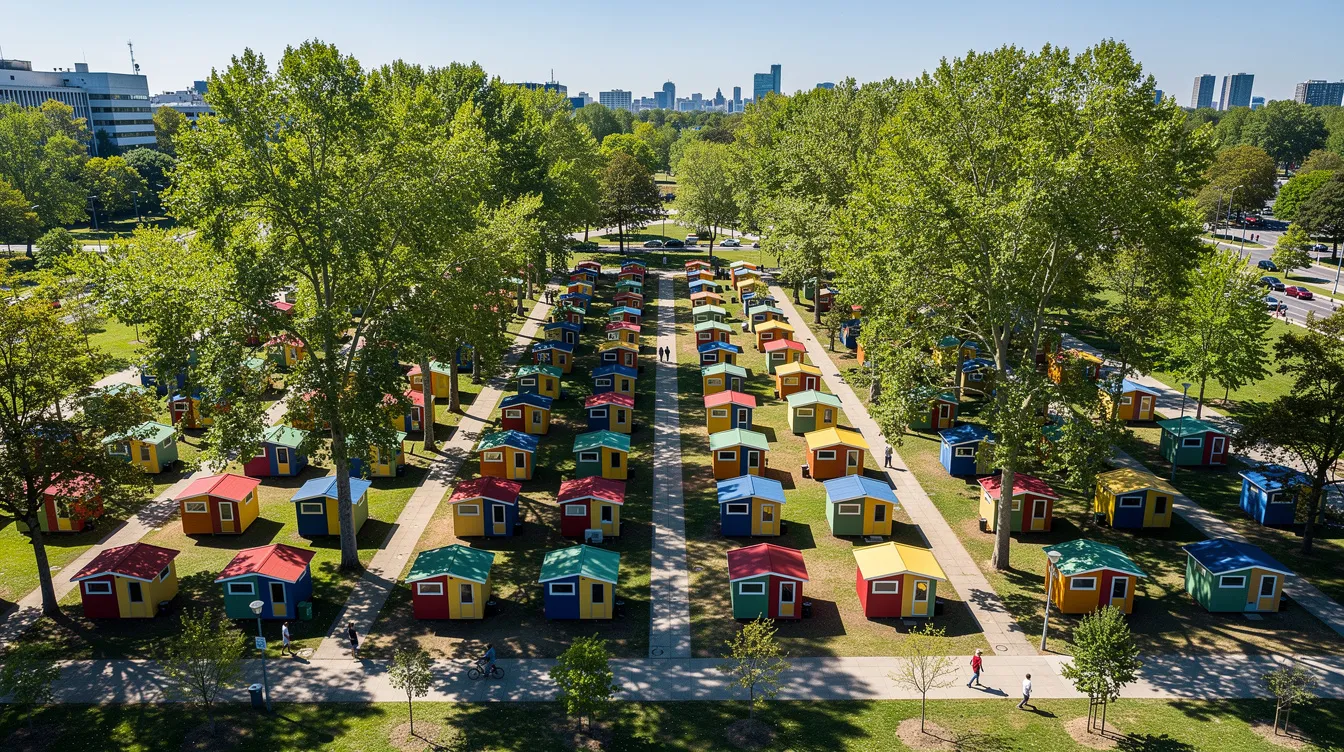
During COVID-19, many units initially housed only one resident for physical distancing, with plans to reach full double-occupancy over time. Each unit is designed to hold two beds. The average stay runs around 90 days while residents work with housing specialists on longer-term placements. Hope the Mission, formerly known as Hope of the Valley Rescue Mission, operates the site under contract with the City of Los Angeles, providing staffing, meals, and supportive services. Alexandria Park is part of a growing network of tiny home sites that includes Chandler Boulevard Tiny Homes Village, Whitsett West, and Arroyo Seco, all aimed at giving homeless people a safer, more stable starting point.
Context: Homelessness Crisis and the Push for New Housing Solutions
Los Angeles County faces one of the most severe homelessness crises in the United States. In a given year, roughly 60,000 to 70,000 people experience homelessness across the county, with high concentrations of tents and encampments visible throughout the San Fernando Valley. Before villages like Alexandria Park opened, unhoused residents were camping in and around the park itself and along Chandler Boulevard, creating pressure from neighborhood groups and elected officials for alternatives to sidewalk encampments.
The COVID-19 Homelessness Roadmap, adopted in June 2020, set a target of 6,700 new beds of shelter and transitional housing within 18 months, with tiny home villages as a new tool in that plan. Federal court oversight added urgency: a federal judge issued orders demanding concrete steps to move homeless people off freeways and sidewalks, accelerating timelines for facilities like Alexandria Park. The village is part of Los Angeles’ broader strategy to address homelessness, emphasizing a multi-agency approach to expanding affordable housing options. This strategy includes interim shelter, permanent supportive housing, rental subsidies, and street-based outreach. Still, debate persists between investing in temporary housing versus more permanent housing solutions, a tension that runs through every section of this article.
Design and Location: From Parkland to “Home Village”
Alexandria Park sits on a linear stretch of neighborhood parkland with existing young and mature shade trees, adjacent to transportation corridors and residential streets in North Hollywood. The city and design team, including Lehrer Architects LA and Pallet Shelter as the unit manufacturer, intentionally preserved existing park trees, using them to shade walking paths and gathering areas rather than clearing the site. The site is designed to preserve existing trees and includes pet-friendly areas such as dog runs.
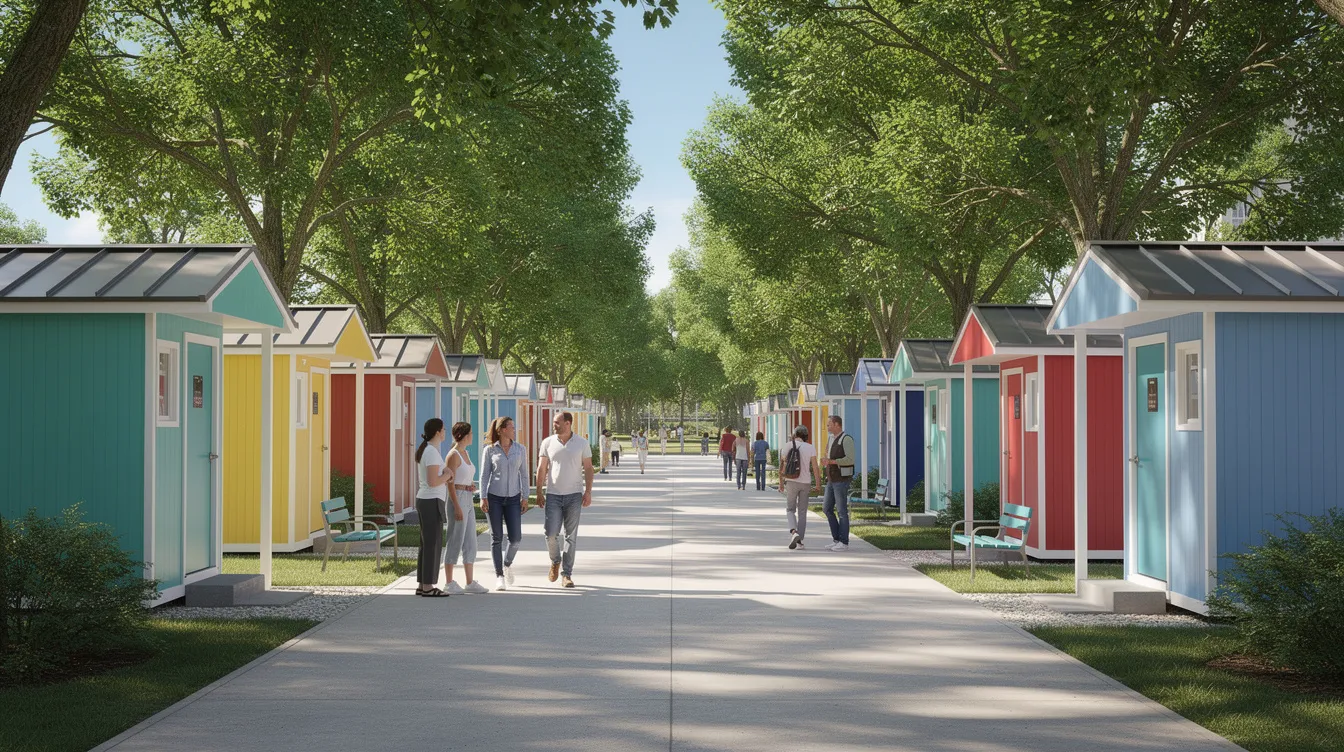
The layout uses a central fire access lane as the main pedestrian boulevard, organizing the village into blocks of tiny houses with communal spaces and service trailers clustered at key nodes. The village layout includes communal areas designed to foster social interaction, reinforcing a sense of community rather than isolation. Bright colors on exterior panels and doors, along with bold ground markings, avoid an institutional feel and instead create a small home village aesthetic.
Key site features include:
- Fenced perimeter with controlled entrances and 24/7 staff for security verification
- Hygiene trailers and laundry facilities
- Shaded outdoor seating and pet relief areas
- Visual connections to the surrounding park
The tiny home site was chosen partly because it was underused public land where services could be added without displacing housed residents, while serving a homeless community already living nearby.
Inside the Tiny Homes: Layout, Comfort, and Daily Life
Each standard Alexandria Park tiny home is an approximately 8-by-8-foot insulated Pallet Shelter structure with a locking door, four windows for ventilation and daylight, and basic interior finishes designed for durability that echo many modern tiny house designs. Each tiny home features two beds and air conditioning, along with heating to handle valley summers and cold winter nights. Storage cubbies, overhead lighting, and electrical outlets for charging phones round out the interior.
Residents are allowed to bring a limited amount of personal belongings inside, with additional items stored in secure lockers when not allowed inside due to fire code or safety rules. Pets are typically allowed inside or in designated outdoor spaces, a factor that draws people who otherwise refuse congregate shelters. Privacy matters: each unit’s locking door, physical separation from neighboring units, and individual climate control stand in sharp contrast to traditional shelters where hundreds of beds share a single room.
A typical day might include waking up in an air-conditioned unit, accessing showers in the hygiene trailers, eating meals in communal areas, meeting with case managers, and connecting with mental health services or job training programs. Although the spaces are small, the combination of climate control, doors that lock, and personal autonomy can be life-changing for people coming directly from streets or vehicles, and mirrors how many people use tiny house living for stability in non-shelter settings as well.
Services, Rules, and What’s Allowed Inside
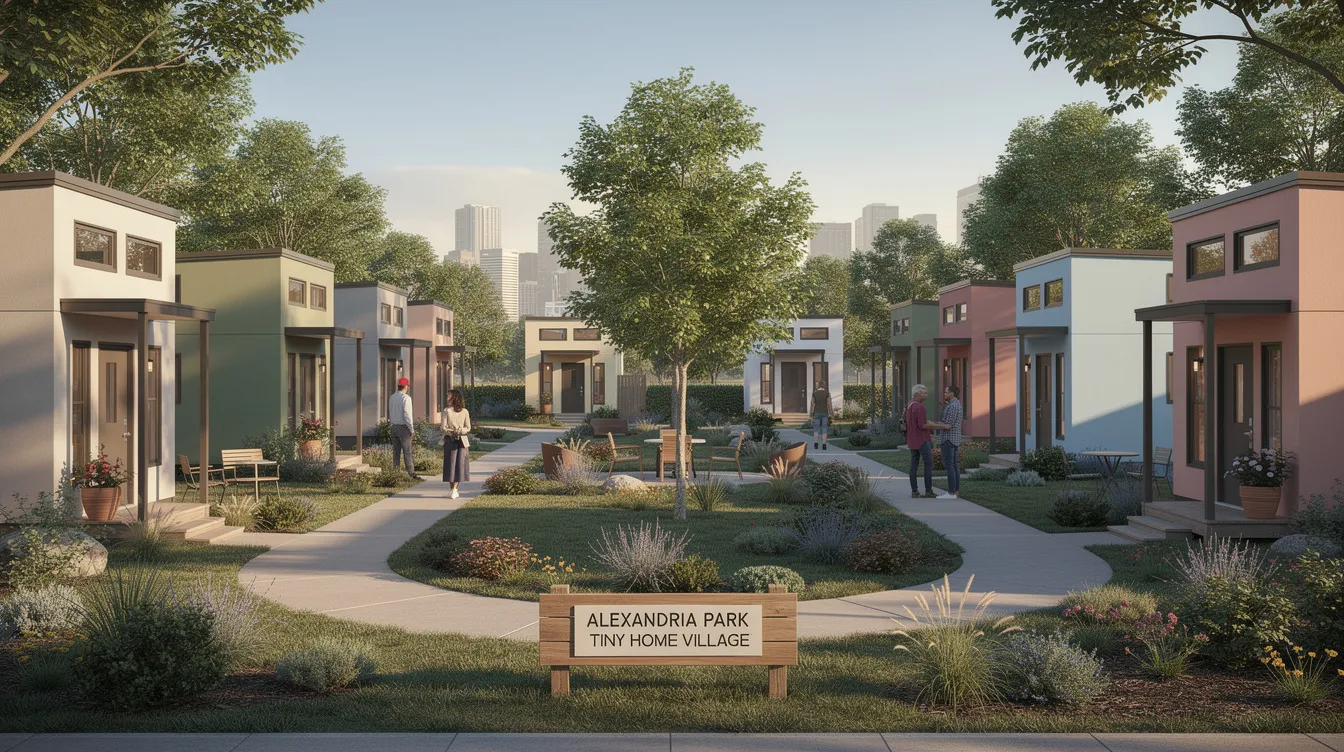
Alexandria Park Tiny Home Village is more than just a collection of shelter units. It functions as a service-rich environment to help residents stabilize and move toward permanent housing. The Alexandria Park Tiny Home Village provides bridge housing for individuals experiencing homelessness, and comprehensive support services include case management and housing navigation assistance.
Core services include:
Service | Detail |
|---|---|
Meals | Three meals per day provided by Hope of the Valley |
Hygiene | Three hygiene trailers with 15 bathrooms total |
Laundry | On-site laundry facilities |
Case management | ~7 housing specialists at launch |
Mental health services | Counseling and substance use support |
Employment | Job training, job center referrals, and placement assistance |
Security | 24/7 security service provided by a professional security company |
Residents receive assistance with job training and employment support as part of their individualized plans. Rules include behavioral expectations around quiet hours, visitor policies with controlled entry, and restrictions on weapons or items not allowed inside for safety reasons. When large items like carts or bikes are not allowed inside homes, residents can use designated storage areas, reducing encampment clutter. |
Intake typically occurs through referral, often via street outreach teams or LAHSA. The typical stay averages around 90 days, with extensions for those on a waiting list for housing or actively progressing through housing navigation. Residents do not pay rent; stays are funded by City dollars. Participation in social services and case management is expected but remains voluntary.
Alexandria Park vs. Chandler Boulevard and Other Tiny Home Villages
Alexandria Park Tiny Home Village is the larger sibling to Chandler Boulevard Tiny Homes Village, both in North Hollywood and both along the G Line Busway corridor. Chandler Boulevard opened as the first village in early 2021 with about 39 tiny homes and capacity for roughly 75 residents. Alexandria Park followed with 103 units and about 200 beds, making it the first village in California to reach that scale.
Both share design DNA: bright colors, 8-by-8 Pallet Shelter units, communal spaces, and a non-institutional layout where air conditioning, heating, and privacy are core features in every Alexandria Park tiny home. The total construction cost of approximately $8.6 million at Alexandria Park works out to roughly $43,000 per bed, compared to about $65,000 per bed at Chandler Boulevard, showing how tiny home villages provide lower-cost transitional housing compared to traditional options and how scale drives costs down, much like how individual tiny house cost breakdowns reveal savings through smaller footprints and efficient design.
Other Hope the Mission-operated villages, including Whitsett West and Arroyo Seco, bring the network to over 1,000 beds region-wide. Lessons from Chandler Boulevard in speed, community engagement, and circulation patterns were applied at Alexandria Park and later sites. Today, Alexandria Park serves as both a local asset for North Hollywood and a prototype that other cities study when exploring long term solutions and tiny home housing communities in California nationwide.
Debate, Challenges, and Long-Term Impact
Not everyone supports the tiny home village model. Some housed neighbors worry about concentration of services near Highland Park and other residential areas, while some unhoused residents and advocates argue that temporary shelters do not equal true stable housing. In media coverage, some residents have described the villages’ fences, security, and rules as restrictive, and worry about the lack of guaranteed permanent housing when they exit.
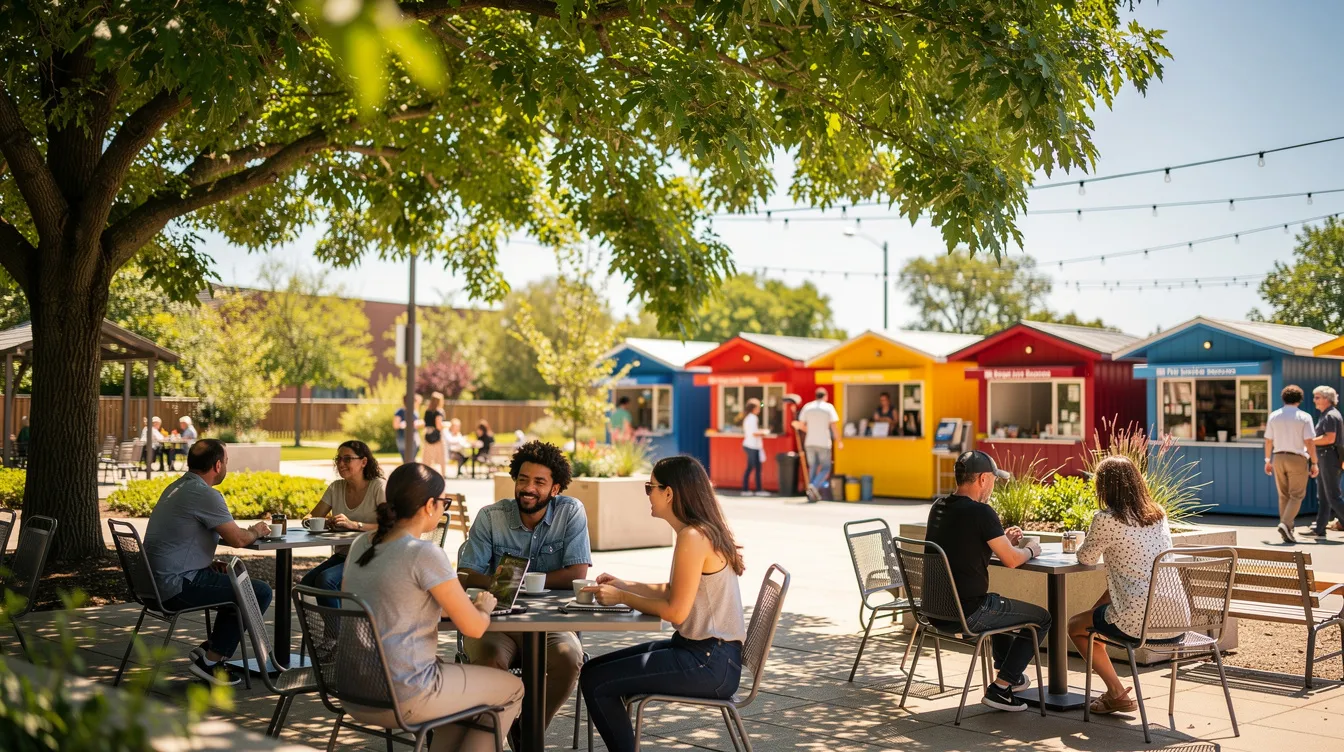
These concerns are real. But benefits frequently reported by participants include dramatically improved sleep and safety compared to sidewalks, protection from heat in air-conditioned units, easier access to case managers and mental health care, and an increased ability to search for work or attend appointments. For many residents, it is the first time they have had a locking door, climate control, and a safe place to rest.
The structural challenge remains: a limited supply of permanent supportive housing and affordable apartments means even well-run villages face bottlenecks when trying to help people find permanent housing. Ongoing litigation and oversight from a federal judge keep pressure on the city to pair short-term shelters with paths to lasting housing, driving investments in conversion motels, modular permanent housing, and rental subsidies alongside tiny home sites, as well as inspiring tiny house communities in other regions like Arizona.
Alexandria Park Tiny Home Village remains an evolving experiment. It is an early, highly visible attempt to bridge the gap between street homelessness and stable housing. Its lessons in design, cost, respond ray id verification successful against malicious bots at intake, and community integration will shape future policy in Los Angeles and beyond, including how other states cultivate tiny house communities in Colorado and tiny house communities in Nevada for alternative living models.
FAQ
These FAQs address common practical questions about Alexandria Park Tiny Home Village that are not fully covered above. Answers are based on publicly reported practices at Alexandria Park and similar Los Angeles tiny home villages.
Who can get a tiny home at Alexandria Park Tiny Home Village?
Units are reserved for people experiencing homelessness, generally referred by street outreach teams, LAHSA, or nearby encampment resolution efforts rather than walk-up self-enrollment. Priority often goes to individuals already living unsheltered in the surrounding area, especially those with health vulnerabilities or safety risks. There is frequently a waiting list due to high demand.
How long are residents allowed to stay?
Alexandria Park operates as emergency and transitional housing, with typical stays around 90 days. Extensions are often granted when residents are actively working on a housing plan and waiting for a unit or voucher. The exact length of stay varies based on individual progress and available housing resources.
Are visitors and family members allowed inside the village?
Visitors are usually limited for safety and privacy reasons, with controlled entry points and check-in requirements. Some sites restrict overnight visitors altogether. Specific visitation rules at Alexandria Park can change over time, and residents receive up-to-date guidance from onsite staff at intake.
Does Alexandria Park Tiny Home Village charge rent or program fees?
Residents do not pay rent. Stays are funded by the City of Los Angeles and other public sources as part of its homelessness response. Instead of payment, residents are expected to participate in case management and work toward more stable housing, employment, or other individualized goals.
What happens when someone leaves the village without permanent housing lined up?
The goal is always to exit residents into safer, more permanent housing solutions, but system constraints mean some people may return to the streets or another temporary program. Case managers typically attempt to maintain contact and re-engage people, and Alexandria Park is part of a broader network of beds and housing solutions designed to reduce cycling back into unsheltered homelessness. A house or apartment remains the end goal for every resident, whether that ultimately looks like a conventional unit or one of the top tiny houses redefining small-space living such as a larger family-focused tiny home on wheels.