

Picking the right 30 amp RV inverter generator can feel hard when dozens of models crowd every product page on amazon. This guide cuts through the noise so you can buy with confidence.
Key Takeaways
- A 30 amp RV inverter generator provides stable clean electricity for RVs. Since 30 amp × 120 volts = 3,600 watts max, you should size your generator around 80–90% of that – roughly 3,000–3,600 running watts – for real-world use.
- A 3,200-watt inverter generator is optimal for 30 amp RVs because inverter generators are quieter than conventional generators, more fuel-efficient, and produce pure sine wave power safe for sensitive electronics.
- Good options include the Champion 3,500W, Honda EU3200i, and Westinghouse iGen4500 – each suited to different camping styles and budgets.
- Always perform security verification of your wiring, cords, and generator grounding before first use. Carbon monoxide is an invisible killer from generators, so run units outdoors only. Check your generator every 50 hours or at the start of the season.
Understanding 30 Amp RV Power (Fast Answer First)
What size 30 amp RV inverter generator do you need? A 30 amp RV needs a 3,000–3,500-watt generator for comfortable, reliable operation.
The math is simple: 30 amp RV service delivers single-leg 120V power, so the maximum power draw for a 30 amp RV is 3,600 watts. But you should not run constantly at that ceiling. Most RVers find their sweet spot between 2,500–3,200 watts of continuous draw. A 25% safety cushion is recommended for generator power calculations to handle startup surges without tripping breakers.
For reference, a 50 amp RV hookup can deliver up to 12,000W – a different kind of system entirely.
Example scenario: summer camping with a 13,500 BTU air conditioner (~1,400W running), fridge (~500W), LED lights, and a laptop (~250W combined) totals around 2,150W running – well within range for a 3,200W unit, even after accounting for ac startup surges.
Inverter Generator vs Conventional for a 30 Amp RV
Both inverter and open frame conventional generators can power a 30 amp RV, but they work differently.
Inverter generators produce pure sine wave power with low harmonic distortion (THD under 3%), making them ideal for laptops, smart TVs, and lithium chargers. Inverter generators provide cleaner power for sensitive electronics than conventional alternatives. Eco mode allows generators to adjust engine speed based on load demand, saving 20–40% on fuel at partial loads. Inverter generators are more fuel-efficient than traditional generators and are lightweight and portable, ideal for RV users.
Generators should ideally operate within 50–60 dB to comply with campground regulations at campgrounds – quiet enough that neighbors won’t complain. 30-amp RV inverter generators are quieter than conventional generators, which often run 68–76 dB. Parallel capability enables linking two generators to increase power output when you need more.
Think of performing security verification in a power sense: use a plug-in voltmeter or surge protector with a display to verify voltage and frequency before trusting the generator with your electronics. This verifies that output is safe and stable.
Conventional generators offer more raw power for lower cost, so they still make sense for tight budgets or construction-plus-RV backup scenarios with fewer sensitive items.
How Many Watts Do Your RV Appliances Really Use?
Generator capacity needs to match the RV’s electrical demands to avoid overloads. Here’s what common RV loads actually draw:
Appliance | Running Watts | Startup Watts |
|---|---|---|
13,500 BTU air conditioner | 1,200–1,500W | 2,200–2,800W |
15,000 BTU air conditioning unit | 1,500–1,800W | Up to 3,000W |
Microwave (1,000W rated) | 1,400–1,600W | Minimal |
Hair dryer | 1,200–1,875W | – |
Fridge (electric) | 300–600W | – |
Converter/charger | 200–600W | – |
Air conditioners can draw 2,200–3,000 watts at startup. The recommended power for one 15,000 BTU air conditioner is 3,500–4,500 watts including surge. Using an A/C soft-start device can help smaller generators start larger air conditioners by cutting that surge by 60–75%.
You cannot run the AC, microwave, and hair dryer simultaneously – stagger high-draw items. Do a quick DIY power audit: add your must-run loads, then add 20–25% for surges. A 3,200-watt inverter generator handles most single-AC 30 amp RVs built in recent years.
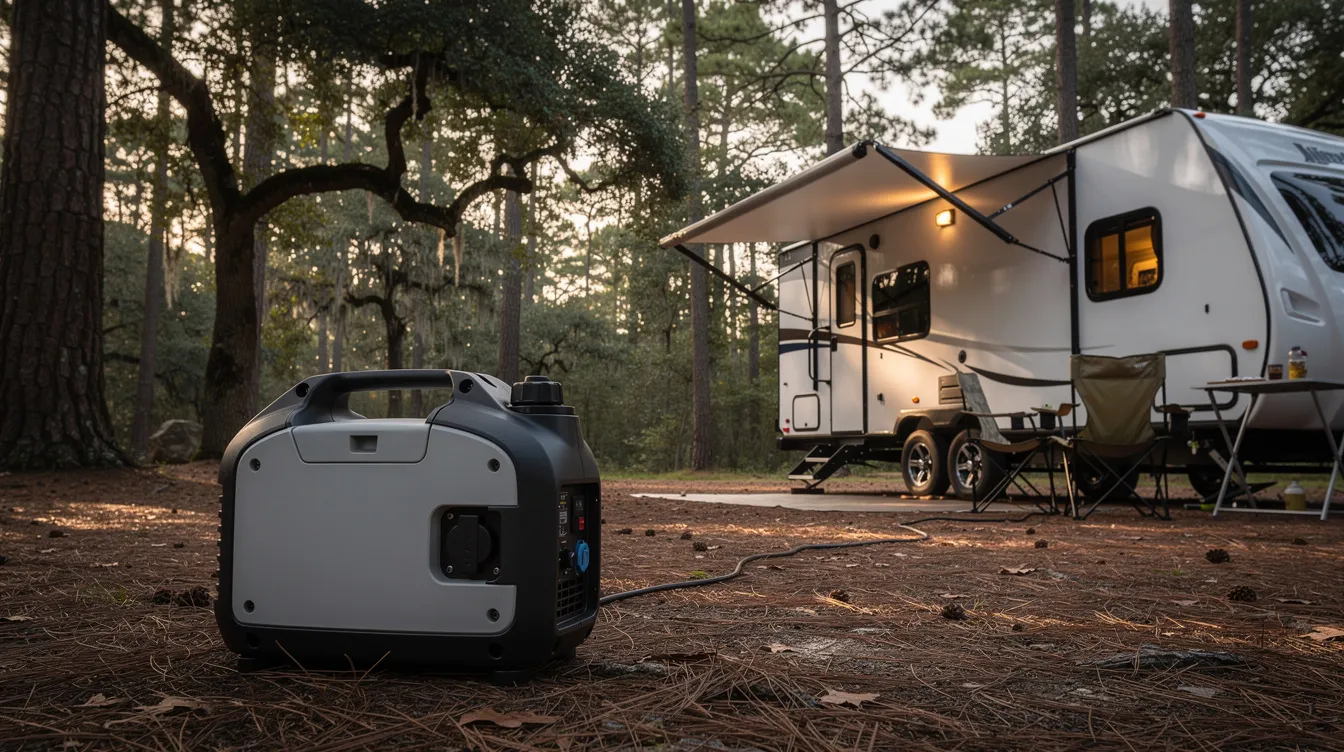
Choosing the Right 30 Amp RV Inverter Generator (Real Models & Use Cases)
Not every model will fit your needs. Match your buying decision to how you actually camp.
Weekend warriors: A champion-class 3,200–3,500W unit like the Champion 200988 offers electric start, manageable weight under 100 lbs, and 8–12 hours run time at quarter load. Easy to handle in and out of a truck bed.
Extended boondockers: Models like the Westinghouse iGen4500 or Honda EU3200i work well for off-grid living. Look for remote start, larger fuel tanks, and compatibility with solar-plus-battery setups so you can live quietly during daytime hours without waiting on the generator.
Full-time or work-from-RV users: Consider 3,500W+ units or two 2,000W inverters in parallel for redundancy. Many digital nomads now pair generators with 200–400Ah lithium banks to reduce run time – a server of sorts for mobile power needs.
A dual-fuel capability allows generators to run on gasoline or propane. Propane stores longer and burns cleaner, while gasoline offers the widest access at fuel stations. Portable generators should weigh under 100 lbs for ease of transport. Before buying, check the product page and reviews on amazon or the manufacturer’s www site. Make sure the website uses a secure http connection – legitimate retailers run a security service that filters malicious bots. You may see a respond ray id or verification successful message displayed before the page loads, confirming the server granted you access. One common mistake is skipping this step and entering payment info on an unverified edgesuite-cached bot page without permission.
Safety, “Security Verification,” and Maintenance Tips
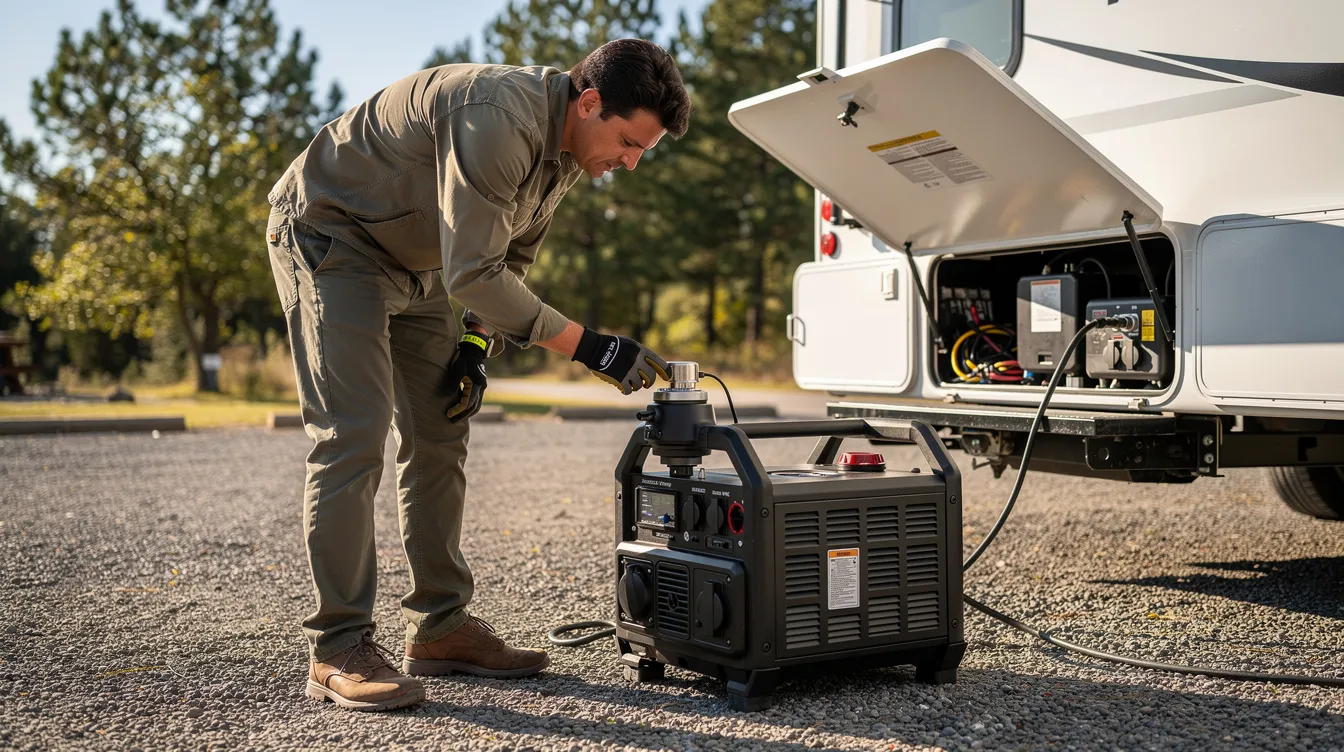
Security verification means confirming your generator, cords, and RV electrical system are safe before relying on them. Modern generators often include carbon monoxide monitoring features, but regular maintenance can prevent most generator-related accidents.
Pre-use checklist:
- Inspect cords and plugs for damage – ensure the 30 amp TT-30R outlet or adapter fits securely with no loose prongs.
- Use an RV surge protector or EMS that displays voltage and error codes to protect your system.
- Proper grounding is essential for generator safety. If you’re confused about floating versus bonded neutral, consult an RV technician.
CO safety: Carbon monoxide is an invisible killer from generators. Always run your unit outdoors, at least 15–20 feet from windows, doors, and vents. Ensure RV CO detectors are working and current.
Maintenance schedule:
- Oil change after the first 20–25 hours, then every 50–100 hours
- Air filter check monthly in dusty conditions
- Spark plug and fuel system inspection annually
- Fuel stabilizer for off-season storage
Consistent security verification and maintenance help avoid issues like nuisance shutdowns and damaged electronics during peak summer trips.
FAQ: 30 Amp RV Inverter Generators
These questions address common edge cases and lingering concerns not fully covered above.
Can I plug my 30 amp RV directly into a 3,000W inverter generator?
Yes – most 3,000–3,500W inverter generators include a 30 amp TT-30R outlet or work with a properly rated adapter. Use a surge protector and confirm wiring passes basic security verification checks before applying heavy loads.
Is a 2,000W inverter generator enough for a 30 amp RV?
A single 2,000W unit usually cannot start the RV air conditioner, but it can handle lights, fans, charging devices, and the fridge on propane. Many RVers run two 2,000W inverters in parallel to reach 30 amp-class output while keeping portability.
Do I need a soft-start kit on my RV AC for a 30 amp inverter generator?
Not mandatory, but a soft-start kit reduces AC startup surge by 60–75%, making it far easier for 3,000–3,200W generators to handle a 13,500 or 15,000 BTU unit. Highly recommended for anyone camping in hot climates or at altitude.
How does altitude affect my 30 amp RV generator performance?
Gasoline engines lose roughly 3.5% power per 1,000 feet above sea level. At 7,000 feet, a 3,500W generator may effectively behave like a 2,700–3,000W unit. Size up or reduce simultaneous loads when camping in Colorado or Utah.
Can I run my 30 amp RV inverter generator while driving?
Some RVers do, but it raises legal and safety questions. You need secure mounting, proper exhaust direction, and strict CO precautions. Check local regulations and manufacturer guidelines – request permission from your RV manufacturer if unsure – and limit use while in motion to truly necessary situations like pet safety in extreme heat.