Planning a living room inside a tiny house is equal parts exciting and nerve-wracking. Every sofa, shelf, and paint swatch carries outsized weight when your entire home fits under 400 square feet. A living room mood board gives you a low-risk way to experiment with colors, textures, furniture, and lighting before you spend a single dollar-or drill a single hole.
This guide is built specifically for small-space and tiny house living rooms, with step-by-step instructions, HDR mood board images, and a complete 2026 case study you can adapt to your own build.
Key Takeaways
- A living room mood board is a visual tool made of photos, textures, and color swatches that helps tiny house owners define the exact room mood before buying furniture or decor.
- This guide focuses on living rooms under 400 sq ft, using high-resolution HDR mood board images to test layouts, colors, and lighting in realistic detail.
- You will learn how to create a room mood board step by step: define your mood, gather inspiration images, build a color palette, and choose furniture, finishes, and lighting.
- The article includes a concrete 2026 “Calm & Cozy” example for an 18 m² living room, plus printable and digital mood board options.
- The FAQ covers budget tips, free tools, and how to adapt a design mood board to multi-use tiny living spaces.
What Is a Living Room Mood Board (and Why Tiny Homes Need One)
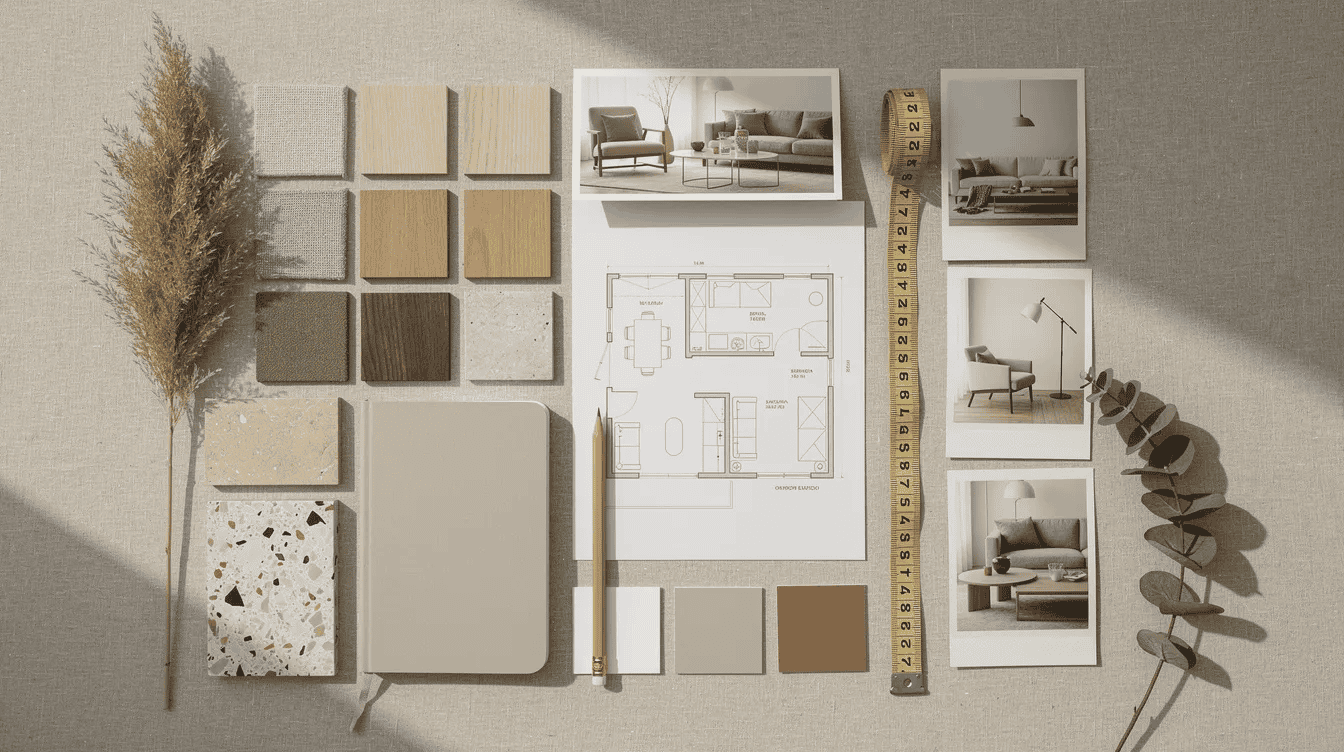
A mood board is a curated collection of images, colors, textures, and product photos arranged on a single page-digital or physical-to capture the overall feel of a space before you build or decorate it. In the context of tiny homes, a living room mood board narrows that concept to one critical zone: the area where you sit, relax, entertain, and often sleep.
The difference between a general design mood board and a focused living room mood board is scope. A general board captures your whole-home style and vibe. A living room mood board zooms in on layout, seating shape, storage space, wall color, and lighting for a single room-often the most used space in a tiny house.
When your living room is only 2.5 × 3 m (about 8 × 10 ft), mood boards reduce overwhelm by letting you see whether a sofa, rug, and coffee table actually fit together-visually and physically-before anything is purchased.
Practical benefits at a glance:
- Avoid mismatched purchases that waste money
- See how colors look together under your specific lighting
- Test whether furniture dimensions leave enough walkway (minimum ~90 cm)
- Pre-visualize a room that must double as a bedroom, office, or dining nook
At Explore Tiny House, we use lifestyle photography and HDR mood board images to help readers picture their dream living room mood with accurate light and shadow detail.
Clarify Your Tiny Living Room Mood and Function
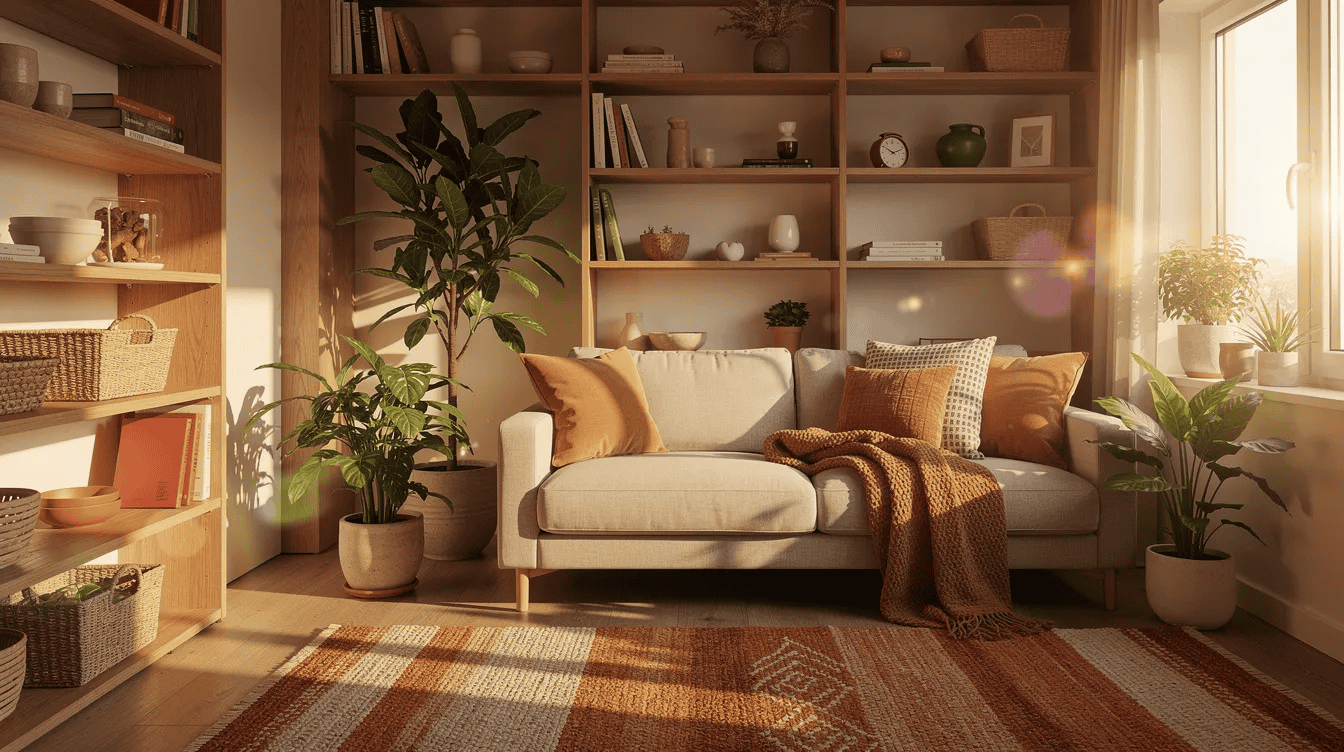
Before you collect a single picture, ask yourself: what does daily life look like in this room? Are you reading alone most evenings, hosting two to four guests on weekends, working remotely from the couch, or unwinding after outdoor adventures? Your answer shapes every choice on the mood board.
Example mood directions to consider:
Mood Label | Core Feel | Key Materials |
|---|---|---|
Calm & Cozy Cabin | Warm, grounded, soft | Wool, oak, linen |
Japandi Minimalist | Airy, clean, restrained | Light wood, cotton, stone |
Organic Modern | Sophisticated, natural, modern | Boucle, rattan, mango wood |
Boho Traveler | Playful, layered, fun | Kilim textiles, macramé, brass |
Industrial Loft on Wheels | Edgy, stylish, urban | Steel, concrete, leather |
Choose three to five mood words-such as warm, airy, grounded, playful, or rustic-and write them at the top of your room mood board as a design compass. For more style inspiration, browse our top aesthetic tiny home styles.
Next, list the core functions your living room must cover in a tiny house: sleeping on a sofa bed, hiding a projector, fitting a collapsible dining table, or carving out storage space for outdoor gear. These mood and function notes will drive every later decision, from sofa shape to lighting type.
Gather Inspiration: High-Quality HDR Images, Textures, and Real Tiny Rooms
High-resolution, HDR-quality images matter for mood boards because they capture both the bright highlights near windows and the deep shadows in corners-giving you a far more accurate picture of how colors behave in a room with limited natural light. Standard photos often misrepresent tiny spaces by blowing out windows or losing detail in dark areas.
Where to find inspiration images:
- Explore Tiny House galleries and published posts
- Pinterest boards tagged “tiny house living room” or “small space design”
- Instagram hashtags like #tinyhouselivingroom (recent 2024–2026 posts)
- Small-space interior design books and shelter magazines
Save 20–40 images that match your chosen room mood. Include whole-room shots for scale, close-ups of furniture, accent pillows, rugs, wall treatments, shelving, and storage benches suited to small footprints.
Collect texture close-ups too-linen, boucle, rattan, oak, cork, clay, wool-photographed in good natural light. You can also snap your own smartphone photos of favorite cafes, cabins, or tiny homes you have visited and add them to the mood board as life-style references.
Choosing Tools: Digital vs. Physical Room Mood Board
Both digital and physical mood boards work. The choice depends on whether you prefer dragging images on a screen or pinning real fabric swatches to foam board.
Free digital tools (2026):
- Canva – thousands of mood board templates, unlimited free designs, supports high-res HDR images
- Milanote – polished infinite canvas (free up to 100 cards)
- Google Slides – simple, shareable, works on any device
- Pinterest – great for collecting, limited for precise layout
According to a 2026 comparison of free mood board tools, Canva and Milanote remain the top picks for beginners who want to create polished boards fast.
For a physical board, grab an A3 or A2 foam board, print photos on matte paper, bring home paint swatches from the hardware store, and request real fabric samples from upholstery shops. Tiny house owners often prefer digital boards so they can try multiple layouts quickly and share them with builders or partners on mobile devices.
Inside your chosen tool, create separate folders or pages for “Living Room Mood,” “Color Palette,” and “Furniture & Storage” to stay organized.
Build Your Color Palette for a Tiny Living Room
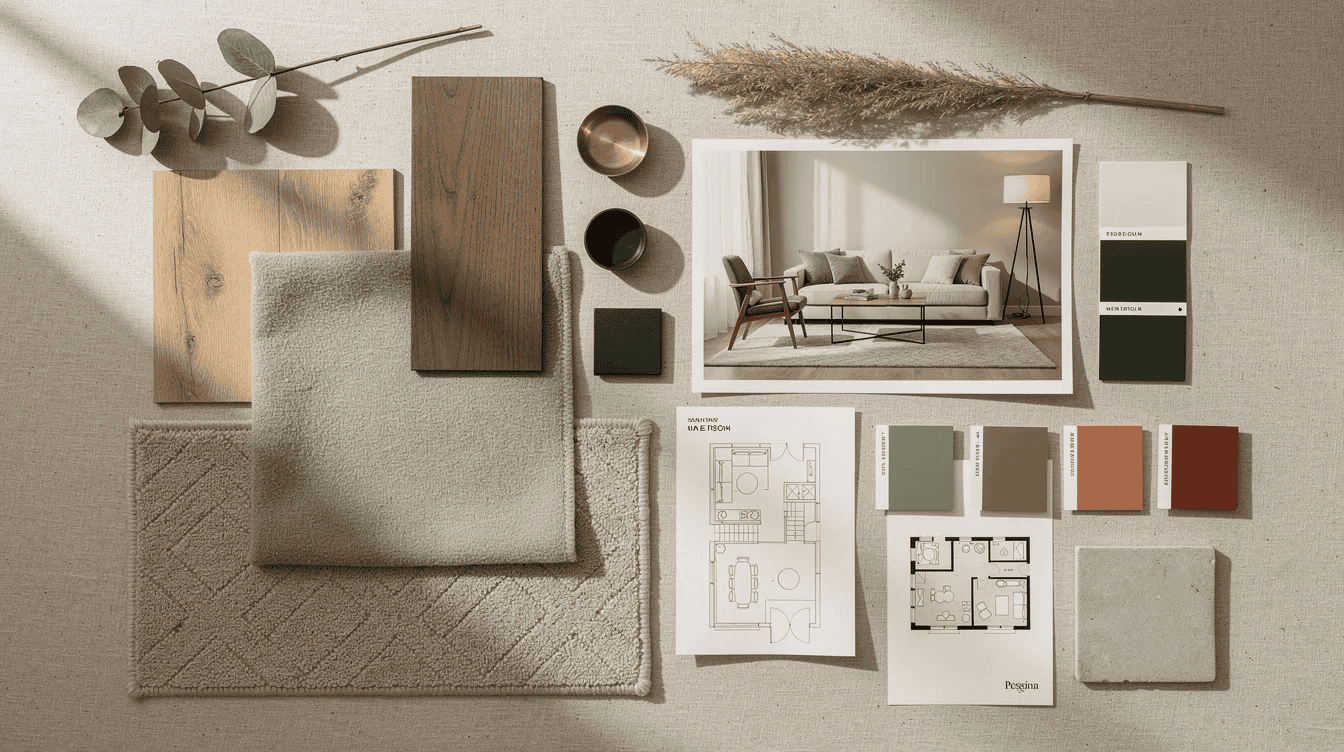
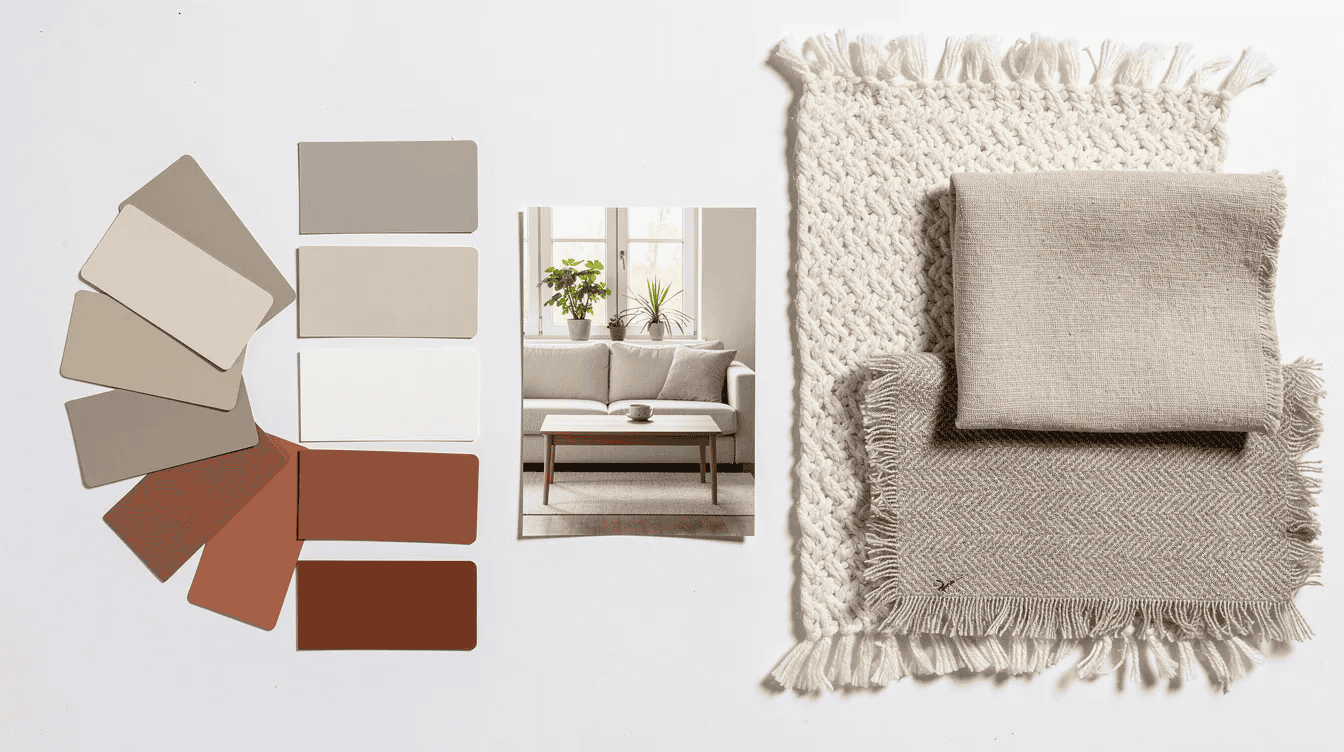
Small living rooms in tiny houses benefit from a limited, cohesive color palette to avoid visual clutter. A modern living room often features a warm neutral color palette, and that approach works beautifully at a compact scale.
Use the 60-30-10 Rule: roughly 60 % dominant neutrals (walls, large furniture), 30 % supporting tones (rug, curtains, secondary furniture), and 10 % accent colors (cushions, art, decor). A harmonious mix of warm neutrals and grounding tones is ideal for color palettes in tiny spaces.
Three palette ideas:
- Calm & Cozy (2026): warm white walls, oatmeal sofa, oak wood accents, sand-toned rug, cinnamon-brown cushions
- Japandi Mist: pale greige walls, charcoal linen couch, birch shelf, stone-grey rug, muted sage pillows
- Desert Modern: creamy white walls, camel leather chair, mango wood console, jute rug, terracotta accent pillow
Add paint chips, color blocks, or digital hex codes onto a dedicated zone of your mood board labelled “Living Room Color Palette.” Remember to consider window orientation-north-facing rooms skew cool, south-facing rooms run warm-and use HDR room photographs that show how chosen colors behave in low light, evening lamp light, and sunny daytime.
Furniture, Storage, and Layout for Small Living Rooms
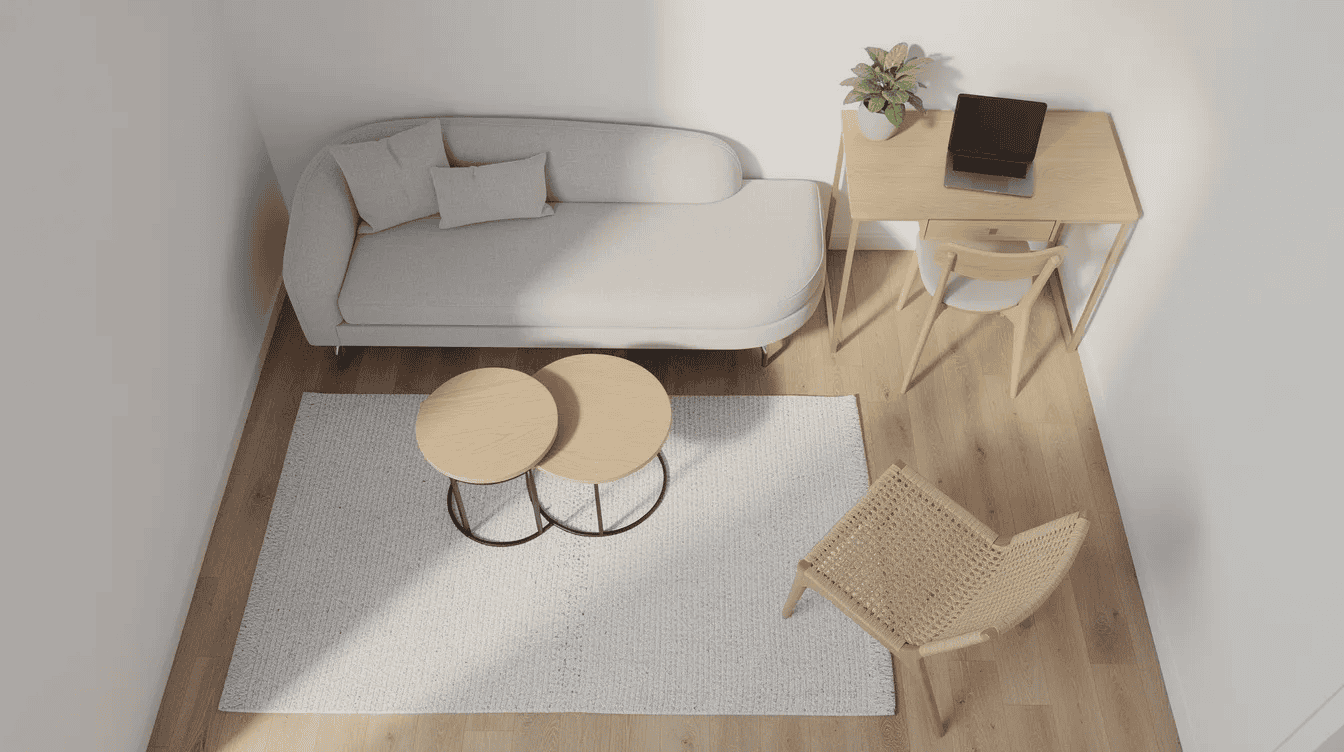
Every piece of furniture in a tiny house living room must earn its place by combining comfort, storage space, and flexibility. With walkways often dropping to 90 cm, there is zero room for dead-weight decor.
Tiny-friendly furniture for your room mood board:
- A 2–3 seat sofa (≈ 180 cm wide) with hidden storage or sofa bed function. Curved sofas enhance comfort and style in living room design, and their rounded shape softens a tight layout.
- A nesting coffee table (≈ 60 × 80 cm) that tucks away when you need floor space
- Wall-mounted shelves-each shelf doubles as display and storage
- A slim console (≈ 120 cm) that doubles as a desk
- Woven lounge chairs that add natural materials to a modern room without visual heaviness
- Foldable stools or poufs for guests, stackable when not in use
For more multi-purpose ideas, check out our guide to tiny house furniture ideas and tiny house kitchen table solutions.
Add light annotations under each item image on the mood board (e.g., “180 cm wide storage sofa, fits 2 people”) so you-and your builder-can confirm everything fits before you purchase.
Lighting and Atmosphere: Setting the Living Room Mood
Lighting is the fastest way to shift room mood in a tiny space, from focused work zone to calm evening retreat. Layered lighting creates a refined atmosphere in living rooms of any size, and in a small room, it is absolutely essential.
Three layers to represent on your mood board:
Layer | Purpose | Example |
|---|---|---|
Ambient | Overall illumination | Compact ribbed pendant (30–40 cm shade), track lighting |
Task | Focused activity light | Swing-arm wall sconce, adjustable reading lamp |
Accent | Mood and detail | LED strip under a shelf, candles, fairy lights |
For a small living room, try a ribbed white pendant centered over the living area, an arched floor lamp beside the sofa, and a warm LED strip running under a wall shelf. Stick to warm light color temperatures-2700 K for a cozy, inviting glow or 3000 K for neutral warm-and add those notes under each lighting image on the mood board.
Include at least one evening-shot HDR mood board image so you can visualize how the space feels after dark. For more atmosphere ideas, explore our coastal tiny home interiors collection.
Textures, Materials, and Sustainable Choices
In a tiny home you see and touch every surface daily, so choosing the right textures is crucial to living room comfort. Textiles are essential for creating a cozy atmosphere in living rooms-and textural variety in soft furnishings enhances the coziness of a room far more than color alone. Incorporating tactile materials can prevent neutral schemes from feeling flat.
Sustainable material ideas for your mood board:
- FSC-certified oak or birch for shelving and table surfaces
- Bamboo or mango wood for consoles and decorative detail
- Recycled wool throws and linen curtains
- Jute or sisal rug for a grounding, natural feel
- Low-VOC matte or eggshell wall paint
Large-scale abstract art with muted earth tones contributes to a warm decor style and can serve as a beautiful focal piece even in a limited wall space. Greenery helps soften modern edges in interior design, so add a trailing pothos on a shelf or a small fiddle-leaf fig in a corner. Biophilic elements like indoor plants make spaces feel inviting without taking up precious floor area.
Use close-up HDR images to show tactile contrast on your mood board: a chunky knit blanket next to smooth timber, boucle upholstery against a flat plaster wall. For more on crafted, eco-conscious builds, visit our minimalist tiny houses gallery.
Example: Calm & Cozy Tiny Living Room Mood Board (2026)
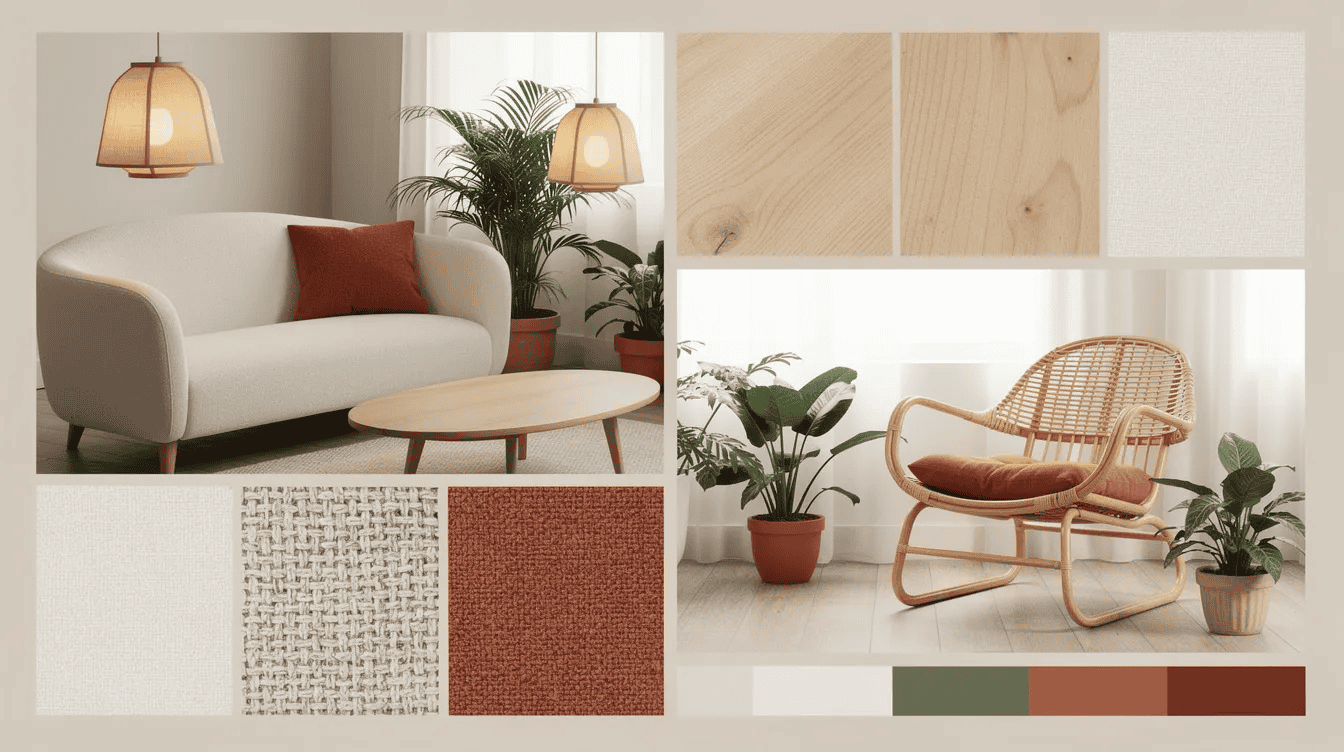
Here is a concrete example: an 18 m² (≈ 194 sq ft) living room inside a 7.2 m long tiny house on wheels, designed in early 2026 to feel like a sophisticated retreat.
Main elements:
- A curved off-white storage sofa (180 cm wide) with beige linen cushions
- A rounded oak coffee table (60 × 80 cm) with a hidden compartment in the middle
- A low media console (120 × 45 cm) doubling as a desk, crafted from sustainable birch
Color and texture choices:
- Warm white walls (low-VOC eggshell finish)
- Oatmeal wool rug (1.5 × 2 m)
- Ribbed ceramic lamp base in cream
- Woven rattan side chair for bringing natural texture into the space
- Terracotta accent pillows and a soft linen throw for subtle contrast
Lighting in this HDR mood board:
- Ribbed white pendant (35 cm shade, 2700 K) centered over the living area
- Slim black arched floor lamp beside the sofa for reading
- Small table lamp on the console for luxurious evening ambiance
This example fills the board with romance and restraint in equal measure-proving that a tiny living room can feel special without clutter.
From Mood Board to Real Tiny Living Room
Moving from concept to action starts with reviewing your finished mood board, setting a realistic budget, and prioritizing purchases in phases so you save money and avoid impulse buys.
Simple 4-step process:
- Finalize your color palette – confirm paint colors and order samples.
- Order key furniture – sofa, table, and bed (if the living room does double duty as a bedroom) come first.
- Add lighting – install ambient, task, and accent layers.
- Layer in textiles and decor – rug, pillows, throws, art, and any collection of small objects that deliver personality.
Tiny-home-specific advice:
- Cut cardboard templates to the exact size of your sofa and table and lay them on the floor before you purchase-this is the best experience for confirming fit.
- If you are building a new house on wheels, confirm furniture weights; every kilogram matters for road-legal towing.
- Prioritize multi-purpose pieces first-a storage couch beats a clean-looking but hollow bench every time.
- Track items purchased against your original mood board and update it as a live design document.
Share your finished living room mood board-and your real-life transformation photos-with the Explore Tiny House community. Drop your link and tags in the comments on our latest post, and let others draw inspiration from your tiny living room journey.
FAQ
How many images should I include in a living room mood board?
Aim for 15–30 carefully chosen images: a mix of whole-room shots for scale, close-ups of textures and materials, specific furniture pieces with known dimensions, lighting examples, and color swatches. Going beyond 40 images often creates clutter that makes it harder to synthesize a clear vision. Quality over quantity delivers the best results.
Can I use a living room mood board if my tiny house is still just a plan?
Absolutely-mood boards are ideal in the planning phase, even before 3D drawings or blueprints exist. Creating one early helps guide decisions about window placement, wall color, ceiling height, and built-in storage before the building stage locks those details in. Under IRC Appendix Q, habitable rooms must meet minimum dimension and ceiling-height requirements, so pre-visualization helps you stay code-compliant while designing a space you love.
What free tools do you recommend for beginners?
Canva, Google Slides, and Pinterest boards are the easiest starting points. All three work on laptops and phones, support saving high-res photos, and let a person with zero design experience create a polished design mood board in under an hour. Milanote is another strong option if you prefer an infinite-canvas approach.
How do I keep my tiny living room from feeling cluttered if I love bold decor?
Use your mood board to test restraint. Keep big-ticket items-sofa, walls, rug-in neutral tones, then channel bold patterns or colors into small, swap-friendly accents: cushions, a throw, a piece of art, or a single statement chair. Seasonal swapping (terracotta for autumn, deep teal for winter) lets you refresh the room without permanent overwhelm or spending extra money.
Do I need a separate mood board for each room in my tiny house?
It helps to start with one overall home design mood board that captures palette and style, then create smaller boards for each zone-living room, sleeping loft or bedroom, kitchen, bathroom-that share a consistent look. This keeps everything cohesive while letting each space address its own functional needs, from a luxurious reading nook to a hide-away laundry corner.