
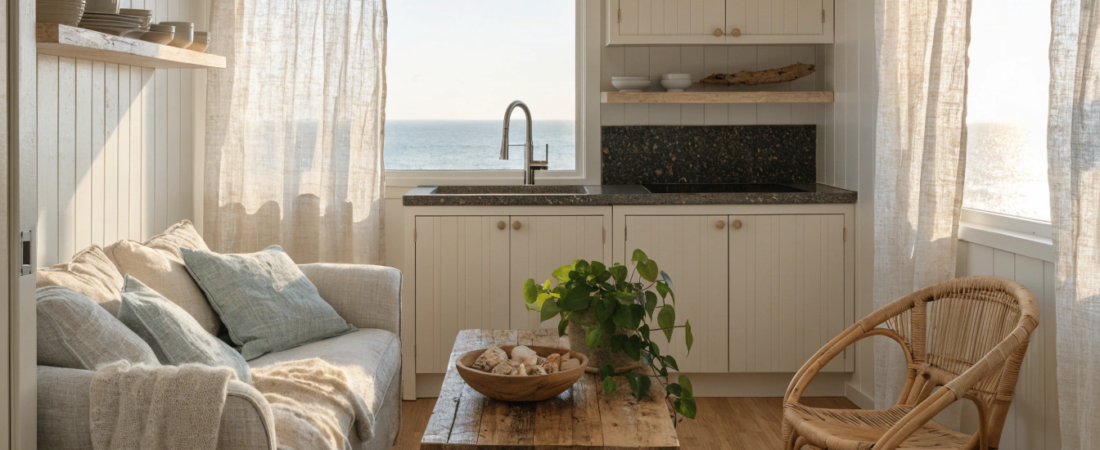


Coastal tiny home interiors mix the calm of the sea with smart, space-saving design. I love how these spaces feel light, open, and connected to nature — even when you’re working with just a few hundred square feet. The right colors, textures, and furniture can make a small home feel relaxed and airy instead of tight and cluttered. You don’t need to live on the water to pull this off. Whether you’re a few miles from the beach or landlocked, that easy seaside vibe is totally within reach. I’ve rounded up 12 of my favorite looks, each with simple, practical tips you can start using today. Let’s get into it.
- 1. Start with a Light, Ocean-Inspired Color Palette
- 2. Add Texture with Shiplap Walls
- 3. Choose Multi-Functional Furniture
- 4. Maximize Natural Light
- 5. Go Vertical with Smart Storage
- 6. Use Natural, Eco-Friendly Materials
- 7. Pick Coastal Lighting with Character
- 8. Add Plants and Greenery
- 9. Use Nautical Accents — But Keep It Simple
- 10. Open Up the Floor Plan for Indoor-Outdoor Flow
- 11. Hang Coastal Art and Personal Touches
- 12. Layer Soft, Textured Fabrics
- Bringing It All Together
1. Start with a Light, Ocean-Inspired Color Palette
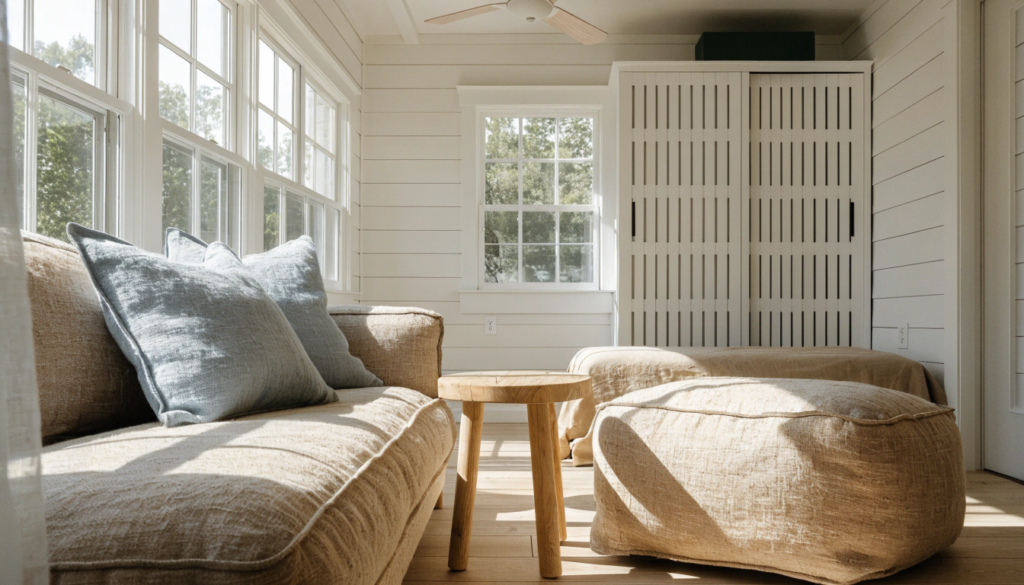
Color sets the whole mood. In a small space, light and soft shades do the heavy lifting — they bounce natural light around and make your home feel bigger.
Here’s what works:
- Base neutrals: Creamy white, warm beige, pale gray
- Ocean tones: Soft blue, seafoam green, sea-glass teal
- Accent pops: Deep navy or muted sage on one wall or set of cabinets
A neutral base keeps things flexible too. You can swap pillows and prints by season without repainting a thing.
2. Add Texture with Shiplap Walls
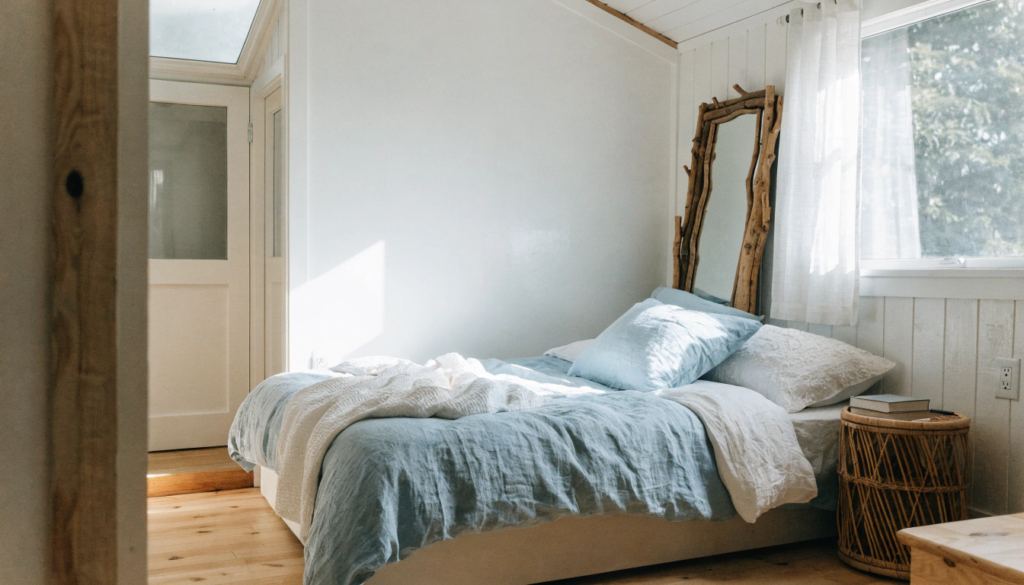
Shiplap gives a room that clean, cottage-by-the-sea feel. Painted white or a soft neutral, it catches light and adds character without crowding the space.
Great spots to use it:
- Behind the bed as a headboard feature wall
- In the kitchen for a fresh, cottage look
- In the bathroom to create a spa-like feel
On a tight budget? Peel-and-stick shiplap panels give you the same look without a big renovation.
3. Choose Multi-Functional Furniture
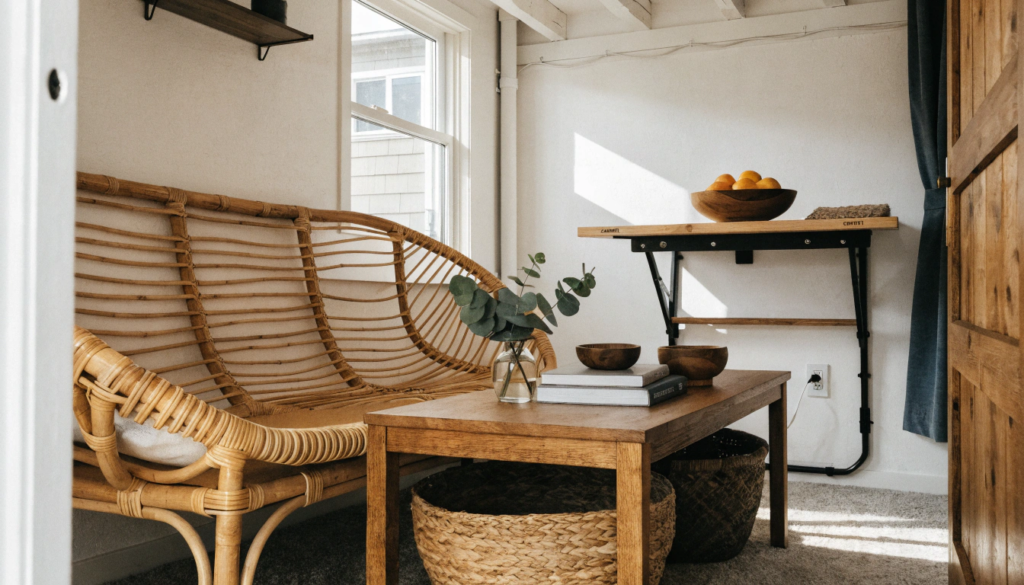
Every piece of furniture in a tiny home has to pull its weight. Multi-functional picks save space and keep things looking tidy.
My go-to choices:
- A fold-down dining table that doubles as a workspace
- A sofa that converts to a guest bed
- An ottoman with hidden storage inside
- Lift-top benches for storing linens or beach gear
Go for light wood, rattan, or linen-slipcovered pieces to keep that easy coastal look. Slipcovers are especially smart near the water — just toss them in the wash after a sandy day.
4. Maximize Natural Light
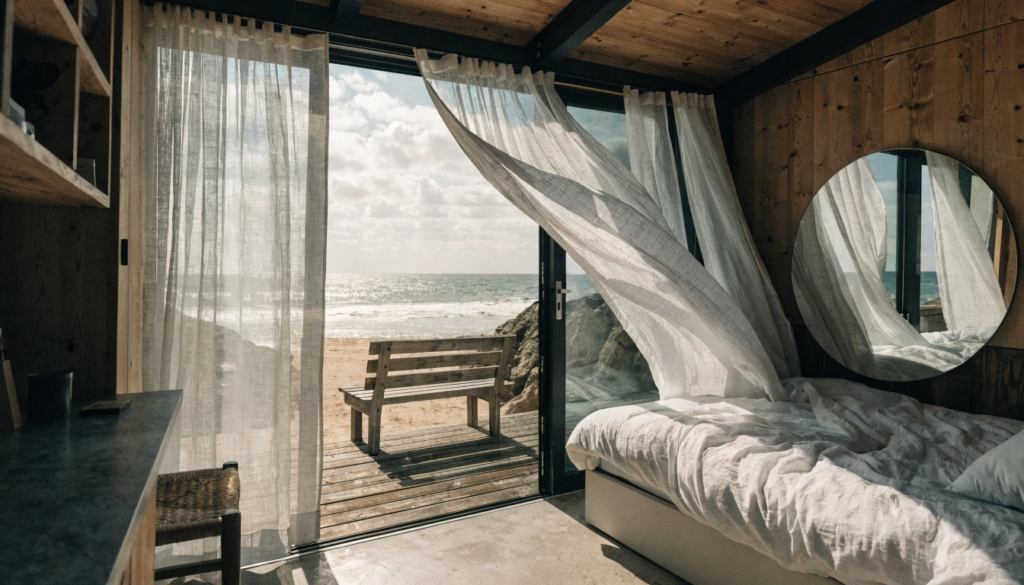
Sunlight is the best tool you have in a small space. The more natural light you let in, the bigger and fresher your home feels.
Easy ways to do it:
- Large windows to draw in light and any views you have
- Skylights to brighten loft sleeping areas
- Sliding glass or French doors that open to the outdoors
- Sheer linen curtains or bamboo shades that filter without blocking light
Place a mirror across from your biggest window. It doubles the light and opens up the room instantly.
5. Go Vertical with Smart Storage
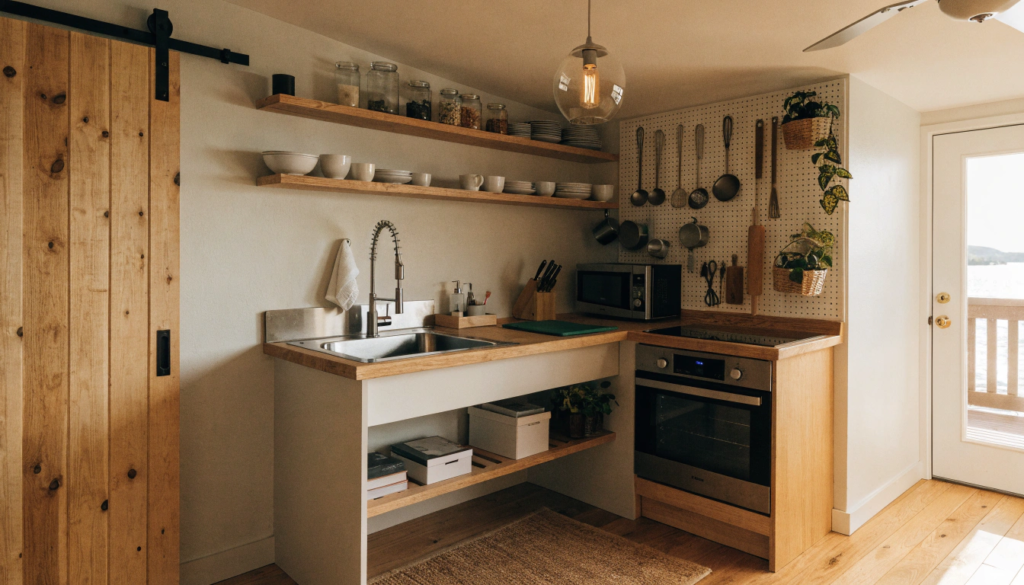
When the floor runs out of room, the walls and ceiling take over. Vertical storage is a game-changer in a small footprint.
Smart spots to build up:
- Floating shelves above doorways or kitchen counters
- Stair drawers if you have a loft
- Under-bed storage bins for seasonal items
- Wall-mounted pegboards and hooks for bags, hats, and tools
Open kitchen shelves do double duty — they free up cabinet space and let you show off pretty coastal dishes or glassware.
6. Use Natural, Eco-Friendly Materials
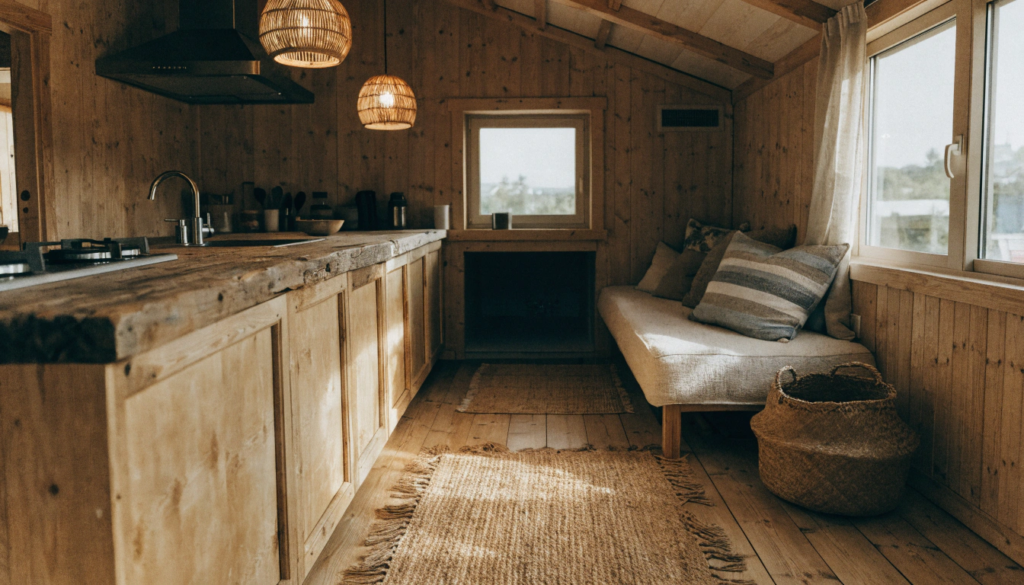
Natural materials are the backbone of coastal design. They also line up perfectly with the eco-friendly values that draw so many people to tiny living.
Best picks:
- Reclaimed wood for counters, shelving, or a feature wall
- Bamboo for flooring and window shades — it grows back fast
- Rattan and wicker for chairs, baskets, and light fixtures
- Jute or sisal rugs for warmth and texture underfoot
These materials hold up well in salty, humid air. And using reclaimed or renewable materials means less waste — a win all around.
7. Pick Coastal Lighting with Character
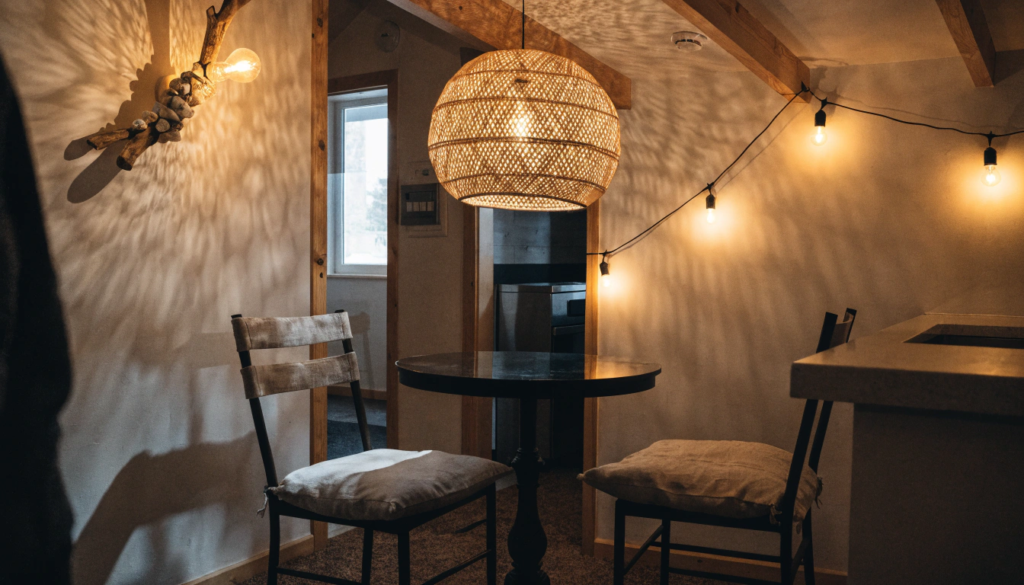
Lighting adds style without eating up any floor space. In a tiny home, a great fixture is one of the easiest upgrades you can make.
Coastal-friendly picks I love:
- Rattan or woven pendant lights over the table or kitchen island
- Driftwood or rope-wrapped fixtures for a natural, beachy feel
- Capiz shell chandeliers for soft, scattered light
- Linen-shade table lamps and string lights for a cozy evening glow
Layer your light sources. One overhead bulb makes a small space feel flat. A mix of pendants, lamps, and accent lights shifts the mood from day to night.
8. Add Plants and Greenery
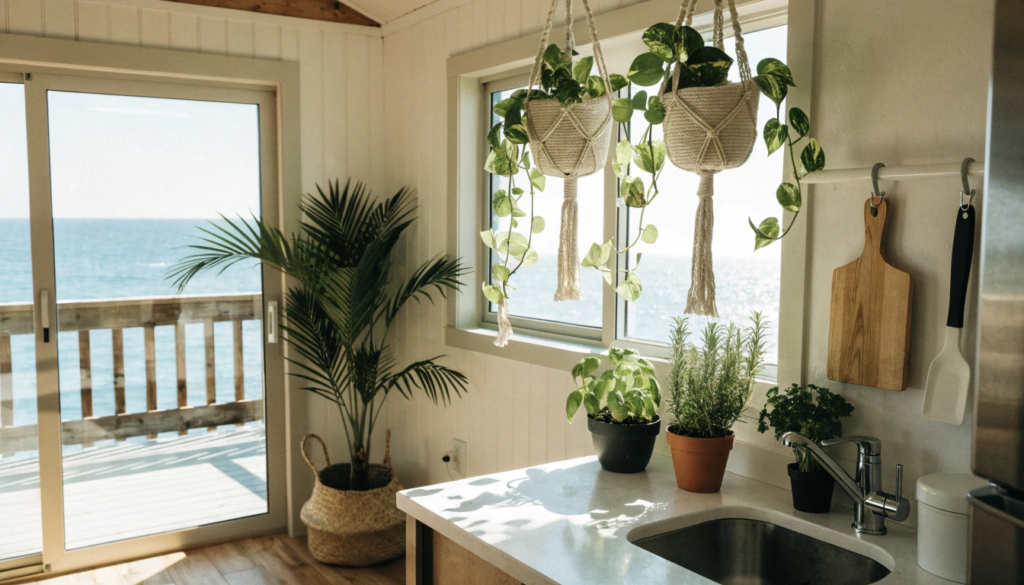
Plants make any space feel alive. They soften the hard edges in a small room, clean the air, and fit the coastal look perfectly.
Easy options for tiny spaces:
- Hanging planters to save counter and floor room
- Wall-mounted pots for trailing vines
- Palms, ferns, or succulents in woven baskets
- A small herb garden on a sunny windowsill
Better air quality matters even more in a tight footprint. A few well-placed plants keep the space feeling fresh and cared for.
9. Use Nautical Accents — But Keep It Simple
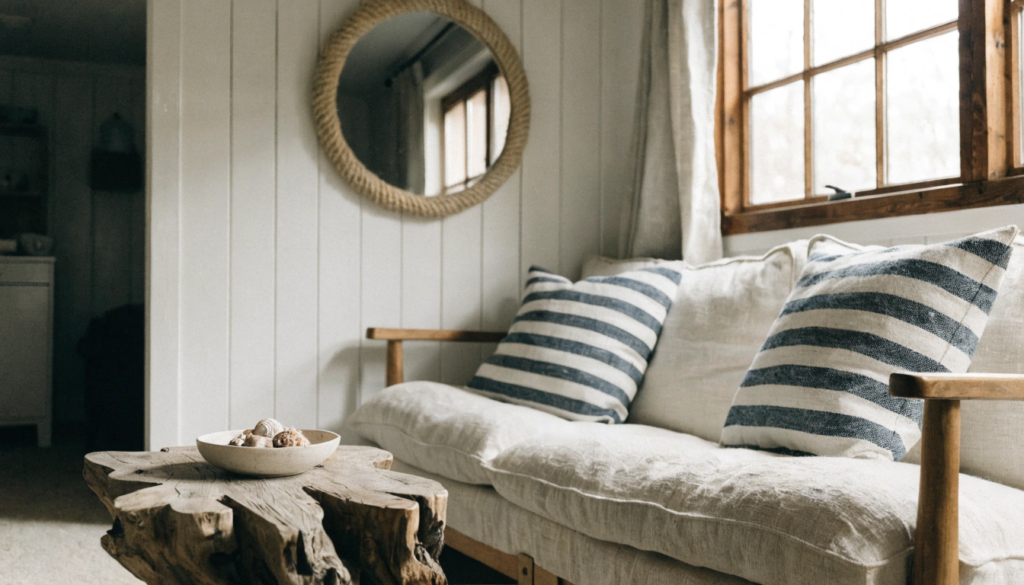
A few nautical details add charm. But a little goes a long way — the goal is a nod to the sea, not a full theme.
Keep it tasteful:
- Navy and white stripes on a pillow or throw
- A piece of driftwood art or a framed coastal map
- Rope details on baskets, mirrors, or drawer pulls
- A bowl of shells you collected yourself
My personal rule: two or three accents per room, then stop. Restraint keeps things looking calm and put-together.
10. Open Up the Floor Plan for Indoor-Outdoor Flow
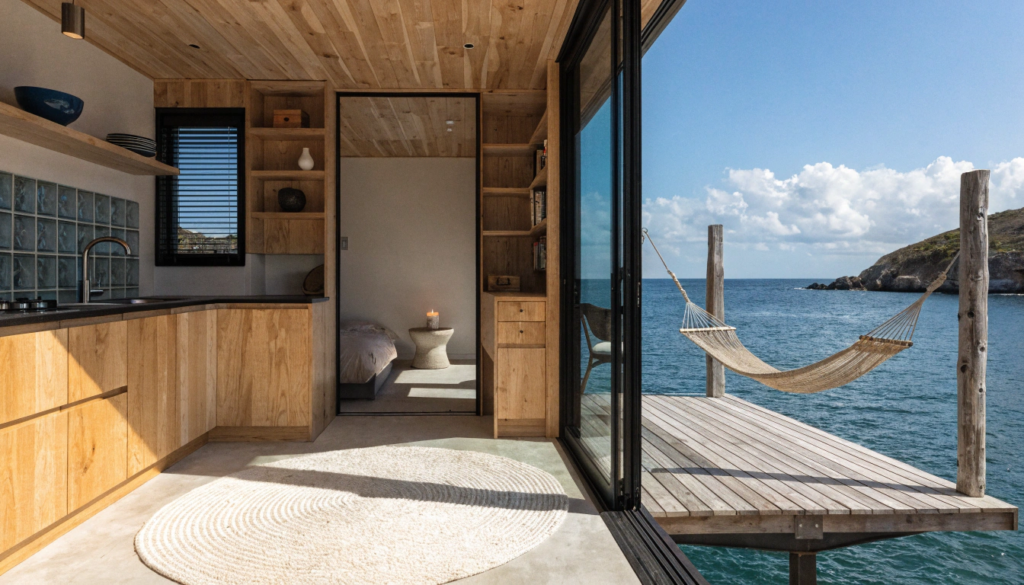
Open layouts make small homes breathe. When your kitchen, dining, and living areas flow together, the whole place feels roomier.
Ways to open things up:
- Skip interior walls between main living areas
- Use sliding or pocket doors so you only divide when you need to
- Add a deck or small patio to extend your usable space outside
- Line up doors and windows so light and air move freely through the home
You get more room without adding a single square foot. That’s what tiny living is all about.
11. Hang Coastal Art and Personal Touches
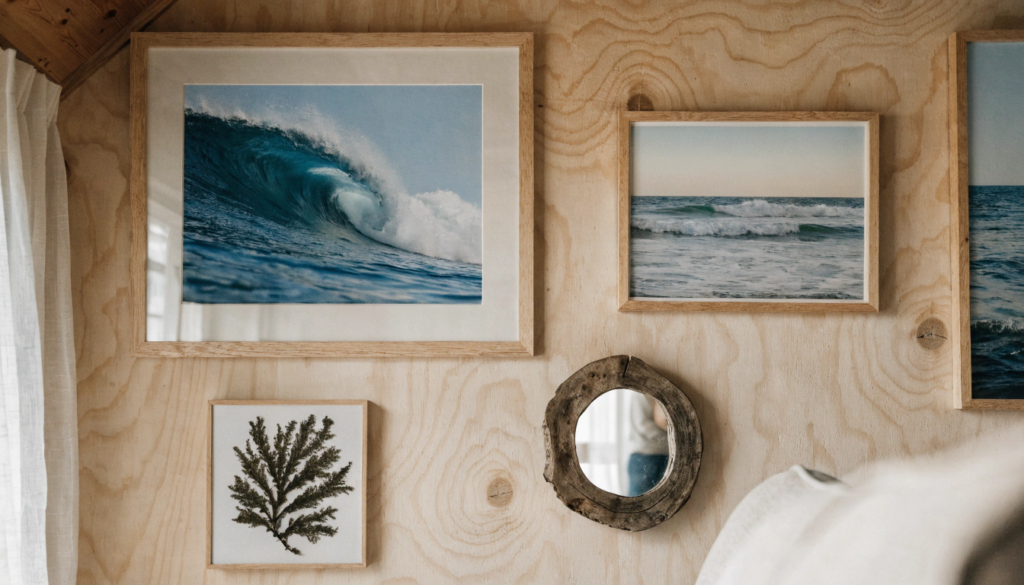
Art makes a house feel like yours. In a small home, a few well-chosen pieces add heart without crowding the walls.
Ideas that work:
- Prints of waves, boats, or quiet seaside scenes
- Framed sea glass or pressed seaweed for a handmade feel
- A driftwood mirror that adds light and texture at once
- Photos from your own trips to the beach
Stick to a simple color story that ties back to your palette. That way, mixed pieces still look like they belong together.
12. Layer Soft, Textured Fabrics
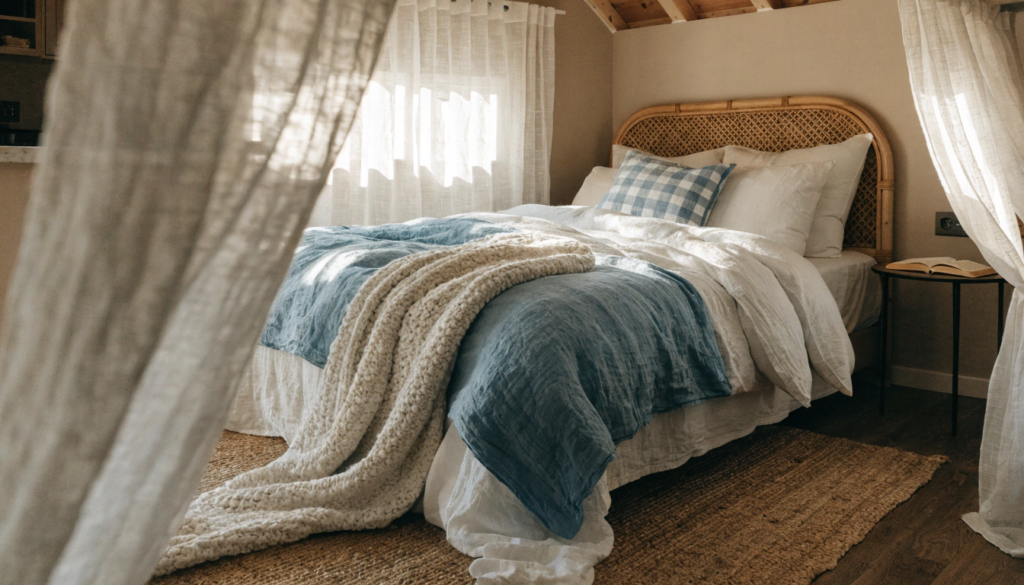
Soft furnishings add comfort and depth. Layering textures gives a small room warmth and keeps it from feeling flat.
Mix and match:
- Linen cushions in ocean blues and sandy neutrals
- Cotton or knit throws for cool nights
- Layered rugs in jute and soft wool to define spaces
- Rattan or canopy headboards for a breezy bedroom focal point
Choose washable, durable fabrics — especially if you live near the sand. They hold up well and clean up fast.
Bringing It All Together
You don’t need a big budget or a big footprint to create a home that feels calm, open, and connected to the sea. Start with a soft color palette, bring in natural materials, and lean on smart storage and multi-use furniture to make every inch count. From there, layer in the finishing touches — plants, coastal art, good lighting, and a few soft textiles. Build it out at your own pace and make it yours. With the right choices, these coastal tiny home interiors can turn even the smallest space into the place you never want to leave.