Introduction: Sample Mood Boards for Tiny Living
A mood board is a visual collage of images, colors, textures, typography, and materials that captures the emotional direction and aesthetic of a design project before a single nail gets hammered. For tiny house planning – where every square inch carries weight – sample mood boards help you lock in style, test material combinations, and avoid expensive mistakes in spaces ranging from 100 to 500 square feet. This guide from Explore Tiny House walks you through concrete mood board concepts, HDR photography ideas, and layout suggestions you can copy or adapt for your own compact build.
Here’s what you’ll find below:
- Six style-specific mood board types for tiny homes, cabins on wheels, and micro-studios
- What to look for when evaluating sample boards for small-space realism
- A step-by-step process for creating your own interior design mood board
- Ready-made mood board ideas for specific tiny house scenarios
Types of Sample Mood Boards for Tiny Houses
Mood boards can be organized by style, by function, or by the lifestyle needs of the people living in a tiny home. Each type below includes visual themes, suggested HDR photography subjects, and the best use cases – so you can find the starting point closest to your project.
Scandinavian Minimalist Tiny House Mood Board
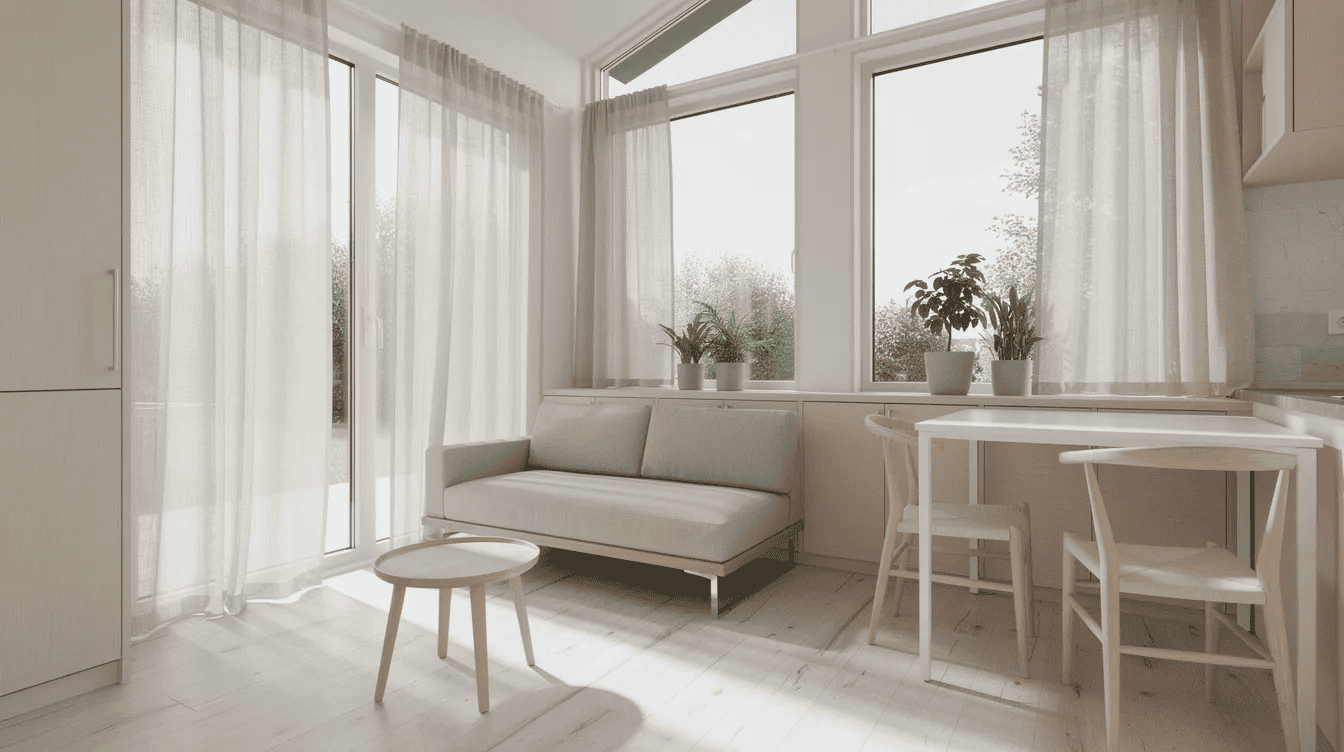
The Scandinavian minimalist board is built on light woods, soft whites, pale grays, and abundant natural light. The mood is calm and clutter-free – an effective mood board in this style communicates a specific feeling of openness even in 200–400 sq ft. HDR image ideas include close-ups of white oak floorboards showing grain detail, matte white cabinetry with concealed handles, linen textiles draped over a reading nook, and soft daylight pouring through large windows where both the outdoor view and interior surfaces are properly exposed.
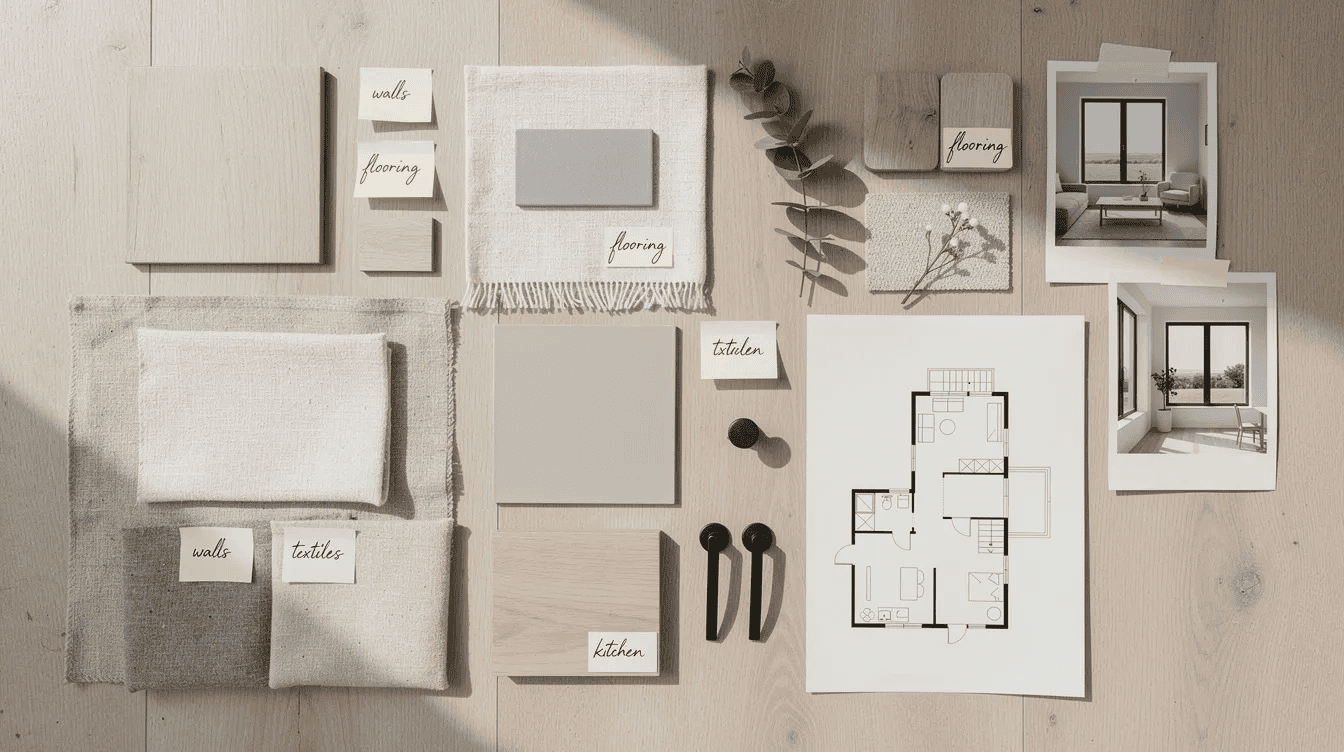
This board works well for full-time Scandinavian tiny homes where brightness is a priority. Include storage imagery – integrated bench seating with hidden drawers, wall-mounted floating shelves, and stair-step drawers – to keep the board grounded in tiny-house reality.
Rustic Cabin-on-Wheels Mood Board
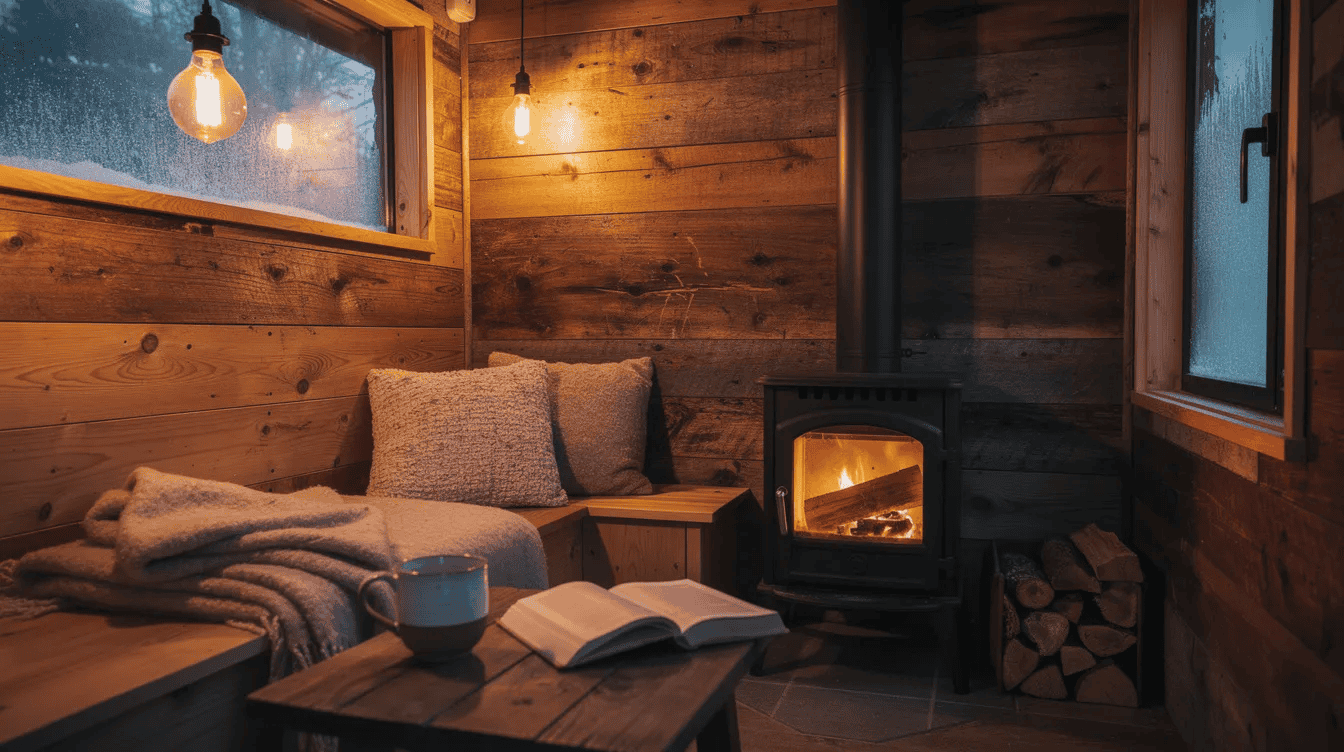
Reclaimed wood, iron hardware, warm ambient lighting, and forest or mountain surroundings define this board. HDR photo suggestions: high-contrast shots of knotty pine walls where shadow detail in the grain is preserved, a cast-iron wood stove glowing against a dark corner, warm Edison bulbs hanging from rough-sawn beams, and foggy woodland exteriors at dawn.
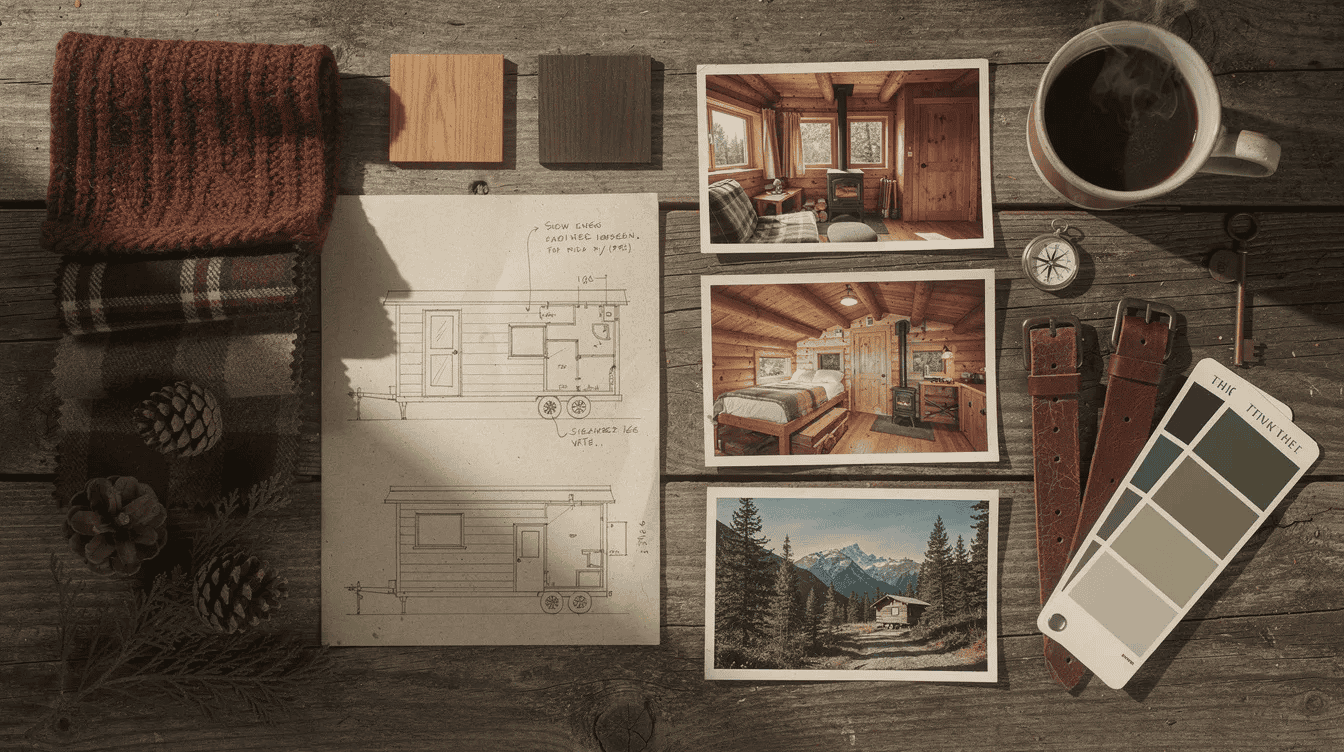
This style suits off-grid or rural tiny houses on wheels and skid-mounted cabins. Textures to highlight include wool blankets, rough-sawn ceiling beams, natural stone hearth surfaces, and worn leather seating. The cohesive color palette – think amber, charcoal, and deep brown – makes disparate images feel like they belong together.
Japandi-Inspired Tiny House Mood Board
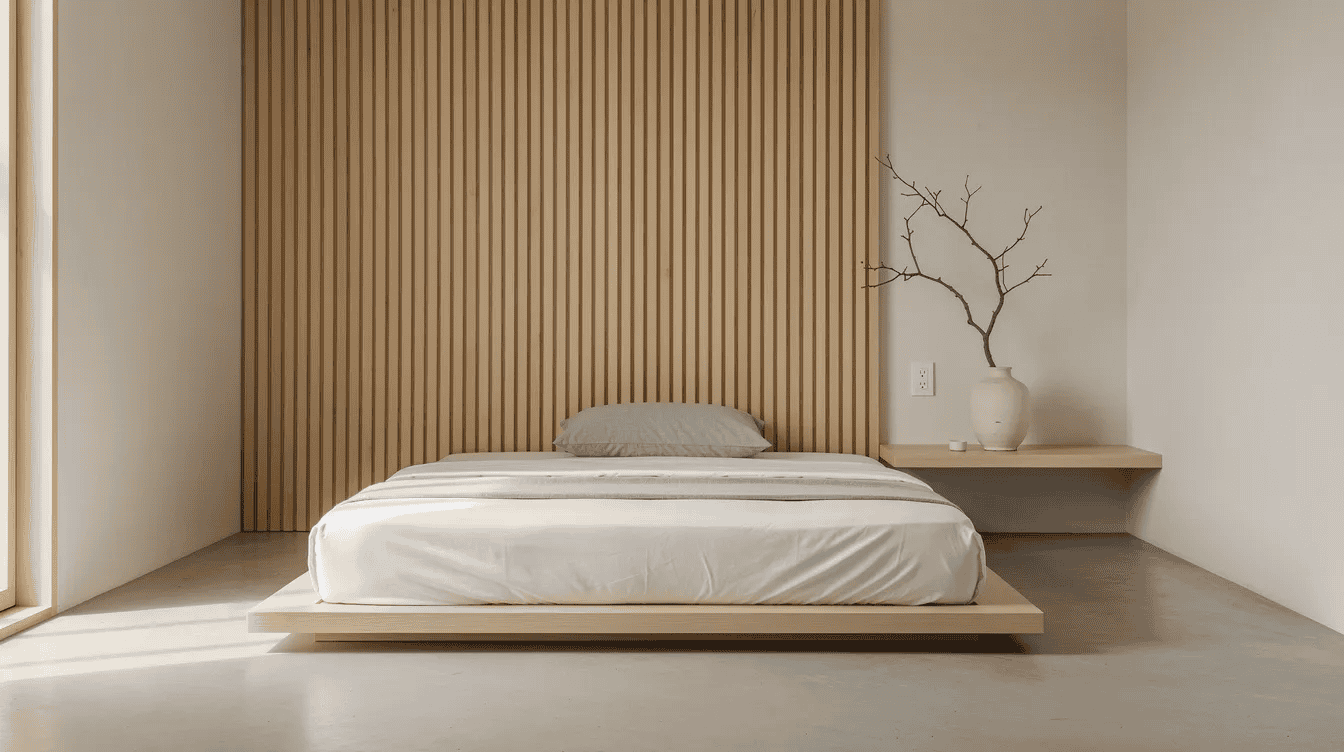
Japandi blends Japanese simplicity with Scandinavian warmth – ideal for compact, serene interiors. Concrete HDR images to gather: tatami-style mats, shoji-inspired sliding screens, low platform beds, pale wood slat walls, and a single bonsai or branch arrangement as a focal point. Inspiration imagery in mood boards should evoke a specific emotion rather than just display random pictures, and here the emotion is quiet intentionality.
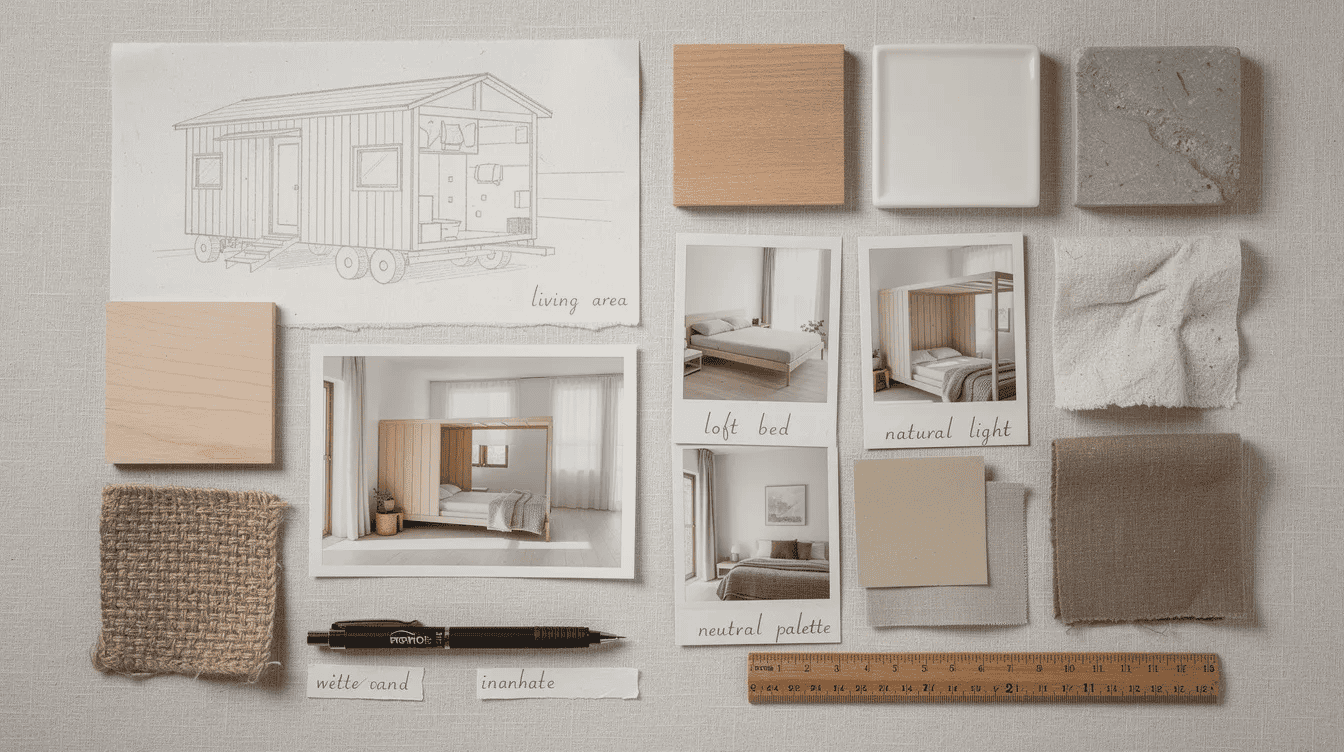
Layout focus for this board leans toward open floor plans with sliding partitions, raised lofts accessed by minimal-profile stairs, and built-in bench dining. Use a muted, natural color palette and soft, balanced lighting across every image for coherence.
Urban Micro-Studio Mood Board
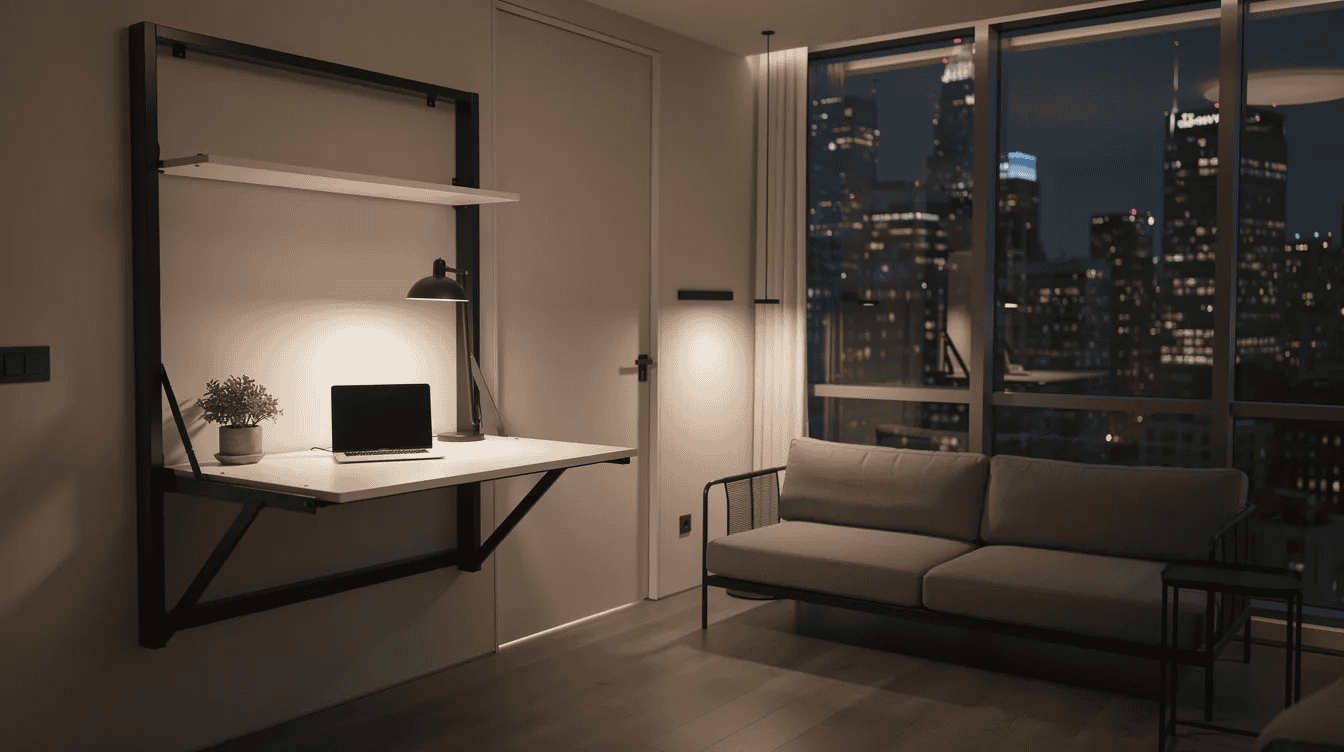
This board targets city-based micro-apartments (150–350 sq ft) or tiny condos. A 140-square-foot triangular micro-apartment in London demonstrated how custom built-ins – bench seating, slide-open cabinets, pullout desks – can pack multiple functions into challenging geometry. HDR photography ideas include night shots with city lights outside large windows, matte black metal frame details, poured concrete textures, and compact kitchenettes with under-counter lighting.
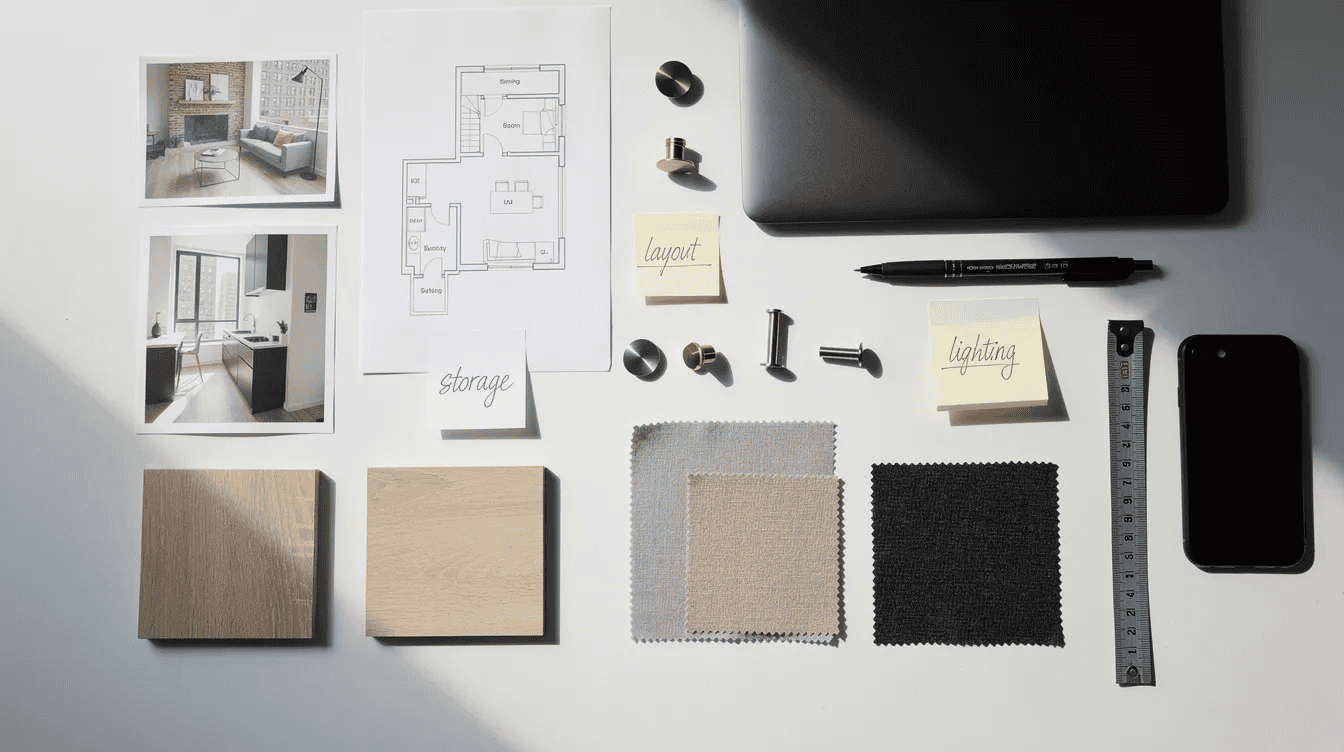
Highlight images of transformable furniture: wall beds, fold-out desks, nesting tables. Color and material themes lean toward charcoals, deep blues, and bold accent art or neon signage for visual energy.
Off-Grid Eco Tiny Home Mood Board
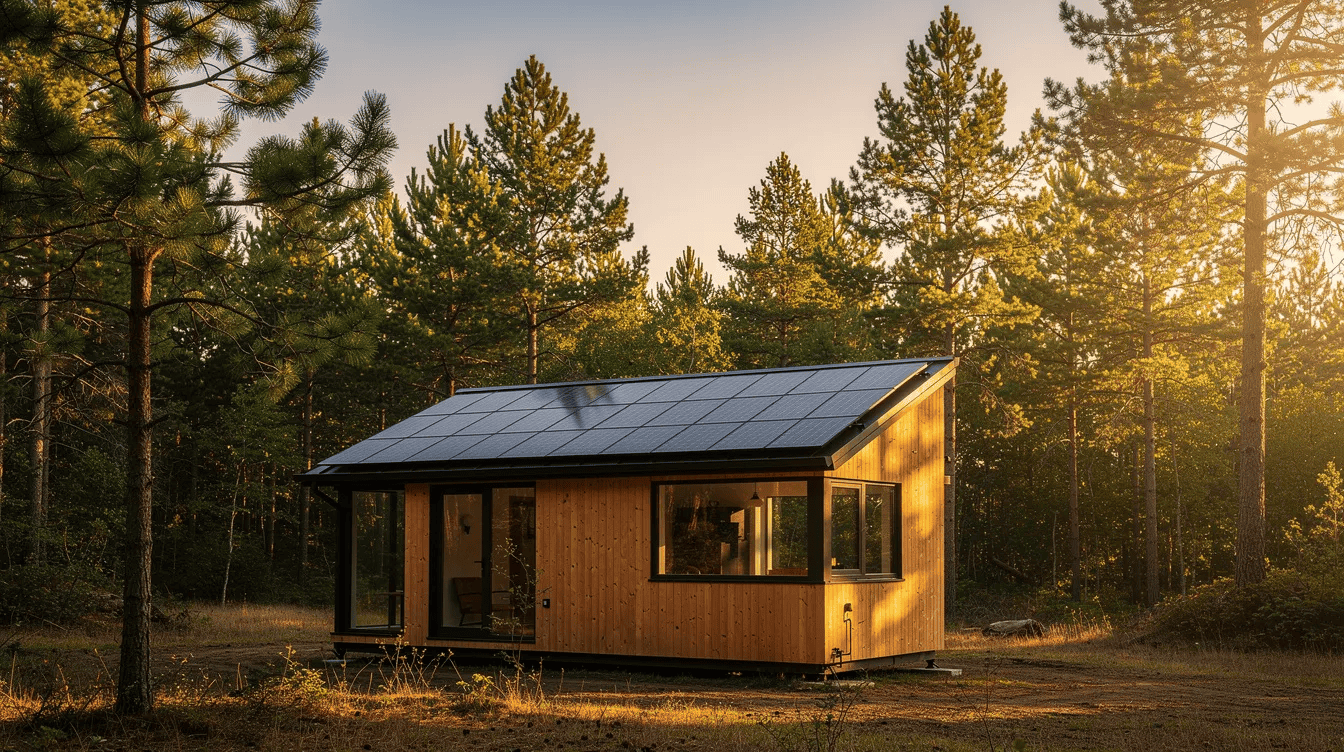
Sustainability is the anchor here: solar panels, rainwater collection systems, natural finishes, recycled materials. HDR image ideas include rooftop solar arrays at golden hour with rich sky gradients, close-ups of bamboo flooring and cork wall panels, hemp insulation cross-sections, and composting toilet setups that look clean and modern.
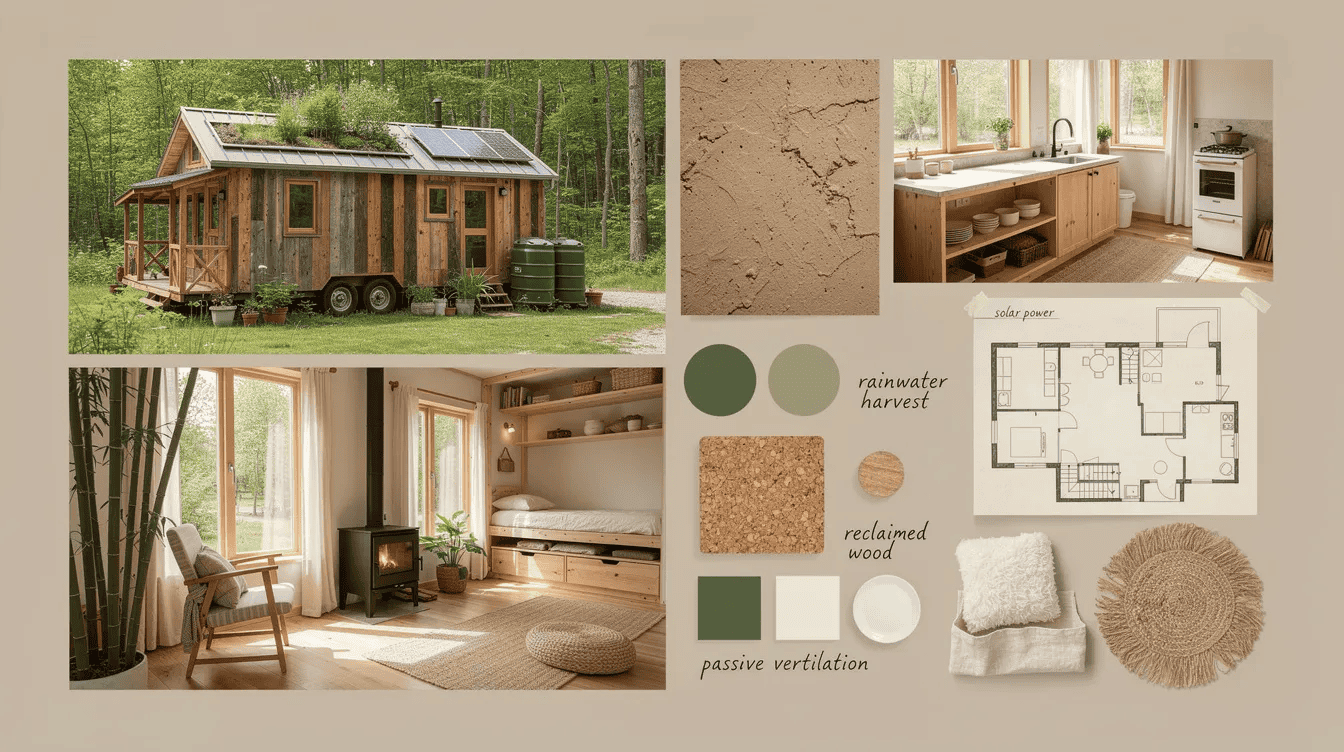
Pair interior shots with nature context: forest clearings, rivers, desert vistas, self-contained tiny houses parked in wild landscapes. Include visuals of low-tech comforts – wool rugs, cast-iron cookware, outdoor showers backed by mountain views – to show that off-grid living doesn’t mean sacrificing comfort.
Family-Friendly Tiny House Mood Board
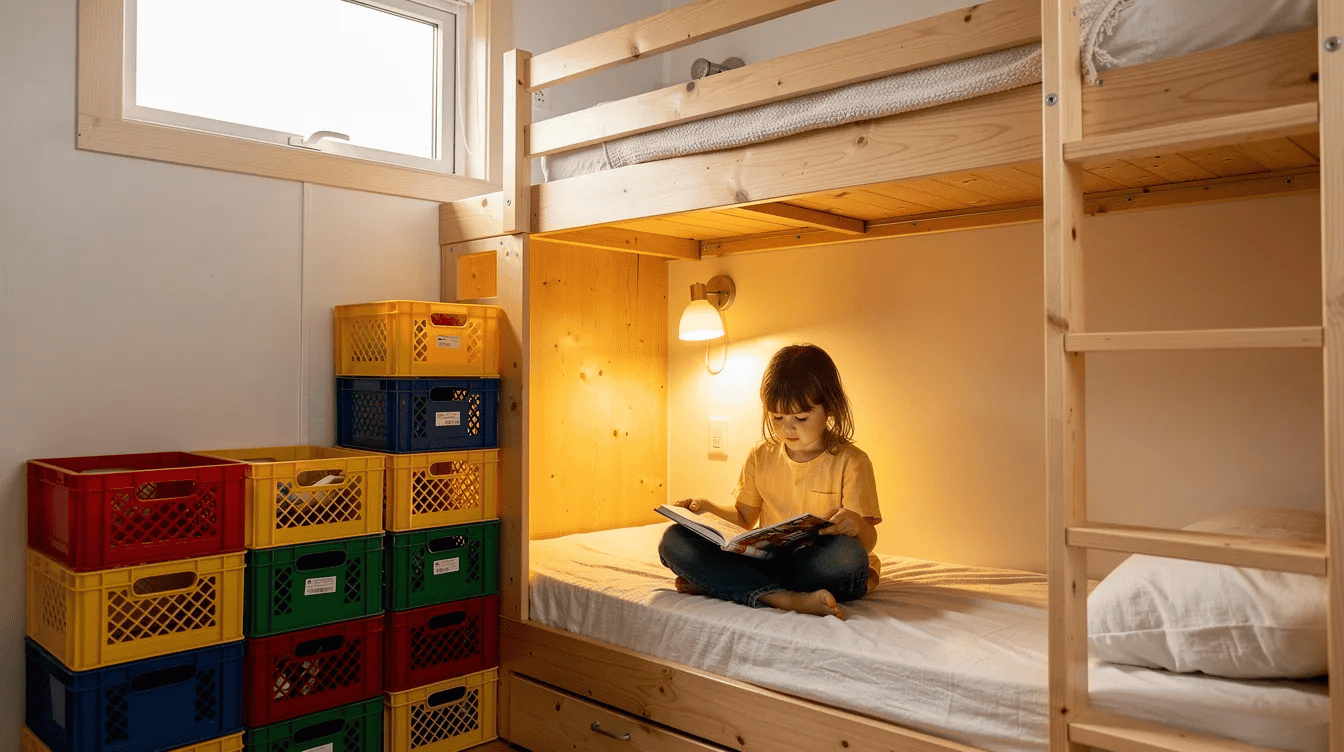
For small families (2–4 people) in 250–500 sq ft tiny homes, this board balances durability with warmth. HDR images to collect: bunk-bed nooks with integrated reading lights, loft safety rails, playful storage solutions (painted crates, toy baskets), and dining benches with hidden compartments. A detailed study of 204 tiny house layout plans shows that many designs use dual lofts – one for the primary bedroom and one for kids or storage – keeping the main floor open for family activity.
Show kid-friendly colors and textures: durable fabrics, rounded furniture edges, chalkboard accent walls. Mix in lifestyle shots – children reading in lofts, family dinners at a fold-out table, outdoor deck play areas – so the board captures daily life, not just décor.
What to Look For in Sample Mood Boards for Tiny House Projects
Not all mood boards serve tiny house planning equally. In spaces where every inch matters, you need boards that are clear, realistic, and photographed well enough to actually inform build decisions. Here’s what to evaluate.
Clarity of Tiny House Style and Function
Each sample mood board should clearly communicate a specific style and everyday use – full-time living, vacation retreat, short-term rental, or backyard studio. Mood boards establish the style and emotional direction of a design project, so you should be able to “read” a board within seconds: what flooring is being used, what the cabinetry line looks like, how lighting sets the mood, whether lofts are present. A board that mixes too many directions – industrial fixtures next to cottage florals next to tropical prints – fails to guide decisions. Successful mood boards have a clear emotional goal that guides the project’s aesthetics.
Realistic Scale for Small Spaces
Evaluate whether the furniture and layout images on a board actually fit 150–500 sq ft footprints. Look for scale cues: door heights relative to furniture, stair widths, window sizes compared to sofas. Wide-angle lenses can exaggerate space and make low ceilings appear taller than they are – loft ceilings in tiny houses on wheels typically offer only 3.3 to 5.5 feet of headroom. Avoid boards featuring oversized sectionals or sprawling island kitchens that would never fit in a tiny build.
HDR Image Quality and Lighting Consistency
High dynamic range (HDR) images matter in tiny house boards because small interiors often have large windows next to dark corners. HDR captures detail across the full luminance range – you can see the forest view outside and the wood grain in shadowed corners in a single image. High-quality imagery is crucial for setting the scene and evoking specific emotions in a mood board.
Consistent lighting color temperature across images is equally important. A board where some photos are shot under warm incandescent light and others under cool fluorescent creates a disjointed mood. Prefer boards with crisp, high-resolution images over grainy phone shots – the difference directly affects your ability to evaluate materials and finishes.
Material and Color Palette Coherence
A mood board should feature a primary color, secondary tones, and accent colors – not a random assortment. Check boards for 1–2 dominant woods, 1–2 metal finishes, and a limited, intentional palette. For example: pine + black metal + off-white creates a clean modern cabin feel, while oak + brass + forest green leans warmer and more traditional. Common elements of a mood board include images, color palettes, typography, and textures – all of which should harmonize. Balancing light and dark tones carefully enhances perceived space in tiny homes.
Storage and Multi-Function Visuals
Strong tiny house boards always show storage solutions: stair drawers, under-sofa cubbies, wall hooks, ceiling-mounted racks. Look for specific multi-use elements – a sofa that becomes a bed, a dining table that doubles as a desk, a Murphy bed that folds into a wall unit. The best boards show open and closed states of the same piece of furniture so you can evaluate both aesthetics and function.
How to Choose the Right Sample Mood Boards for Your Tiny Home
With dozens of sample mood boards available, the right choice depends on your specific build constraints and lifestyle. Here’s a decision criteria checklist to narrow things down.
Decision Criteria Checklist
- Available square footage and layout – A 160 sq ft THOW needs more vertical storage and loft imagery than a 400 sq ft small cottage. Match your board’s compositions to your actual dimensions.
- Primary lifestyle use – Full-time digital nomads, weekend cabin retreat users, families, and remote workers each prioritize different zones and furniture. Pick boards that reflect how you’ll actually live.
- Climate and light conditions – Homes in cloudy climates benefit from brighter palettes and lots of window imagery, while sunny regions can handle moodier, darker tones without feeling cave-like.
- DIY vs professional build – Choose boards that match your skill level. Simple painted plywood and basic hardware suit DIY builders; custom cabinetry and intricate joinery boards assume a professional crew.
- Budget range – Pair mood boards to budget tiers. A tiny build under $40,000 leans toward durable, simple materials like plywood and butcher block, while higher budgets can include walnut counters and custom steel work.
- Off-grid vs on-grid – Off-grid boards should emphasize solar, propane, and water system imagery. On-grid builds can show standard appliances and utility hookups.
- Personal aesthetics and long-term comfort – Mood boards guide decisions about colors, imagery style, interface tone, and overall user experience in design. Pin your favorites, then revisit them a week later. The boards you still respond to are the ones worth building from.
Step-by-Step: Creating Your Own Tiny House Mood Board Using Samples
You can remix sample mood boards into a personalized board tailored to your tiny house project. Mood boards can be physical or digital collections – what matters is that the process is intentional. Follow these steps.
Gather Reference Images and HDR Photos
Start by collecting inspiration from Pinterest, Instagram, architecture blogs, and tiny house galleries – especially HDR interior shots that show realistic lighting. Gather images, colors, and textures for inspiration across these specific tiny house elements:
- Loft ladders and staircases with built-in storage
- Trailer exteriors showing siding, roofline, and hitch details
- Fold-down decks and outdoor living extensions
- Compact bathrooms with wet-room layouts
- Galley kitchens with open shelving
- Window seats and reading nooks
- Rooftop features (solar panels, skylights, roof decks)
- Material close-ups: wood grain, tile, metal hardware, textile weave
Aim for 30–50 images initially so you have enough variety to create meaningful compositions.
Select a Platform and Canvas Format
Choose between a digital or physical mood board based on how you’ll use it. Digital options include Canva, Milanote, Pinterest boards, or Google Slides – use a 16:9 or square layout for easy screen viewing and sharing with builders. Physical options work too: a corkboard with printed HDR photos, fabric swatches, paint chips, and flooring samples gives you tactile feedback that digital can’t match.
For tiny house planning, digital boards are easier to share with remote builders and update as the project evolves. Physical boards shine during in-person material comparisons and color matching.
Edit Down and Arrange by Zones
Reduce your collection to 12–20 core images per board for clarity. Good mood boards avoid overwhelming the viewer by allowing elements to breathe. Arrange images to create a cohesive visual narrative by grouping visuals by zone: kitchen, loft/bedroom, bathroom, living/entry, and exterior.
A visual hierarchy with hero images dominating while smaller references support them is vital for mood boards. Place your anchor image – the one that best captures the overall vibe – in the center or top of the board. Surround it with detail shots: handles, textiles, lighting fixtures, flooring samples.
Add Text, Measurements, and Annotations
Add text or annotations for context and explanation. Short captions like “24-inch apartment stove,” “steel standing-seam roof,” or “3-step storage ladder” keep every element grounded in reality. Include rough dimensions directly on images – noting that a loft opening is 36 inches wide or that a countertop runs 8 feet long – so you and your builder can sign off on feasibility.
Track sources too: brand names, product lines, supplier links. These notes turn a pretty board into a functional build reference.
Refine with a Cohesive Color and Material Story
Review and refine your board to capture your vision. Pick a main color palette from your existing images – for example, light wood + white + sage green – and evaluate every image against it. Effective mood boards typically rely on a clear anchor image that captures the desired vibe, supported by elements that reinforce that same direction.
Replace outlier images that clash with the core palette or material mood. Include 1–2 mini “swatch rows” showing floor, wall, cabinet, and textile colors side-by-side to test whether the full palette holds together. Mood boards utilize a mix of concrete elements and abstract inspiration to spark creativity, so leave room for one or two aspirational images that push the design forward – just make sure they still fit the palette.
Create Multiple Versions for Comparison
Develop 2–3 alternate boards – for example, “Scandi light,” “Rustic warm,” and “Urban dark” – for the same tiny layout. Side-by-side comparison reveals which aesthetic you can genuinely live with long-term in a compact space. An aesthetic tiny home needs to feel right day after day, not just look good in a single photograph.
Share your mood board for feedback and collaboration. Involve partners, family members, or your builder and invite them to comment and vote on each version. This collaborative step often surfaces practical concerns – a builder might note that a particular wood finish won’t hold up in a humid climate, or a partner might flag that a dark palette will feel oppressive in a north-facing loft.
Sample Mood Board Ideas for Specific Tiny House Scenarios
These ready-made concepts are tied to real-life tiny house situations. Each lists concrete visual elements, textures, and HDR scenes you can use as a starting point for your own board.
Weekend Tiny Cabin Retreat
- Mood: Cozy, unplugged, focused on relaxation and nature views
- Images: Large picture window framing trees or a lake, wood stove with visible flames, thick wool blankets layered on a daybed, a stack of books on a reclaimed-wood side table, battery-powered lanterns
- Palette: Warm woods, burnt orange, forest green, cream
- Exterior: HDR shots of a tiny cabin at sunrise with mist rising from a meadow, an outdoor fire pit ringed by Adirondack chairs, string lights over a small deck
Full-Time Digital Nomad Tiny House on Wheels
- Mood: Efficient, tech-friendly, calm but energizing workspace
- Images: Compact desk positioned against a window for natural light, integrated monitor shelf, hidden cable management channels, high stool or compact ergonomic chair
- Palette: Light neutral base (white, warm gray, birch) with one accent color – teal or mustard – for focus areas
- Details: Rooftop or side deck workspace for outdoor days, portable solar panels, discreet router placement, multi-use seating that converts from work chair to lounge
Backyard Tiny House Office or Studio
- Mood: Professional yet inviting – suited for therapy practices, design studios, or writing retreats
- Images: Built-in bookshelves lining one wall, daybed or small sofa for reading breaks, a simple standing desk, potted plants, a soft area rug defining the workspace zone
- Client entry experience: Path lighting leading to a small porch, entry hooks and storage for bags and coats
- HDR ideas: Large glass doors with afternoon light streaming across the desk surface, evening shots with warm interior glow visible from the garden path
Rental-Friendly Tiny House for Airbnb or Short Stays
- Mood: Photogenic, intuitive layout, durable materials that withstand high turnover
- Images: Eye-catching feature wall (shiplap, patterned tile, or bold paint), compact spa-like bathroom with walk-in shower, styled breakfast nook, clear signage board (Wi-Fi code, house rules)
- Palette: Simple, high-contrast scheme – white walls, black fixtures, natural wood accents – that photographs well in HDR listing photos
- Practical emphasis: Dedicated luggage storage nook, easy-to-clean quartz or laminate surfaces, minimal decorative clutter
Frequently Asked Questions about Sample Mood Boards for Tiny Houses
These are common questions tiny house planners ask when using mood boards for the first time.
Do I need separate mood boards for the interior and exterior of my tiny house?
For complex builds with a strong indoor–outdoor contrast – say, a rustic cedar exterior paired with a modern interior – two boards make sense. For simpler projects, one unified board with a dedicated exterior zone works fine. A minimal approach: create one main interior design mood board and add a smaller “exterior focus” section at the bottom or on a second page.
How many images should a tiny house mood board include?
Aim for 12–20 core images. Fewer than 10 can leave gaps in your vision; more than 25 overwhelms the viewer and dilutes the mood. An effective mood board communicates a specific feeling, visual language, and direction – that clarity gets lost when you crowd in too many references. Keep a separate overflow folder for extra inspiration you might circle back to later.
Can I mix different styles on one mood board?
Yes, but it should be intentional. A Japandi + rustic blend can work beautifully if the material palette and color temperature stay consistent. The safest approach: use one “base” style for roughly 80% of the board and layer in 10–20% accents from another style. A 50/50 split almost always reads as indecision rather than design fusion. Mood boards are used across various creative industries including interior design, fashion, and branding – and in every field, the most effective boards commit to a clear direction.
How do I turn a sample mood board into a build-ready plan?
Start by sharing the board with your designer or builder. Then log every major visual element – flooring, countertop, cabinet finish, lighting fixture, hardware – and match each to a real product or specification with pricing. Compare the board against your floor plan to confirm spatial feasibility, and refine based on budget. Mood boards help designers, clients, and teams agree on a direction before investing time in detailed designs – but the board is a starting point, not a blueprint.
Where can I find high-quality HDR images for my tiny house mood boards?
Professional tiny house photography sites, architecture blogs like Dwell and ArchDaily, and HDR-friendly stock image libraries are strong sources. Always respect licensing terms. Explore Tiny House galleries often feature suitable HDR imagery of real tiny interiors that you can use for inspiration – browse our best tiny house designs collection to start building your image library.
Start Exploring Sample Mood Boards for Your Tiny House
Using sample mood boards can clarify your vision, prevent costly design missteps, and help you communicate exactly what you want to a builder – all before a single material is purchased. They turn vague ideas into concrete direction, and in tiny house projects where budgets are tight and space is unforgiving, that clarity pays for itself.
Browse Explore Tiny House galleries and articles for real-world tiny interiors you can turn into mood boards. Create at least two contrasting boards this week – then share them with your builder, partner, or online tiny house community for honest feedback. The board that still excites you after a few days of review is the one worth building from.