Introduction to Tiny Homes in St. Petersburg, Florida
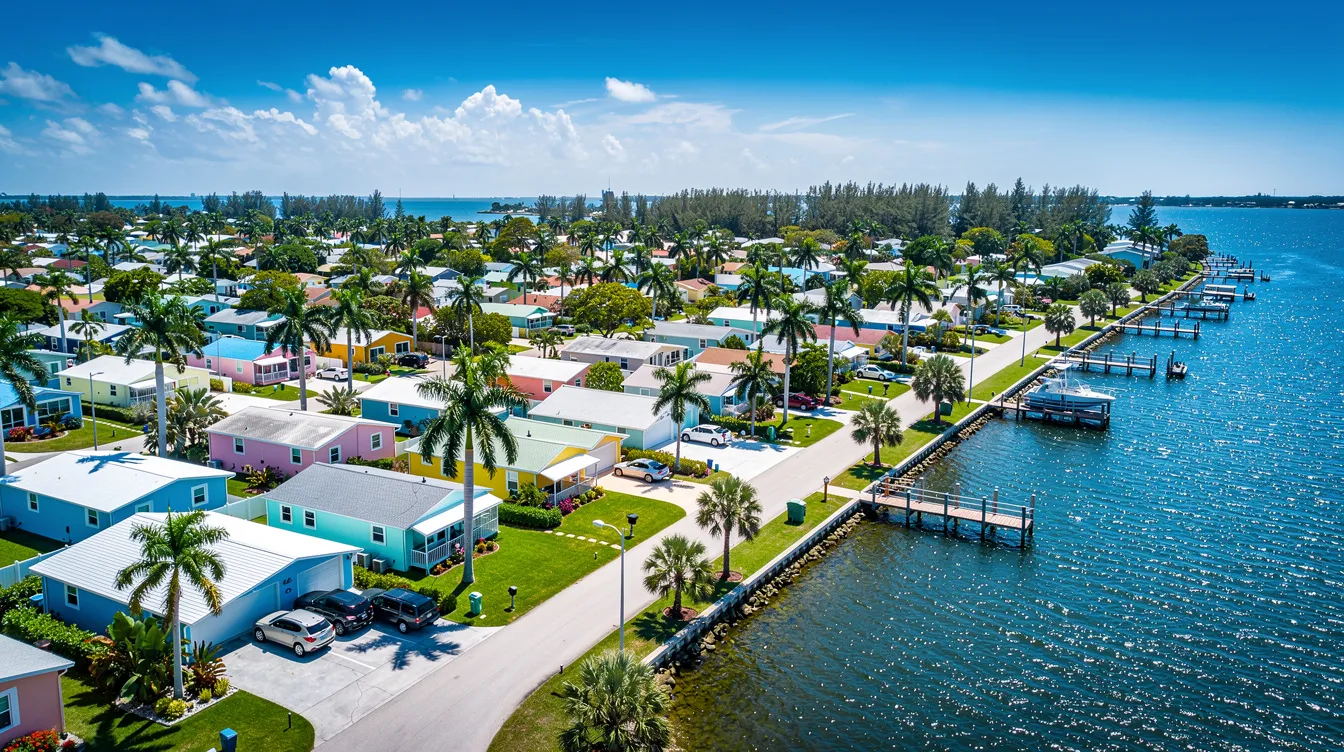
St. Petersburg sits on Florida’s Gulf Coast with year-round sun, a walkable downtown arts scene, and some of the highest-rated beaches in the country. It’s also a city where tiny homes are quietly reshaping how people vacation, live, and invest. Whether it’s a 250-square-foot backyard cottage behind a 1920s bungalow or a modern micro-cabin near the waterfront, st pete tiny homes are showing up everywhere – on rental platforms, in affordable housing proposals, and in the backyards of savvy homeowners.
Tiny homes in St. Petersburg are a viable housing solution that typically range from 200 to 450 square feet, though ADU versions can stretch larger. Rising housing costs across pinellas county, booming tourism near the beaches and downtown, and growing interest in minimalism are all making this movement hard to ignore.
This article will explore three angles:
- Tiny house vacation rentals in and around st pete – what’s available, what they cost, and what to look for.
- Local tiny home communities and projects – including proposed tiny house community developments and zoning basics.
- Buying or placing your own tiny home – costs, logistics, and practical next steps for the petersburg area.
The focus here is specific to St. Petersburg and nearby neighborhoods like Gulfport, Largo, and greater Tampa Bay – not generic tiny living advice.
Tiny House Vacation Rentals in and Around St. Pete
St. Pete and its neighboring communities have a growing inventory of tiny house and cottage-style rentals listed on platforms like Airbnb, Vrbo, and Furnished Finder. These are popular with beachgoers, arts-district visitors, and remote workers who want something more personal than a hotel room.
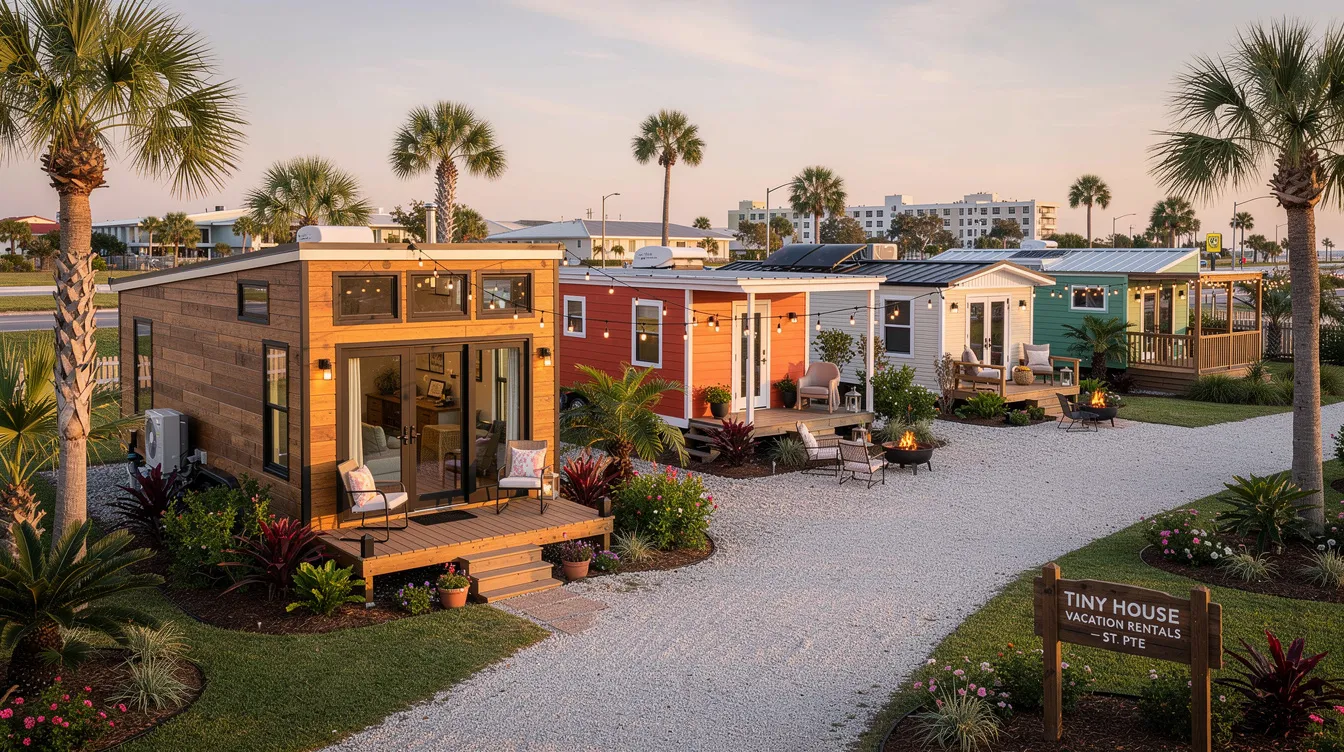
The vacation rental scene here leans toward compact studios and tiny cottages tucked behind historic homes, guesthouses with shared pools in neighborhoods like Historic Old Northeast and Kenwood, and waterfront micro-cabins near Gulfport. St. Petersburg has roughly 30 vacation tiny house rentals available across major platforms within a 20–30 minute drive of downtown, and that number climbs during high season as homeowners list seasonal spaces.
What to Expect on Pricing
Nightly prices for tiny home rentals start at around €18 on some European booking platforms and roughly $75–$120 per night on US-based sites during off-season, depending on location and amenities. Properties with pools, hot tubs, or direct beach access push higher. Keep in mind that taxes, cleaning fees, and service charges are added on top of the listed nightly rate.
For longer stays, monthly rentals run in the $1,500–$1,800 range with utilities included – a solid deal compared to a standard one-bedroom apartment in downtown st pete. Tiny homes provide potential rental income opportunities for owners, which is one reason the supply keeps growing.
Types of Tiny Rentals You’ll Actually Find
- A small guest cottage in St. Pete a short drive from St. Pete Beach and the Salvador Dalí Museum, often with a private patio and off-street parking.
- A poolside tiny guesthouse in Gulfport near the arts district and waterfront restaurants, ideal for guests who want a quieter neighborhood.
- A modern backyard studio in Seminole Heights or Ybor City (Tampa) with a hot tub and garden, within commuting distance of St. Pete via I-275.
- Waterfront tiny homes with canal or mangrove access – like units rated 4.92 out of 5 stars with over 100 verified reviews.
All 30 tiny house rentals in St. Petersburg include Wi-Fi access, and tiny home rentals in St. Petersburg average a 4.8 rating across platforms. Before booking, look for listings with dozens of reviews confirming cleanliness, accuracy, and location quality, especially if you’re using the trip to explore the world of tiny houses and minimalist living inspiration.
Amenities That Matter
Guests consistently prioritize:
- Reliable Wi-Fi – critical for remote workers spending a week or more in the area
- Functional kitchenette with basic cooking equipment and a mini-fridge
- Private outdoor space – a patio, garden seating, or screened porch
- Parking – off-street or dedicated spots, since street parking in popular neighborhoods fills up fast
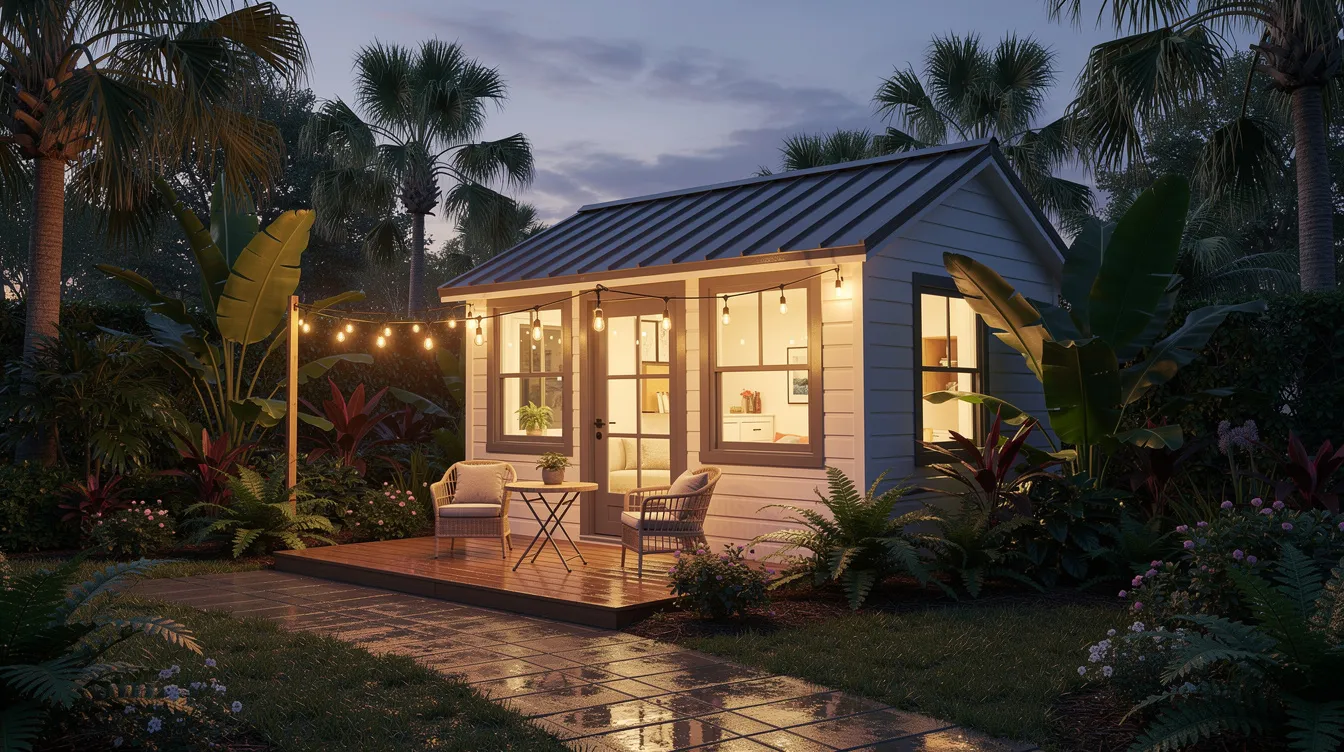
A subset of tiny rentals now highlight dedicated workspaces with a desk, comfortable chair, and strong internet for remote workers. If you’re planning an extended stay, these details matter more than a pool and can be a chance to experiment with tiny living tips and ideas for your own future tiny house.
Pet-Friendly and Other Considerations
Pet-friendly options exist across the area. Some owners allow small dogs in fenced-yard cottages with vet documentation and a modest pet fee, making it easier to visit dog-friendly spots like Fort De Soto Park or St. Pete’s waterfront green spaces.
When selecting the right tiny rental, weigh proximity to beaches versus downtown, your need for parking, noise levels near nightlife corridors like Central Avenue, and whether amenities like a pool or hot tub justify the extra per-night cost. Individuals traveling for work will seek different things than a family on a beach vacation – plan accordingly.
St. Pete Tiny Home Communities, Projects, and Zoning Basics
Beyond vacation rentals, St. Petersburg has been actively exploring tiny homes as part of its broader affordable housing strategy. The city’s South Side, in particular, has become a testing ground for small-scale housing concepts that could expand the supply of lower-cost units.
The South St. Pete Proposals
A city-owned parcel at 18th Avenue South and 18th Street South – four blocks from Tangerine Plaza – drew significant attention in the mid-2020s when St. Petersburg received three proposals for affordable housing development on the site.
The most notable came from the Pinellas Ex-Offender Re-Entry Coalition (PERC), which proposed a tiny house community of 18 affordable tiny homes for rental in South St. Pete, reflecting broader trends in tiny houses as small-scale living, design, and community solutions. Key details of the PERC proposal:
- Each tiny home unit by PERC will be around 420 square feet, designed for individuals and small households at or below 80% of Area Median Income.
- Rent for PERC’s tiny homes is expected to be $600–$700 monthly – well below market rate for the area.
- Units would be open to the general public, not restricted to ex-offenders, with the goal of pairing affordable rent with workforce training and job placement through PERC, Inc.
The competing proposals for the same lot included Namaste Homes, which proposed 11 affordable townhomes for $215,000 each targeting buyers at or below 120% AMI, and Habitat for Humanity, which proposed 10 or 12 affordable townhomes for buyers at or below 80% AMI. These alternatives show that tiny homes are one of several solutions being weighed by the city’s review team.
The city council reviews such proposals on a case-by-case basis, and there is often no fixed deadline for selecting a developer – which can delay when (or if) certain tiny home villages break ground. Mayoral candidates have expressed interest in changing lot-size zoning rules and increasing ADU supply, signaling that the political environment is shifting in favor of smaller housing.
Zoning and Placement Basics
If you’re looking at zoning rules for st pete tiny homes, here’s what matters, especially if you’re considering small ADUs and compact backyard homes:
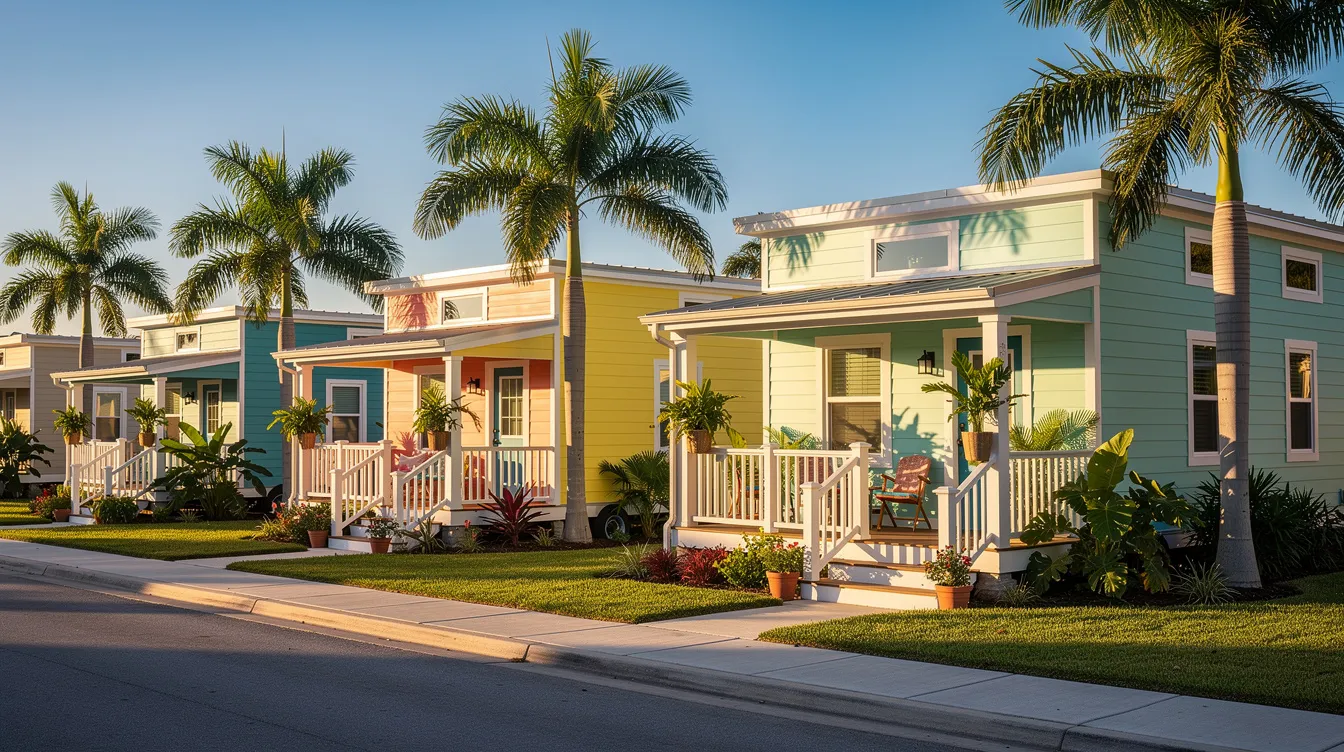
- ADUs on existing lots: St. Petersburg allows tiny homes as accessory dwelling units in specific residential zones. Accessory Dwelling Unit regulations allow smaller homes on existing lots, and the city has updated rules for easier construction of ADUs. The primary residence must be owner-occupied for an ADU to be built, and ADUs generally require compatibility with the primary residence’s architectural style. ADUs must be up to 800 square feet or 67% of the primary home size, whichever is less.
- Foundation vs. wheels: Tiny homes on a permanent foundation are legal as ADUs in specific residential zones and follow the same permitting path as any new structure. Tiny Homes on Wheels (THOWs) are classified as domestic equipment or RVs under St. Pete’s land development regulations, and tiny houses on wheels for sale, including models and pricing guides, must navigate stricter zoning regulations in St. Petersburg. They are generally restricted from long-term residential occupancy outside of designated mobile home parks.
- Short-term rental compliance: Using a tiny home for short-term rentals may require a local business tax receipt and compliance with safety codes – smoke alarms, egress windows, proper electrical hookups.
ADUs must meet zoning and building code standards in every case. For readers interested in starting or joining a tiny home community in pinellas county, check the City of St. Petersburg’s planning and zoning resources, connect with neighborhood associations, and follow agenda items related to South St. Pete redevelopment through public meetings and city council updates.
Buying, Placing, and Living in a Tiny Home in the St. Pete Area
If you want to go beyond renting and own your own tiny home in or near St. Petersburg, the path forward depends on what type of structure you’re after and where you plan to put it.
Purchase Pathways
There are three common routes:
- Order a custom-built tiny home on wheels from a regional builder and have it delivered to a st pete or Tampa Bay lot. Tiny homes in St. Petersburg start under $90,000 for basic models, though finishes, size, and trailer quality affect final cost. Buyers focused on budget often look at affordable tiny house designs, models, and cost-saving tips. Be aware that a down payment may be harder to structure since many lenders don’t finance THOWs as real property.
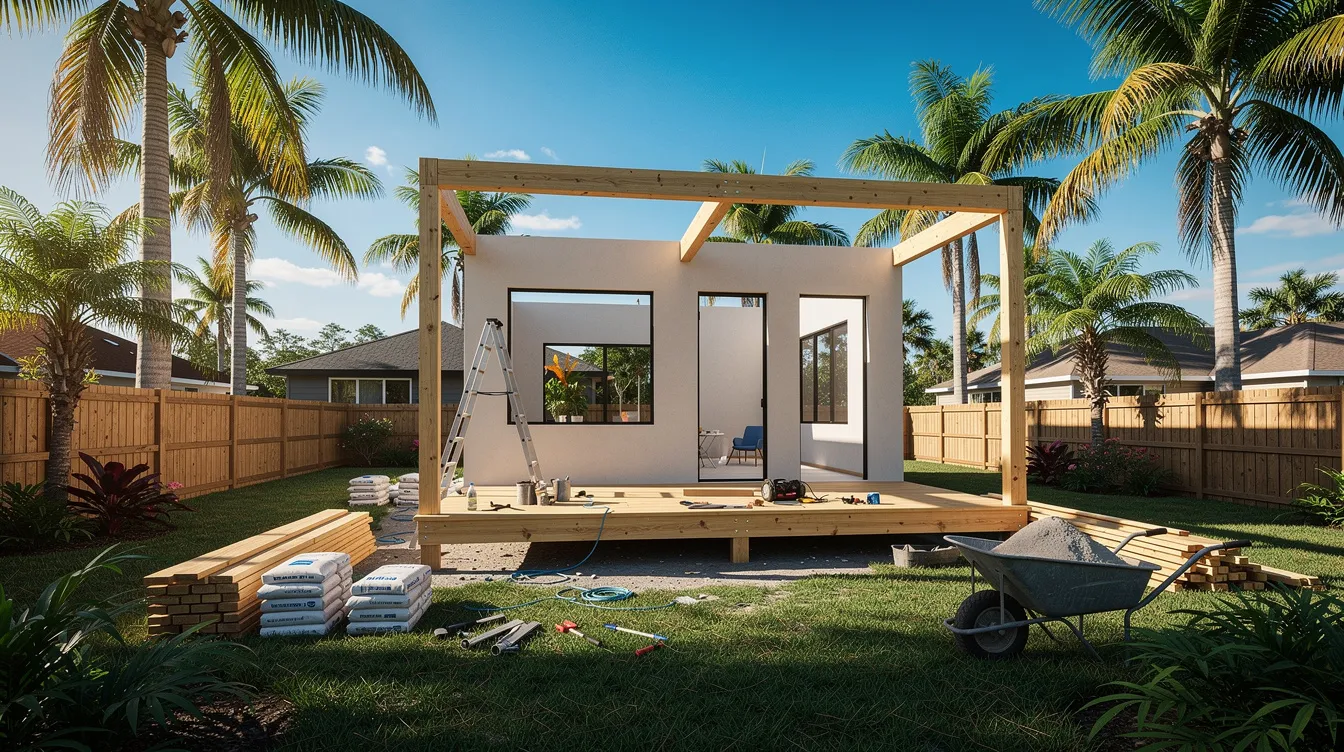
- Construct a backyard ADU – convert a garage or build a detached cottage behind an existing bungalow. Construction costs in St. Pete run roughly $175–$300 per square foot for ADU projects, putting a 400-square-foot unit in the $70,000–$120,000 range for construction alone. Many homeowners use tiny homes as ADUs for additional living space and rental income.
- Purchase a move-in-ready small cottage or townhome through one of the area’s infill projects or new communities currently for sale in neighborhoods undergoing redevelopment.
Typical size of tiny homes ranges from 375 to 800 square feet, and many tiny homes are designed to be under 400 square feet or up to 800 square feet for ADUs, giving flexibility depending on your property and needs, especially if you’re inspired by top tiny house designs that redefine small living. ADUs can be used for rental income or family housing – or both, over time.
Delivery and Construction Logistics
Tiny homes designed for hurricane-prone florida can include durable construction features like reinforced tie-downs, impact-resistant windows, and elevated foundations. Construction requires high-wind ratings to withstand severe weather in Florida, and this adds cost but is non-negotiable in a coastal zone, making it important to work with small house builders in Florida who specialize in custom ADUs and tiny homes.
For homes on wheels, transporting units across bridges and causeways may require oversize-load permits. Width is typically capped at 8.5 feet for standard road transport, and height limits matter when crossing causeways in pinellas county, so coordinating with an experienced tiny house builder in Orlando, FL familiar with Florida logistics and permitting can simplify the process.
Tiny homes and ADUs in St. Petersburg need proper permits before construction, and all tiny homes must comply with Florida Building Code requirements. Permitting fees typically run $3,500 to $10,000 depending on project scope, and thoughtful planning and maintenance are key if you care about how long tiny houses last and what affects their lifespan.
Where You Can Place a Tiny Home
- Older neighborhoods like Kenwood, Old Northeast, and parts of South St. Pete may allow ADUs on single-family lots subject to setback and design rules. Homeownership entails verifying property zoning for tiny homes or ADUs before committing to a purchase or build.
- Some mobile home and RV parks near St. Pete accept park-model tiny homes, while others restrict them – buyers must confirm community rules before selecting a location.
How St. Pete Owners Use Tiny Homes
- Long-term rentals aimed at local workers, students, or retirees who seek smaller, more affordable spaces. A well-positioned ADU can generate upward of $35,000 per year in gross rental income, with payment structures ranging from month-to-month leases to annual agreements.
- Short-term vacation rentals in tourism-friendly areas close to St. Pete Beach, Treasure Island, or Madeira Beach – though compliance with local short-term rental rules is essential.
- Multigenerational living: Tiny homes promote multigenerational living by accommodating family members. Building a small cottage for aging parents or adult children keeps everyone close while preserving privacy.
Tiny homes also offer a reduced ecological footprint due to their smaller size – less energy, less material, less maintenance over time.
Next Steps for Buyers
If you’re serious about a st pete tiny home, here’s a practical checklist:
- Check with the City of St. Petersburg zoning office to confirm your property allows an ADU or tiny home placement.
- Get written guidance on whether your intended use (rental, family housing, or personal) is permitted in your zone.
- Budget for insurance, flood-zone compliance, and hurricane-resilient construction – these are real costs in coastal florida.
- Compare building a custom ADU versus buying a pre-built tiny home delivered to your site.
- Explore financing options: home equity loans and construction loans work for permanent ADUs, while THOWs may require personal loans or cash payment.
St. Pete’s combination of thriving tourism, active redevelopment in South St. Pete, and increasingly flexible regulations around small-space living make tiny homes a serious option – whether you’re booking a weekend getaway, seeking affordable housing, or investing in a rental property along Florida’s Gulf Coast. The city is moving in the right direction, and the time to pay attention is now.