
Tiny house communities in Maryland are a growing alternative for those seeking minimalist, sustainable, and affordable living. These intentional neighborhoods cluster compact dwellings—typically under 400 square feet—alongside shared spaces that create connection and reduce costs.
Maryland offers a unique advantage for tiny living. The state adopted the International Residential Code (IRC) statewide, meaning a tiny home must be a maximum of 400 square feet with a ceiling height of at least 6’8”. The diverse landscape ranges from Appalachian mountains to Chesapeake Bay coastlines, all within 90 minutes of major job markets in D.C. and Baltimore.
Monthly lot rents for tiny home communities often range from $300 to $800—a fraction of the $2,500+ mortgages typical in the state. That’s the appeal. Less cost. More life.
- How We Chose the Best Tiny House Communities
- Top 7 Tiny House Communities in Maryland
- 1. Blue Moon Rising – McHenry, MD
- 2. Tiny House Community of Southern Maryland – Leonardtown, MD
- 3. Tiny House Community of Maryland – Annapolis, MD
- 4. Tiny House Community of Eastern Shore – Salisbury, MD
- 5. Tiny House Community of Central Maryland – Westminster, MD
- 6. Tiny House Empowerment Village – Baltimore, MD
- 7. Liberty Village – Union Bridge, MD
- Quick Comparison of the Best Tiny Home Communities
- How to Choose the Right Tiny House Community
- Which Option Is Best for You?
- Final Thoughts on Tiny House Living
How We Chose the Best Tiny House Communities
Finding the right tiny house community takes research. Here’s what matters:
- Community amenities: Wi-Fi, gardens, fitness centers, shared kitchens
- Location: Drive time to I-70/I-95 corridors and attractions
- Cost transparency: Lot fees, utility connections, hidden costs
- Community culture: Events, resident interaction, satisfaction ratings (4.5+ stars preferred)
- Pet policies: Most communities allow pets under 50 lbs
- Sustainability features: Composting, solar, recycling programs
- Security: Gated entry, cameras, 24/7 monitoring
Zoning varies by county, with Garrett and Wicomico counties being more flexible regarding tiny homes compared to urban areas like Baltimore. Communities help residents navigate complex, area-specific zoning rules, which can vary from strict residential codes to more flexible regulations.
Popular tiny house communities in Maryland include Blue Moon Rising, Tiny House Empowerment Village, and Liberty Village, reflecting broader trends in tiny houses as a versatile, eco-friendly housing option. Let’s explore all seven top options.
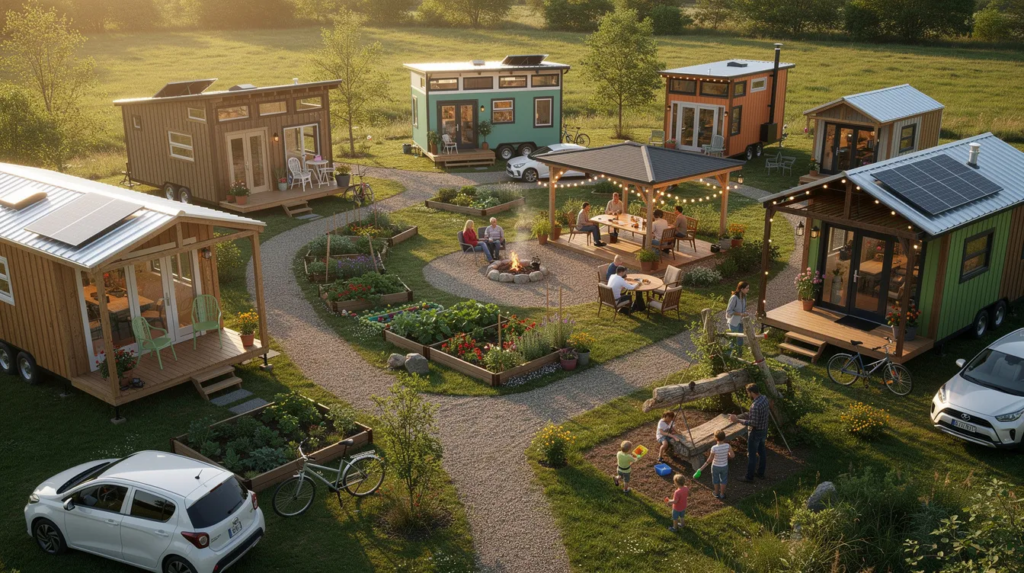
Top 7 Tiny House Communities in Maryland
1. Blue Moon Rising – McHenry, MD
This sustainable eco-conscious community sits in Garrett County near Deep Creek Lake. Founded in 2014, it pioneered the tiny home movement in Maryland with a focus on environmental responsibility.
Why It Stands Out
Blue Moon Rising is a tiny house community located in McHenry, Maryland, focusing on sustainable living with 15 unique tiny homes built from sustainable materials. The cabins use 80% local hemlock lumber, R-40 insulation, and solar panels generating 5kW per unit.
The scenic location provides access to Deep Creek Lake State Park, with bicycle rental and over 100 miles of hiking trails nearby, making it easy to stay immersed in nature while embracing tiny living with tips and ideas for your journey.
Best For
Environmentally conscious residents seeking nature-based community living, and Blue Moon Rising is a strong option for those who want to stay close to outdoor recreation.
Key Strengths
- 15 eco-conscious tiny homes built with reclaimed materials
- Energy-efficient design achieving 40% energy savings
- Access to hiking, cycling, fishing, and lake activities
- Rainwater harvesting covering 70% irrigation needs
- 4.8/5 Google rating from 450+ reviews
- Weekly community dinners with 90% attendance
Possible Limitations
- Remote location (2.5 hours to Baltimore) may limit access to urban amenities
- Winter heating costs can reach $150/month
- Higher lot fees ($600-850/month) due to premium features
2. Tiny House Community of Southern Maryland – Leonardtown, MD
This community in St. Mary’s County offers comprehensive amenities in a structured environment. The pocket neighborhood model provides 10-15 pads with full hookups.
Why It Stands Out
Extensive shared facilities set this community apart. The 24/7 gated security and organized events create a complete living experience while maintaining that small space lifestyle.
Best For
Residents interested in full-service community living with modern amenities.
Key Strengths
- Free Wi-Fi, parking, and pet-friendly accommodations
- Shared kitchen, community garden, and fitness center
- Community events, green spaces, shared amenities, and activities like a book exchange
- Composting stations supporting sustainability
- Lot fees typically $500-700/month
Possible Limitations
- May feel too structured for those seeking simpler living
- Potential for higher monthly fees due to extensive amenities like a shared kitchen, community garden, fitness center, and a book exchange nook
3. Tiny House Community of Maryland – Annapolis, MD
Located near Maryland’s capital, this community emerged from 2024 Anne Arundel County zoning amendments that enable tiny home clusters in mixed-use developments.
Why It Stands Out
Strategic location provides access to both urban and rural experiences. You’re 20 minutes to D.C. while maintaining community connection.
Best For
Professionals working in the Baltimore-Washington corridor seeking community living.
Key Strengths
- Free Wi-Fi, shared kitchen, and community garden
- Fitness center, yoga studio, and library facilities to meet neighbors
- Community events and green spaces
- 24/7 security in supportive environment
- Close proximity to employment centers
Possible Limitations
- Higher cost of living ($650-900/month) due to Annapolis location
- Limited parking and potential urban noise
4. Tiny House Community of Eastern Shore – Salisbury, MD
This Wicomico County community offers rural charm with comprehensive amenities. The informal village style suits those seeking peaceful living space away from metropolitan density.
Why It Stands Out
Balance of rural tranquility with game room and library for indoor entertainment. Recycling programs achieve 90% waste diversion.
Best For
Residents seeking peaceful rural setting with strong community connections. Ideal for retirees.
Key Strengths
- Free Wi-Fi, parking, and pet-friendly environment
- Game room, library, yoga studio, and fitness center
- Recycling programs and 24/7 security
- Fewer than 5 units per acre density
- Budget-friendly lot fees
Possible Limitations
- Limited access to major metropolitan areas
- Fewer employment opportunities nearby
5. Tiny House Community of Central Maryland – Westminster, MD
This Carroll County community emphasizes outdoor recreation with family-friendly amenities. It’s located conveniently for those wanting rural character with urban accessibility.
Why It Stands Out
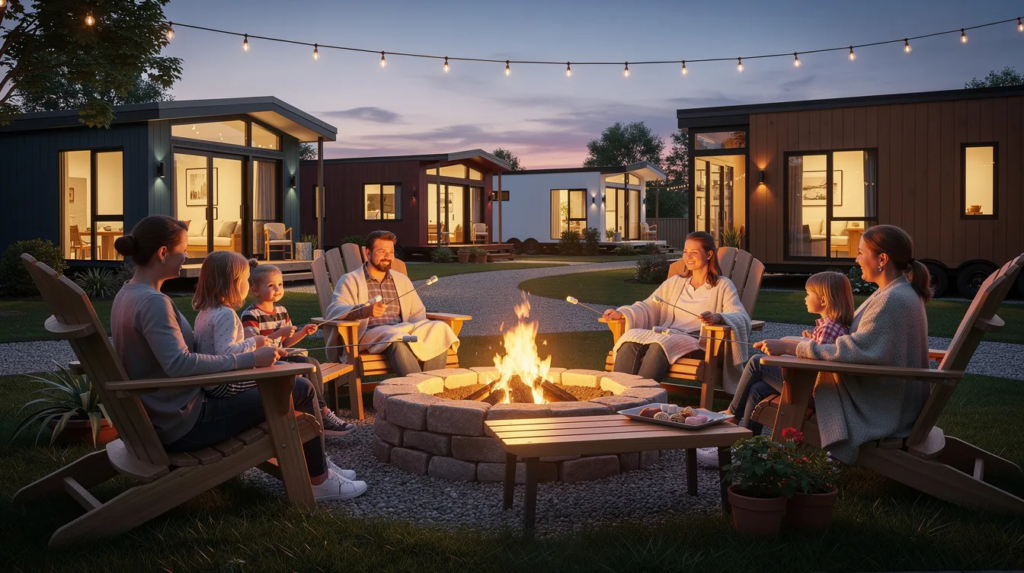
Dedicated spaces for outdoor living include fire pits and walking trails, with plenty of room outdoors for family activities. The playground serves 40+ kids in the community.
Best For
Families and outdoor enthusiasts seeking active community lifestyle.
Key Strengths
- Free Wi-Fi, parking, and pet-friendly spaces
- Fire pit, walking trails, and playground facilities
- Community garden, picnic area with an outdoor table, and board games
- 30 minutes to Frederick with complete amenities
- Family-oriented programming
Possible Limitations
- Seasonal limitations for outdoor activities
- May be too family-oriented for single residents
6. Tiny House Empowerment Village – Baltimore, MD
This urban community in Baltimore City focuses on affordable housing solutions, with a village model aimed at reducing cost while creating a stronger neighborhood atmosphere. The mission-driven model addresses housing challenges with a beautiful blend of advocacy and practical support, and the initial microshelter phase marked the start of a longer development process.
Why It Stands Out
Urban location with direct access to the job market. The community launched with $1.2M in HUD grants to create 25 microshelters (80-150 sq ft) with plans for permanent expansion.
Living in a tiny home promotes a sustainable lifestyle, and this project reflects Maryland’s growing passion for eco-friendly tiny living options, with many communities emphasizing environmental sustainability and minimalism through renewable energy, reduced waste, and sustainable materials.
Best For
Urban professionals and those with a passion for affordable housing advocacy.
Key Strengths
- Kitchenette facilities and free Wi-Fi access
- Pet-friendly with heating and air conditioning
- Safety features including smoke detector and first aid kit
- 65% of residents secure full-time jobs within 18 months
- Port and hospital access within 10 minutes
Possible Limitations
- Urban noise (70dB average) and limited green space
- 0.5 acres shared among residents
7. Liberty Village – Union Bridge, MD
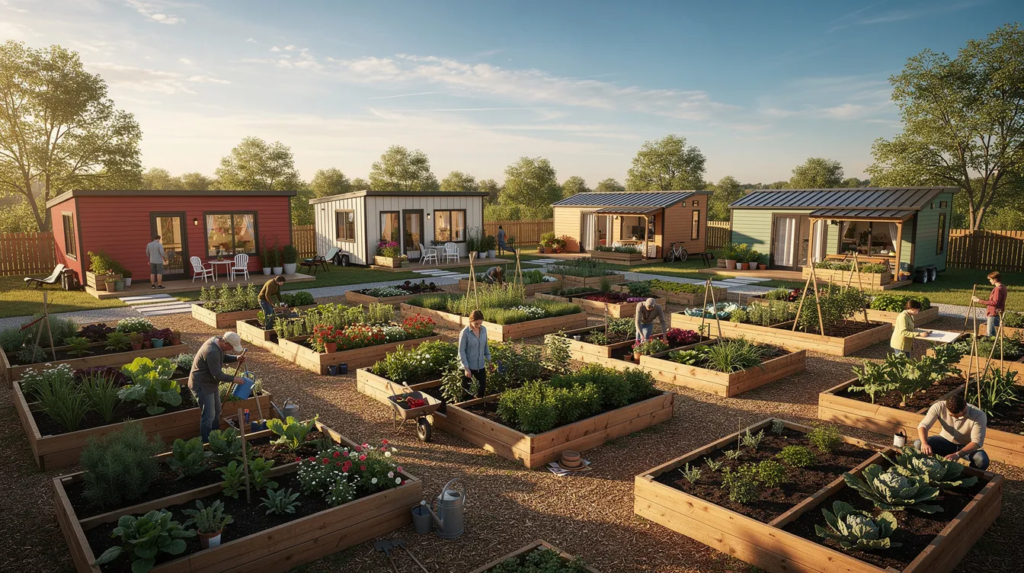
Liberty Village in Union Bridge, Maryland, offers a supportive co-housing community for tiny home living, featuring individual lots with amenities like water, sewage, and electricity, as well as shared spaces such as gardens and recreational facilities.
Why It Stands Out
The co-housing model provides individual lots ($45,000-65,000 purchase or $550-750/month lease) with 200A electric and septic hookups. You can own your tiny home on your own land as an owner. This kind of place also appeals to buyers considering private-land setups or backyard accessory dwelling units elsewhere in Maryland.
Best For
Would-be owner residents seeking a stable place with community support.
Key Strengths
- Individual 1/4-acre lots with full utility connections
- Community gardens producing 5 tons of vegetables yearly
- 1,500 sq ft recreation hall for events
- Sustainability focus with solar farm powering commons
- 8% annual property appreciation
Possible Limitations
- Higher initial investment for lot purchase
- More responsibility for individual property maintenance
Quick Comparison of the Best Tiny Home Communities
Community | Best For | Monthly Cost | Location Type |
|---|---|---|---|
Blue Moon Rising | Eco-conscious living | $600-850 | Rural/Lake |
Southern Maryland | Comprehensive amenities | $500-700 | Suburban |
Annapolis | Urban professionals | $650-900 | Urban |
Eastern Shore | Peaceful rural living | $400-600 | Rural |
Central Maryland | Families/outdoor lovers | $450-650 | Suburban |
Empowerment Village | Housing advocacy | Subsidized | Urban |
Liberty Village | Ownership/co-housing | $550-750 | Suburban |
Tiny home communities often provide affordable housing options, making them economically viable compared to traditional housing in major cities. Living in close proximity to others with similar values fosters a strong social fabric and sense of belonging. |
How to Choose the Right Tiny House Community
Choose Based on Location Preferences
Consider your commute. Western mountain communities like Blue Moon Rising offer nature but require 2+ hour drives to Baltimore. Urban options like Empowerment Village put you close to jobs and mirror some of the ways DC tiny homes are revolutionizing urban living. In Maryland, rural areas are generally more accommodating than urban ones when it comes to tiny house rules.
Tiny homes in Maryland are typically 300-400 square feet and can be movable or foundation-based, similar to many minimalist tiny houses for sustainable living and other top tiny house designs that redefine small living. Movable Tiny Homes (MTH) are homes on wheels, and to understand placement rules, it helps to know that legal siting in Maryland is often more planning-intensive than in other states. Park Model Homes are park models built to an RVIA standard and are widely accepted in specialized communities.
Urban areas like Baltimore and Montgomery County frequently require tiny homes to be built as Accessory Dwelling Units (ADUs) on existing lots. Tiny houses on wheels (THOWs) are classified as RVs and may be limited to licensed RV parks or campgrounds for full-time residency, though some Maryland counties are exploring affordable housing options that could open more placements.
Choose Based on Community Culture
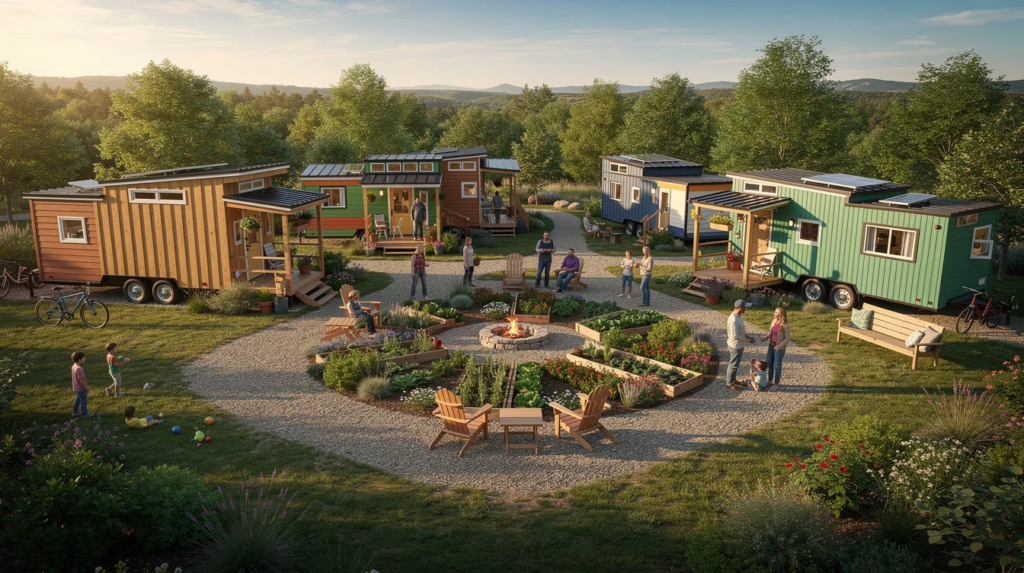
Community living in tiny home communities fosters social interaction and engagement, with shared amenities and community activities being a common part of the culture, allowing residents to connect with like-minded individuals and participate in communal activities.
Consider these questions:
- Do you want structured events or informal gatherings?
- Are kids and pets welcome?
- Is sustainability a core interest?
Many Maryland tiny house communities focus on sustainability and shared resources, often centering on shared spaces and community gardens, echoing broader trends you’ll see when exploring the world of tiny houses. Many communities provide on-grid sewage and water, but some may focus on using composting toilets and managing utilities sustainably.
Because limited storage demands careful organization, look for communities whose shared facilities help residents manage space more efficiently.
Choose Based on Budget, Park Models, and Costs
In Maryland, the typical cost range for building a tiny home is between $30,000 to $60,000, with modern and luxury options costing around $80,000 to $100,000; using a dedicated tiny home cost calculator can help you fine-tune a budget for your specific plans. Utility bills for tiny homes are generally around $50 a month, significantly lower than traditional homes due to their smaller size and efficient use of resources, so tiny house living can reduce living expenses and monthly bills, though high permitting costs in some Maryland jurisdictions can still disrupt affordability.
The minimum size for a tiny home in Maryland is typically 120 square feet, but local zoning ordinances may vary, affecting costs and design options, as well as which of the best tiny house designs for modern living will work on your site.
Lower maintenance costs and the potential to live mortgage-free allow residents to spend more on personal interests and travel. Tiny living encourages simplicity, resulting in less clutter and fewer chores, and many people use cute tiny house designs for their dream home to make that simpler lifestyle feel inspiring and personal.
Amenities in Maryland tiny house communities may include free Wi-Fi, picnic areas, fire pits, pet-friendly environments, and laundry facilities, especially if you opt for custom tiny homes for your perfect small-space living that are tailored to community amenities. When comparing budgets, confirm what is included in lot or community fees and how that changes the total cost, especially for a two-bedroom layout where the number of rooms can affect pricing.
Many RV parks and campgrounds throughout Maryland accommodate Park Model Homes, providing community activities and amenities that enhance the living experience for residents, similar to what leading micro house builders for modern living emphasize in their communities and what you’ll find in some of the best tiny house communities in Virginia for downsized living.
Which Option Is Best for You?
Here’s the simple breakdown so you can pick what best fits your priorities and living style:
- Choose Blue Moon Rising if you prioritize sustainability and lake access
- Choose Southern Maryland Community if you want comprehensive amenities and security
- Choose Annapolis Community if you need urban access while maintaining community living
- Choose Eastern Shore if you find peace in rural areas
- Choose Central Maryland if you have kids and love the outdoors
- Choose Empowerment Village if you acknowledge the importance of affordable housing advocacy
- Choose Liberty Village if you prefer ownership and co-housing model
Progressive counties like Montgomery and Frederick have updated zoning to explicitly include tiny homes and Accessory Dwelling Units (ADUs). Tiny houses on wheels are mostly restricted to RV parks, while foundation-based homes must adhere to local zoning regulations.
Tiny homes are legal in Maryland, but regulations vary by county and city, with all counties adhering to the International Residential Code (IRC). To receive a certificate of occupancy for a tiny home in Maryland, homeowners must secure building permits and pass all required inspections, which may vary by local zoning ordinances.
Final Thoughts on Tiny House Living
Maryland offers diverse tiny house community options—from mountain retreats to urban villages. The world of tiny living continues to expand as more people discover its benefits, paralleling growth in tiny house communities across the UK for affordable living.
Blue Moon Rising delivers the strongest sustainability focus with its eco-building design and lake access. Southern Maryland provides the most complete amenities package. Liberty Village offers the clearest path to ownership.
The right choice depends on your lifestyle, your budget, and whether you plan to work remotely or commute. Visit communities before making decisions. Talk to current residents and ask the developer whether the project is open for business and what current clients say. Check local building codes and zoning regulations for your specific area, and one thing to remember is that what is considered a tiny home can vary by county. The main thing is whether the structure is permitted after permits and inspections; homes larger than 400 square feet may not be permitted in some areas. If you’re comparing options such as a mobile home park or trailer park, ask whether year-round placement is allowed and what limits apply at the end of the approval process.
The tiny home movement in Maryland isn’t just a trend. It’s a practical solution for those ready to live with less and connect with more.