
Tiny homes under $40,000 range from bare-bones DIY shell kits starting around $4,000 to fully finished, move-in ready models at the upper end of the budget. Whether you’re searching for a compact backyard ADU, a mobile tiny house on wheels, or an affordable primary dwelling, this price bracket offers surprisingly diverse options – the key is knowing what level of completion, size, and quality you’re actually getting for your money.
Types of Tiny Homes Under 40k
The under-40k market breaks down into four distinct tiers based on completion level and mobility. Understanding where each type falls helps you match your budget, DIY capability, and timeline to the right purchase.
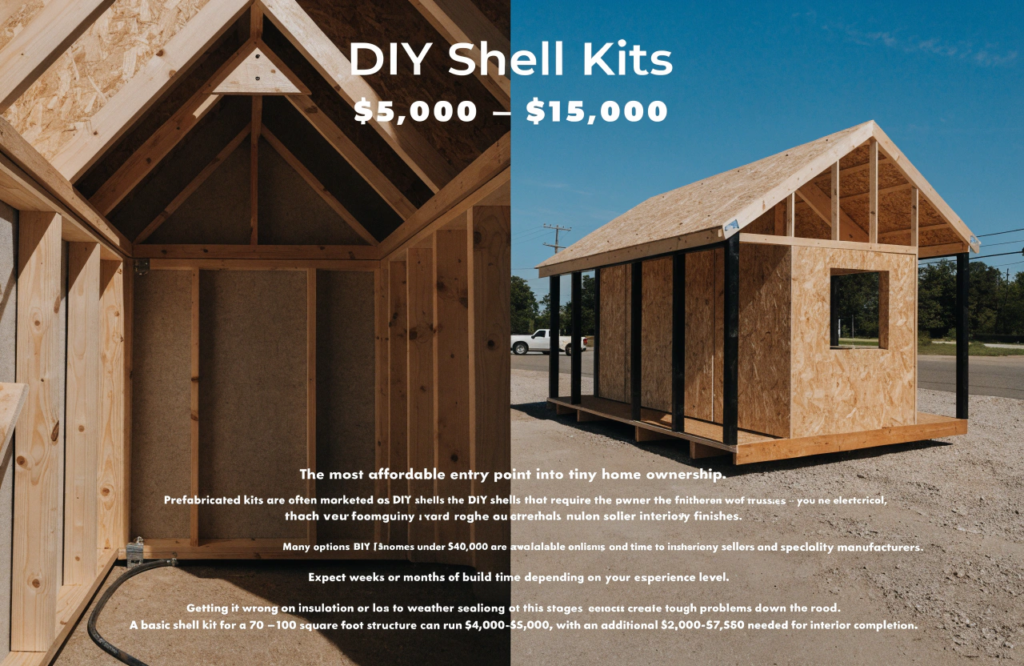
DIY Shell Kits ($5,000 – $15,000)
These are the most affordable entry point into tiny home ownership. Prefabricated kits are often marketed as DIY shells that require the owner to finish the interior – you get the structural envelope (framing, exterior sheathing, roof trusses) but no electrical, plumbing, insulation, or interior finishes. A basic shell kit for a 70–100 square foot structure can run $4,000–$5,000, with an additional $2,000–$7,500 needed for interior completion.
These kits are ideal for budget DIYers with carpentry skills and time to invest. Many options for tiny homes under $40,000 are available online or as prefabricated kits through Amazon sellers, big-box retailers offering tiny house kits, and specialty manufacturers. Expect weeks or months of build time depending on your experience level. Getting it wrong on insulation or weather sealing at this stage can create tough problems down the road.
Partially Finished Kits ($15,000 – $30,000)
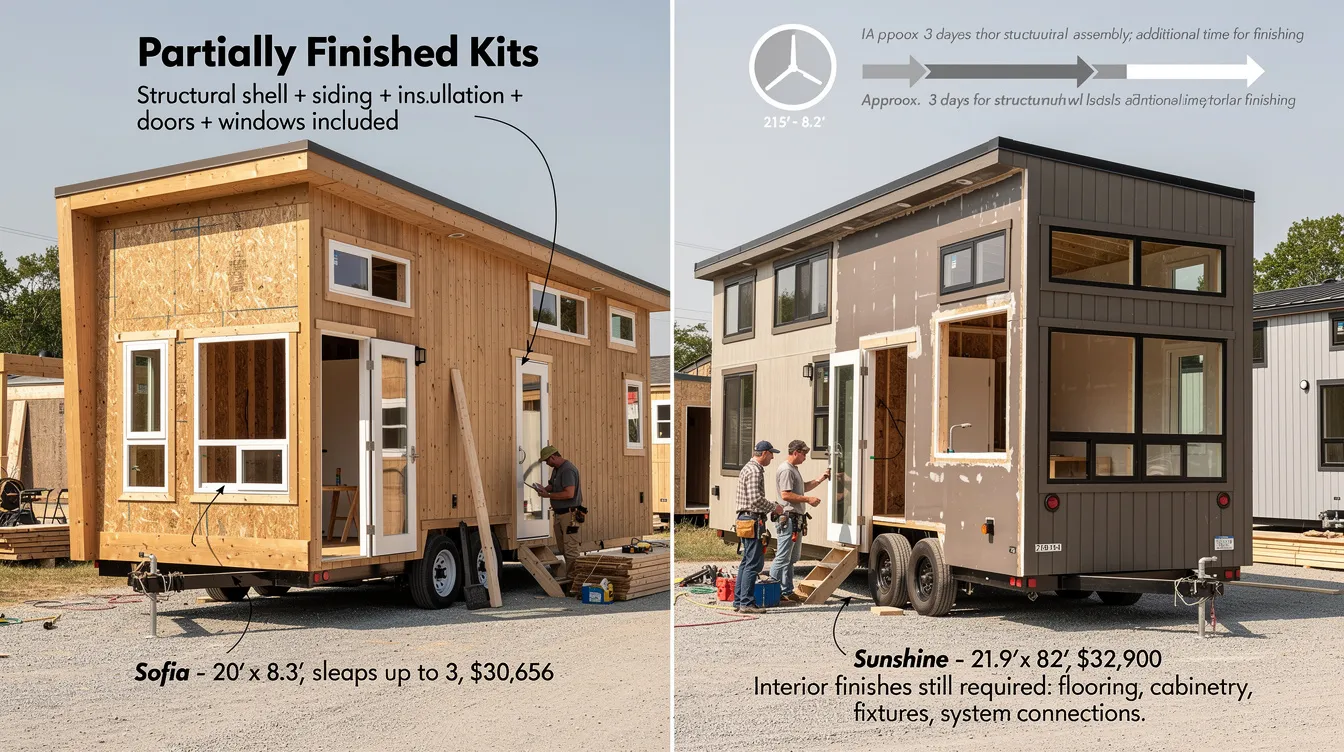
Mid-range kits bridge the gap between raw shells and finished homes. These typically include insulation, exterior siding, pre-hung doors, windows, and sometimes rough plumbing or electrical. The remaining work is mostly interior finish – flooring, cabinetry, fixtures, and final system connections.
The Sofia tiny home is priced at $30,656, measures 20′ x 8.3′, and sleeps up to 3 – a solid example of what this price tier delivers. The Sunshine model, at $32,900 and 21.9′ x 8.2′, represents the higher end of this bracket. Prefabricated homes in this range can sometimes be assembled in as little as three days for the structural components, though finishing work extends the timeline. The skill requirement is moderate – less demanding than a shell kit, but still requiring hands-on work.
Tiny Houses on Wheels ($25,000 – $40,000)
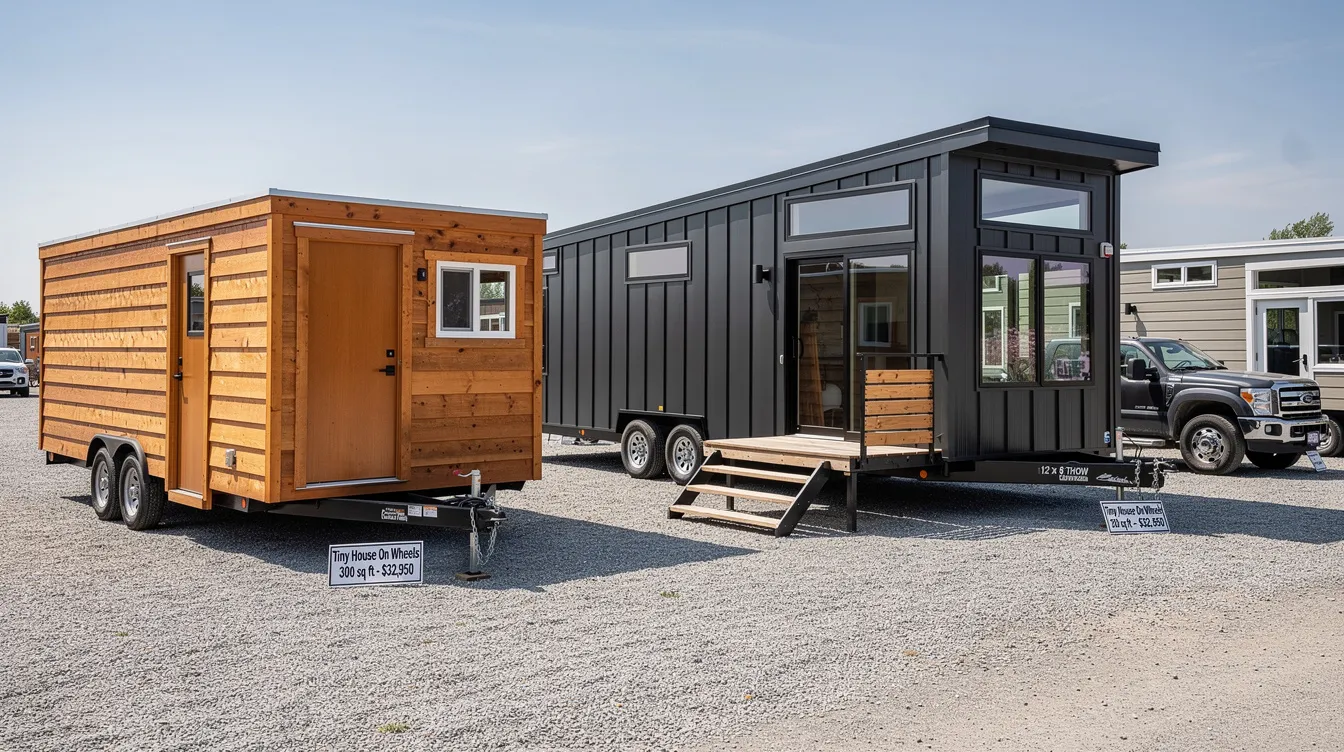
Tiny homes built on trailers offer regulatory flexibility and the freedom to relocate. Most tiny homes are built on trailers for mobility, and this category represents the largest selection in the under-40k space, with a wide range of tiny houses on wheels for sale. The Stanley model is built on a 12′ x 8′ trailer, illustrating the compact end of THOW designs, while larger models like the LE30 at approximately $32,950 offer 300 square feet of living space.
Tiny homes cannot exceed 8.5 feet in width and must be under 13.5 feet tall for transport – DOT compliance requirements that every THOW buyer needs to check. The average tiny home length is about 30 feet, though models in this price range vary significantly. Mobility is a real advantage: you can park on rented land, move between states, or reposition on your own property without the permanence of a foundation.
Move-In Ready Models ($35,000 – $40,000)
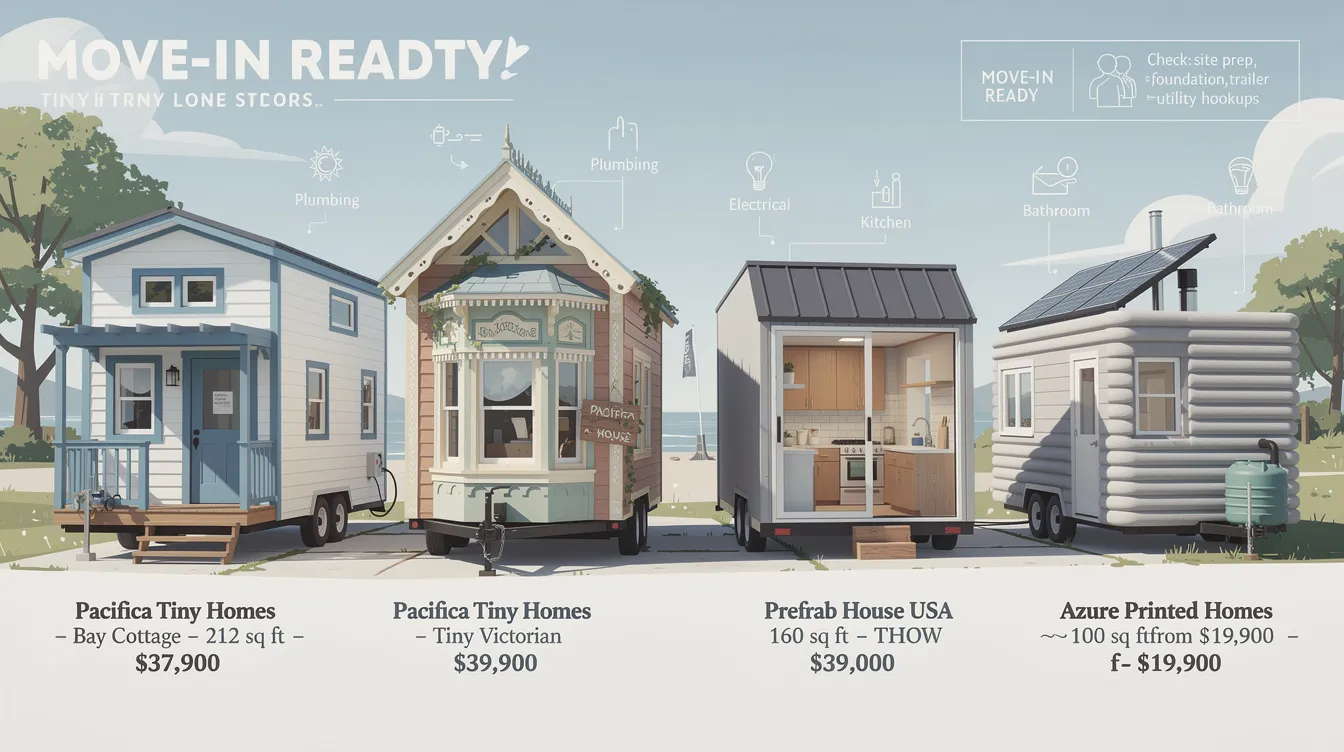
At the top of the budget, fully finished tiny homes include working plumbing, electrical, kitchen, bathroom, and interior finishes requiring minimal additional setup, similar to many turnkey tiny home options. Pacifica Tiny Homes offers models under $40,000, including the Bay Cottage – 212 square feet selling for $37,900 – and the Tiny Victorian model, inspired by San Francisco homes, at $39,900.
Prefab House USA built a 160 sq ft finished THOW for $39,000 with a complete kitchen and bathroom. Azure Printed Homes, using recycled-plastic 3D printing technology, offers move-in ready units starting at $19,900 for approximately 100 sq ft. Many models are pre-wired for solar panels or rainwater collection systems, adding off-grid capability. What sells these top-tier models is the turnkey convenience – but check carefully what additional costs to expect for site preparation, foundation or trailer setup, and utility hookups.
What to Look For in Tiny Homes Under 40k
Not all tiny homes at the same price point deliver the same value, and understanding how much a tiny house really costs helps set realistic expectations. These are the concrete attributes that separate a smart purchase from a disappointing one.
Square Footage and Layout Efficiency
Prefabricated tiny homes are typically under 400 square feet, with most models in this price bracket ranging from 100 to 300 square feet. Cedar Canyon models range from 399 to 660 square feet, though units at the higher end of that range generally exceed the $40k ceiling. Tiny homes under $40,000 are typically designed to maximize space while keeping costs low, while higher-budget buyers may opt for custom tiny home designs tailored to their exact layout preferences.
Features of tiny homes commonly include lofted sleeping areas and multifunctional furniture – these design choices can make a 150 sq ft home feel meaningfully larger. Smart storage solutions are a critical feature in tiny homes to maximize functionality: built-in shelving, under-stair drawers, fold-down tables, and wall-mounted organizers transform limited square footage into genuinely livable space.
Construction Quality and Materials
Eco-friendly materials are commonly used in the construction of tiny homes to enhance energy efficiency. Wood framing remains the most common and affordable option; steel framing or structural insulated panels (SIPs) cost more but improve energy performance and durability. For exterior cladding, the range runs from basic OSB in shell kits to cedar, metal, or composite siding in finished models.
Insulation quality matters enormously – especially if the home will serve as a primary dwelling. In colder climates, look for wall R-values of R-13 to R-19 and ceiling R-values of R-30 to R-40. Cheaper models using fiberglass batts often under-insulate; spray foam or rigid foam perform better but add cost. Roof material (metal vs. asphalt shingles) directly impacts longevity, particularly for mobile units exposed to road vibration, and all of these choices should be factored into a detailed tiny home cost calculator when planning your budget.
Included Systems and Finishes
The difference between a $10,000 shell and a $38,000 finished home is largely about systems. Tiny homes priced below $40,000 often include features such as efficient floor plans and compact kitchens – but only at the higher end of the range. Shell kits lack all plumbing, electrical, and HVAC. Mid-range kits may include rough-ins. Move-in ready models come with a working kitchen, bathroom, and electrical service.
Look carefully at finish levels: lower-end models may have exposed OSB interiors, while higher-end offerings feature drywall or wood paneling, durable flooring, and installed cabinetry. Upgrades like designer fixtures, washer/dryer combos, or premium countertops push models toward the $40k ceiling.
Foundation and Mobility Options
This decision shapes everything from permitting to daily living. Tiny homes can be built on trailers for mobility, which provides flexibility but requires DOT compliance (axle ratings, lighting, braking systems). Permanent foundation homes need site preparation – concrete piers, slabs, or blocks – plus consideration of drainage, frost lines, building permits, and whether the structure qualifies for a traditional tiny house mortgage.
Buyers of tiny homes should verify compliance with local building codes before purchasing. Zoning laws can impact where tiny homes can be placed or parked legally, and regulations vary dramatically between states and even municipalities. Some jurisdictions classify THOWs as RVs, restricting full-time occupancy; others have updated ADU policies that welcome small homes on existing residential lots.
How to Choose the Right Tiny Home Under 40k
- DIY capability and time availability – If you’re handy with tools and have months to invest, a $5,000–$15,000 shell kit stretches your budget furthest. If you need to move in soon, a finished model at $35,000–$40,000 eliminates the construction timeline entirely, and broader roundups of the best tiny homes for sale can help you compare move-in-ready options.
- Intended use and occupancy – A guest house or vacation rental has different requirements than a full-time residence. Tiny homes can be used as guest houses or vacation rentals due to their compact size, but primary dwellings need robust insulation, full plumbing, and adequate kitchen and bathroom facilities.
- Mobility requirements – If relocation flexibility matters, a THOW is the clear choice. If you want permanence and potentially easier permitting, a foundation-based small home makes more sense.
- Budget allocation within 40k – Purchasing tiny homes often requires budgeting for additional costs like land and utility hookups. A $25,000 home that needs $10,000 in finishing work and $5,000 in site prep may or may not beat a $38,000 move-in ready model – run the full numbers, and remember there are also tiny homes under $20k if you’re willing to compromise on size or finish level.
- Local regulations and permits – Check your municipality’s zoning, minimum square footage requirements, and foundation rules before committing. Getting this wrong can mean an unusable purchase.
Frequently Asked Questions
What can I realistically get for under $40,000 in tiny homes?
Many prefabricated tiny homes cost between $4,000 and $40,000. At the low end, you get a structural shell requiring lots of DIY work. In the $15,000–$30,000 range, partially finished models like the Sofia ($30,656) and Sunshine ($32,900) include more components but still need finishing. At the top, the Bay Cottage tiny home sells for $37,900 with 212 square feet of finished space, and the Tiny Victorian model costs $39,900. Prices for tiny homes can range from $10,000 for used models to $40,000 for new units.
Are tiny homes under 40k actually livable long-term?
Yes, but comfort depends heavily on construction quality, insulation, and included systems. Move-in ready models in the $35,000–$40,000 range offer genuine long-term livability with proper kitchen, bathroom, and climate control. Tiny homes promote a minimalist lifestyle, encouraging decluttering and focusing on experiences. Lower utility bills are a benefit of living in tiny homes due to their smaller size, and tiny homes can support a low-maintenance lifestyle because of their smaller square footage. The tough reality is that cheaper shells may lack adequate weatherproofing for year-round comfort without significant additional investment.
What hidden costs should I budget for beyond the initial price?
Foundation or site preparation ($1,000–$5,000+), utility hookups for water, electric, and septic ($2,000–$8,000), building permits ($500–$2,000+), and delivery/transport costs that vary by distance and weight. Shell kit buyers should budget an additional $2,000–$7,500 for interior completion. Even move-in ready models typically exclude land costs and may require additional upgrades for full comfort.
Can I get financing for tiny homes under 40k?
Traditional mortgages rarely apply at this price point. Personal loans ranging from $1,000 to $50,000+ are the most common option, with interest rates from roughly 6% to 30% depending on credit score and terms of 12–84 months. THOWs classified as RVs may qualify for RV financing with terms up to 20 years. Some builders offer in-house financing – Tiny Homes USA provides loan programs with terms of 5–15 years and rates starting around 7.5% for qualified buyers. A credit score of 680+ typically secures the best rates. Online marketplaces, specialized builders, and wholesale tiny home suppliers are common sources for purchasing tiny homes, and many offering financing options directly through their sales platforms.
Start Your Tiny Home Journey
The under-$40,000 tiny home market delivers real variety – from bare-frame shell kits for committed DIY builders to polished, move-in ready models with full kitchen, bathroom, and living space. The right choice comes down to your skills, timeline, intended use, and how you want to allocate your budget between the home itself and the costs that surround it. Explore the collection to find the balance of price, features, and completion level that fits your situation.