

Clean water matters.
Especially in a tiny house.
RV water filters were built for compact spaces with limited plumbing. That makes them perfect for tiny house living where every square inch counts.
RV water can contain harmful contaminants such as chlorine, sediment, rust, bacteria, and unpleasant tastes or odors, making a dedicated water filter essential for safe drinking water. Whether you’re filling your tank from city water hookups or relying on well water off-grid, you need protection.
Using a water filter in an RV helps prevent damage to plumbing systems, faucets, ice makers, and water heaters by removing harmful substances from the water supply. Your rv’s plumbing system deserves that protection.
Here’s what we looked for in the best rv water filter for tiny house applications: compact design, easy installation, reliable filtration, and long-term affordability.
- How We Chose the Best RV Water Filters for Tiny Houses
- Top 7 RV Water Filters for Tiny Houses
- Quick Comparison of the Best RV Water Filters for Tiny Houses
- How to Choose the Right RV Water Filter for Your Tiny House
- Which RV Water Filter Is Best for Your Tiny House?
- Final Thoughts
How We Chose the Best RV Water Filters for Tiny Houses
Finding the right filter takes more than reading specs.
Here’s our selection criteria:
- Space efficiency: Units under 12×12 inches that fit utility closets or under the kitchen sink
- Water filtration performance: Removal of chlorine, heavy metals, bacteria, and other contaminants
- Flow rate maintenance: Systems delivering 2-5 GPM without pressure drops below 30 PSI
- Installation simplicity: Most external RV filters feature simple garden hose connections that require no specialized tools or skills
- Filter lifespan: Balance between replacement costs and capacity
- Durability: Housings that withstand 40-100°F temperature swings
- Compatibility: Many RV water filtration systems are designed to work with standard 1/2-inch and 3/4-inch water inlet connections found on most rvs
A quality RV water filter is crucial for ensuring clean and safe water, especially when relying on various water sources that may not be trustworthy, such as municipal systems or well water.
Top 7 RV Water Filters for Tiny Houses
1. Berkey Big Gravity Water Filter
This gravity-fed system transforms questionable water sources into clean drinking water without electricity or plumbing connections.
Why It Stands Out
The Berkey uses silver-impregnated ceramic filter elements that purify water through gravity alone. No water pressure required. No electricity needed.
Best For
Off-grid tiny houses and those prioritizing maximum water purity.
Key Strengths
- Removes 99.999% of bacteria and viruses, 99.9% of heavy metals like lead and arsenic
- Filters 6 gallons per hour with two chambers holding 4.25 gallons
- Filter elements last 2-3 years with proper cleaning
Possible Limitations
- Occupies 19×8.5 inches of counter space
- Higher upfront cost around $200-300
- Requires manual filling rather than continuous flow
2. Camco TastePure Inline Water Filter
This rv inline water filter weighs just 1 lb and installs in 30 seconds.
Why It Stands Out
The space-saving design hides completely in your water line. Filters that utilize carbon filtration technology are particularly effective at reducing chlorine and improving the taste of water, making them a popular choice among rv owners.
Best For
Tiny houses with standard RV-style plumbing connections and weekend campers who want simplicity.
Key Strengths
- 12-inch unit with 1-micron carbon block reduces chlorine by 97%
- Eliminates bad taste and metallic taste from pipes
- Affordable at $25-35 with replacement filters under $30
Possible Limitations
- Basic filtration misses cysts and heavy metals
- Requires replacement every 3 months or 500 gallons
- Housing can crack if exposed to freezing temperatures
3. GlacierFresh 3-Stage RV Water System
This comprehensive filtration system combines three filter stages in one compact unit.
Why It Stands Out
The GlacierFresh 3-Stage RV Filtration System combines sediment removal, carbon filtration, and improved taste and odor control, making it a versatile choice for RVs and boats.
Best For
Full time rvers and tiny house dwellers wanting professional-grade water treatment, especially those building tiny smart homes with integrated systems.
Key Strengths
- Triple protection: 5-micron sediment filter, 1-micron carbon block, 0.2-micron post-filter
- Removes 99.9% of cysts like Giardia and Cryptosporidium
- Maintains 3 GPM flow rate with stable 50 PSI output
- Two-year warranty included
Possible Limitations
- Larger footprint requiring 2 cubic feet of space
- Higher price at $150-200 plus $40 annual replacement costs
- More complex installation than single-stage options
4. Aquatainer Gravity Filter System
This portable 2.5-gallon system works anywhere without installation.
Why It Stands Out
Complete portability means you can filter water anywhere. No hose connection. No plumbing. Just fill and go.
Best For
Mobile tiny houses and emergency backup water filtration.
Key Strengths
- Removes 99.99% bacteria and 97% fluoride
- Doubles as water storage tank
- NSF-53 certified with ceramic carbon core
- No installation required
Possible Limitations
- Slower flow rate at 1 gallon per 10 minutes
- Manual filling and monitoring required
- Batch processing suits low-use scenarios
5. Culligan RV-800 External Filter
This external hose filter mounts outside your tiny house, saving precious interior space.
Why It Stands Out
External installation means zero interior space used. Installation of RV water filters typically takes about 15-20 minutes for most RV owners, and clear step-by-step instructions are usually provided with the system.
Best For
Tiny houses that frequently connect to external water sources at campgrounds or hookups.
Key Strengths
- Weatherproof to -20°F for year-round outdoor use
- High flow rate of 4 GPM maintains water pressure
- GAC plus KDF media reduces chlorine 95%
- Budget-friendly at $40
Possible Limitations
- Exposed to weather and potential theft
- Only filters water when connected to external source
- Basic protection compared to multi-stage systems
6. LifeSource ApaPure Under-Sink Filter
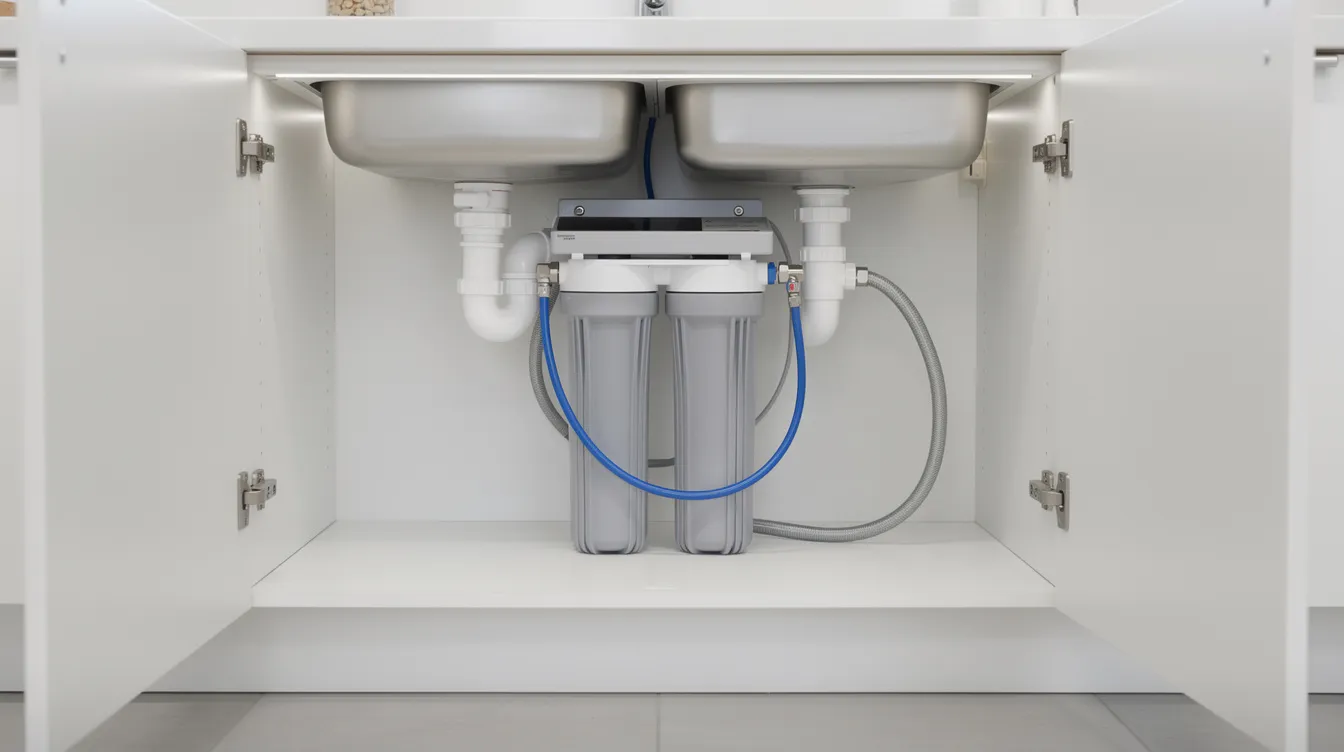
This hidden system installs beneath your sink for point-of-use filtered water at your faucets.
Why It Stands Out
The under-sink design preserves kitchen aesthetics while delivering safe water directly where you need it for cooking and drinking.
Best For
Stationary tiny houses with dedicated kitchen sink storage space.
Key Strengths
- 0.5-micron carbon block removes 99% lead and chlorine
- Filters 10,000 gallons per year at 1 GPM
- Long filter life with $100 cartridges lasting 2 years
- Hidden installation keeps counters clear
Possible Limitations
- Requires under-sink storage space
- More complex one-hour DIY installation
- Only filters water at single faucet
7. ProOne Countertop Gravity Filter
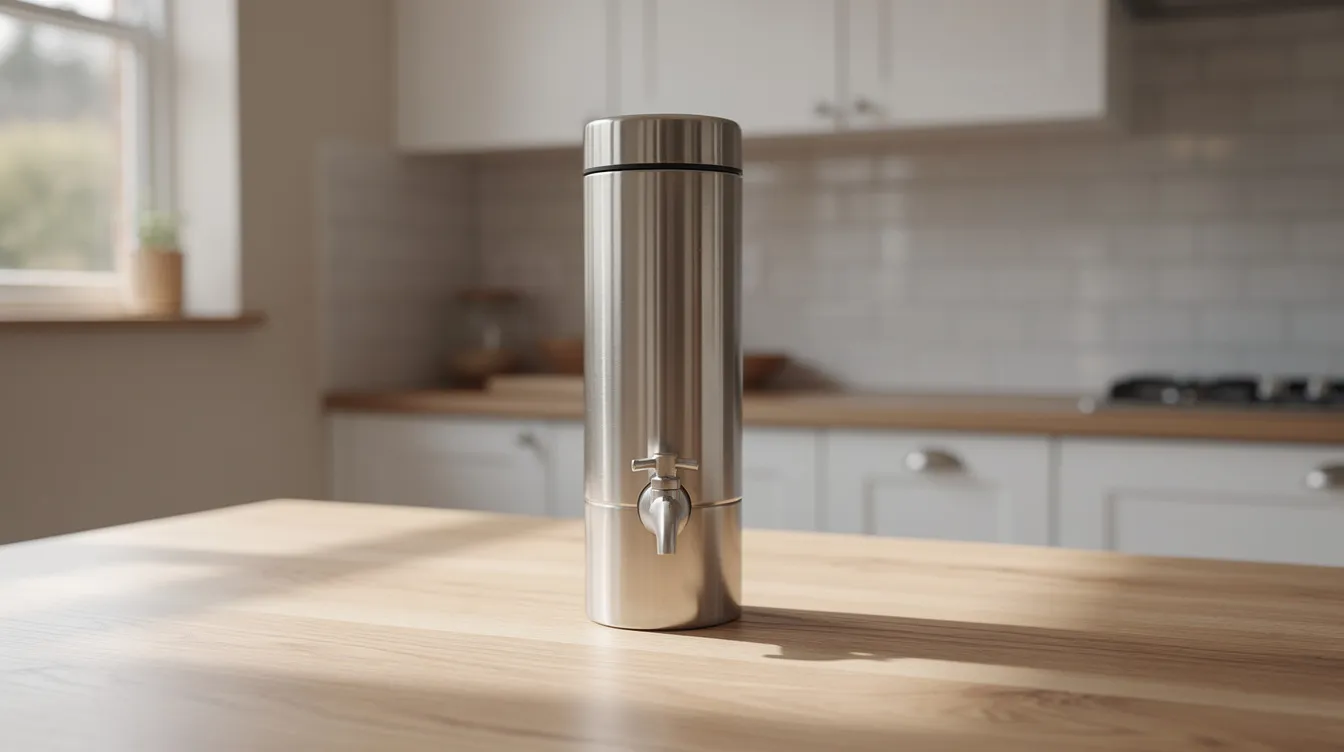
This premium stainless steel system uses proprietary ceramic filtration technology.
Why It Stands Out
Lab-tested beyond NSF standards, this countertop unit removes volatile organic compounds and pharmaceuticals other filters miss.
Best For
Tiny houses prioritizing water quality over space conservation.
Key Strengths
- Removes 99.9% fluoride, lead, and pharmaceuticals
- Stainless steel construction for durability
- No plumbing or electricity required
- 2.5-gallon capacity
Possible Limitations
- Takes up valuable counter space
- Slower filtration at 1 gallon per hour
- Premium price point
Quick Comparison of the Best RV Water Filters for Tiny Houses
Here’s the breakdown:
- Berkey Big – Best for maximum filtration without electricity
- Camco TastePure – Best for budget-conscious space saving
- GlacierFresh 3-Stage – Best for comprehensive full-time filtration
- Aquatainer Gravity – Best for mobile and emergency use
- Culligan RV-800 – Best for external connection convenience
- LifeSource ApaPure – Best for hidden under-sink installation
- ProOne Countertop – Best for premium ceramic filtration
How to Choose the Right RV Water Filter for Your Tiny House
Choose Based on Available Space
Kitchen size dictates your options, just as overall layout does when you’re comparing tiny house park model homes.
Counter space below 100 square feet? Skip countertop gravity systems. Under-sink options or inline filters work better.
Choose Based on Water Source
When choosing an RV water filter, consider your travel style; occasional campers may prefer simple inline filters, while full-time RVers might need heavy-duty systems for comprehensive protection.
Understanding the common contaminants in your camping areas can help you select the right filter; for example, filters that target iron and sulfur are essential for well water sources. Specialized media in RV water filters can target specific contaminants such as iron, hydrogen sulfide, and heavy metals, which are often found in well water.
Choose Based on Filtration Needs
Not all water sources pose the same risks.
RV water filters can effectively remove contaminants such as chlorine, sediment, rust, bacteria, and unpleasant tastes and odors, depending on the water source. The Clearsource Premier RV Water Filter System features a two-stage filter system that provides 0.2-micron protection against bacteria and cysts, making it ideal for uncertain water supplies.
In-line carbon filters, such as the Guzzle H2O Eddy, utilize activated carbon blocks that are significantly more effective than standard filters, improving water taste and reducing chemicals.
Choose Based on Maintenance Preferences
The lifespan and capacity of RV water filters vary; full-time RVers should consider filters with higher capacities to reduce the frequency of replacements compared to occasional users.
A common complaint with RV water filters is reduced water pressure, particularly noticeable when multiple fixtures are used simultaneously. Flow rate correlates directly with filter micron rating, but the design of the filter also significantly impacts performance.
Filters specifically designed for high flow rates are recommended for RVers who frequently camp at locations with already low water pressure to avoid a trickle shower.
The PUREPLUS Dual Stage RV water filtration system allows for multiple filter combinations to adapt to varying water conditions, ensuring clean and safe water for various uses.
Which RV Water Filter Is Best for Your Tiny House?
Here are direct recommendations:
- Choose Berkey Big if you need maximum filtration, have counter space, and live off-grid
- Choose Camco TastePure if you want affordable basic filtration and hate buying bottled water
- Choose GlacierFresh 3-Stage if you’re living full-time and want comprehensive treatment
- Choose Aquatainer if you move frequently or need emergency backup
- Choose Culligan RV-800 if you primarily use hookup campgrounds and want to protect interior space
Final Thoughts
The best rv water filter for tiny house living depends on your lifestyle.
Space constraints matter. Water quality priorities matter. Your setup matters.
Any of these rv water filters dramatically improves water safety compared to unfiltered sources. You’ll save money versus bottled water while protecting your health and your tiny house environment.
Proper installation and maintenance are crucial regardless of which system you choose. Just as with tiny house septic system options, even the best water filter system fails without regular replacement filters.
Fresh, clean water isn’t optional in tiny house living.
It’s essential.
Start by assessing your water sources. Measure your available space. Then pick the filter that fits your life.