

Every tiny house needs a plan for water – where it comes from, where it goes, and how much you can store between refills. Whether you want to live off grid on rural land or park at an RV site with full hookups, your water tank setup determines how independent and comfortable your daily life actually feels.
Key Takeaways
- Water tanks for tiny houses let you buffer unreliable hookups, protect against freezing in cold climates, and maintain water supply when you’re away from city water. Combining tanks with an rv hookup gives you maximum flexibility for both stationary and mobile living.
- Most full-time tiny homes benefit from a tank + RV hookup hybrid system. Your two options beyond that are tank only (classic off grid setup) or hookup only (for stationary houses with reliable on grid water access).
- A typical tiny house water tank is 40-46 gallons. For a couple using 10–15 gallons per day for showering, washing dishes, and handwashing, a 40–60 gallon fresh water tank provides roughly 3–5 days before you need to fill again.
- Protect tanks from freezing and contamination with proper insulation, food-grade materials, and regular sanitizing of your fresh water system.
How Tiny House Water Systems Work (Fast Overview)
In a tiny house, your plumbing system basically consists of five parts: a water source (tank, rv hookup, or both), a fresh water tank for storage, a water pump (usually 12V), PEX pipes and valves running to your fixtures, and a drainage system for wastewater. For a deeper breakdown of these on-grid and off-grid options, see how tiny houses get water through hookups, tanks, and hybrid systems.
Here are the key terms you need to know. Fresh water is clean, potable water for drinking water, cooking, and washing. Greywater is defined as wastewater from sinks and showers. Black water is toilet waste from a flush toilet. Off grid means no city water or sewer connection. On grid means connected to municipal water and sewer services.
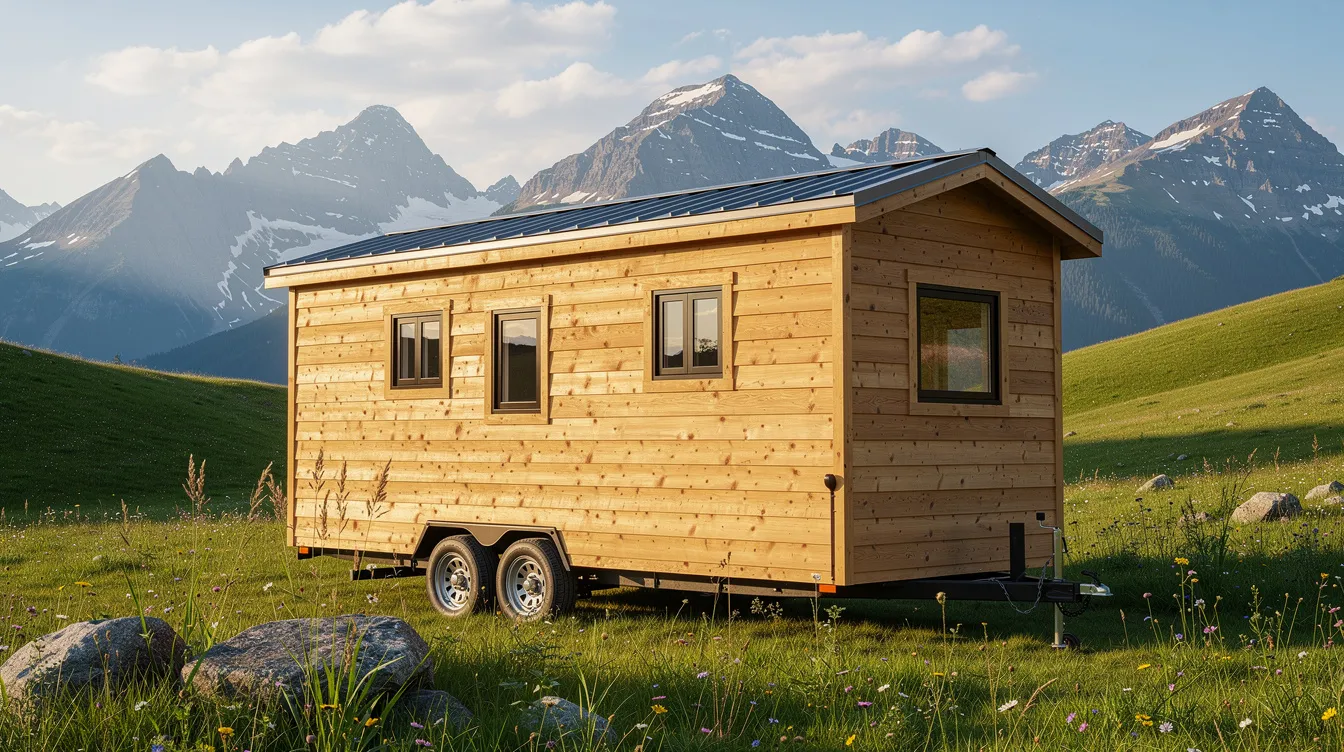
A concrete example: picture a 26-foot tiny house with a 46-gallon fresh water tank tucked under the kitchen counter, a 12V demand pump pressurizing PEX lines to a kitchen sink, bathroom sink, and shower, with drain lines running to portable grey and black tanks beneath the trailer. Tiny houses typically use 46-gallon water tanks for storage in this kind of arrangement. Compare that to a tiny house parked at an RV park with full hookups, where you can connect directly to pressurized water and a sewer drain – and your onboard tank just sits as backup. The average American uses 80-100 gallons of water daily, but careful tiny house living cuts that figure dramatically.
Choosing a Water Source: No Plumbing, Tank, RV Hookup, or Both
How you get water into your house frames every other decision about tank size, plumbing layout, and off grid capability. This is the first thing you should plan before buying a single fitting.
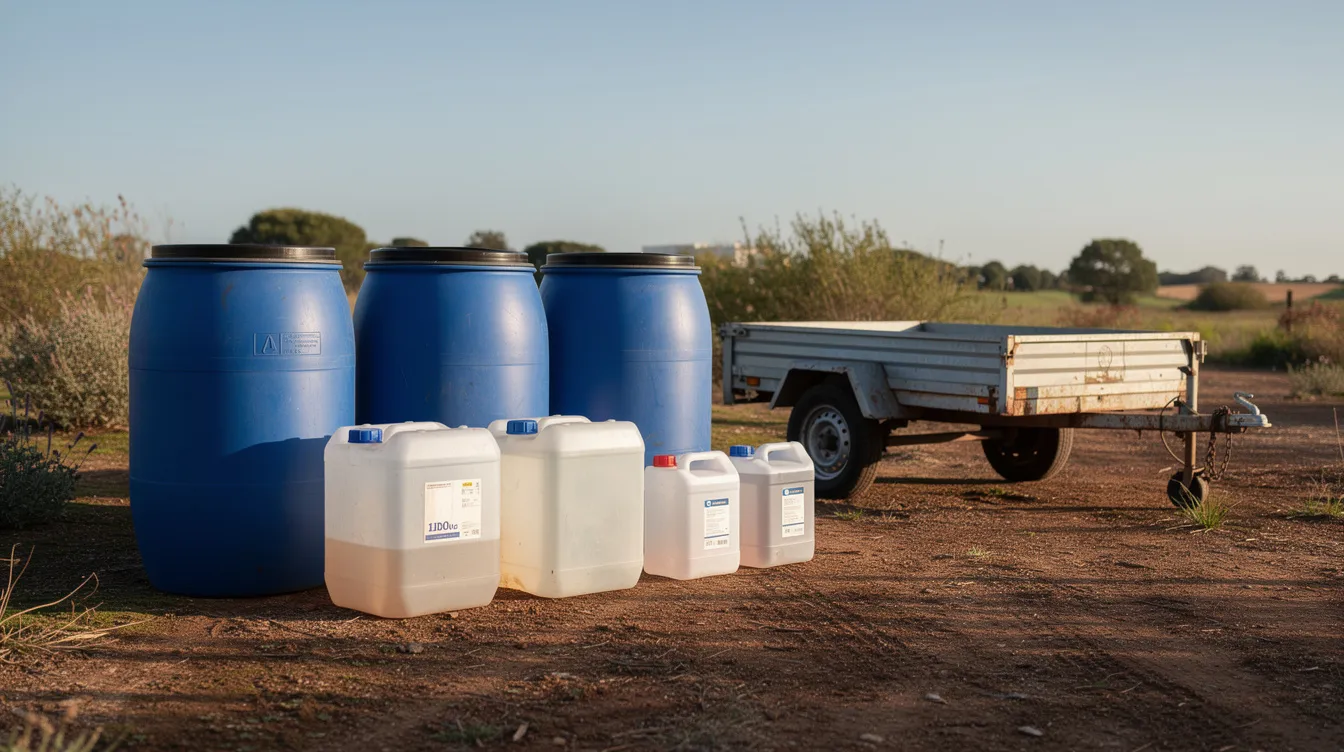
No plumbing at all. You carry water in 1–5 gallon jugs, store bottles on shelves, and maybe use a gravity camp shower. This idea might work for a weekend cabin, but it’s impractical for full-time tiny house living – especially in winter when you don’t want to haul jugs through snow.
Tank only. A fresh water tank (30–60 gallons) filled from jugs, a well spigot, a water truck, or a neighbor’s garden hose. This is the classic off grid arrangement and requires careful conservation habits, and it pairs naturally with broader self-sufficient tiny home off-grid systems. You’ll need to plan refill logistics, especially in dry or cold climates.
RV hookup only. Tiny houses can connect directly to city water systems via a potable water inlet and a drinking water hose, with a pressure regulator protecting your fixtures. This suits houses that rarely move and have reliable on grid access, but you lose all off grid capability.
Tank + RV hookup hybrid. Hybrid plumbing systems combine city water and tank options – run directly off the spigot when parked long-term, then switch to your onboard tank and pump when traveling or boondocking. For most modern tiny homes, this is a great option and the most practical compromise, especially when you understand the full process of hooking a tiny house up to utilities.
If you move monthly and want off grid backup, plan on a 40–60 gallon tank plus RV hookup. If you’re stationary with city water, a smaller tank just for emergencies is a better idea.
Sizing Your Tiny House Water Tank
Tank sizing depends on daily water use, number of occupants, and how many days you want to stay off grid between refills. Be careful with your estimates – undersize and you’ll run dry; oversize and you waste space and payload.
Conservative daily-use benchmarks for a tiny house:
- 1–2 gallons per person for drinking water and cooking
- 3–5 gallons per person for quick showers
- 2–3 gallons per day for washing dishes by hand
- 1–2 gallons for handwashing, cleaning, and miscellaneous
Worked examples:
- Single person, careful water saving: 7–10 gallons/day → a 30–40 gallon tank gives 3–4 days off grid.
- Couple using 10–15 gallons/day together → a 46–60 gallon tank provides roughly 3–5 days before refilling. A 50–60 gallon tank is generally suitable for 1-2 people for short-term needs.
Tanks must consider weight constraints since water weighs approximately 8.34 lbs per gallon. A full 60-gallon tank adds about 500 lbs to your trailer – keep that weight near the axles for towing stability. Tiny houses with washing machines can double or triple daily water demand, so factor that in. A typical tiny house owner can save thousands of gallons of water annually compared to conventional housing through low-flow fixtures and conservation habits.
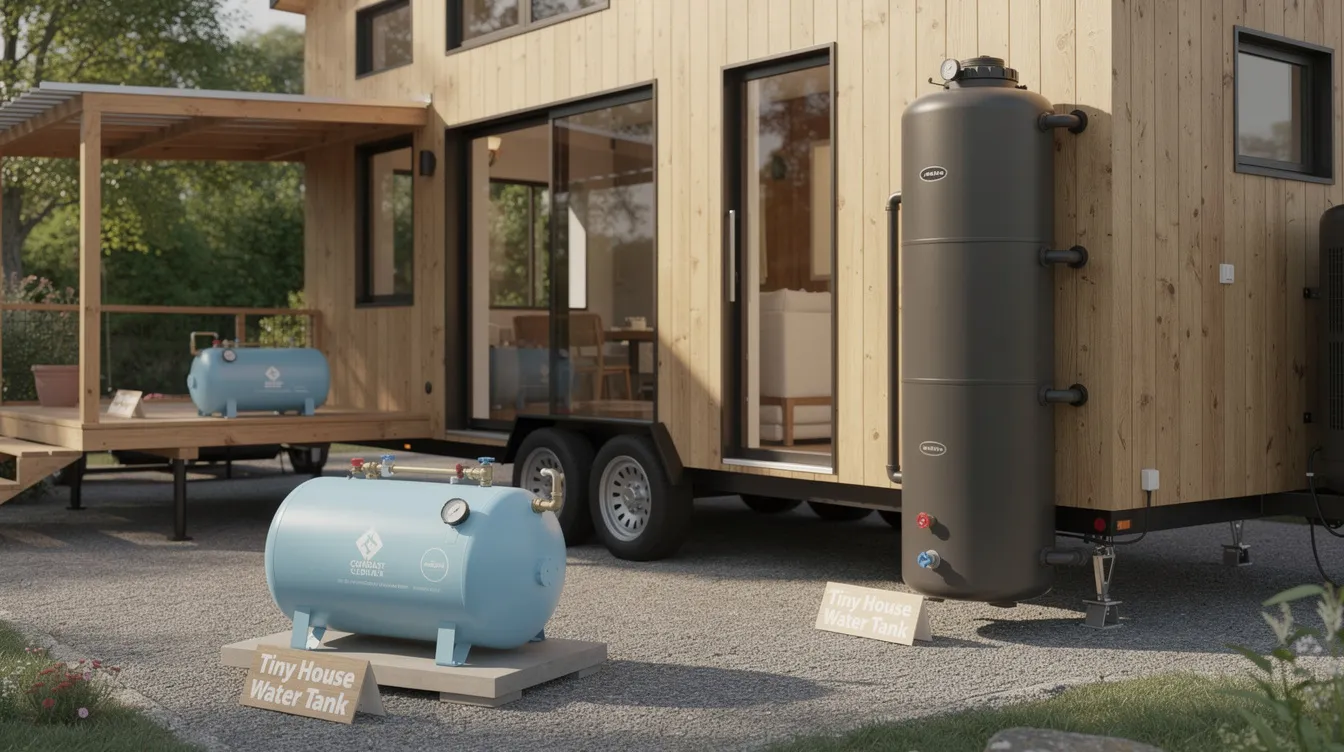
For off grid living or rainwater harvesting, a 250–1,000 gallon tank is recommended, especially when paired with a well-designed tiny house rainwater collection system. Place tanks under the kitchen counter, under a bed platform, inside a bench seat, or in an insulated utility bay over the trailer axles – wherever they create more space rather than consuming it.
Recommended ranges: 20–30 gallons for part-time use, 40–60 gallons for most full-timers, 75+ gallons only with strong payload capacity and serious off grid needs.
Types of Water Tanks for Tiny Homes
Three main categories matter: fresh water tanks, greywater tanks, and black water tanks. Each is built to handle a different kind of water and has distinct material and venting requirements.
Fresh water tanks. Polyethylene tanks are lightweight, durable, and suitable for many tiny homes. The best ones carry NSF/ANSI 61 certification, ensuring they’re safe for potable water storage. Common shapes include rectangular low-profile tanks that fit under cabinets, vertical design tanks used to maximize height in limited spaces, and custom wedge tanks over wheel wells. Slimline tanks are engineered for narrow footprints suitable for urban environments and slimline water tanks maximize storage while minimizing footprint. Flexible tanks can fit into irregular spaces, saving floor space, and modular tanks can sometimes be easier to install than one large tank. Stainless steel tanks are durable and safe for potable water but more expensive and heavier. Opaque tanks help reduce algae growth, and pairing your storage with the best RV water filters for tiny houses helps keep that water clean and safe.
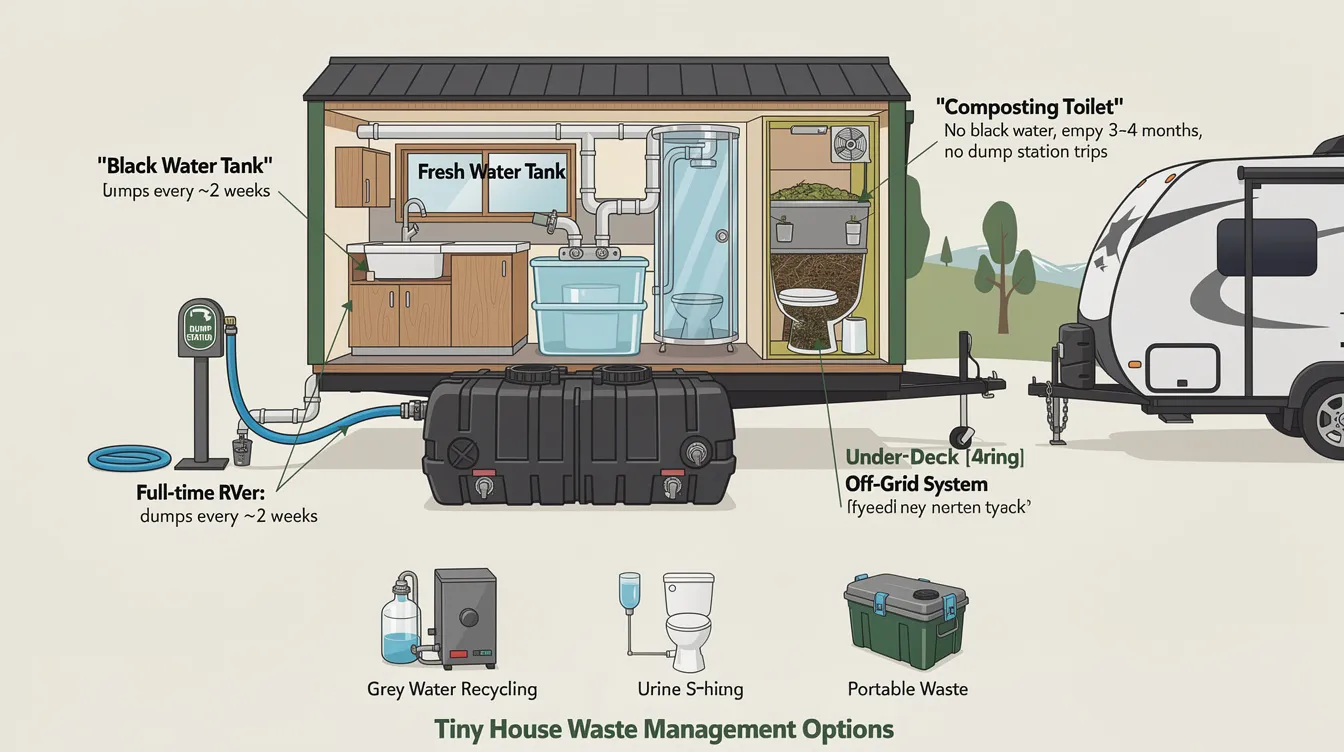
Greywater tanks. These collect water from sinks, showers, and sometimes washing machines. Greywater tanks in tiny houses can be as small as 15 gallons. You can use portable 10–25 gallon tote tanks you roll to a dump station, or fixed under-trailer tanks plumbed to an RV sewer hose. Some off grid tiny houses skip a built-in grey water system entirely and drain to a permitted greywater irrigation system – grey water systems for tiny houses can be designed to reuse greywater for irrigation systems to water plants in your garden.
Black water tanks. These store toilet waste and require robust plastic with proper vents and dump valves. The average full-time RVer dumps black water every two weeks. Many tiny house owners use composting toilets to eliminate black water entirely. Composting toilets eliminate black water waste entirely and require emptying every 3–4 months – no dump station trips needed. Under-deck tanks utilize space underneath tiny houses to save outdoor area. Internal freshwater tanks can be placed in utility spaces for off-grid use, and there are several broader tiny house waste management options that can replace or supplement traditional black water setups.
Installation Options: Inside vs. Outside, Warm vs. Cold Climates
Where you place your water tank matters as much as its size – especially for freezing protection, maintenance access, and weight distribution on a tiny house trailer.
Inside installations. Putting tanks under kitchen cabinets, benches, or beds keeps them hidden within the living envelope. Indoor tanks are easier to keep above freezing in cold climates and simpler to inspect for leaks. Downsides: you lose interior space, pump noise can be an issue, and full tanks must be braced so they don’t shift while towing.
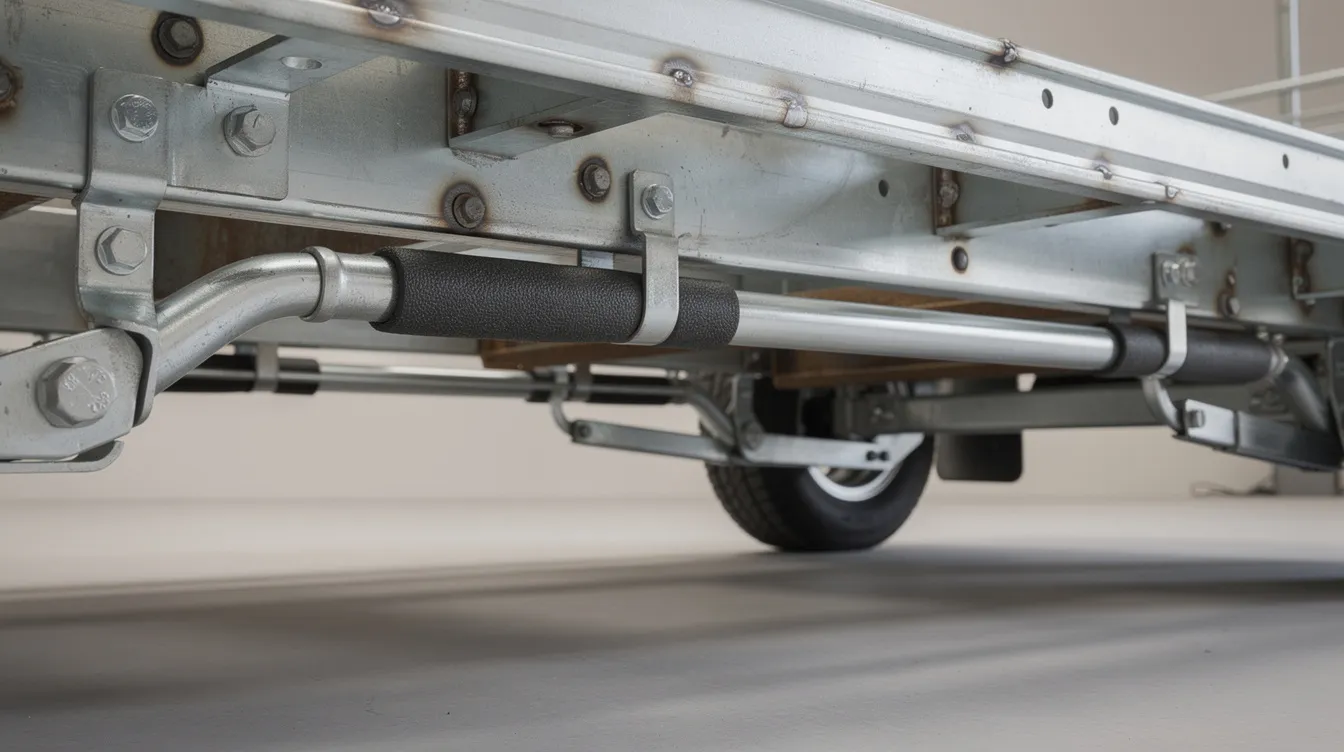
Outside or under-floor installations. Mounting tanks between trailer frame rails or in exterior utility bays saves interior room and can lower the center of gravity. However, these locations face greater risk of freezing, road debris damage, and require more complex plumbing penetrations through the floor.
Cold climate strategies. Enclose tanks and pipes in insulated chase spaces. Install 12V tank heaters or heat tape on vulnerable lines. Route warm interior air through utility bays. A heated hose prevents freezing in cold climates when connected to an insulated spigot at an external water source. Some tiny houses in places like Minnesota use heated fresh water hoses to keep everything flowing during winter, even at temperatures below -20°F, which is especially important for self-contained tiny homes designed for off-grid living.
Warm climate considerations. Exposed tanks face algae growth and elevated water temperature. Use opaque tanks, shade them, and sanitize periodically – especially if the house is parked in sun-baked locations like Arizona.
Regardless of climate, secure tanks with straps or brackets and plumb with flexible PEX. Tiny house plumbing often uses PEX piping for flexibility and better freeze tolerance than rigid PVC.
Integrating Tanks into a Tiny House Plumbing System
Your tank, pump, plumbing system, and drains must work together so water flows smoothly from your water source to fixtures and then out as greywater or black water.
Fresh water flow. Water enters the fresh tank via a gravity fill port or a pressurized water inlet from a hose. Off-grid systems often use 12V water pumps for pressure, bringing lines to around 40–50 psi and feeding your kitchen sink, bathroom shower, and any appliance like a compact washing machine. An accumulator tank reduces pump cycling and noise – a great option for comfortable living.
Switching between tank and hookup. Install a simple valve arrangement where one position uses the onboard pump and fresh water tank, and another bypasses the pump to run directly on city water from an rv hookup. Always add a pressure regulator when using high-pressure city water to avoid damaging fixtures.
Hot water. A tankless propane water heater is popular for tiny houses due to its compact size. Small electric units work too, but both must be sized for the low flow rates (1–2 GPM) common in tiny house plumbing. Exploring the best water heaters for tiny houses can help you match your heater to your power source and layout. Either way, a water heater needs to be accessible for maintenance.
Drain and waste. Greywater drains via P-traps and a main outlet to a portable grey tank, a fixed tank, or a sewer hookup. Black water from a flush toilet goes to a separate tank with its own vent and dump valve. A composting toilet skips black water plumbing entirely – no wastewater to manage. Greywater systems must comply with local regulations before you drain to land or garden irrigation.
Keep accessible shutoff valves, low-point drains for winterizing, and access panels to inspect tank fittings and pump connections. Use electricity-efficient components wherever possible to reduce your overall draw.
Operation, Maintenance & Water Quality
A well-installed tank system still needs regular care to keep fresh water safe and your plumbing running smoothly in a tiny home. Don’t skip this – contamination and freeze damage are real risks.
Filling and daily operation. Use only potable-rated hoses and spigots for filling. Avoid using an ordinary garden hose, which can leach chemicals into your drinking water. Monitor tank levels with sight tubes or inexpensive level sensors so you don’t run the pump dry and burn it out.
Sanitizing. Outline a basic routine: flush your tank with a diluted household bleach solution at least 1–2 times per year, plus after any long storage period. Install in-line carbon filters or under-sink filters for drinking water, especially when you store water sourced from varied rural taps or campgrounds, and consider integrating a tiny house rainwater harvesting system with proper filtration if you plan to rely heavily on collected rain.
Winterizing. If your house will sit unused below freezing, drain tanks and lines fully and use non-toxic RV antifreeze for parts that can’t be fully drained. Full-time cold climate residents instead keep systems active with insulation, heat tape, and continuous low-level heating inside the home to maintain temperature above freezing.
Conservation habits. Take military-style showers, use basins for washing dishes, fix drips immediately, and reuse greywater (where legal) for garden irrigation to water plants. These habits create a sustainable routine and extend the time between refills dramatically.
Lifecycle. Check tank straps, fittings, pump mounting, and hoses yearly for cracks or leaks. Quality plastic tanks can last a decade or more when properly supported and ventilated. Plan for the future by choosing tanks and fittings that are easy to replace.
Frequently Asked Questions About Tiny House Water Tanks
These questions cover common concerns not fully addressed above.
Can I drink water that has been stored in a plastic tank for weeks?
Yes, provided the tank and hoses are food-grade, the water came from a potable source, and you sanitize the system regularly. If water has sat for more than a few weeks, run it through a carbon filter or boil it before drinking. Rotating your water supply is a good habit to create for long-term storage safety.
Do I really need separate tanks for greywater and black water?
Plumbing codes and health regulations require black water to be isolated from greywater. A composting toilet avoids the need for a black water tank entirely, while greywater from your sink and shower can sometimes be routed to a legal outdoor irrigation system instead of a traditional tank – but always check your location’s regulations first.
How hard is it to retrofit a water tank into an existing tiny house?
It’s feasible but requires opening walls or cabinets to add PEX lines, potentially reinforcing the trailer frame for an under-floor tank, and planning safe routing for fill and vent lines. Consult a plumber or experienced tiny house builder for structural checks before you start.
Is rainwater collection enough to supply my tiny house tank?
In many regions, roof catchment can cover a significant share of your fresh water needs, but you must pre-filter, treat, and check local regulations before relying on it. Rainwater is a great option primarily for non-potable uses unless treated to drinking water standards with multi-stage filtration and UV purification.