Key Takeaways
- A pink mood board is a curated collage of images, textures, and color swatches used to plan a tiny house’s pink aesthetic before committing to finishes in a compact space of 200 to 400 sq ft.
- This guide from Explore Tiny House covers pink mood boards tailored to small spaces: lofts, 8 to 10 ft wide trailers, 20 to 30 ft cabins, and micro-apartments, using high-resolution, HDR-style imagery for accurate color reference.
- You will learn how to choose specific pink shades (blush, dusty rose, millennial pink, fuchsia accents) that won’t overwhelm a tiny home, and how to balance them with neutrals and natural materials like birch plywood and brushed brass.
- The article walks through building a digital or physical mood board using tools like Pinterest boards, Canva layouts, and printed A4 boards, with real object examples such as fabrics, tiles, and fixtures.
- A final FAQ section answers practical questions about maintenance, cost, and how to adapt a pink aesthetic mood board to different tiny house styles including Scandinavian, Japanese-inspired, and modern cabin.
Introduction to Pink Mood Boards for Tiny Houses
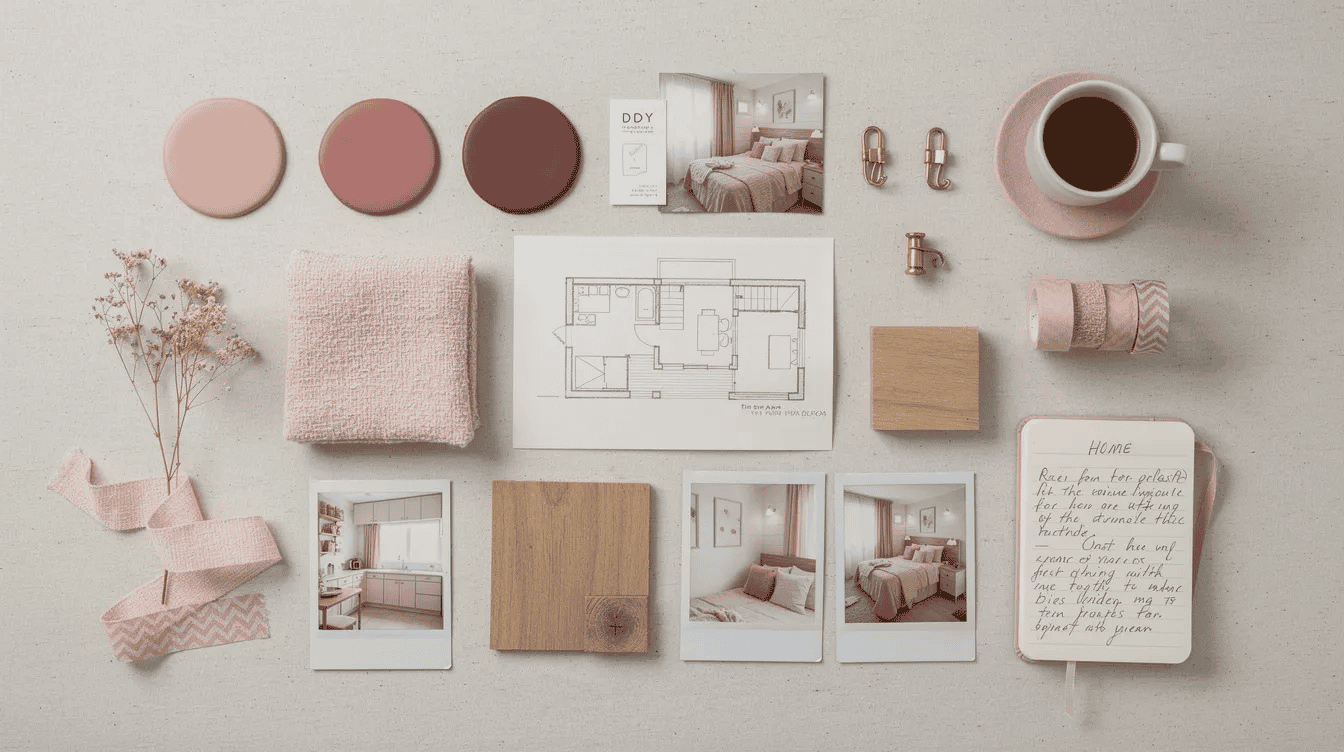
A pink mood board is a visual reference sheet that gathers images, color swatches, material samples, and texture ideas into one place before you spend money on paint, tile, or upholstery. Documenting the feel of a project through a mood board creates cohesion; every finish, fixture, and fabric connects to a single visual thread instead of drifting into mismatched impulse purchases. For tiny houses between 200 and 400 sq ft, where every surface is visible from nearly every angle, that cohesion matters more than in a 2,000 sq ft house with separate rooms.
This guide is written by Explore Tiny House, a platform dedicated to tiny and small-space living. The examples here are tailored to the spaces our readers actually live in: 24 ft trailers on wheels, 9 m² micro-studios, van conversions, and compact cabins. While pink mood boards guide decisions in fashion and product collections, our focus is on walls, cabinetry, textiles, and fixtures in spaces where a single wrong color choice is impossible to ignore.
A pink mood board serves as a visual compass for design projects, and the compass works best when the reference images are honest. That is where HDR-style photography comes in. HDR images merge multiple exposures so that bright windows and dim loft corners both show true color detail. When you collect HDR-quality reference images, you see how a blush wall actually behaves next to a sunny window at noon and under warm LED strips at 9 p.m. Pink is a versatile color family; it ranges from soft blush walls in a 24 ft tiny house on wheels to bold fuchsia textiles in a 160 sq ft off-grid cabin. A mood board helps you test that range on paper (or screen) before it ends up on your walls.
The sections that follow cover three things: how to design a pink aesthetic palette that works in small spaces, how to build a practical pink mood board in both digital and physical formats, and how to apply that board to actual tiny house materials and layouts.
Designing a Pink Aesthetic Palette That Works in Tiny Spaces
Not every shade of pink behaves the same way inside 250 sq ft. A pale blush on the ceiling of a well-lit 28 ft trailer reads open and airy. The same blush in a shaded loft under a low roofline can look washed-out or grey. Designers use pink mood boards in branding to communicate a brand’s identity; in a tiny house, the pink palette communicates whether a space feels calm, playful, or sophisticated.
Different shades of pink evoke specific feelings such as romance or playfulness. A dusty rose leans warm and grounded; a cool-toned mauve feels restrained; a saturated fuchsia reads energetic. Pink mood boards often feature pastel shades and textures because those lighter values keep small rooms from closing in, but mid-tones and accents have their place too.
Pink is increasingly used as a warm neutral in contemporary interiors, and trend data from Homes & Gardens confirms that blush-rose and dusky pinks are staging a comeback in living areas and exteriors heading into 2026.
Here is a restrained palette formula that works across most tiny house layouts:
Role | Example shade | Hex code | Where to use it |
|---|---|---|---|
Pale pink (dominant) | Benjamin Moore “First Light” (OC-19) | #F6E9DE | Walls, ceiling, large built-ins |
Mid-tone pink (secondary) | Benjamin Moore “Pale Petal” (2094-70) | #E7D4D5 | Larger textiles, headboard panel, cabinetry |
Accent pink (pop) | Dusty rose | #C97C7C | Throw pillows, a single door, a backsplash row |
Neutral support 1 | Warm white | #F8F4EE | Ceiling, window trim |
Neutral support 2 | Muted sage | #8A9A5B | A single plant shelf, small textile accent |
Neutral support 3 | Charcoal | #333333 | Metal fixtures, door handles |
Use contrasting colors like green to enhance pink aesthetics. Muted sage, for instance, keeps a pink palette from feeling one-note. This 60/30/10 proportion (60% neutral or pale pink on walls and cabinetry, 30% mid-tone pink on larger furniture and textiles, 10% accent on small objects) is a standard tiny house guideline cited across design platforms for aesthetic tiny homes.
Mood boards help visualize lighting effects in interior spaces. HDR-inspired photography captures how pink surfaces shift between morning daylight (around 5000 to 6500 K color temperature) and warm evening LEDs (2700 to 3000 K). Collect or shoot reference images under both conditions. A pink that looks perfect in a noon photo can turn amber-peach under warm bulbs at night. Seeing both on your mood board prevents surprises.
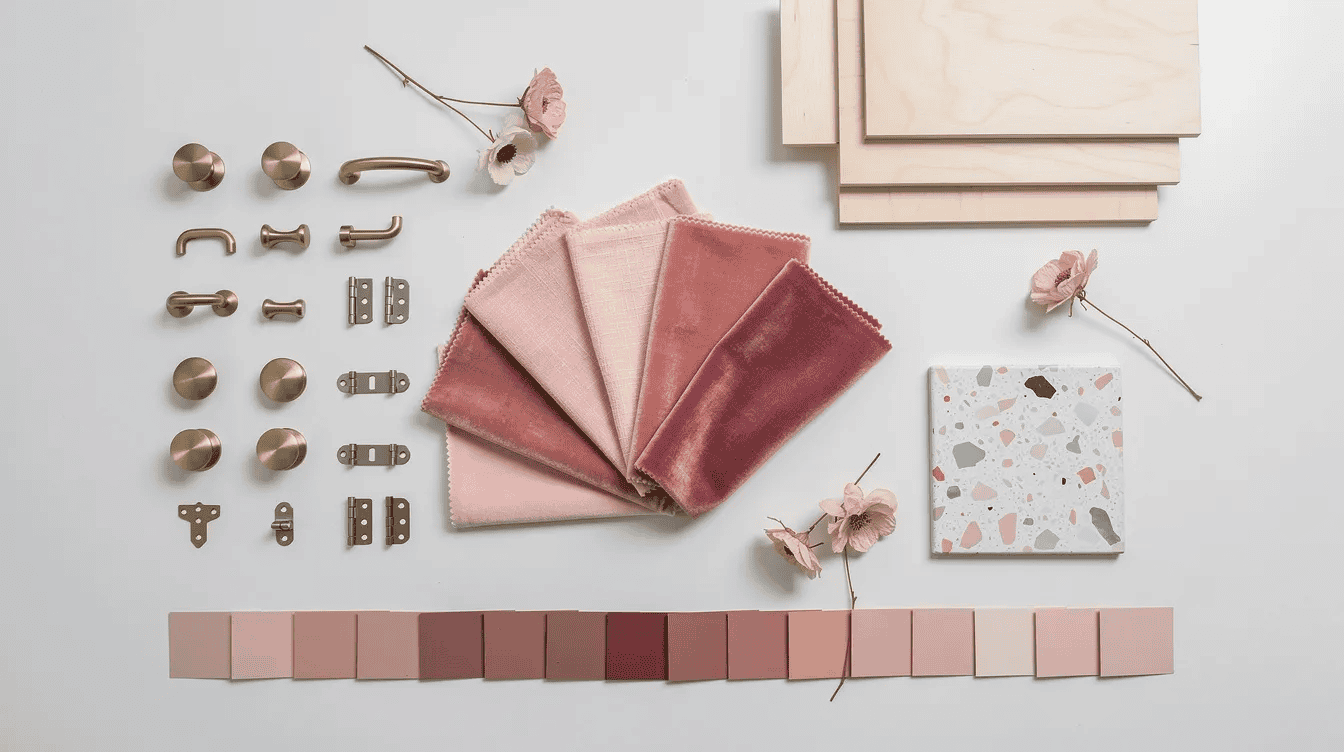
Natural elements enhance the warmth of pink in design. The materials that pair best with a pink aesthetic in tiny houses are:
- Pale birch plywood and whitewashed pine for cabinetry and shelving
- Light terrazzo or zellige tiles for backsplashes and shower niches
- Brushed brass or copper hardware (warm metals complement warm pinks)
- Rattan, linen, and woven cotton for textiles
- Matte wall finishes with glossy white cabinetry for light bounce without glare
Textures like velvet and silk add depth to pink mood boards. In a tiny house, a velvet cushion in dusty rose against a matte blush wall creates visual interest without adding clutter.
For finishes that don’t visually shrink the space: matte blush walls paired with glossy white upper cabinetry reflect light back into the room. A pink Moroccan-style zellige backsplash with white grout adds texture while keeping the overall impression light. Semi-gloss surfaces make pinks read slightly more saturated, so test samples before committing.
Soft, Airy Pink Aesthetic for Light-Filled Tiny Homes
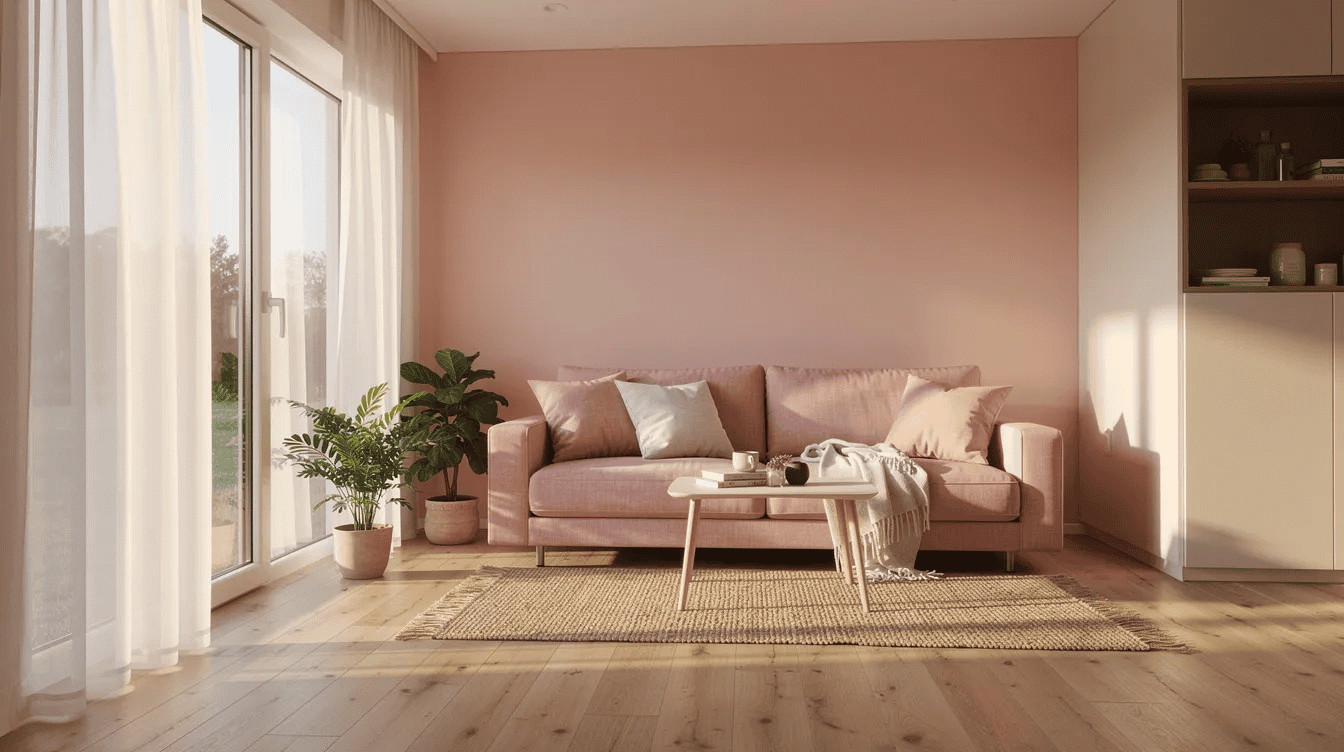
If your tiny house has large windows or glass doors (common in 24 to 30 ft builds and modern tiny house designs), pale blush and barely-there pinks can cover larger surfaces without overpowering.
Concrete ideas for this scenario:
- White shiplap walls with a single accent wall washed in Benjamin Moore “First Light”
- A pale pink linen slipcovered sofa in a 10 ft wide living area, paired with light oak flooring
- Sheer pink curtains that catch sunrise or sunset light, creating a warm glow across the ceiling
- A single piece of art with rose tones, hung at eye level to anchor the palette
Bright, HDR-style inspiration photos are the best references here. They show how sunlight travels through the tiny home during the day; at 7 a.m., pink walls look cool and soft, while at 5 p.m. they warm to a honey-blush. Pin or print images taken at multiple times of day so your mood board captures that range.
Cozy, Cocooning Pink Aesthetic for Dim or Narrow Layouts
Narrow or shaded tiny homes need a different approach. A 20 ft trailer parked under tree cover, or a narrow city micro-flat with north-facing windows, gets limited direct sun. Here, mid-tone or earthy pinks create a warm cocoon instead of looking washed-out.
Combining pink with earthy colors results in a grounded aesthetic. Try these combinations:
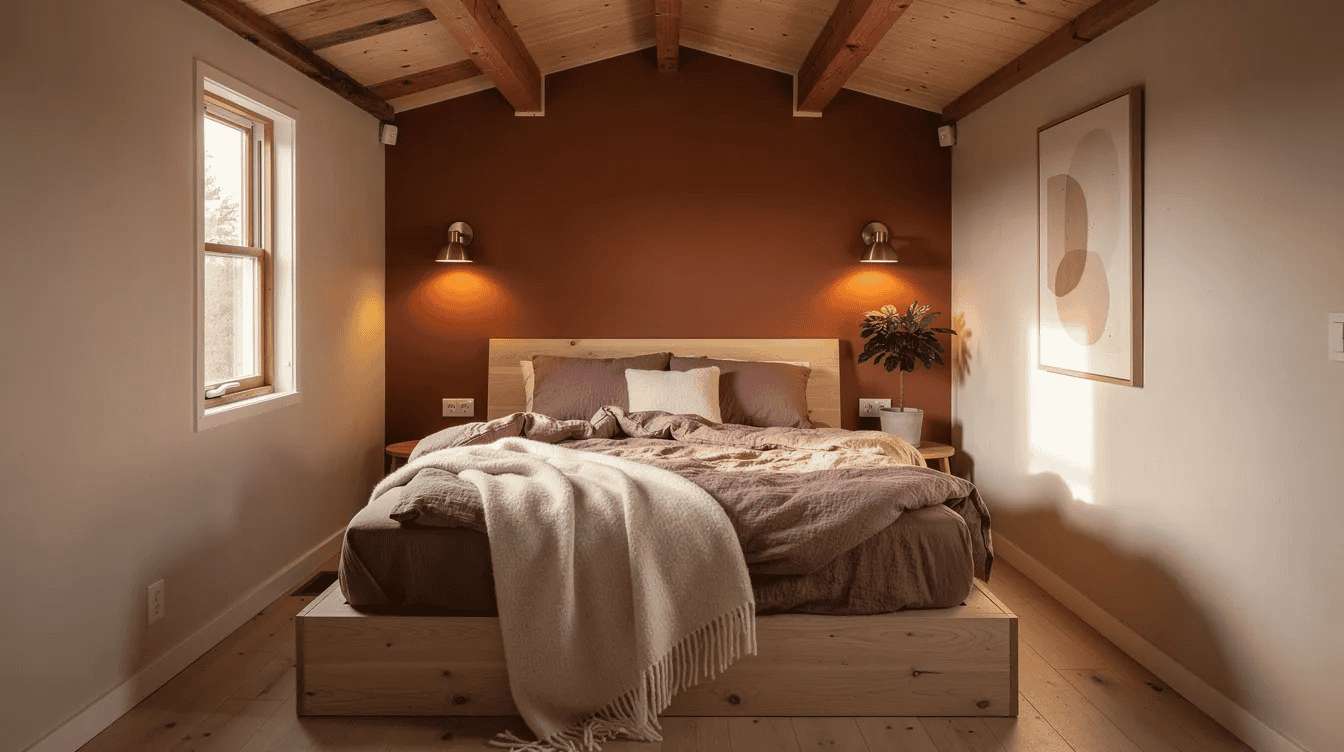
- A terra-cotta pink accent wall (around #C4756A) behind a compact sofa, with the remaining walls in warm white
- Mauve bedding in a loft, layered with a cream wool throw
- Darker rose cabinetry on the lower half of a galley kitchen, keeping upper cabinets white to preserve headroom
- Warm brass or copper pendant lights and under-cabinet LED strips at 2700 K
The photos you select for this section of your mood board should be rich, high-contrast HDR images. They need to show what the space looks like under warm evening lighting (wall sconces, under-cabinet LEDs) because that is the primary light condition in dim layouts. Shooting or selecting images with visible light sources (a glowing pendant, a candle, warm strip lighting) gives you a realistic preview of nighttime ambiance.
How to Build a Pink Mood Board (Digital & Physical) for Your Tiny House
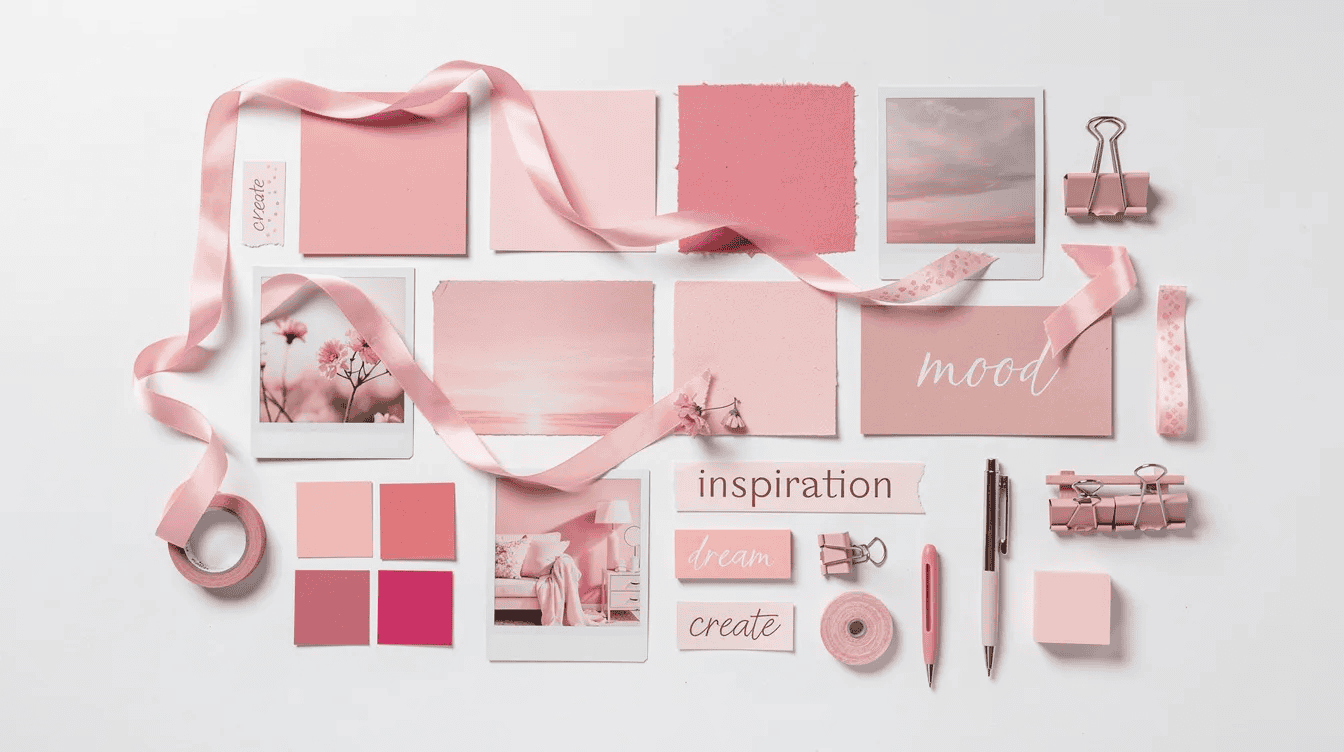
Mood boards communicate design ideas before project execution. They’re your pitch to yourself, to your partner, or to a builder. Mood boards can include digital and physical elements; digital boards are quick to assemble and easy to share, while physical boards let you see and touch real material samples under real light.
The process starts with gathering reference images. Look for tiny house interiors, close-ups of pink textiles, tiles, pink front doors, bedding, and decor. Sources include the Explore Tiny House galleries, architecture sites, and photographers who shoot small-space interiors. Incorporate floral elements for a vibrant pink mood board; a dried peony stem or a photo of a wildflower arrangement in blush tones adds organic texture.
Use high-resolution, HDR-quality photographs wherever possible. HDR merges multiple exposure brackets (typically +/- 2 to 3 stops) so that wood grain, textile weave, and subtle pink undertones are visible and realistic. When these images are viewed on a laptop or printed, they show materials as they actually appear in person rather than overexposed or muddy.
Organize your board into categories:
- Walls and built-ins (paint colors, shiplap, accent wall finishes)
- Textiles (curtains, bedding, cushion fabrics, rugs)
- Decor and lighting (art prints, plants, sconces, pendant fixtures)
- Materials and finishes (metal hardware, wood species, stone, tile)
Keep the board to 8 to 15 key images. More than that turns a mood board into a Pinterest rabbit hole; fewer than 8 leaves gaps. For a compact dwelling, clarity beats quantity.
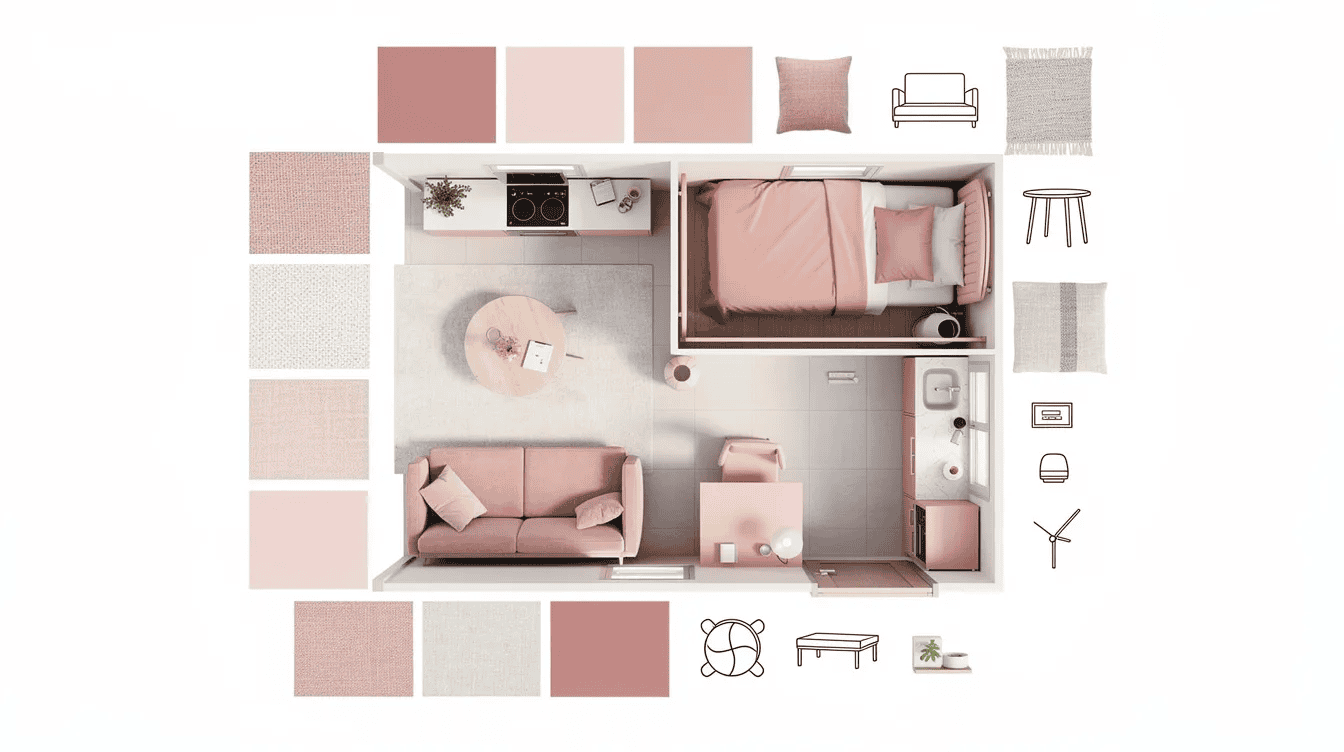
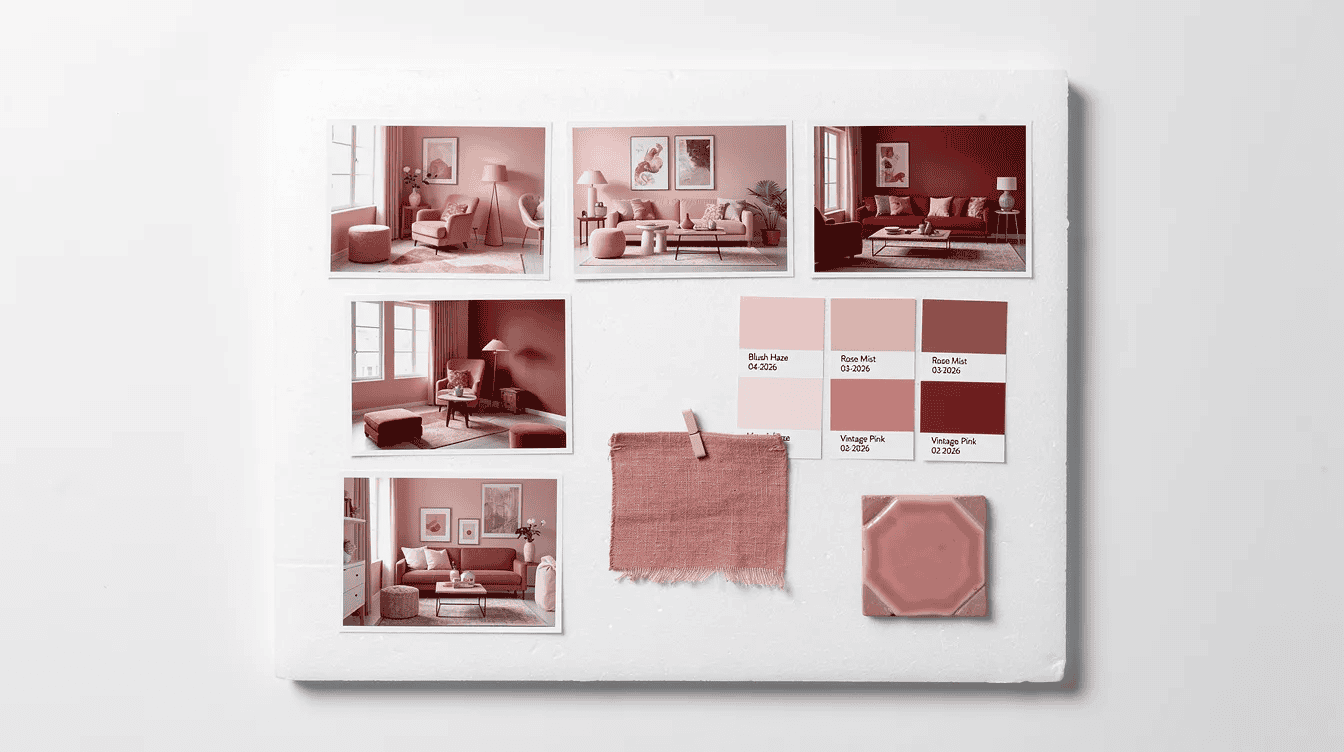
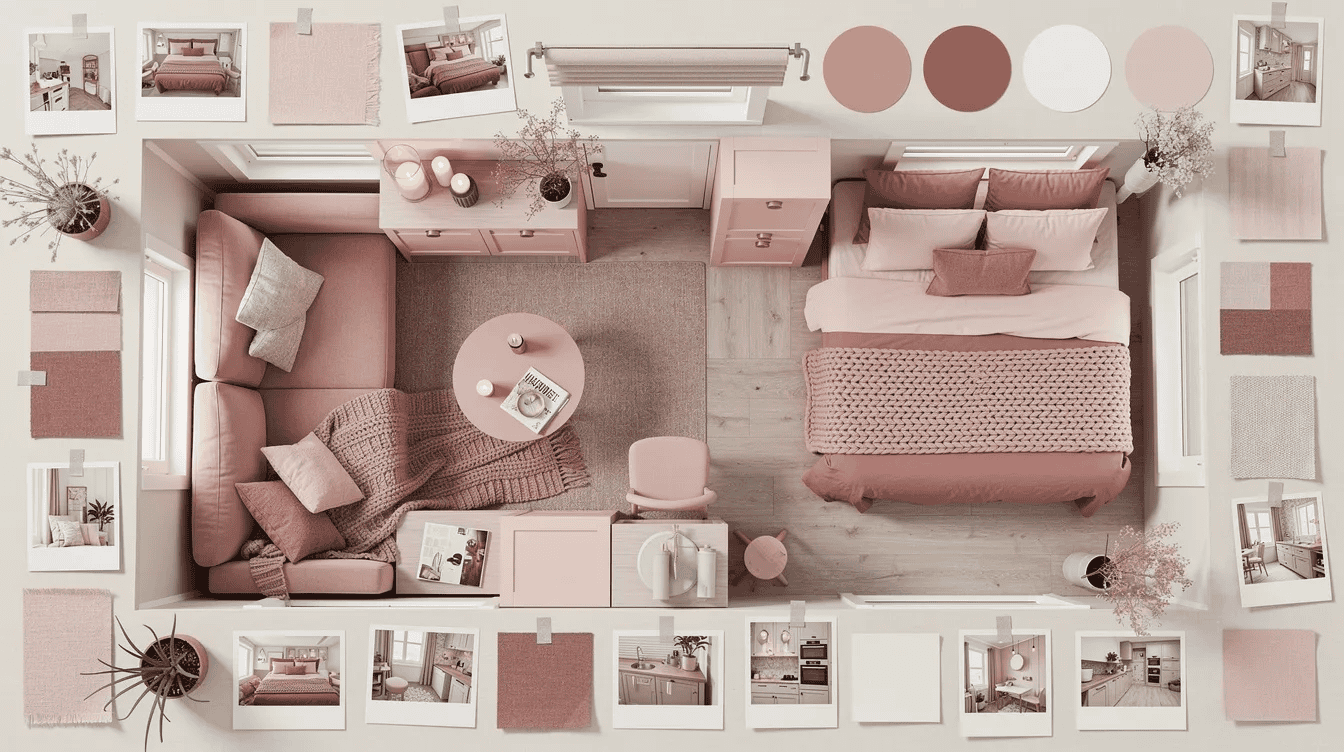
If possible, add physical samples: paint swatches dated and labeled, a small off-cut of pink terrazzo tile, a piece of rose linen. Place a top-down floorplan or sketch of your tiny home (e.g., an 8.5 x 24 ft layout) on the board, annotated to show where each type of pink will appear. Write notes directly on or beside the board: “loft wall: soft blush,” “kitchen backsplash: pink subway tile,” “front door: dusty rose.” These notes bridge the gap between inspiration and specific decisions.
Creating a Digital Pink Mood Board
Here is a simple workflow:
- Open Pinterest and create a private board titled “Pink Tiny House.” Pin 20 to 30 images of tiny house interiors with pink accents, pink textiles, and pink exterior doors.
- Narrow those pins to your 10 to 15 strongest images. Look for variety: at least one wall shot, one textile close-up, one exterior, one lighting detail.
- Open Canva (free tier works) and select a 1920 x 1080 mood board template. Drag your selected images into the canvas.
- Organize the canvas into loose zones: walls in the upper left, textiles upper right, decor lower left, materials lower right. Add minimal text labels so the board is image-led and easy to scan on desktop and mobile.
Typography on a mood board sets the mood for the project. Use a clean, simple font for labels. Avoid decorative script; it competes with the images. A single header in a warm serif font can anchor the board without cluttering it.
Export the finished mood board as a high-resolution PDF or PNG (at least 300 dpi). Share it with builders, interior designers, or tiny house manufacturers when ordering custom tiny homes or custom finishes.
Building a Physical HDR-Inspired Pink Mood Board
Print your best reference photos on semi-gloss or matte photo paper at good resolution (at least 300 dpi). Before gluing anything down, check the prints under both warm and cool light. Pink shades can shift on paper; a blush that looked accurate on screen may print with a magenta cast on glossy paper or go flat on matte.
Arrange prints, paint chips, and small material samples (tile shards, fabric, wood veneer) on a white or pale grey foamcore board (A3 or larger). The neutral background prevents the board itself from skewing how you perceive the pink tones.
Once the board is assembled, photograph it in daylight using your phone’s HDR mode. This gives you a portable, realistic digital reference you can carry while shopping for finishes or visiting tiny house show models.
Applying Your Pink Mood Board to Real Tiny House Design
Mood boards help map out room decor in interior design projects, but the board is only useful if it translates into actual purchase and placement decisions. This section covers how to move from inspiration to execution.
At Explore Tiny House, we focus on tiny living practicality: storage, multi-functional furniture ideas, and how color placement affects perceived size and light levels in 200 to 400 sq ft. A mood board is the sign that you have moved past browsing and into planning.
Placement strategies for pink in small spaces:
- Lighter pinks above eye level. Pale blush on walls and ceilings makes the upper half of the room recede, adding perceived height.
- Darker tones lower down. A dusty rose sofa, a patterned rug, or rose-toned lower cabinetry grounds the room without closing in the space overhead.
- Bold pink on small, replaceable pieces. Cushions, a throw, a single accent door. These are easy to swap if your taste changes or if you decide to sell.
Reference your mood board at every decision point: paint purchase, tile order, sofa fabric, curtain color. If a finish isn’t on the board, it needs a good reason to enter the space. This habit prevents impulse buys that fragment the pink aesthetic you planned.
After finishing your tiny home, photograph it in HDR. This validates how the palette works in real life and lets you share your design in the Explore Tiny House community. Other readers will comment on what worked, what they’d adapt, and how the colors read in your specific light conditions.
Room-by-Room Pink Aesthetic Ideas for Tiny Homes
Main living area: A blush slipcovered sofa, a pale pink throw draped over one arm, and a single framed art print with rose tones, all grounded by neutral walls and light oak flooring. One potted plant on a shelf adds the sage-green contrast that keeps pink from feeling flat. Browse more color combinations in our gallery of colorful tiny houses.
Loft or bedroom: Soft rose linen bedding, a pink woven throw folded at the foot of the bed, and an upholstered pink headboard panel attached directly to the wall (saving the 4 to 6 inches a freestanding headboard would eat). In a loft with a low ceiling, keep the ceiling white and limit pink to the bedding zone.
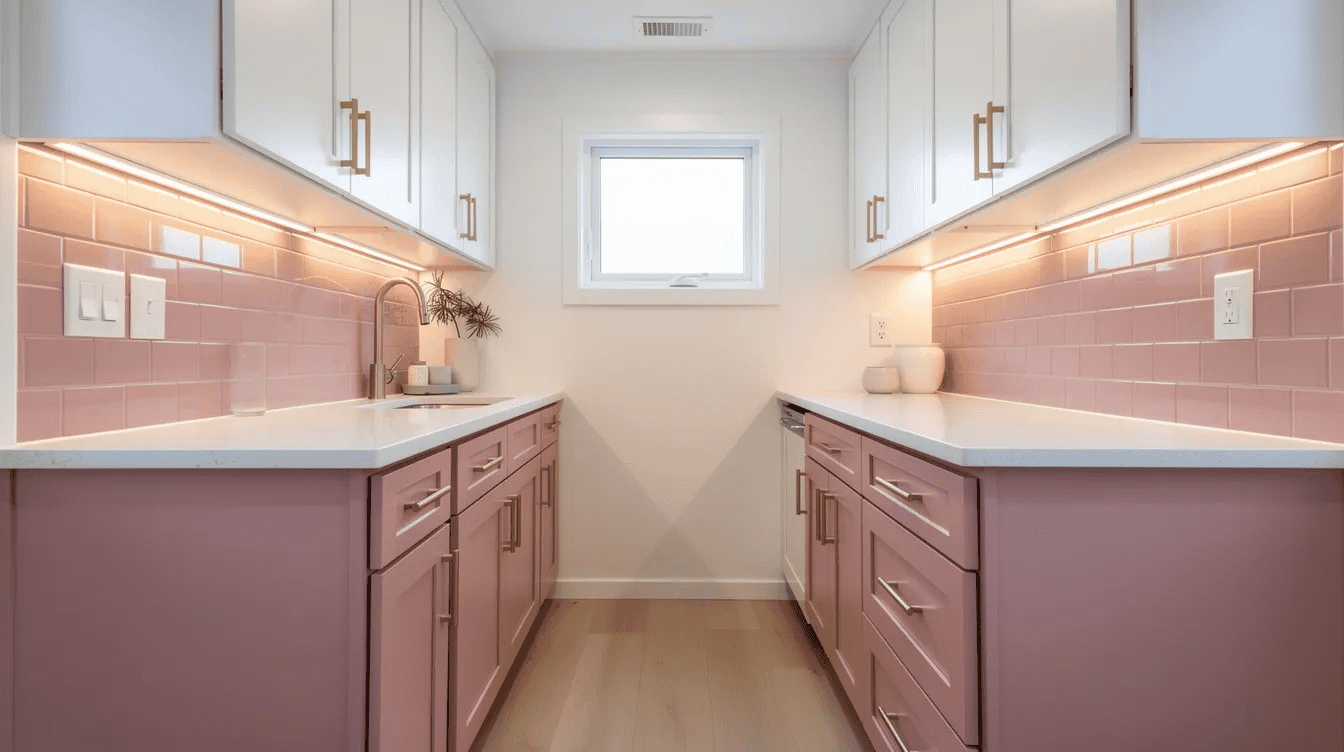
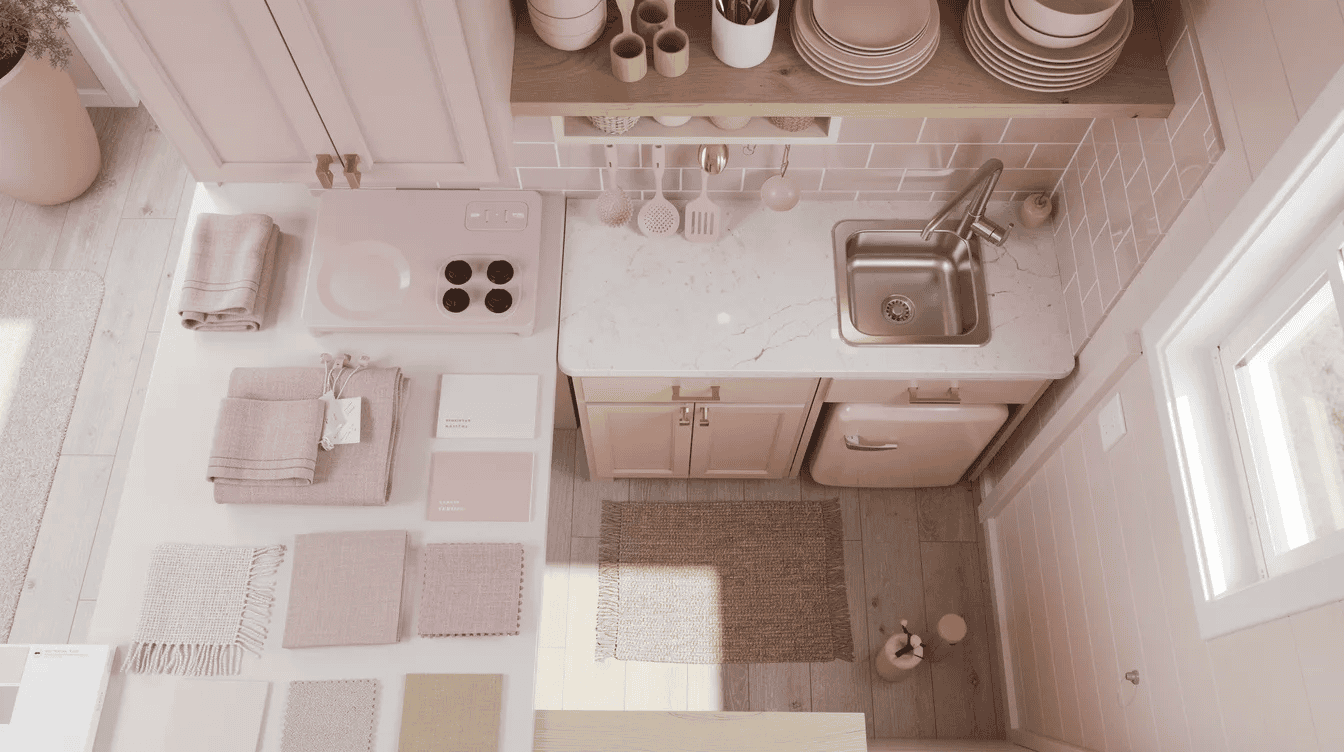
Tiny kitchen: A row of pink cabinet fronts below white uppers creates visual weight at counter height without lowering the ceiling line. A glossy pink subway tile backsplash reflects under-cabinet LED lighting back into the workspace. Or try a pink-tinted concrete countertop if your build budget allows it.
Compact bathroom: Small-scale pink mosaic tiles in the shower niche add color without overwhelming a 30 sq ft bathroom. A blush-painted vanity or a pink-framed mirror are simpler, reversible options. Keep grout white and pair with chrome or brushed nickel fixtures to keep the room feeling bright and easy to clean.
Adapting Pink Mood Boards to Different Tiny House Styles
The same core pink palette adapts to multiple aesthetics:
Scandinavian: White walls, pale pine or birch plywood, and pastel pink accents in textiles. The look relies on negative space and natural light. See more examples in our guide to Scandinavian tiny homes.
Japanese-inspired: Muted sakura pinks with a grey undertone, paired with cedar or teak wood, bamboo textures, and shoji-style sliding panels. Pink appears in futon textiles and paper lanterns rather than on walls. A log of hinoki cypress on a shelf doubles as decor and fragrance.
Boho rose: Richer rose and terra-cotta accents, textured rugs with fringe, woven baskets, and brass fixtures. Deeper pinks show up in textiles rather than paint; the walls stay neutral. Cozy log cabin interiors work with this layered approach.
Modern urban: Industrial materials paired with pink soften its appearance in designs. A neon pink cushion or a single fuchsia cabinet door against concrete walls, black steel framing, and glass partitions reads grown-up and precise. Use saturated pink in one element only; the rest stays minimal and neutral. This approach suits container homes and urban minimalist tiny houses.
If you are undecided between styles, create separate but related mood board variations for each one, then compare. Pin them side by side or print them on adjacent boards. One will feel more aligned with your daily life and your tiny house layout.
FAQ
The questions below address practical concerns about pink mood boards for tiny houses that were not fully covered in the sections above.
Will a pink aesthetic make my tiny house feel smaller?
Dark or intense pinks on large surfaces (ceiling, all four walls) can make a compact space feel tighter. But pale blush and dusty rose, when combined with white trim, light wood, and good lighting, can feel open and airy. Data from exterior tiny house repainting projects shows that soft pastel body colors can increase rental bookings by 22 percent, which suggests these tones read as appealing rather than cramped. Keep stronger pinks for textiles and smaller accents. Reflect that strategy in your mood board from the start so it is built into the plan.
How do I keep my pink tiny house from looking too childish?
Pair pink with sophisticated neutrals: greige, charcoal, light oak, and warm metals like brass or aged bronze. Use grown-up textures such as linen, boucle, and matte ceramics. Avoid saturated bubblegum pink on large surfaces; instead, use muted, earthy pinks that feel closer to natural clay or stone. The mood board should show these combinations clearly so that anyone reviewing it (builder, partner, designer) can see the intended sophistication.
Can I create a pink mood board if I’m renting a small apartment, not owning a tiny house?
The same principles apply to micro-apartments and studio rentals. Your mood board will lean more on removable elements: curtains, rugs, bedding, art, cushions, and freestanding furniture. Adhesive-backed wallpaper in a blush pattern can cover a single wall without damaging paint. Use HDR-style reference imagery to test how pink will look under existing rental lighting, since you likely cannot change the overhead fixture color temperature.
What’s the best way to share my pink mood board with a tiny house builder?
Export digital boards as high-resolution PDFs or images (300 dpi minimum) and bring them to design meetings. If you built a physical board, photograph it in good daylight using your phone’s HDR mode. Label each image on the board with notes like “kitchen backsplash,” “loft textiles,” or “front door color” so the builder sees where each pink element should go. This eliminates guesswork and reduces the chance of mismatched finishes during construction.
How many shades of pink should I include in a tiny home?
Limit the palette to 2 to 3 main pinks: one very light (walls, ceiling), one mid-tone (larger textiles, a piece of furniture), and possibly one accent (a single door, a row of tiles, a set of cushions). Add 2 to 3 supporting neutrals (warm white, light wood, charcoal). Using more than three distinct pinks in 200 to 400 sq ft creates visual noise that works against the simplicity a tiny house depends on. A carefully edited palette photographs better, lives better, and holds resale or rental value better than a space with competing pinks on every surface.