Planning a tiny house involves hundreds of decisions about colors, textures, finishes, and style. Before you commit to a single material or place an order, you need a way to see whether all those choices actually work together. That is exactly where a mood board comes in. Whether you are designing your first tiny home on wheels, refreshing a small-space interior, or building a brand around a tiny house rental, a mood board gives you a clear visual starting point that keeps the entire project on track.
Key Takeaways
- A mood board is a visual collage that captures the overarching feel of a project, combining images, colors, textures, and words to define style and mood before construction or spending begins.
- Mood boards are used early in the creative process to get owners, builders, and designers on the same page about aesthetic direction, reducing wasted time and costly material changes.
- You can create a mood board on a physical or digital board using tools like Adobe Express, Canva, or Milanote-both formats work as long as they clearly convey the mood.
- An effective mood board for tiny homes ties together color schemes, interior design ideas, brand elements, and lifestyle imagery into one consistent visual direction.
- At Explore Tiny House, we use mood boards to plan small-space layouts, choose finishes, and keep tiny house designs cohesive and on-budget.
What Is a Mood Board?
A mood board is a visual tool that arranges inspirational images, color schemes, textures, fonts, and short phrases to express the mood of a project at a glance. Mood boards visually represent design concepts and styles, translating abstract ideas into concrete visual references that anyone can understand without reading a technical drawing.
Mood boards are used in various industries including fashion, film, and web design. In graphic design, interior design, branding, and UX/UI work, they capture a creative vision before detailed plans are drawn. For tiny house planning, one board might combine exterior cladding inspiration, interior finishes, and lifestyle images like vanlife or cabin living to keep the whole project aligned.
A mood board differs from a blueprint or floor plan. It does not show exact measurements. Instead, it communicates atmosphere-cozy cabin warmth, Japandi calm, off-grid rustic grit. The concept traces back to practices like Aby Warburg’s Atlas Mnemosyne in the 1920s, where visual compilations were used to provoke thematic connections, much like modern boards do today.
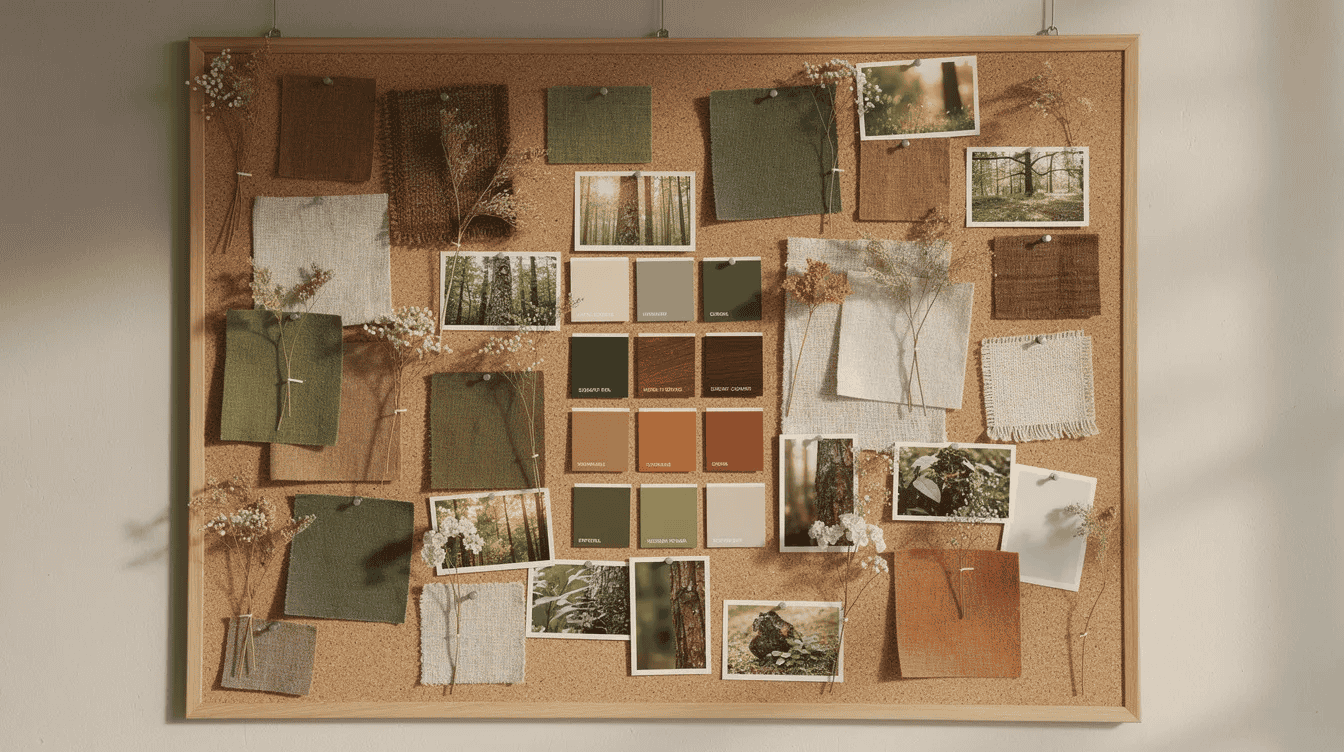
Picture a sample tiny house mood board: a hero shot of a cedar-clad cabin surrounded by pines, a strip of muted green and warm oak swatches, close-ups of linen cushions and matte black hardware, a lifestyle photo of someone reading in a window seat, and the words “off-grid” and “light and bright” handwritten in the corner. That single board tells you more about the design concept than a paragraph ever could.
Why Mood Boards Matter in the Creative Process
Mood boards sit at the start of the design process, between vague ideas and concrete plans, acting as a bridge from imagination to implementation. They help clarify the vision of a project so that everyone involved knows what “minimal yet warm” actually looks like.
Here is why they matter, especially for tiny house projects:
- Mood boards reduce miscommunication. Everyone literally looks at the same images and color palette instead of interpreting abstract words differently. Visual examples in mood boards clarify design concepts for teams, ensuring design teams are aligned on project goals.
- They enhance team communication during design projects. Mood boards help align team members on project goals and expectations, so builders, partners, and other team members share the same creative direction.
- They streamline the design process by providing visual references. In a study with design students, 96.4% of respondents said their role in the design process was clearer after completing mood board exercises.
- They enhance client engagement and approval rates, giving clients something tangible to react to rather than guessing.
- For budget-conscious tiny house projects, catching a style clash early-say, cold gray flooring paired with warm timber walls-saves costly changes to finishes or built-ins later.
Mood boards also double as a reference for sourcing materials: siding, flooring, cabinetry, textiles, and fixtures that match the original mood. That alone can prevent weeks of wasted time.
Key Elements of an Effective Mood Board
While there are no rigid rules, most effective mood boards share common elements that make the creative vision clear and actionable. Mood boards can include color palettes, textures, and images-along with several other components. Here is a checklist of what belongs on a finished board:
- Inspirational images (wide room shots, architecture details, landscapes)
- Color schemes shown as separate swatches or strips
- Textures and materials (fabric close-ups, wood grain, metal finishes)
- Typography or lettering style samples
- Brand elements such as logos, icons, or monogram drafts
- A few descriptive words or sticky notes (“no upper cabinets,” “off-grid ready”)
- Layout hints for tiny houses-loft sleeping concepts, galley kitchen references, window wall ideas
Keep the total number of various elements limited. Aim for 15–30 strong visuals rather than hundreds of loosely related ones. A mood board clarifies the vision of a design project only when it stays focused.
Color: Building the Mood With Palettes
Color schemes are often the backbone of an effective mood board, especially in small spaces where every surface is noticeable. In a tiny house, the color palette sets the entire feel of daily life.
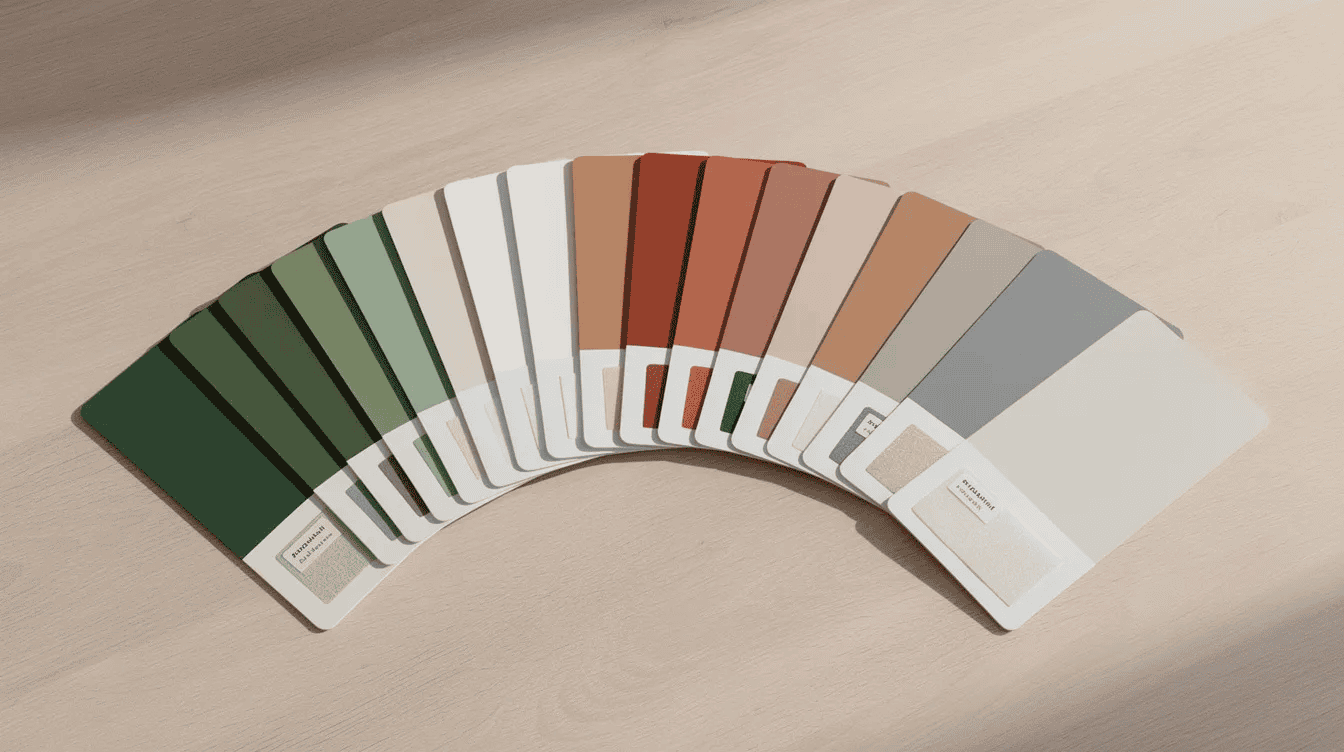
Include 3–6 core colors plus a couple of accent options, shown as swatches or blocks rather than only embedded within photos. Different palettes completely change the mood:
- Warm whites + oak + terracotta for a cozy cabin vibe
- Charcoal + pale wood + black hardware for a modern minimalist box
- Muted greens + linen + stone for nature-inspired off-grid living
Pay attention to how natural light in a small footprint interacts with chosen colors. Dark ceilings can make low lofts feel cramped, while light tones open them up. On your board, add a simple horizontal color strip alongside 2–3 interior photos that show those colors in real spaces. This gives you and your builder a reliable visual representation of the palette in context.
Images, Textures, and Materials
Inspirational images and textures translate the abstract mood into tangible surfaces you can buy and build with. This is where your board shifts from “feeling” to “doing.”
- Include close-up photography of materials relevant to tiny houses: shiplap, plywood, metal roofing, cork flooring, wool textiles, tatami-style mats, or paint samples on wood.
- Mix wide interior shots (a full tiny kitchen or loft nook) with detail shots (a cabinet pull, a wall sconce, window trim) to show both big picture and fine details.
- For sustainable or off-grid tiny houses, textures like reclaimed timber, raw metal, hemp textiles, or even solar panel arrays can visually reinforce eco-friendly goals.
- Combine physical objects like fabric swatches with printed images when working on a physical board, or use high-resolution close-ups on a digital board.
A photography mood board approach works well here: treat each image like a curated shot that earns its place through relevance, not just beauty.
Typography, Brand Elements, and Graphic Design
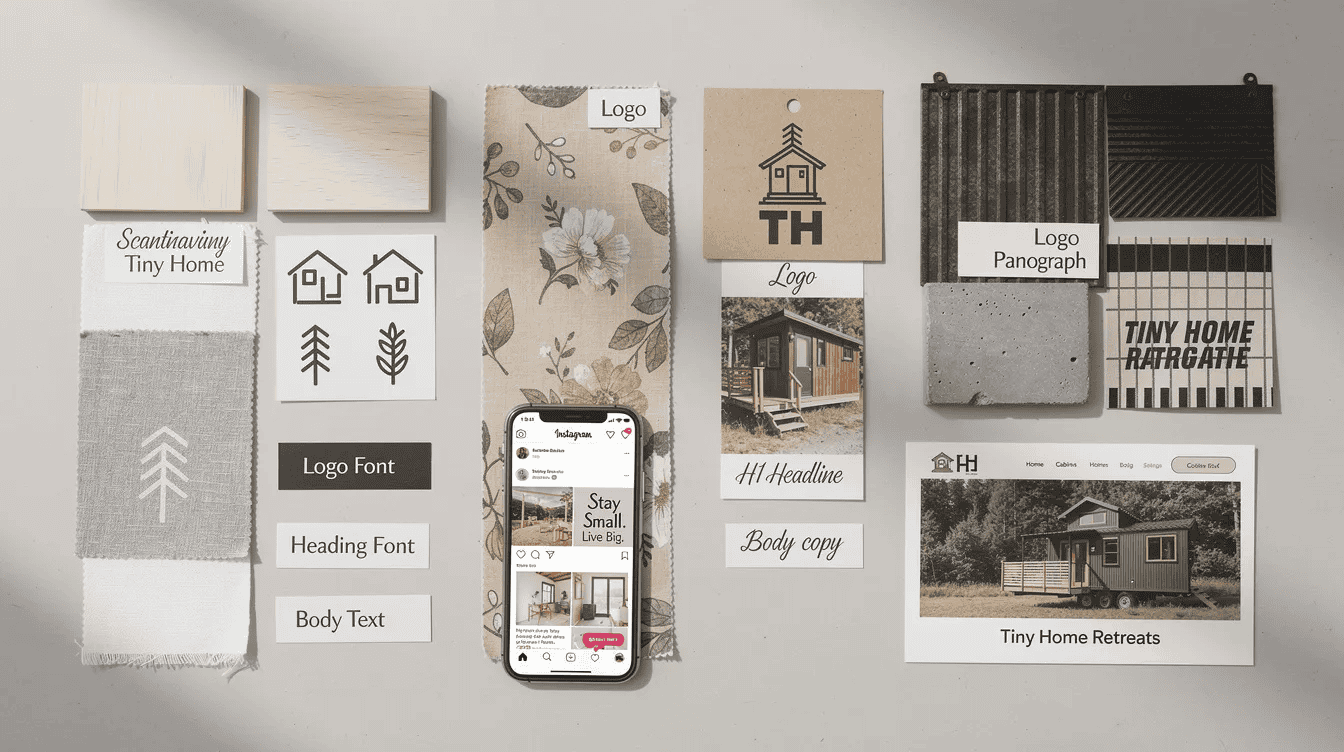
Mood boards serve purposes beyond physical interiors. In branding, mood boards establish the brand’s personality and visual language-essential if you run a tiny house rental, blog, or small business.
- Include sample fonts for logos, headings, and body text. Typography should echo the interior mood: clean sans-serif type for Scandinavian tiny homes, soft serif or script for cottage-core cabins, bold condensed fonts for industrial container homes.
- Add simple brand elements such as a draft logo, monogram, or social media post mockup that shows how visual identity matches the tiny home’s look and feel.
- If you have an existing brand, make sure the board reflects how interior design choices and brand identity stay consistent across your website, listing photos, and printed materials.
- Typography, patterns, and icons are design elements that help convey a certain feeling-they deserve space on the board alongside material swatches.
This approach ensures your creative freedom on the interior side flows naturally into cohesive digital and print branding.
Types of Mood Boards: Physical vs Digital
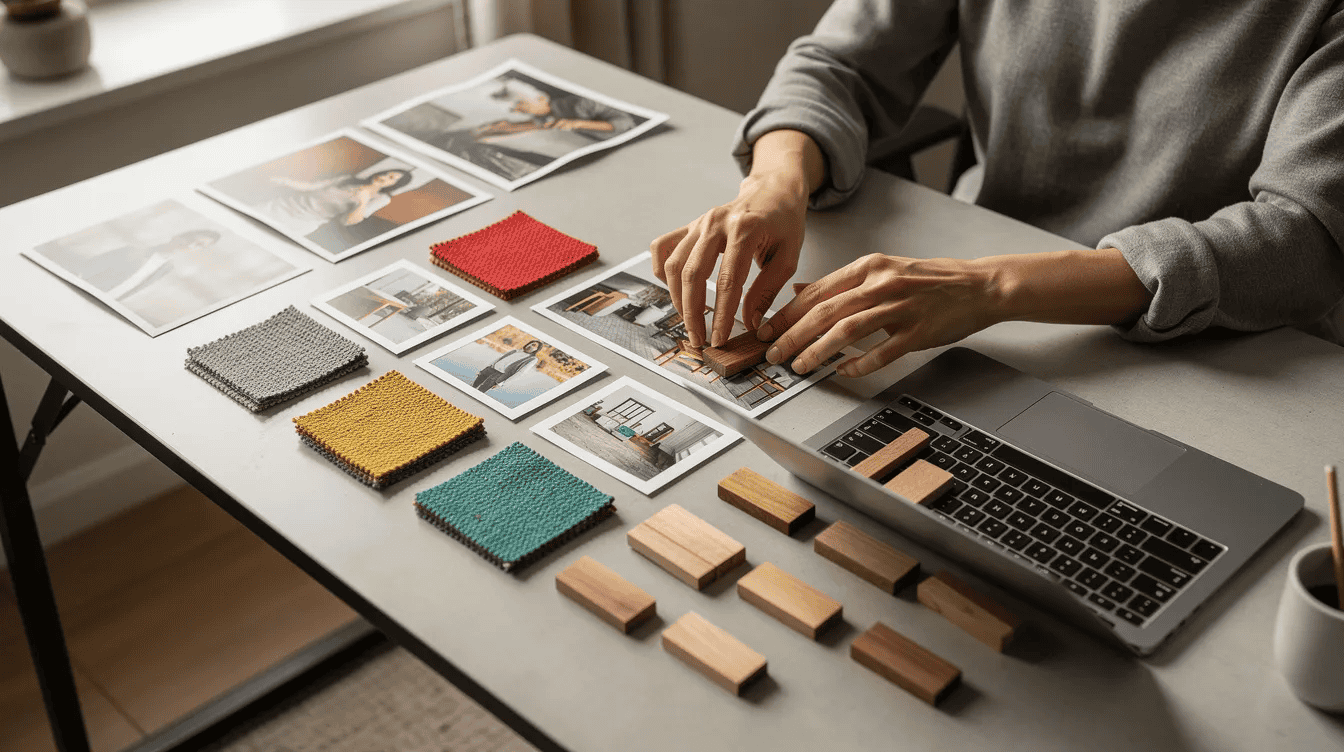
Mood boards can be created digitally or physically, and both formats are valid. Many designers use them together.
Physical Board | Digital Board | |
|---|---|---|
Best for | Feeling real textures, showroom visits, hands-on DIY builds | Remote collaboration, sharing with builders or online communities, easy revisions |
Includes | Magazine cutouts, fabric swatches, paint chips, wood samples pinned to corkboard | Curated images, digital swatches, video clips, links to products |
Pros | Tactile feedback, true color under natural light, always visible in your workspace | Easy to share, iterate, and export; AI-assisted palette suggestions in newer tools |
Cons | Hard to share remotely, difficult to revise quickly | May not capture true material texture; licensing concerns with found images |
Cost | Low (supplies you likely own) | Free tiers available; Milanote starts around $9.99/month |
At Explore Tiny House, we tend to favor digital mood boards when collaborating remotely with readers and community members, but we encourage a physical board when selecting real-world finishes at showrooms. The best approach depends on whether you are a solo DIY builder or working with a professional design service and other team members.
How to Create a Mood Board Step by Step
Here is a practical, repeatable process for creating a mood board for any tiny house project or brand visual direction:
- Define purpose and audience. Are you planning for personal clarity, partner alignment, a client pitch, or rental branding? Your audience determines how polished the board needs to be.
- Gather design inspiration. Pull inspirational images and words from Pinterest, Instagram, interior design books, and tiny house tours. Collect more than you need.
- Curate ruthlessly. Narrow to the strongest items that fit one clear visual theme. A 2026 study found that moderate constraints on mood boards produced significantly higher novelty, variety, and quality of creative output compared to very loose or overly rigid boards.
- Arrange with hierarchy. Place hero images larger, group similar items (materials, lifestyle shots, furniture pieces) together, and leave white space so the board breathes.
- Add annotations. Use short notes or sticky notes-“lightweight materials,” “no upper cabinets”-to clarify intent that images alone might not communicate.
- Review and refine. Creating mood boards can involve multiple team members collaboratively. Share the board, gather feedback, and begin working toward consensus.
For beginners, mood board templates in tools like Adobe Express or Canva provide pre-built grid layouts that speed up mood board creation without requiring graphic design skills.
Using Mood Boards for Tiny House Interior Design
This is where general mood board theory meets the specific needs of tiny house and small space living. In interior design, mood boards can communicate the intended atmosphere of a space, and that communication matters even more when every square foot counts.
A mood board can define your entire tiny interior:
- Kitchen style: galley vs L-shaped layout
- Loft vibe: sleeping nest vs open mezzanine
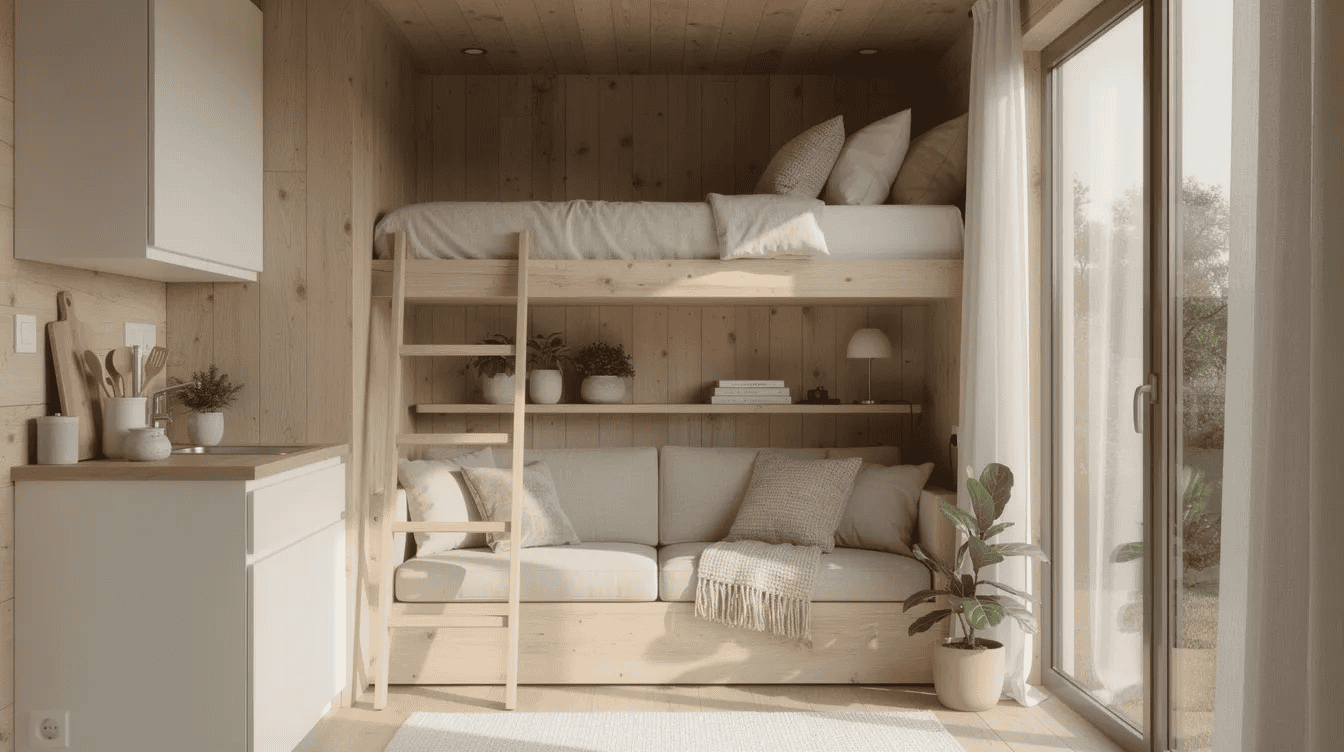
- Multipurpose furniture pieces: fold-down desks, convertible sofas, built-in storage benches
- Storage strategies: under-stair drawers, wall-mounted shelving, Japanese-inspired compact bathrooms
Include lifestyle shots too. Images of nature, off-grid living, urban backyards, or tiny house villages remind you who and what you are designing for. Interior designers working on small projects often find that these context images keep the final design grounded in real life rather than magazine fantasy.
Here is an example of a themed board: a “Japandi 2026 Off-Grid Cabin on Wheels” mood board might feature pale birch plywood, charcoal linen, tatami mats, a muted sage and cream color palette, a compact soaking tub, and a wide landscape photo of a forested mountain clearing.
From Mood Board to Real Tiny Home or Brand
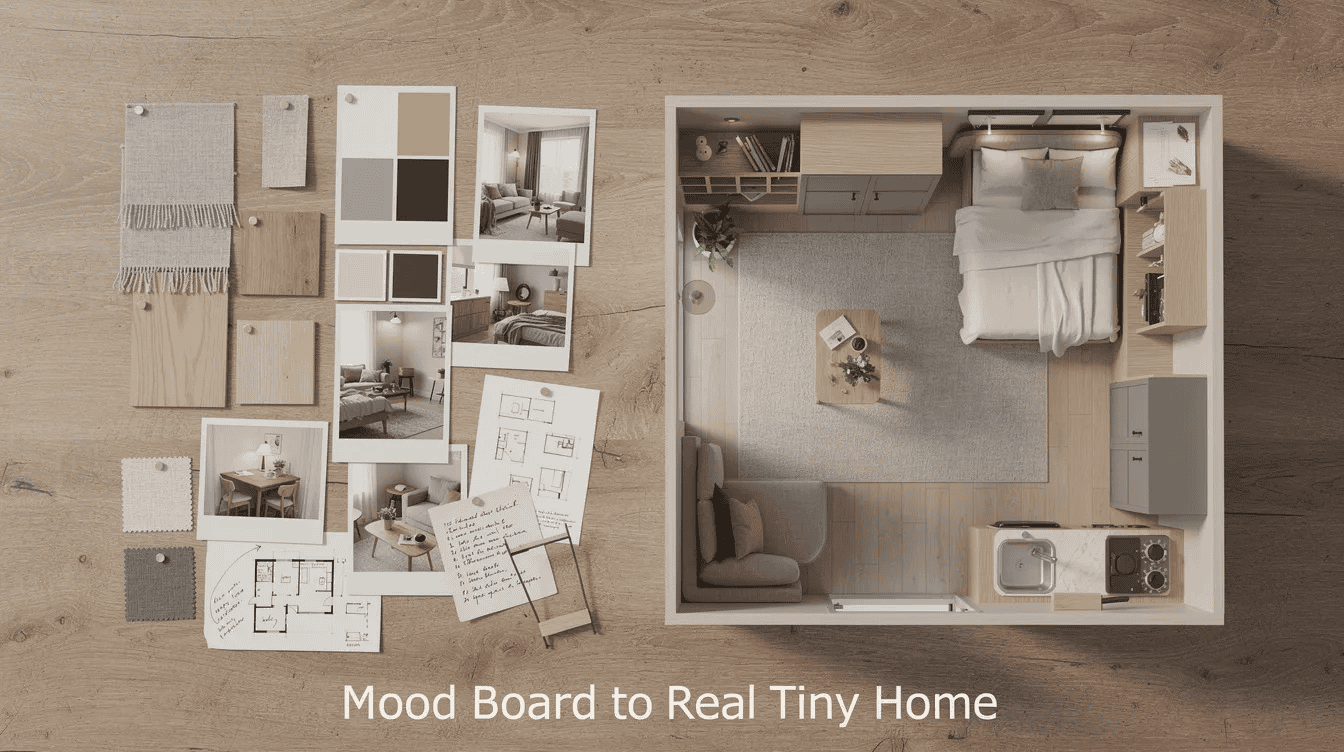
A mood board is a starting point, not the final product. Its real value emerges when you carry that visual inspiration into tangible decisions.
- Use the board to choose actual products: siding, windows, flooring, fixtures, linens, and decor that visually match. Build a shopping or specification list directly from it.
- Refer back to the board whenever you are tempted by a sale or trend that does not fit the original creative vision. Mood boards serve as a reference point to maintain consistency throughout a project.
- For branding-rental listings, social media, blogs-the board informs photography style, preset choices, and consistent graphic design, resulting in a recognizable brand identity. Using mood boards can enhance client engagement in projects by giving clients a visual anchor.
Keep your own mood board visible in your workspace during planning and construction. Pin a physical board above your workbench or set your digital board as a browser bookmark. That constant visual direction prevents scope creep and keeps the final product aligned with your original ideas.
Tips for Creating an Effective Mood Board
A professional mood board communicates clearly and supports real decision-making. Here are tips to get there:
- Start with one focus-often the color palette or a single hero image-and build around it. This provides a strong foundation for the entire board.
- Limit conflicting styles. If you have two very different moods (black industrial vs soft cottage), create separate mood boards to compare instead of mixing. Creating mood boards this way can streamline the design process.
- Add a few short annotations to clarify intent that images alone might not convey. Example: “off-grid ready,” “passive solar orientation,” “lightweight materials only.”
- Periodically prune the board as the design project evolves. Remove visuals that no longer fit and add more specific references as decisions firm up.
- Remember that mood boards help establish a strong foundation for design. A great tool is only useful if you keep it honest-let go of art that looks beautiful but does not serve the project.
Mood boards are a valuable tool whether you are working solo or presenting to clients. Give them the focus they deserve, and they will repay you with clarity at every stage.
FAQ
Do I need design skills to create a mood board?
Formal design training is not required. Anyone planning a tiny house or building a brand can create a simple, effective mood board using free tools like Canva or Adobe Express, or even a basic corkboard with magazine cutouts and paint samples. The goal is visual clarity, not artistic perfection. If you can drag and drop images or pin photos to a board, you have enough skill to start creating a mood board that guides real decisions.
How many mood boards should I create for one tiny house project?
Start with 2–3 distinct mood boards if you are undecided on style-for example, one Nordic white board, one rustic cabin board, and one Japanese-inspired minimal board. Compare them side by side, then choose one to refine into your working reference. This approach gives you creative freedom to explore concepts without committing too early.
When in the planning process should I create a mood board?
Mood boards work best near the very beginning, before you finalize floor plans or order materials. They sit between the “dreaming” phase and the “building” phase. That said, they can be updated as your ideas become more concrete. Think of a mood board as a living document that evolves alongside the project.
Can mood boards help with budgeting my tiny house?
Indirectly, yes. By narrowing down material types and finishes early, a mood board makes it easier to get accurate quotes and avoid impulse purchases. When you know you want matte black hardware and birch plywood-not brushed nickel and marble-you can price those specific items and keep spending focused.
What’s the difference between a mood board and a vision board?
A mood board focuses on visual direction for a specific design project, like a tiny house interior or a brand identity refresh. It guides aesthetic decisions about colors, textures, and style. A vision board is broader and more personal, often representing life goals, experiences, and aspirations. Both are collages, but a mood board is project-specific while a vision board is life-specific.