

RV generators provide the electricity you need when shore power isn’t available – whether you’re boondocking in the desert, parked at a remote campsite, or simply traveling between campgrounds. Choosing the right one comes down to your RV’s size, your power demands, and how you prefer to camp. This page covers the main types of RV generators, the features that matter most, and how to find the one that fits your setup.
Types of RV Generators
RV generators break down into three main categories based on portability and technology. Each serves a different kind of RVer and a different set of power needs.
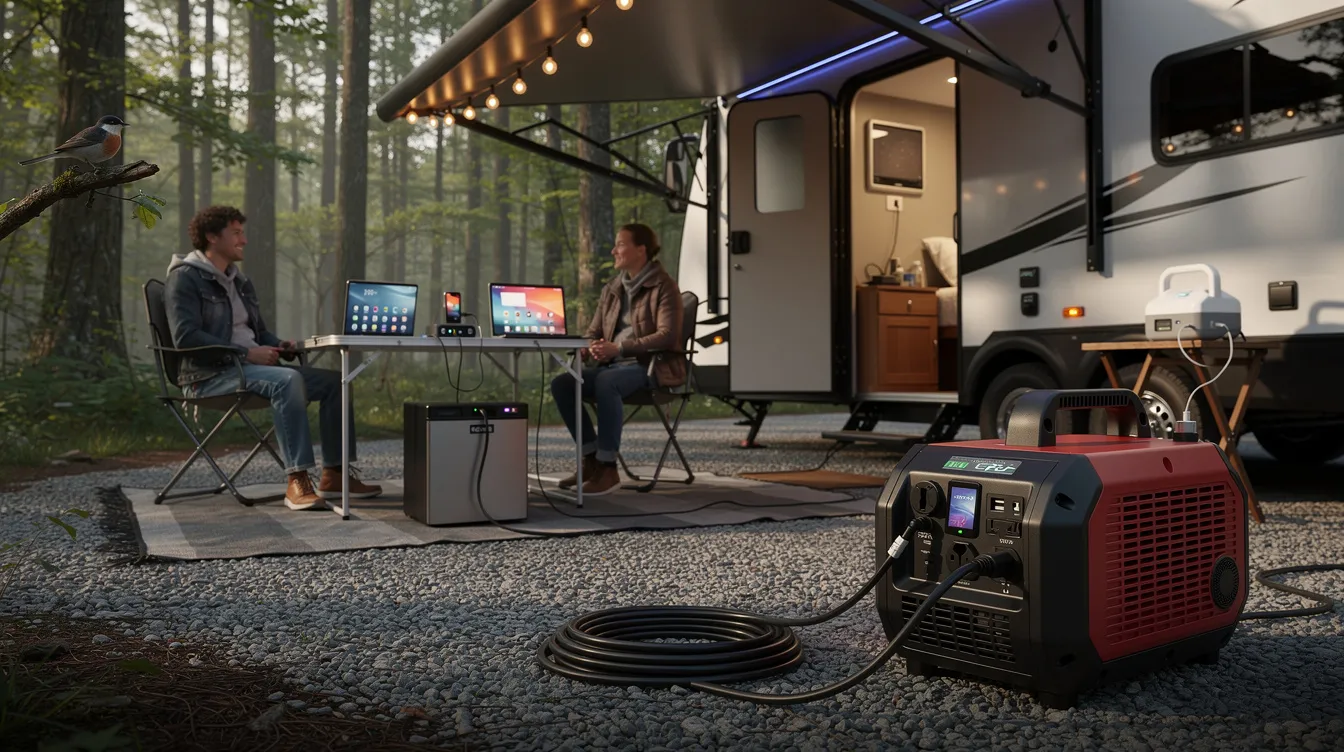
Portable Inverter Generators
Portable inverter generators are lightweight, compact units that produce clean power safe for sensitive electronics like laptops, CPAP machines, and charging stations. They throttle engine speed to match the load, which means quiet operation and excellent fuel efficiency at partial loads. Models like the Honda EU2200i – one of the most popular among RVers with a maximum output of 2,200 watts and a noise level of just 47–58 decibels – are ideal for small weekend RVs due to low weight and noise. Inverter generators are favored for boondocking due to their fuel efficiency and lower noise levels, and many RVers love them for the ability to run lights, a fridge, devices, and even a small air conditioner without disturbing the campground.
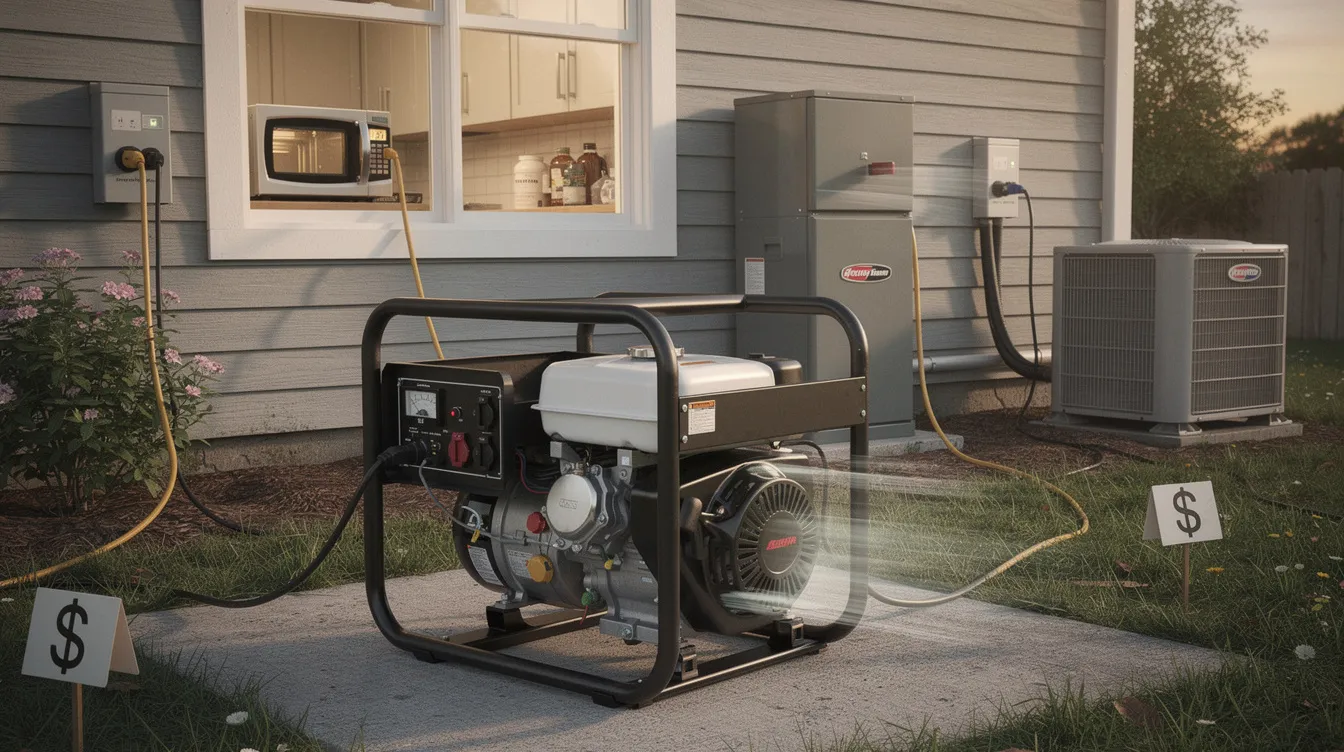
Conventional Portable Generators
Open frame generators are typically cheaper but louder and produce less clean power than inverter models. They run at a fixed engine speed (usually 3,600 RPM) regardless of load, which makes them less efficient under light use but gives them an advantage in raw wattage per dollar. If you need lots of power for a larger setup – think a big microwave, furnace, and AC running at the same time – and noise isn’t a primary concern, conventional portable models fill that gap at a lower price point.
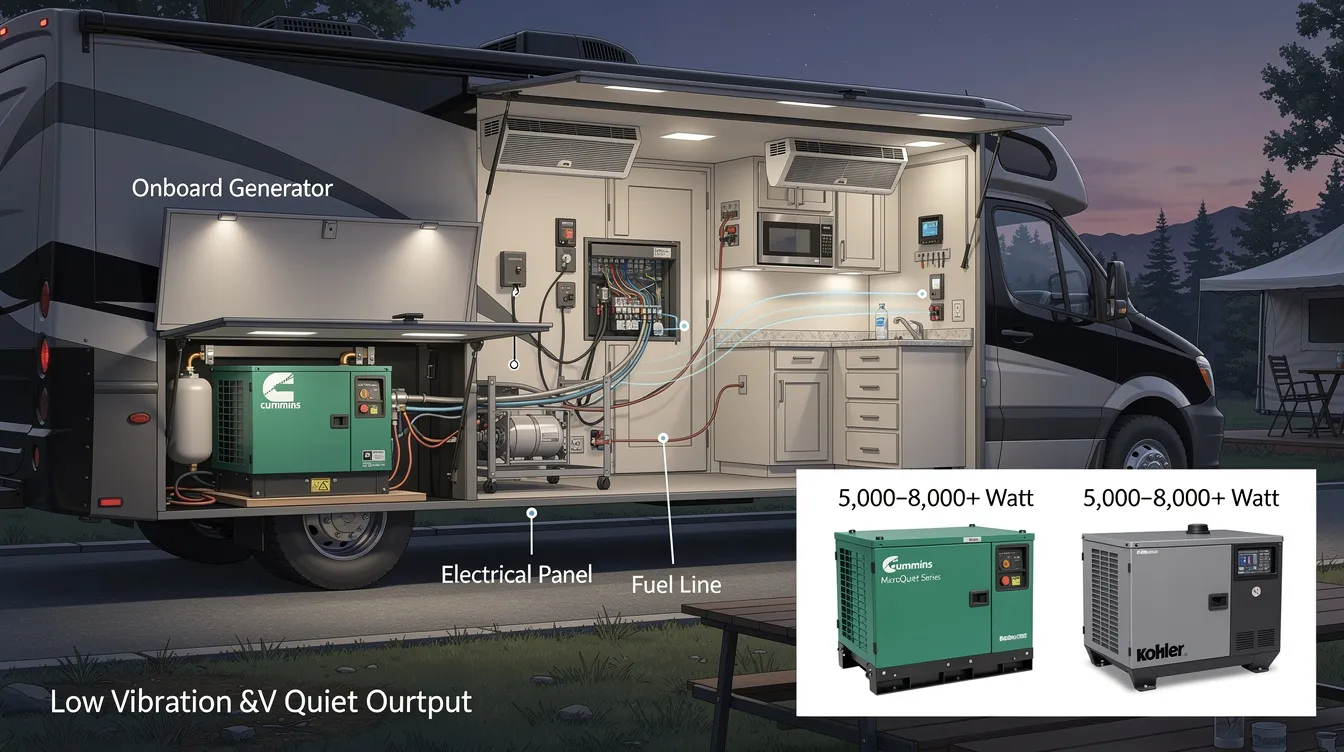
Built-In RV Generators
Onboard generators are permanently installed and designed for high power needs. Found in larger motorhomes and fifth wheels, these units are wired directly into the coach’s electrical system and often share the main gas tank or diesel fuel supply. Cummins RV generators are known for exceptionally low vibration levels and long operational lifespans. The MicroQuiet Series, for example, is the quietest generator set of its size. Large RVs need high-output onboard generators to run multiple air conditioners, and built-in models from brands like Cummins and Kohler deliver 5,000–8,000+ watts to handle full coach loads.
What to Look For in RV Generators
A couple of key attributes separate a great RV generator from one that leaves you waiting in the dark. Here’s what to evaluate before you buy.
Power Output and Wattage
Generator sizing is critical for running RV rooftop AC units without stalling. Proper generator sizing depends on both running and starting wattage of appliances – your air conditioner might draw 1,600 watts continuously but surge to 5,100 watts at startup. Typical RV appliance needs vary between 2,000 watts for small units to over 10,000 watts for large motorhomes. Add up every appliance you plan to run simultaneously (fridge, lights, microwave, AC), then add a 20–30% buffer above the highest surge demand. A 30-amp generator is generally sufficient for running one air conditioner, while larger rigs with multiple ACs will need significantly more capacity.
Specific models displayed across the market illustrate the range: the Honda EU2200i outputs 2,200 watts, the Westinghouse generator produces 4,500 watts quietly, the EcoFlow Delta Pro Ultra generates 7,500 watts, and the Bluetti AC200L has a 2,400-watt output. On the built-in side, the Cummins 7.0kW RV generator costs $7,673.00, while the 8kW Cummins generator costs $12,580.00 – reflecting the premium for permanent installation and higher performance.
Noise Level
Noise limits for generators at campgrounds are usually around 50–60 dB, and many parks enforce quiet hours from 10 pm to 6 or 7 am. Inverter generators are quieter than conventional generators and suitable for RV use in these settings – most run in the 50–60 dB range at partial load, roughly the volume of a normal conversation. Conventional models are significantly louder, often hitting 68–80 dB under load. Westinghouse generators reduce noise by throttling power output, and dual-fuel generators run quieter on propane than gasoline. If you camp at established campgrounds or simply don’t want to feel like you’re sitting next to a lawnmower, quiet matters.
Fuel Type and Runtime
Different fuel types for RV generators have distinct advantages and disadvantages. Gasoline is widely available but has a shorter shelf life than propane. Propane burns cleaner and can be stored indefinitely without going stale, making it a great choice for RVers who don’t run their generator every week. Diesel is excellent for heavy-duty use and efficiency in large motorhomes, offering higher energy density and longer engine life. Dual-fuel generators use gasoline and propane for flexibility – models like the GD400BN dual-fuel generator with its 4,000-watt output let you switch based on what’s available.
Runtime varies heavily by load and tank size. The Honda EU2200i delivers roughly 8.1 hours at 25% load on a small tank. A 7,500-running-watt gasoline unit at 50% load consumes about 0.5–0.75 gallons per hour. Built-in generators that share the main fuel tank can run much longer between fill-ups, simplifying logistics on extended trips.
Solar generators combine solar panels, batteries, and an inverter for eco-friendly power – the HomePower 3000 generates up to 3,600 watts, and many RVers now use hybrid setups to reduce fuel consumption during low-demand periods. Note that the EcoFlow Delta Pro Ultra weighs over 180 pounds, so portability varies considerably across battery-based alternatives.
How to Choose the Right RV Generator
Turn the features above into a decision by focusing on these criteria:
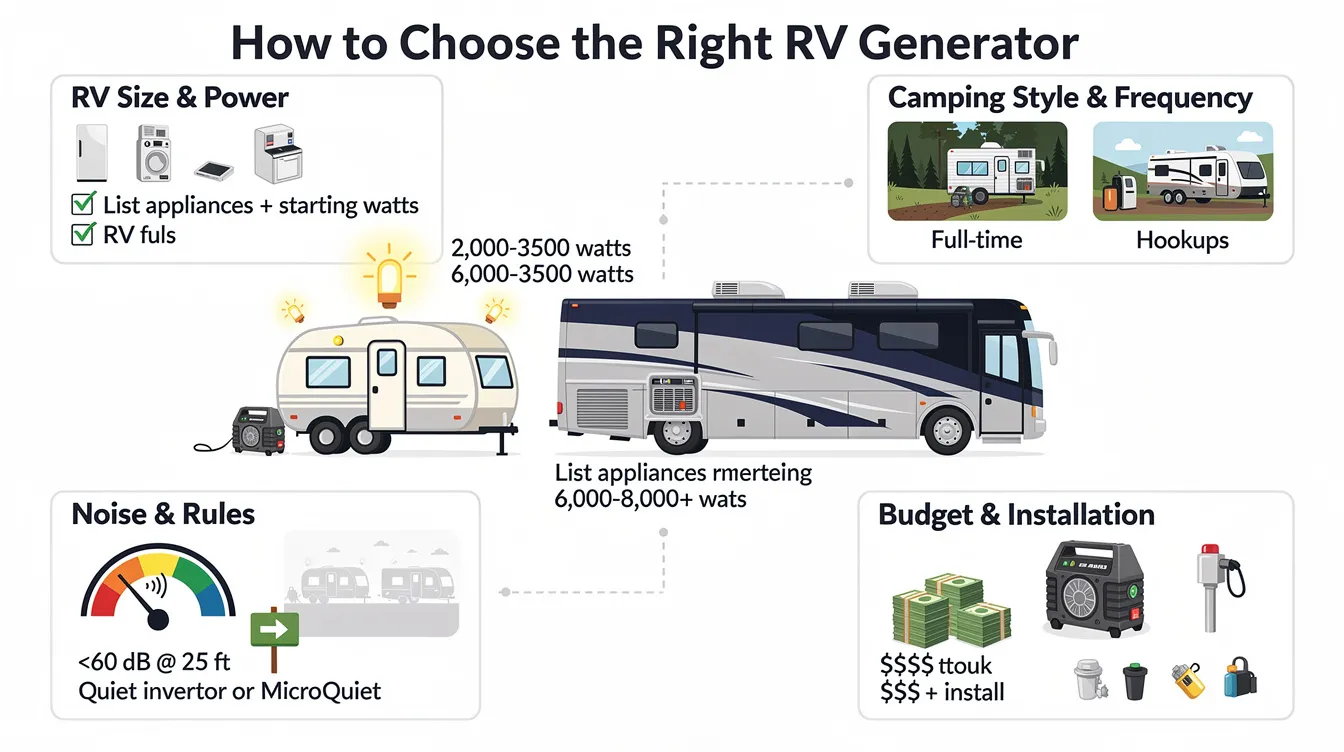
- RV Size and Power Requirements – A compact pop-up camper with a couple of lights and a fridge needs far less than a 40-foot Class A with two rooftop AC units. Start by listing every appliance you’ll run simultaneously, note the starting watts of the biggest one, and size your generator accordingly. Small trailers can work well with a 2,000–3,500 watt portable unit; larger motorhomes may need 6,000–8,000+ watts from a built-in system.
- Camping Style and Frequency – If you boondock regularly or travel full-time, efficient fuel consumption, long runtime, and quiet operation become essential. Weekend campers who mostly use campgrounds with hookups can get by with a more affordable conventional model they bring out occasionally. Full-timers will find a built-in or premium inverter generator a better long-term investment.
- Noise Restrictions and Preferences – Many campgrounds set strict decibel limits. If you explore a mix of state parks, national forests, and private campgrounds, a generator under 60 dB at 25 feet keeps you compliant almost everywhere. Models designed for quiet performance – like inverter units or the Cummins MicroQuiet Series – let you run power without becoming the louder neighbor everyone resents.
- Budget and Installation – Portable generators start at a few hundred dollars; built-in units can run well over $7,000–$12,000 before installation. Factor in ongoing costs: oil changes every 50–150 hours, filters, spark plugs, and fuel. Portable models are easy to set up and store, while built-in generators require professional installation into your RV’s fuel, exhaust, and electrical systems – but they add convenience and resale value.
Frequently Asked Questions
What size generator do I need for my RV?
It depends on what you plan to run at the same time. A 13,500 BTU rooftop AC draws around 1,300–1,500 running watts but can surge to 3,800–4,000 watts at startup. Add your fridge (400–1,000 W), microwave (1,400–2,000 W), and other appliances, then build in a 20–30% buffer. For most smaller RVs with one AC, a 3,000–3,500 watt generator is a solid starting point. Larger rigs with two ACs and 50-amp service should look at 6,000–8,000+ watt models. Always check your specific appliance specs rather than guessing.
Can I run my RV air conditioner on a portable generator?
Yes, but you need enough starting watts to handle the compressor’s initial surge. A standard 13,500 BTU AC unit may need 3,800–4,000 surge watts. The Honda EU2200i at 2,200 watts can sometimes start a single AC with a soft-start device installed, but a 3,500–4,500 watt portable inverter handles it more reliably. The Westinghouse at 4,500 watts or the Champion models in that range work well for a single AC. Running two air conditioners simultaneously requires a built-in generator or paralleling two portable units.
How long can an RV generator run continuously?
Most portable generators can run 6–18 hours per tank depending on load and fuel capacity. Built-in generators connected to a shared fuel tank can run much longer – potentially days on a full gas tank at moderate loads. However, manufacturer guidelines recommend periodic rest and maintenance checks. Oil changes are typically needed every 50–150 hours of operation. High-quality built-in generators are designed for 10,000–20,000 operational hours over their lifetime, while portable units typically last 1,000–2,000 hours with proper care – which translates to roughly 10–15 years of occasional use.
Find Your Perfect RV Generator
The right RV generator depends on your rig, your camping style, and how much power you actually need on the road. Start by calculating your wattage requirements, decide whether portable flexibility or built-in convenience matters more, and weigh noise and fuel preferences against your budget. Explore the collection below to find the generator that keeps your RV comfortable wherever you choose to park it.