

Key Takeaways
- A safe tiny house propane system starts with correctly sizing and placing your propane tank outside the home in a ventilated, code-compliant location.
- All propane appliances (gas stove, water heater, heater) must share a properly regulated low pressure propane system (typically 11 inches water column) using approved gas regulators and piping.
- Copper tubing with flare fittings and a quality flaring tool dramatically reduce leak risk compared with improvised rubber hoses.
- Every tiny house propane setup needs a sealed propane locker, shut off valve at each appliance, a CO detector, and regular leak checks with soapy water.
- Many regions require a licensed gas professional to connect, pressure test, and sign off on any permanent propane system.
Introduction: Why Propane Matters in a Tiny House
Propane is the backbone of off-grid tiny living.
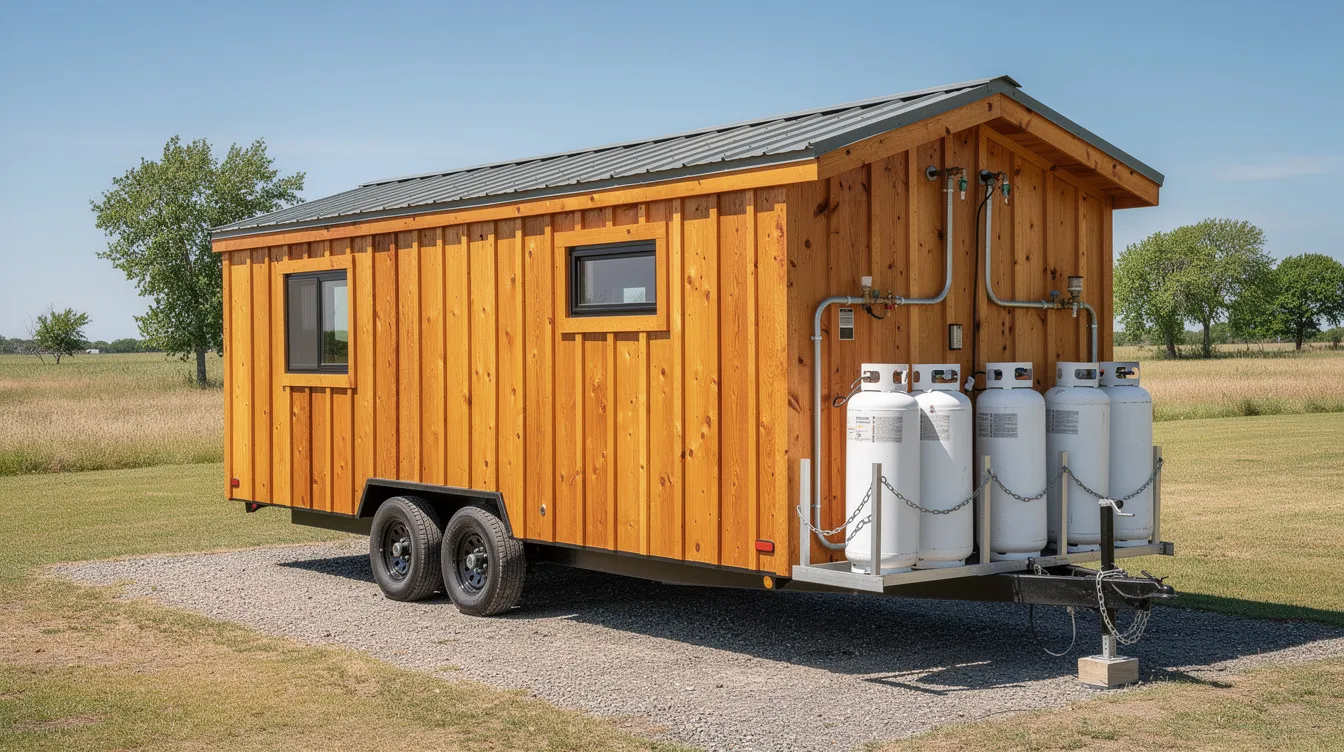
It powers your cooking, delivers hot water on demand, and keeps you warm without draining massive electricity. Most tiny homes on wheels cannot tap into natural gas lines. They rely on portable propane tanks instead.
Common tiny house propane uses include a gas stove or cooktop, a tankless water heater for that reliable hot shower, a propex heater or similar forced-air unit for space heat, and perhaps a camp stove for outdoor cooking. These appliances run efficiently on LP gas, freeing your electrical system for lights, devices, and other essentials.
This guide walks you through the complete propane system: planning your layout, choosing tank size, selecting components, installation basics, and safety checks. Whether you hire a pro or handle the planning yourself, understanding how each piece connects directly to safe, reliable energy makes all the difference.
- Step 1: Decide If Propane Is Right for Your Tiny House
- Step 2: Choosing Propane Tank Size and Location
- Step 3: Designing Your Tiny House Propane System Layout
- Step 4: Critical Components – From Propane Tank to Appliances
- Step 5: Piping, Fittings, and Tools for a Leak-Free System
- Step 6: Regulators, Pressure, and High-Pressure Accessories
- Step 7: Connecting Tiny House Appliances to the Propane System
- Step 8: Safety Devices, Shutoff Valves, and Leak Detection
- Step 9: Working With Pros, Codes, and Inspections
- Maintenance, Troubleshooting, and Seasonal Tips
- FAQ
- Can I install my tiny house propane system entirely by myself?
- Is copper tubing better than black pipe for a tiny house?
- How often should I replace propane regulators and hoses?
- Can I convert a natural gas stove to run on propane in my tiny house?
- Do I need a propane locker if my tank is sitting on the trailer tongue?
Step 1: Decide If Propane Is Right for Your Tiny House
Start with a quick power budget, especially if you’re still in the early stages of building your tiny house.
The electrical needs of a tiny house significantly influence the decision to use propane, as high power consumption from electric appliances can exceed the available amperage from the electrical service. A 12-gallon electric water heater drawing around 15 amps on a 20-amp breaker leaves little room for anything else.
Using a tankless water heater can greatly reduce the electrical load, requiring less than 1 AMP of power compared to traditional electric water heaters that can consume up to 15 AMPS.
Propane makes the most sense when:
- You have only 30A or 50A service limits
- Your off-grid solar setup cannot handle high-draw appliances
- You live in cold weather where electric resistance heat is impractical
The frequency of propane usage in a tiny house is determined by the number and type of propane appliances, such as a cooktop or oven, which can significantly increase consumption compared to a setup with only a tankless water heater.
Biggest propane load items in a tiny house:
- Cooktop/oven (40,000+ BTU/hr)
- On-demand water heater (30,000–42,000 BTU/hr)
- Space heater like a propex heater (6,800–20,000 BTU/hr)
All-electric can work with large grid connections and robust battery banks in mild climates. But most appliances that generate heat run more efficiently on propane.
Step 2: Choosing Propane Tank Size and Location
Estimate your usage by counting appliances and daily run time.
A 2-burner stove running 30 minutes daily, a 40,000 BTU tankless heater for quick showers, and a small space heater might total 80,000–100,000 BTU per day. That translates to roughly 1 gallon of propane daily.
Common tank size options:
Size | Capacity | Typical Use |
|---|---|---|
20 lb | 4.7 gallons | Weekend trips, light use |
30 lb | 7 gallons | Part-time living |
40 lb | 9.4 gallons | Full-time, primary tank |
100 lb | 23.6 gallons | Stationary, extended use |
Vertical gas cylinders are commonly available in sizes such as 20lb, 11lb, and 5lb, making them suitable for various space constraints in mobile living situations. Typically, propane tanks for tiny houses are available in sizes like 30lb and 40lb, with many users opting for two tanks to ensure a backup supply. |
Under-slung propane tanks are advantageous for mobile living as they free up interior space, although they may reduce ground clearance.
Safe outdoor storage requirements:
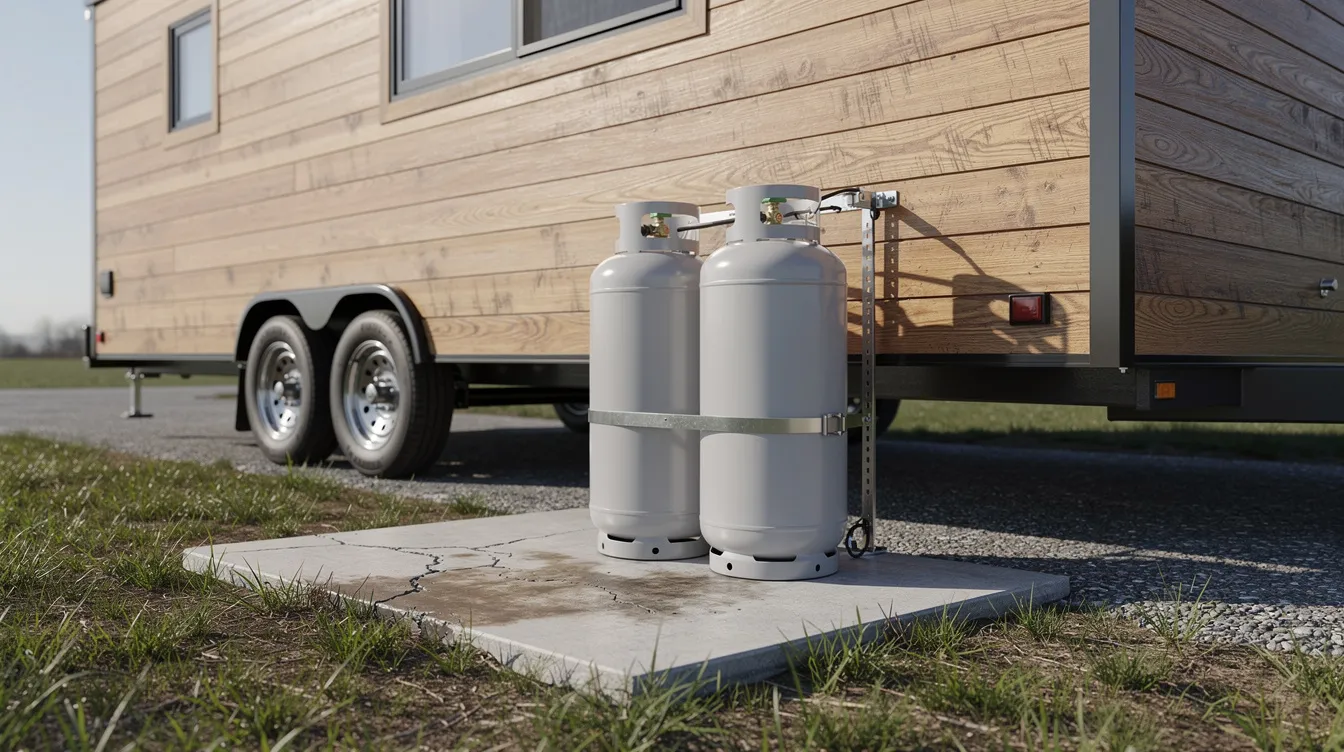
Propane tanks should always be stored outside in a dry place, on an even surface, and should have ample ventilation. Ensure that the tank is placed 10 feet from any other propane tanks or appliances to minimize risk.
Propane tanks should always be stored upright and the top should be secured to prevent leaks and accidents. It is recommended to have a barrier around the tank to keep animals and children from getting too close, while still ensuring the area is well ventilated.
A propane locker differs from a simple tank stand. The locker is a sealed, vented enclosure that contains any leak and routes the heavier-than-air gas safely downward. Any tank stored adjacent to or partially under the house needs this dedicated locker.
Step 3: Designing Your Tiny House Propane System Layout
Sketch a basic propane system diagram before you buy components, ideally alongside your broader tiny house floor plan and layout.
Your diagram should show:
- Tank location and propane locker
- Regulator position
- Main copper tubing run
- Branch lines to each appliance
- Shut off valve locations
- Penetration points into the house
Route the main propane line on the exterior underside or along the frame of your tiny house. Individual branches should enter the structure close to each appliance through protected penetrations sealed with fire caulk.
Position lines where they are protected from road debris and physical damage. Use clamps and supports every 4–6 feet. Keep runs as short and direct as possible. Avoid tight bends in copper tubing and minimize total joints to reduce potential leak points.
Long runs supplying multiple burners and a water heater may require larger diameter tubing. Check BTU load tables from regulator and appliance manufacturers to confirm sizing. A 3/8-inch line handles around 100,000 BTU over 50 feet with minimal pressure drop.
Step 4: Critical Components – From Propane Tank to Appliances
Every link in the chain matters. Here is each main component from tank valve to appliance inlet:
Propane tank valve and pigtail connection: The tank connects via a POL (left-hand thread) valve to a braided stainless steel pigtail hose rated for high pressure service. Standard pigtails are 72 inches and rated for 350 psi burst pressure.
Primary and secondary gas regulators: To ensure safe and effective connections in a propane system, a regulator is necessary to maintain the correct pressure, typically around 11 inches of water column (WC) or approximately 28 mBar. A standard propane regulator for tiny houses uses dual-stage design: first stage reduces tank pressure from 100–200 psi down to about 10 psi; second stage drops it to the 11 inches WC that most appliances need.
Propane locker: This sealed box has a drop vent at the bottom vented to the outside. Since propane is 1.5 times denser than air, any leak sinks and escapes safely rather than accumulating.
Low pressure distribution system: From the regulator, copper tubing or approved iron pipe enters the house. Tees split off to each appliance branch. A manual shut off valve sits at or near each appliance location.
Flexible appliance connectors: A short flexible hose connects the fixed valve to the stove or heater inlet. These are appropriate only for final short connections—never for long runs through walls or floors.
Step 5: Piping, Fittings, and Tools for a Leak-Free System
This section covers the physical plumbing that carries gas through your system.
Copper tubing selection: Use Type L or Type K copper tubing for most tiny house installs. Size according to total BTU load and run length per standard gas piping charts. Type L handles most residential applications; Type K is thicker for buried or high-stress runs.
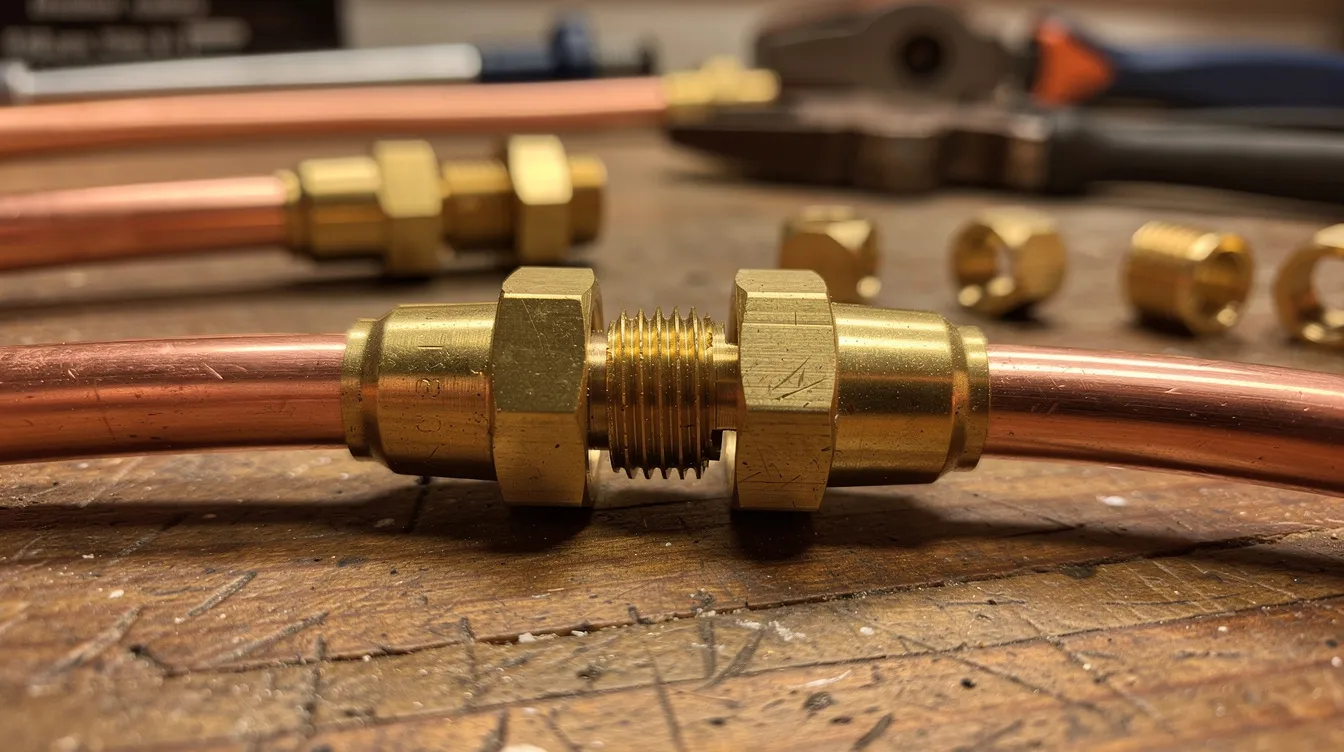
Flare fittings vs. compression fittings: Flare fittings are commonly used in North America and Australia for propane connections, as they handle vibrations better and do not require sealant due to the gas-tight seal created by the flared copper pipe. The flare nut slides over the tubing before you form the 45-degree flare.
Compression fittings rely on an olive or ferrule to create a seal. They are more common in parts of Europe. Tighten carefully to achieve a gas-tight connection without crushing the tubing.
Using a flaring tool:
- Cut the tubing squarely with a tubing cutter
- Deburr the inside edge
- Slide the flare nut on first
- Form a clean 45-degree flare to mate with the fitting
Research from the Propane Education & Research Council shows flare connections fail at rates under 0.5% with proper tooling versus 2–5% for compression fittings under vibration loads like towing.
Thread sealant: When connecting propane systems, it is important to use gas-approved yellow PTFE Teflon tape for threaded connections to ensure a leak-free seal, as opposed to the white tape which is meant for water. Use 3–4 wraps clockwise on NPT fittings and adapters. Flare mating surfaces themselves should not be taped—they seal metal-to-metal.
Avoid rubber hoses for permanent runs: Running long lengths of rubber hoses as permanent lines is not allowed by most codes. Rubber degrades from UV and ozone, can be chewed by rodents, and should only serve as final appliance connectors.
Step 6: Regulators, Pressure, and High-Pressure Accessories
Most built-in tiny house appliances operate on low pressure propane at approximately 11 inches water column. This propane pressure is supplied by the dual-stage regulator at the tank.
When to use high pressure: A single-stage high-pressure regulator feeds dedicated outdoor equipment like a camp stove or grill designed for higher inlet pressure. The line connects directly from the first-stage regulator output or a separate high pressure port.
Regulator sizing: Select gas regulators with adequate BTU capacity for combined demand of all appliances. A 200,000 BTU regulator handles most tiny house setups comfortably. Check manufacturer specs before purchase.
Installation tips:
- Mount the regulator outside, near the propane tank or locker
- Orient per manufacturer instructions (usually vent facing down)
- Protect from weather with a cover or shield
Appliances with built-in regulators: Some portable items like 1 lb bottle camp stoves have built-in regulators. Do not double-regulate these unless the manufacturer explicitly allows it—this can cause pressure locks and performance issues.
Step 7: Connecting Tiny House Appliances to the Propane System
Each appliance connects slightly differently. Here is how common ones typically hook up:
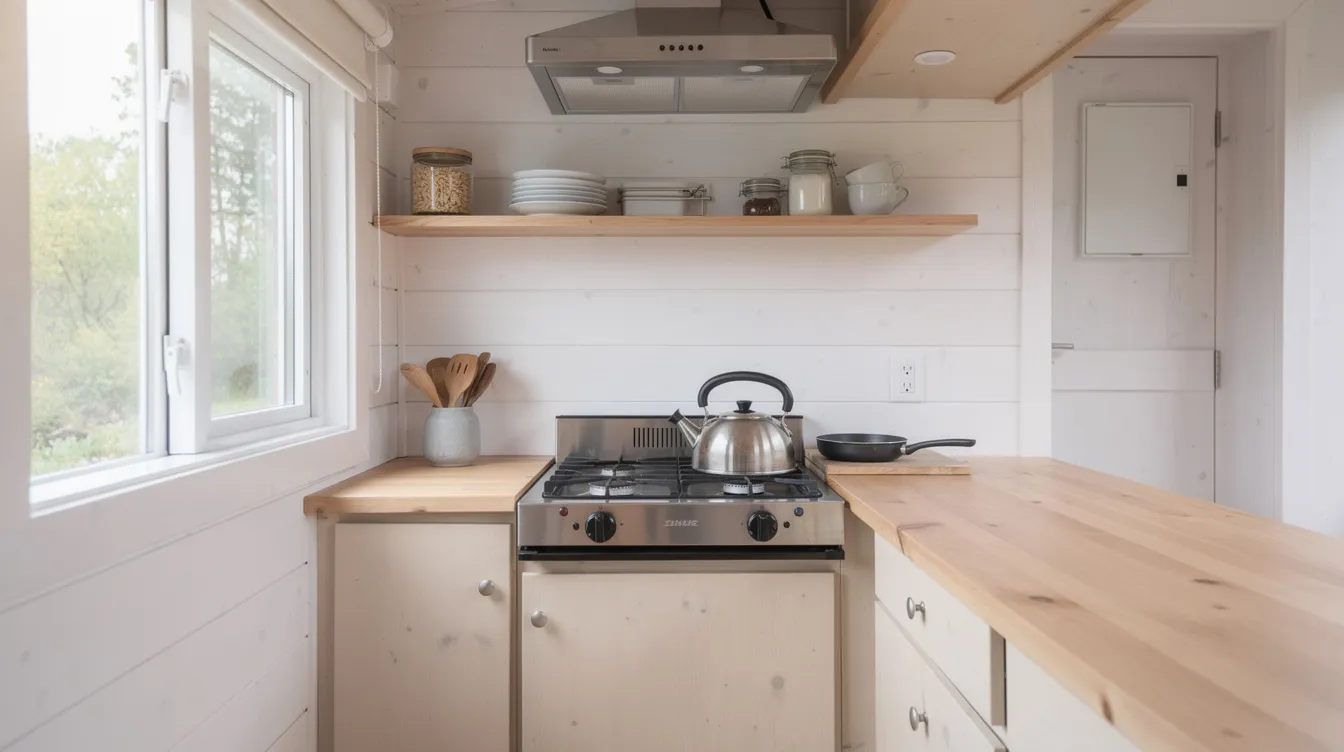
Gas stove or cooktop: Run a rigid copper line to a nearby shut off valve. Use a short flexible appliance connector (12–24 inches, rated for propane) between the valve and the stove inlet. This allows minor adjustments during installation and service access later.
Tankless propane water heater: Indoor-rated models must be vented correctly per manufacturer instructions and local code. The gas supply pipes to a shutoff valve and union fitting for easy service access. These units deliver instant hot water without the storage tank that electric models require.
Forced-air space heaters: A propex heater or similar sealed-combustion unit often uses smaller diameter copper tubing (1/4 inch). These heaters may draw less than 1 amp electric for the fan while delivering 20,000+ BTU of heat. The low electrical load makes them ideal for off-grid setups.
Portable outdoor appliances: An outdoor camp stove can connect via a quick-connect port. Depending on stove requirements, this may be high-pressure or low-pressure supply. Always verify the correct fittings and flow requirements.
Check each appliance manual for required orifice sizes, regulator needs, and minimum/maximum gas pressure. Fine tune your overall system design accordingly.
Step 8: Safety Devices, Shutoff Valves, and Leak Detection
Propane safety is non-negotiable in a small, enclosed tiny house, especially in self-contained tiny homes designed for off-grid living. Treat this section as your practical checklist.
Manual shutoff valves: Every appliance branch needs its own valve in an accessible location. This allows isolation of a single appliance without shutting down the entire propane system.
Optional safety upgrades: Consider an electric propane solenoid valve (normally closed) controlled from inside the house. One switch shuts off the entire low pressure side in an emergency.
Required detectors: Install at least one carbon monoxide detector and one propane gas leak detector. Place the CO detector near sleeping areas. Place the propane detector low to the floor—propane sinks since it is heavier than air.
The soapy water leak test:
- Mix dish soap with water (roughly 1:10 ratio)
- Spray all joints, fittings, and connections
- Watch for continuous bubbles—any bubble lasting more than 3 seconds signals a leak
When to test: Perform full-system leak checks when the system is first pressurized, after any adjustments, and again after the house has been moved or towed to a new location. Temperature changes from travel can loosen connections.
Critical safety reminders:
- Never use open flame to test for leaks
- If you detect a strong propane odor, immediately shut off the propane tank valve
- Ventilate the tiny house by opening windows and doors
- Do not operate any electrical switches until the space is clear
Step 9: Working With Pros, Codes, and Inspections
Regulations for propane installations vary by country, state, and municipality. Many areas require a licensed gas fitter or plumber to connect and pressure test permanent systems.
DIY-friendly tasks:
- Building the propane locker
- Running conduit paths
- Mounting appliance locations
- Planning the layout
Leave these to professionals:
- Final line connections
- Pressure testing (typically 1.5x operating pressure for 10–15 minutes)
- Code compliance certification
Tiny houses on wheels may be inspected under RV or park model standards, which reference national gas codes like NFPA 1192 for piping, regulators, and appliance installations.
Documentation to save: Keep all regulator specifications, appliance manuals, pressure test results, and photos of your piping layout. These prove valuable for future service, insurance claims, or resale.
Ask your professional installer about maintenance intervals, annual safety checks, and region-specific requirements like mandatory tank recertification dates.
Maintenance, Troubleshooting, and Seasonal Tips
An installed propane system is not set-and-forget.
Annual inspection routine:
- Visually check copper tubing for corrosion or damage
- Verify supports and clamps remain intact
- Repeat a full soapy water leak test at all accessible joints
- Inspect flexible hoses for cracks or stiffness
Cold weather considerations: In sub-freezing temperatures, propane vaporizes more slowly. Keep tanks above 10% capacity to maintain adequate tank pressure. Wind shielding or appropriately rated heating blankets can help where manufacturer-approved.
Troubleshooting signs:
- Yellow, sooty flame at a gas stove indicates poor air/fuel mix
- Difficulty lighting appliances suggests regulator or blockage issues
- Low flame height means insufficient pressure reaching the appliance
These issues warrant professional evaluation. Most appliances work properly when the system delivers clean, regulated propane at the correct pressure.
Track refill dates and consumption patterns. Knowing how much propane a 30 lb or 40 lb tank provides helps you anticipate when you will run out and avoid losing hot water or heat unexpectedly.
FAQ
Can I install my tiny house propane system entirely by myself?
Many owners successfully plan the layout, build a propane locker, and mount appliances themselves. However, most jurisdictions require a licensed gas professional to make final connections, pressure test the system, and certify it for safety and insurance purposes. DIY connections that bypass this process can void insurance coverage and create serious safety risks.
Is copper tubing better than black pipe for a tiny house?
Both copper tubing and black iron pipe are widely accepted for propane service. Copper is often preferred in tiny houses and mobile applications because it is lighter, easier to route in tight spaces, and compatible with flare fittings that resist vibration during travel. Black pipe works well but adds weight and requires more complex threading.
How often should I replace propane regulators and hoses?
Many manufacturers recommend inspecting regulators and flexible hoses annually. Plan to replace them roughly every 10 years or sooner if you notice corrosion, cracking, stiffness, or performance issues like fluctuating flame height. Keep records of installation dates.
Can I convert a natural gas stove to run on propane in my tiny house?
Many modern ranges ship with an LP conversion kit containing propane orifices and regulator adjustments. The orifices are typically 10–15% smaller than natural gas versions. Follow the manufacturer’s instructions exactly, and in most regions, have a licensed technician perform or verify the conversion.
Do I need a propane locker if my tank is sitting on the trailer tongue?
Even when a tank is mounted on the tongue, a properly vented propane locker or enclosure is recommended. It protects the tank from road debris, contains minor leaks, and routes heavier-than-air propane safely downward and away from living space and ignition sources. Many codes require this regardless of tank location.