
When you have fewer than 320 square feet to work with, every cushion, every lamp, and every finish you choose either lifts the whole room or drags it down. A neutral living room mood board gives you a visual safety net – a single reference document that keeps your tiny house living room cohesive, calm, and totally intentional before you spend a dollar.
This guide from Explore Tiny House walks you through building a practical neutral living room mood board from scratch, selecting furniture and decor pieces that actually fit, and bringing the whole plan to life inside a real tiny home. We will reference HDR-quality mood board images throughout so you can see how colors, textures, and light work together at small-home scale.
Key Takeaways
- A neutral living room mood board is a curated visual plan – photos, swatches, textures, and floor-plan sketches – that helps tiny house owners visualize a calm, flexible design before they buy furniture or decor.
- Neutrals like warm whites, sand, greige, and soft charcoal make a small living room feel brighter, taller, and more spacious. Neutral color palettes enhance the feeling of spaciousness in ways that bold palettes simply cannot at this scale.
- A few well-chosen pieces – a compact sofa, a space-saving coffee table, layered rugs, and smart storage – can define the entire mood board without overcrowding a tiny home.
- High-quality HDR mood board images (flat-lays and styled room shots) combine textures, colors, and lighting for a realistic preview of the finished space.
- Everything in this article is written from Explore Tiny House’s perspective, focusing on real, practical choices for small-space and tiny house living rooms.
What Is a Neutral Living Room Mood Board (and Why Tiny Homes Need One)?
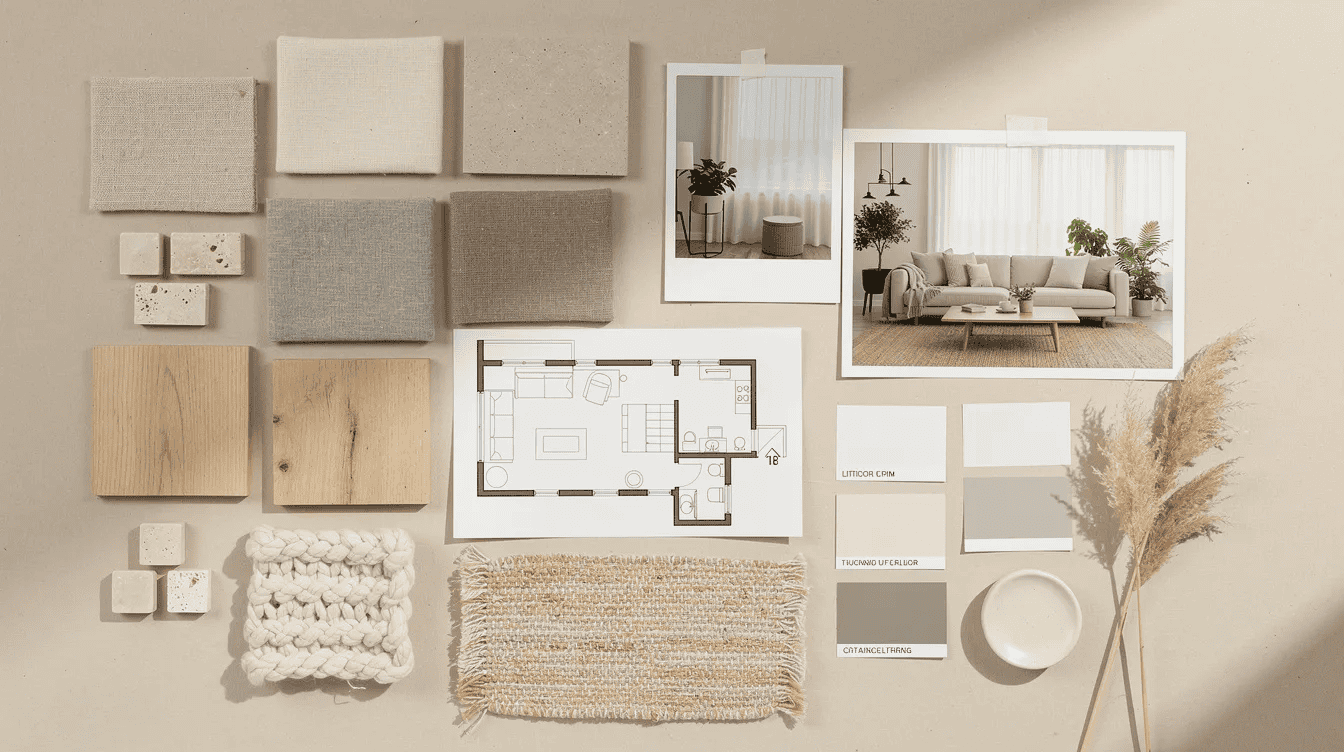
A neutral living room mood board is a curated visual plan – photos, color swatches, fabric samples, material close-ups, and scaled sketches – that guides every design choice in a tiny house living room. Think of it as a decision-making tool, not just a Pinterest board. It tells you whether that oatmeal linen sofa will actually look right next to your light oak floor, or whether your chosen wall color clashes with the trim already locked into your shell.
“Neutral” here does not mean boring beige. A neutral living room mood board uses warm beige, soft cream, and natural wood tones alongside modern additions like greige fabric, muted charcoal hardware, clay-toned ceramics, and black metal accents. A neutral palette relies on nuanced shifts in texture and tone rather than bold colors, which is exactly why it works so well in compact spaces where visual noise accumulates fast.
For tiny homes – especially those built or renovated between 2020 and 2026 – a mood board prevents expensive mistakes. When your entire home might sit under 30 m² (roughly 320 sq ft), every purchase must earn its place. A custom tiny home build integrates windows, electrical outlets, built-in storage, and ceiling heights into one shell, and your living room mood board ensures all of those structural decisions support the look and feel you actually want.
Minimalist aesthetics focus on functionality and simplicity, which aligns perfectly with tiny house design. Neutral color schemes promote calmness in minimalist spaces, making them the natural default for homes where you eat, sleep, work, and relax in essentially one open area.
A mood board also makes it easy to compare different sofa fabrics, coffee table finishes, wall colors, and storage pieces before committing money or space. We recommend building your mood board before finalizing a tiny house shell layout so that window placement, outlet locations, and built-in cabinetry all serve the living room’s visual direction.
Throughout this article, we reference HDR-quality photographs and mood board images: overhead flat-lays of materials and styled tiny living room scenes captured under natural daylight to show how pieces truly look at scale.
Building Your Neutral Living Room Mood Board: Colors, Textures & Layout
This section walks through the core building blocks of your room mood board – the color palette, the materials, and the basic layout – all calibrated for small living rooms in tiny houses.
Primary Neutral Palette
Start with three anchors:
Element | Recommended Neutral | Why It Works in Tiny Homes |
|---|---|---|
Walls | Warm white (LRV 85–95) with creamy undertones | Reflects light, makes ceilings feel taller |
Flooring | Light oak, bamboo, or light vinyl plank | Continuous pale floor visually extends the room |
Sofa fabric | Greige (grey + beige blend) | Balances warm and cool undertones, hides wear |
Avoid stark whites; opt for off-whites with creamy undertones to soften the space. Neutral living rooms often use a palette of whites and beiges, but the 2026 trend leans warmer – think caramel and bronze tones that designers are now treating as primary neutrals rather than accents.
Secondary Neutrals
Layer in sand, stone, mushroom, and warm taupe through cushions, throws, and poufs. Soft or warm neutrals include cream, taupe, and warm beige to create depth without adding visual clutter. Layering different shades of neutral colors creates depth – this is how you keep the palette from reading as one flat wash.
Contrasting Accents
Add subtle contrast with dark accents to prevent a flat appearance in a neutral room. Matte black or deep charcoal in slim lamp bases, picture frames, or a metal coffee table frame sharpens the entire scheme without making the living room feel heavy. Keep these accents to roughly 10% of the visual weight.
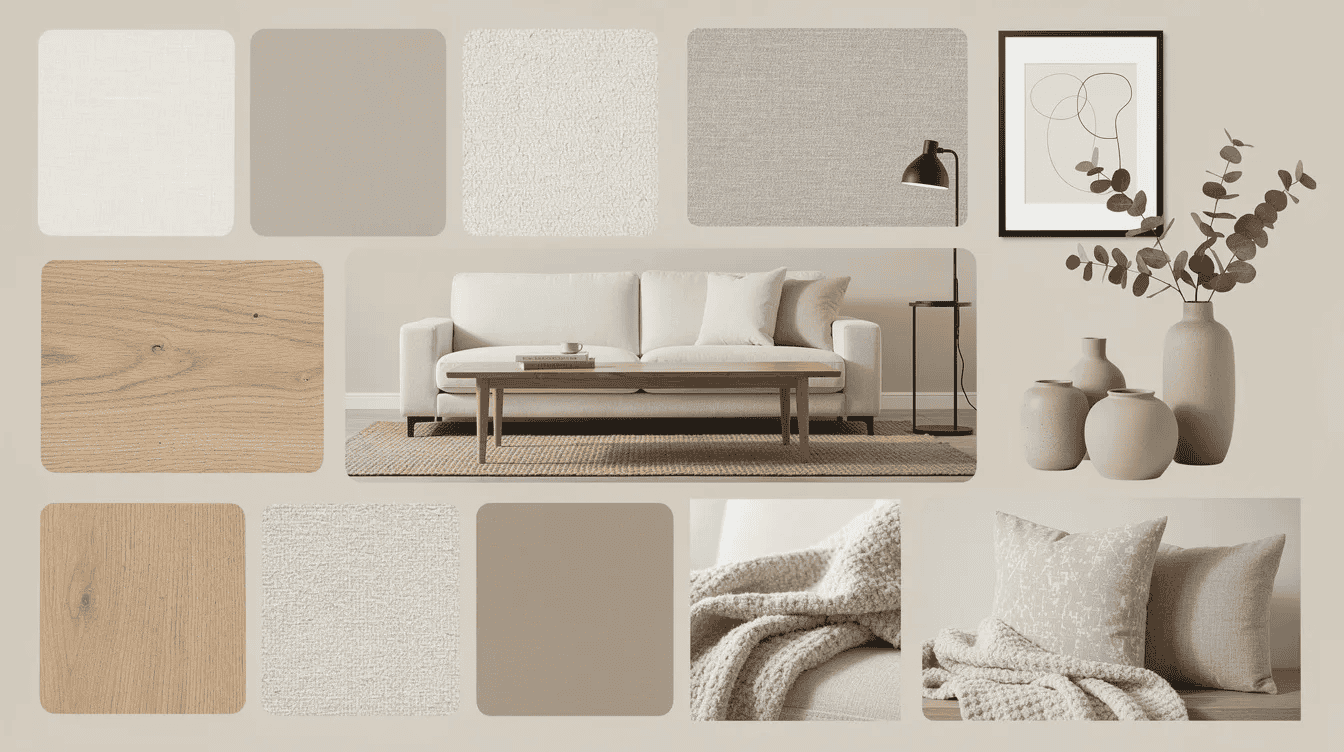
Texture & Materials
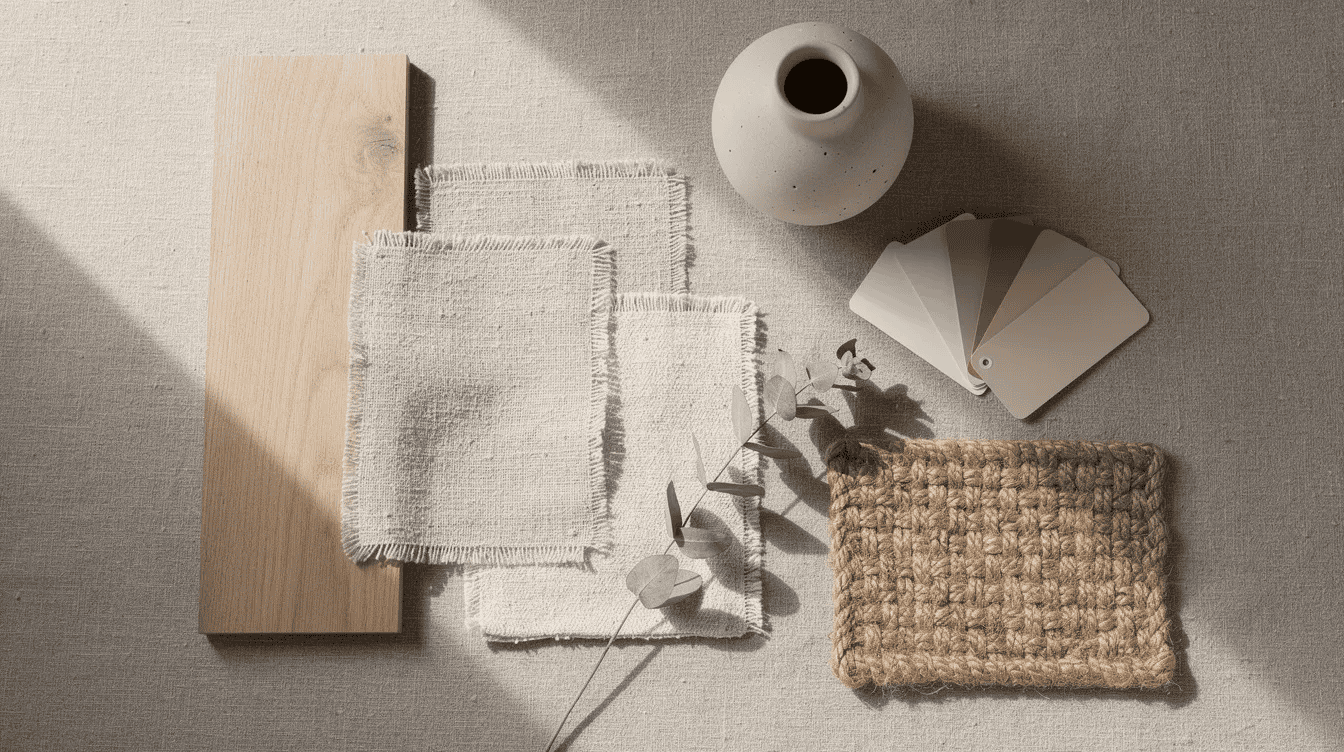
Layering diverse tactile textures creates a calm and inviting space. Natural materials like wood, stone, and ceramics infuse warmth into the design. Textures like wood and linen enhance neutral living room designs. For your mood board, collect or photograph:
- Linen upholstery swatches
- Wool or jute flat-weave rug samples
- Bouclé cushion fabric
- Woven rattan baskets
- Raw or unglazed ceramic vases
- Unfinished pine or oak shelving samples
Aim for a balanced mood board with varying textures and materials to maintain interest. Sample physical or digital cutouts of paint swatches and fabric samples so you can interact with them – move them around, hold them under different light, and see what clicks.
Layout for a Tiny Home Living Room
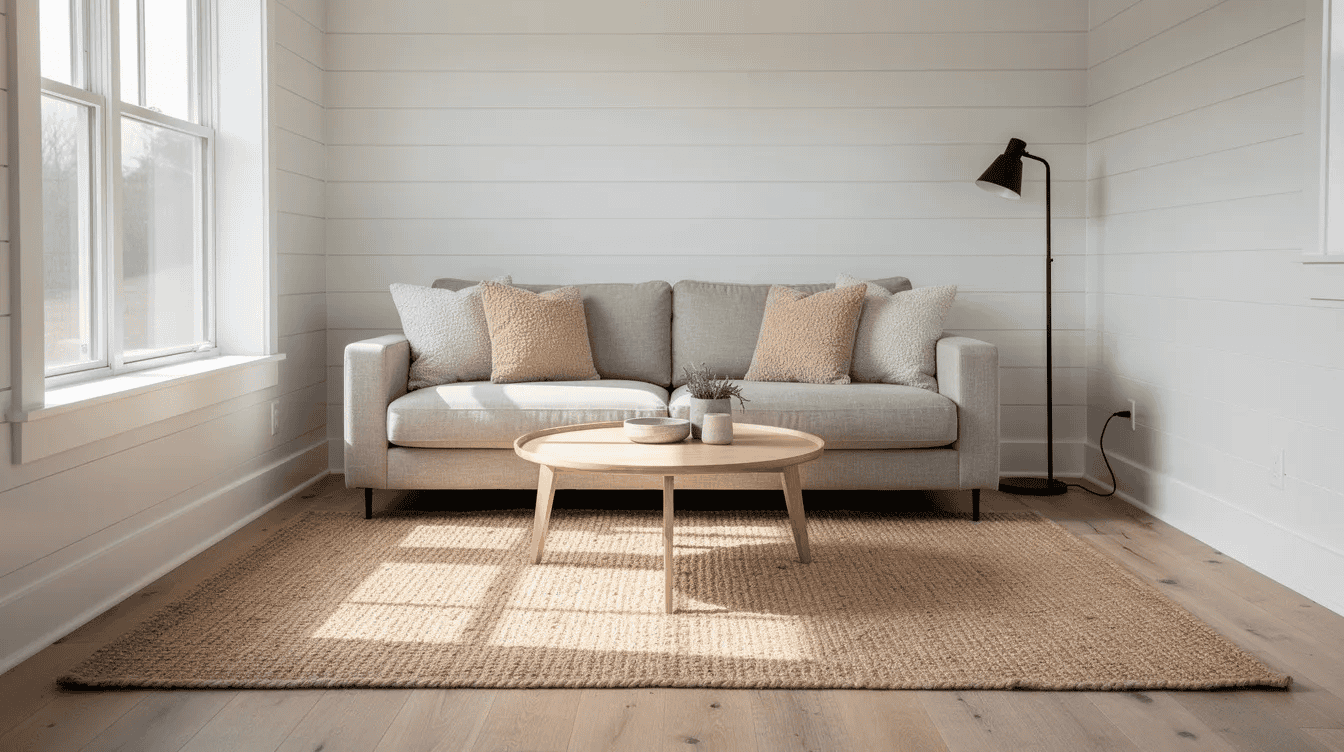
In a typical 7–8 m long tiny home, the living room sits under the tallest ceiling zone, often just 2–2.5 m wide. Place the sofa against the long wall to free the central circulation path. A compact coffee table sits centered on a rug, with at least 45–60 cm of clearance on all walkable sides.
If you are working with an A-frame or lofted layout, the same principles apply: anchor the seating against the longest uninterrupted wall and keep floor space open.
Assembling the Board
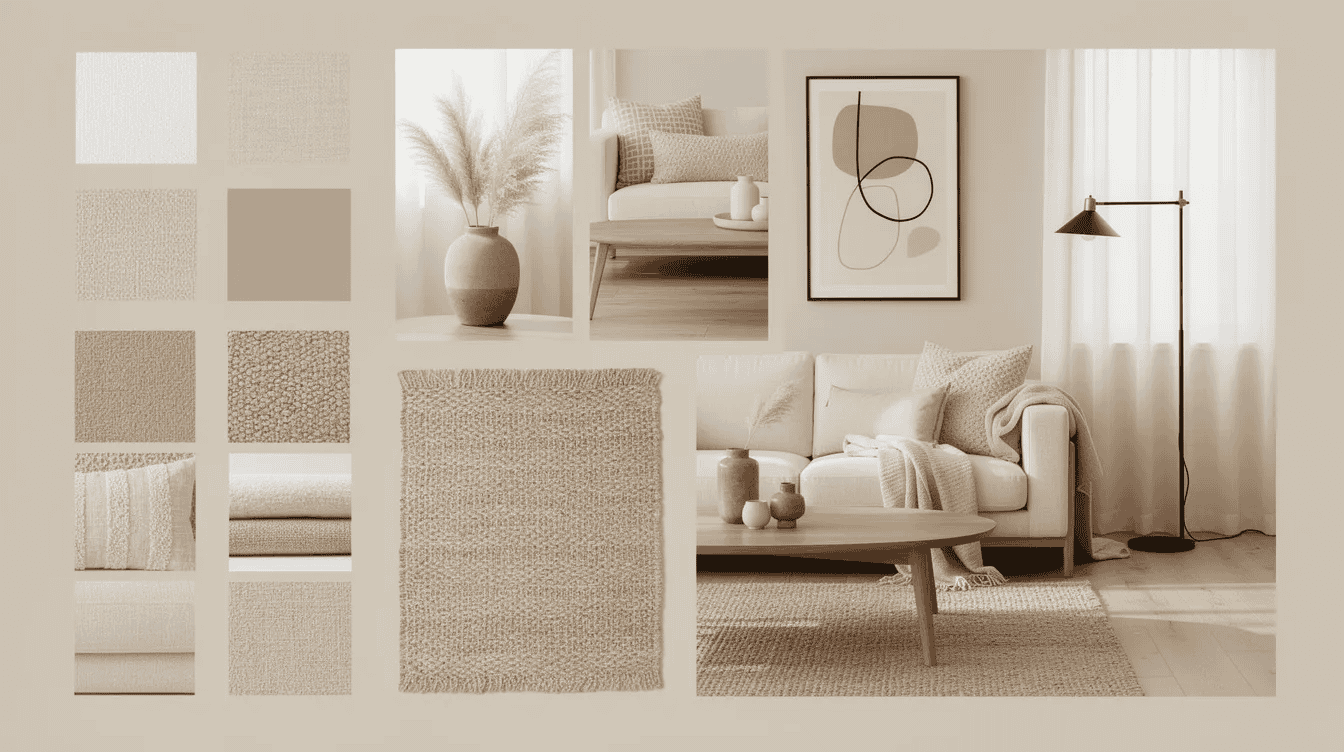
Arrange your mood board with one HDR hero image of a styled tiny living room at the top to set the mood. Surround it with close-up texture shots, paint chips, and a scaled floor-plan sketch showing furniture footprints. A flat-lay photo concept works well: a top-down shot of a neutral rug sample, fabric swatches, a miniature wooden coffee table model, and printouts of aesthetic tiny home living rooms arranged in a grid.
Key Furniture & Decor Pieces for a Neutral Tiny House Living Room
This section turns the mood board into actual pieces – selected for small footprints, storage potential, and neutral aesthetics. Minimalism encourages functional furniture choices for small spaces, so every item below pulls double or triple duty.
Sofa
Comfortable furniture with simple silhouettes enhances the inviting quality of a room, and in a tiny home, the sofa is the biggest visual commitment you will make. I recommend a 70–75 inch (178–190 cm) armless or slim-arm two-seater in oatmeal linen or a similarly durable neutral fabric. Depth should stay shallow – around 35–38 inches (89–97 cm) – so it does not eat the walkway.
If you need the sofa to work harder, look for hidden storage under a lift seat or a pull-out sleeper mechanism. Compact sleeper sofas rated for small spaces can be as narrow as 50 inches (127 cm) wide, like the West Elm Harris loveseat, which doubles as a guest bed. Tiny houses often utilize multi-functional furniture to save space, and a sleeper sofa is one of the most impactful examples.
For lots more ideas on making furniture work in tight layouts, see our guide to tiny house furniture ideas.
Coffee Table
An ideal coffee table for tiny homes is an 80–100 cm oval or round table in light oak or ash, with a lower shelf or lift-top storage compartment to hide remotes, laptops, and small items. The round shape eliminates sharp corners in tight walkways.
Alternatives that totally work:
- Two nesting side tables in natural wood and matte white – push them together when you need surface area, separate them when you need floor space.
- A storage ottoman in a neutral fabric that doubles as seating and a coffee table when you set a tray on top.
Space-Saving Seating
Beyond the sofa, consider:
- A slim accent chair in soft grey with a low arm profile
- Floor cushions (20–25 inches square) in sand tones for informal seating you can stack and store
- A built-in bench under a window with lift-up storage – for homes under 24 m², this is often essential and earns both seating and hidden storage in one footprint
Storage-Focused Decor
Decluttering is a key principle of minimalist living, and storage-focused decor helps you maintain that discipline daily:
- Wall-mounted shelves in whitewashed wood – hang them above the sofa or flanking a window
- A narrow console against the back of the sofa if it floats away from the wall
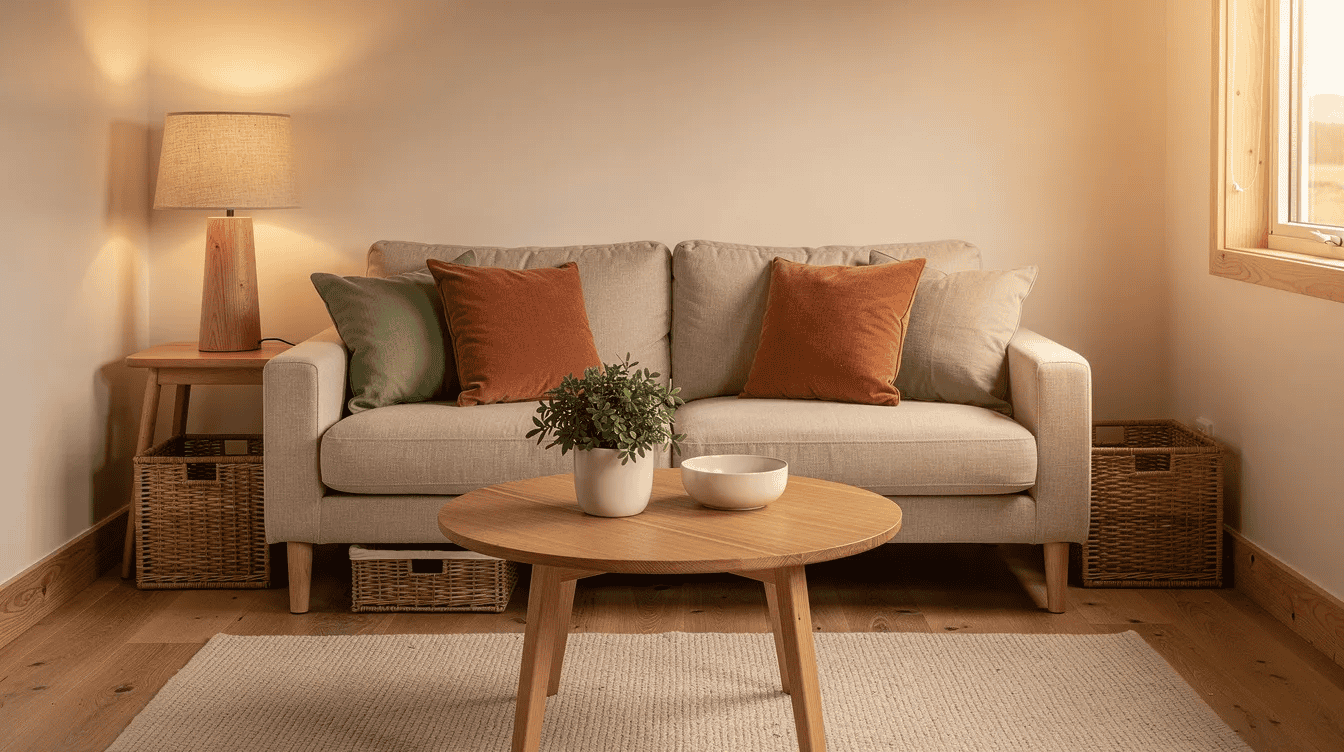
- Woven baskets in natural jute or rattan to keep throw blankets, magazines, and odds-and-ends off the floor
Textiles
Layered textiles such as chunky knit blankets and linen pillows contribute coziness. A grounding rug can visually connect the seating area and add softness underfoot – choose one large neutral flat-weave rug sized to anchor the sofa and coffee table, then layer a smaller wool or loopy-pile rug on top for texture.
Mixing at least three distinct fabric weights and material finishes adds textural variety: pair linen cushions with bouclé throw pillows and a thick knit throw in warm beige or clay. Minimalist living emphasizes reducing possessions to essentials, but that does not mean the essentials should feel sparse – the right textiles make a few pieces feel rich.
Lighting
Use warm lighting (2700K to 3000K) to create a cozy atmosphere. A single central ceiling light is one of the most common lighting mistakes in small homes – it creates harsh shadows that compress visual space. Instead, use ambient and task lighting to create a layered illumination effect:
Fixture | Role | Suggested Style |
|---|---|---|
Floor lamp | Ambient / reading | Slim black metal, linen shade |
Table lamp | Task / mood | Linen shade on a shallow wall shelf |
LED strip or puck lights | Accent | Under shelving or behind built-ins |
Choose warm LED bulbs with a CRI of 90 or higher so your neutral fabrics and wood finishes render accurately – cheap bulbs can make warm whites look pink or grey.
Mood Board Image Concept
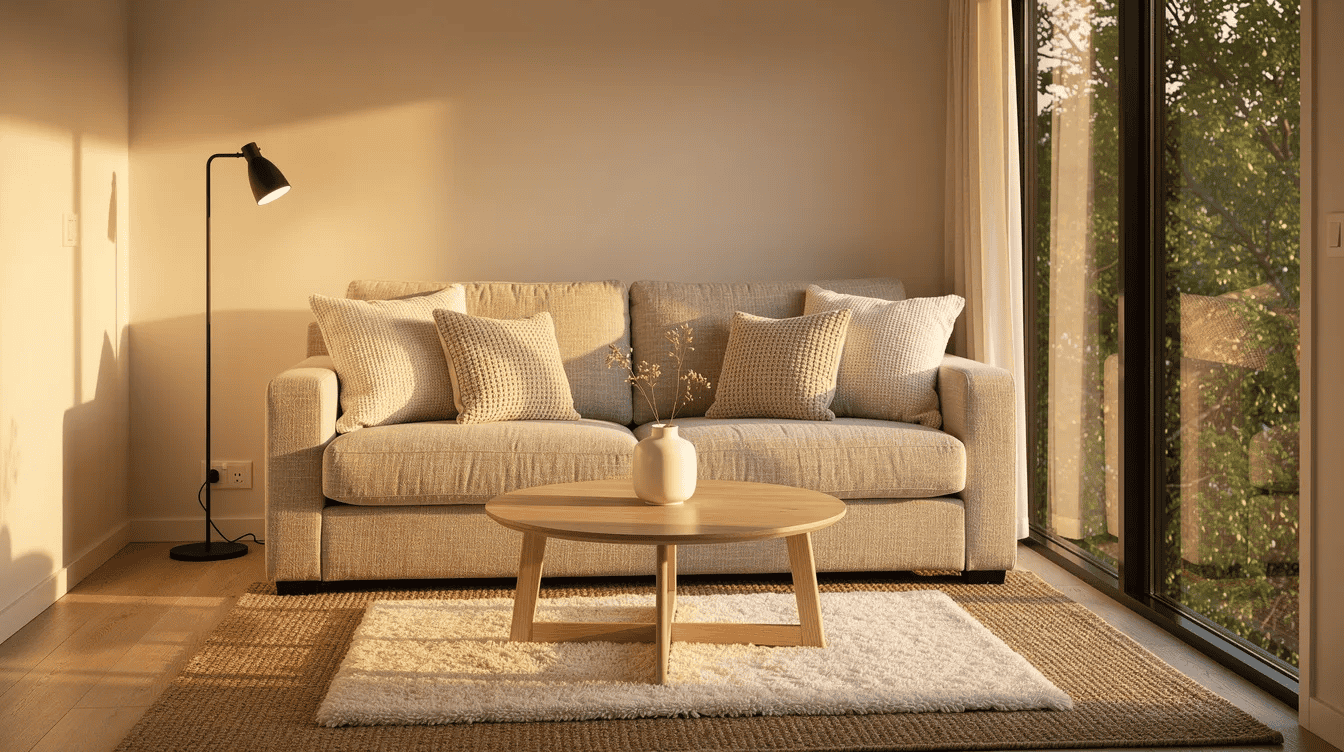
Imagine a styled HDR shot showing the sofa, coffee table, rug, and floor lamp in a tiny living room at golden hour. Soft shadows fall across the bouclé cushions. The warm light catches the grain of the oak coffee table. This kind of image anchors the mood board and gives you a clear target to build toward.
Bringing the Mood Board to Life in a Real Tiny House Living Room
Here is where the mood board leaves the screen (or the corkboard) and enters the actual space. This section covers step-by-step implementation – from painting and flooring to styling and photography.
Order of Operations
Follow this course to avoid backtracking:
- Walls first. Paint in the chosen warm white neutral. Let it cure completely.
- Flooring. Install or refinish light oak, bamboo, or light vinyl planks.
- Large furniture. Bring in the sofa, position it against the long wall. Then the coffee table and rug to fix the ground plane.
- Lighting. Install floor lamp, table lamp, and any accent lighting.
- Storage and shelving. Mount wall shelves, place baskets.
- Textiles and accessories. Cushions, throw blankets, ceramics, a small plant.
Proportion Check
Use painter’s tape on the floor to map sofa and coffee table footprints before you buy anything. In a living area approximately 2–2.5 m wide, you need at least 60–70 cm (24–30 in) of clear walkway in front of the seating. If the tape outline feels too tight, switch to a narrower coffee table or swap for nesting tables. This five-minute test saves hundreds on returns.
Low ceilings appear taller with continuous vertical lines – a tall, slim floor lamp, narrow bookcases, or full-height curtains all help. If you agree that proportions matter more than decoration, this step will save you from the most common tiny home regret: buying pieces that technically fit but visually crowd the room.
Keeping the Palette Cohesive
Whenever a new item enters the space – a 2026 smart projector, a portable heater, a piece of artwork you love – compare its color and finish against the mood board. If it deviates too far (wrong undertone, overly saturated color, glossy finish that clashes), either repaint it, buy an alternative, or update the mood board to accommodate it intentionally. The board should be a live document.
Balancing layered tones, tactile materials, and warm lighting creates an inviting atmosphere, but only if those layers are coordinated. One rogue purchase can throw the whole scheme.
Vertical Styling
Hang artwork or framed tiny house photography in black or oak frames at eye level, but leave some negative space in the design to create a calm and relaxed room feel. A common thought is that walls need to be filled – in a tiny home, restraint is your friend. One or two carefully chosen pieces suggest taste far more than a gallery wall that shrinks the room.
Natural light is crucial in tiny house design for openness, so avoid blocking windows with tall shelving or heavy curtains. Let the light do the work of making the space feel larger.
Personal accents in décor prevent the space from looking generic or like a showroom. A handmade ceramic mug used as a pencil holder, a small framed photo, or a single book you actually read – these details make the room yours. Incorporating plants adds life to neutral living spaces, so a potted trailing plant on a shelf or a small succulent on the coffee table is an easy win. Incorporating organic greenery introduces life while maintaining a neutral aesthetic.
Capturing HDR Mood Board Images
Once the room is styled, shoot bracketed photos in natural daylight through your tiny house windows – take three exposures (dark, normal, bright) and combine them so both interior textures and exterior views through the glass are visible. Golden hour light enhances warmth and casts longer shadows that highlight wool, bouclé, and wood grain.
For a deeper dive into design ideas you can reference as you photograph and refine your space, explore our roundups of elegant tiny homes and modern tiny house designs.
Seasonal Updates Without Starting Over
The beauty of a neutral base is flexibility. Switch cushion covers and throw blankets seasonally – subtle clay tones for autumn, soft sage for spring – while keeping the sofa, rug, and coffee table unchanged. Update your digital mood board with any new additions so it stays current and continues to guide future purchases, like a future accent chair or upgraded lighting.
Adding seasonal elements is one of the easiest ideas to keep the living room feeling fresh without ever needing a full redesign.
FAQ
These FAQs address common questions tiny house owners have about neutral living room mood boards and small-space interior design. Each answer is focused on tiny homes, not large houses or generic apartments.
How do I keep a neutral tiny living room from feeling flat or boring?
Layer multiple textures rather than adding bright colors. Combine linen upholstery, a wool rug, jute baskets, smooth ceramics, and matte metals so the eye has lots of surface variation to explore. A black floor lamp base or a dark wood tray on the coffee table provides just enough contrast to add depth without breaking the neutral living room mood.
I also suggest using HDR-style photos or mockups during the planning phase to test how textures and light interact before you buy pieces. What looks flat in a catalog swatch might come alive once you see it under real daylight alongside your other materials.
Can a neutral mood board work if my tiny home has dark floors or trim?
It can absolutely work. Balance dark existing elements with lighter rugs, slipcovers, and wall paint – sample these on the mood board first by including an accurate photo of your current floors or trim. Prioritize large light pieces in the center of the room: a pale rug under the seating area and a light wood or white coffee table visually brighten the space where your eye naturally lands.
Dark oak trim, for example, pairs beautifully with warm greige walls, a linen sofa, and lighter wood furniture. The key is to coordinate with the dark elements rather than fight them.
What’s the best way to build a neutral living room mood board if I’m not a designer?
Start with a free digital tool like Canva, Milanote, or Planner 5D, or use a simple physical corkboard. Pin 8–12 images of tiny living rooms that feel calm and neutral. Then add real-world samples: paint chips from a local hardware store, fabric swatches ordered online, and printed photos of potential sofas or coffee tables sized to scale.
Limit the palette to 3–4 main neutrals plus one accent and use the 60-30-10 rule: dominant color for walls and floor (60%), secondary for furniture (30%), and accent for small decor (10%). Refer to the mood board before every purchase to stay consistent.
How many furniture pieces should I include in a tiny house living room?
Most tiny homes function best with one main sofa (the anchor), one coffee table or storage ottoman, one or two side tables or nesting tables, and perhaps a single accent chair or built-in bench. Test arrangements on the mood board floor plan first, then confirm with tape on the actual floor to avoid crowding.
Multifunctional pieces – like a lift-top coffee table or a sofa with hidden storage – mean fewer total items are needed. Your mood board should reflect this edited set rather than trying to replicate a full-size living room.
Can I add color to my neutral tiny living room later without redoing the mood board?
A well-planned neutral base is ideal for exactly this. You can introduce small amounts of color over time through cushions, art, or a throw without needing to start from scratch. Before you buy, update the mood board with the new color element and check that it harmonizes with existing neutrals – compare undertones (warm vs. cool) side by side.
Muted, nature-inspired tones work best: soft clay, olive, or slate blue. These still support the calm, space-enhancing feel of neutrals in a tiny living room and let you switch things up seasonally without any permanent commitment.