

Fairy gardens pack an entire miniature landscape into a single pot, tray, or windowsill planter. For tiny home dwellers, that makes them one of the most space-efficient ways to bring live greenery indoors or onto a small patio. The trick is choosing the right plants; ones that grow slow, stay small, and actually thrive in containers rather than fighting against them.
This list covers six fairy garden plants selected for small-home conditions: limited light, shallow containers, and minimal maintenance time. Each one fills a different role, from ground cover to miniature trees.
How We Chose the Best Fairy Garden Plants for Small Homes
Creating a fairy garden requires compact and slow-growing plants. Small fairy gardens need plants that grow slow and stay small for scale, so every pick on this list stays under 12 inches tall at maturity. Fairy gardens can be effectively created using small pots and containers with drainage; every plant here performs in containers with limited root depth.
We evaluated each plant across six criteria:
- Size and growth habit: mature height under 12 inches; naturally compact or controllable spread
- Maintenance: watering frequency, pruning needs, pest resistance
- Indoor-outdoor versatility: ability to move between a windowsill and a balcony seasonally
- Container friendliness: shallow root systems, tolerance for restricted soil volume
- Visual impact: leaf texture, color, flowers, or structural form that adds charm at miniature scale
- Availability: sold at common U.S. nurseries; affordable for beginners
Miniature plants fit into specific design categories based on growth habits: ground covers, accent rosettes, and structural “trees.” A good fairy garden uses at least two of these categories to create depth.
Top 6 Fairy Garden Plants for Small Homes
1. Hen and Chicks Succulents
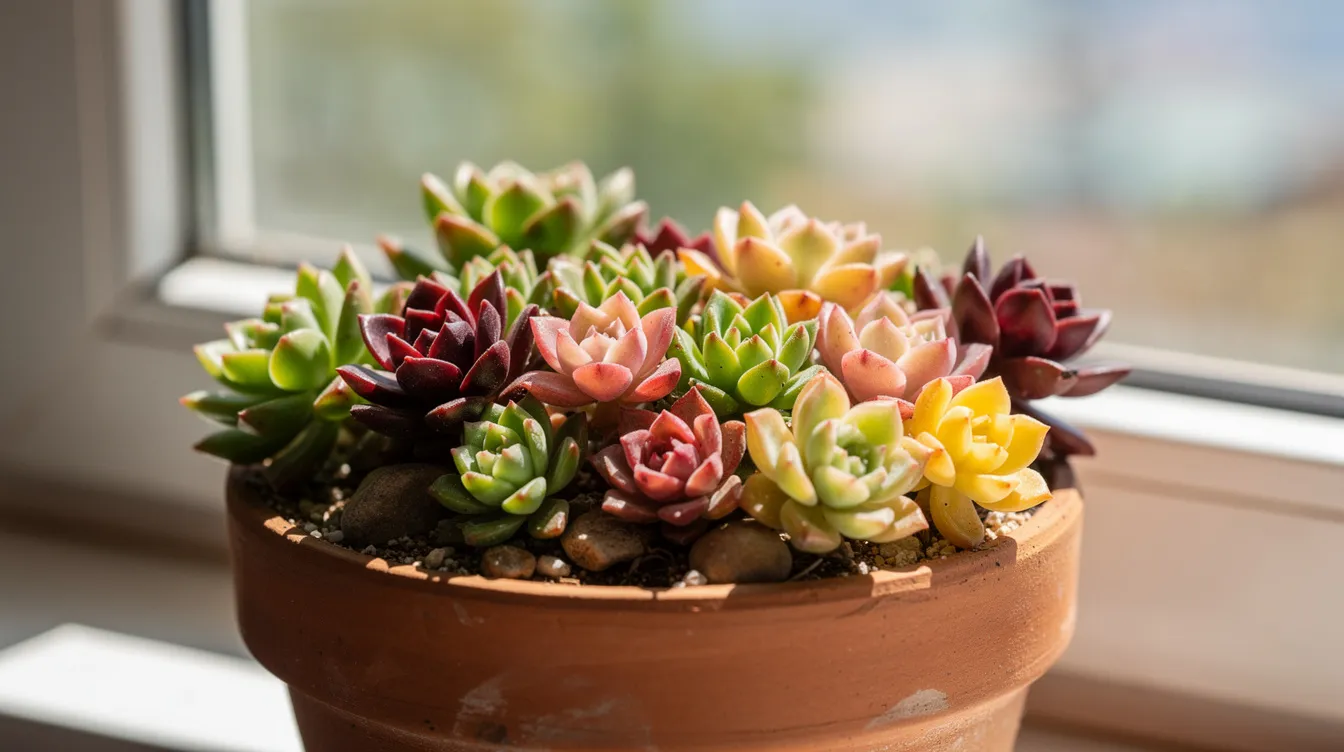
Hen and chicks (Sempervivum) are rosette-forming succulents that stay 1 to 4 inches tall. Each “hen” produces smaller offsets called “chicks,” which cluster around the parent rosette. In ground plantings, clusters can spread 24 to 36 inches wide, but in a 6-inch pot, they stay contained and fill the space naturally. Miniature succulents require less water and adapt well to sunny environments, which makes hen and chicks a low-effort starting point.
Why It Stands Out
The plant multiplies on its own. New rosettes emerge from the base without any planting or propagation effort on your part. You get a fuller garden over time without buying more plants.
Best For
Apartment dwellers with south-facing windows, beginners who forget to water, and anyone building a fairy garden on a sunny windowsill. Sedum is a low-maintenance plant suitable for fairy gardens and pairs well alongside hen and chicks in the same container, since both share identical water and sun needs.
Key Strengths
- Drought tolerant; water roughly once every 10 to 14 days
- Self-propagates through offsets
- Thrives in shallow soil and small containers
- Hardy in USDA Zones 3 through 10 outdoors
Possible Limitations
- Needs at least 6 hours of bright light; may stretch and lose color in dim rooms
- Overwatering causes crown rot, a common mistake in indoor settings
2. Irish Moss
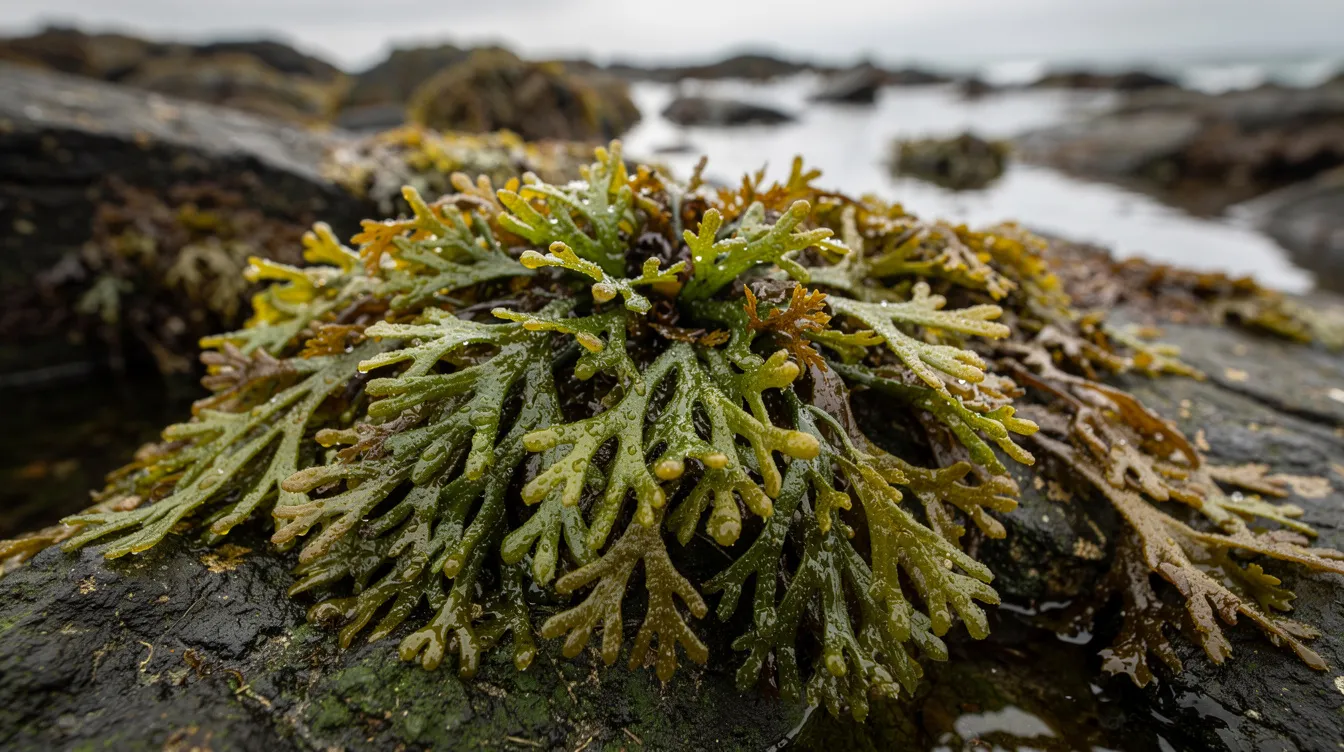
Irish moss (Sagina subulata) is a mat-forming perennial that stays roughly 1 inch tall. It produces tiny white flowers in spring and forms a dense, soft carpet of fine leaves. Irish moss creates a perfect forest carpet for fairy gardens, filling the ground layer between fairy houses and miniature accessories. Groundcovers and carpets create soft textures for paths in miniature landscapes.
Why It Stands Out
No other plant on this list replicates the look of a lush lawn or forest floor at fairy sized scale. The texture is soft enough to look like moss but structured enough to hold its form in containers.
Best For
Small container gardens, shaded balconies, and indoor terrariums where humidity can be maintained. Irish moss grows well across the US in USDA zones where temperatures stay moderate.
Key Strengths
- Stays under 1 inch; never outgrows a shallow dish
- Tolerates shade to partial sun, suitable for north-facing patios
- Plant 10 to 15 cm apart for quick coverage in containers
- The golden cultivar “Aurea” adds lovely color contrast
Possible Limitations
- Requires consistent moisture; dry soil causes browning within days
- Struggles in hot, full sun locations without afternoon shade
3. Mini Jade Plants
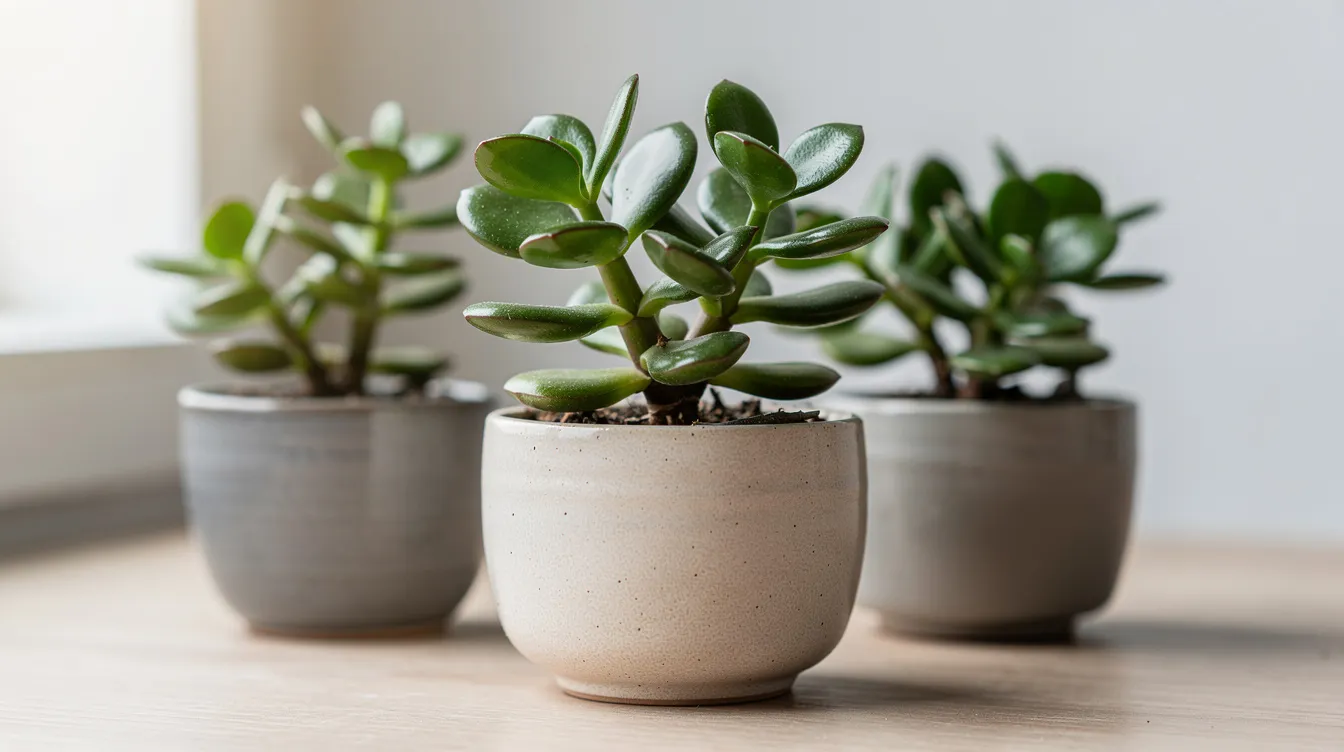
Jade plants (Crassula ovata) develop thick trunks, glossy oval leaves, and a branching structure that looks like a miniature tree. Dwarf cultivars like “Crosby’s Compact” stay under 12 inches indoors for years. Miniature trees and shrubs can add height to a fairy garden, and a single jade plant anchors the whole scene with a focal point that reads as a charming canopy.
Why It Stands Out
No other small plant mimics the look of a real tree this convincingly. The thick, woody stem and branching crown give a fairy garden vertical structure that flat ground covers cannot provide.
Best For
Indoor fairy gardens, sunny windows, and year-round small-space gardening. Jade plants have been documented living for decades with basic care.
Key Strengths
- Prunable to any shape or size
- Needs water only when topsoil dries completely
- Slow growth means infrequent repotting
Possible Limitations
- Cold sensitive; keep above 50°F and away from drafty windows in winter
- Becomes leggy in low light; needs 4 to 6 hours of direct sun
- Mildly toxic to pets if ingested
4. Creeping Thyme
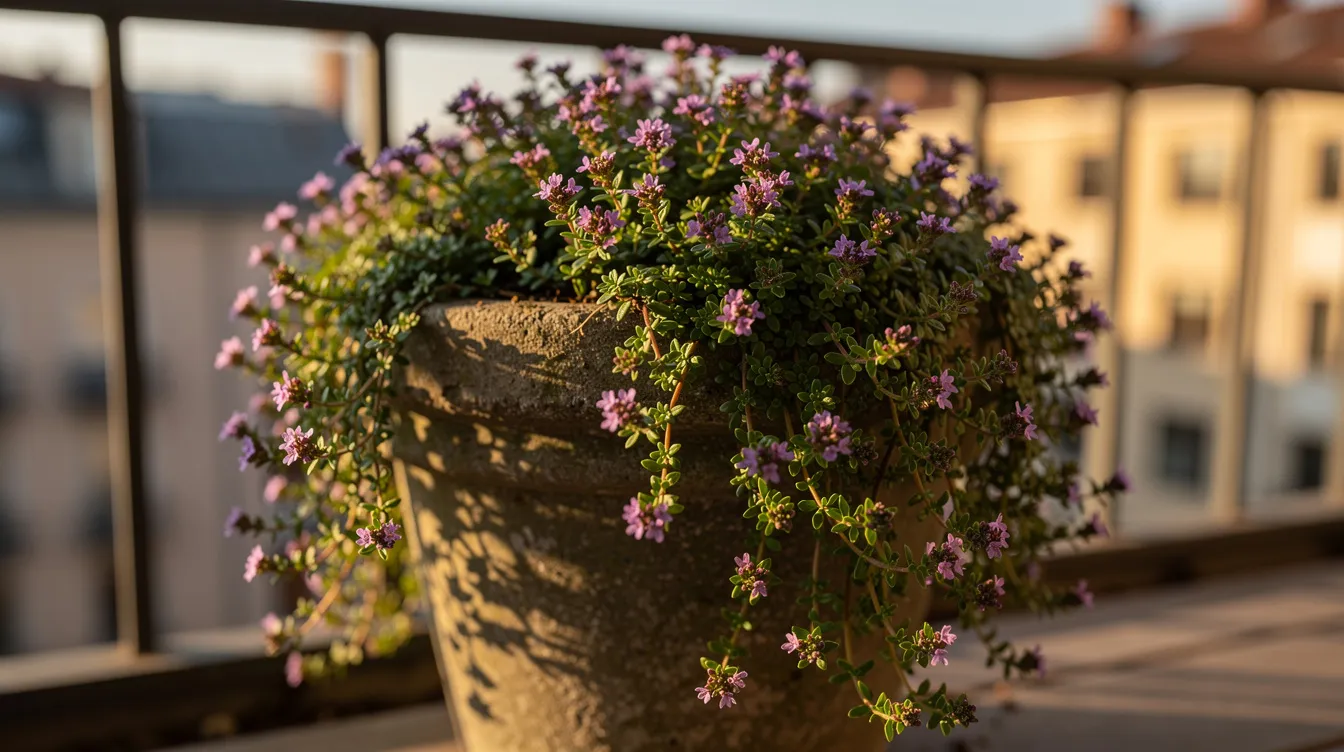
Creeping thyme (Thymus spp.) reaches 1 to 4 inches tall and spreads 12 to 18 inches wide. Creeping thyme sprouts cute purple flowers for fairy gardens, and butterflies love creeping thyme’s purple flowers. Beyond beauty, the foliage is edible and aromatic.
Why It Stands Out
Fragrance, flowers, and ground cover from one plant. Creeping thyme attracts butterflies and has purple flowers that add pink and purple tones to an outdoor fairy scene without needing a separate flowering plant.
Best For
Outdoor balcony gardens in sunny locations, small patios, and herb-loving fairy gardeners who want dual-purpose plants. Hardy in USDA Zones 4 through 9.
Key Strengths
- Edible leaves for cooking; aromatic when brushed
- Attracts pollinators to small outdoor spaces
- Drought tolerant once established
Possible Limitations
- Spreads beyond boundaries in permanent outdoor plantings without containment
- Requires full sun; becomes sparse and leggy in shade
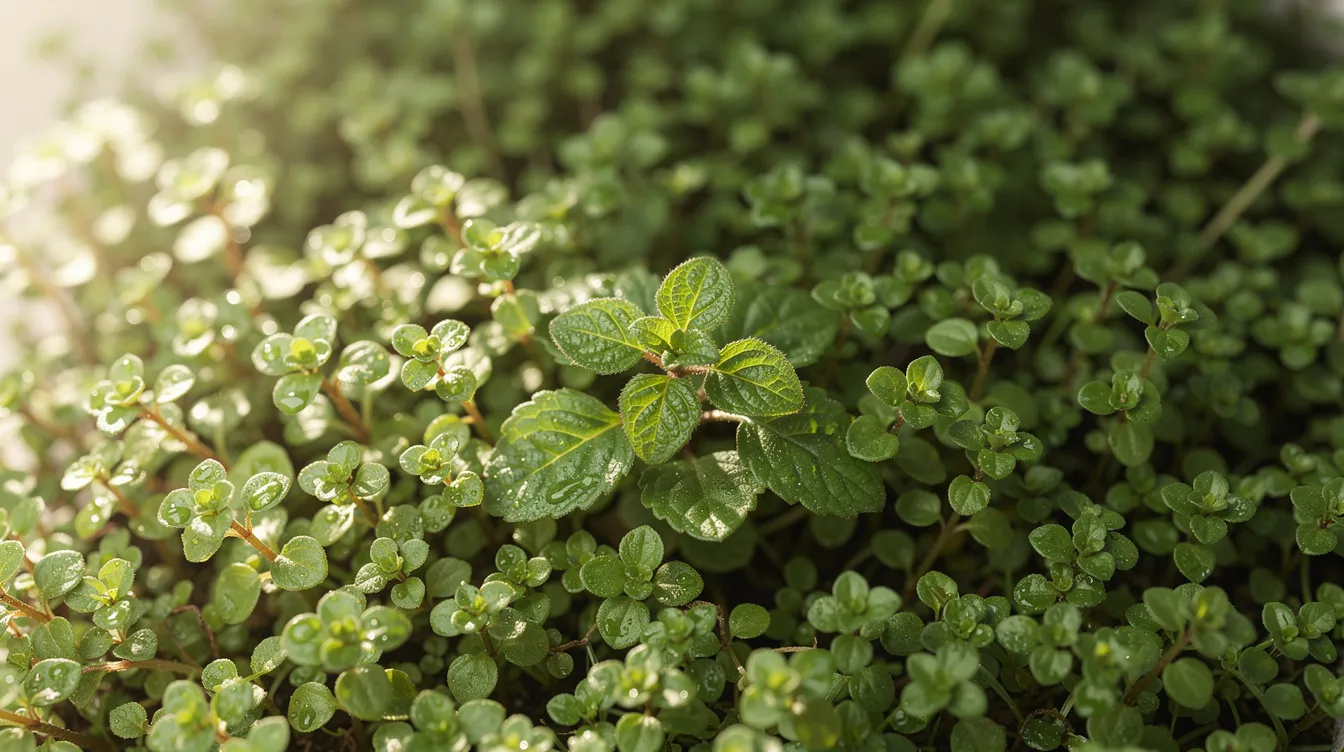
5. Baby Tears
Baby’s tears (Soleirolia soleirolii) features a delicate mat of tiny leaves perfect for miniature gardens. The plant stays 1 to 2 inches tall and spreads via creeping stems, filling containers in weeks. It needs humidity between 60 and 80 percent and daytime temperatures around 60 to 65°F.
Why It Stands Out
No plant fills a terrarium floor faster or more densely. The fine-textured, bright green carpet looks like an exotic miniature meadow within days of planting.
Best For
Terrarium fairy gardens, humid small spaces, and shade-heavy apartments. Glass containers help maintain the moisture these plants demand.
Key Strengths
- Rapid coverage in terrariums and enclosed containers
- Thrives under fluorescent or LED grow lights
- Dense growth creates a beautiful forest-floor effect
Possible Limitations
- Invasive creeping stems escape open containers if not trimmed
- Dries out and deteriorates rapidly in low humidity or dry HVAC environments
6. Miniature Hostas
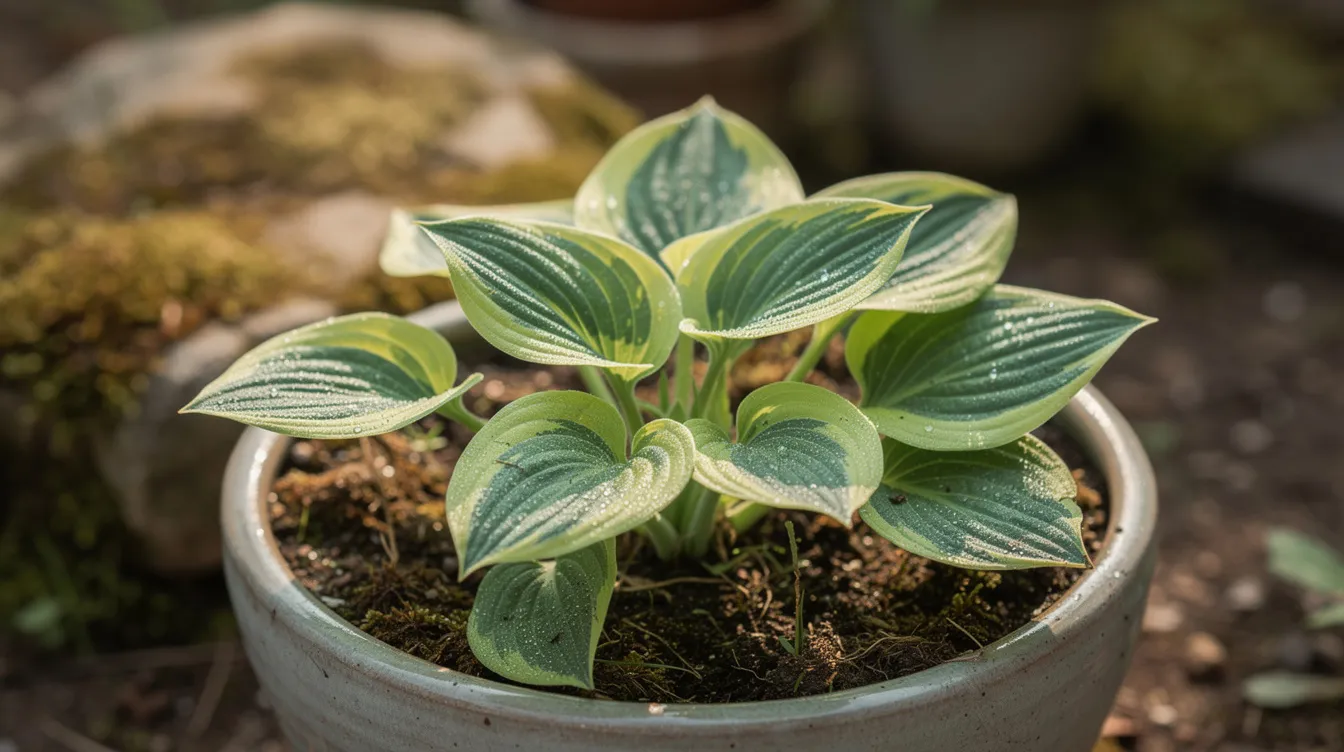
Dwarf hosta cultivars like “Blue Mouse Ears” and “Pandora’s Box” stay 4 to 10 inches wide with leaves only a couple of inches long. They prefer shade to part shade, making them one of the few fairy garden plants that actually perform in low-light conditions.
Why It Stands Out
Hostas deliver substantial foliage impact; variegated whites, golds, and blues; in spots where most other plants on this list would fail. Keeping plants at different heights enhances the visual appeal of miniature landscapes, and a small hosta next to a ground cover like Irish moss creates immediate depth.
Best For
Shaded balconies, north-facing small patios, and seasonal outdoor containers. These are dwarf plants bred for compact spaces.
Key Strengths
- Thrives in low light common in small homes
- Returns each growing season outdoors
- Wide variety of leaf colors and patterns
Possible Limitations
- Goes dormant in winter, reducing visual interest for several months
- Susceptible to slugs and snails outdoors
Quick Comparison of the Best Small-Home Fairy Garden Plants
Plant | Height | Light | Water Needs | Best Setting |
|---|---|---|---|---|
Hen and Chicks | 1–4 in. | Full sun | Low | Sunny windowsill |
Irish Moss | ~1 in. | Shade to partial sun | Moderate–high | Shaded containers |
Mini Jade | Up to 12 in. | Bright direct sun | Low | Indoor pot |
Creeping Thyme | 1–4 in. | Full sun | Low | Outdoor balcony |
Baby Tears | 1–2 in. | Indirect light | High | Terrariums |
Mini Hostas | 4–10 in. | Shade | Moderate | Shaded patio |
Beyond this list, other garden plants work at fairy scale. Marigolds repel plant-eating bugs and attract pollinators. Sedum is a low-maintenance plant ideal for fairy gardens alongside succulents. Petunias are reliable and hearty for novice fairy gardeners. Cosmos are low-maintenance and attract pollinators to outdoor containers.
How to Choose the Right Fairy Garden Plants for Your Small Home
Choose Based on Light Conditions
Selecting plants that tolerate indoor light is crucial for indoor fairy gardens. Measure your available sun: south-facing windows provide 4 to 6 hours of direct light, enough for hen and chicks, jade, and creeping thyme. North-facing rooms or shaded patios call for hostas, Irish moss, or baby tears. Polka dot plants bring colorful foliage to indoor fairy gardens and tolerate moderate light. Lavender is loved by butterflies and other pollinators in sunny locations but needs at least 6 hours of direct sun.
Choose Based on Indoor vs. Outdoor Space
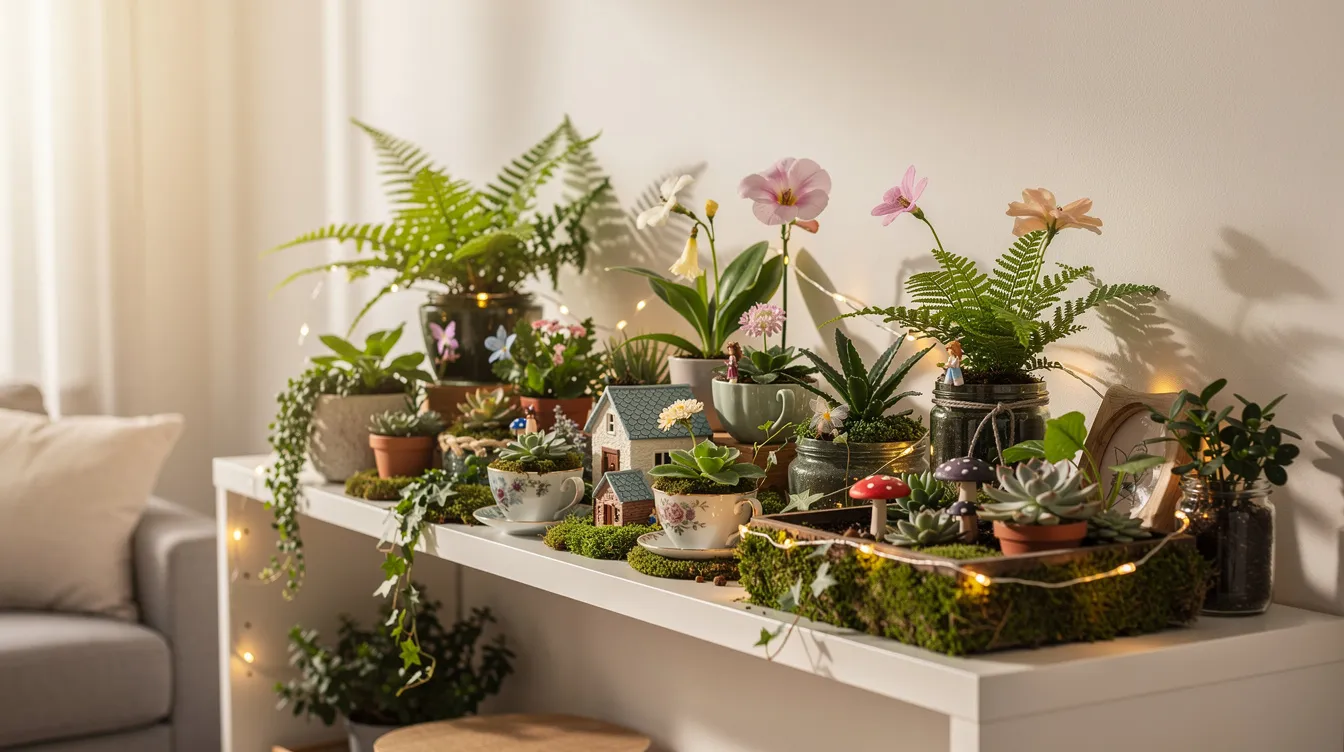
Indoor miniature gardens favor jade plants, baby tears in terrariums, and succulents on bright sills. Outdoor spaces open up options: miniature ivy varieties can be trained to climb or left to trail in fairy gardens on a balcony. California poppies are deer resistant and loved by pollinators for outdoor fairy beds. Dwarf rosemary is an excellent aromatic option for fairy gardens placed outside in full sun. Miniature daisies are adorable and easy to grow in outdoor containers. For more outdoor ideas, check out 50 Creative Tiny Gardens Ideas for Small Spaces.
Choose Based on Maintenance Level
Avoid mixing plants with dramatically different watering needs in fairy gardens; a jade plant and baby tears in the same pot will end with one of them dead. Group succulents together in one container and moisture-loving plants in another. Marigolds require little maintenance and add yellow flowers to outdoor setups. Petunias are hardy and easy to grow for beginners. Miniature ivy is great for small spaces and containers with minimal fuss. For more flowering options suited to tiny homes, see 15 Lovely Flowering Plants Suited For Tiny Homes.
Which Fairy Garden Plants Are Best for You?
- Choose Hen and Chicks if you have sunny windows and want to water once every two weeks at most
- Choose Irish Moss if you have a shaded outdoor nook and want a white-flower-dotted green carpet
- Choose Mini Jade if you want a year-round indoor fairy garden with a tree-like centerpiece
- Choose Creeping Thyme if you want fragrant, edible plants for outdoor small spaces with tall sun exposure
- Choose Baby Tears if you are building a terrarium or live in a naturally humid place
- Choose Miniature Hostas if your outdoor space gets limited sun and you want bold foliage in shades of blue, gold, or heart-shaped green
Begonias, ferns, and dwarf conifers also work in fairy scenes if your conditions match their needs. Send your fairy friends off to a good start by picking plants that match your actual light and moisture, not the ones that look best on the page.
Final Thoughts
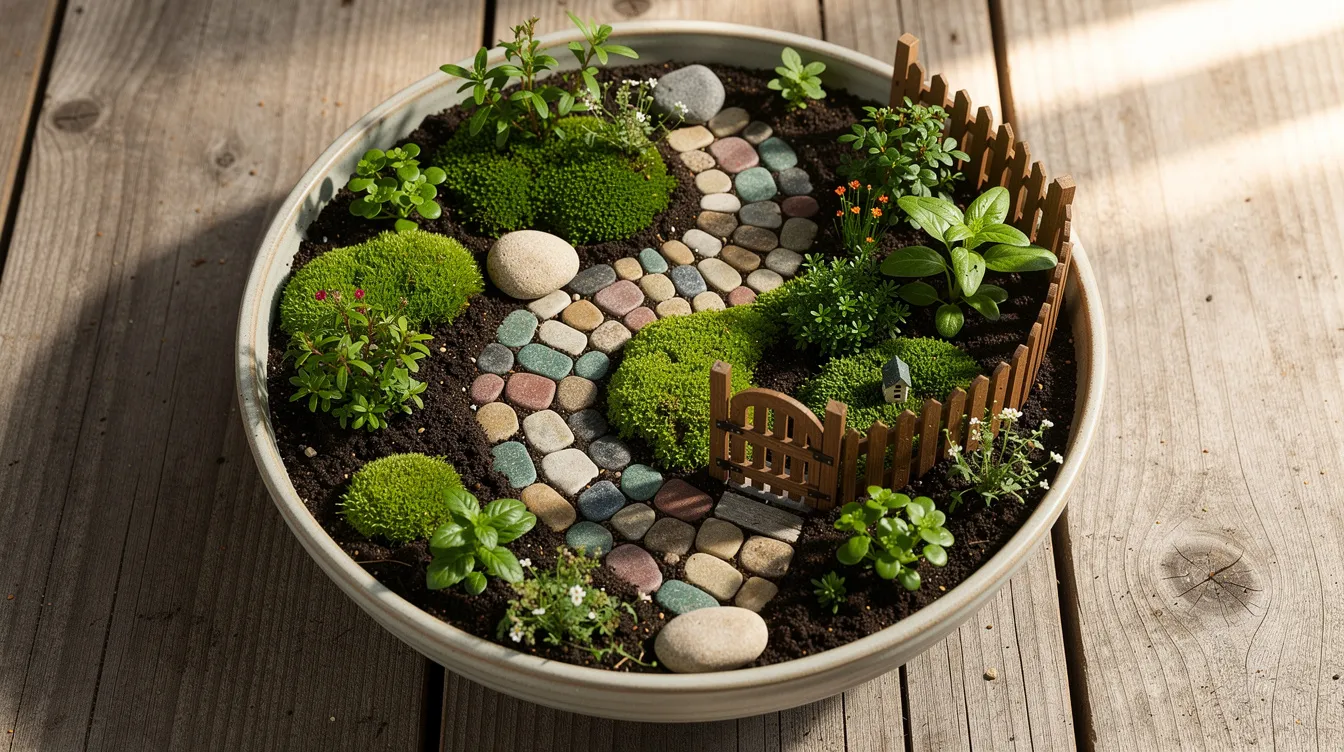
A fairy garden does not require a yard, a raised bed, or even a balcony. A single pot with drainage, the right plants, and a few rocks or miniature structures is enough to build a scene where tiny fairies could live. The best fairy garden plants for your place depend on your specific conditions: light, humidity, temperature, and how much time you can spend watering.
Start with one or two plants from this list that match your space. Add a small accessory; a fairy house tucked behind a jade plant or a pebble path through Irish moss. Expand as your confidence grows. For more inspiration on making the most of limited square footage, explore Top 20 Small Japanese Garden Designs for Tranquil Outdoor Spaces on our website. Find what works, select what fits, and enjoy the process of building something beautiful in a small place.