

If you’re planning a tiny house build in 2026, plumbing is one of the line items that can quietly balloon your budget or stay remarkably lean depending on the choices you make. Here’s what the real numbers look like.
Key Takeaways
- Plumbing for a tiny house typically costs between $1,000 and $7,000 for in-house work only. When you add hookups, a septic system, or off grid water solutions, the total cost can climb to $4,000–$18,000 or more.
- The biggest price swings come from whether the tiny home is on wheels or sits on a permanent foundation, and whether it connects to city sewer and water or relies on off grid infrastructure.
- A practical rule of thumb: budget $4 to $7 per square foot of finished square footage for basic plumbing lines and fixtures inside the house, not counting site work.
- Plumbing materials should represent about 5 to 10 percent of the total tiny house budget to keep spending balanced across the build.
- Off grid systems like composting toilets, rainwater catchment, and solar-powered pumps often cost more up front but lower monthly utility bills and make rural areas usable for tiny house living.
What Does “Plumbing a Tiny House” Actually Include?
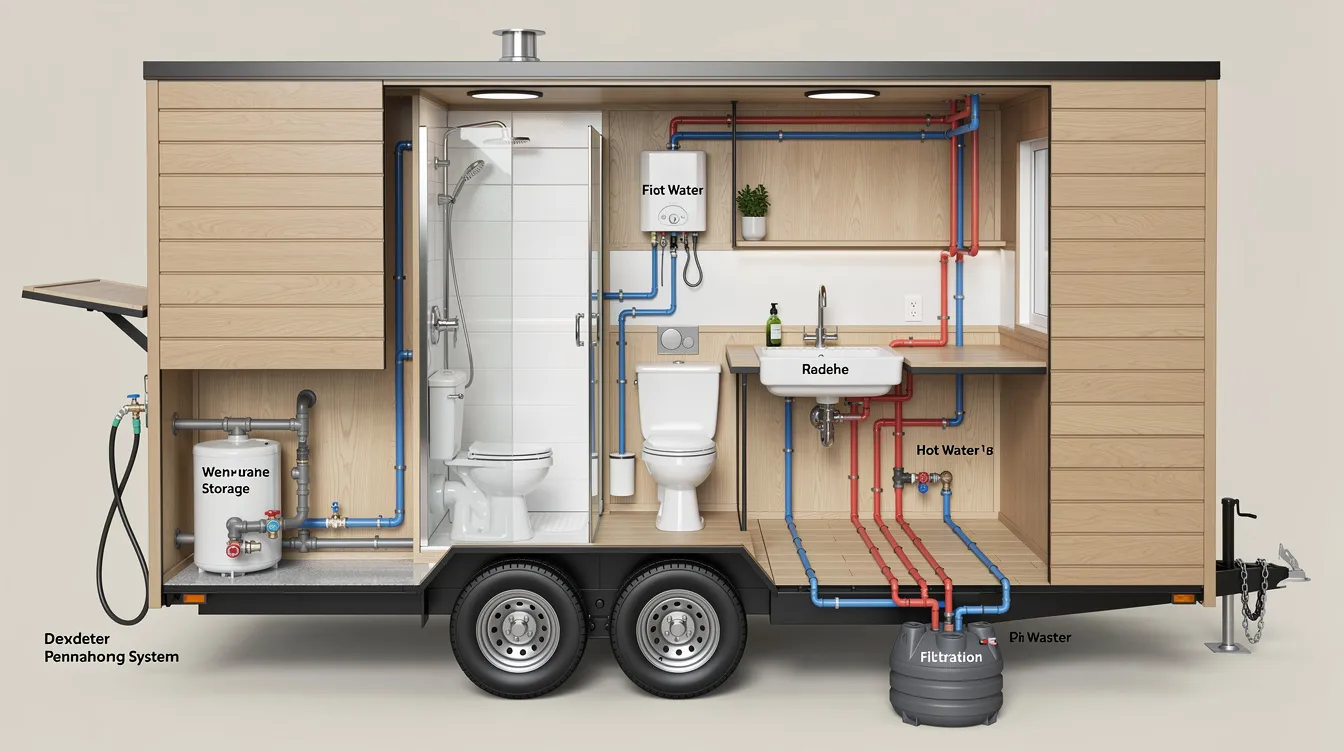
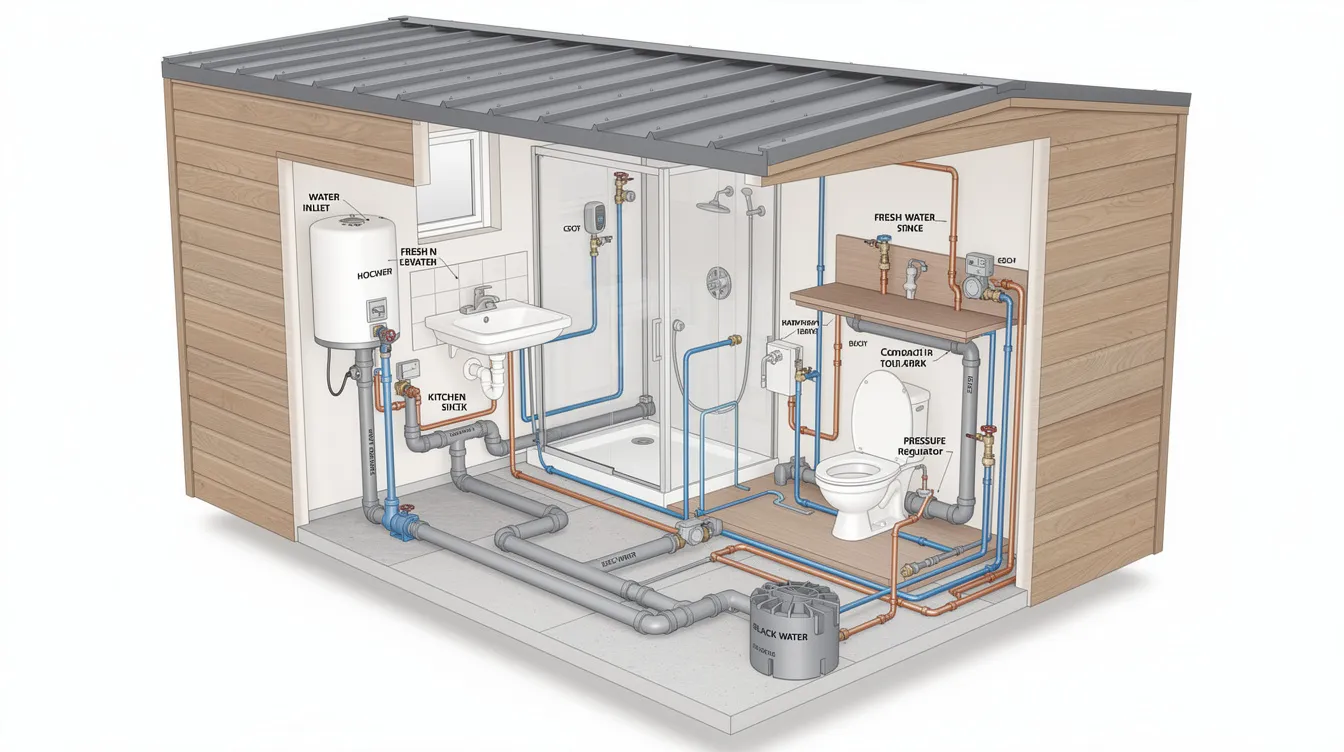
When people ask about tiny home plumbing costs, they’re usually talking about everything inside the shell: cold water and hot water supply lines, drain/waste/vent pipes, fixtures like a kitchen sink, shower, bathroom sink, and toilet, plus a water heater. That’s “in-house” plumbing.
Site utilities are a separate bucket entirely. This covers the water main or well connection, sewer hookup or septic system, trenching, frost-proof hose bibs, and any pumps or pressure tanks outside the structure.
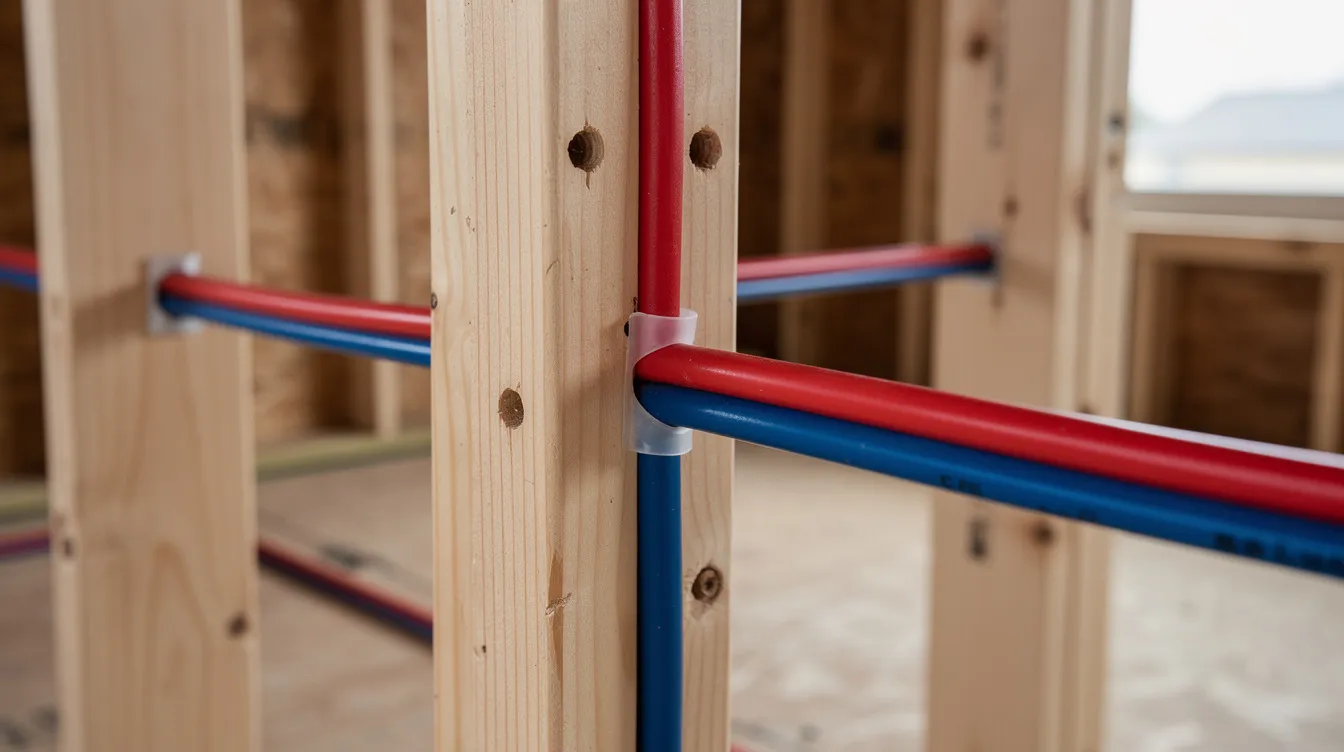
The distinction matters because a tiny home on wheels uses plumbing more similar to what you’d find in rv parks: flexible PEX lines, quick-disconnect fittings, compact fixtures, and shorter drain lines. A tiny house on a permanent foundation is treated like a small traditional home under building codes, often requiring full-size drains, vent stacks through the roof, and standard residential fixtures.
Permit and inspection requirements vary depending on location. Some states classify a house on wheels as an RV, while permanently installed tiny houses must meet local residential code and IRC Appendix Q. Zoning laws and building codes dictate whether you need a plumbing permit, rough-in inspection, and final pressure test.
Typical Tiny House Plumbing Cost Range in 2026
For a 150–400 square foot tiny house, plumbing installation costs for tiny homes range from $2,000 to $6,000 when you include rough-in, fixtures, and a water heater with professional labor. DIY plumbing can start around $1,180 for tiny homes when you handle the installation yourself with basic fixtures.
A mid-range real-world example: a 240 square foot tiny house with one full bathroom and a basic kitchen paying roughly $3,000 to $5,000 for professional plumbing, including a standard electric or propane water heater. High-end plumbing installations can exceed $4,000 in tiny homes when you choose premium fixtures, dual sinks, or a washer/dryer hookup.
On a per square foot basis, fully installed in-house plumbing typically falls in the $4 to $7 range when labor and fixtures are included. That means a 200 square foot build might allocate $800–$1,400 for materials alone, doubling once you factor in labor and finishes.
The number that catches people off guard is site work. Trenching, tying into city water and sewer, or installing a small septic system typically adds $2,000 to $13,000+ in 2026. Plumbing costs can add $10,000 or more to a tiny home budget when sewer connections are involved, and that’s before you touch the electrical installation, which averages between $3,000 and $10,000 for tiny homes.
Key Factors That Affect Tiny House Plumbing Cost
Tiny houses can be inexpensive to plumb, but several design and location choices quickly push the total cost up or down.
Square footage and layout complexity are the first drivers. A simple 160 square foot studio with all fixtures clustered on one wall needs fewer pipes, a single DWV stack, and less labor. A 400 square foot layout with a bathroom on one end and a kitchen on the other requires longer runs, more fittings, and significantly more money.
Fixture count and type matter just as much. Adding a separate tub plus shower, luxury faucets, or a washer/dryer combo can raise plumbing costs by several thousand dollars compared to a minimalist setup with one sink, one shower, and a composting toilet.
Labor rates in 2026 vary depending on where you build. Typical U.S. residential plumber rates run $75–$130 per hour, climbing to $150–$200 in high-cost states like California or the pacific northwest. In the Midwest and South, rates often fall to $45–$90 per hour. Labor for professional plumbing installation typically costs between $500 and $3,000 total for a tiny house project.
Location-specific extras also add up. Freeze protection in cold climates (heat tape, deeper bury depth, interior shutoffs) and corrosion-resistant materials in coastal areas both increase the price of putting plumbing into a tiny house. Utility installation costs can vary significantly by location and complexity.
Plumbing Cost by Tiny House Type and Square Footage
Plumbing cost is strongly linked to both the home’s size and whether the house sits on a chassis or a permanent foundation.
Size Range | Typical Interior Plumbing Cost |
|---|---|
120–160 sq ft micro tiny home | $1,200–$3,000 |
200–300 sq ft standard tiny home | $2,500–$5,500 |
350–400 sq ft larger tiny home | $4,000–$7,000 |
A tiny home on wheels often uses more compact, RV-style fixtures and flexible PEX, which can lower material costs. However, the specialized labor familiar with mobile systems and the tight space for routing pipes can push workmanship costs higher per fixture. |
Tiny houses on a permanent foundation face slightly higher plumbing costs per square foot when local code requires full-size drain lines, vent stacks through the roof, and standard-sized fixtures. These are treated more like a larger home or accessory dwelling units under residential code.
Builders often include a plumbing cost allowance when quoting a per square foot price. A custom tiny house cost of $250–$350 per square foot typically allocates $15–$30 per square foot toward plumbing and basic utilities, meaning a 300 square foot build might carry a $4,500–$9,000 plumbing budget including site work. Tiny home prices vary depending on how much of this you handle yourself versus outsourcing to a general contractor.
Off-Grid vs. On-Grid: Septic Systems, Composting Toilets, and Utilities
Where the tiny home is parked and whether it’s off grid massively changes plumbing cost. If there’s no city sewer or water main available on the property, your budget shifts toward self-contained systems and other off grid sanitation ideas.
Municipal hookups in 2026: water service lines run roughly $32–$55 per linear foot, sewer lines cost $40–$180 per linear foot, and tap fees plus permits can bring a basic sewer hookup to $3,000–$10,000. Cost for municipal water and sewer hookups varies depending on distance and local fees. Adding a sewer connection can cost about $10,250 in many jurisdictions, and tiny home plumbing can add over $10,000 if sewer connections are needed.
Septic system pricing scaled to tiny homes: small conventional systems still run $3,500–$8,500 installed because tanks and drain fields have minimum sizes set by code. Tiny house septic options for sustainable living span from compact conventional systems to more advanced treatment units, and installation costs range from a few thousand to several thousand dollars depending on soil and regulatory environment.
Composting toilets offer an alternative at $1,000–$3,000 per unit. Composting toilets for tiny houses reduce water usage significantly and convert waste into compost, reducing odors. Choosing a composting toilet can save on ongoing sewage fees by eliminating the need for a flush system entirely. Code acceptance varies, so check local zoning laws before committing.
Tiny homes can also utilize rainwater harvesting systems for water supply. Small rainwater capture setups with filtration run $200–$2,500, while well drilling with a pressure tank and pump can add several thousand dollars. Energy efficiency improves when you pair these with solar-powered pumps or natural gas heating systems.
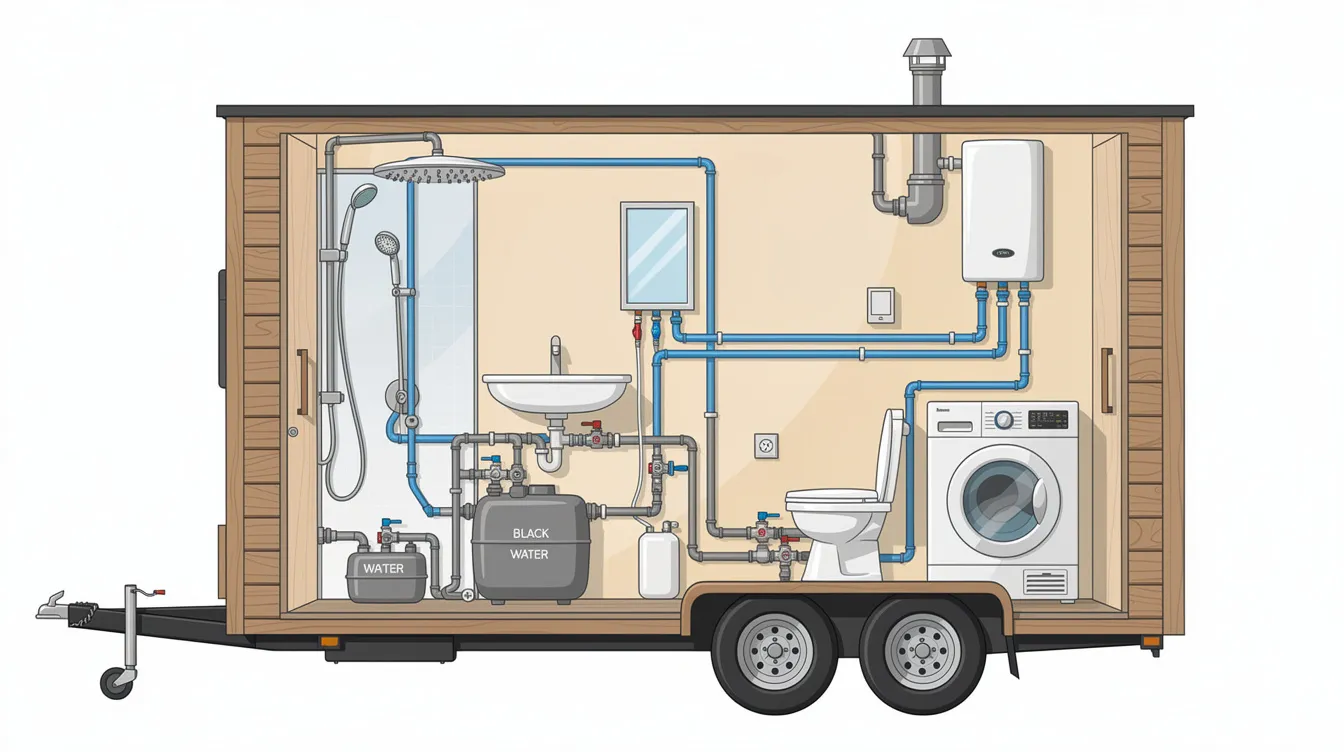
Materials, Water Heaters, and Cost-Saving Design Choices
The choice of pipe materials, water heater type, and layout efficiency often matters more in a tiny house than raw square footage.
Pipe options and 2026 prices:
Material | Cost per Linear Foot | Best For |
|---|---|---|
PEX (A or B) | $0.50–$2.00 | Supply lines (most popular) |
CPVC / PVC | $0.50–$3.00 | Drains, vents |
Copper (Type L/M) | $2.00–$10.00 | Where required by code |
Pipes made from flexible PEX tubing is the most affordable choice and the go-to for most tiny home owners because it’s easy to route through tight spaces and tolerates freezing better than rigid pipes. |
Water heaters represent a significant decision. Water heater costs can range from $350 to $2,600. The best water heaters for tiny houses often include tankless units ($600–$2,600 installed) that save space and pair well with solar panels or propane, making them cost effective for off grid builds. Small tank-style heaters of 20–40 gallons ($350–$900 installed) work well when electricity or natural gas is available and daily water usage is predictable.
Cost-saving design tips: cluster kitchen and bathroom back-to-back to minimize plumbing walls, choose a single multi-function shower instead of a separate tub and shower, and size the water heater based on realistic daily use. Off grid tiny home owners should consider low-flow fixtures and greywater-friendly soaps so drainage fields stay simpler and cheaper, and explore grey water system options for tiny houses that meet local regulations. Installing solar panels alongside your plumbing system lets you run an electric tankless heater without relying on propane, improving long-term energy efficiency.
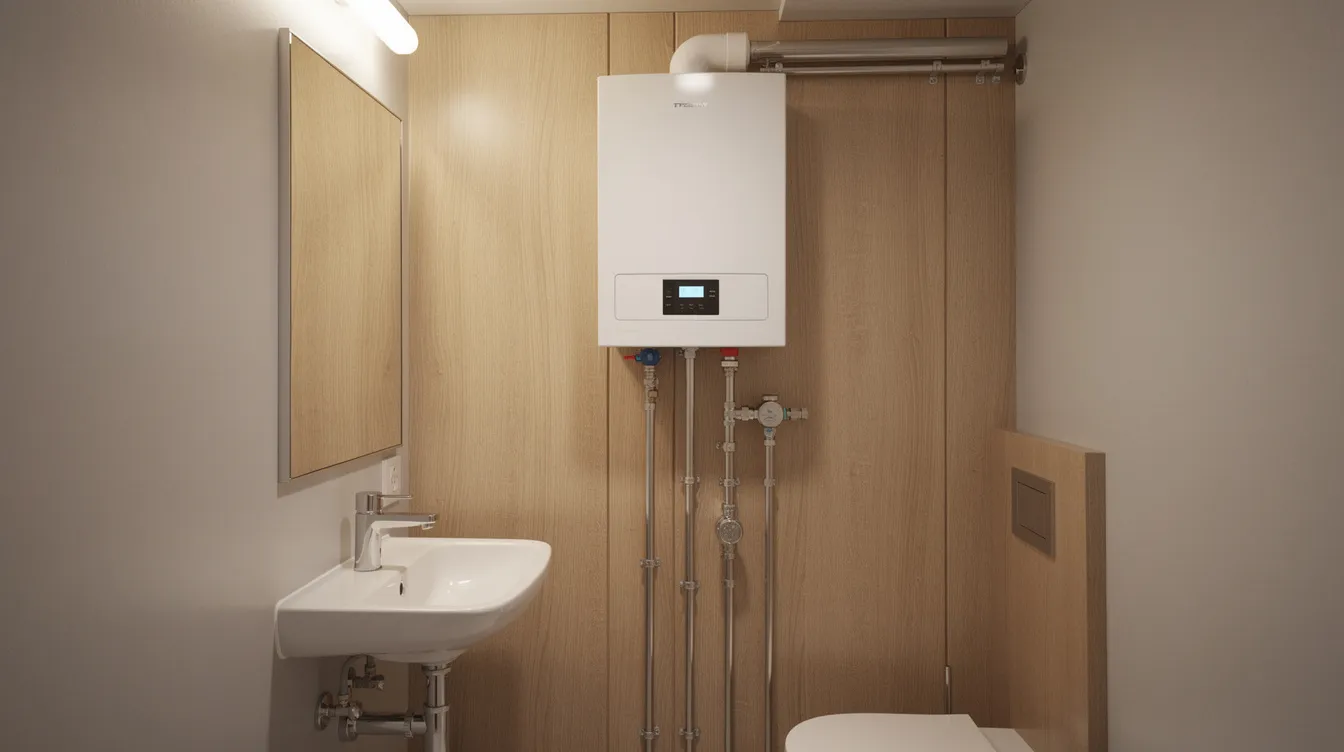
Budgeting, Permits, and When to Hire a Pro vs. DIY
A realistic plumbing budget for a tiny house should be its own line item, separate from general per square foot building estimates. The total cost depends on how you split materials, labor, and site work.
Budget structure for a 250–300 square foot build in 2026:
- Materials (pipes, fittings, fixtures, appliances): $1,000–$2,000
- Labor (rough-in through fixture install): $1,000–$3,000
- Site work (utilities, septic system, or city hookups): $2,000–$10,000+
- Permits: $50–$2,000 depending on your city and state
Permits can add $50 to $2,000 to utility installation costs, so factor them in early. Key inspection steps include a plumbing permit application, rough-in inspection before walls are closed, and final inspection for fixtures and pressure tests.
For DIY, handy tiny house owners can safely handle layout planning, fixture shopping, and basic PEX runs. But you should hire a licensed plumber for main water lines and sewer connections, gas lines, and any work that must pass code inspection. If you’re financing your build with an rv loan or a new home construction loan, lenders may require licensed installation.
Before signing any contract, gather at least three quotes, ask whether the bid includes the water heater and septic or just in-house lines, confirm warranty terms, and check for travel charges to rural sites. Compare how each bid handles electrical systems and site preparation so you’re not surprised by the average cost once work begins. Putting this level of detail into your budget saves money and headaches on every property.
FAQ: Tiny House Plumbing Costs in 2026
Below are common questions that cover maintenance, retrofits, and special scenarios not fully addressed above.
Does tiny house plumbing need to be winterized every year?
Tiny houses in freezing climates often require winterizing if they’re on wheels or use above-ground hoses and tanks. Steps include draining exterior water lines, applying heat tape to supply hoses, insulating exposed PEX, and adding RV antifreeze to traps if the house will sit vacant. Annual maintenance for tiny house plumbing costs between $100 and $500, with winterizing supplies making up part of that range. Tiny homes on a permanent foundation with buried lines below frost depth usually only need standard residential freeze precautions, not full seasonal winterization.
Can I add full plumbing later if I start with a composting toilet?
Yes. Many tiny house owners begin with composting toilets and minimal plumbing, then later upgrade to a full bathroom with a flush toilet and shower. The cheapest approach is to rough-in future drain and vent paths during the initial build, even if you don’t install fixtures yet. Retrofitting a drain line and vent stack into an existing finished tiny house can add $1,000 or more in demolition and repair costs compared to planning ahead. If you’re building on land you own, this phased approach keeps your initial budget lean while preserving room for a future upgrade.
How does going off grid with solar panels affect plumbing costs?
Solar panels themselves don’t change pipe prices, but they affect how you heat water and pump it, which impacts plumbing design. Off grid solar systems may require smaller, highly efficient electric or propane water heaters, low-flow fixtures, and possibly a DC pump for well or rainwater systems. Adding a solar-ready electric tankless heater or efficient pump setup usually adds several hundred to a couple thousand dollars to the combined plumbing and electrical budget. Plumbing maintenance costs for grid-connected tiny houses typically fall between $200 and $600 annually, while off grid setups may run slightly less on utilities but more on equipment upkeep.
Is it cheaper to plumb a bus conversion or van than a tiny house on a trailer?
Bus and van conversions often use even more compact RV fixtures and shorter plumbing runs, so basic materials may cost less than a larger 300–400 square foot tiny house. However, labor can be more specialized and cramped, and many conversions require custom greywater and fresh water tanks, which can push total plumbing cost into a similar $1,500–$5,000 range. Code rules differ: buses and vans are usually regulated as vehicles, not houses, changing inspection requirements but not the need for safe, leak-free plumbing throughout the space.
How long does tiny house plumbing typically last?
Properly installed PEX supply lines can last 25–50 years, while copper typically lasts 50–70 years. PVC and ABS drain lines hold up for decades when installation is done correctly. The most common replacements are faucets, shower valves, and water heaters, which usually wear out in 8–15 years depending on water quality and heating demands. For a tiny home on wheels, annual inspections of flexible connections, hose attachments, and under-sink fittings are recommended, as road vibration can loosen joints faster than in a fixed new home.