
Living in a tiny home means every inch of space matters, and finding greenery that actually works in low light situations with small pots can feel like a puzzle. The good news: low-light plants can thrive in small pots and dim environments, and compact plants are ideal for tiny homes with limited space. Whether your room gets barely any natural light or you only have a small shelf to spare, the right houseplants can brighten even the darkest corner.
Here are seven plants selected for their ability to survive low light, stay compact in 4-6 inch pots, and tolerate the kind of neglect that busy plant parents often dish out.
How We Chose the Best Low Light Plants for Tiny Homes
Every plant on this list was evaluated against six criteria designed specifically for tiny home living:
- Low light tolerance – thrives in 25-75 foot-candles, the range NC State Extension classifies as low light for maintenance
- Compact size – stays manageable in pots 4-6 inches in diameter
- Low maintenance – requires minimal daily care and infrequent watering
- Air purifying qualities – helps reduce VOCs in small enclosed spaces
- Slow growth rate – won’t quickly outgrow its allocated space
- Durability – tolerates occasional neglect and temperature fluctuations
Watering frequency should be adjusted based on light availability, since lower light conditions mean soil stays moist longer and root rot becomes a real risk.
Top 7 Low Light Indoor Plants for Small Pots in Tiny Homes
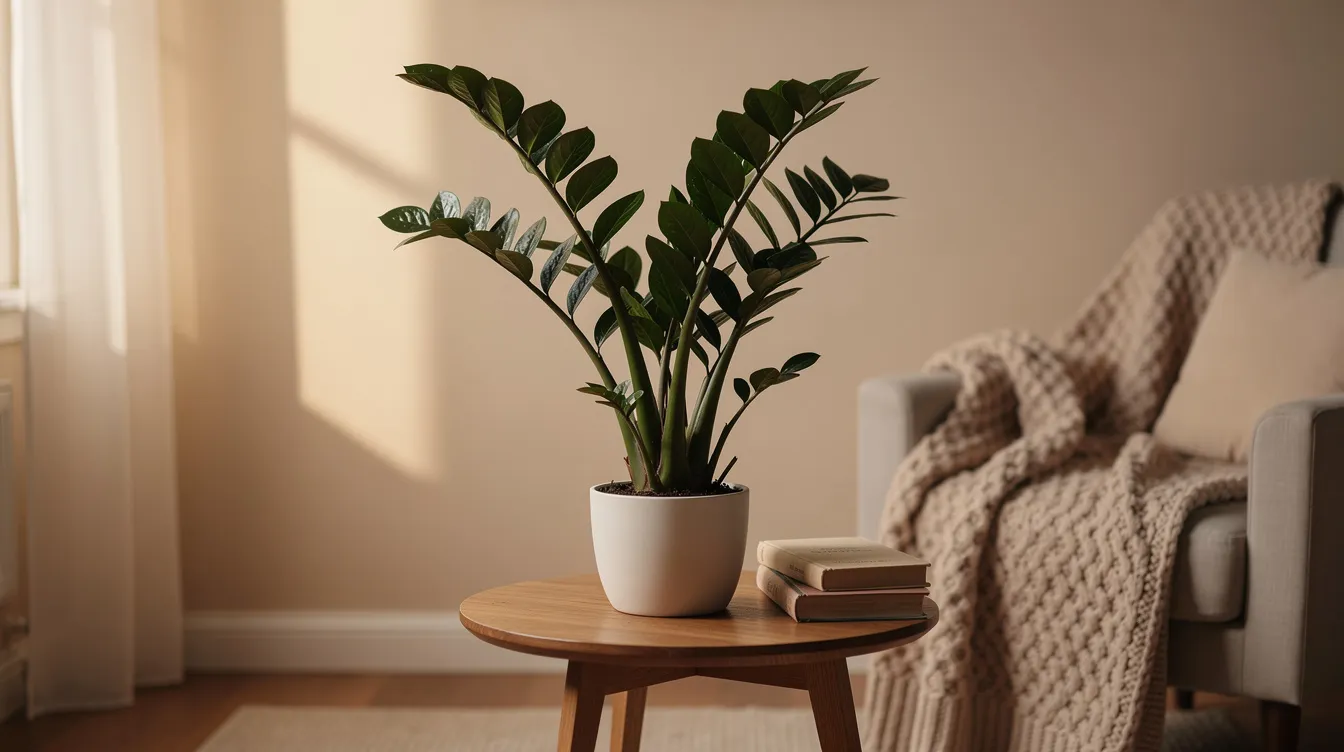
1. ZZ Plant (Zamioculcas zamiifolia)
The ZZ plant features glossy dark green leaves on upright stems with water-storing rhizomes that make it incredibly drought tolerant. ZZ plants can survive in complete darkness and grow on artificial plant light alone.
- Why It Stands Out: Super easy care – water monthly, ignore confidently
- Best For: Tiny home beginners who want foolproof greenery
- Key Strengths: ZZ plants can grow 2 to 4 feet tall over many years, but in a small pot they stay compact for a long time. They thrive indoors under fluorescent lighting and tolerate neglect beautifully.
- Possible Limitations: Very slow growth rate. All parts are toxic to pets if ingested.
2. Snake Plant (Sansevieria trifasciata)
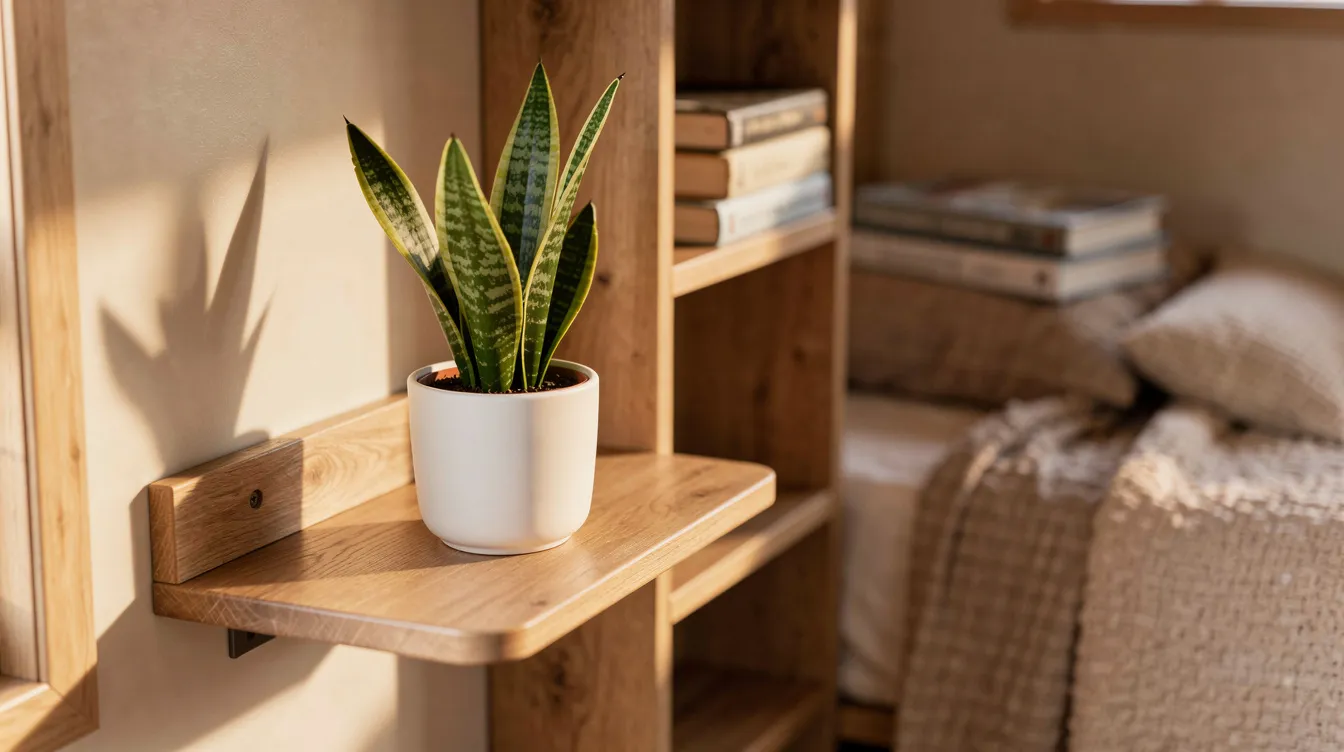
Also called mother-in-law’s tongue, the snake plant has upright sword-like leaves with an architectural appeal that saves floor space. Snake plants tolerate low light and can grow for years without complaint.
- Why It Stands Out: Releases oxygen at night and is an excellent air purifier that removes formaldehyde and benzene
- Best For: Tiny homes with poor air circulation or bedroom placement
- Key Strengths: Dwarf snake plants are tolerant of low light and infrequent watering, and snake plants can stay under 12 inches in height. They tolerate being root-bound for years, so repotting is rare. Choose varieties like ‘Hahnii’ for the smallest footprint.
- Possible Limitations: Overwatering causes rot. Sharp leaf edges can catch you in tight small spaces.
3. Pothos (Epipremnum aureum)
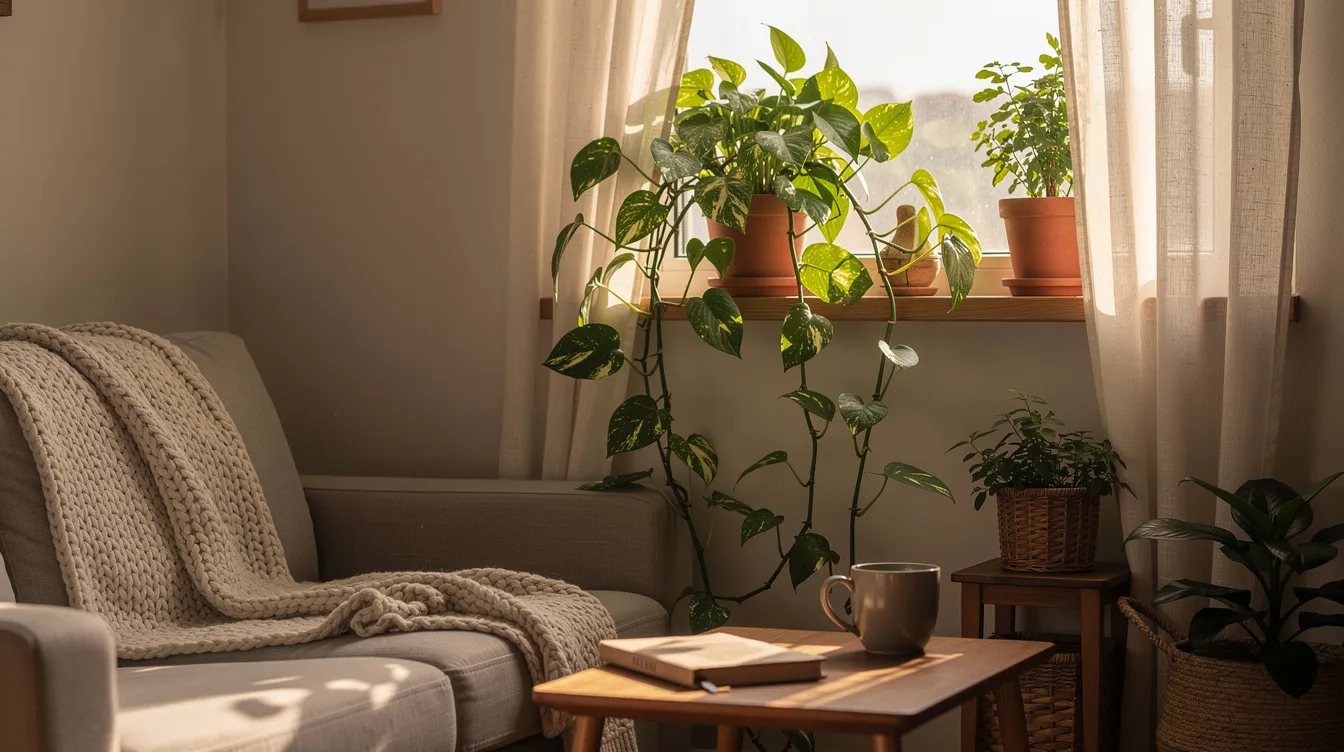
Golden pothos produces heart-shaped green leaves on trailing vines that cascade from hanging baskets or climb supports. Sometimes called the money plant, it’s one of the best indoor plants for versatility.
- Why It Stands Out: Fastest growing option you can shape, prune, and propagate easily
- Best For: Adding vertical greenery with wall-mounted planters or hanging from a shelf
- Key Strengths: Golden pothos can thrive in complete shade or bright light. Trailing stems save counter space and the plant propagates from cuttings in water.
- Possible Limitations: Needs regular pruning to prevent legginess. In very low light, internodes lengthen and new leaves come in smaller. Can burn in direct sun.
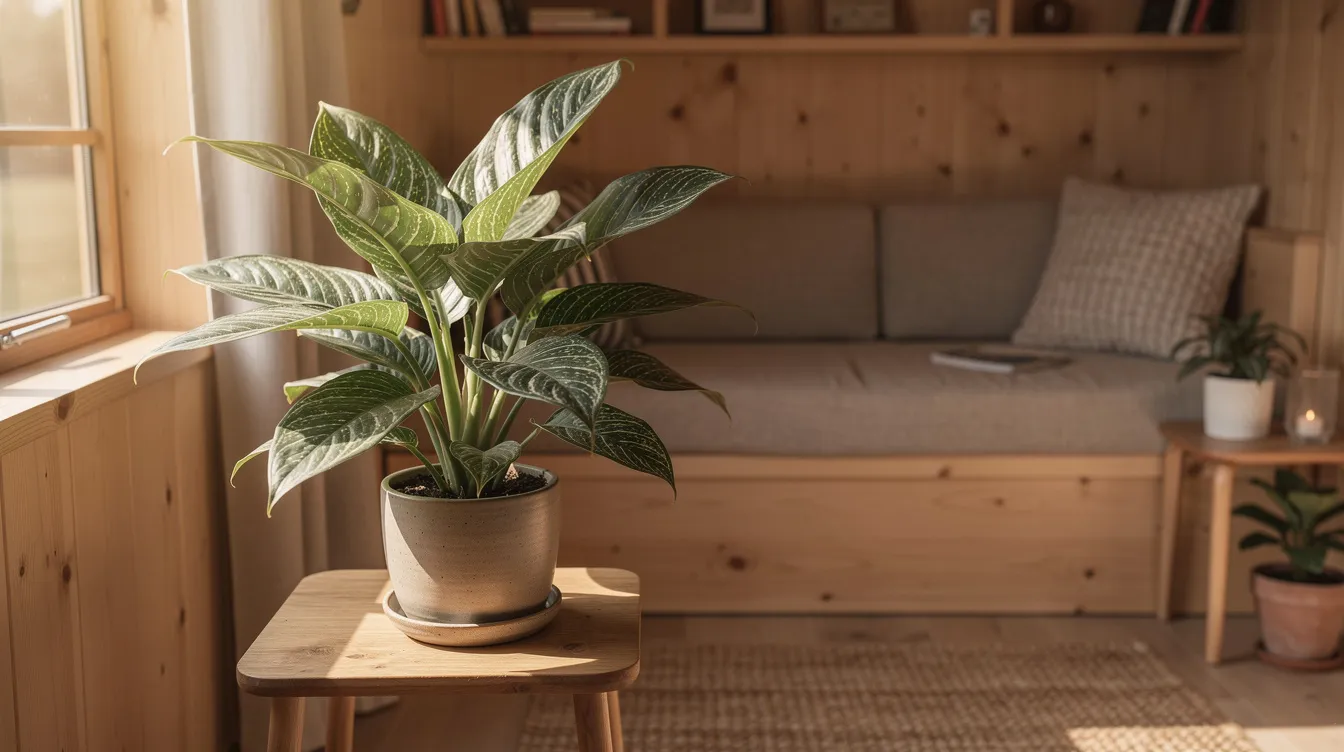
4. Chinese Evergreen (Aglaonema)
The chinese evergreen offers colorful patterned leaves in silver, pink, and red – even in shade. With over 26 species native to tropical understory forests, these plants are built for darkness.
- Why It Stands Out: Vibrant foliage that adds visual interest where other low light tolerant plants look plain
- Best For: Tiny homes needing decorative small plants that don’t demand bright indirect light
- Key Strengths: Chinese evergreen plants thrive in shady environments and stay naturally compact. A 4-inch pot may take 6+ months to fill out. Tolerates fluorescent lighting well.
- Possible Limitations: Prefers warmer temperatures (70-80°F) and high humidity. Color may dull in very dim conditions. Mildly toxic.
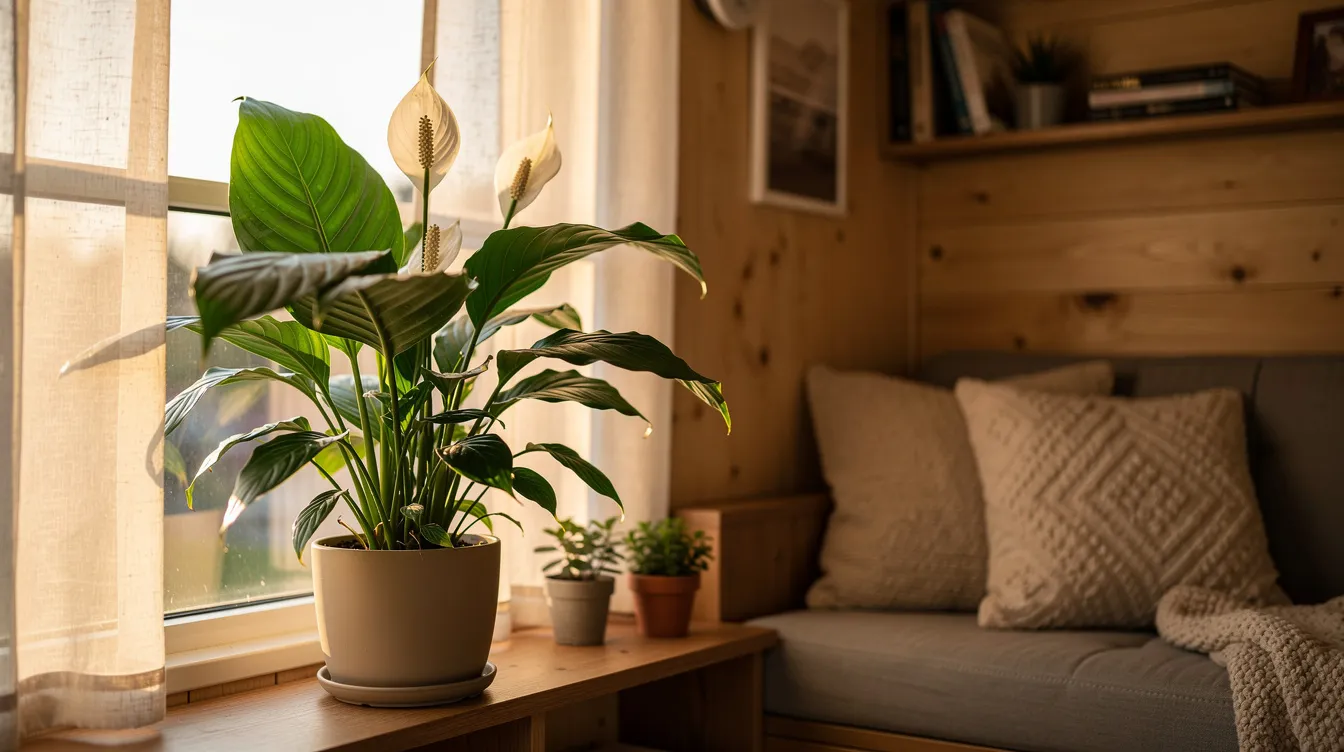
5. Peace Lily (Spathiphyllum)
Dark green leaves with occasional white flowers make the peace lily a standout among low light plants. It’s one of few indoor plants that produce flowers without bright light.
- Why It Stands Out: Produces elegant white flowers and visibly droops when thirsty – a built-in watering reminder
- Best For: Tiny home dwellers wanting occasional blooms (see more options in our guide to flowering plants suited for tiny homes)
- Key Strengths: Excellent air purifier in experimental studies. Leaves determine their own watering schedule by wilting.
- Possible Limitations: Needs consistent moisture. Blooms less frequently in very low light spaces. Toxic to pets.
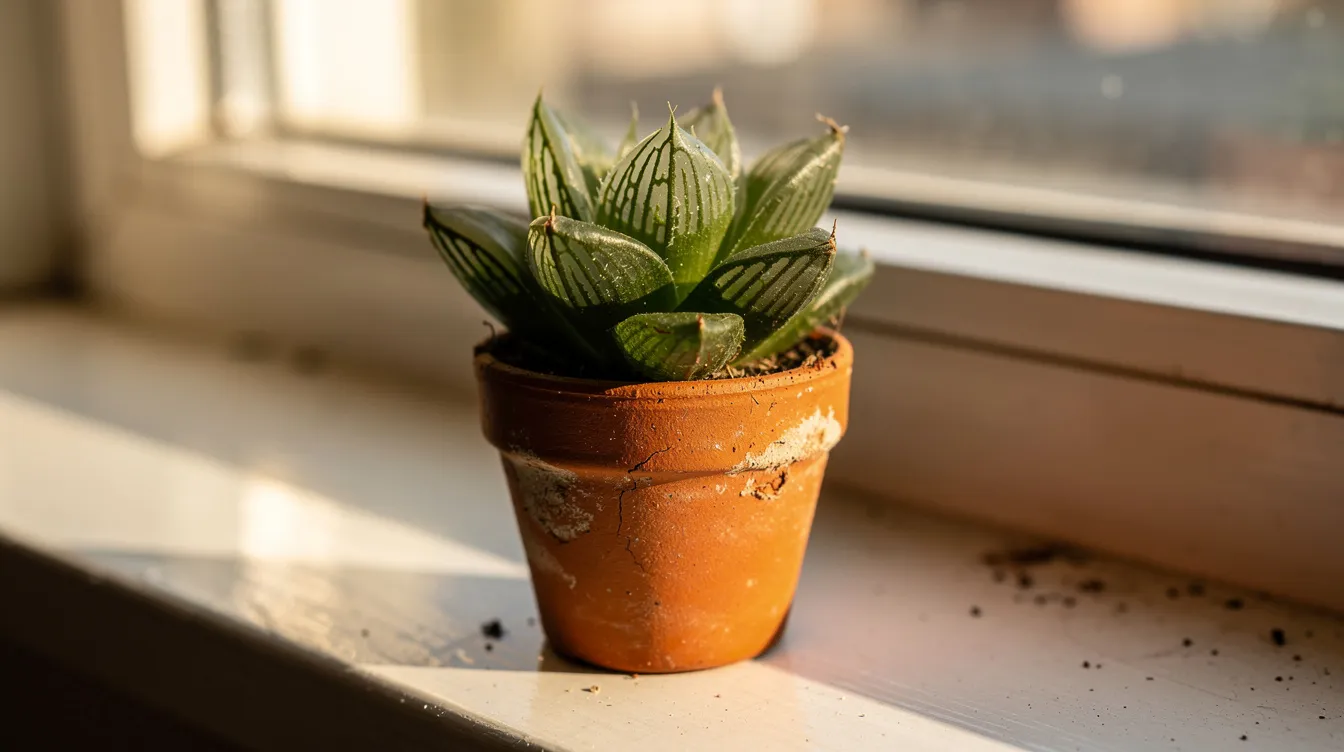
6. Haworthia
This small rosette succulent features zebra-like markings and geometric patterns that fit on a desk, windowsill, or small shelf. Most varieties stay between 2-12 inches tall.
- Why It Stands Out: Tiny enough to fit anywhere, with striking appearance
- Best For: Minimalist tiny homes or an apartment with very limited growing space
- Key Strengths: Extremely compact, unique geometric rosettes, very low water needs
- Possible Limitations: Succulents require more light compared to other small indoor plants on this list. May stretch in deep shade. Growth is extremely slow.
7. Cast Iron Plant (Aspidistra elatior)
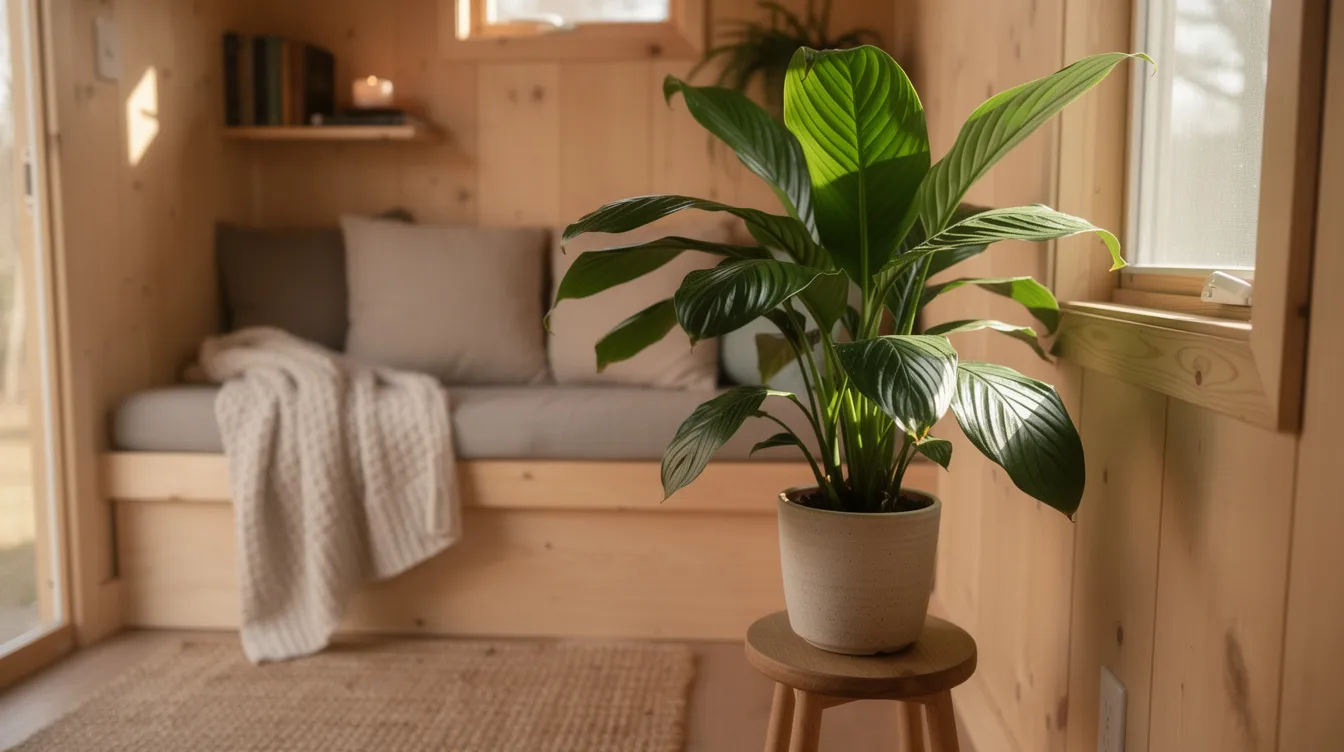
Named for its near-indestructible nature, the cast iron plant produces sturdy upright dark green leaves and evolved in deep forest shade in Japan. It’s pet friendly and virtually impossible to kill.
- Why It Stands Out: Survives neglect, deep shade, temperature swings, and irregular watering
- Best For: Tiny homes with minimal sunlight and busy lifestyles
- Key Strengths: Extremely low light tolerant, very slow growing, non-toxic. Leaves reach 12-20 inches indoors in lower light conditions.
- Possible Limitations: Plain appearance compared to colorful options. Can be expensive initially. Very slow growth means patience is required.
Quick Comparison of the Best Low Light Plants for Tiny Homes
Plant | Best For | Light Needs | Watering | Pet Safe? |
|---|---|---|---|---|
ZZ Plant | Beginners, dark corners | Very low to indirect light | Monthly | No |
Snake Plant | Air purification, vertical space | Low to bright | Every 2-3 weeks | No |
Pothos | Trailing greenery, propagation | Low to bright light | Weekly | No |
Chinese Evergreen | Colorful foliage | Low to medium | Weekly | No |
Peace Lily | Flowers, humidity indicator | Low to medium | When drooping | No |
Haworthia | Tiny spaces, minimal care | Medium indirect | Every 2-3 weeks | Yes |
Cast Iron Plant | Neglectful plant parents, dark rooms | Very low | Every 2-3 weeks | Yes |
How to Choose the Right Low Light Plant for Your Tiny Home
Choose Based on Available Space
Vertical plants like snake plants work for narrow spaces beside furniture. Reinforcing vertical space helps incorporate more greenery into small areas – try wall-mounted planters with pothos vines or arching stems trailing downward. For a small shelf or desk, Haworthia fits perfectly. Explore more ideas for maximizing tiny spaces with creative garden setups.
Choose Based on Light Conditions
If your tiny home relies on artificial light only, ZZ plants and cast iron plants are your safest bet. For a north or east-facing window with some indirect light, Chinese evergreen and peace lily do well. Bird’s nest ferns prefer low to medium indirect light and work as an alternative fern option. Spider plants can survive in low-light conditions but may not produce offshoots – they need a bit more sun to generate the plantlets (sometimes called spiders) they’re known for.
Choose Based on Maintenance Level
For frequent travelers, ZZ and snake plants are nearly indestructible. If you want some routine, peace lilies and pothos give you a reason to check in. Heartleaf philodendrons adapt well to low-light conditions and stay compact, making them another solid pick. Peperomia plants grow slowly and require minimal care, and peperomias are naturally compact and good for small corners. For pet owners, stick with pet friendly options like cast iron plant or Haworthia.
Choosing containers with drainage holes prevents root rot in small pots – this matters more than almost any other care tip. Also consider that lucky bamboo can grow in water for many years and can be purchased in sizes from 4 inches to 4 feet, making it adaptable to any space. African violets can range from 3 to 12 inches in size and add color, while a rubber plant or nerve plant can work if you have slightly more room and light.
Which Plant Is Best for You?
- Choose ZZ Plant if you want the most foolproof option for dark spaces
- Choose Snake Plant if you prioritize air purification and vertical growth that won’t grow tall too fast
- Choose Pothos if you want fast growth and easy propagation
- Choose Chinese Evergreen if you want colorful foliage in low light
- Choose Haworthia if you have very limited space and want minimal care
Small potted plants can help maximize greenery in tiny spaces without costing a bunch of money or demanding constant attention during winter or any other season.
Final Thoughts
These seven low light tolerant plants prove you don’t need a wall of windows or a green thumb to enjoy indoor greenery. Success comes down to matching each plant’s needs to your specific tiny home conditions – your available light, space on a compact piece of furniture, and how much care you’re willing to give.
Start with one or two plants before expanding your collection. For most tiny homes, a ZZ plant or snake plant is the safest all-around choice to care for low light environments. Either one will survive, thrive, and brighten your space for years without demanding much in return.