

Climbing flowers are plants that grow upward using twining stems, tendrils, or adhesive pads to scale vertical surfaces. For tiny home owners, they solve one of the most persistent challenges in small-space living: how to get maximum beauty, privacy, and function out of minimal square footage.
Climbing flowers are ideal for maximizing vertical space in tiny homes. A single vine planted in two square feet of ground or container can cover 10 to 15 square feet of wall, fence, or trellis. That kind of return on space is hard to beat with any other type of planting. Vertical growing improves air circulation around plants and climbing flowers create shade beneath their canopy, cooling patios and outdoor seating areas naturally.
Beyond aesthetics, flowering vines provide privacy screening between closely parked tiny homes, and climbing flowers attract pollinators like hummingbirds and bees. Many vining plants also offer fragrant flowers, edible parts, or year-round foliage structure.
Not every climbing plant belongs near a tiny home, though. The best climbing flowers for tiny homes are compact, well-behaved, container-friendly, and won’t damage lightweight construction.
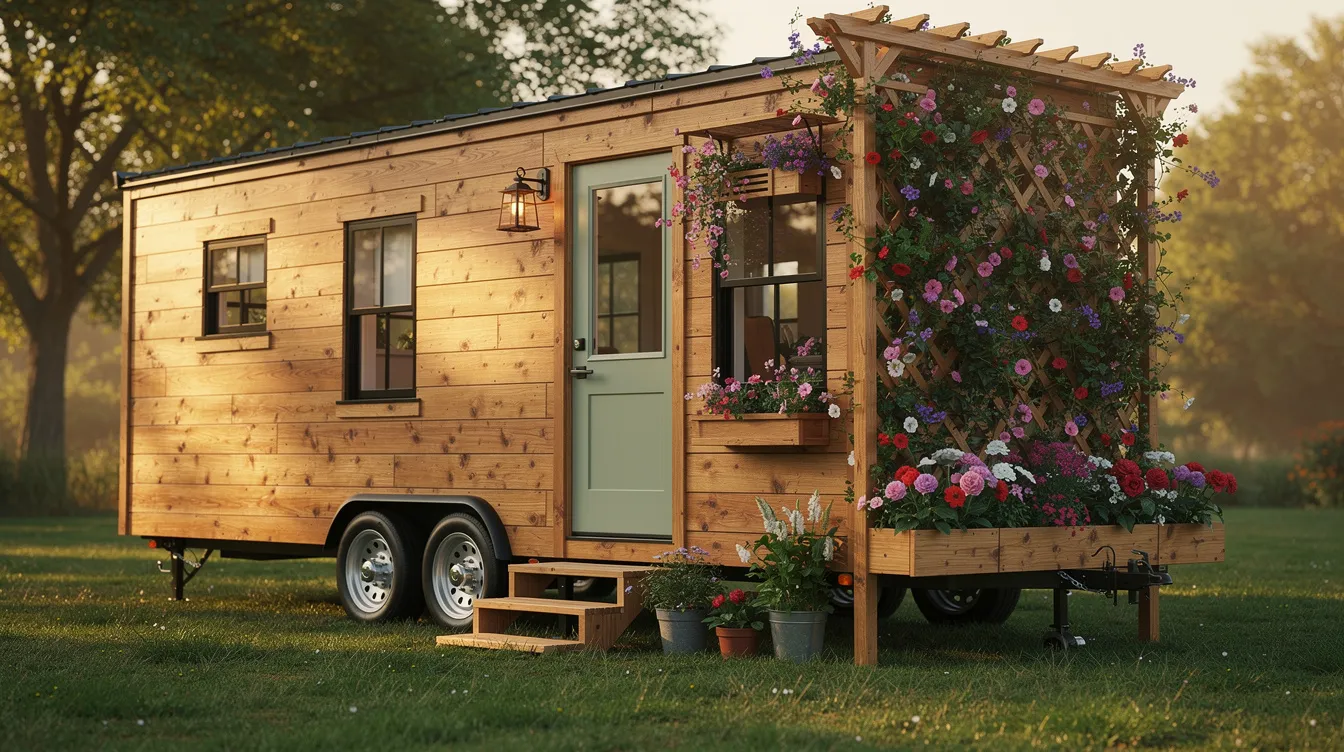
How We Chose the Best Climbing Flowers for Tiny Homes
Careful selection of climbers is essential for aesthetic appeal in tiny homes. We evaluated each plant against criteria that matter specifically in small and alternative housing situations:
- Compact growth habit and manageable size. Compact climbing plants should thrive in containers and hug narrow trellises without overwhelming the structure. Compact climbers must not damage exterior walls or overwhelm small footprints.
- Container adaptability. Most tiny home gardens rely on pots and raised beds. We prioritized plants that perform well in containers with limited root space. Container gardening helps keep vigorous vines manageable in small spaces.
- Support structure requirements. Choosing climbers that do not require extensive support is essential for small areas. A freestanding trellis allows better control over vigorous vine growth. Trellises can be made from various materials like wood or metal, and should match the growth habit of your plants. Trellises maximize vertical space in small gardens.
- Low invasiveness and structural safety. Bright, well-behaved climbers are preferred to avoid damage to sidings. Using lightweight climbers can help maintain a tiny home’s structural integrity. Vigorous climbing plants like wisteria and honeysuckle may damage tiny homes and should be avoided-wisteria can grow 10 to 50 feet long and needs strong support that most tiny homes can’t provide.
- Pruning and maintenance. Plants should be pruned to promote neatness and prevent them from overtaking spaces. We favored species with predictable growth and straightforward care.
- Multi-functional benefits. Seasonal interest, fragrance, wildlife attraction, and even edible parts all add value per planted vine. Train young vines onto trellises for better support from the start.
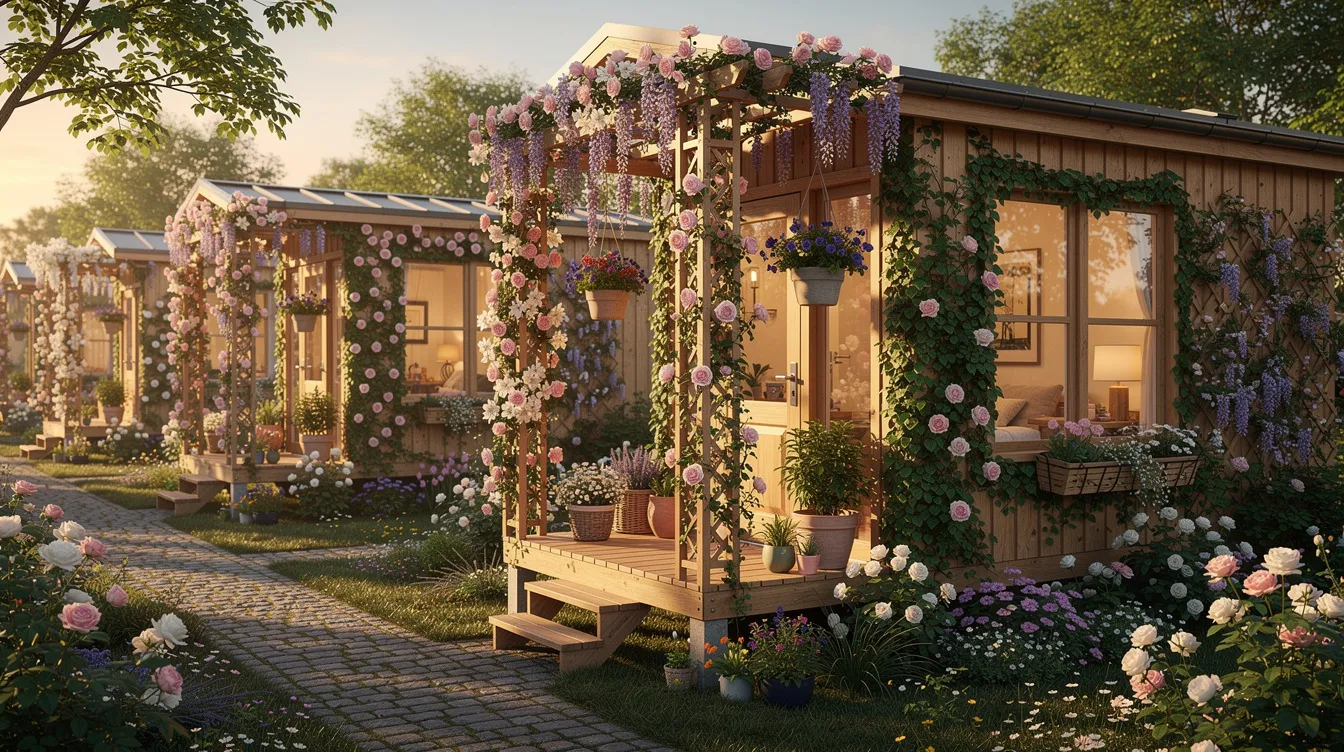
Top 7 Climbing Flowers for Tiny Homes
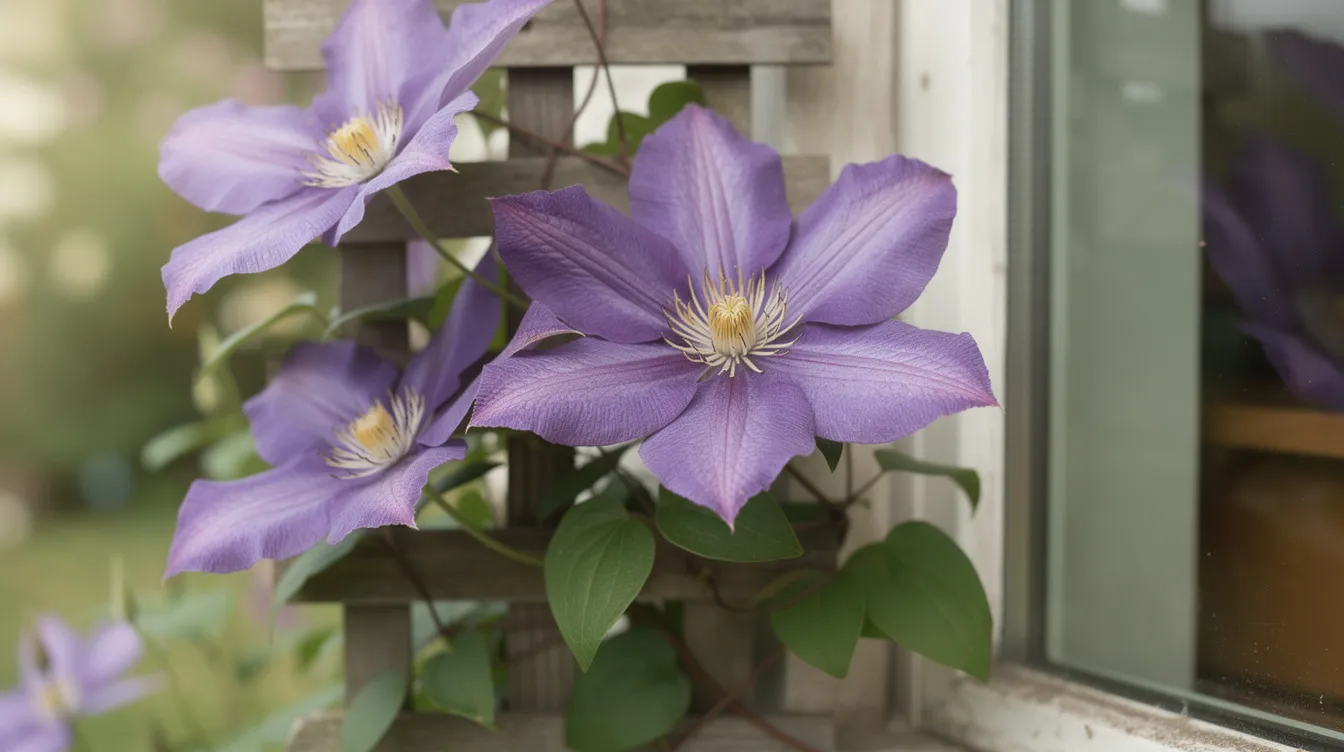
1. Clematis (Clematis spp.)
Clematis is one of the most versatile flowering vine options for small spaces. Clematis, Carolina Jasmine, and Mandevilla are excellent choices for small spaces, but clematis stands apart for its sheer variety. Clematis has over 300 species with various bloom times, and clematis can grow 2 to 50 feet tall depending on the cultivar-making it easy to find a compact variety that fits a tiny home setup perfectly.
Why It Stands Out
Clematis thrives in containers when given a pot at least 18 inches deep and wide, with well draining soil and roots kept shaded. Patio-bred cultivars like “Boulevard” or “Niobe” stay in the 8 to 12 foot range, ideal for a small garden trellis. Bloom colors range from deep purple flowers to white, pink, and red, with varieties flowering from late spring through late summer depending on pruning group.
Best For
Tiny home owners wanting long-season color and willing to learn basic pruning group classifications. Also suitable for those with limited gardening experience if they start with a group 3 variety that gets cut back hard in early spring-simple and forgiving.
Key Strengths
- Compact growth suitable for small trellises and obelisks
- Thrives in containers with proper support and root shading
- Multiple varieties for extended blooming seasons across mid spring, early summer, and late summer
Possible Limitations
- Requires specific pruning knowledge for different variety groups
- Needs consistent moisture in containers; soil dries faster than in-ground plantings
- Some cultivars are vulnerable to clematis wilt
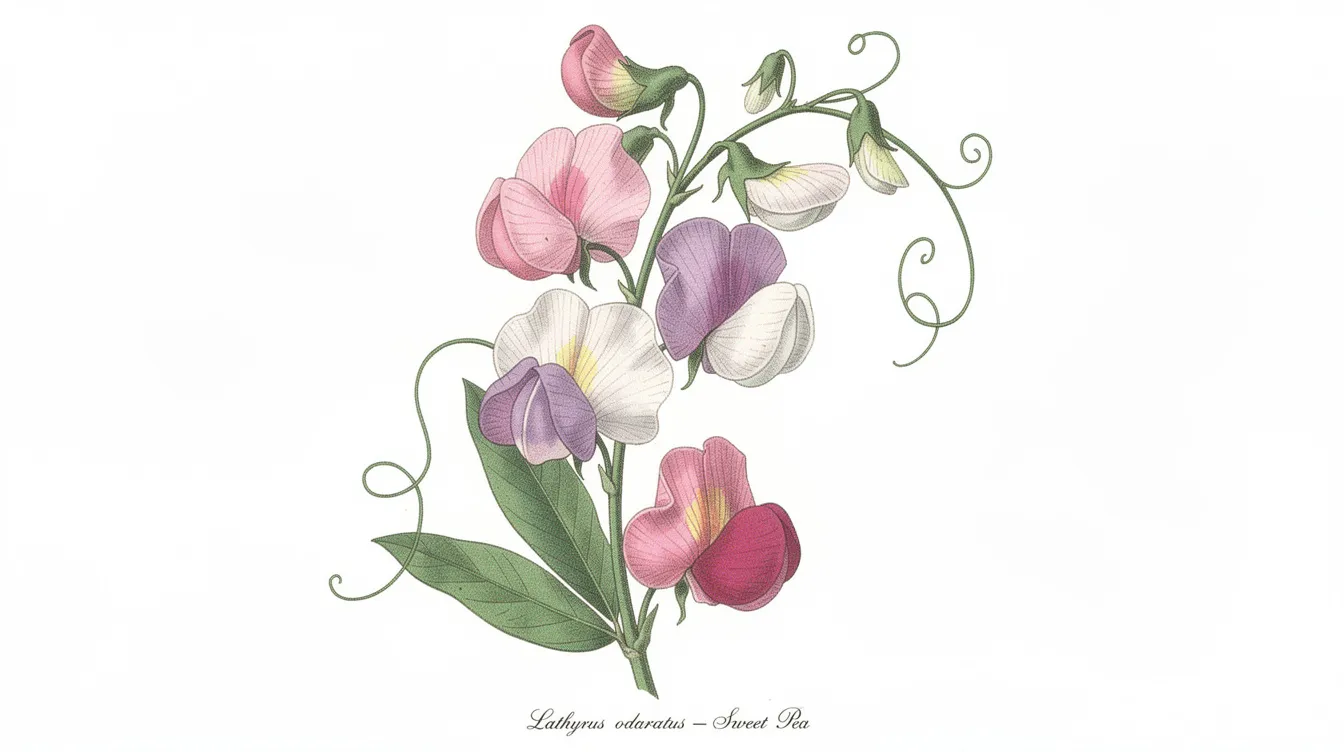
2. Sweet Pea (Lathyrus odoratus)
Sweet peas are annual vines that deliver old-fashioned cottage garden charm with sweetly scented blooms from late spring through early summer. Compact sweet peas offer old-fashioned fragrance without heavy vertical requirements, making them ideal for temporary or seasonal tiny home gardens.
Why It Stands Out
Few climbing plants match sweet peas for sheer fragrance. The sweet fragrance fills a patio or porch area, and the delicate flowers make excellent cut arrangements. Their annual nature is a feature, not a bug-perfect for renters or tiny home owners who relocate.
Best For
Tiny home owners who move locations seasonally. Those wanting cut flowers and garden fragrance without committing to a perennial vine that needs year-round care.
Key Strengths
- Easy to grow from seed; direct sow after frost or start indoors
- Moderate size (4 to 8 feet) perfect for small supports like bamboo stakes
- Excellent cut flower and fragrance source; deadheading extends bloom period
Possible Limitations
- Annual requiring replanting each year
- Prefers cool weather conditions; performance declines in hot summers
- Delicate twining stems may need frequent training
3. Mandevilla (Mandevilla spp.)
Mandevilla is a tropical vine with glossy foliage and large, showy trumpet-shaped blooms in pink, red, or creamy white flowers. It’s a container-friendly powerhouse for tiny home patios in warm climates.
Why It Stands Out
This flowering vine blooms continuously from summer through fall in warm weather-few perennial vine options match that output. It performs exceptionally well in containers with a sturdy trellis, delivering vibrant flowers without needing in-ground planting.
Best For
Tiny home owners in warmer climates (USDA zones 10+) or those with bright indoor space for overwintering. Those wanting a tropical aesthetic and long bloom period. By comparison, bougainvillea (bougainvillea spp) thrives in USDA zones 10 to 11 and prefers full sun, but mandevilla is more container-manageable.
Key Strengths
- Blooms continuously in warm weather with tubular flowers that attract hummingbirds and butterflies
- Compact growth ideal for containers (20 to 30 gallon pots for mature plants)
- Dramatic visual impact with minimal ground footprint
Possible Limitations
- Not cold hardy; requires winter protection or indoor growing in cooler zones
- Needs regular feeding in containers; rich, well-drained soil essential
- Can get leggy without adequate light or pruning
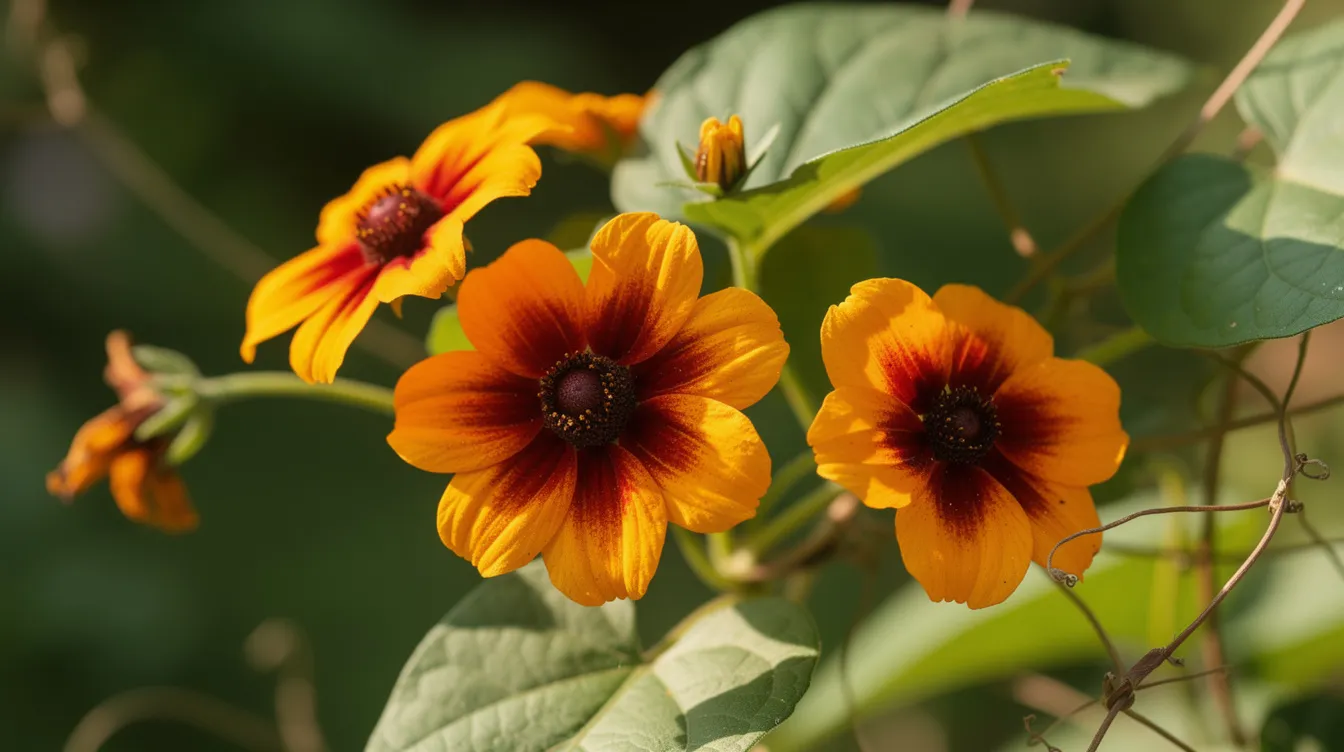
4. Black-Eyed Susan Vine (Thunbergia alata)
Black-eyed susan vine is a fast growing vine with cheerful daisy-like flowers featuring dark centers. It’s lightweight and produces colorful flowers with dark centers in shades of orange, yellow, and white. For quick screening on tiny home porches and railings, it’s hard to beat.
Why It Stands Out
This is one of the fastest annual climbers available. It covers trellises quickly and blooms continuously until frost, providing a wall of color from a single container. Climbing plants can cover trellises quickly, enhancing aesthetics-and this vine proves it.
Best For
Tiny home owners needing fast privacy solutions. Beginners wanting foolproof climbing flowers that don’t require pruning expertise.
Key Strengths
- Fast growth covers trellises in weeks
- Blooms continuously until frost with no deadheading required
- Very easy to grow from seed or starts; tolerates average soil
Possible Limitations
- Annual requiring yearly replanting
- Can become aggressive in ideal warm conditions; self-seeds readily
- No permanent structure or winter interest
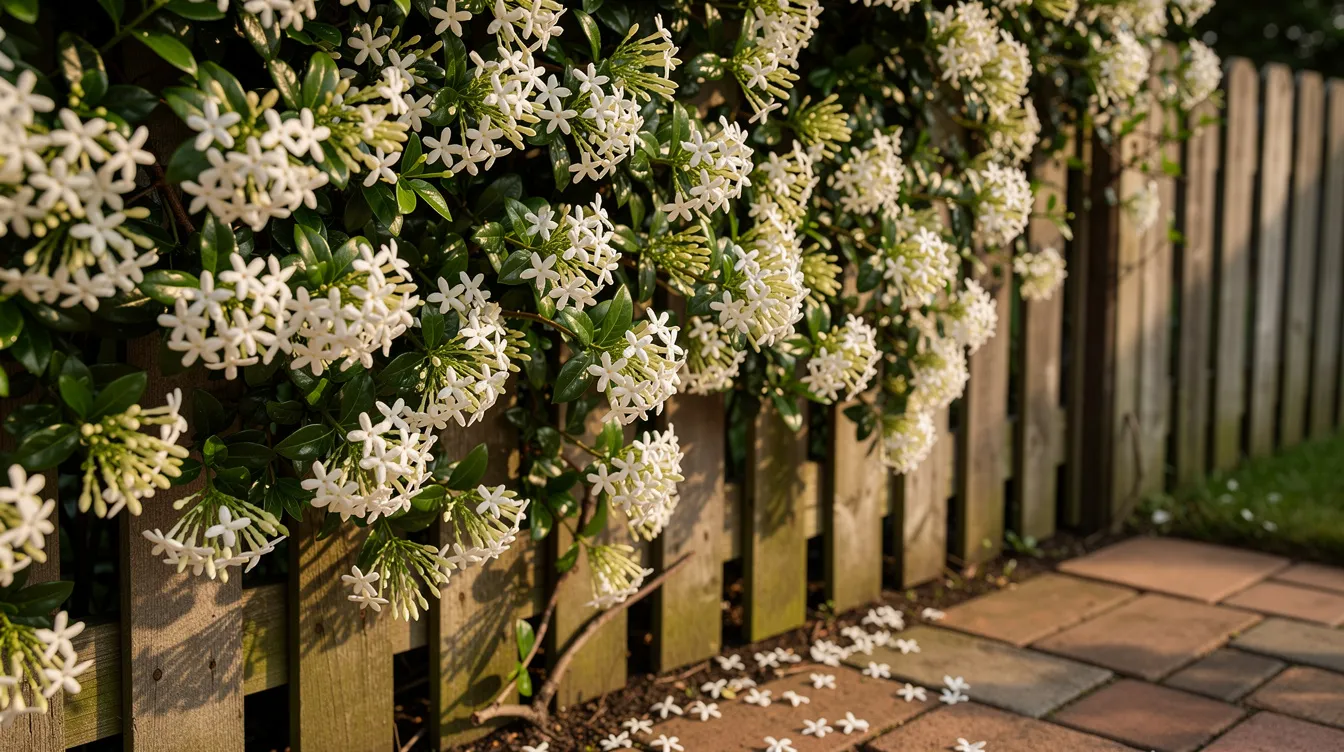
5. Star Jasmine (Trachelospermum jasminoides)
Star jasmine is an evergreen vine with fragrant white star-shaped flowers. It provides year-round foliage structure for tiny home gardens in warmer regions, functioning as both a privacy screen and a fragrance garden.
Why It Stands Out
As an evergreen vine, star jasmine delivers 12-month coverage-no bare stems in winter. Star Jasmine is an evergreen that produces fragrant white flowers in summer, and the fragrant flowers perfume an entire outdoor living area. It responds well to pruning, staying neat on a small trellis or fence.
Best For
Tiny home owners in mild climates (USDA zones 8+) wanting permanent screening. Those prioritizing fragrant gardens and low maintenance once established.
Key Strengths
- Evergreen providing year-round coverage and privacy
- Intensely sweetly scented flowers in summer
- Responds well to pruning for size control; neat growth habit
Possible Limitations
- Slow to establish and reach full size; patience required
- Limited cold hardiness; not suitable for temperate climates with harsh winters
- Vigorous grower once established, needing regular trimming
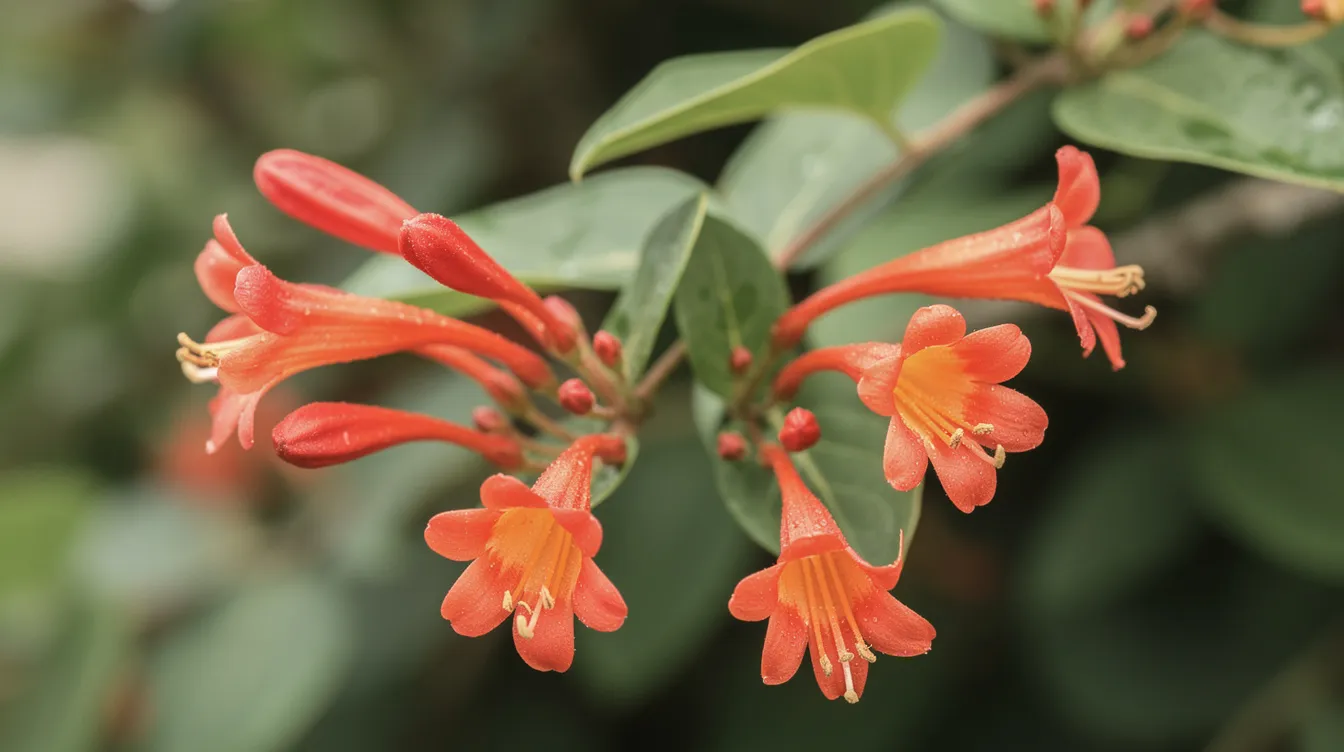
6. Coral Honeysuckle (Lonicera sempervirens)
Coral honeysuckle is a native North American vine with coral-red trumpet flowers, valued for wildlife support. Unlike Japanese honeysuckle-a notorious invasive species-coral honeysuckle is well-behaved and won’t take over a tiny home lot.
Why It Stands Out
This is a native species that supports local ecosystems. It’s semi evergreen to evergreen in warmer climates and deciduous in colder zones. Honeysuckle attracts pollinators and grows 8 to 30 feet tall, but coral honeysuckle can be kept manageable with light pruning and a contained support structure. Honeysuckle can reach heights of 8 to 30 feet, so choose a compact cultivar and prune after flowering.
Best For
Eco-conscious tiny home owners wanting native plants. Those seeking to attract hummingbirds and other insect pollinators to their small garden. It’s one of the best choices among hardy vines for wildlife-focused gardening.
Key Strengths
- Native plant supporting local ecosystem; hardy in USDA zones 4 through 9
- Flowers attract hummingbirds and beneficial insects; berries feed birds
- More manageable than invasive honeysuckle species (lonicera spp)
Possible Limitations
- Less fragrant than some honeysuckle varieties
- May still require annual pruning to control size in containers
- Reduced flowering in partial shade; performs best in full sun to partial shade
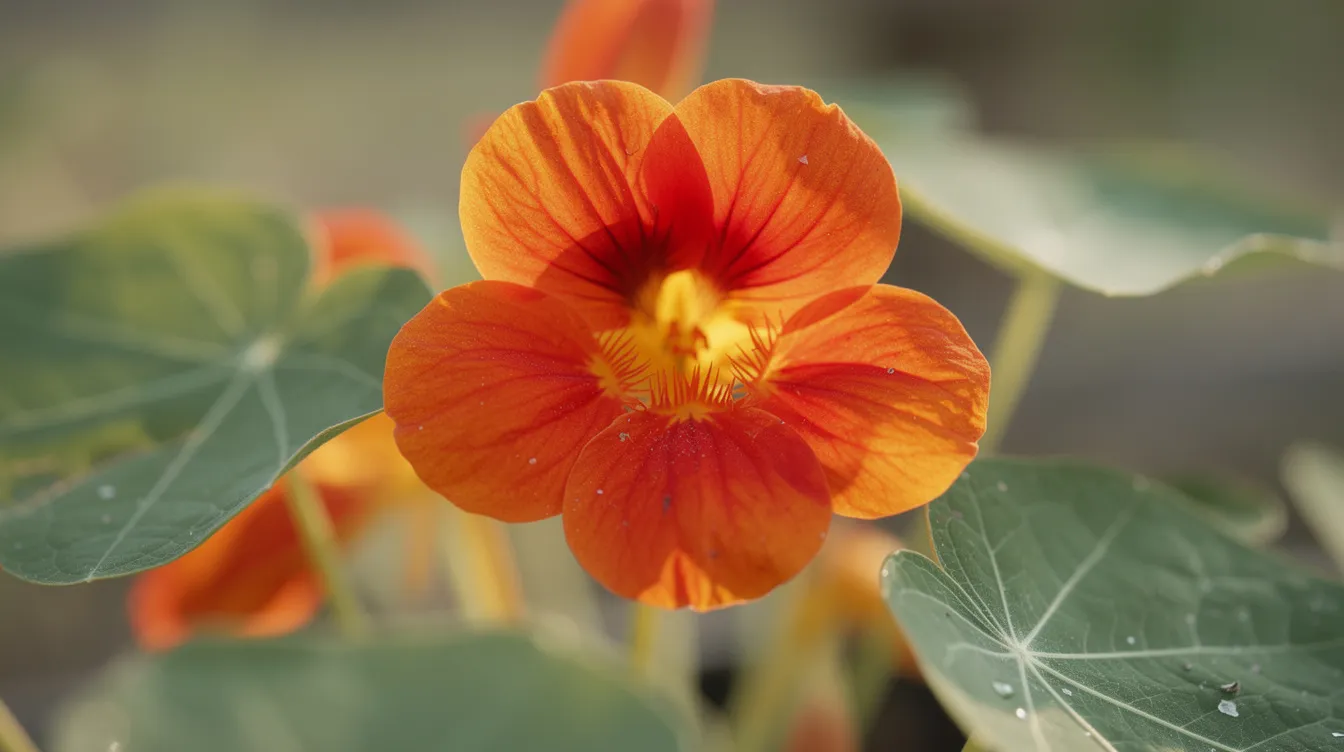
7. Nasturtium (Tropaeolum majus)
Nasturtium is an edible vine with colorful blooms in shades of orange, red, and yellow. It’s the ultimate dual-purpose climber for tiny home owners who want both beauty and food from every inch of their growing space.
Why It Stands Out
Edible flowers and leaves maximize tiny home garden productivity. Nasturtiums are also natural pest deterrents-they repel aphids and whiteflies from nearby plants, making them excellent companions for pole beans, tomatoes, and other edibles in raised beds.
Best For
Tiny home owners interested in edible landscaping and growing flowers that pull double duty. Those wanting colorful, low-maintenance annual climbers that thrive in poor soil conditions. Check out more ideas in our guide to flowering plants suited for tiny homes.
Key Strengths
- Edible flowers and leaves provide food value; peppery flavor for salads
- Natural pest deterrent for nearby plants
- Thrives in lean, well draining soil; overfeeding actually reduces blooms
Possible Limitations
- Annual requiring yearly replanting
- Can become less productive in very hot climates; prefers afternoon shade in hot areas
- Vining types need light support; some varieties are bushy rather than climbing
Quick Comparison of the Best Climbing Flowers for Tiny Homes
- Clematis (clematis spp) – Best for long-season color variety and container gardening on a sturdy support
- Sweet Peas – Best for seasonal fragrance and renters or mobile tiny home owners
- Mandevilla – Best for tropical vine drama and continuous warm-weather blooms
- Black-Eyed Susan Vine – Best for fast, foolproof screening and beginner gardeners
- Star Jasmine – Best for year-round evergreen privacy and sweet fragrance in warm climates
- Coral Honeysuckle – Best for native wildlife gardens and eco-conscious tiny home owners
- Nasturtium – Best for edible landscaping and companion planting in small gardens
Compact climbing roses are also suitable for tiny homes with modest heights. Climbing roses can reach heights of 10 to 20 feet with proper support, so select miniature or patio varieties for the best fit. Morning glory blooms quickly and prefers full sun exposure, growing 4 to 15 feet tall as an annual-another solid option for quick seasonal color.
How to Choose the Right Climbing Flowers for Your Tiny Home
Choose Based on Climate and Hardiness Zone
Your USDA hardiness zone determines which perennial vine options will survive winter outdoors. In temperate climates with cold winters, coral honeysuckle (zones 4-9) and many clematis varieties are reliable. In warmer regions, mandevilla and star jasmine thrive as permanent outdoor plants. Wisteria (wisteria floribunda and wisteria frutescens, also called american wisteria) can grow 10 to 50 feet long and 4 to 30 feet wide-beautiful but far too vigorous for most tiny home setups. A sturdy arbor barely contains it, and it can damage lightweight structures.
For those in variable climates, annual vines like black-eyed susan vine and morning glory provide color during the growing season without winter survival concerns. Many vining plants from tropical origins, including passion flower (passiflora spp) and mandevilla, can be overwintered indoors in a sunny location if you have the space.
Choose Based on Space and Support Structure Available
Evaluate your available vertical space honestly. A small porch railing can support sweet peas or nasturtiums. A wall-mounted trellis handles clematis or star jasmine. A freestanding sturdy trellis accommodates coral honeysuckle.
Climbing hydrangea and climbing hydrangeas use aerial roots to attach to surfaces-impressive on large walls but potentially damaging to tiny home siding. Boston ivy behaves similarly. Trumpet vine (also called trumpet creeper) is a vigorous grower that can overwhelm small structures. The saucer vine and chocolate vine are interesting conversation pieces but require monitoring for vigorous growth in small spaces.
For small space designs, woody vines need the strongest supports, while herbaceous annuals work with lightweight frames.
Choose Based on Maintenance Level and Lifestyle
If you travel frequently or spend limited time on garden care, choose low-maintenance options:
- Lowest maintenance: Nasturtium, black-eyed susan vine (plant and forget until frost)
- Moderate maintenance: Coral honeysuckle, star jasmine (occasional pruning, regular water)
- Higher maintenance: Clematis (pruning group knowledge), mandevilla (winter protection, feeding)
A deciduous vine drops leaves and needs seasonal cleanup, while an evergreen vine like star jasmine stays tidy year-round. Consider whether you want a fast growing vine for immediate impact or a slower perennial vine for long-term structure.
Which Climbing Flower Is Best for You?
Choose clematis if you want the widest variety of colors and bloom times from a single genus. Choose sweet peas if fragrance matters most and you don’t mind replanting each growing season. Choose mandevilla if you live in a warm climate and want nonstop tropical blooms through late summer.
Choose black-eyed susan vine if you need fast, easy screening with vibrant flowers and zero learning curve. Choose star jasmine if year-round evergreen coverage and sweet fragrance in a sun to partial shade spot are priorities. Choose coral honeysuckle if supporting native species and wildlife is central to your values. Choose nasturtium if you want an edible vine that feeds you and your garden’s ecosystem simultaneously.
For mobile tiny home living, lean toward annuals. For permanent setups, invest in a perennial vine with a quality container and sturdy support.
Final Thoughts
Climbing flowers turn blank walls, bare railings, and empty trellises into living features that earn their keep in color, fragrance, food, or wildlife habitat. For tiny home owners, that vertical real estate is too valuable to leave bare.
The best climbing flower for your tiny home depends on your climate, available support, and how much time you want to spend in the garden. Start with one vine, one container, and one trellis matched to your situation. As you explore what works, you’ll find that even the smallest tiny home exterior can support a thriving vertical garden.
Pick your first climber from this list, get it in the ground or pot this season, and let the vertical space do the work.