

Landscaping a tiny house requires compact plants that do not crowd the structure, and nowhere is this more important than right at your front door. The entrance sets the tone for your entire home, and even in downsized living, curb appeal matters. Tiny house entrances can benefit from one or two attractive containers that frame the doorway without eating into precious square footage. Dwarf shrubs can enhance curb appeal in small spaces where traditional landscaping simply won’t fit.
The best plants for front door tiny home setups share a few things in common: they stay small, they thrive in pots, and they look good year round. Unlike traditional homes with deep garden beds and sprawling walkways, tiny homes demand plants that earn their place through compact size, low maintenance needs, and season long visual impact. Here’s how to pick the right ones.
How We Chose the Best Plants for Tiny Home Front Doors
When choosing plants for front door tiny home entrances, we evaluated each option against criteria that matter most in small-space living:
- Compact size and slow growth to avoid overcrowding. Plants should handle micro-climates and be slow-growing for low maintenance.
- Container suitability. Container gardening is particularly suitable for small spaces, and every plant on this list performs well in pots and planters.
- Low maintenance requirements for busy tiny home lifestyles and frequent travel.
- Weather tolerance across a range of climates.
- Visual impact without bulk. Compact and vertical plants maximize visual impact in small spaces.
- Seasonal interest for year round appeal, including winter interest and spring blooms.
- Root system compatibility with restricted container volumes.
Ideal plants for tiny homes include dwarf conifers and flowering shrubs, and our final five reflect that range. Compact evergreens provide year round structure for tiny homes, while foliage and bloom variety add personality.
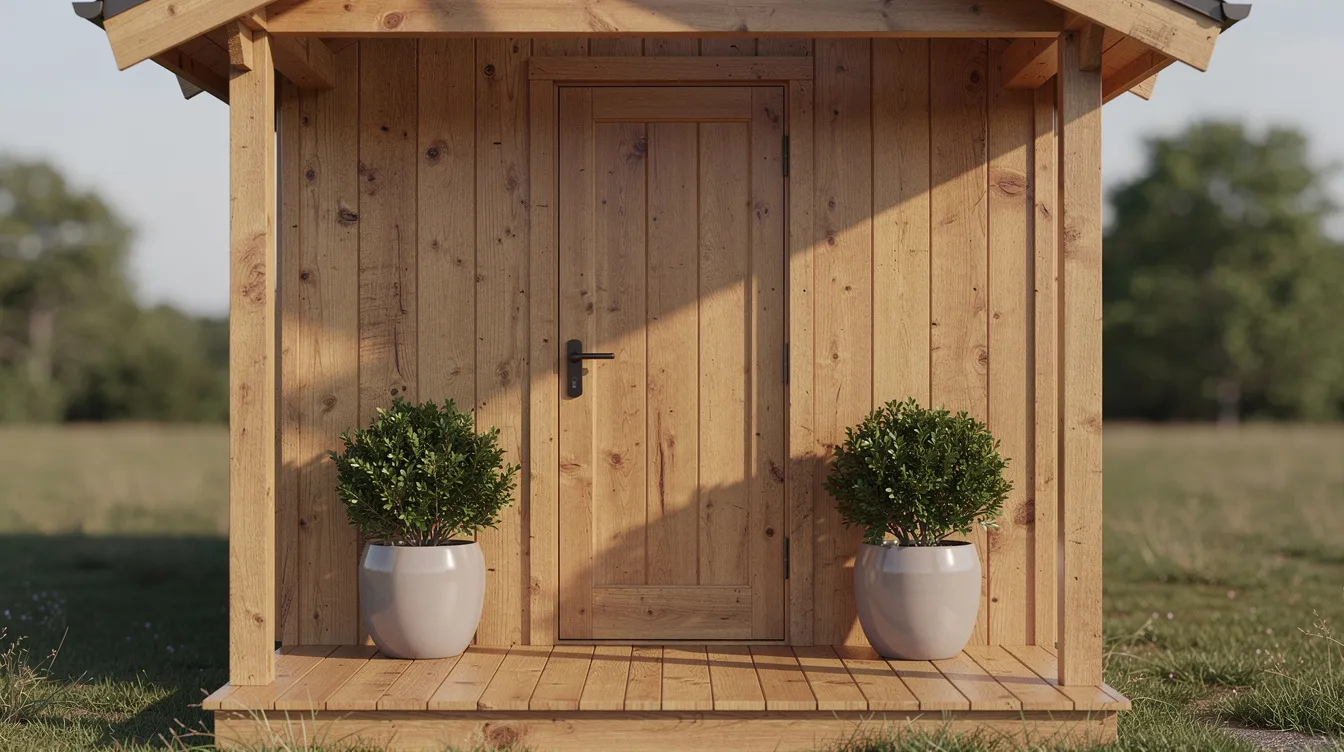
Top 5 Plants for Tiny Home Front Doors
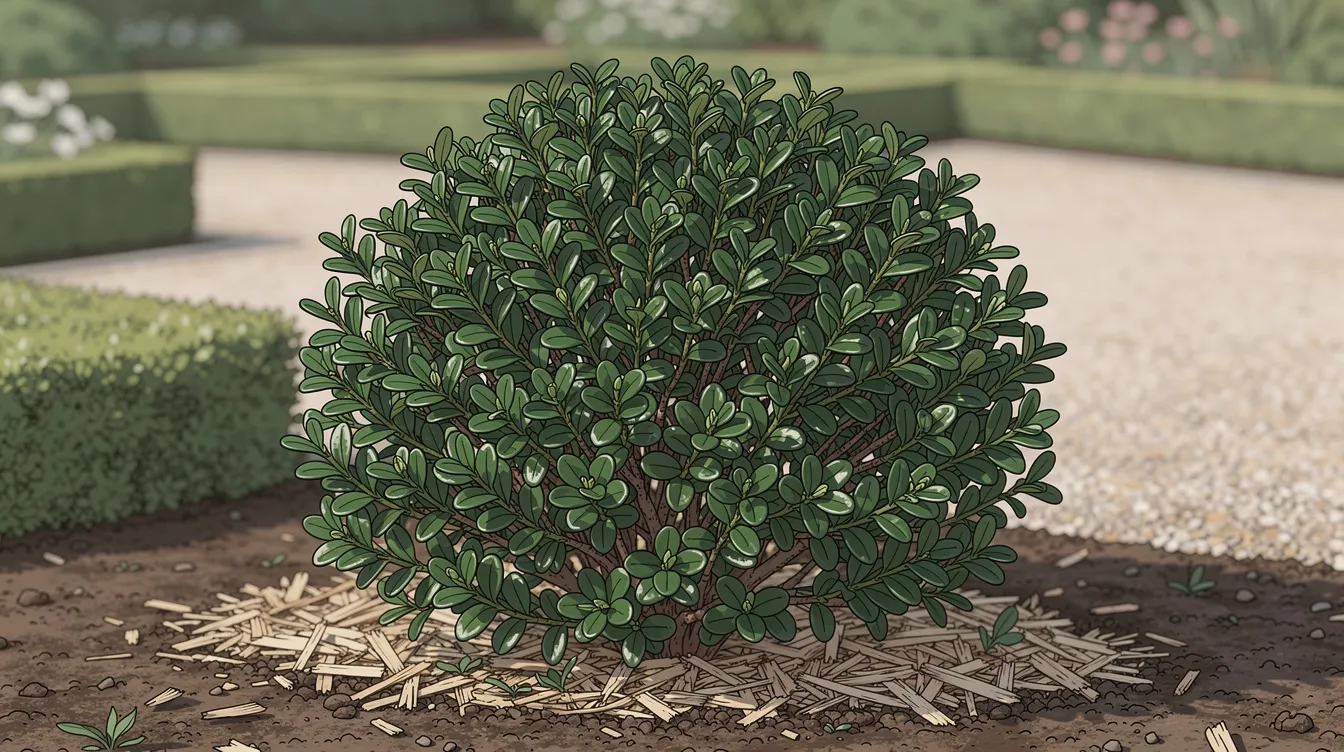
1. Dwarf Boxwood (Buxus sempervirens ‘Suffruticosa’)
Dwarf boxwood is the classic choice for framing a front door with clean, formal structure. This true dwarf cultivar of English boxwood has been used in formal gardens for centuries, and it translates perfectly to tiny home containers. Its dense, dark green foliage stays tight and tidy with minimal effort.
Why It Stands Out: Provides year round structure and can be shaped to fit any tiny space. Growth rate is extremely slow at just 1 to 2 inches per year, making it ideal for doorway planters that shouldn’t outgrow their spot. Dwarf boxwoods grow well in USDA zones 5 to 9 and prefer full sun to partial sun.
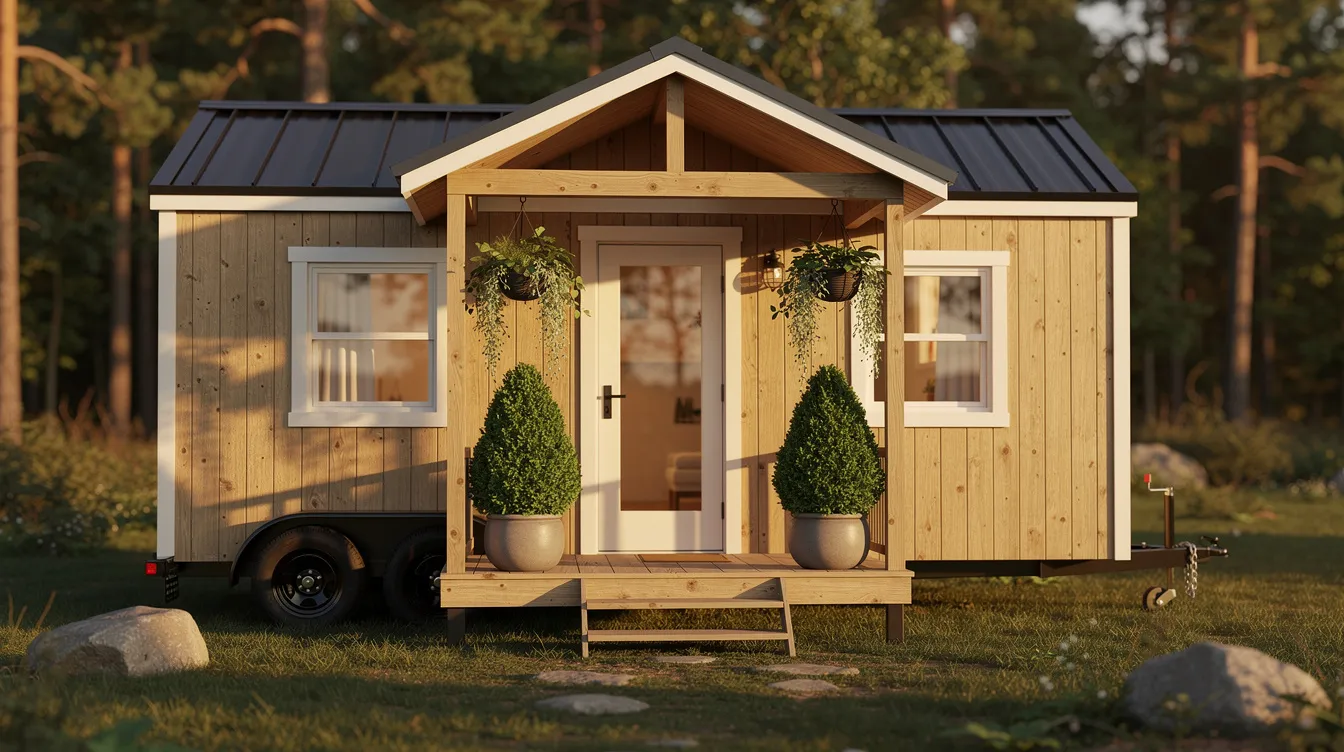
Best For: Tiny homeowners wanting a formal, neat appearance with minimal upkeep. Using matching pots on either side of a door can create a cohesive look with these evergreen shrubs.
Key Strengths:
- Evergreen foliage provides year round structure
- Responds well to pruning and shaping
- Drought tolerant once established
- Deer resistant
Possible Limitations: Slow growth means patience is needed to reach desired size. Evergreen shrubs must be cold hardy to at least two USDA zones lower than your area when grown in containers, since roots are more exposed to cold temperatures. In harsh climates, winter protection like burlap screens may be necessary. Susceptible to boxwood blight and winter bronzing in exposed locations.
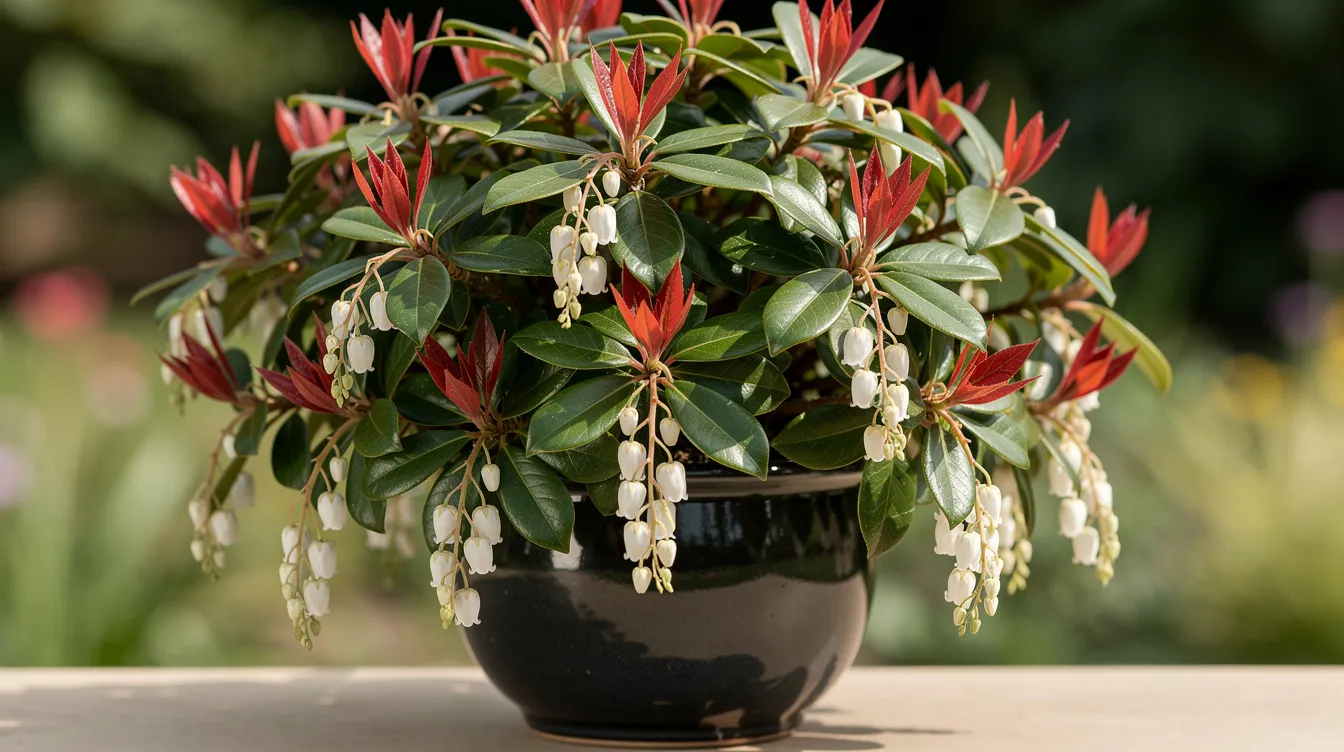
2. Japanese Pieris (Pieris japonica ‘Mountain Fire’)
Japanese Pieris ‘Mountain Fire’ earns its name with fiery red-orange new growth that matures into glossy green foliage. This broadleaf evergreen delivers spring blooms in the form of drooping clusters of bell-shaped white flowers, plus winter interest through decorative buds. Flowering shrubs add seasonal color to small entrances, and this cultivar does it with style.
Why It Stands Out: Offers spring blooms and colorful foliage in a single compact plant. In its first decade, ‘Mountain Fire’ typically reaches about 4 feet tall by 3 feet wide, manageable in a large container with occasional pruning.
Best For: Tiny homeowners in partial shade locations wanting seasonal flowers. Hardy in zones 5 through 8, it performs best with afternoon shade in hotter climates and appreciates dappled light.
Key Strengths:
- Spring bell-shaped flowers that are fragrant and elegant
- Red new growth creates vibrant colors against green foliage
- Deer resistant
- Evergreen year round
Possible Limitations: Prefers acidic, well drained soil with consistent moisture. Toxic to pets, which is important to consider in tight tiny home spaces. Can be susceptible to lace bugs. Needs filtered sunlight rather than harsh direct sun in warm regions. Check out our guide to 15 Lovely Flowering Plants Suited For Tiny Homes for more flowering shrubs options.
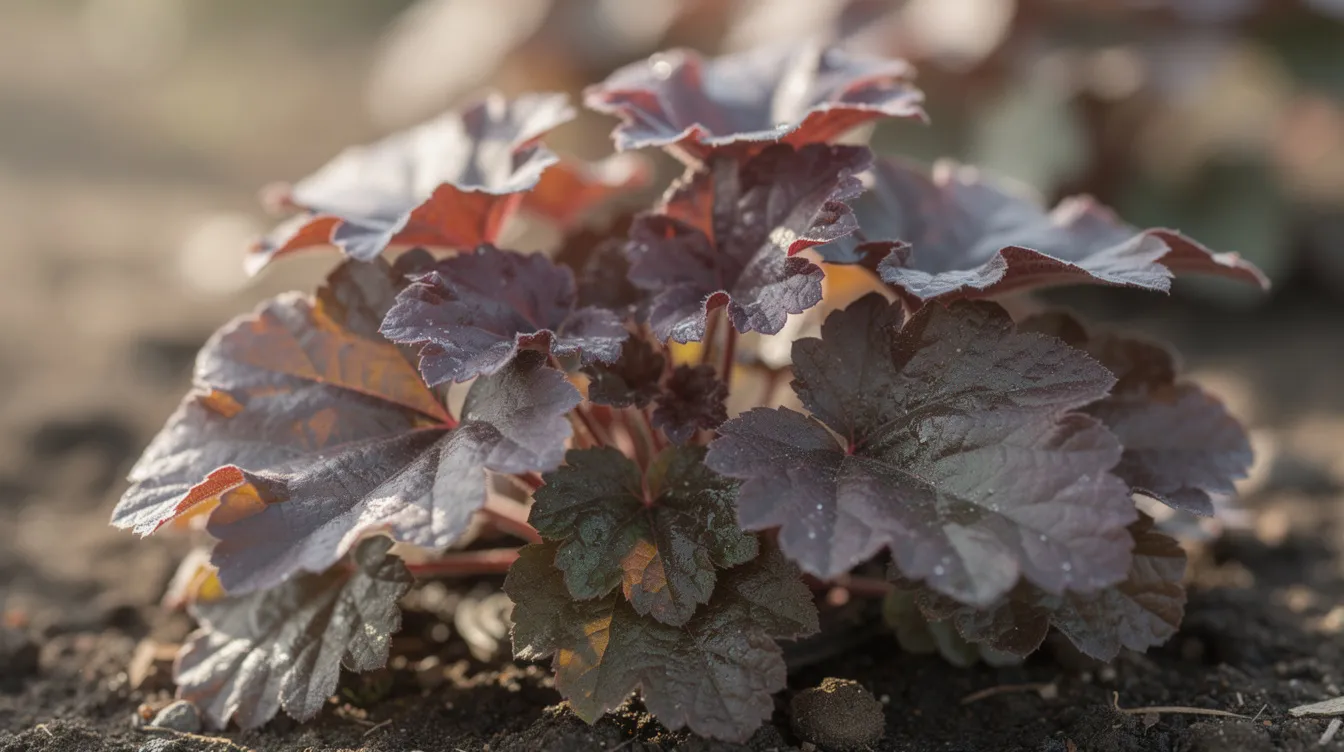
3. Coral Bells (Heuchera ‘Palace Purple’)
Coral Bells ‘Palace Purple’ is a perennial powerhouse of leaf colors, producing metallic purple-bronze foliage that looks striking in containers year round. Unlike plants that rely on blooms for impact, this Heuchera delivers through colorful foliage alone. Delicate flowering stalks appear in late spring to early summer, adding airy pink flowers above the foliage mound.
Why It Stands Out: Provides colorful foliage year round in a compact package. Foliage height stays around 10 to 12 inches, with bloom stalks reaching 18 to 20 inches. It works in various light conditions from partial shade to morning direct sunlight.
Best For: Tiny homeowners wanting low maintenance color without relying on flowers. Hardy in zones 4 through 8.
Key Strengths:
- Purple-bronze foliage all growing season
- Cold hardy perennials that return reliably
- Compact size won’t block your doorway
- Works alongside other plants as a foliage contrast
Possible Limitations: Foliage can burn under intense afternoon sun, especially where six to eight hours of direct sun exposure occurs. Needs division every few years to maintain vigor. Limited winter structure in deep cold. Flowers can be sparse depending on conditions.
4. Dwarf Mugo Pine (Pinus mugo var. pumilio)
The dwarf Mugo Pine is a rugged alpine native that forms a dense, low mound of dark needles with zero fuss. This European mountain conifer is one of the toughest door plants you can choose, handling full sun exposure, wind, and cold without complaint. Evergreens provide year-round structure for entrance gardens, and few do it as reliably as this one.
Why It Stands Out: Provides evergreen structure with extremely compact growth. Dwarf varieties grow just 1 to 8 inches per year depending on cultivar, staying under 2 to 3 feet for a decade or more.
Best For: Tiny homeowners in full sun wanting zero-maintenance greenery. Hardy in zones 3 through 7, making it excellent for colder climates.
Key Strengths:
- Extremely hardy and wind tolerant
- Needs no pruning
- Drought tolerant once established
- Strong architectural presence in well drained soil
Possible Limitations: Very slow growth means it takes time to fill its space. Limited seasonal interest beyond its consistent green foliage. No flowers, no fall color. Containers need good drainage and winter root insulation. Dwarf Alberta Spruce provides a similar neat, compact evergreen appearance if you want a more conical form.
5. Hens and Chicks (Sempervivum tectorum)
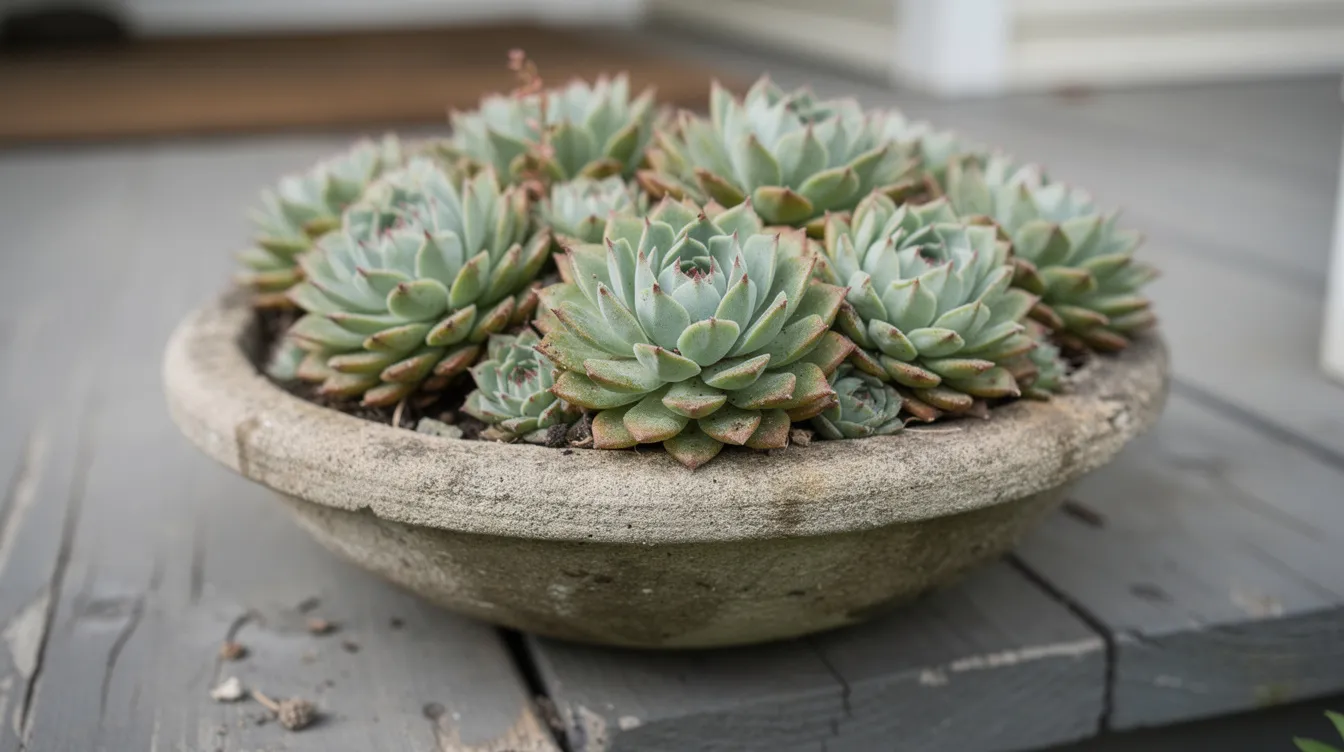
Hens and Chicks is the ultimate set-and-forget succulent for tiny home front doors. These rosette-forming plants thrive in shallow containers, multiply on their own, and demand almost nothing from you. Succulents require very little water and are excellent for minimalist designs, making Sempervivum a natural match for modern tiny homes.
Why It Stands Out: The ultimate low-water, no-fuss option. Rosettes stay just 2 to 4 inches tall, with offsets (“chicks”) spreading to fill planters naturally. Plants that thrive in tight pots include lavender and succulents like these.
Best For: Tiny homeowners wanting sculptural potted plants requiring minimal care.
Key Strengths:
- Drought tolerant in the extreme
- Multiplies naturally to fill containers
- Unique rosette shape adds sculptural interest
- Hardy to at least 10°F, often lower
Possible Limitations: Limited seasonal change. When a rosette flowers, it dies and is replaced by offsets. May not suit traditional design styles. Requires very well draining soil to avoid rot, especially in winter.
Quick Comparison of the Best Tiny Home Front Door Plants
Plant | Best For | Sun Needs | Hardiness Zones | Maintenance |
|---|---|---|---|---|
Dwarf Boxwood | Formal, traditional tiny home styles | Full sun to partial sun | 5–9 | Low (occasional clipping) |
Japanese Pieris | Spring color and partial shade locations | Partial shade | 5–8 | Low-moderate |
Coral Bells | Year-round foliage color in containers | Partial shade to morning sun | 4–8 | Low (divide every few years) |
Dwarf Mugo Pine | Full sun and zero-maintenance needs | Full sun | 3–7 | Very low |
Hens and Chicks | Modern, minimalist tiny home aesthetics | Full sun to light shade | 3–8+ | Almost none |
How to Choose the Right Plant for Your Tiny Home
Choose Based on Available Space
Start by measuring the actual space around your tiny home door. Most tiny home porches or landings offer only a few square feet. A single 12-inch container or a pair of matching pots enhance visual appeal at entrances without creating obstacles. Utilizing layers in planting design can create intentional aesthetics even in tight quarters. Ornamental grasses add soft texture without blocking doorways if you want to layer behind your main container plant. Sweet potato vines serve as colorful fillers in small containers when paired with upright plants.
Choose Based on Light Conditions
Assess your sun exposure honestly. Does your doorway get full sun with six to eight hours of direct sunlight? Mugo Pine, creeping thyme as ground covers, and Sempervivum thrive there. Dwarf lavender is ideal for sunny micro-climates next to homes. Drought-tolerant plants like butterfly weed are good for full sun areas as companions. Petunias need full sun for the most profuse flowers and grow best in zones 10 to 11. Petunias require full sun to perform at their peak. Creeping Sedum thrives in dry soil and full sun as a low-maintenance ground cover option.
If your entrance sits in partial shade or under an overhang, Pieris and Coral Bells are stronger picks. Ferns prefer partial sun and are virtually maintenance-free, making ferns ideal for shaded or covered doorways. Ferns are suitable for partial sun to shade conditions across many climates. Begonias thrive in partial sun to shade in zones 9 to 11, and most begonias bloom all season if deadheaded regularly. Caladiums prefer partial shade to full shade and thrive in zones 9 to 11, offering bold leaf colors. For full shade entrances, caladiums prefer partial shade and create dramatic foliage displays.
Creeping Jenny is hardy in USDA zones 4 to 9 and prefers partial sun, making it a versatile trailing option. Trailing Creeping Jenny is hardy from zones 4 to 9 and works beautifully spilling over container edges. Clematis can grow up to 50 inches tall in containers and thrives in USDA zones 3 to 10, offering blue flowers, pink flowers, or purple blooms on a vertical trellis beside your door. Hydrangeas thrive in USDA zones 3 to 9 with regular watering if you have space for a larger pot. Dwarf Hinoki Cypress thrives in USDA zones 5 to 8 as another excellent compact evergreen option.
Choose Based on Maintenance Preferences
Consider your travel schedule and whether your tiny home is mobile. If you move your home seasonally, plants in containers offer flexibility. Low-maintenance choices include Dwarf Mondo Grass and Creeping Sedum for tiny homes where hands-off care is a priority. Lavender offers fragrant blooms and can thrive in tight spaces with minimal watering during late summer heat. Purple coneflower attracts butterflies and blooms long through summer into fall, and black eyed susans provide yellow flowers that light up a sunny doorway in late summer. Soft Touch Holly is a rounded evergreen bush suitable for tiny spaces if you want something that handles a cooler climate well.
Native plants are adapted to local climates and need less irrigation once established, so research what grows naturally in your area for the easiest results. For more tiny garden ideas and inspiration, browse our curated galleries.
Which Plant Is Best for You?
Here’s the quick decision guide:
- Choose Dwarf Boxwood if you want classic, formal appeal with easy shaping and year round interest. It pairs well with hanging baskets filled with seasonal blooms for added dimension.
- Choose Japanese Pieris if you have partial shade and want fragrant spring flowers alongside red new growth in early spring.
- Choose Coral Bells if you prefer colorful foliage over flowers. The purple-bronze leaves create contrast against other plants and look stunning through the growing season.
- Choose Dwarf Mugo Pine if you want set-and-forget evergreen structure that handles direct sun and cold temperatures without blinking.
- Choose Hens and Chicks if you embrace minimalist, water-wise gardening. These plants thrive in neglect and create a sculptural statement in shallow containers.
For those drawn to Japanese-inspired designs, a japanese maple in a dwarf varieties container can also create a stunning focal point, though it needs more attention than our top five picks. Consider pairing any of these selections with planting combinations that include perennials for seasonal bloom rotations.
Final Thoughts
The best front door plants for your tiny home depend on your specific setup: your sun exposure, climate zone, maintenance tolerance, and design preferences. There’s no single perfect plant, but any of the five options above will create a welcoming entrance without adding a maintenance burden to your life.
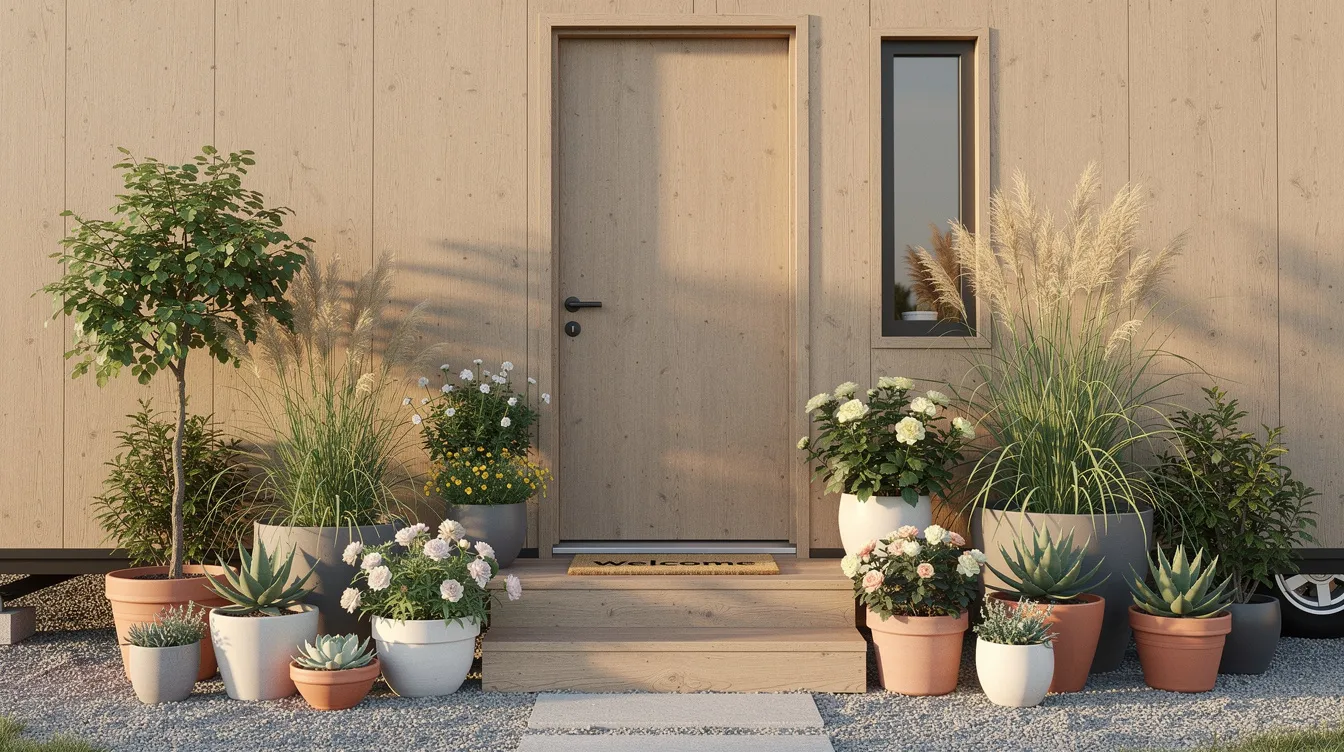
Container growing gives you flexibility that ground planting never can. You can move pots to adjust for seasonal light conditions, protect roots during winter, or simply take your garden with you when your tiny home relocates. Even small plant additions can significantly improve tiny home curb appeal, transforming a bare doorway into something that feels intentional and inviting.
Start simple. One well-chosen plant in a quality container does more for your tiny home’s entrance than a cluttered collection of mismatched pots ever will. The ideas in this guide give you a starting point. The rest is about matching your space, your climate, and your style to the plant that fits.