

Tiny homes range from 100 to 400 square feet. Every plant that occupies more than a square foot of floor space starts to feel like a roommate. Ivy plants solve this problem because they grow vertically, trail from shelves, and fill dead corners with lush foliage without claiming precious floor real estate. They are low maintenance and easy to propagate from cuttings, which makes them a popular houseplant for compact living.
This guide covers seven ivy setups designed for tight quarters, with specific cultivar picks, care tips, and honest limitations for each.
How We Chose the Best Ivy Ideas for Tiny Homes
We evaluated each idea against five criteria tied to real tiny home constraints.
- Space efficiency: any setup consuming more than 1-2 square feet of floor area was deprioritized. Vertical and overhead designs scored higher.
- Weight: mobile tiny homes use light stud framing. Saturated soil and water add up fast; we favored lightweight soil mixes and smaller pot sizes.
- Light adaptability: ivy thrives in bright, indirect light and can tolerate lower light, but variegated forms lose their color below roughly 500 lux. We matched each idea to realistic light conditions in small spaces.
- Maintenance effort: ivy plants are a vigorous grower category. Regular pruning helps keep ivy compact and bushy, so we prioritized setups where pruning is simple and infrequent.
- Moisture and airflow: ivy appreciates moderate humidity levels of 40% to 60%. Tiny homes often run dry in winter or overly humid near bathrooms, so each idea accounts for these swings.
English ivy can be toxic if ingested by pets, a factor we flagged for every indoor setup.
Top 7 Ivy Plant Ideas for Tiny Homes
1. Vertical Living Wall Systems
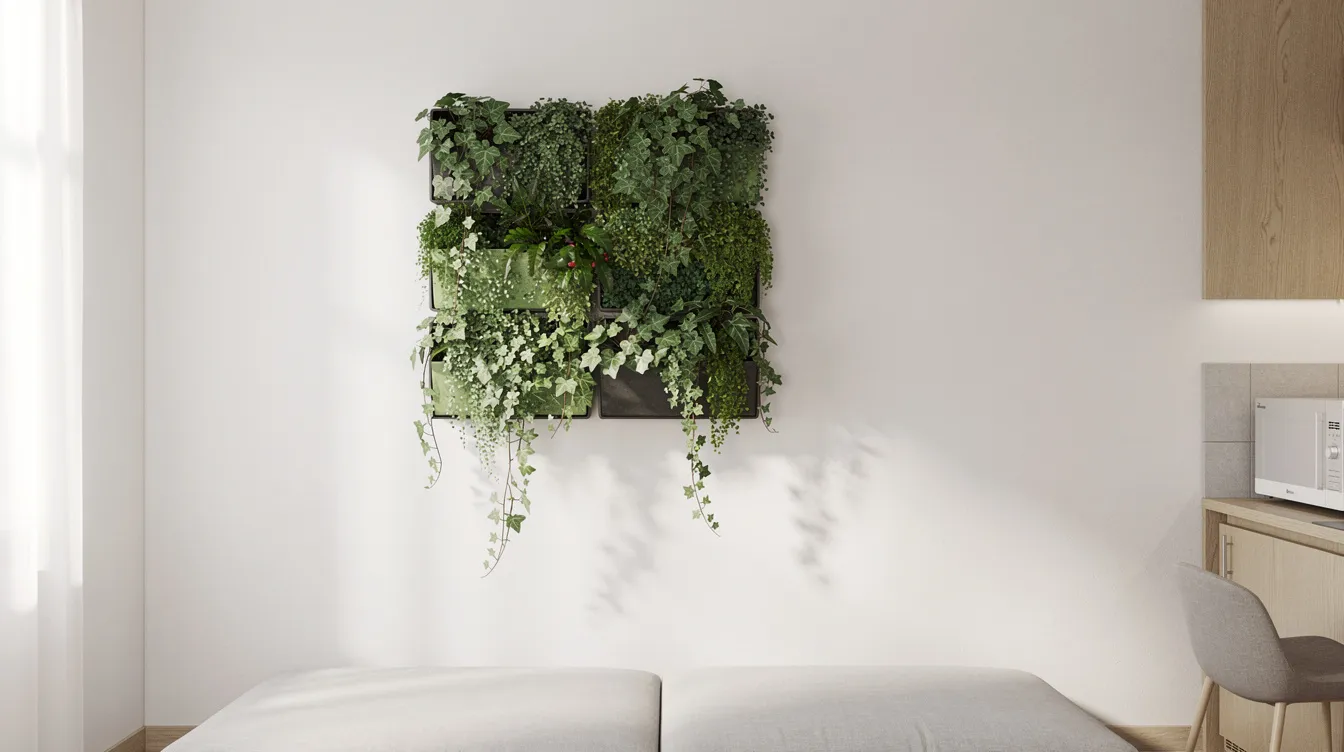
Modular systems like LiveWall use slot rails or RainRails mounted on furring strips spaced 16 to 32 inches apart, with a waterproof membrane behind them. Ivy can create beautiful living walls in small spaces, and these rigs turn a blank wall into a living surface. Ivy purifies the air by removing toxins such as benzene and formaldehyde, which is useful in a sealed tiny house with limited ventilation.
Best for: stationary tiny homes with at least one open wall section.
Key strengths: zero floor footprint; placing ivy in high shelves or ceilings leverages vertical space in tiny homes; modular panels can be scaled to wall size. Magnetic or suction planters help utilize unused vertical space if a full rail system feels excessive.
Possible limitations: installation hardware runs several hundred to over a thousand dollars depending on wall coverage. Irrigation plumbing adds complexity. Not practical for mobile tiny homes that experience road vibration.
2. Hanging Basket Cascades
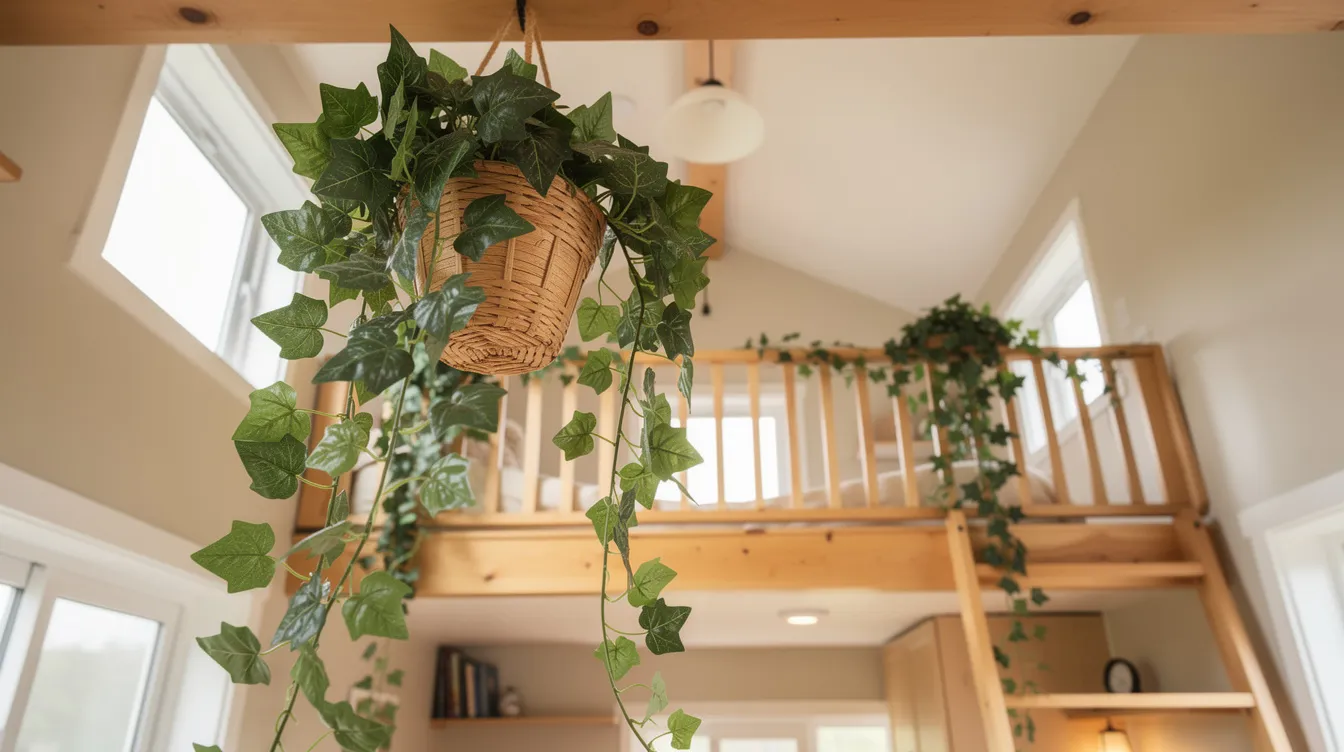
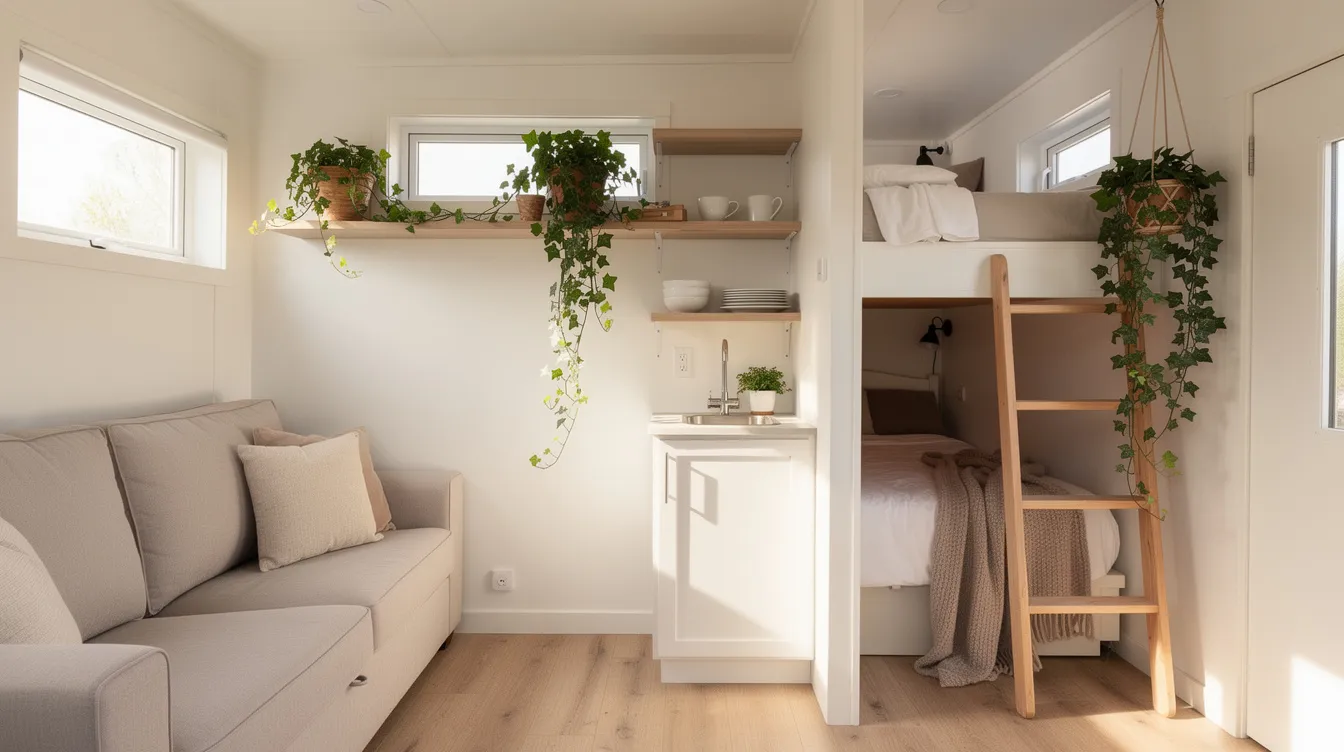
Using hanging baskets allows ivy to cascade without occupying floor space. A single basket mounted to a ceiling joist lets a vine trail two to three feet downward, creating a dramatic spill of foliage. Ivy is suitable for hanging baskets due to its trailing nature. Hedera helix ‘Sweetheart’ has heart-shaped deep green leaves and works well in baskets where the leaf shape is visible from below.
Best for: tiny homes with ceilings above 8 feet or loft areas where ivy can cascade along railings.
Key strengths: hanging ivy can soften edges of loft beds or sleeping platforms. Overhead placement keeps the vine away from pets and children. Irish ivy and english ivy both produce glossy new growth that catches indirect light from above.
Possible limitations: confirm your ceiling joist can handle 10-15 pounds of wet soil and plant. Water drips require a tray or liner beneath each basket. Pruning overhead vines means a step stool.
3. Window Box Indoor Gardens
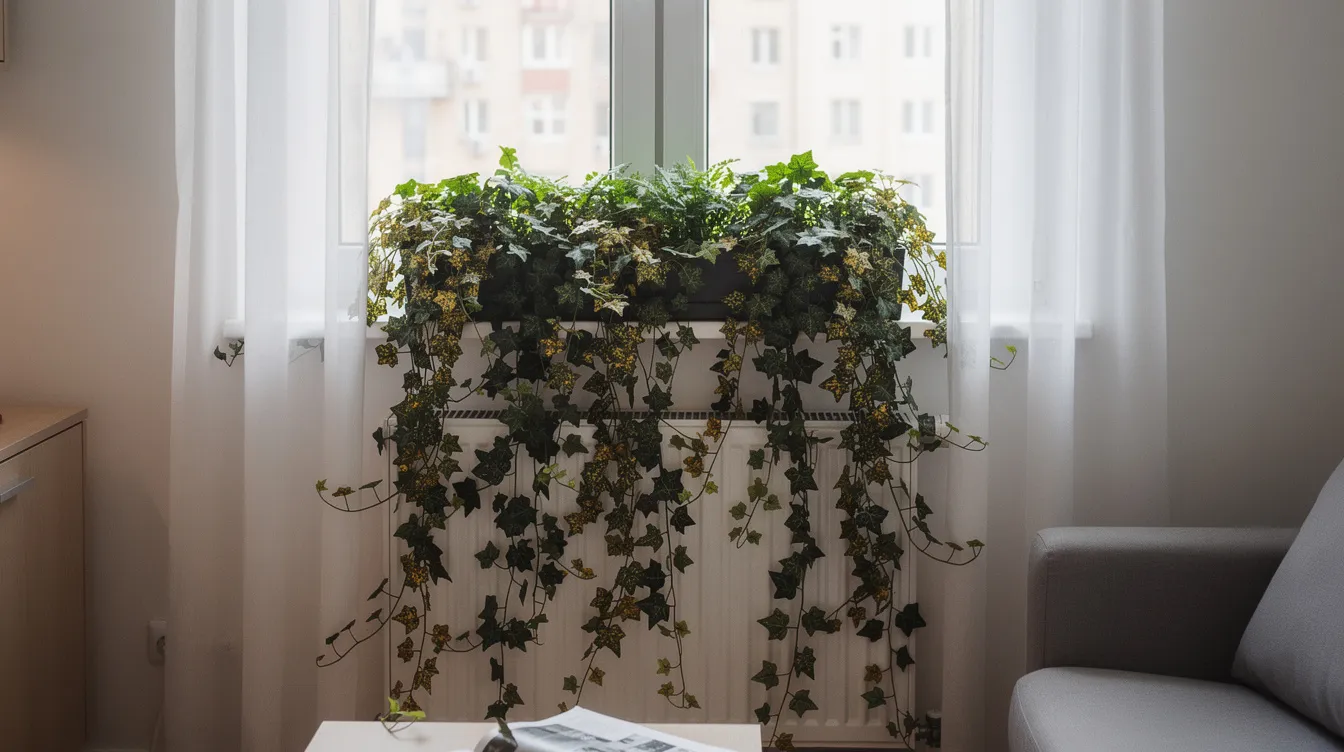
Window-mounted planters bring ivy toward its preferred light source while consuming zero counter or floor space. Ivy can create a living curtain by hanging a planter above a window, and hanging ivy near windows creates a soft divider effect in small spaces; both approaches work with a single window box or rail-mounted pot.
Hedera helix ‘Gold Dust’ features dark green leaves with golden-yellow spots, making it a bright accent against a sun-lit window. Avoid direct sunlight, which scorches leaves; a sheer curtain or north-facing orientation provides the partial shade most ivy varieties prefer.
Best for: tiny homes with multiple windows and adequate natural light.
Key strengths: natural bright light access, privacy screening, easy water access from a kitchen sink or spray bottle.
Possible limitations: window sill load capacity varies; use lightweight soil mixes. Seasonal light changes in winter can slow growth. Condensation near glass increases fungal risk if airflow is poor.
4. Miniature Ivy Terrariums
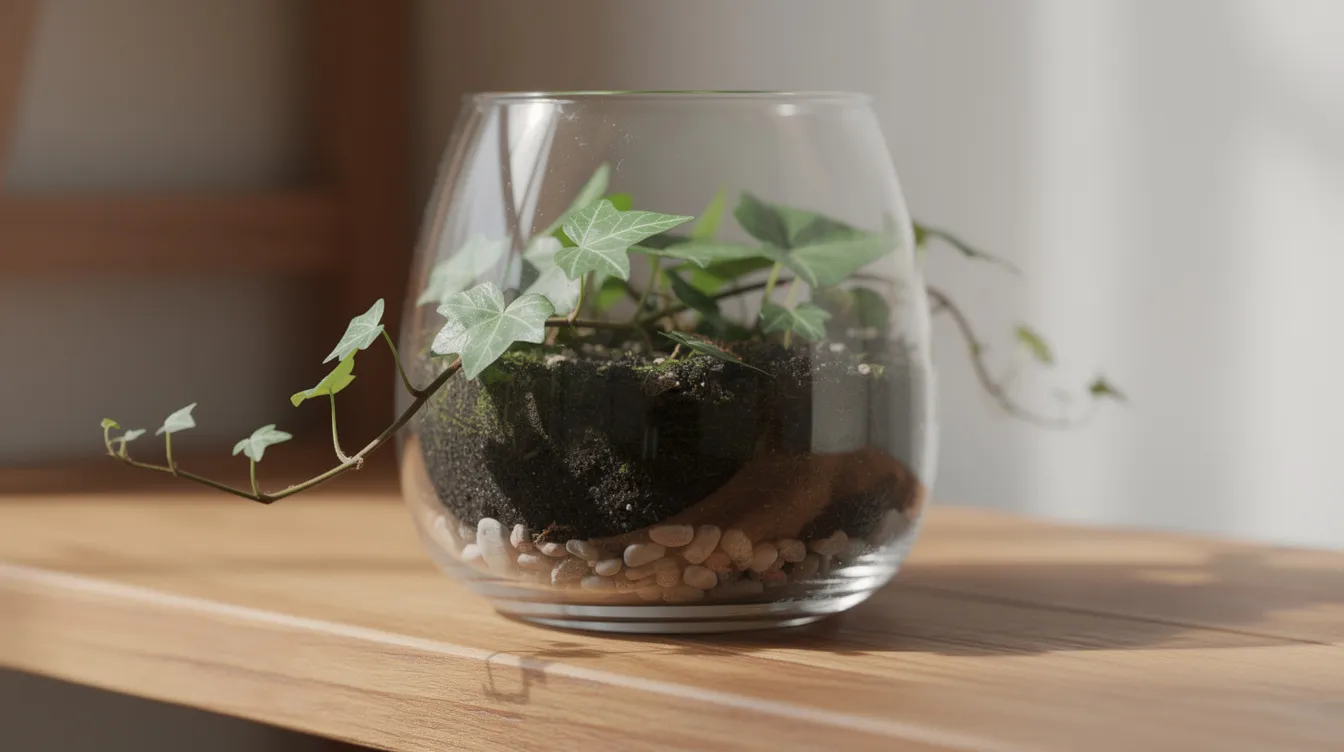
For ultra-small spaces, miniature ivy in glass containers occupies just a few cubic inches. Needlepoint ivy and cultivars like ‘Midget’ have leaf sizes under one inch, which keeps scale proportional to the container. Hedera helix ‘Eva’ has small leaves with cream edges, adding contrast inside a clear vessel. Small-leaved, slower-growing ivy varieties are easier to maintain compactly.
Hedera helix asterisk has between five and seven leaf points, giving it a star-like shape that looks cute in a tabletop terrarium. Its lighter veins stand out against the glass backdrop.
Best for: minimalist living spaces, desktops, or accent pieces where a full vine would overwhelm.
Key strengths: contained growth, minimal watering (lidded terrariums hold humidity), and the terrarium acts as a self-contained greenhouse environment. Mini ivy cultivars need pruning only every few weeks during peak growth.
Possible limitations: limited visual impact from across a room. Glass can trap too much moisture if sealed without periodic air exchange. New leaves may press against container walls and need trimming.
5. Multi-Level Plant Ladders
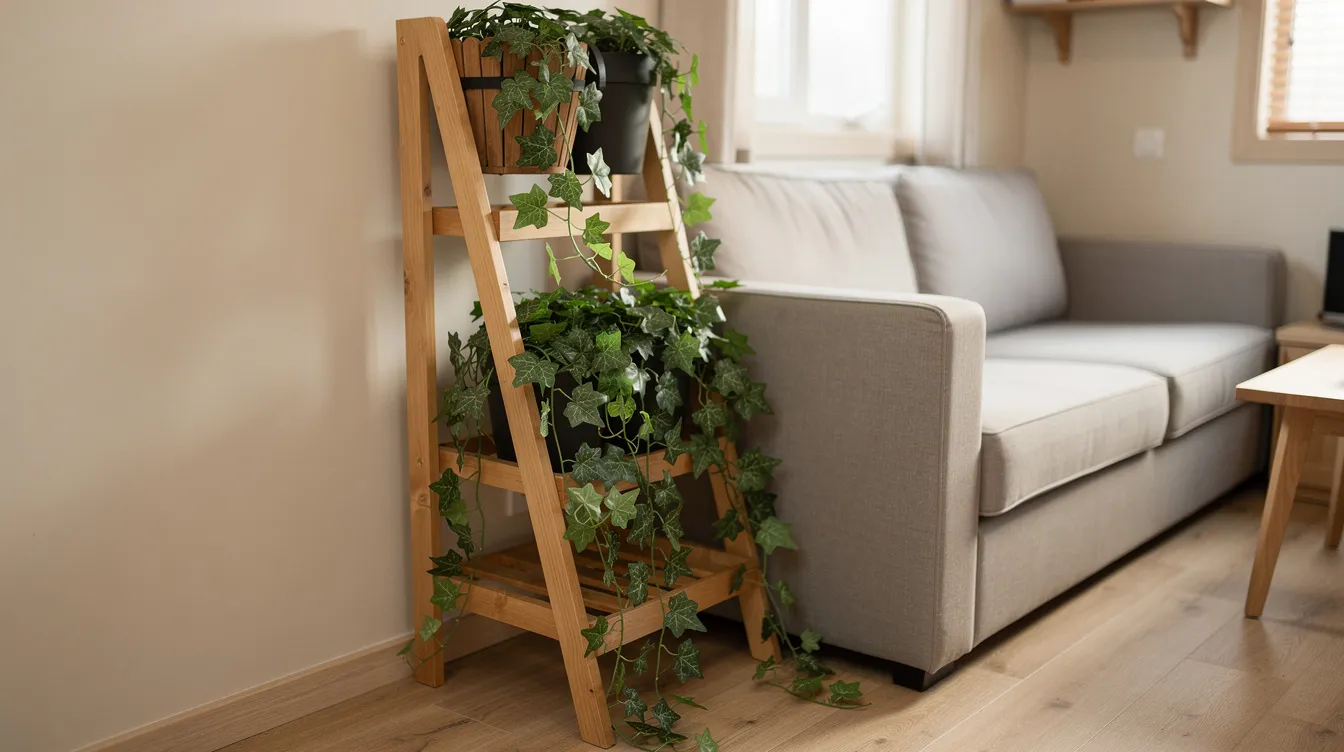
Tiered plant stands create multiple growing levels in a floor footprint of roughly one square foot. Ivy can grow vertically or trail from a shelf, so a ladder stand lets you combine upright pots on upper tiers with trailing vines on lower tiers. Ivy makes an excellent spiller plant for winter pots, and a three-tier ladder keeps your vine collection organized through the colder months.
Best for: tiny homes with corner spaces or narrow wall areas. If you’re already shopping for tiny house furniture ideas, a plant ladder doubles as decor.
Key strengths: moveable; you can reposition the ladder toward a window when light shifts seasonally. Each tier holds a different ivy variety for visual contrast.
Possible limitations: takes roughly 12 inches of floor space. Upper tiers receive more light than lower ones, creating uneven growth. Secure the ladder to a wall if your tiny home is mobile.
6. Kitchen Herb Garden Integration
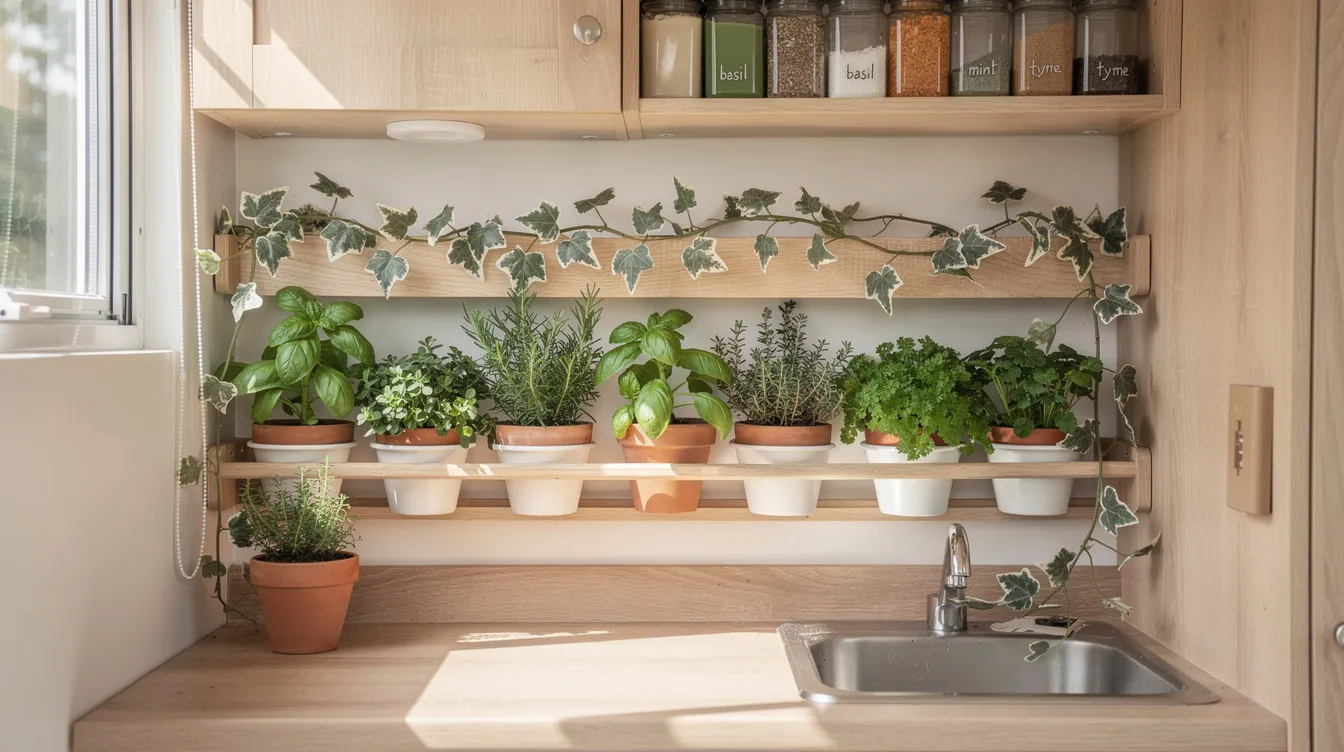
Combining ivy with kitchen herb pots adds a decorative trailing element to a functional food-growing setup. Ivy itself is not edible, but training a vine along a kitchen shelf or above a spice rack next to herbs like basil and mint creates a lush garden corner. The trailing stem of a compact cultivar like ‘Glacier’ (gray green leaves, slower growth rate) weaves between herb pots without competing for root space.
Best for: tiny homes that prioritize dual-purpose growing and want live plants in the kitchen. See more ideas in our guide to tiny gardens for small spaces.
Key strengths: kitchen windows often face east or south, providing the bright indirect light ivy prefers. Having the vine near the sink makes watering easy.
Possible limitations: kitchen humidity fluctuates with cooking. Ivy grown indoors near stovetops collects grease residue on leaves; wipe foliage monthly. Keep ivy separate from any food prep surface.
7. Bathroom Humidity Gardens
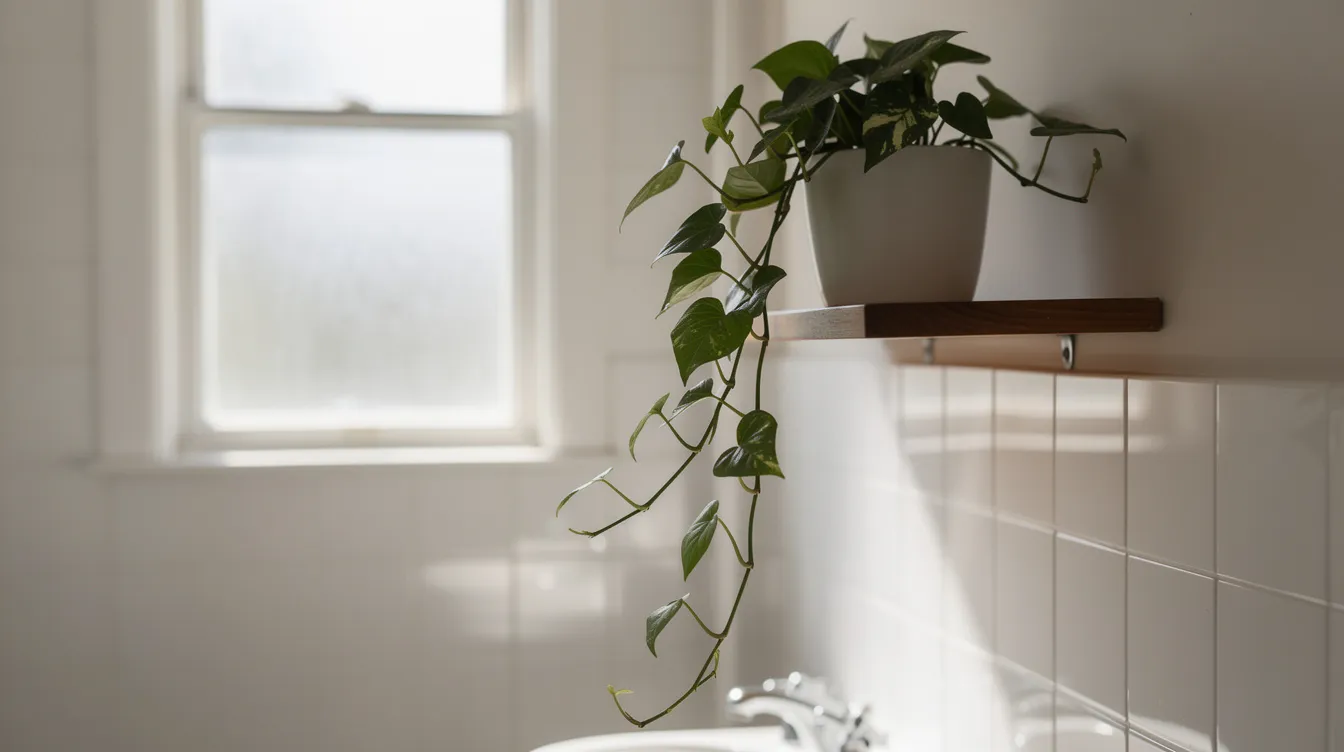
Tiny home bathrooms naturally sit in the 50-60% humidity range after showers, which lines up with the 40-60% window ivy prefers. That humidity keeps spider mites at bay; these pests thrive in dry air. Algerian ivy (Hedera algeriensis) has leaves that can grow up to four inches wide, and when those leaves mature, they add bold coverage in a small bathroom. Marengo ivy, a variegated form of algerian ivy, brings cream and green patterns to a space that often lacks visual warmth.
Best for: bathrooms with an exhaust fan or window for ventilation.
Key strengths: natural humidity reduces misting effort. Air purification benefits suit an enclosed wet room. A single pot on a shelf or wall-mounted planter adds a lovely green accent.
Possible limitations: low light in windowless bathrooms requires a grow light or solid-green cultivars with deep green foliage. Ensure shower water does not constantly splash leaves, which causes fungal leaf spots. Treat any mold promptly by improving airflow.
Quick Comparison of the Best Ivy Ideas
Idea | Best For | Floor Space Used | Light Need | Maintenance Level |
|---|---|---|---|---|
Vertical Living Walls | Max green coverage, air purification | None | Medium-High | High (irrigation) |
Hanging Basket Cascades | High ceilings, lofts | None | Medium | Medium |
Window Box Gardens | Natural light, privacy | None | High | Low-Medium |
Miniature Terrariums | Ultra-small spaces | Tabletop only | Low-Medium | Low |
Multi-Level Ladders | Corners, moveable setups | ~1 sq ft | Variable | Medium |
Kitchen Integration | Dual-purpose growing | Shared shelf | Medium | Medium |
Bathroom Gardens | Humidity-loving ivy varieties | Shelf or wall | Low-Medium | Low |
How to Choose the Right Ivy Idea for Your Tiny Home
Choose Based on Available Space
Measure vertical and horizontal availability separately. If your ceiling height exceeds 8 feet, hanging baskets and living walls work well. Below 7 feet, terrariums and window boxes keep the vine at eye level without crowding headroom. Mobile tiny homes benefit from lightweight, removable setups; avoid mounted irrigation systems that add plumbing complexity.
Choose Based on Light Conditions
Ivy prefers bright but indirect light indoors. Variegated cultivars like ‘Gold Dust’ need roughly 1,000 to 2,000 lux to hold their color. Ivy can thrive in low light conditions indoors if you pick solid-green forms; their foliage stays healthy down to about 500 lux. Below that threshold, supplement with a grow light. Avoid placing any ivy in sustained direct sunlight, which burns leaf edges. Ivy can adapt to various soil types and light conditions, but matching the right variety to your light level prevents leggy, sparse vines.
Ivy prefers temperatures between 60-75 degrees Fahrenheit. Most tiny homes sit in this range, but check spots near windows in winter where temps drop below 50°F at night.
Choose Based on Maintenance Preferences
Monitoring soil moisture weekly helps prevent overwatering of ivy. Water ivy only after the top two inches of soil dry; the top inch test also works for smaller pots. Use loose, well-draining potting mixes for ivy to ensure oxygenation of roots. Ivy thrives in all-purpose potting soil with good drainage, so a standard houseplant mix with perlite or bark is sufficient.
Ivy benefits from monthly fertilization during the growing season (spring and summer). Reduce feeding in winter to avoid salt buildup in the soil. For travelers or those who follow up on plant care sporadically, terrariums and bathroom setups forgive neglect better than living walls. You can also propagate new plants from stem cuttings in water, creating backups at no cost. This one article covers the core care tips, but the best ivy setup is the one you can maintain consistently.
If you tend to travel often, choose a self-watering pot or ask a neighbor to check in weekly.
Which Ivy Option Is Best for You?
- Choose Vertical Living Walls if you have a stationary tiny home with a blank wall and want maximum green coverage. The air-purifying benefit is measurable; english ivy removes volatile organic compounds including formaldehyde and benzene.
- Choose Hanging Cascades if your house has high ceilings or a loft. The trailing shape of a healthy vine adds movement to a static space.
- Choose Window Box Gardens if you prioritize natural light and want a privacy screen. The outer edges of variegated leaf forms catch sun and glow.
- Choose Miniature Terrariums if space is at a premium and you want a contained, low-effort setup. A single pot with needlepoint ivy or hedera helix ‘Asterisk’ fits on a bookshelf.
For a deeper look at flowering plants suited for tiny homes, pair your ivy with complementary species.
Final Thoughts
Ivy works in tiny homes because it adapts to the constraints rather than fighting them. A fast grower like solid-green english ivy fills a topiary frame or covers a bare wall within a single growing season. A compact cultivar like ‘Eva’ sits quietly in a terrarium for months between prunings. The best ivy choice depends on your specific light, space, and schedule.
Ivy provides winter cover for insects and birds when grown outdoors, and it can provide ground cover in tough areas of the garden around a tiny home’s exterior. Indoors, it attracts wildlife interest only through its glossy, berry-like fruits if allowed to mature outdoors. New growth on indoor vines stays vegetative and contained with regular trimming.
Start with one setup. Observe how your vine responds to the light and humidity in your space over a few weeks, then expand. Multiple approaches combine well: a window box in the kitchen, a hanging basket in the loft, a terrarium on the nightstand. For more ideas on making every inch count, explore our complete guide to tiny houses.