
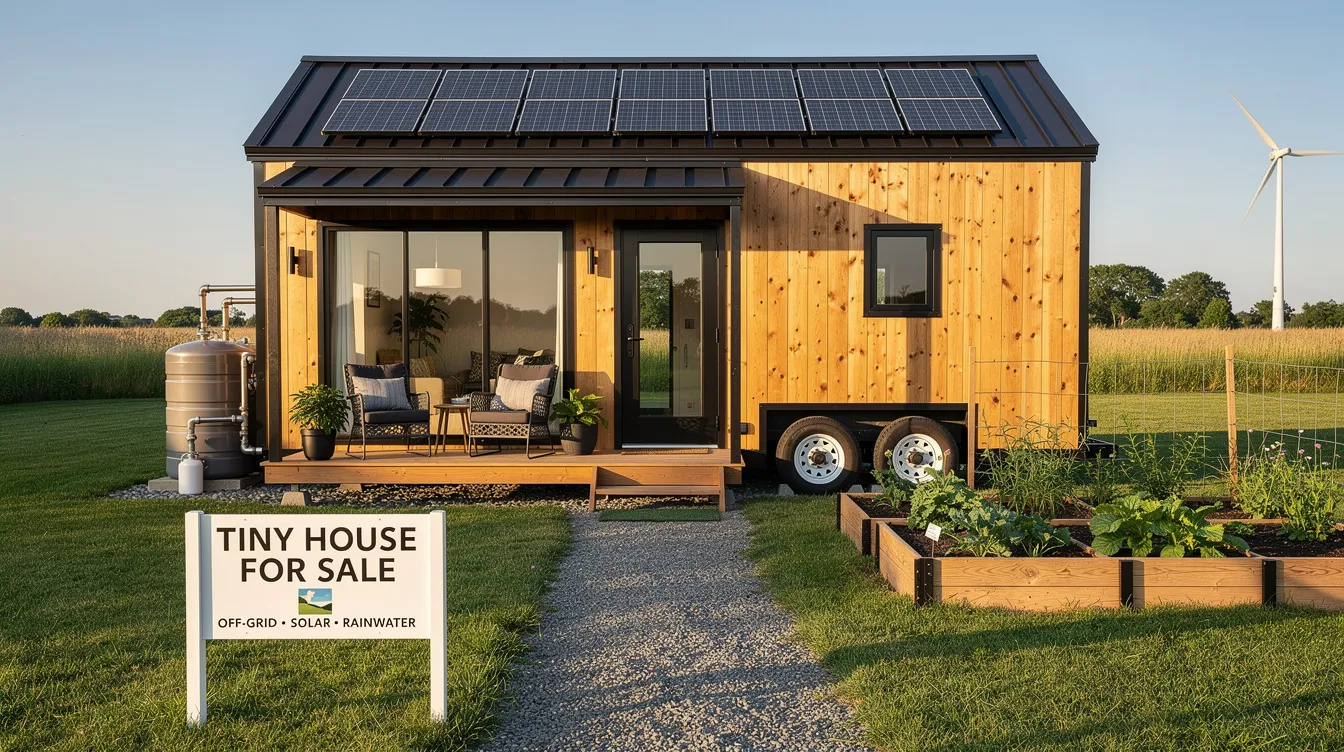
A self sustaining tiny house gives you complete independence from traditional utilities – generating its own energy, collecting and filtering water, and managing waste on-site. Whether you’re pursuing full time off grid living, downsizing for economic freedom, or setting up an off grid retreat in remote areas, these homes range from off-grid ready shells to fully equipped, turnkey dwellings. Below, we break down the types available for sale, the features that matter most, and how to choose the right model for your life.
Types of Self Sustaining Tiny Houses
Self-sustaining tiny houses fall along a spectrum defined by how much independence they deliver out of the door, and understanding the broader world of tiny houses and minimalist living can help you see where these models fit. Here are the three main categories you’ll encounter.
Off-Grid Ready Tiny Houses
These units come pre-wired for a solar panel system and pre-plumbed for rainwater or well water, but leave the final system installation to you. They’re built with roof strength for solar panels, space for battery banks, and conduits for future wiring. Off-grid ready models suit buyers who want to phase in renewable energy systems on their own budget and timeline – or those who enjoy custom builds and DIY upgrades. Many are fully insulated and finished inside, so you can live in them on grid while planning your transition to off grid living.
Fully Self-Sustaining Tiny Houses
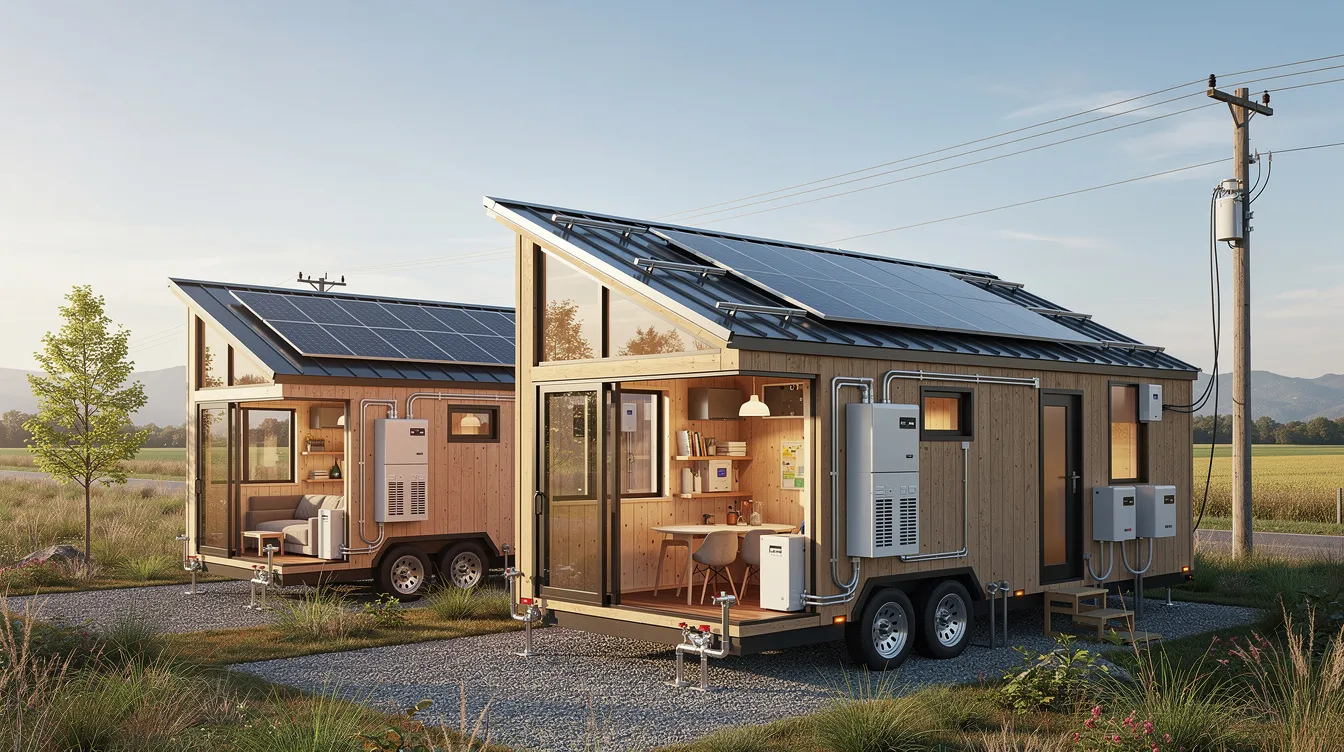
A fully self-sustaining tiny home includes every system needed for immediate independence: a complete solar array with battery storage, rainwater harvesting with filtration that filters water to potable quality, composting toilets, greywater recycling, and climate control. Self-sustaining tiny houses run entirely on renewable energy and minimize dependence on public utilities from day one. A real-world example: a 264 sq ft tiny house on wheels offered with 12 solar panels (~2.76 kW), a 28.8 kWh LiFePO₄ battery bank, a 305-gallon rainwater tank with UV purification, and a composting toilet – listed at approximately $107,500. These are best for buyers who want turnkey, self sufficient living without sourcing individual components.
Hybrid Self-Sustaining Models
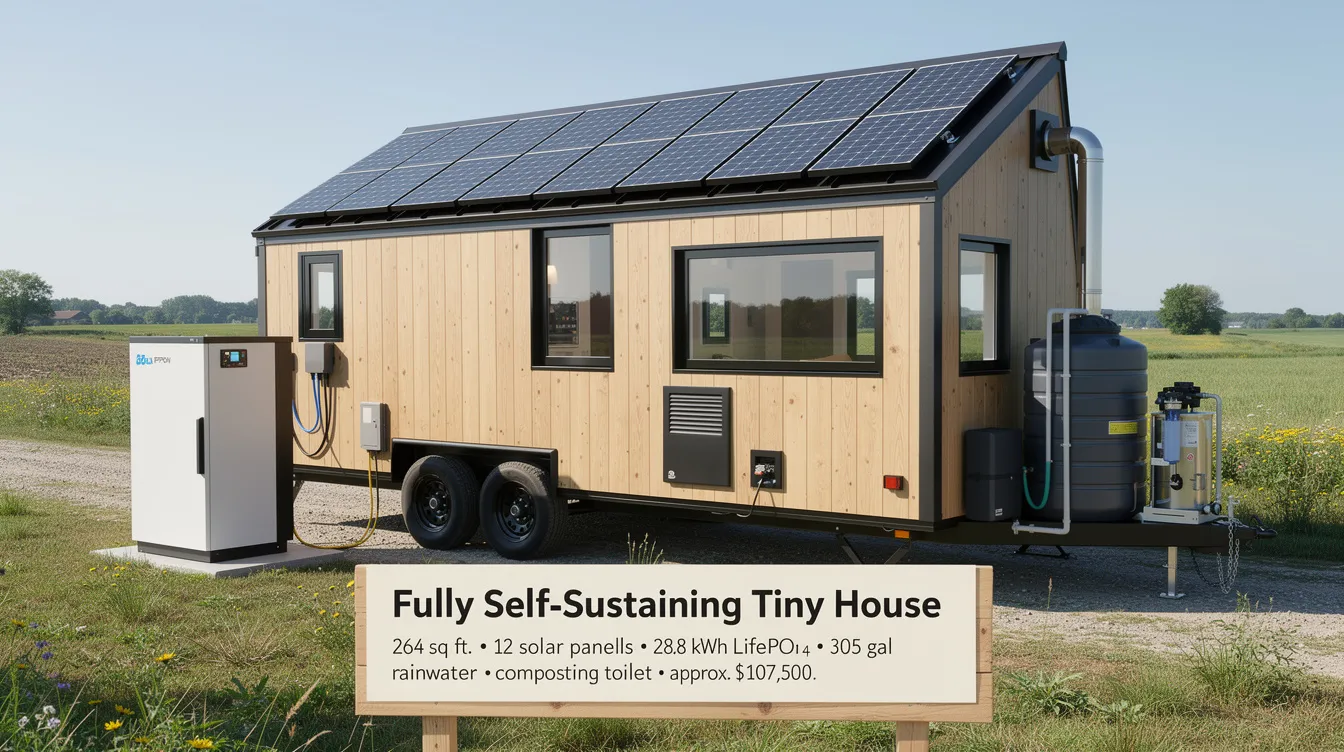
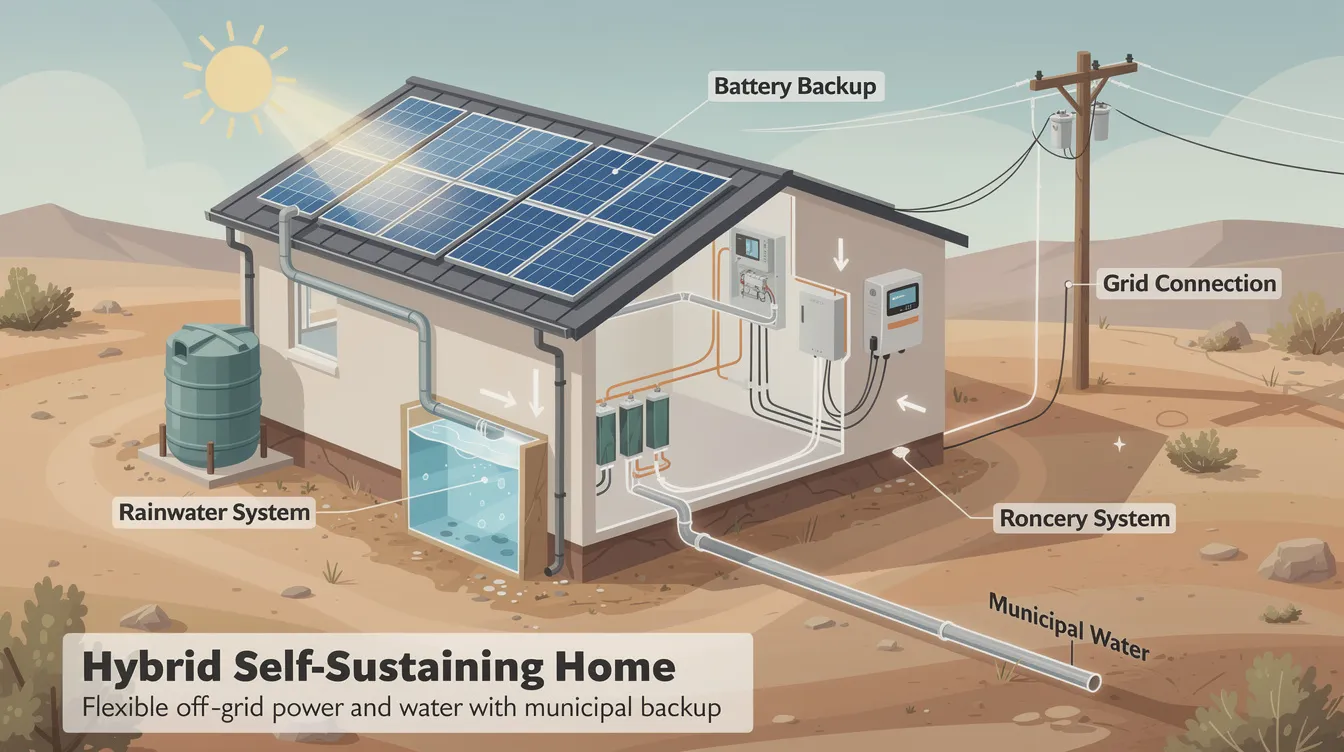
Hybrid models can operate off grid but also connect to municipal utilities when needed. You might run on solar and battery backup most of the year, then pull from the grid during cloudy winter months – or use a rainwater system but keep a municipal water hookup as insurance. This flexibility makes hybrids a cost effective entry point for buyers in extreme climates or locations with variable sunlight and rainfall. They deliver much of the sustainability benefit at a lower upfront cost than a complete off-grid system.
What to Look For in Self Sustaining Tiny Houses
The difference between a durable, self sufficient tiny home and one that disappoints comes down to four core systems. Here’s what quality looks like in each.
Solar Power Systems
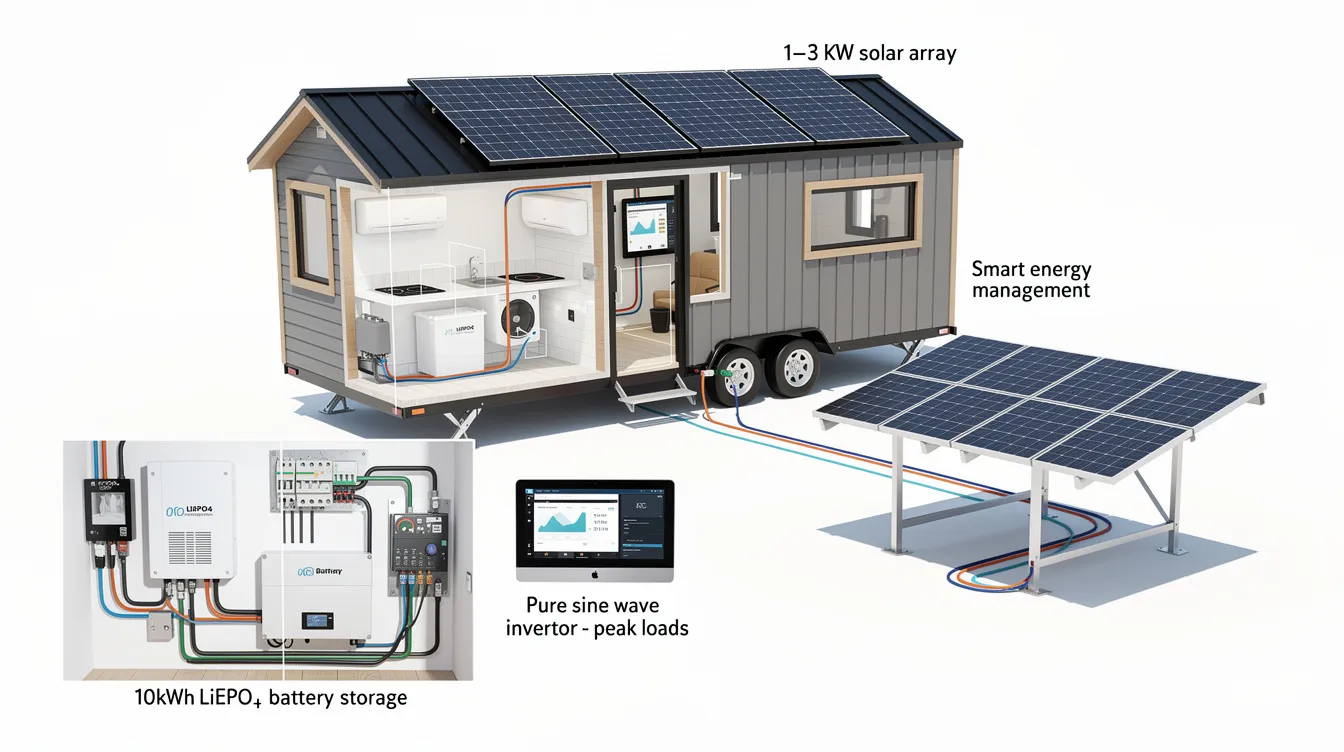
Solar panels are the most popular power source for off grid homes, and adequate capacity is non-negotiable for year-round energy independence. For a tiny house, expect a minimum of 1–3 kW of panel capacity; larger or more energy-intensive setups may need more. Battery backup systems are common in off-grid tiny house setups – look for LiFePO₄ chemistry with at least 10 kWh of storage for comfortable daily use. A pure sine wave inverter sized to handle peak loads (air conditioning, induction cooking) is essential. Advanced energy management systems are popular in high-end self-sustaining homes, with smart monitoring systems that help in autonomous energy management. Roof area on a tiny house on wheels is limited, so some models include ground-mount panels to supplement. Renewable energy systems in tiny houses typically include solar arrays and battery storage working together.
Water Management Systems
Rainwater harvesting is a common water management method for off grid living, and a reliable system includes catchment (your roof), gutters with a first-flush diverter, storage cisterns, and multi-stage purification – sediment filters, carbon filters, and UV disinfection. In arid regions, look for tanks of 500 gallons or more to ride out dry spells. Greywater recycling lets you reuse sink and shower water for irrigation, reducing total consumption. Proper planning is required for off-grid systems including water storage and waste management, so verify that the builder has addressed freeze protection in cold climates and local health department compliance.
Waste Management Solutions
Composting toilets are a sustainable waste management solution for off grid homes, eliminating the need for septic systems or sewer connections, and choosing from the best composting toilets for tiny houses ensures reliable, low-odor performance. The best models use urine-diverting designs with proper ventilation for odor-free operation. Greywater systems handle sink, shower, and laundry water through mechanical filters or gravity-flow treatment. Some higher-end builds include incineration toilets, though these require more energy. Whichever system you choose, verify that it meets local building and sanitation codes, which vary significantly by jurisdiction.
Insulation and Climate Control
High-efficiency insulation is standard in self-sustaining tiny homes because every degree of thermal performance reduces the size (and cost) of the solar and HVAC systems you need, which aligns closely with the principles behind minimalist tiny houses for sustainable living. Prefab homes use structural insulated panels for energy efficiency, delivering high R-values in walls, roof, and floor. Insulated sandwich panels improve energy efficiency further in quality builds. Look for double or triple-pane windows with low-E coatings that maximize natural light while minimizing heat loss. For climate control, mini-split heat pumps offer efficient heating and cooling in a single unit. Tiny houses require less energy to heat and cool than a traditional home, but in extreme climates, proper insulation and sealing are what make that advantage real.
How to Choose the Right Self Sustaining Tiny House
Choosing the right model comes down to matching your circumstances to the right configuration:
- Climate and Location – Harsh winters demand thick insulation, freeze-protected plumbing, and a heating backup. Limited sun hours mean a larger solar array or a hybrid setup with grid or generator backup. Arid locations need oversized water storage. Your location determines which systems need to be strongest.
- Level of Self-Sufficiency Desired – Decide how many utility “cords” you want to cut. Full independence requires complete solar, water, and waste systems, similar to the setups found in self contained tiny homes for modern off-grid living. If you mainly want to reduce your carbon footprint and utility costs but keep a safety net, a hybrid or off-grid ready model may be the smarter investment.
- Budget and Maintenance Commitment – DIY tiny home kits cost between $10,000 and $20,000, while stationary prefab tiny homes range from $35,000 to $68,000. Mobile prefab tiny homes average between $60,000 and $80,000, and custom tiny homes can start at $25,000 and exceed $200,000 depending on systems and finishes, while many affordable tiny house designs and builds focus on keeping upfront costs manageable. Off-grid tiny houses save thousands on utility bills annually, but factor in ongoing maintenance: battery health checks, filter replacements, composting toilet servicing, and solar panel cleaning.
- Mobility Needs – Many tiny homes are designed on trailers for mobility and flexibility, letting you relocate your off grid retreat as your life changes, and custom tiny homes on wheels can be tailored precisely to how often and how far you plan to travel. Tiny houses on wheels must adhere to local zoning laws regarding placement and face weight and size limits for road travel. A permanent foundation allows more square footage, larger water tanks, and expanded solar arrays – but you lose the ability to move.
Frequently Asked Questions
How much do self sustaining tiny houses cost compared to regular tiny houses?
The self-sustaining premium is real but pays dividends. A standard tiny home without off-grid systems typically costs $30,000–$80,000 for a prefab home in the 250–300 sq ft range. Adding complete solar, water, and waste systems can increase the price by $15,000–$35,000 or more – pushing a fully self-sustaining model into the $80,000–$150,000+ range depending on size, features, and premium materials. However, off grid living can save homeowners thousands in utility bills annually, and over a decade those savings can substantially offset the higher purchase price. Less energy consumption and improved utility independence are ongoing financial advantages.
What’s the difference between off-grid ready and fully self-sustaining models?
An off-grid ready tiny house provides the structural and electrical infrastructure – reinforced roof, wiring conduits, plumbing rough-ins, space for battery banks and propane tanks – but leaves system installation to the buyer. A fully self-sustaining model arrives complete with working solar, water collection, filtration, waste management, and climate control. Off-grid ready suits buyers who want to customize their setup or spread costs over time. Fully self-sustaining is for those who want to start living off grid immediately without sourcing individual components.
Can self sustaining tiny houses work in all climates?
Yes, with the right design adaptations. In cold climates, look for builds with high R-value structural insulated panels, freeze-protected plumbing, and efficient heating – many four-season models use charred cedar or durable cladding with high-strength steel frames for superior strength and weather resistance. In hot, arid regions, reflective roofing, shading, and ventilation reduce cooling loads. In low-sun areas, oversized solar arrays or wind backup compensate. The key is matching the build specification to your specific climate rather than assuming a one-size-fits-all approach.
What maintenance do self sustaining systems require?
Expect regular but manageable tasks: cleaning solar panels seasonally, replacing water filters and UV bulbs annually, servicing composting toilets every few months, inspecting battery state of charge and balance, and checking roof seals and tanks. LiFePO₄ batteries last 3,000–5,000+ cycles, so replacement is infrequent. Budget a few hours per month and a modest annual parts cost. Quality components and professional installation reduce issues significantly – always verify warranty coverage on major systems before purchase.
Browse Our Self Sustaining Tiny House Collection
The tiny house movement has made self sufficient, eco friendly living more accessible than ever, and exploring whether a tiny house for sale is right for you can clarify how this lifestyle fits your goals. Tiny homes contribute to a reduced carbon footprint due to their smaller size – consuming a fraction of the energy of a traditional home – while offering the freedom to live where and how you choose. Whether you’re looking for a fully furnished off grid cabin, a hand crafted custom build, or an affordable prefab home to serve as a new home, guest house, or office space, browsing top tiny house designs for modern living and innovative tiny homes that redefine small-space living can help you narrow in on layouts and features that fit your needs, then start by matching your climate, budget, and independence goals to the right type. Explore our collection to find the self sustaining tiny house that fits your dream.