
A 200 sq ft tiny house has roughly 80 sq ft of usable floor area after furniture. Every pot on the ground eats into that. Indoor wall planters enhance a small room while preserving floor space, turning bare vertical surfaces into planting real estate. Wall planters can transform dull walls into living art, and indoor plant walls can purify air and reduce stress (studies link indoor greenery to lower cortisol levels).
This page covers seven wall planter ideas sized and weighted for small spaces. Each one was chosen for renters, tiny house owners, and anyone who wants to bring greenery inside without blocking a walkway.
How We Chose the Best Wall Planter Ideas for Small Rooms
Wall planters come in various shapes and sizes. Narrowing the list required specific criteria:
- Space efficiency: Planters that protrude less than 4-6 inches from the wall avoid becoming obstacles. Using shallow planters contributes to a clean and less cluttered appearance.
- Weight: A 6-inch pot with moist soil weighs 4-8 lb. Lightweight planters are better for wall mounting, especially on drywall without stud anchors.
- Maintenance: Busy small space dwellers need low-effort setups. Self watering reservoirs and wick-based systems scored higher.
- Versatility: Each idea works in multiple room types; kitchen, bathroom, hallway, office, or living room.
- Cost: Budget-friendly options and DIY builds ranked above premium-only systems.
- Visual scale: Minimalist designs allow small planters to hug the wall closely without overwhelming a compact room. Choose wall planters based on material and design aesthetic.
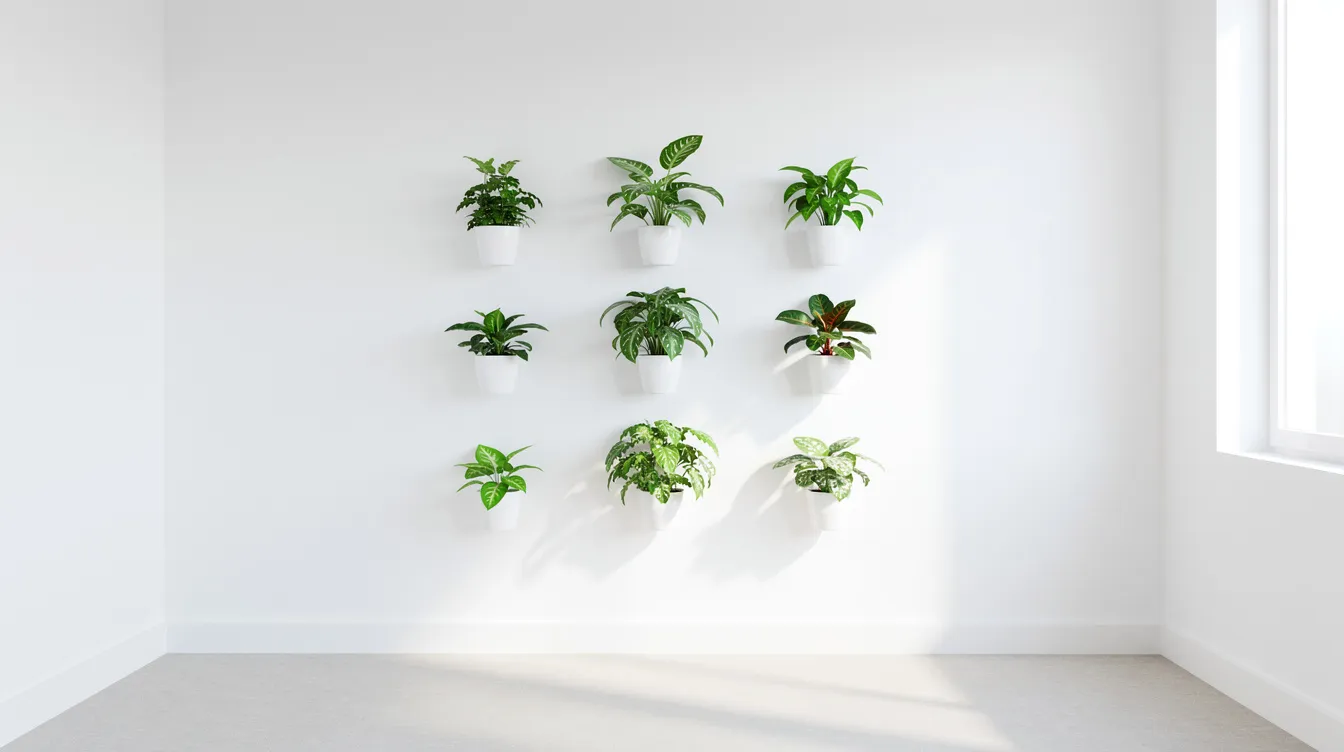
Top 7 Indoor Wall Planter Ideas for Small Rooms
1. Modular Wall Pocket Planters
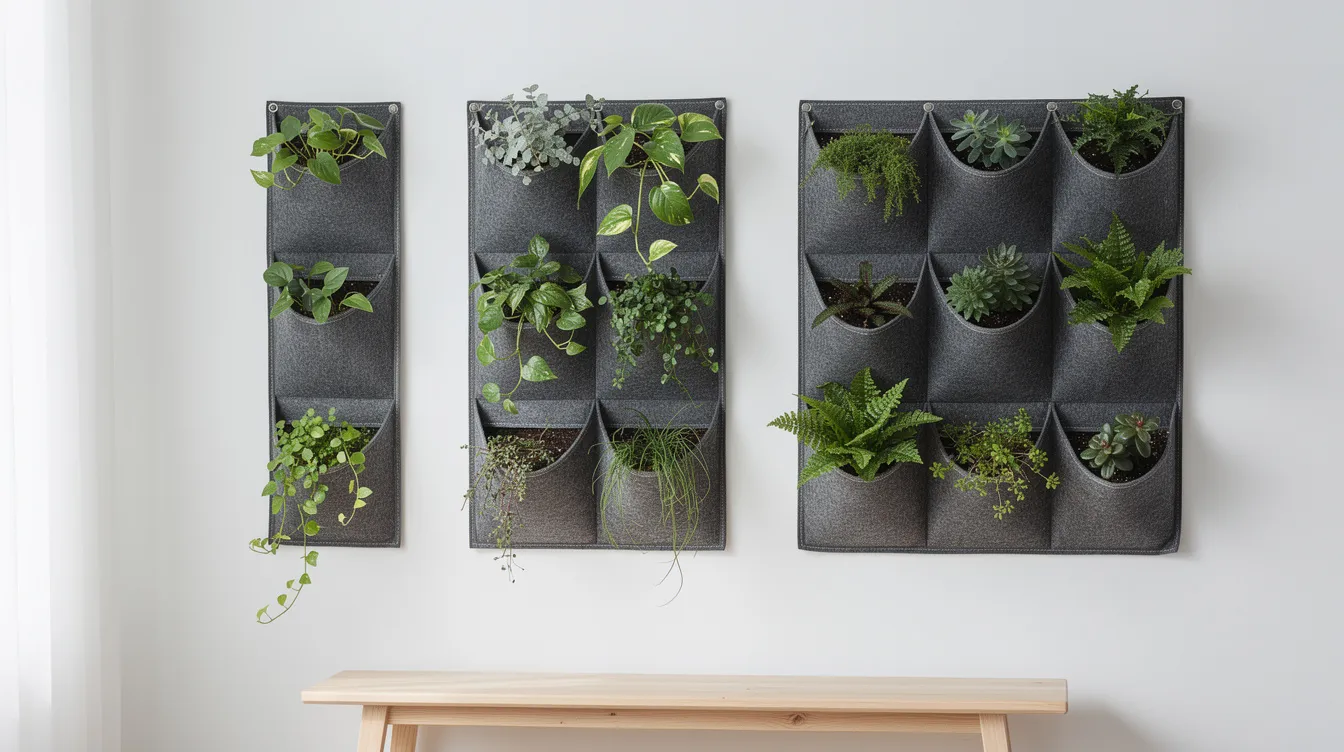
Felt or fabric pocket systems hang flat against a wall and hold individual plants in separate compartments. Products like the Vàs modular vertical planter use laser-cut felt material shipped flat-pack, with minimal dead space between pockets. Plant pockets are customizable and come in various sizes, from three-pocket strips to twelve-pocket grids.
Why It Stands Out
Each pocket weighs under 1 lb empty. You can arrange them in rows, staggered patterns, or clusters. Indoor plant walls can be customized to fit any space, so a set of pockets works on a small wall beside a doorway or across a full accent wall.
Best For
Renters who cannot drill holes. Adhesive strips rated for 3-8 lb support most pocket configurations.
Key Strengths
- No drilling required; adhesive or hook mounting
- Fits different plant sizes (3-inch succulents, 4-inch ferns, air plants)
- Remove individual pockets for watering or rearranging
Possible Limitations
- Felt retains moisture against the wall, risking mold over time
- Root depth is limited; large plants will outgrow pockets
2. Pegboard Plant Display System
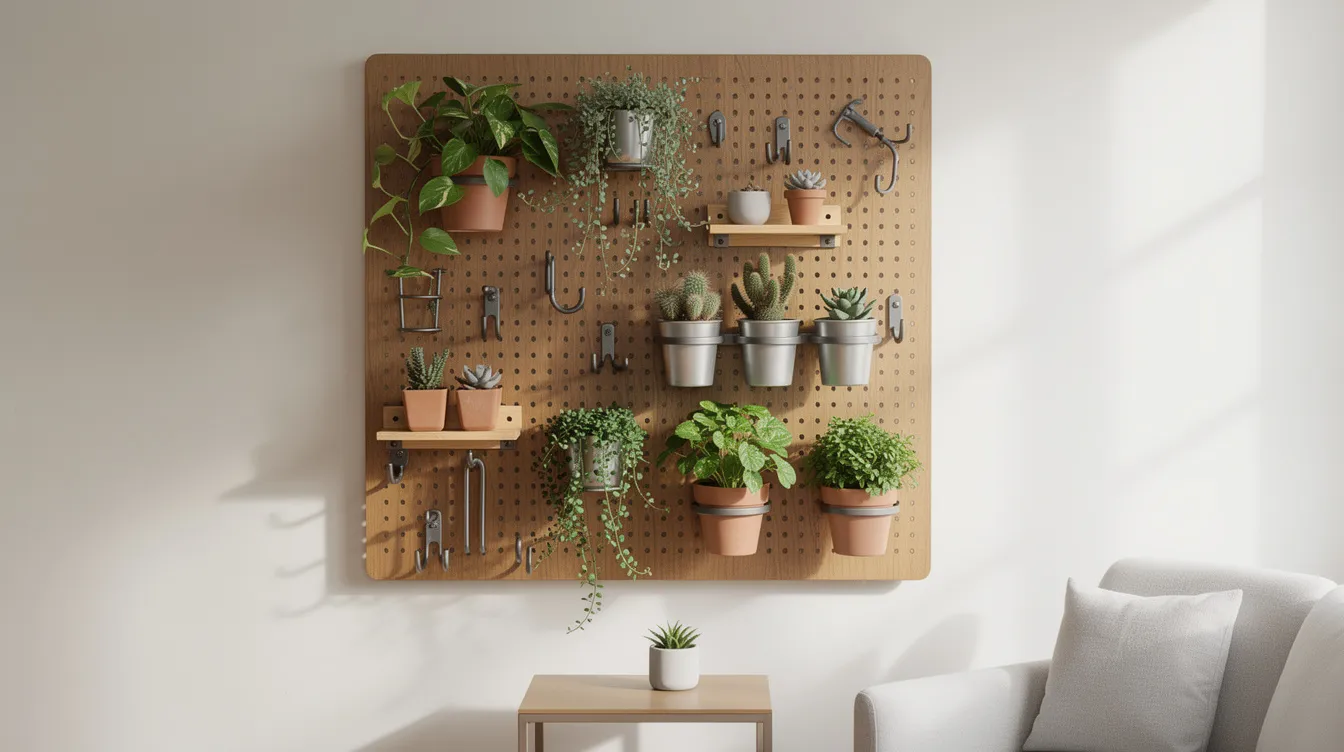
A pegboard mounted to the wall accepts adjustable hooks, small shelf brackets, and planters indoor enthusiasts can rearrange at will. Compact vertical gardens are great for clustering multiple small plants together on a single board.
Why It Stands Out
One pegboard handles pots, hooks for tools, and even a small grow light clip. It doubles as storage, which matters when every inch of a tiny house counts.
Best For
Tiny house dwellers who want plants and organization in one system.
Key Strengths
- Functions as both plant display and tool or kitchen storage
- Rearrange hooks and shelf positions in seconds
- Works in kitchens, offices, or living areas
Possible Limitations
- Requires screws into studs or heavy-duty anchors to install safely
- The industrial look does not match every home decor style
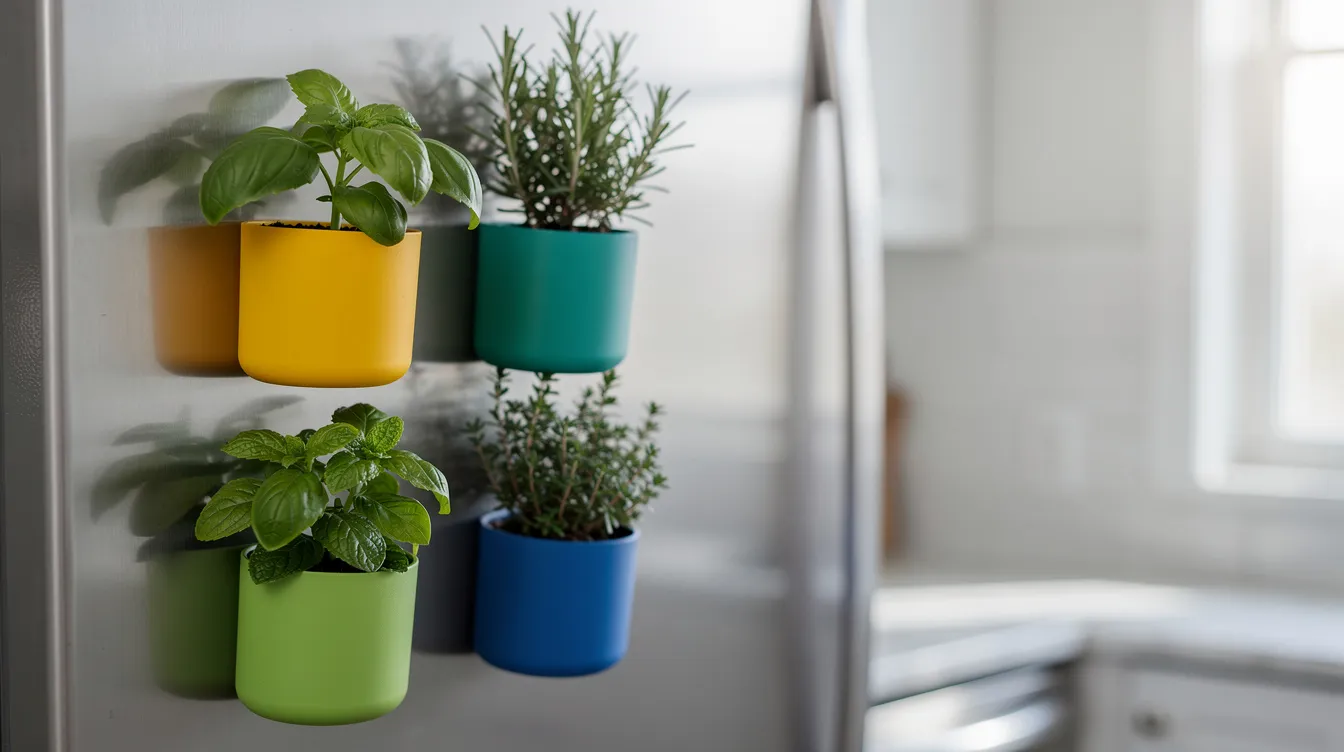
3. Magnetic Wall Planters
Small pots with embedded magnets attach to any metal surface: refrigerator doors, metal backsplashes, or a mounted metal board. Magnetic wall planters provide flexibility for arranging plant displays without any tools.
Why It Stands Out
Zero installation. Pick the planter up, set it on the fridge, done. Metal wall planters fit modern and contemporary spaces, and the clean lines add a fun, unexpected touch to a tiny kitchen.
Best For
Tiny homes with metal appliances or anyone who wants zero-commitment mounting.
Key Strengths
- No wall damage or holes
- Perfect for herbs like basil, cilantro, or mint
- Relocate with seasons or redesigns
Possible Limitations
- Works only on magnetic surfaces
- Most magnetic planters hold under 1-2 lb total (pot, soil, water), which means only small succulents or herbs fit
4. Corner Ladder Plant Stand
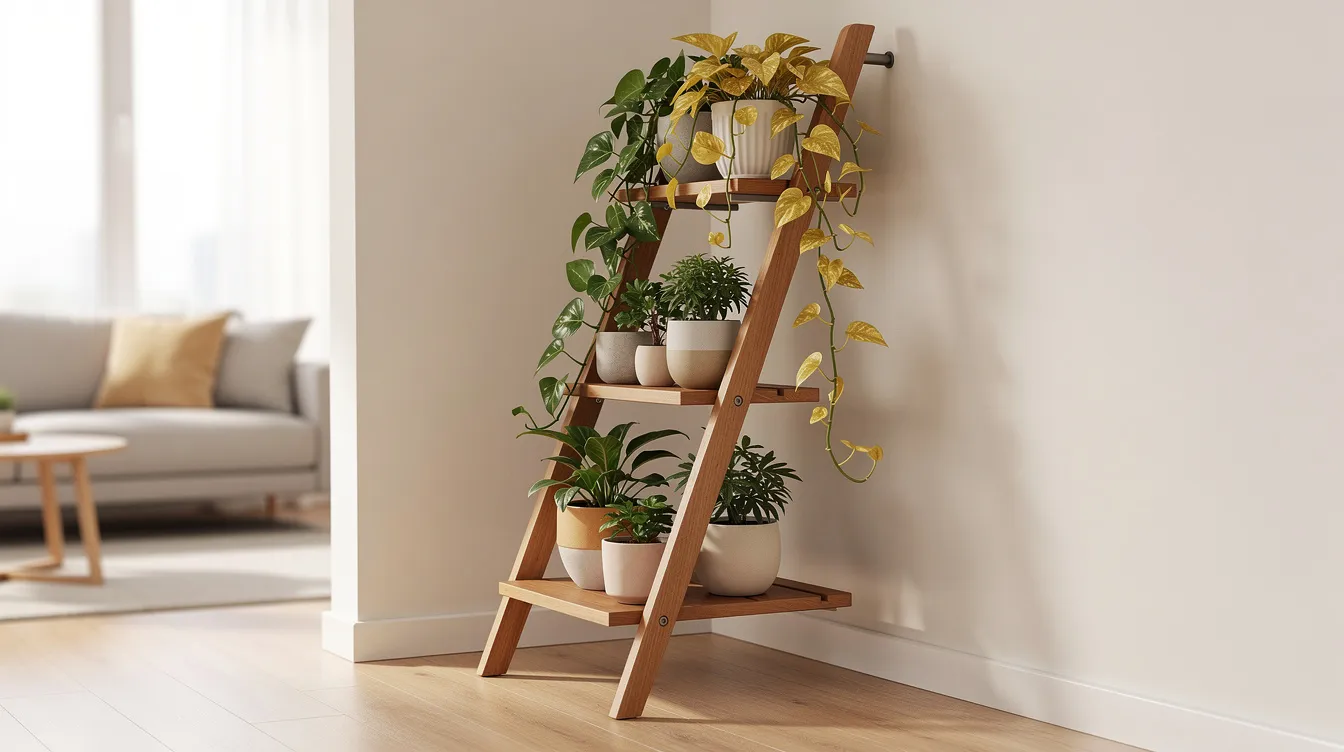
A freestanding A-frame or leaning ladder shelf fits into a room corner and provides three to five tiers for pots. Trailing plants like golden pothos and heartleaf philodendron soften corners when placed on upper shelves and allowed to cascade downward.
Why It Stands Out
Corners are dead space in most rooms. A ladder stand turns that gap into a vertical garden. Framed living wall panels or grouped pots on each shelf create a dramatic green display.
Best For
Small bedrooms or living areas with awkward corners that collect nothing but dust.
Key Strengths
- Multiple display levels for flowers, moss jars, or trailing vines
- No wall mounting needed
- Creates a plant wall effect without permanent installation
Possible Limitations
- The base footprint (typically 12-18 inches wide) uses some floor space
- Upper tiers receive less natural light unless positioned near a window
5. Suction Cup Window Planters
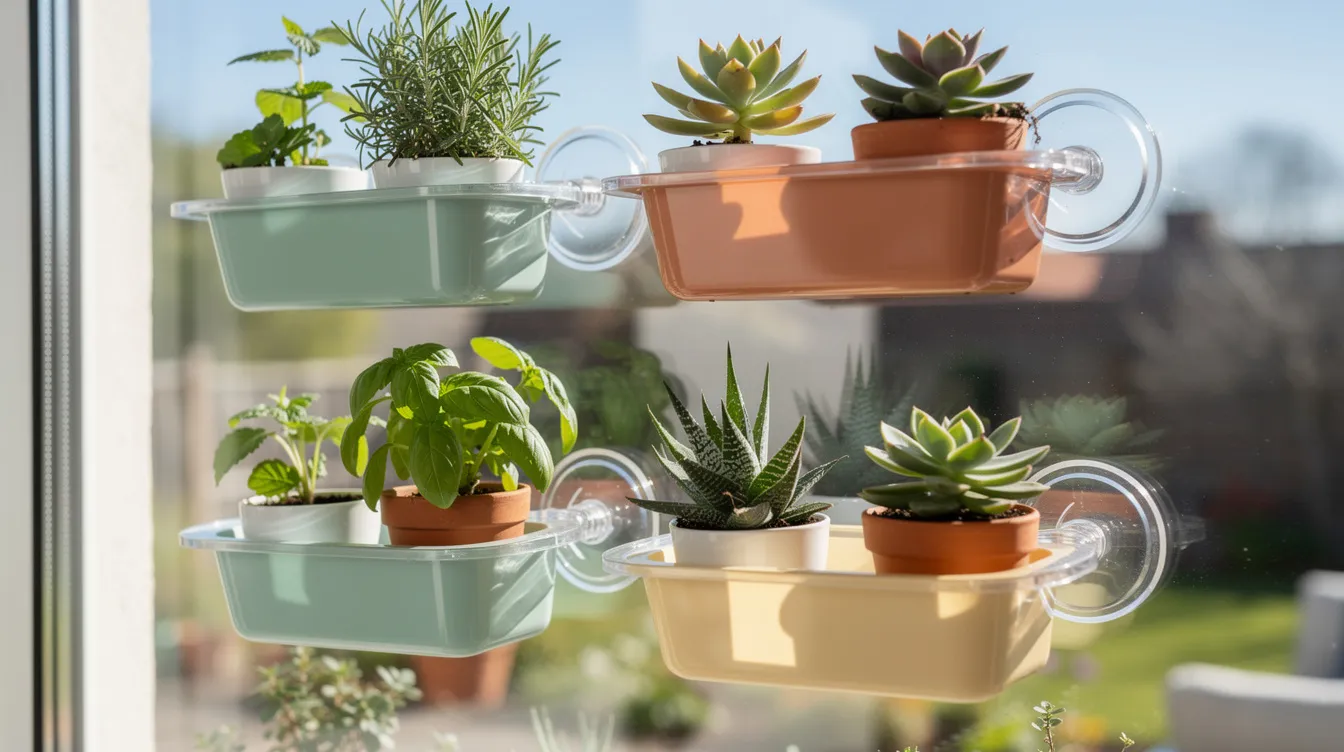
Clear or colored trays with suction cups press onto glass and hold small pots directly in the light path. Wall planters can be used indoors or outdoors effectively, and window-mounted versions capture the bright conditions herbs and succulents need.
Why It Stands Out
Windows are underused real estate. Mounting planters on glass puts plants exactly where light is strongest; indoor plants need 25-75 foot-candles for low-light species and over 150 foot-candles for edibles.
Best For
Tiny bathrooms or kitchens with limited wall space but at least one bright window.
Key Strengths
- Optimal natural light for growth
- No installation or wall damage
- Ideal for herbs, small succulents, and flowering plants
Possible Limitations
- Suction cups can fail in humidity or temperature swings; test with equivalent weight for 24 hours before adding plants
- May reduce light entering the room if heavily loaded
6. Hanging Macramé Wall Planters
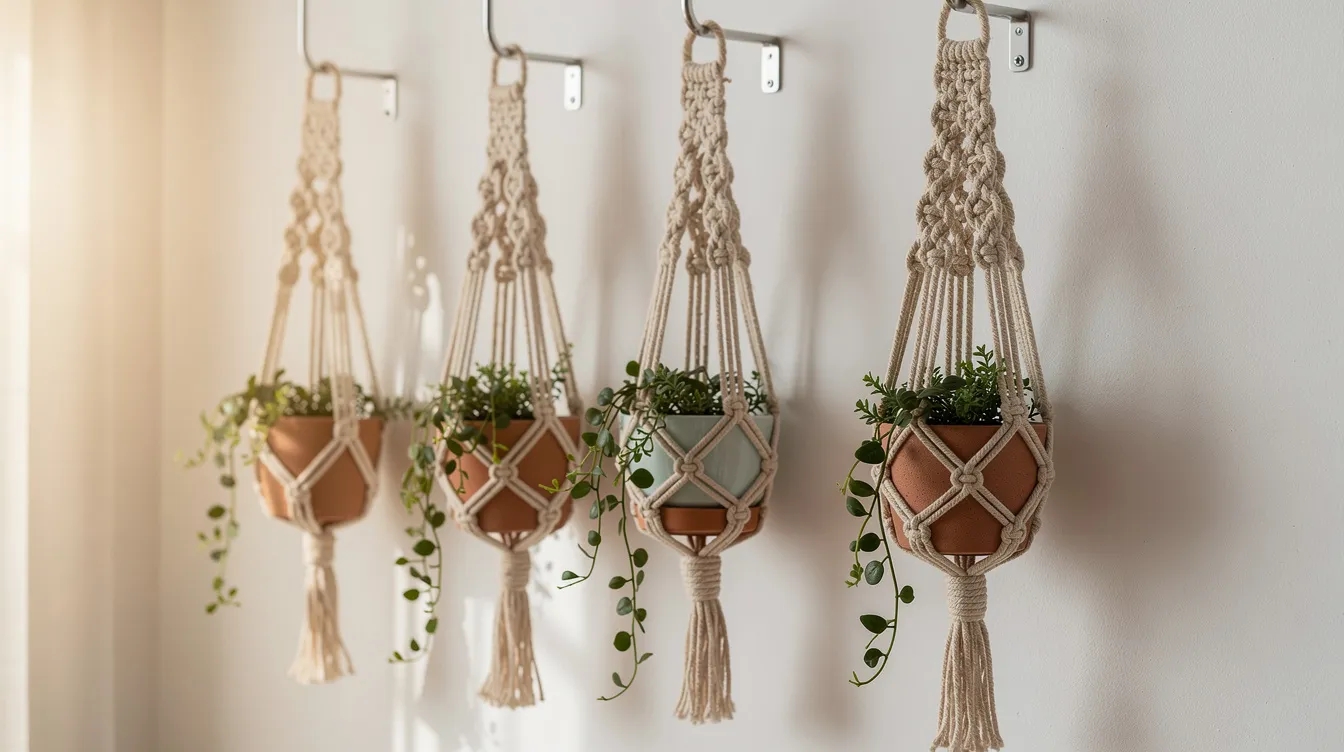
Knotted cotton or jute cord cradles hold pots and hang from a single ceiling hook or wall bracket. They add texture and a bohemian look.
Why It Stands Out
Macramé uses ceiling height rather than wall area. A single hook supports a cascading arrangement of two or three tiers. Choosing plants that require minimal care (like pothos or spider plants) suits small-space wall planters hung at ceiling level where watering is less convenient.
Best For
Bohemian or rustic-styled tiny homes. Of course, a simple white cotton hanger also fits Scandinavian or modern interiors.
Key Strengths
- Minimal mounting; one hook per hanger
- Creates cascading green curtains
- Handmade options from artisan sellers (several are best seller items on craft marketplaces)
Possible Limitations
- Cord style may clash with sleek, modern minimalist decor
- Requires adequate ceiling height; rooms under 8 feet feel cramped with low-hanging planters
7. Wall-Mounted Propagation Tubes
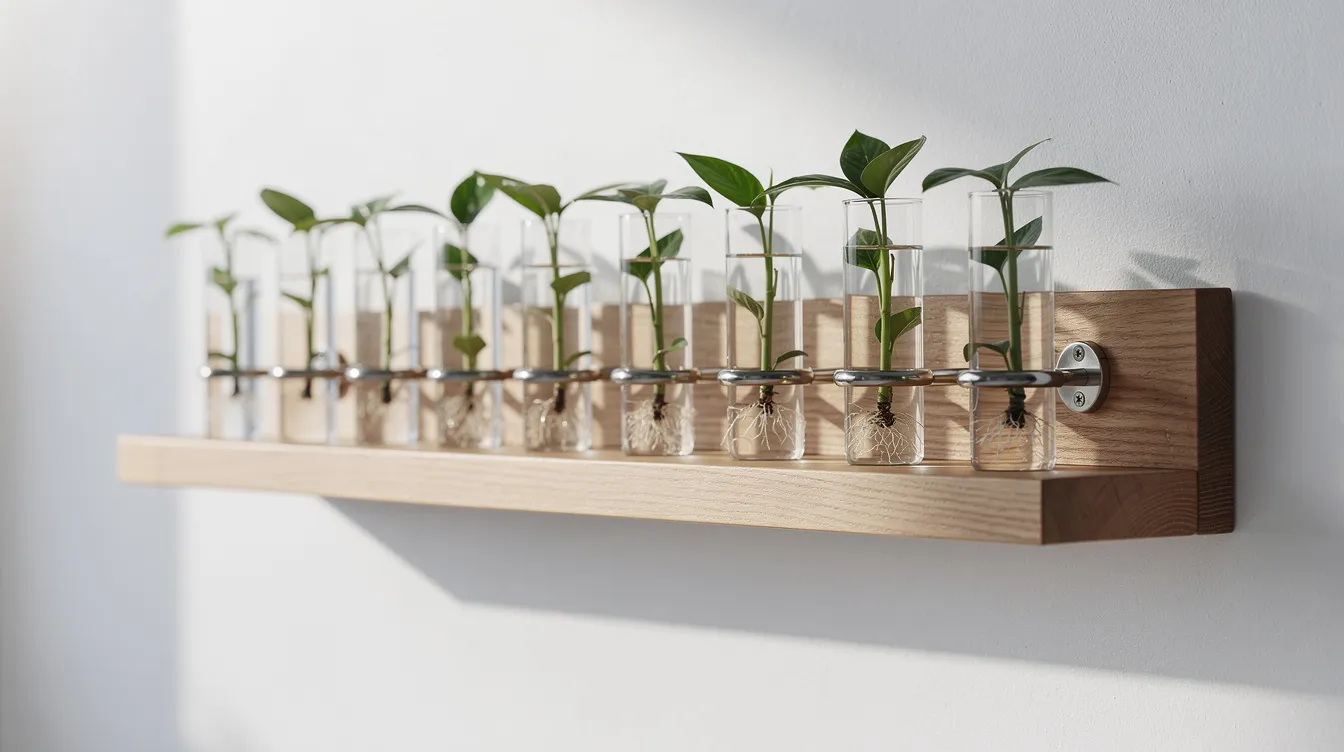
Glass test tubes or small vases mount on a wood or metal backing, holding water and single-stem cuttings. Propagation tubes are a unique way to display plants, and propagation tubes can display plant cuttings creatively in a row or staggered pattern.
Why It Stands Out
The profile is less than 2 inches deep. Hanging test tubes are ideal for tight kitchen or office walls where a standard pot would block a shelf or counter. Clear acrylic propagation bubbles make small spaces look open and airy.
Best For
Plant enthusiasts who propagate cuttings and want a living display rather than a jar on a windowsill.
Key Strengths
- Extremely space-efficient
- A simple DIY project: a wood board, test tube clips, and screws
- Works as both art and functional plant station
Possible Limitations
- Limited to water-propagated plants (pothos cuttings, philodendron nodes, herb stems)
- Water needs changing every 5-7 days to prevent algae
Quick Comparison of the Best Wall Planter Ideas
Planter Type | Best For | Mounting | Weight Capacity | Floor Space |
|---|---|---|---|---|
Modular Wall Pockets | Renters, flexible layouts | Adhesive/hooks | 3-8 lb per strip | None |
Pegboard System | Multi-use small spaces | Screws into studs | 20+ lb (stud-mounted) | None |
Magnetic Planters | Tiny kitchens | Magnet | 1-2 lb per planter | None |
Corner Ladder Stand | Unused corners | Freestanding | 30+ lb total | 12-18 in wide |
Suction Cup Window | Bright windows | Suction cups | 2-4 lb per cup | None |
Macramé Hangers | Bohemian style | Ceiling/wall hook | 5-10 lb per hook | None |
Propagation Tubes | Minimalist rooms | Screws or adhesive | 1-2 lb per set | None |
Vertical arrangements can maximize visual impact in small rooms. Wall-mounted planters favor vertical gardening in compact spaces, and creative indoor wall planters turn unused wall area into planting space. Maximizing vertical space helps bring greenery into a small room, no matter which style you select.
How to Choose the Right Wall Planter for Your Small Room
Consider Your Wall Type and Rental Restrictions
Smooth painted drywall holds adhesive strips well. Textured walls or surfaces with peeling paint do not; screws or anchors into studs are needed there. To protect your walls, test adhesive mounts by hanging a bag of rice equal to the full wet weight of the planter for 24 hours before committing. Renters should discover no-drill options (adhesive pockets, magnetic planters, suction cups) and avoid anything requiring anchors.
Match Your Available Light Conditions
Room lighting determines which plants thrive. North-facing rooms with low lux suit pothos, snake plants, and ZZ plants. South or west-facing windows support herbs, succulents, and flowers that need over 150 foot-candles. If your room lacks natural light, a clip-on full-spectrum LED grow light drawing 10-15 watts fills the gap. For spaces where live plants fail, artificial plants and fake plants on a living wall panel (like Vistafolia’s moss and fern panels) deliver green without upkeep. Self-watering wall planters include a reservoir for plants, and self-watering wall planters provide plants with consistent moisture, reducing the risk of dry-outs in hard-to-reach spots.
Factor in Maintenance and Accessibility
Self-watering planters reduce maintenance for wall plants by wicking water from a built-in reservoir. For standard pots, look for drainage holes to prevent root rot; remove planters to water over a sink, then remount once drained. Select a planter size two inches larger than the current pot to allow root growth without frequent repotting. Depending on the plant, you may need to rotate pots every week or two to prevent uneven growth toward the light source.
Which Wall Planter Option Is Best for You?
- Choose Modular Wall Pockets if you rent and want the flexibility to rearrange or remove planters when you move.
- Choose Pegboard System if you need to build a combined storage and plant display in a kitchen or office.
- Choose Magnetic Planters if you have zero available wall space but own a fridge or metal trellis board.
- Choose Corner Ladder Stand if you want to fill a dead corner with maximum plant volume.
- Choose Window Planters if bright windows are your strongest asset and you grow herbs or succulents inside.
- Choose Propagation Tubes if you prefer ultra-minimalist design and enjoy rooting cuttings.
For more ideas on using vertical space in a tiny home, see our guide to 50 creative tiny gardens ideas for small spaces.
Final Thoughts
Every wall in a small room is potential planting space. The idea that plants require counters, tables, or floor stands does not hold when adhesive pockets, magnetic pots, and suction cup trays exist. Multiple small solutions (three magnetic herb pots on the fridge, a set of propagation tubes by the desk, a macramé hanger in the living room) often outperform one large planter that dominates a room.
Pick the option that matches your wall type, light, and lifestyle. Start with one, hang it, and grow from there. That approach fits the tiny house philosophy at its core: use every inch with intention, and let even a small wall carry its weight in inspiration and greenery.