Every square inch of a tiny house carries weight-literally and visually. When your entire home fits inside 400 square feet, one wrong finish or clashing colour can feel like a design disaster that follows you from the kitchen to the loft. A nature mood board is the tool that prevents that. It lets you plan calm, connected interiors and outdoor zones using real images, real textures, and real light before you spend a single dollar on materials.
This post walks you through exactly how to build a natural mood board for your tiny home, from picking a landscape theme and pulling a colour palette to choosing the right window treatments and finishes. You will also find four ready-to-use mood board ideas-forest cabin, coastal retreat, desert minimal, and Japanese-inspired sanctuary-each described with specific HDR-style image concepts that you can recreate for your own project.
Key Takeaways
- A nature mood board is a curated collage of organic elements and textures-HDR-quality photos, wood samples, colour swatches, pressed leaves-that helps tiny house owners establish a visual direction before detailed design begins. It keeps every surface, fixture, and accent cohesive inside a space where nothing can hide.
- At Explore Tiny House, we focus on high-quality, HDR-style mood board images (wood grain, forest light, stone, plants) that show realistic contrast and detail, so your mood board communicates how colours and materials actually behave in small interiors-not just how they look in a flat Pinterest collage.
- You will learn step-by-step how to create a natural mood board for small spaces: choosing a core colour palette, selecting textures that feel grounded, and arranging the layout so your tiny house reads like open spaces rather than a cramped box.
- The article covers specific natural mood board themes-forest cabin, coastal breeze, desert calm, and Japanese-inspired minimalism-and shows how to translate each one into finishes, furniture, windows, and storage choices for real tiny home builds.
- The FAQ at the end answers practical questions about digital versus physical boards, adapting a mood board for limited budgets, and working within the constraints of rental or off-grid tiny living.
What Is a Nature Mood Board (and Why Tiny Homes Need One)?
A nature mood board is more than a pretty arrangement of pictures. It is a deliberately curated set of HDR-quality photographs, material samples, earthy colour swatches from nature-such as muted greens and terracotta-and tiny house references that together capture the feeling of being immersed in the natural world. Natural mood boards include earthy colour swatches from nature, such as muted greens and terracotta, and they use raw textures and earthy colour palettes to evoke specific emotions: calm, grounding, quiet energy. Creating a natural mood board helps in establishing visual direction before detailed design begins, giving you and anyone working on your build a shared language to make decisions.
The difference between a generic mood board and a focused nature mood board is specificity. A generic board might mix industrial metal, neon accents, and abstract art. A nature mood board zeroes in on natural light, organic textures, and landscape-inspired colours. Natural design uses earthy colours and tones. Natural themes often include woods and less refined materials-think raw cedar, unpolished stone, hand-woven linen. Natural mood boards help visualize how natural light interacts with materials, so you can predict whether that ash-toned plank flooring will look warm or cold at 4 p.m. in your loft. Mood boards help establish creative direction in design projects and can inspire creative design choices you might not have considered on your own.
Why does this matter more for tiny houses than conventional homes? Because in a 300-square-foot structure, every surface is visible from almost every angle. Natural design aims to bring the serenity of open spaces indoors, and in a tiny home, that serenity is either everywhere or nowhere. Natural mood boards can guide colour and material selection for interior projects, ensuring that your siding, interior panelling, flooring, and window placement all speak the same visual language. They create consistency by acting as a reference point for design choices throughout the entire build process. Mood boards help maintain a consistent design theme from exterior cladding to throw-pillow fabric. Natural mood boards often convey feelings associated with nature such as calmness and simplicity-exactly the atmosphere most people are chasing when they choose to live small.
- Reducing costly mistakes: A mood board aligns every material decision before a single board is nailed. Effective natural mood boards include imagery that captures the desired atmosphere, so you can test whether that moss-green accent wall clashes with your cedar countertops visually-before either one is installed. Research on micro-housing confirms that window-to-wall ratio and interface materials significantly affect both subjective comfort and perceived spaciousness, even without changing actual square footage. Your mood board helps you get those ratios right.
Natural mood boards facilitate communication among design teams and clients. Whether you are working with a prefab manufacturer, a local carpenter, or just your partner over coffee, a physical or digital board lets everyone acknowledge the same aesthetic target. At Explore Tiny House, we use nature mood boards across our galleries and style guides to help readers compare different tiny home directions-forest retreat versus coastal calm versus desert minimal-and pick a path before diving into floor plans.
How to Create a Natural Mood Board for Your Tiny House
This is the step-by-step section. By the end, you will have gathered high-resolution images, a core colour palette, and real material references to build a practical nature mood board for your tiny home project. The process is designed to be actionable: concise paragraphs, clear steps, and supporting bullets so you can follow along whether you are sitting in your current apartment or standing on a bare trailer frame.
Step 1: Choose a nature theme based on your actual site and climate.
Don’t pick “coastal” because it looks great on Instagram if your tiny house will sit in a pine forest in Washington state. Your primary landscape should match where the home will actually live. This matters for material durability (cedar performs differently in desert heat versus coastal salt air) and for visual coherence-your windows will frame a real view, and the interior should feel like a continuation of it, not a contradiction. Common starting points: forest, coast, mountain, desert, meadow. Pick one.
Step 2: Collect 15–25 HDR, high-quality photographs.
These should show natural light filtering through trees, close-ups of timber grain and stone, plant leaves, sky gradients at sunrise and sunset, and tiny houses in environments similar to yours. Focus on images with clear, crisp details and high dynamic range so the mood board communicates realistic colour and light. HDR photography uses bracketing techniques-three to nine exposures blended together-to preserve detail in both bright window views and shadowed interior corners. This realism prevents surprises, like a wood tone that looks warm in direct sun but ashy in shade. They focus on visual language derived from natural elements like plants and landscapes.
Step 3: Pull a core palette of 4–6 colours.
From your collected images, extract:
- One main wood tone (the dominant material for walls, cabinetry, or cladding)
- One wall or ceiling colour (lighter tones increase perceived height)
- One accent colour (terracotta, sea-glass green, wildflower pink)
- One greenery tone (the plant life you will bring indoors)
- One or two dark anchor shades (charcoal, bark brown, slate) for depth and grounding
A cohesive natural mood board should have a balanced mix of textures, colours, and imagery. Natural mood boards utilize dynamic lighting integration to illustrate how light affects textures, so test your swatches near a window at different times of day.
Step 4: Add real-world samples.
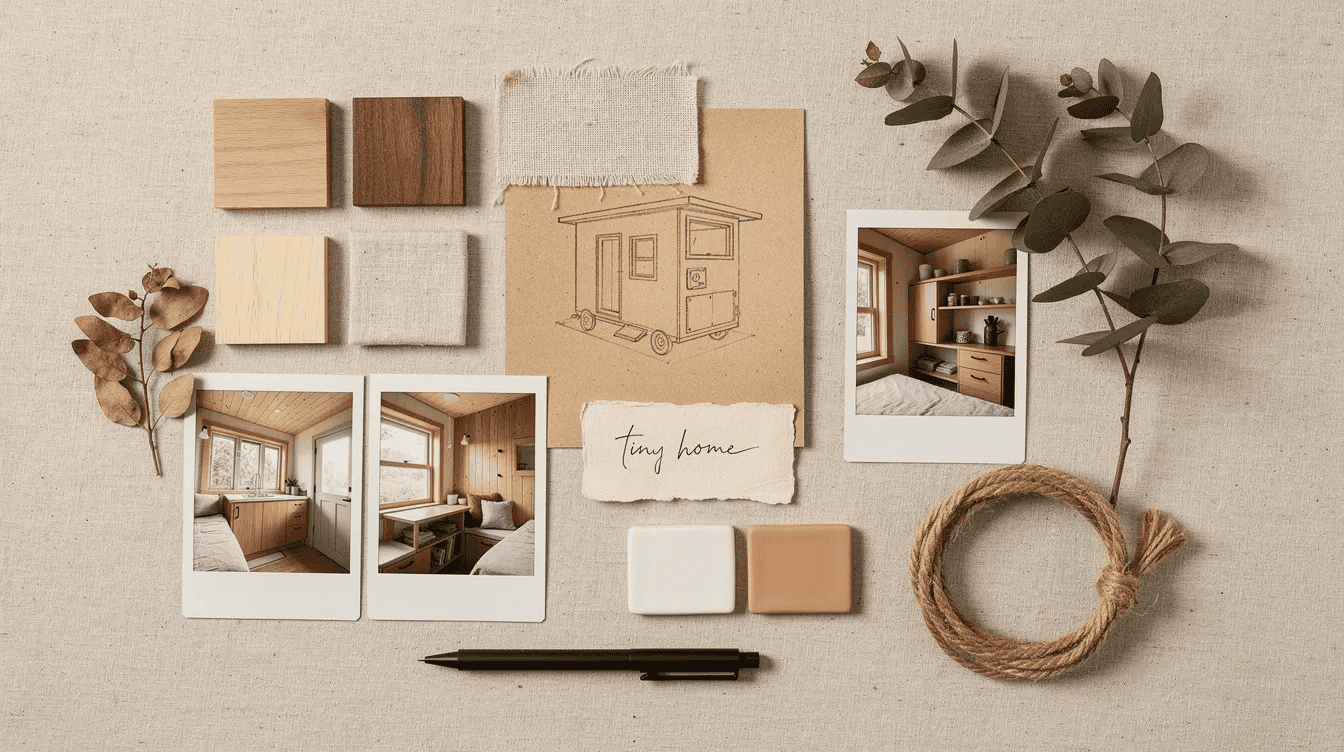
They emphasize tactile experiences by highlighting different textures. Go beyond the screen. Gather wood offcuts (cedar, pine, bamboo), linen or cotton swatches, small pebbles, or pressed leaves. Photograph or scan these in high resolution to blend into a digital board-or pin them directly to a physical corkboard. They serve as a tactile blueprint for grounding design projects in authenticity, and the touch of a real material tells you things a photo cannot.
Step 5: Arrange digitally or physically.
Use free digital tools like Canva, Milanote, Figma, or Pinterest to arrange your nature mood board if space inside a tiny home is tight. For people who prefer tactile layouts, a magnetic board or corkboard on a wall works well. Either way, keep the calmest, lightest images in the centre. Frame the edges with darker textures and accent colours to mimic how a small room feels grounded yet open.
Step 6: Create a separate exterior mini-board.
Keep a dedicated mini mood board for exterior cladding, roofing, and deck materials. This ensures the outside of your tiny house still reflects the same nature mood board as the interior. The transition from porch to front door should feel seamless.
Step 7: Treat the board as a living document.
Mood boards are not one-and-done. Revisit yours after visiting tiny house communities or model homes. Swap out anything that feels too busy or artificial. They influence sustainable practices in design by promoting the use of local and raw materials-so if you discover a local reclaimed-wood supplier, update your board accordingly. Natural mood boards guide material sourcing for eco-friendly and sustainable products.
Step 8: Save versions with dates.
Log each iteration with clear labels: “Forest Cabin Tiny House – Nature Mood Board – June 2026 – v2.” This makes it easy to track decisions, share with builders, and avoid backtracking. Continuing to refine your board over weeks or months is normal and encouraged.
Choosing the Right Nature Theme for Small Spaces
Not every nature theme suits every tiny house. A desert palette in a rainy Pacific Northwest forest will feel disconnected the moment you look out the window. This subsection helps you match theme to space, climate, and personality.
Forest Cabin
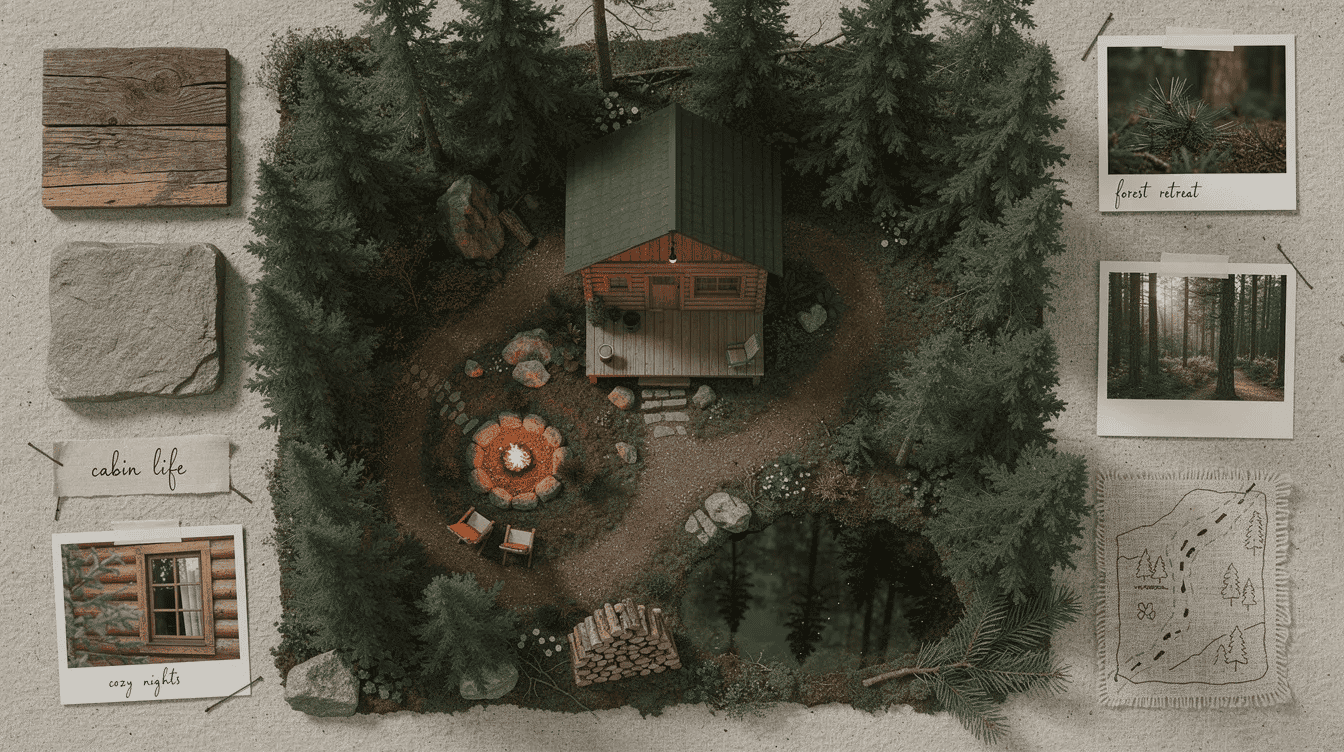
Deep greens, bark browns, soft off-white, moss textures, and HDR images of dappled light through evergreen canopy. Ideal for wooded plots and off-grid cabins. Natural themes often include less refined materials-rough-hewn beams, knotty pine, clay-washed walls. If this direction appeals to you, read more ideas in our forest interior design guide.
Coastal Breeze
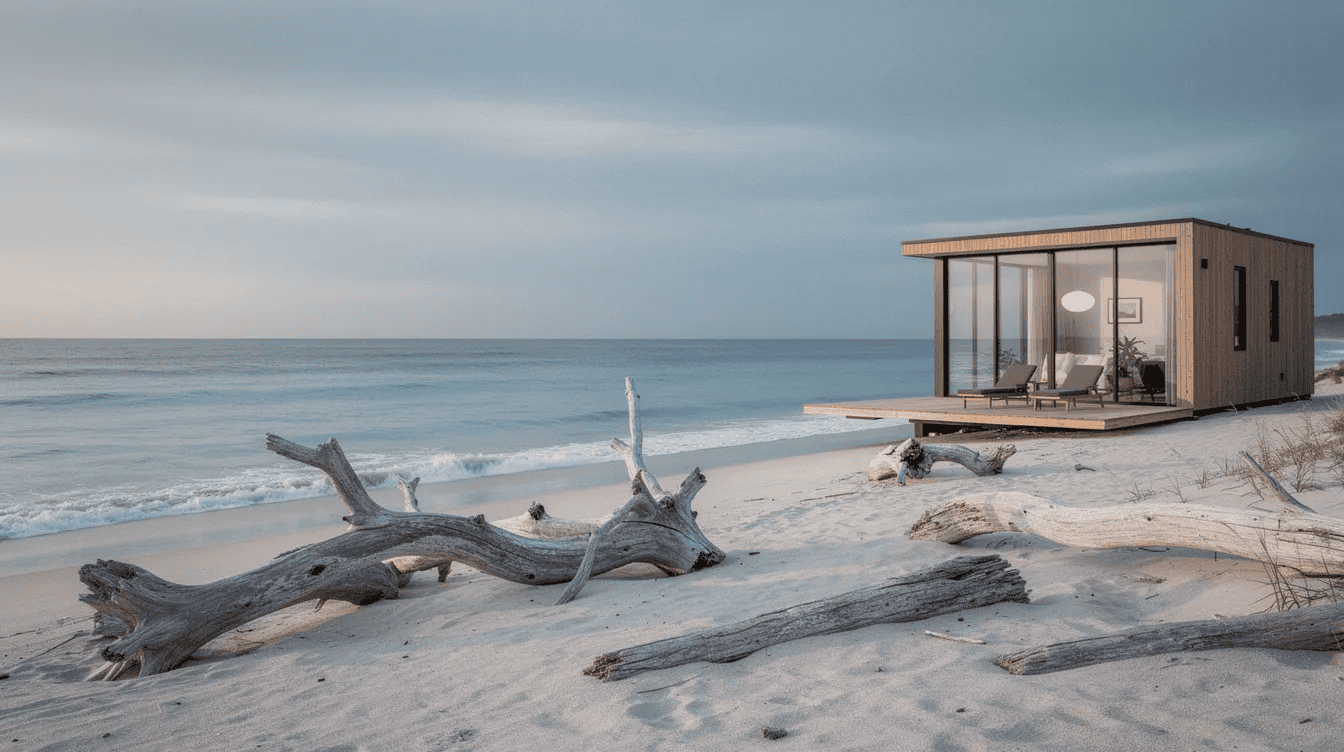
Driftwood gray, sand beige, seafoam green, muted sky blue, and linen textures. Suited for tiny homes near lakes, beaches, or wide-open coastal plains. Incorporate vibrant greens and reds for natural beauty in small accent details-a trailing pothos, a coral-toned cushion-against an otherwise quiet palette. For more ideas on this direction, explore our coastal tiny home interiors.
Desert Calm
Terracotta, warm sand, sun-bleached wood, cactus green accents, and strong sunlight. Passive-solar conscious choices matter here: deep overhangs to shade midday sun, clerestory windows positioned high on walls to control heat gain, operable windows for cross-ventilation. Natural mood boards use earthy colours and textures that align perfectly with this arid landscape.
Mountain Meadow
Slate gray rock, wildflower accents (soft yellows, gentle pinks), warm knotty pine, and big-sky blues. Great for tiny houses in alpine or highland regions. Panoramic windows framing distant peaks, skylights for stargazing, and wool textiles for warmth.
Japanese-Inspired Minimalism
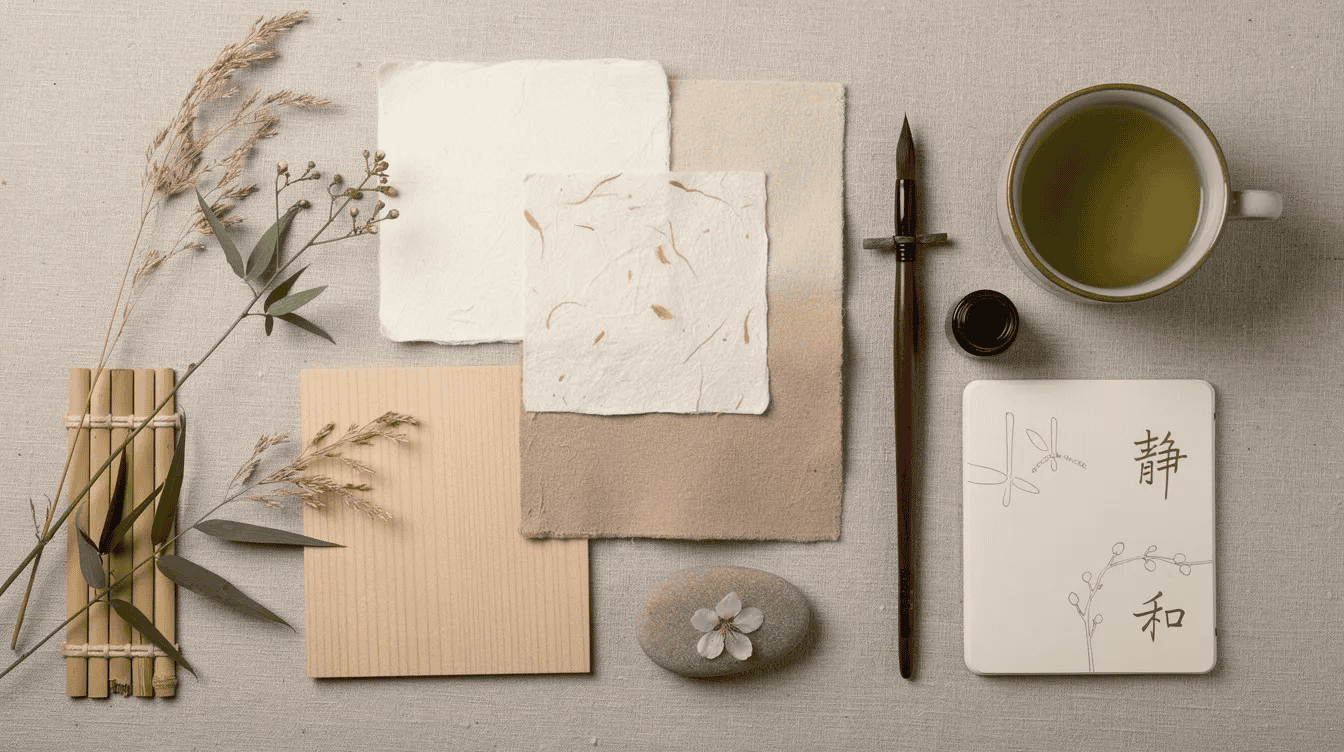
Light woods like spruce, birch, and bamboo. Rice-paper-style textures, stone, and generous negative space. Minimal hardware, sliding doors, low platforms instead of bulky furniture. This theme pairs beautifully with tiny houses in Japanese style and works especially well in compact footprints where every object earns its place.
Pick only one main theme and possibly one secondary nuance-for example, “Forest Cabin with Japanese Calm.” Trying to combine three themes will overcrowd both your mood board and your real-life tiny house.
Translating Your Nature Mood Board into Tiny House Design Choices
A mood board is only useful if it leads to real specs. This subsection turns visuals into concrete decisions: finishes, fixtures, window placement, and storage choices that support the design you have pinned to your board.
Map images to materials. For each photo on your nature mood board, assign one real product. That close-up of cedar bark becomes cedar tongue-and-groove wall panels. The jute rug texture becomes a jute runner by your entry door. The smooth river stone becomes a microcement countertop (which, when professionally installed, can last 15–25 years or more). This translation step is where inspiration becomes a shopping list.
Prioritize windows and doors. Lighting is crucial for achieving a natural feel in homes. Use large picture windows, skylights, and glass doors on the side with the best natural view, mirroring the open spaces and light in your reference photos. Window treatments can enhance natural light in a room, and window treatments control natural light in your home. Plantation shutters offer earthy tones and textures that complement a forest or mountain theme. Solar screens limit glare while preserving outdoor views in sun-heavy desert builds. Woven wood shades enhance natural beauty in interiors and add warmth. Custom window treatments can use exotic materials like bamboo for a Japanese or tropical feel.
Design storage that disappears. Built-in storage with flat, clean-faced cabinetry in colours pulled from the mood board keeps functionality from visually fighting the natural aesthetic. Think flush-panel doors in your wall colour, integrated pull handles, and toe-kick drawers beneath bench seating. For more on how modern tiny house designs handle this, browse our curated gallery.
Balance textures. Pair rough surfaces (jute, raw wood, stone) with smooth ones (white plaster, simple cabinetry, matte metal hardware) to keep the tiny house from feeling visually noisy. In spaces under 500 square feet, three or four texture types repeated consistently across the room create calm. Adding new textures in every corner creates chaos.
Layer your lighting. The HDR-like contrast in your mood board-bright highlights, detailed shadows-should be echoed with layered lighting in the actual build. Daylight through well-placed windows, warm LED strips tucked under cabinets, and adjustable task lamps create depth. A single overhead fixture flattens everything and kills the atmosphere your mood board worked so hard to establish.
Add living plants. One or two plants that echo the greenery on your board-a small fern, a snake plant, a trailing pothos-reinforce the connection to nature without overwhelming your square footage. A single plant on a window shelf does more for the feel of a tiny house than a dozen throw pillows.
Tiny House Nature Mood Board Ideas (With HDR-Style Image Concepts)
This section gives you four concrete mood board recipes, each one focused on tiny homes, nature, and high-quality HDR photography references. Think of each as a single-page board: specific colours, specific textures, specific types of images to collect so a designer, photographer, or even just you with a phone can visualize the board clearly.
Each idea emphasizes how to make a tiny space feel like open spaces by controlling light, vertical lines, and colour intensity. Visually, these pair well with 16:9 or vertical HDR image collages showing close-up details alongside one or two wide tiny house shots.
Nature Mood Board 1: Forest Canopy Tiny Cabin
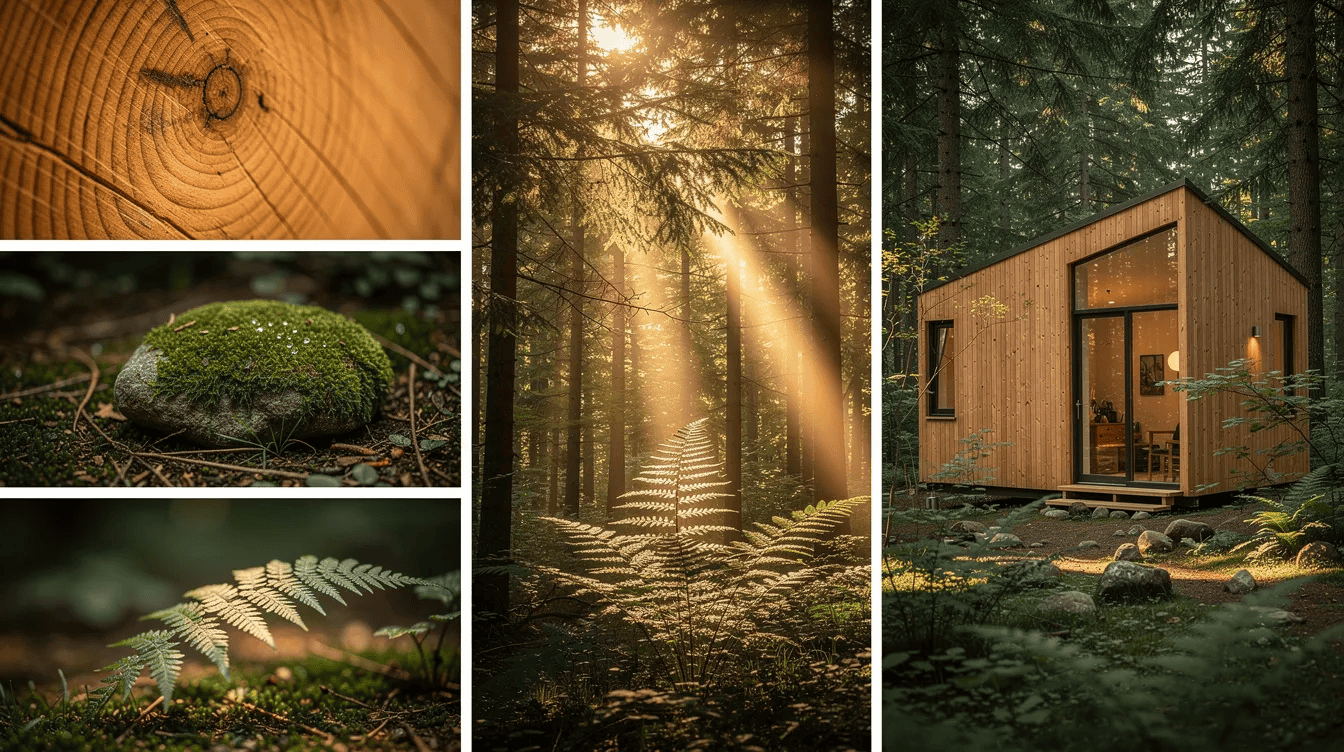
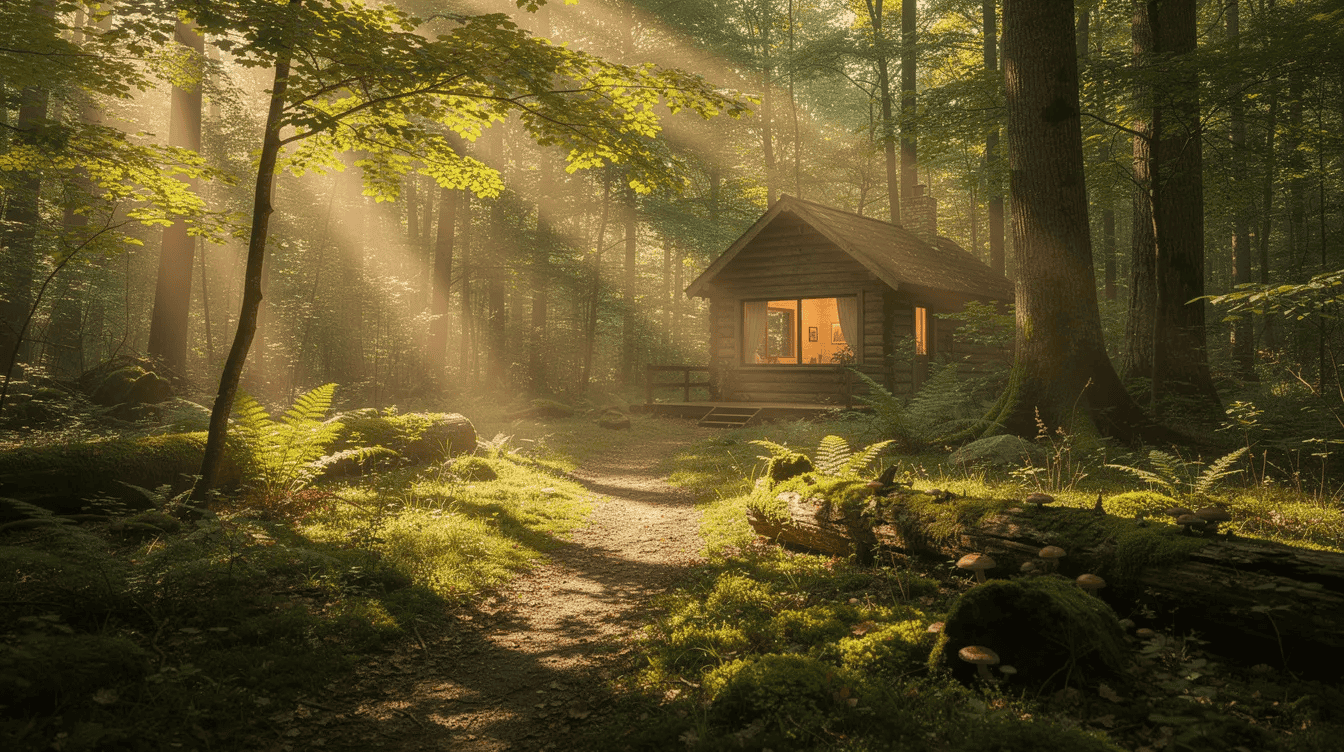
Palette: Moss green, cedar brown, mushroom gray, warm white, charcoal accents-all sampled from HDR photos of evergreen forests taken at golden hour.
Images to collect:
- Overhead tree canopy with sun rays breaking through dense branches
- Macro shots of wet bark, lichen patterns, mushroom caps
- Forest floor covered in ferns and fallen needles
- A tiny cabin with a large picture window facing the woods, interior light glowing warm against the cool forest backdrop
Materials and finishes: Vertical cedar cladding on the exterior (lifespan 20–40 years with restaining every 3–5 years). Interior matte clay or limewash walls. Dark metal hardware. Wool throws in muted greens draped over a built-in bench. A jute runner down the main walkway to echo forest textures underfoot.
Open-space staging: Built-in bench seating along the main window wall. Minimal upper cabinets on the forest-facing side-keep sightlines clear to the trees outside. A fold-down dining table that stores flat against the wall when not in use. The view does the decorating.
HDR interior photos for the board: Balanced exposures showing detailed shadows in exposed wood beams and bright-but not blown-out-forest views through the windows. This is the kind of image that makes people feel something when they look at the mood board.
Nature Mood Board 2: Coastal Open-Space Tiny Retreat
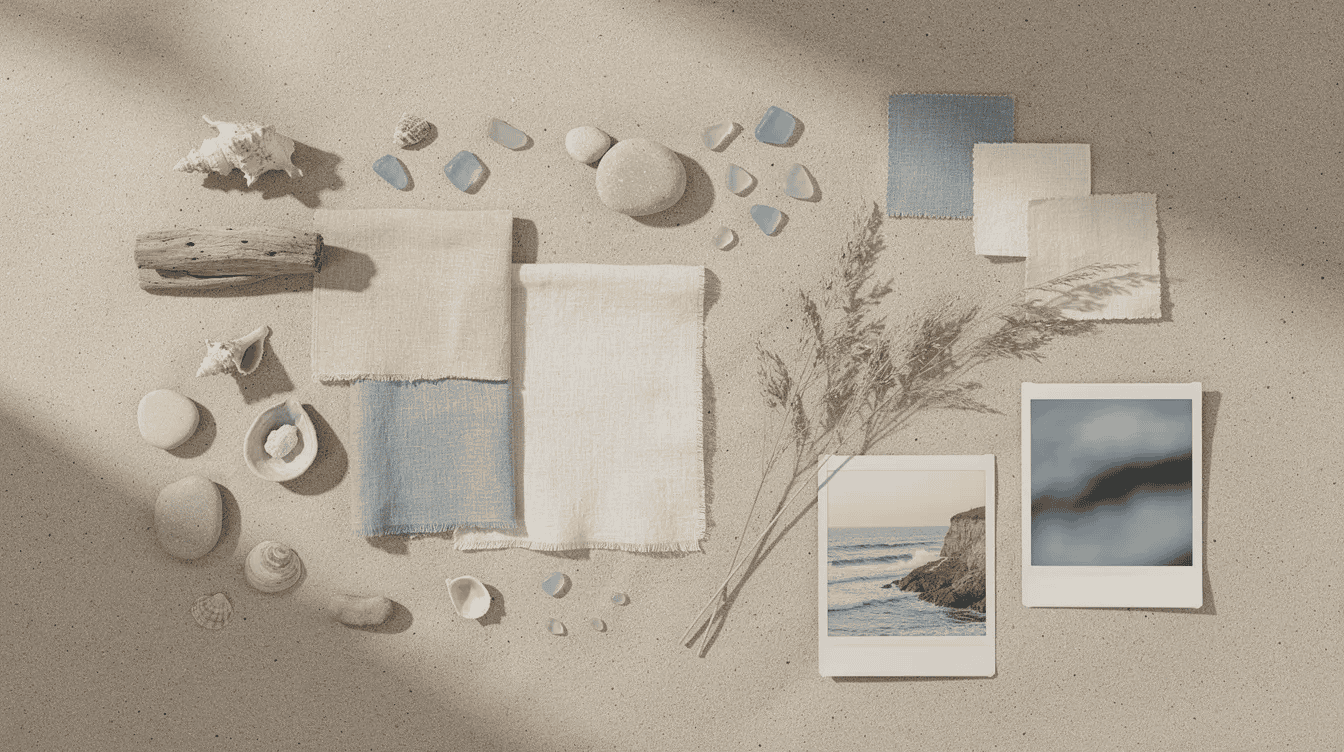
Palette: Soft sand, driftwood gray, sea-glass green, cloud white, and a single navy or deep teal accent drawn from beach and horizon photographs.
Images to collect:
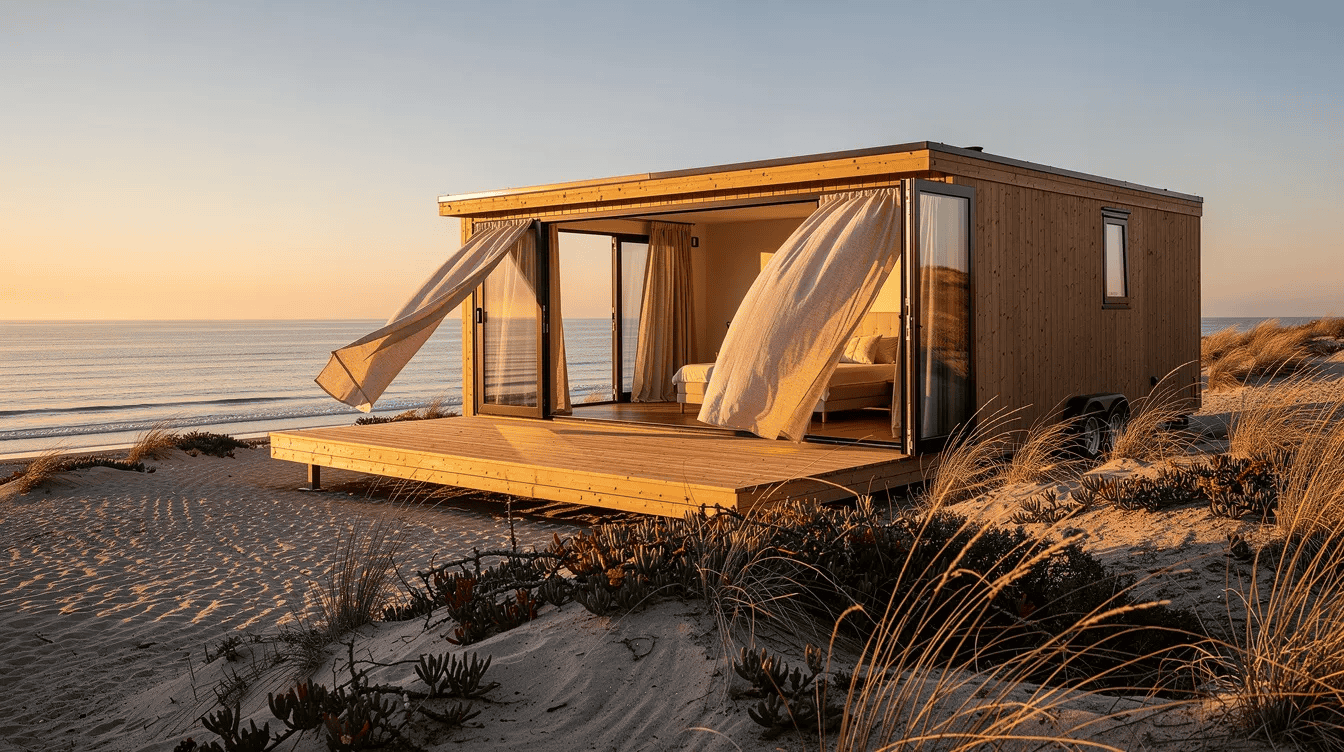
- Windswept dunes with sea grass bending in the breeze
- Close-ups of sun-bleached driftwood with visible grain and cracks
- Ripples of shallow turquoise water over pale sand
- Linen curtains blowing inward through an open tiny house window
- A tiny house deck facing an open shoreline or lake with morning mist
Design connections: White shiplap or smooth plaster walls. Light oak or bamboo flooring. Pale woven blinds. A built-in window seat with hidden storage beneath, evoking a ship’s berth. For more inspiration on this vibrant approach, browse our best coastal tiny home interiors.
Light strategies that mimic open spaces: Large glazing on the side with the best view. Bright reflective surfaces-light-coloured plaster, white cabinetry, pale textiles-to bounce natural light deep into the room. Minimal overhead cabinets so sightlines travel straight from interior to horizon.
Time-of-day HDR images: Include shots at sunrise (warm peach tones on water) and blue hour (cool silver light on dunes) so the mood board captures how the tiny house should feel across different parts of the day, not just at midday.
Nature Mood Board 3: Desert Minimal Tiny Home
Palette: Terracotta, sun-bleached beige, soft blush, cactus green, and dark cocoa brown-inspired by HDR images of desert rock formations and succulents at midday.
Images to collect:
- Cracked earth textures with warm ochre tones
- Agave rosettes and prickly pear close-ups
- Sandstone cliffs layered in rust, cream, and pink
- A low, simple tiny house with deep overhangs casting graphic shadows on smooth plaster walls
Material translation: Smooth plaster or microcement walls in warm sand tones. Warm-toned plywood cabinetry with minimal hardware. Woven seagrass rugs. Terracotta pots with drought-tolerant plants-echeveria, aloe, small barrel cactus. For tiny house communities in desert climates, check our Arizona community guide.
Open-space strategies: Large operable windows opposite each other for cross-ventilation. Built-in seating instead of bulky sofas. A clean, linear kitchen that keeps the centre of the home open and unobstructed. Every piece of furniture should earn its footprint.
High-contrast HDR mood board images that show sharp sunlight and deep shade remind the designer to integrate shading devices, overhangs, and solar-conscious window placement. If the mood board looks blindingly bright in every photo, you have forgotten about the reality of living in desert heat.
Nature Mood Board 4: Japanese-Inspired Tiny Sanctuary
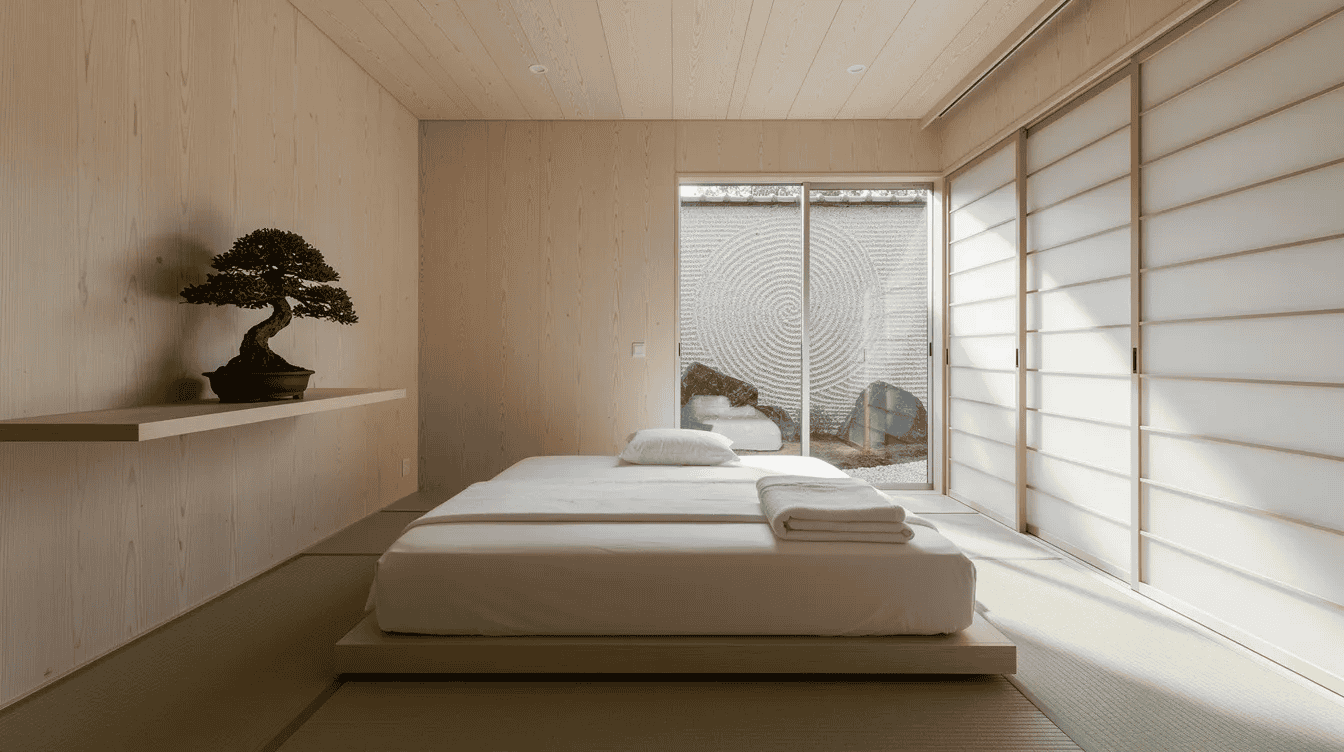
Palette: Pale spruce or birch, warm off-white, charcoal, soft moss green, and occasional muted indigo-drawn from gardens, tatami rooms, and stone lantern scenes.
Images to collect:
- HDR shots of shoji screens with soft backlighting revealing wood grain
- Raked gravel patterns in a zen garden
- Moss gardens with stepping stones and a single stone lantern
- Smooth river stones stacked by a water feature
- Minimalist tiny house interiors with strong horizontal lines and no visible clutter
Design translation: Low sleeping platforms instead of bulky bed frames. Sliding shoji-style doors to save space and allow flexible room division. Smooth light-wood cabinetry with no visible hardware-push-latch mechanisms keep surfaces clean. Paper-like window coverings that diffuse light rather than block it.
Negative space is the design. Use images with generous breathing room, clear surfaces, and uninterrupted wall planes. This mood board should remind you-every time you look at it-to resist the urge to fill every shelf, hang art on every wall, or introduce another decorative object. In a tiny house, what you leave out matters as much as what you put in.
This theme pairs especially well with off-grid tiny homes seeking a calm, contemplative retreat that still feels deeply connected to surrounding nature. For more on this aesthetic, read our guide to Japan small house design.
FAQ
These FAQs cover practical questions about nature mood boards for tiny houses that the main sections above didn’t fully address. Each answer is kept direct and concise.
How do I use a nature mood board if my tiny house is still only on paper?
Pair your mood board with your floor plans. Pin or overlay key images near the relevant zones-kitchen, loft, deck, bathroom-so you can see how the palette and textures relate to actual spatial layout. If you are working digitally, use a tool like Figma or Canva to place your mood board images side by side with elevation drawings. Share these paired documents with your builder or prefab manufacturer so everyone can agree on the aesthetic direction before framing begins. Even at the earliest planning stage, a mood board helps you make confident decisions about window size, material type, and storage placement that would be expensive to change later.
Can I create an effective nature mood board entirely on my phone?
Yes, and many tiny house owners do exactly that. Apps like Pinterest, Canva, and Milanote all have mobile versions that let you collect, crop, and arrange images on the go. Organise boards by zone-exterior, interior, loft-and use only high-resolution images so colours stay reliable when later viewed on a larger screen or sent to a printer. The one thing to forget about doing exclusively on your phone is judging colour accuracy: screens vary. Before committing to a paint or stain based on a phone-screen mood board, always test a physical swatch in the actual light of your build site.
What if my budget is small-does a nature mood board still help?
Mood boards are especially valuable on tight budgets. They help you prioritize where to spend: a few high-impact materials (like a real wood countertop or quality window coverings) make the biggest visual difference. Match smaller, less visible elements (shelf brackets, drawer pulls, baseboard trim) to those hero materials using affordable alternatives that still sit within your chosen nature palette. Use low-cost natural accents-plants from a local nursery, pebbles collected on a hike, a thrifted wool blanket-to amplify your theme. A mood board keeps you from impulse-buying things that look great in isolation but clash with everything else in 250 square feet.
How can I keep my tiny house from feeling cluttered when I love lots of natural textures?
Limit your mood board to three or four main textures and repeat them across the space rather than introducing new ones in every corner. Use smooth, calm backgrounds-plain plaster walls, simple painted surfaces-and concentrate texture in smaller accents: a single jute rug, one woven throw, or a feature wall of reclaimed wood. The key is rhythm, not variety. When your eye can predict the next texture, the space feels calm even though it is full of tactile richness.
Can a nature mood board work for a rental or community tiny house where I can’t change everything?
Absolutely. Renters can use a nature mood board to guide portable, non-permanent choices: textiles (curtains, bedding, rugs), plants, removable peel-and-stick wall finishes, framed nature photography, and table lamps with warm light. None of these require altering the built structure. In tiny house communities, shared outdoor spaces-fire pits, communal decks, garden planters-can also be styled using a shared nature mood board to bring visual cohesion between individual homes without requiring every owner to match interiors.
Your tiny house deserves a design plan as intentional as your decision to live small. A nature mood board is where that plan starts-and it costs nothing but a few hours of honest looking at the landscapes, materials, and light that make you feel at home.
Start building your mood board today. Grab your phone, step outside, and photograph the nature that surrounds your future tiny home site. Collect images that make you feel something. Pull colours. Touch materials. Then arrange it all into one board that says: this is how I want to live.
If you want more ideas and inspiration for your build, browse our full tiny house design galleries or drop a comment below with your mood board theme-we read every one. You can also subscribe to our email list for weekly tiny house tips and community spotlights delivered straight to your inbox.