
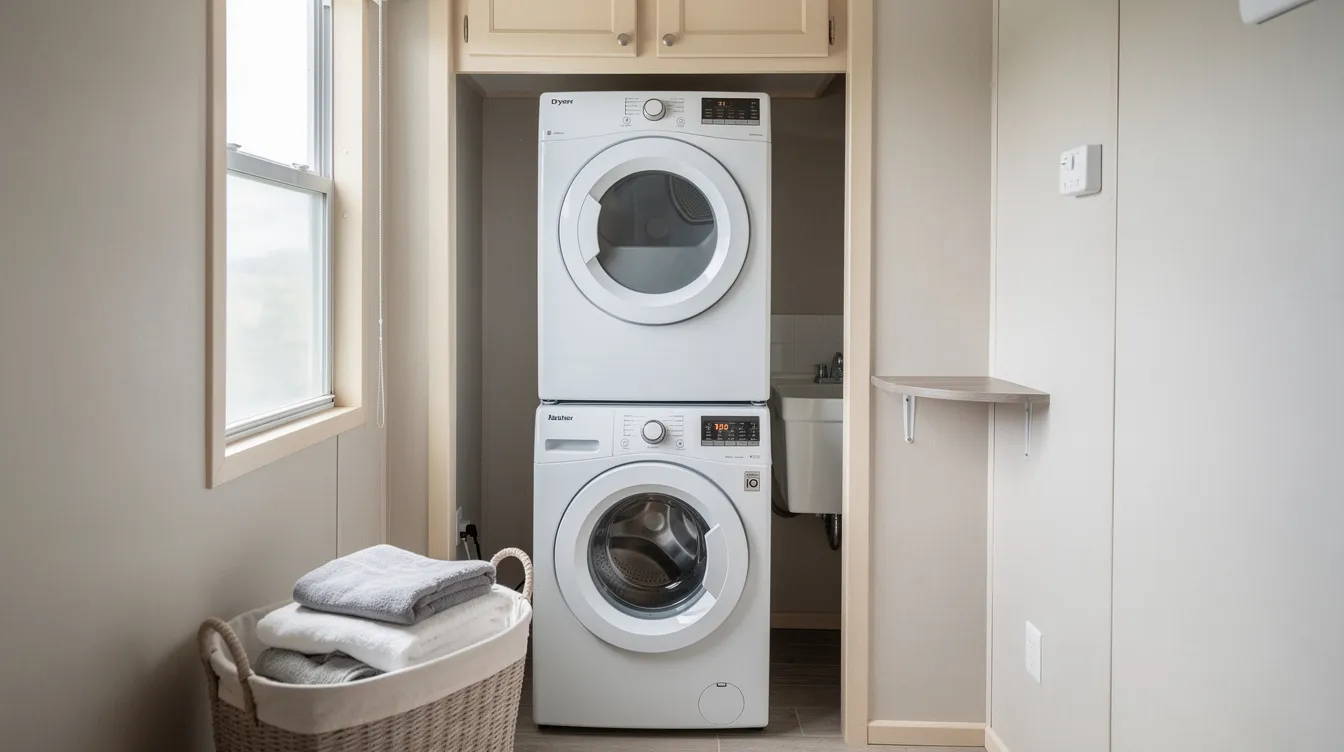
A stackable washer and dryer is one of the smartest ways to add full laundry capability to a mobile home without sacrificing precious floor space. These units stack vertically – dryer on top of washer – so you get the performance of two separate machines in roughly half the footprint. Whether your manufactured home has a dedicated laundry closet or just a narrow alcove, the right stackable unit lets you wash and dry clothes on your own schedule, with options designed specifically for small spaces, limited hookups, and the structural realities of mobile home living.
Types of Mobile Home Stackable Washer and Dryer
Mobile home laundry units break down into three main categories based on size, functionality, and installation requirements. Three main types of RV washers and dryers are stackable, portable, and combo – and understanding the differences helps you choose the right fit for your space and lifestyle.
Standard 27-Inch Stackable Units
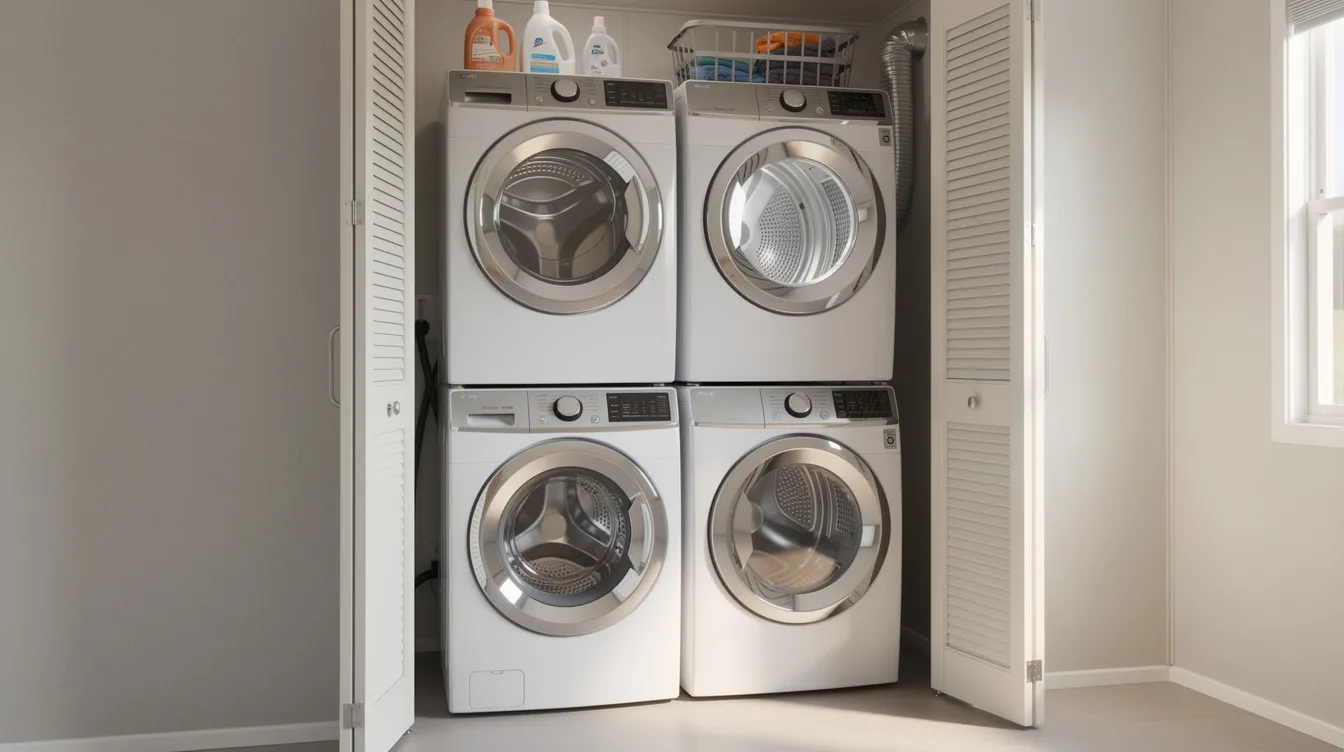
These are full-size front-load pairs that deliver near-conventional performance in a vertical configuration. At roughly 27 inches wide, 30–34 inches deep, and 76–80 inches tall when stacked, they offer washer capacities of 4.0–5.5 cubic feet and dryer drums around 7–8 cubic feet. Stackable units have faster load times compared to combo units, and they allow simultaneous washing and drying of different loads. Best for mobile homes with standard laundry closets or dedicated laundry rooms that can accommodate the dimensions and weight.
Compact 24-Inch Stackable Units
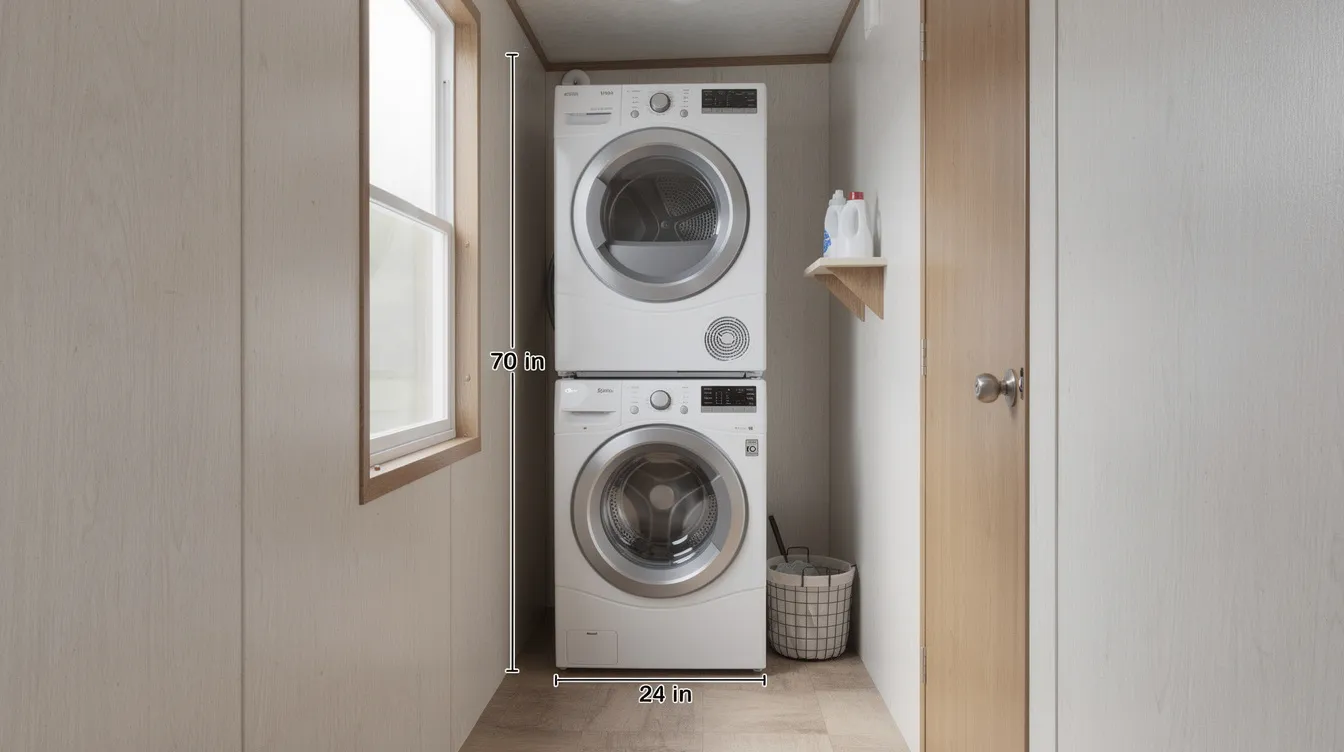
Compact models are designed specifically for tight installations in mobile homes. With widths of approximately 24–26 inches and depths of 22–29 inches, they drop stacked height to roughly 70–75 inches. Washer capacity typically runs 2.0–3.5 cubic feet, with dryers at 3.5–4.5 cubic feet. Mobile homes typically have laundry spaces designed for 24-inch-wide units, making these an ideal match for older manufactured homes or any setup where space is extremely limited. They’re also lighter – easier on floors and simpler to maneuver through narrow doorways.
All-in-One Washer Dryer Combos
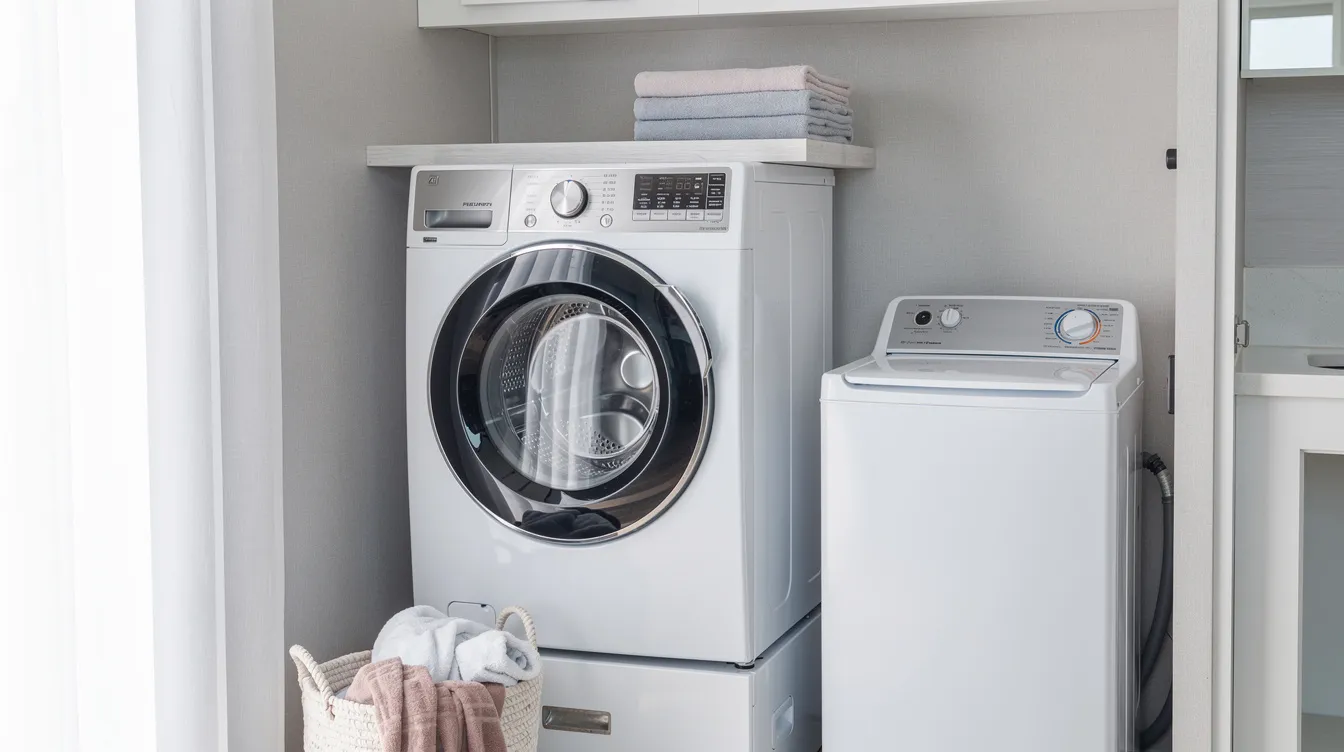
A washer dryer combo is a single machine where washing and drying happen in the same drum. Most are ventless, using condensation or heat-pump technology, and require only standard washer hookups. Combo units wash and dry clothes in a single machine, with dimensions typically ranging from 23–27 inches wide and 33–39 inches tall. A combo-style RV washer-dryer unit weighs around 150 lbs, making it lighter than a full stackable pair. Perfect for mobile homes without existing dryer venting or for customers who want the simplest possible installation – though drying cycles run significantly longer.
For those with even less space or who need a temporary solution, a portable washer (typically weighing around 50 lbs) can handle basic wash loads without permanent installation, though it won’t replace the convenience of a dedicated stackable setup.
What to Look For in Mobile Home Stackable Washer and Dryer
Buying a stackable washer and dryer for a mobile home involves more than picking the right price point. Several technical attributes, especially electrical wiring basics for small homes, determine whether a unit will work safely and perform well in your specific manufactured home.
Ventilation Requirements
Most standard dryers require exterior venting, but ventless options are available – and this distinction matters enormously in mobile homes. A vented RV dryer needs an external vent, which means routing 4-inch ducting through an exterior wall or through skirting. Many older mobile homes lack a proper vent opening, making this a significant installation issue.
Ventless dryers are suitable for homes without proper ducting. They condense moisture internally and drain the water rather than exhausting it outdoors. The trade-off: longer drying cycles and periodic condenser maintenance. Gas dryers must always be vented outdoors to protect against carbon monoxide buildup – there’s no ventless gas option.
Electrical and Plumbing Compatibility
A washer and dryer require water and electricity, but the specifics vary. Standard washers run on 120V, while most electric dryers require a dedicated 240V, 30-amp circuit. RV washers and dryers operate on 110-volt electricity, so if your mobile home’s electrical panel doesn’t support 240V, you’ll need either an electrician to upgrade or a unit compatible with your existing circuits.
Installation requires routing water lines and drain lines to the unit location. Mobile homes sometimes have water pressure constraints or drainage slope limitations that affect performance. Ensure hot and cold supply lines reach your laundry area and that a proper drain is accessible.
Weight and Floor Support
Stackable units typically weigh around 200 lbs – and that’s before you add a full load of wet clothes and water. Stackable RV washer-dryer units weigh around 200 lbs or more, concentrating several hundred pounds of static and dynamic load in a small footprint. Mobile home floor systems use lighter joist materials than site-built homes, with standard residential floors designed for roughly 40 psf live load.
Vertical stacking requires a specific stacking kit for safety and stability. Without one, vibration during spin cycles can shift the dryer. Consider vibration-dampening pads or a load-spreading platform to distribute weight more evenly across floor joists.
Capacity and Efficiency
Energy efficiency is a key factor when selecting a washer and dryer for mobile homes. Front-load washers usually consume less water and energy than top-load machines, and stackable washers and dryers are energy-efficient with 1200 rpm spin speed – extracting more water during the spin cycle so the dryer works less. Look for ENERGY STAR certification, moisture sensors, and heat-pump dryer technology. Compact stackable sets may cost $80–120 per year to operate; heat-pump ventless versions can drop that to $50–80 per year.
How to Choose the Right Mobile Home Stackable Washer and Dryer
With the features above in mind, here’s how to turn them into a decision:
- Available Space – Stackable washers require careful measurement of width, depth, and height for installation. Measure your laundry closet or alcove carefully, including ceiling height and door swing clearance. Stackable designs optimize vertical space usage for compact areas, similar to space-efficient tiny house layouts, but you need to confirm your opening can accept the unit. Accessibility can be an issue with stacked systems for shorter individuals, so consider who will be using the dryer controls on top.
- Existing Hookups – If you already have a vent to the exterior, a 240V outlet, and plumbing in place, your options are wide open and installation stays easy. Without existing hookups, a ventless combo or compact ventless dryer eliminates the most complex retrofit work, just as planning utility runs does when attaching a tiny house to a trailer. Check what you have before browsing.
- Household Size – A household of one or two can often get by with a compact unit or a combo. Families of three or more will want the larger capacity of a standard 27-inch stackable to avoid running the machine constantly. Stackable units fit perfectly in compact spaces while still handling meaningful load sizes, much like custom tiny homes designed for specific family needs.
- Budget and Installation – Unit cost ranges from $500–$1,500 for compact sets to $1,400–$2,400+ for full-size stackable pairs. Installation with existing hookups runs $150–$300 for labor, plus $30–$70 for a stacking kit. Without hookups, total installation can reach $650–$2,500. Factor in operating costs over time – a heat-pump ventless model costs more upfront but saves on monthly utility bills, which is worth considering for budget-conscious mobile home residents or those comparing costs with portable house rentals.
Frequently Asked Questions
Can any stackable washer and dryer work in a mobile home?
No. Units must meet your mobile home’s physical dimensions, electrical capacity, venting options, and floor load limits. Stackable units are designed for durability in mobile environments, but you still need to confirm voltage compatibility, ensure the floor can handle the weight, and verify that venting (or ventless operation) is feasible. These considerations differ from those in tiny houses versus mobile homes, where regulations and structural standards can impact appliance choices. They operate quietly, minimizing noise disruption, but proper fit and installation matter more than brand or features. Repairs on stacked units can be more complex than on side-by-side models, so access to the machines for service is another consideration.
Do I need 220V electrical for a mobile home stackable dryer?
Most standard electric dryers require a 240V dedicated circuit. However, some compact and RV-rated units run on 110V/120V, which matches many existing mobile home circuits and the kind of service found in larger builds like two-story tiny houses on wheels. If your manufactured home only has 120V service at the laundry location, you’ll either need an electrician to install a 240V outlet or choose a 120V-compatible dryer or ventless combo unit.
How much does installation cost for mobile home stackable units?
With existing hookups in place, expect $150–$300 for labor plus the cost of a stacking kit. Adding a dryer vent runs $140–$600 depending on duct length and wall modifications. If you need new electrical, plumbing, and venting from scratch, total installation can range from $650 to $2,500, similar to budgeting for utilities in tiny house camper setups.
What’s the difference between vented and ventless dryers for mobile homes?
Vented dryers exhaust hot, moist air outdoors through ducting. They dry faster but require an external vent opening – which many mobile homes lack. Ventless dryers (condensation or heat pump) don’t need exterior ducting, making them far easier to install in manufactured homes. The trade-off is longer drying time and the need to periodically clean condensers and humidity sensors.
Will a stackable unit damage my mobile home floor?
It’s possible if the combined weight – unit plus water plus a full load of wet clothes – exceeds your floor’s load capacity in that concentrated area. Mobile home floors use lighter framing than conventional homes. Use a proper stacking kit, level the unit carefully, and consider a load-distributing platform. If you’re installing a full-size stackable pair, having the floor joists inspected before installation is a good idea to protect against long-term damage.
Find Your Perfect Mobile Home Laundry Solution
Choosing the right stackable washer and dryer for your mobile home comes down to matching your space, hookups, household needs, and budget to the right unit type. Measure carefully, know your electrical and venting situation, and weigh upfront cost against long-term operating experience. Whether you go with a full-size 27-inch stackable pair, a compact 24-inch set, or a single combo unit, the right choice means clean clothes on your schedule – no laundromat required. Browse the options to find the unit that fits your home and your life.