

Discover Utah’s Earthship Opportunities
If you’re searching for a place to experience off-grid, sustainable architecture in Utah, your options are rare – and that’s exactly what makes them worth pursuing. Earthships are self-sustaining off-grid homes designed with natural materials, and Utah’s high desert landscape provides one of the most compelling environments in the world for these structures to thrive. The state’s primary earthship is located in Fruitland, a small unincorporated community in Duchesne County, and it stands as Northern Utah’s premier destination for anyone curious about what life inside an earthship actually feels like.
Whether you want to book a workshop, host a creative retreat, or simply learn how a house built from 650 reclaimed tires and straw bale can keep itself warm in winter and cool in summer – without a single utility connection – this guide covers everything you need to know about finding and experiencing earthship living in Utah.
Ready to visit? Start by submitting a booking application. Applications are reviewed within 2 business days, and the team will walk you through pricing, group size, and scheduling.
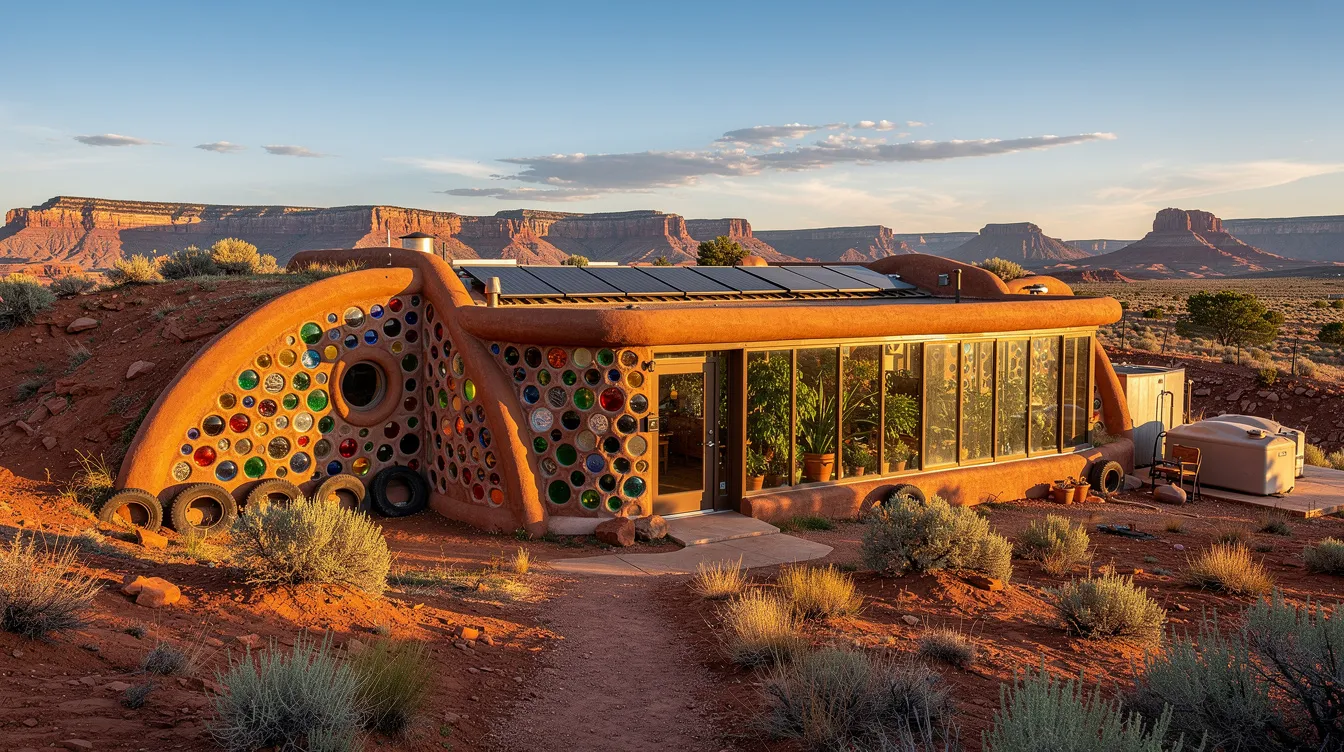
Why Utah is Perfect for Earthships
Utah’s high desert climate isn’t just compatible with earthship construction – it’s practically ideal for it. Here’s why the state has become a serious contender alongside Taos, New Mexico as a hub for earthship biotecture.
Climate and Solar Exposure
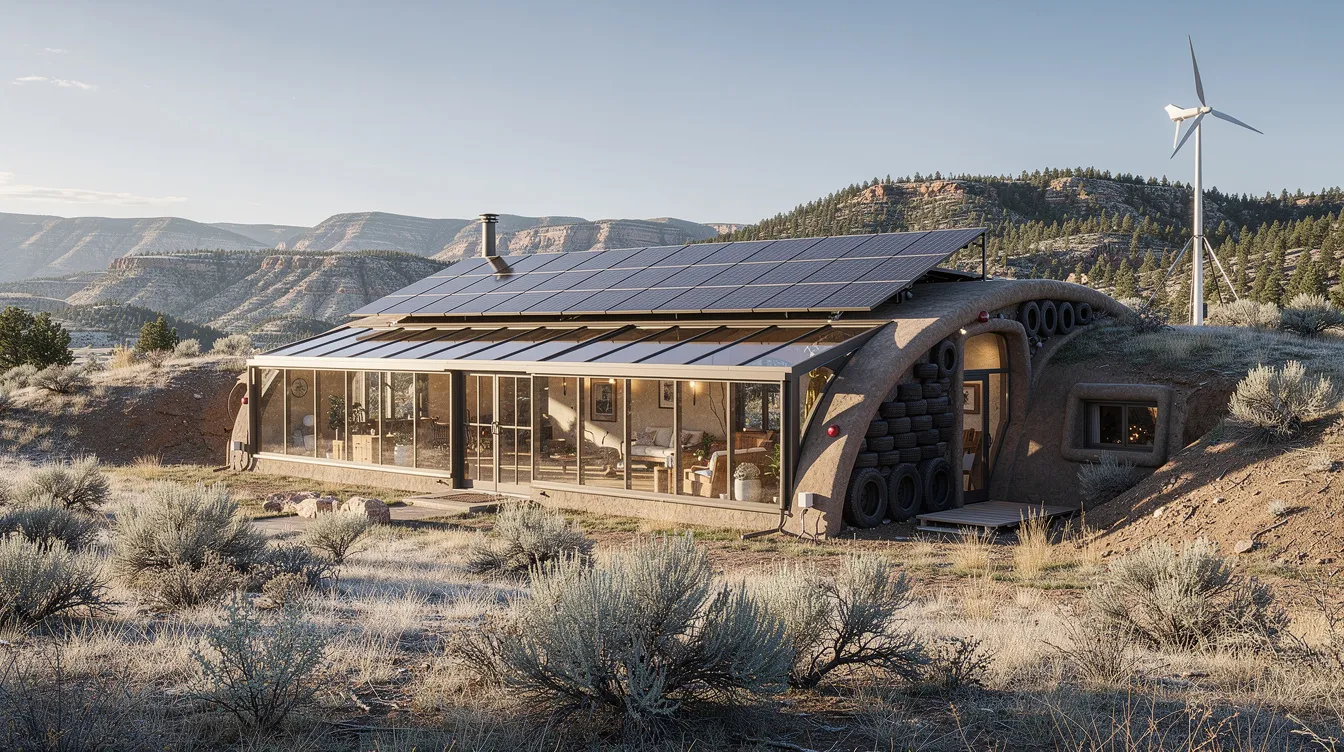
Fruitland sits at approximately 6,624 feet in elevation, where strong diurnal temperature swings create the exact conditions earthships are designed to exploit. Earthships in Utah focus on passive solar design to manage extreme temperature fluctuations. Large south-facing windows capture the sun’s energy during winter months, while thermal mass walls – constructed from earth-rammed tires – absorb and slowly release heat to maintain stable interior temperatures without traditional HVAC systems. In summer, natural ventilation and earth berming keep rooms cool without air conditioning or mechanical cooling systems.
Utah receives abundant sunshine across most of the year, making solar panels highly effective for generating electricity. Wind patterns at elevation further support off-grid energy production, giving earthship residents reliable, renewable power for lights, appliances, and daily life.
Water Collection in Arid Conditions
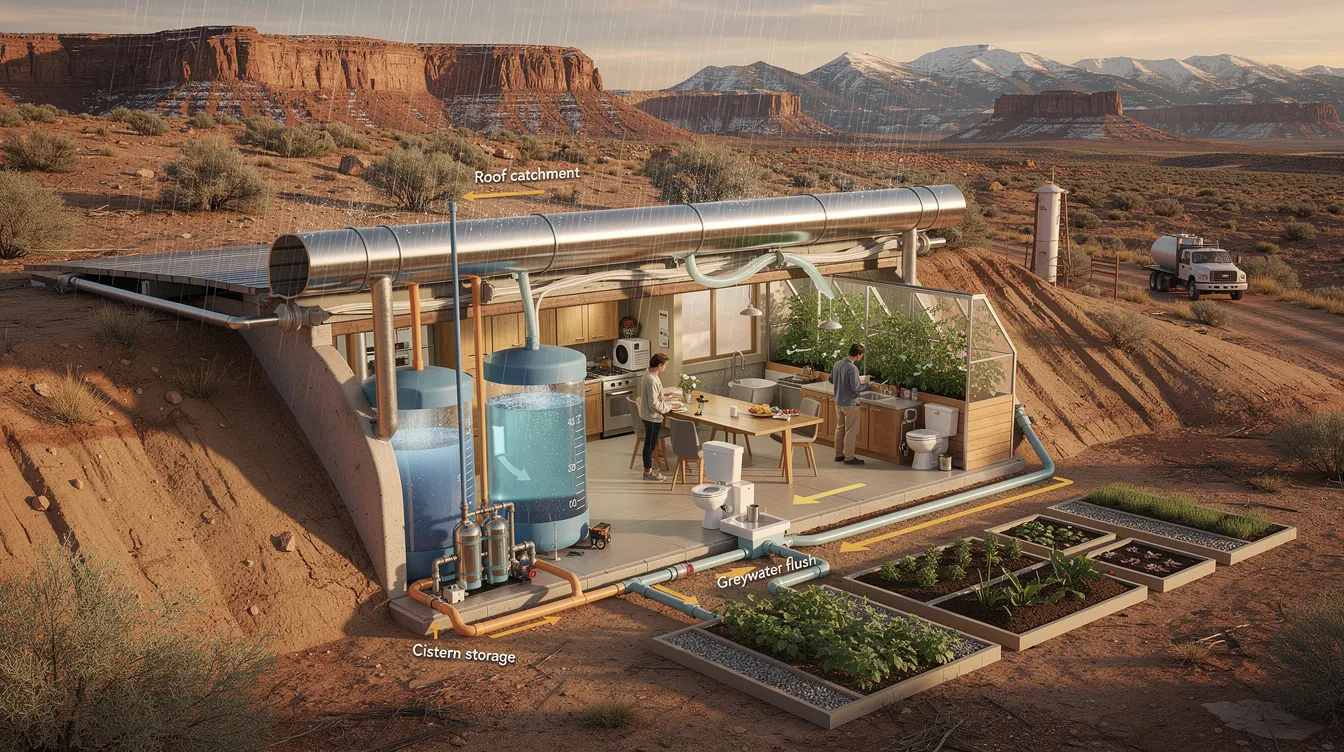
Water is the biggest question mark in any desert climate, but earthships are designed to collect rainwater for household use. Each inch of rain collected per square foot yields 2/3 gallons of water, which is stored in cisterns and filtered for drinking, cooking, and bathing. Greywater is recycled for flushing toilets in earthships, and then directed through indoor greenhouse planters for additional treatment before reaching sewage treatment cells outdoors. In Utah’s varied landscape, seasonal rain and snowmelt provide collection opportunities, though backup water sources (wells or hauled water) are a practical consideration during low-precipitation seasons.
State Regulations and Building Codes
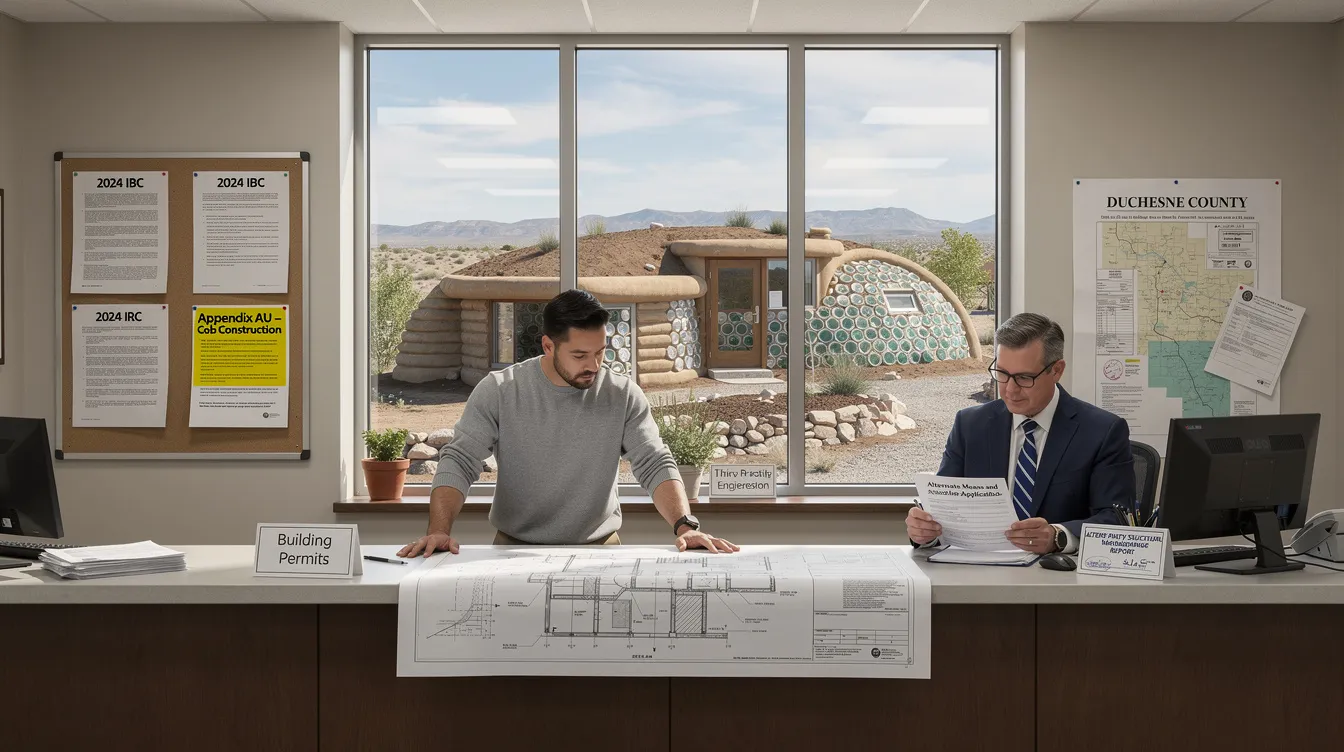
Building codes in Utah vary by county and can complicate earthship construction. The state has adopted the 2024 International Building Code (IBC) and International Residential Code (IRC) as of July 2026, which serve as the baseline for residential permits. However, Utah’s regulatory framework does show openness to alternative construction methods:
- The state’s IRC includes Appendix AU “Cob Construction (Monolithic Adobe)”, which provides provisions for natural building materials
- Salt Lake City offers a formal Alternate Means and Methods Application that allows unconventional designs and materials to be proposed and approved, provided they meet the intent of the code
- Rural counties like Duchesne often have less restrictive enforcement, which has historically made them more accessible for alternative construction projects
Earthships often face unique permitting challenges due to their unconventional materials, including rammed earth tires, recycled glass bottles, and aluminum cans. Third-party structural engineering documentation is typically required to demonstrate code compliance.
Utah’s Premier Earthship Location
The Fruitland earthship is located in Duchesne County, in Utah’s rural high desert northeast of the Wasatch Front. Listed on Earthship Biotecture’s official directory as “Fruitland – Utah – USA,” this site represents one of the few built and documented earthship structures in the state.
Specifications and Construction
Earthships are built using 650 reclaimed tires, stacked and packed with rammed earth to form massive, load-bearing walls. Each rammed earth tire can weigh up to 300 lb (140 kg), creating extraordinary thermal mass that regulates interior temperature through every season. The Fruitland earthship spans approximately 1,800 square feet and combines tire walls with straw bale construction for additional insulation and structural variety. Earthship walls are typically made of earth-rammed tires, though earthships can also utilize concrete, adobe, or stone for walls depending on the design and local conditions.
Design Features
The Fruitland site showcases several hallmark earthship designs adapted for Utah’s climate:
- Greenhouse corridor – Earthships utilize a greenhouse corridor for year-round plant growth, functioning as both a food production zone and a thermal buffer between the exterior glass and the living rooms. Vegetables, herbs, and plants thrive in this space even during winter
- West-facing windows – Designed to capture afternoon sun while earth-bermed walls on the north and east sides provide insulation against cold wind
- Natural ventilation system – Operable skylights and buried cooling tubes create air circulation without mechanical systems, pulling cool desert air through the structure in summer
- Curved earthen plaster and smooth stucco finish – The interior walls feature hand-finished earthen plaster, giving rooms an organic, sculptural quality constructed from natural earth pigments
- Food-growing capabilities – The greenhouse corridor supports year-round cultivation of food, connecting daily life to the building’s integrated water and waste systems
The designs use rammed-earth tires and discarded glass bottles for thermal mass and insulation, with glass bottle walls creating distinctive light patterns throughout the interior spaces.
Earthship Experiences Available in Utah
The Fruitland earthship isn’t just a house – it’s a site designed to host experiences that connect people to sustainable architecture and off-grid living. The earthship holds up to 16 people, making it suitable for intimate group events across several formats. Bookings include half-day, full-day, and multi-day options.
Workshop and Retreat Bookings
Full-day workshops for somatic movement, breathwork, and healing arts take advantage of the earthship’s unique atmosphere – thick earth walls create natural sound dampening, stable temperature, and a grounding sense of enclosure that participants consistently describe as transformative. Multi-day retreat experiences and creative residencies allow deeper immersion, with group sizes kept intentionally small to preserve the quality of the space.
Photo and Content Creation Sessions
The earthship’s curved walls, greenhouse corridor, and natural light make it an increasingly popular site for brand shoots, personal portfolios, and editorial content. Half-day and full-day photoshoot bookings are available, offering a setting that’s impossible to replicate in a conventional studio – thick adobe-style walls, living plants, glass bottle mosaics, and desert light streaming through south-facing windows.
Educational Visits and Tours
For those interested in sustainable construction and off-grid principles, the Fruitland earthship offers learning opportunities about how the six core design principles work in practice. Earthships utilize six core principles: thermal mass heating and cooling, renewable energy, building with recycled materials, rainwater harvesting, wastewater treatment, and food production. Visitors can see each system in action and understand how they interconnect. For deeper education, the Earthship Academy in Taos – founded by Michael Reynolds – offers intensive courses covering solar electrical systems, water filtration, and hands-on construction with upcycled materials.
How to Book Your Earthship Experience
Booking the Fruitland earthship follows a structured process designed to match the right groups with the right experience.
Step 1: Submit Your Application
Start by submitting a booking application describing your intended use – whether it’s a workshop, retreat, photoshoot, or educational visit. Applications for booking are reviewed within 2 business days, and the team will respond with availability and preliminary details.
Step 2: Confirm Pricing and Details
Pricing varies based on use, group size, and duration. Half-day bookings are structured differently than multi-day retreats, and creative shoots carry different terms than educational events. You’ll receive a clear breakdown before committing to anything.
Step 3: Secure Your Date
A deposit is required to hold your booking date. Once the deposit is received and the rental agreement is signed, your date is locked in and the team will coordinate logistics, access instructions, and any specific preparation needed for your event.
Earthship Construction and Design in Utah
Understanding how earthships work helps explain why they perform so well in Utah’s demanding climate – and why construction relies heavily on upcycled materials, significantly reducing environmental impact for earthship tiny homes and full-size dwellings.
Thermal Mass Performance
Earthships use thermal mass to regulate interior temperatures. The massive tire walls – filled with compacted dirt and earth – absorb solar heat during the day and release it slowly through the night. Research from earthship sites in Taos, New Mexico shows that interior bedroom temperatures maintain stability within approximately 2°C (4°F) of overnight swing even when exterior temperatures fluctuate dramatically. Greenhouse zones experience wider swings but serve as thermal buffers between the outside air and the climate-controlled living spaces.
Earthships are designed to maintain stable interior temperatures without traditional HVAC systems – no furnace, no central air, no heating bills. This makes them particularly compelling in Utah’s climate, where winter nights can drop well below freezing while summer days push past 90°F.
Energy and Water Independence
Earthships can operate independently without utility connections. Solar panels generate electricity for all power needs, while rainwater collection fills cisterns that supply the entire house. Each inch of rain collected yields 2/3 gallons of water, which passes through filtration systems before reaching taps. Greywater from sinks and showers feeds greenhouse plants before being recycled for toilet flushing, closing the water loop almost entirely.
Earthships can be 90% to 100% self-sufficient, and earthship designs can significantly reduce energy consumption compared to conventional homes. In Utah, where utilities in remote areas can be expensive or unavailable, this self sufficient approach isn’t just philosophical – it’s practical. Earthships in Utah can save owners significant money on utility costs over time.
Construction Materials
Construction relies on a combination of recycled materials and natural elements:
- Tires – 650 reclaimed tires form the structural walls, stacked and rammed with earth
- Glass bottles – Discarded bottles are set in mortar to create translucent walls and decorative light features
- Aluminum cans – Used as filler material in non-load-bearing walls, reducing concrete use
- Straw bale – Provides additional insulation in climate-appropriate sections
- Earth and adobe – Local dirt and clay form plaster, mortar, and finish surfaces
This approach to building with recycled materials and upcycled materials means that a significant portion of an earthship’s construction mass is diverted from landfills.
Visitor Reviews and Experiences
The Fruitland earthship has hosted workshops, creative sessions, and educational visits. Guests consistently note the remarkable temperature stability – walking into a building with no conventional heating or cooling system and finding it comfortable regardless of the season outside. Workshop facilitators appreciate the acoustic qualities of thick earthen walls, and photographers are drawn to the interplay of natural light through the greenhouse corridor and glass bottle walls.
If you’ve visited or hosted an event at the Fruitland earthship, your testimonial can help future guests understand what to expect. Reach out to share your experience.
Utah Earthship Locations and Future Developments
Current Location: Fruitland, Northern Utah
The Fruitland earthship remains Utah’s primary earthship community site, located in the rural high desert of Duchesne County. Its listing on the official Earthship Biotecture directory connects it to the broader global earthship community that spans from Taos to Germany and France.
Potential for Growth
Several regions across Utah offer strong potential for future earthship construction, and similar opportunities exist for eco yurt designs suited to sustainable, off-grid living:
- Southern Utah high plateau – Areas near Cedar City, Escalante, and Kanab offer excellent solar exposure, affordable land, and climates similar to New Mexico’s earthship campus near Taos
- Wasatch Front high valleys – More accessible to Utah’s population centers while still offering the solar gain and temperature swings that earthship architecture requires
- Rural Duchesne and Uintah counties – Lower regulatory barriers and vast open land, though water access and infrastructure require careful planning
The future of earthship construction in Utah will likely expand as the state’s building codes continue to accommodate alternative methods and as interest in off-grid, self sufficient living grows. The connection to the broader Southwest earthship community – particularly the established infrastructure around Taos, New Mexico, where Michael Reynolds built the original earthship visitor center and university of sustainable design – provides a strong foundation of knowledge and support for Utah-based projects.
Frequently Asked Questions
How do I book the Fruitland earthship?
Submit a booking application describing your intended use. Applications for booking are reviewed within 2 business days. You’ll receive pricing details and availability, and a deposit is required to hold your booking date once terms are agreed upon.
What does it cost?
Pricing varies based on use, group size, and duration. Half-day photoshoots, full-day workshops, and multi-day retreats each have different rate structures. Contact the site directly for a quote tailored to your specific event.
How many people can the earthship accommodate?
The earthship holds up to 16 people, making it suitable for workshops, small retreats, and creative sessions. Larger groups should inquire about capacity limitations and any seasonal considerations.
What should I expect during a visit?
Expect a comfortable interior temperature regardless of the season – the thermal mass walls and passive solar design keep rooms stable without heating or cooling systems. The greenhouse corridor is filled with plants, and the entire structure operates off grid with solar power and rainwater collection. Bring layers for outdoor time, especially in winter at 6,600+ feet of elevation.
Where can I stay nearby for multi-day experiences?
Fruitland is a small, rural community in Duchesne County. Nearby towns offer basic lodging, and participants in multi-day retreats should coordinate accommodation logistics with the earthship team during the booking process. Some events may include on-site arrangements depending on group size and season.
When is the best time to visit?
Every season offers a different experience. Spring (April through May) and fall bring moderate temperatures and demonstrate the earthship’s thermal performance during transition weather. Summer showcases the natural cooling and ventilation systems, while winter visits reveal how the structure maintains warmth with no furnace or fireplace – just sun, earth, and thermal mass.
Plan Your Utah Earthship Experience
Utah’s earthship in Fruitland offers something you won’t find anywhere else in the state – a fully functioning, off-grid structure built from reclaimed tires, straw bale, and recycled glass that heats and cools itself, collects its own water, grows its own food, and generates its own electricity. Whether you’re planning a retreat, a creative shoot, an educational tour, or you’re researching how to build your own home using earthship principles, this is where to start.
Submit your booking application today. The team reviews all applications within 2 business days and will work with you on pricing, scheduling, and logistics. For earthship education resources, construction blueprints, and news from the global earthship community, visit Earthship Biotecture.
Earthship Utah · Fruitland, Duchesne County, Utah