Living small doesn’t mean living without wildlife. If you have a porch, a railing, or even a single sunny window, you can attract hummingbirds right to your doorstep. These fascinating creatures are drawn to nectar rich plants with tubular flowers in reds, oranges, and deep pinks-exactly the kind of compact, container-friendly species that thrive around a tiny home. Here’s how to make it happen.
Key Takeaways
- The fastest way to attract hummingbirds to a tiny home is combining nectar-producing plants like bee balm, cape fuchsia, and trumpet vine with at least one well-placed hummingbird feeder filled with sugar water (four parts water to one part white sugar, no red dye).
- Colorful flowers in reds, oranges, and deep pinks are especially effective in small spaces-think window boxes, railing planters, and vertical trellises that maximize bloom without eating up floor space.
- Choosing native plants and climate-adapted varieties (like Lonicera sempervirens in the East or russian sage in drier regions) delivers reliable nectar with less maintenance.
- A tiny hummingbird garden also needs perches, a small water feature such as a mister, and pesticide-free habitat to keep birds safe and returning daily.
- At Explore Tiny House, we focus on solutions for patios, decks, and micro-yards so tiny house dwellers can enjoy close-up hummingbird action without sacrificing livable space.
Designing a Hummingbird Garden for Tiny Homes
Picture a vertical hummingbird garden wrapped around your tiny home porch: a coral honeysuckle climbing a corner trellis, dwarf bee balm in railing planters, and a hanging basket of fuchsia by the door. A small garden can include one tall plant, a few container plants, and a climbing plant-and that’s enough to pull hummingbirds in close.
Small spaces come with constraints-limited ground, container reliance, and close human-bird distance-but that proximity is actually the payoff. Hummingbirds will feed within arm’s reach of a quiet observer. The trick is designing intentionally around three core principles:
- Layer heights. Use ground-level pots, mid-level railing planters, and vertical vines or tall stems to create depth. Bright red and orange flowers attract hummingbirds effectively at every level.
- Plan continuous bloom. Bright red and orange colors draw attention, but only if something is flowering from early spring through fall. Pair early bloomers with late season bloomers so there’s always nectar available.
- Cluster, don’t scatter. Experts at Penn State Extension recommend grouping colorful flowers into visible masses rather than dotting single plants around. A concentrated bright color patch is easier for hummingbirds to locate and more efficient for feeding.
Place plants along skirting, at the front steps, near large picture windows, and on railings to make every inch of your outdoor space work.
Best Nectar-Rich Plants for Tiny Spaces
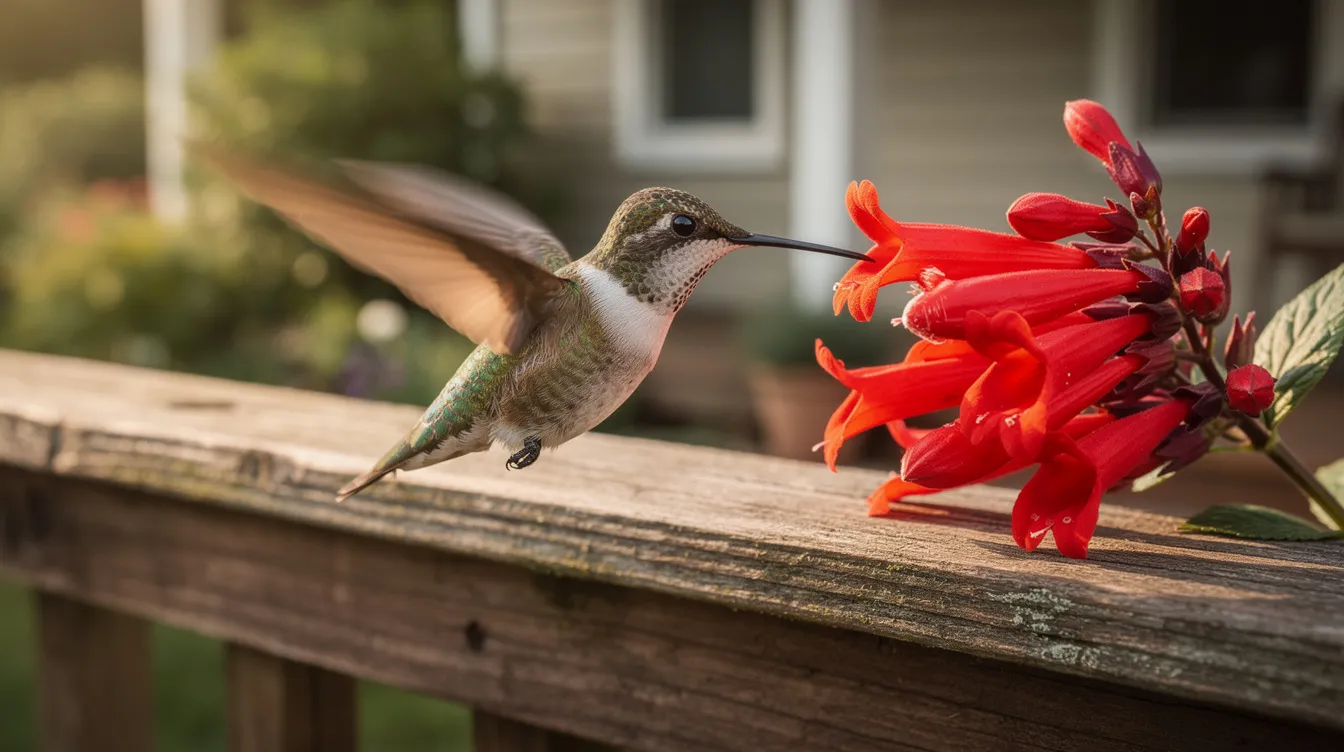
This is where you pick the best plants for your setup. Hummingbirds prefer tubular and trumpet shaped flowers because their long bills fit perfectly into deep-throated blooms. Flowers with high nectar output are essential for hummingbirds, and compact shrubs and perennials are the right fit for containers and micro-yards.
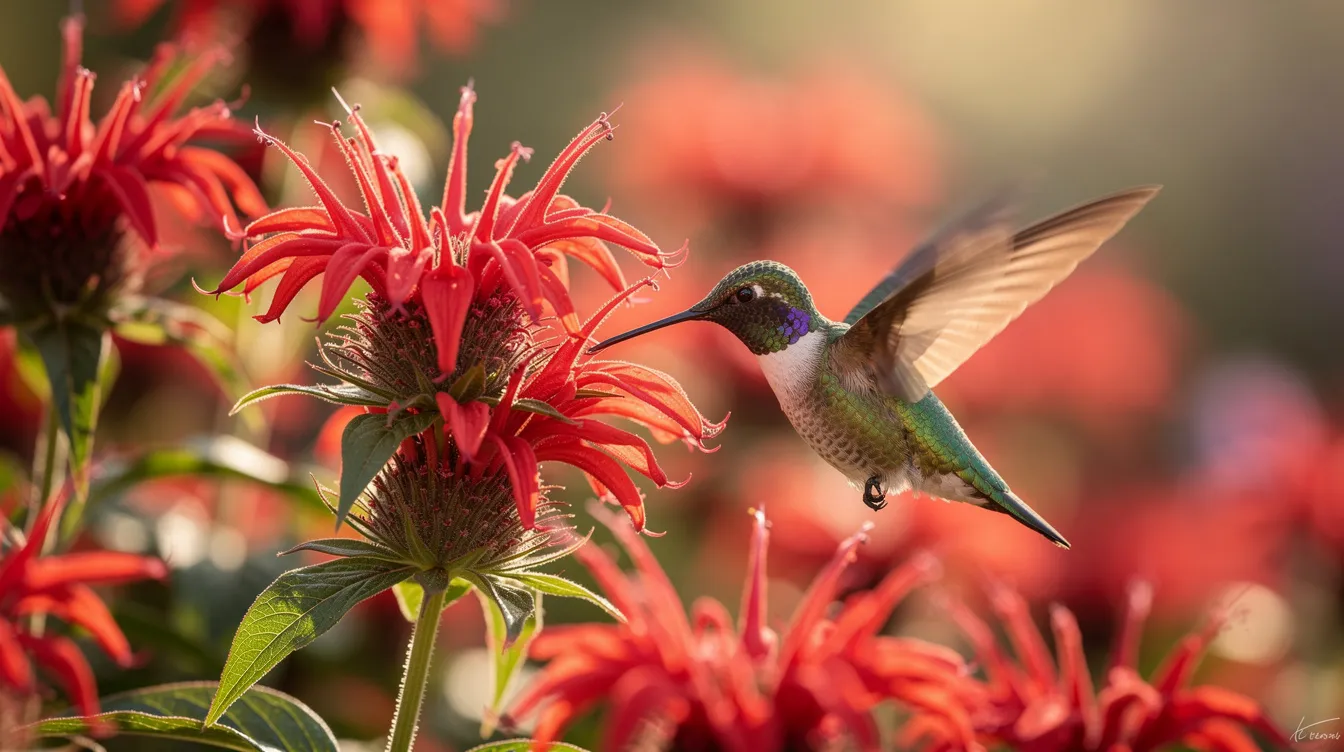
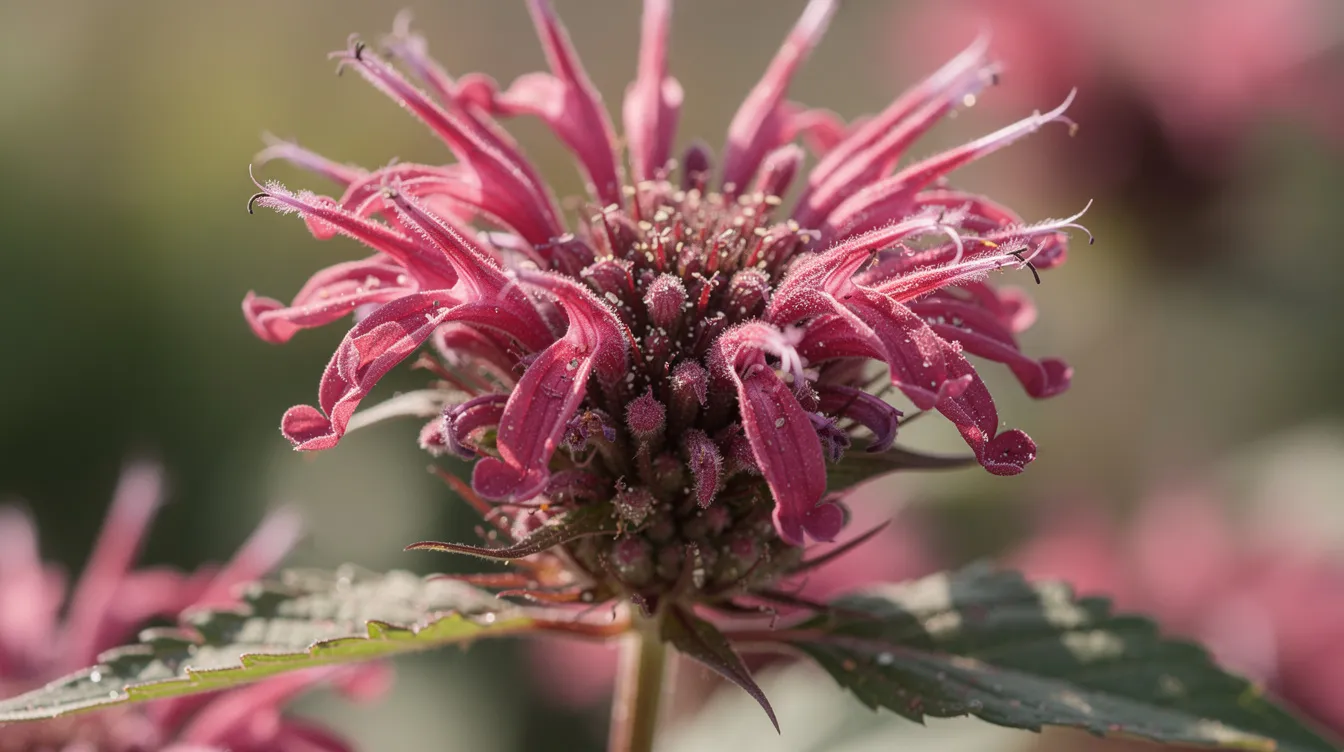
- Bee balm (Monarda didyma / scarlet beebalm) – Bee balm is a favorite of hummingbirds and works well in small garden beds or large pots. Dwarf cultivars stay around 12–18 inches tall. Vibrant blooms in red and pink appear June through August; USDA zones 4–9. Hummingbirds adore the tubular flowers and will visit repeatedly.
- Cape fuchsia (Phygelius) – Produces continuous trumpet shaped flowers in coral, orange, and red throughout summer. Grows well in containers near doors or steps and can be moved on wheeled dollies to follow the morning sun. Great for zones 7–9, or treat as an annual in colder areas.
- Cuphea (firecracker plant) – Nonstop small tubular flowers in red and orange make this ideal for railing planters. Cuphea attracts hummingbirds with vibrant blooms from late spring into fall. Compact, low maintenance, and heat-loving.
- Russian sage (Salvia yangii) – Airy lavender spikes on drought tolerant stems that thrive in full sun and poor soils. While not red, the abundant nectar draws hummingbirds and other pollinators alike. Zones 4–9; blooms July through September.
- Fuchsia (hardy types or hanging-basket cultivars) – Fuchsia is excellent for patios and shaded areas due to its hanging, funnel or cup-shaped flowers that are favored by hummingbirds. Fuchsia flowers are ideal for hummingbirds due to their shape. Perfect for the shady side of a tiny home in a hanging basket. Zones vary; many treated as annuals.
Choose dwarf or patio cultivars whenever possible. A full-size bee balm can reach 4 feet and overwhelm a narrow deck, while a compact variety stays manageable.
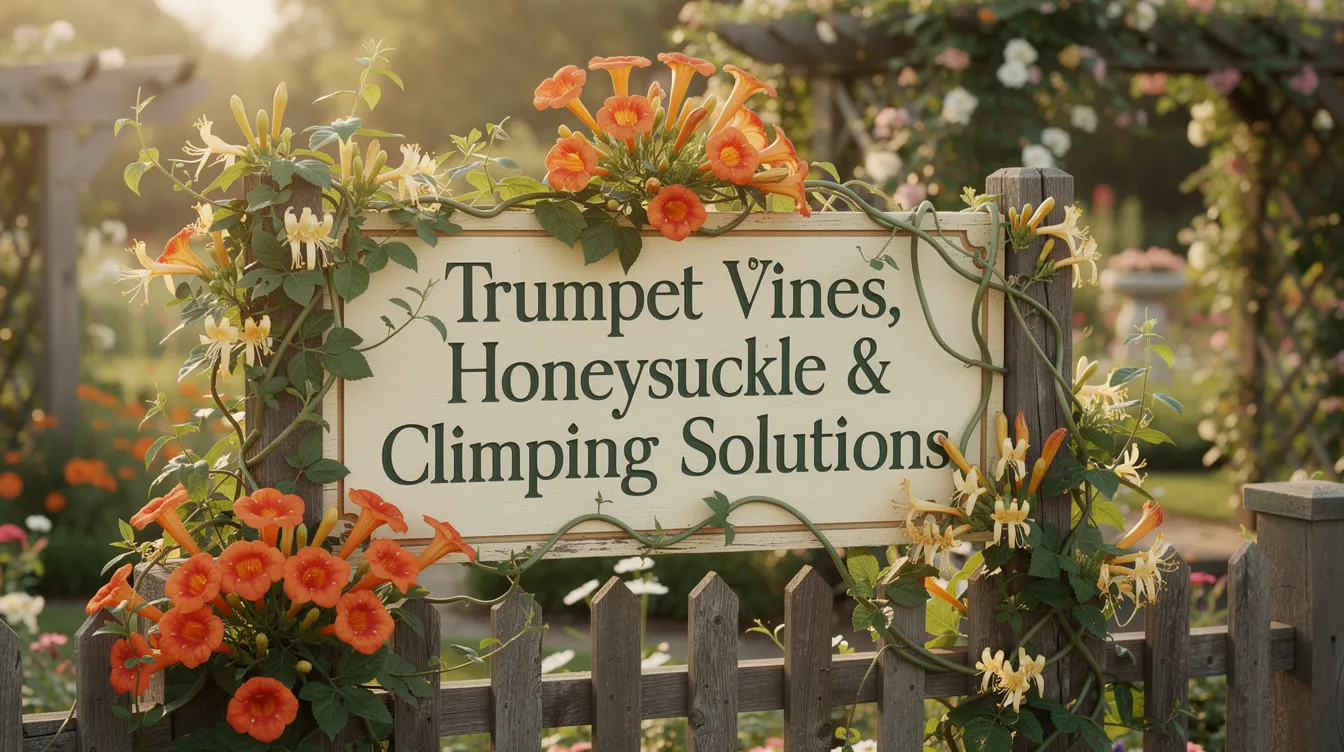
Trumpet Vines, Honeysuckle & Climbing Solutions
Small spaces benefit enormously from vertical growing. Walls, railings, and trellises beside a tiny home can become hummingbird highways-without taking up a single square foot of deck.
- Trumpet vine (Campsis radicans) produces spectacular orange trumpet shaped flowers that hummingbirds love, but it’s aggressive. Around mobile or skidded tiny homes, use compact cultivars in large containers with sturdy trellises. Prune hard annually to keep it in check.
- Coral honeysuckle (Lonicera sempervirens) is a far better-behaved native climber. It’s a compact native vine that produces trumpet-shaped flowers in red-orange clusters from late spring through summer (zones 4–9). Hummingbirds visit it heavily, and it won’t swallow your structure.
- Morning glory and other plants like sweet pea work as annual climbers for renters or seasonal spots where permanent vines aren’t practical. They fill in fast and provide nectar through summer.
Position trellises at the corner of a deck, along the sunny side of the house for direct sunlight, or as a “green screen” that doubles as privacy and a nectar source. For more ideas on maximizing tiny outdoor areas, check out 50 Creative Tiny Gardens Ideas for Small Spaces.
Native Plants That Attract Hummingbirds Around Tiny Homes
Native plants are especially valuable for a hummingbird garden because they’re better adapted to local conditions, need less water, and support the insects hummingbirds require for protein. Selecting native species can provide higher-quality nectar for hummingbirds compared to many non-native ornamentals.
- Eastern U.S.: Bee balm, cardinal flower (Lobelia cardinalis) with its tall spikes of brilliant red blooms, and coral honeysuckle (Lonicera sempervirens). These handle moist to moderate soils and partial shade. Audubon’s citizen science data confirms these among the most-visited native species.
- West Coast: California fuchsia (Epilobium canum), native sages (salvia species), and penstemons adapted to mild winters and dry summers. Many stay compact enough for containers.
- Mountain West / Southwest: Hummingbird Mint (Agastache) offers fragrant vertical spikes that attract pollinators, including bees and butterflies. Pair it with drought tolerant desert salvias and red yucca for a low-water planting that thrives in full sun.
Hummingbirds also require protein from insects for growth, and native plants support the small arthropods these birds depend on. Check local native plant societies or regional nurseries rather than big-box stores-you’ll find better-adapted species that align with sustainable tiny living values.
Container & Vertical Gardening Ideas for Tiny Homes
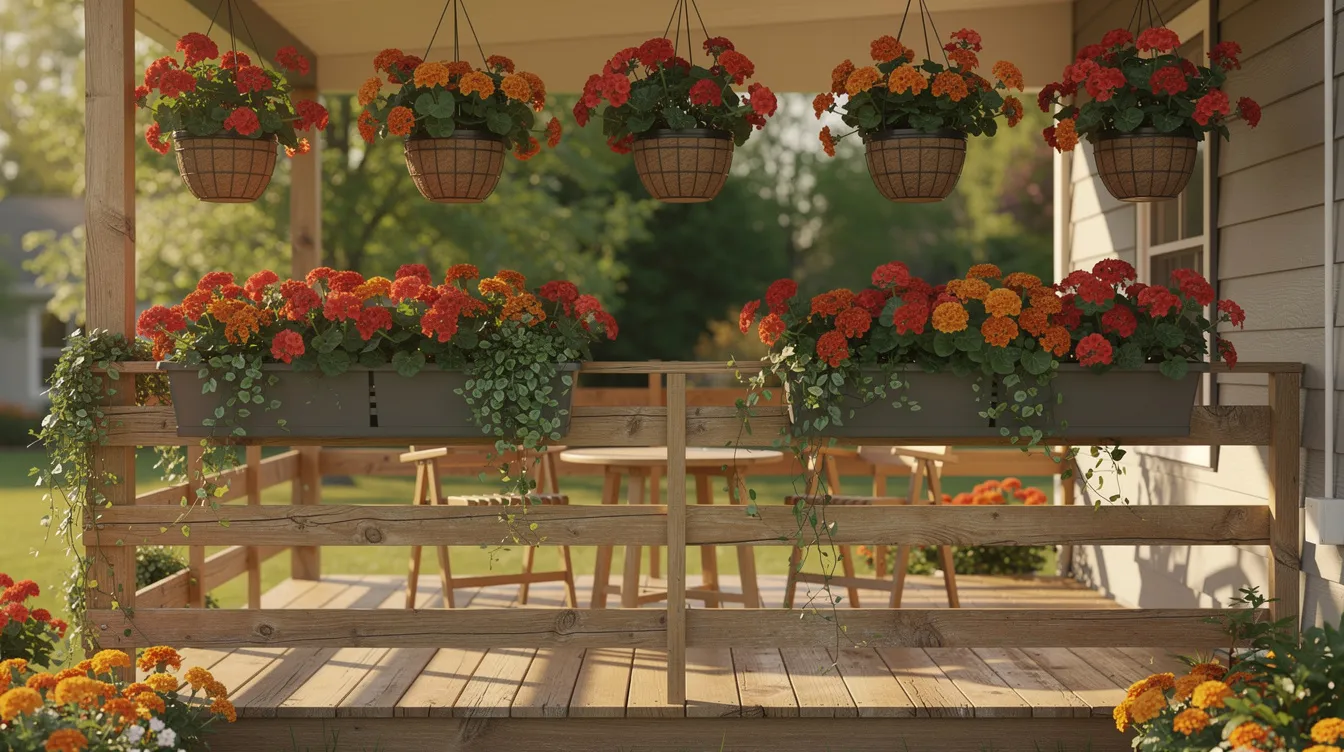
Many tiny homes sit on pads, gravel drives, or leased lots where in-ground planting isn’t an option. Compact shrubs and perennials are suitable for containers, making them the backbone of a tiny-space hummingbird garden.
Container ideas:
- Hanging baskets with fuchsia, petunia, or trailing cuphea at window level-positioned for shade or morning sun depending on the species.
- Rail planters packed with colorful flowers like dwarf bee balm, lantana, and compact salvias. Salvias can bloom from late spring into fall, giving you season long color.
- Large pots on wheels with cape fuchsia or dwarf flowering shrubs you can roll to follow the sun or shelter from storms.
Vertical options:
- Wall-mounted pocket planters filled with nectar-producing annuals on the sunny side of the tiny home.
- Freestanding trellises for trumpet vine or coral honeysuckle where wall drilling isn’t allowed.
Keep containers 12–24 inches from walls for airflow and leave access paths clear for doors, hitches, and hookups. For more on flowering plants suited for tiny homes, we’ve got a dedicated guide.
Using Hummingbird Feeders With Plants
Hummingbird feeders should complement, not replace, your garden-they’re especially helpful near tiny homes where bloom space is limited or during early spring and late fall when fewer flowers are open.
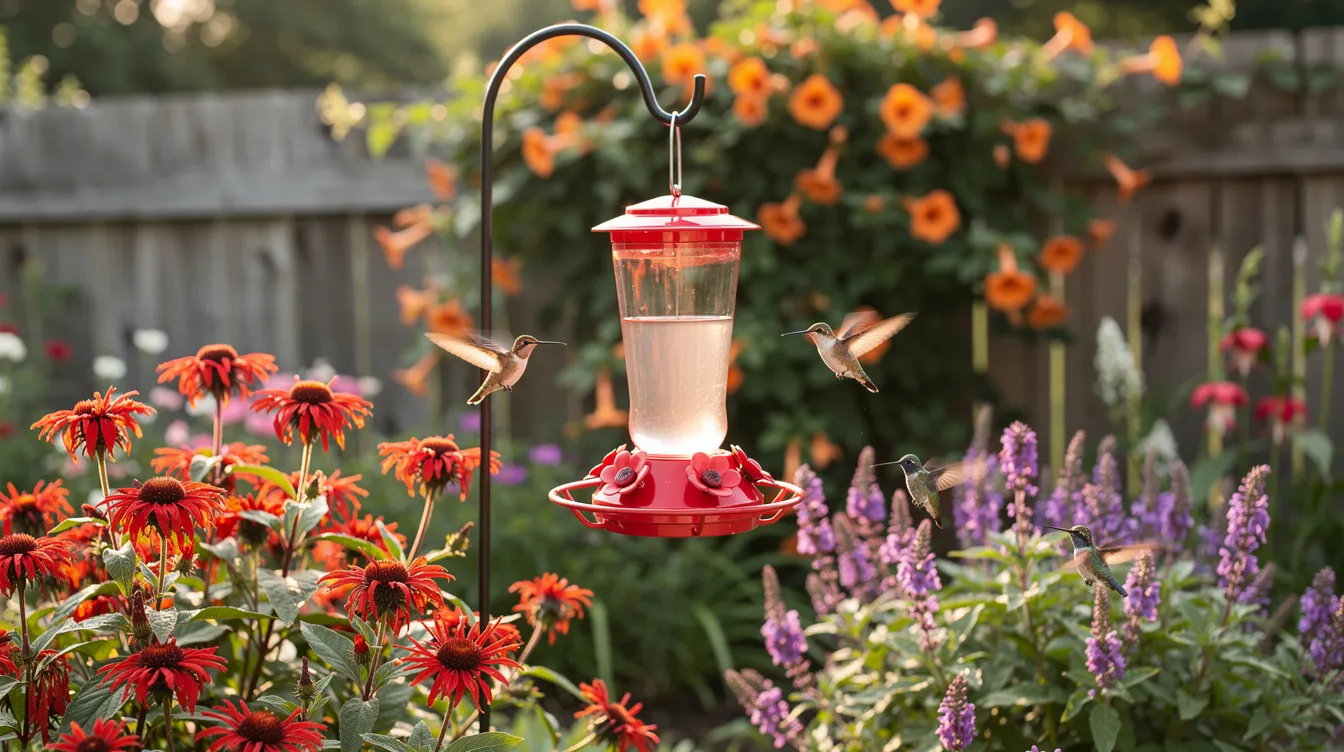
- Hang one small feeder near a viewing window and another near a cluster of vibrant blooms but away from high-traffic doors. Multiple small feeders beat one large one in compact spaces because they reduce territorial aggression-you’ll see less hummingbirds fighting over food sources.
- Feeder care: Use four parts water to one part white granulated sugar. Never add red dye. In summer heat, change the sugar water every 1–2 days; in cooler shoulder seasons, every 3 days. Clean with hot water and a small brush weekly to prevent mold (UC ANR guidelines).
- Keep feeders up into early fall (August–October in most of North America) to support migrating birds. A clean feeder with fresh nectar can be the difference between a brief visit and a daily routine.
Creating Safe, Comfortable Habitat Around a Tiny Home
Beyond plants and feeders, hummingbirds need a few non-plant elements to stick around your yard.
- Perches: Hummingbirds need safe perches to rest and sleep between feeding bouts. Leave a few thin branches at varying heights or install twiggy rods on deck posts. Simple, unobtrusive hooks work well. Hummingbirds prefer to nest near food sources like nectar, and they build nests from lichens and spider webs-so nearby trees or shrubs with fine branching are attractive nesting habitat.
- Water: Provide a constant water source like a drip fountain, a solar bubbler bowl, or a fine mister attached to a railing. Hummingbirds love light mists on leaves more than deep birdbaths. A shallow dish with pebbles works in the smallest spaces.
- Pesticide-free habitat: Avoiding pesticides helps keep food sources clean for visiting hummingbirds. This is critical on small lots where spray drift can reach every plant. Systemic insecticides kill the insects hummingbirds depend on for protein.
- Window safety: If feeders sit very close to large tiny house windows, add decals or screens to reduce collision risks.
Seasonal Planting Strategy for Continuous Bloom
Limited space means every plant should work hard across the season. Planting a mix of flowers that bloom at different times keeps food available throughout the season. Long-blooming plants provide consistent nectar for hummingbirds, but even they can’t cover every week alone.
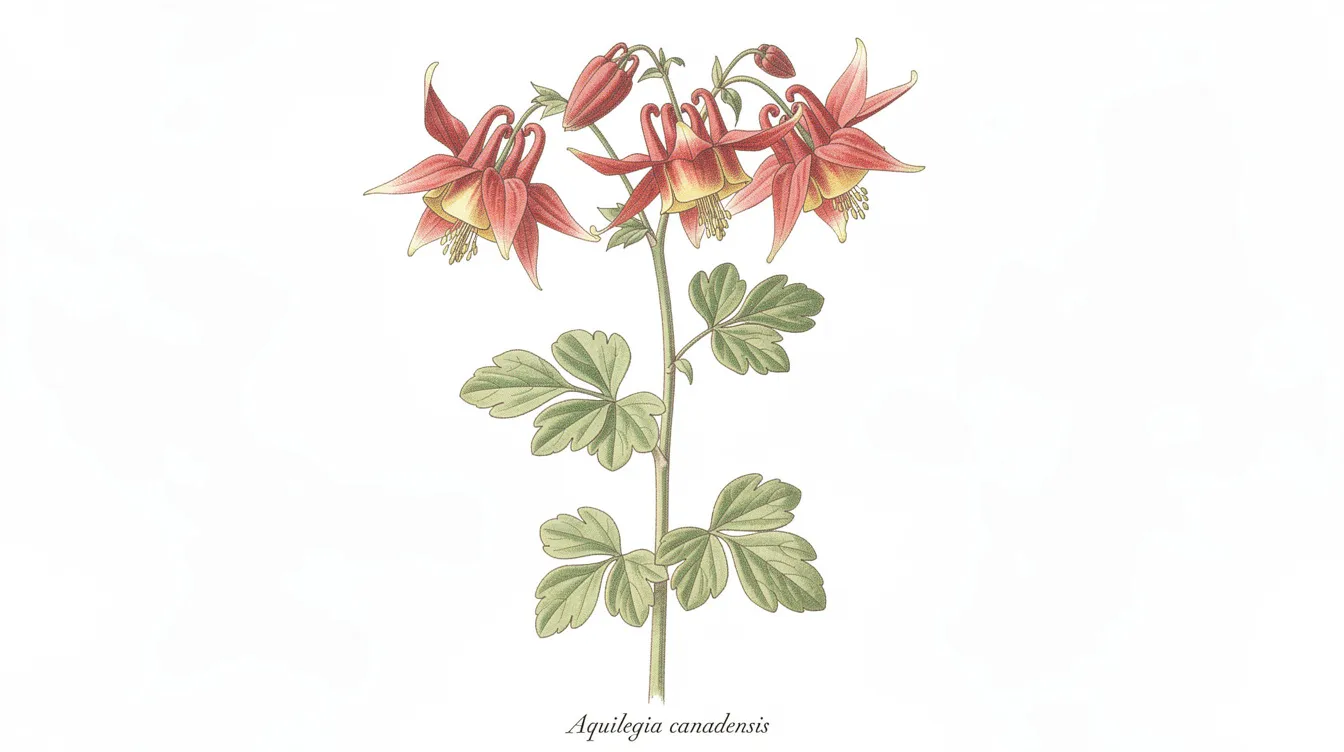
- Spring: Columbine (Aquilegia canadensis) blooms in May with red-and-yellow tubular flowers. Add early salvias and, in warmer zones, native red buckeye in a large container.
- Summer: Bee balm, cape fuchsia, cuphea, trumpet vine, and russian sage carry the peak season (June–August). This is when feeding activity is highest.
- Late summer–fall: Lantana, zinnia, autumn-blooming salvias, and late-blooming agastache extend nectar into September and October. These late season bloomers bridge the gap before migration ends.
Mix annuals and perennials so a new garden looks lush even in its first year. Keep a simple bloom calendar on your phone-note which months feel “quiet” and adjust plant choices the following spring. For off-grid setups, self sufficient tiny homes pair naturally with low-input pollinator gardens.
Explore Tiny House Perspective: Tiny Living, Big Wildlife Impact
One of the best parts of tiny living is how close you are to the outdoors. Imagine sipping coffee on a 6-foot-wide deck while a Ruby-throated Hummingbird hovers inches from your cape fuchsia pot, its iridescent throat flashing in the morning sun. That’s not fantasy-it’s a Tuesday when your garden is dialed in.
Many community and off-grid tiny house setups benefit from pollinator-forward landscapes that require minimal resources. A few plants in containers, a clean feeder, and a small mister can transform even a gravel pad into a vibrant wildlife habitat. It’s sustainable, it’s low maintenance, and it connects you to the ecosystem right outside your door. Explore more outdoor ideas in our guide to modern tiny house designs that embrace nature.
FAQ: Hummingbirds & Tiny Home Gardens
These FAQs address specific questions tiny house owners often have that weren’t fully covered above.
How close can I plant hummingbird flowers to my tiny home walls or skirting?
Most container plants and small perennials can sit 12–24 inches from the wall, leaving room for airflow, maintenance, and skirting inspection. Keep large shrubs and aggressive vines 3–4 feet away so they don’t trap moisture against siding or block access to hitches and service connections. Low-profile plants like cuphea or dwarf bee balm work well for narrow side yards under 3 feet wide.
Will hummingbirds become too territorial or aggressive around such a small space?
Some hummingbirds fighting over territory is normal, but you can reduce it by planting multiple clumps of colorful flowers instead of one nectar hotspot, using two or more small feeders spaced apart on different sides of the tiny home, and providing extra perches away from seating areas. Aggression is usually brief and seasonal, peaking during nesting and migration.
What if my tiny home is in deep shade or a forested setting?
Shade-tolerant hummingbird plants include fuchsia, certain columbines, and native understory shrubs in containers. Place a feeder in the brightest gap in the canopy and use light-colored pots to help blooms stand out. Where legal and safe, trimming minimal branches can create small sun pockets for a few nectar-rich containers.
Can I attract hummingbirds on a tiny home that moves seasonally or is fully off-grid?
Portable containers, hanging baskets, and railing planters make it easy to bring a hummingbird garden along when relocating. Use collapsible or lightweight trellises and solar-powered misters for off-grid setups. Feeders are especially helpful during move-in weeks before plants re-establish at a new location.
Do I need to worry about bears, ants, or other pests near hummingbird feeders?
In bear country, bring feeders in at night or rely primarily on flowering plants. Use ant moats and bee-resistant feeder designs, and wipe spills promptly to prevent insect problems in tight outdoor living areas. With clean feeders and thoughtful placement, pest issues are manageable even in compact spaces. Oranges and other sweet foods left out can also attract unwanted visitors, so keep your deck tidy.