Key Takeaways
- Even a 400–600 sq ft tiny house lot can fit an outdoor room, container garden, and walking path without feeling crowded when you use defined zones and scaled furniture.
- Vertical elements, scaled-down plants, and long blooming perennials are the backbone of successful tiny home landscaping because they deliver maximum impact with minimum footprint.
- Concrete plant choices like coneflowers, dwarf hydrangeas, and compact herbs paired with simple micro-layouts work in real tiny house yards right now.
- Budget-friendly strategies-DIY container gardens, upcycled materials, and phased planting-fit the tiny house lifestyle without breaking the bank.
- Every landscaping choice should connect back to core tiny house values: low-maintenance care, sustainability, and making every square foot of available outdoor space work hard.
Introduction: Why Tiny Home Landscaping Matters
Picture a 20-by-40-foot gravel lot next to a tiny house on wheels. Bare, flat, forgettable. Now picture that same lot twelve months later: a gravel patio with a bistro table, climbing beans on a trellis, dwarf hydrangeas framing the front door, and string lights overhead. That transformation is what tiny home landscaping delivers.
The footprint of a tiny home is typically 100 to 400 square feet, which means standard landscaping can overwhelm a tiny home structure. Giant shrubs, sprawling lawns, and oversized trees don’t just look wrong-they make the house disappear. Landscaping a tiny home requires a specialized approach that creates an optical illusion of space while keeping everything in proportion. Done well, it effectively adds square footage by turning your small outdoor space into a functional yard for dining, relaxing, and working. This article gives you step-by-step smart tips, plant ideas, and layout guidance tailored to the smallest space.
Assess Your Outdoor Space First
Before you buy a single plant, spend a weekend getting honest about what you’re working with. This prevents overstuffed designs that fight each other for sunlight and walking room.
- Measure and sketch. Record your lot dimensions-say, an 18-by-30-foot pad next to a 28-foot tiny house. Sketch it on grid paper or a free app like SketchUp. Include door swings, windows, utility hookups, and water spigots.
- Track sun and shade. On a typical summer day, note how many hours of direct sun hit the south, west, and north sides of your tiny house. This tells you where sun-loving perennials go versus shade-tolerant picks.
- Note existing features. Mark gravel parking, slopes, drainage patterns, overhead wires, and any mature trees worth preserving. A large tree already on site provides shade, habitat, and structure you can’t buy overnight.
- Define 2–3 priorities. Are you here to grow herbs, host four friends outdoors, or create a dog-friendly path? Limiting priorities keeps your tiny yard focused instead of chaotic.
Creating defined zones during this assessment phase helps to organize small outdoor spaces before you ever break ground.
Designing a Tiny but Functional Yard Layout
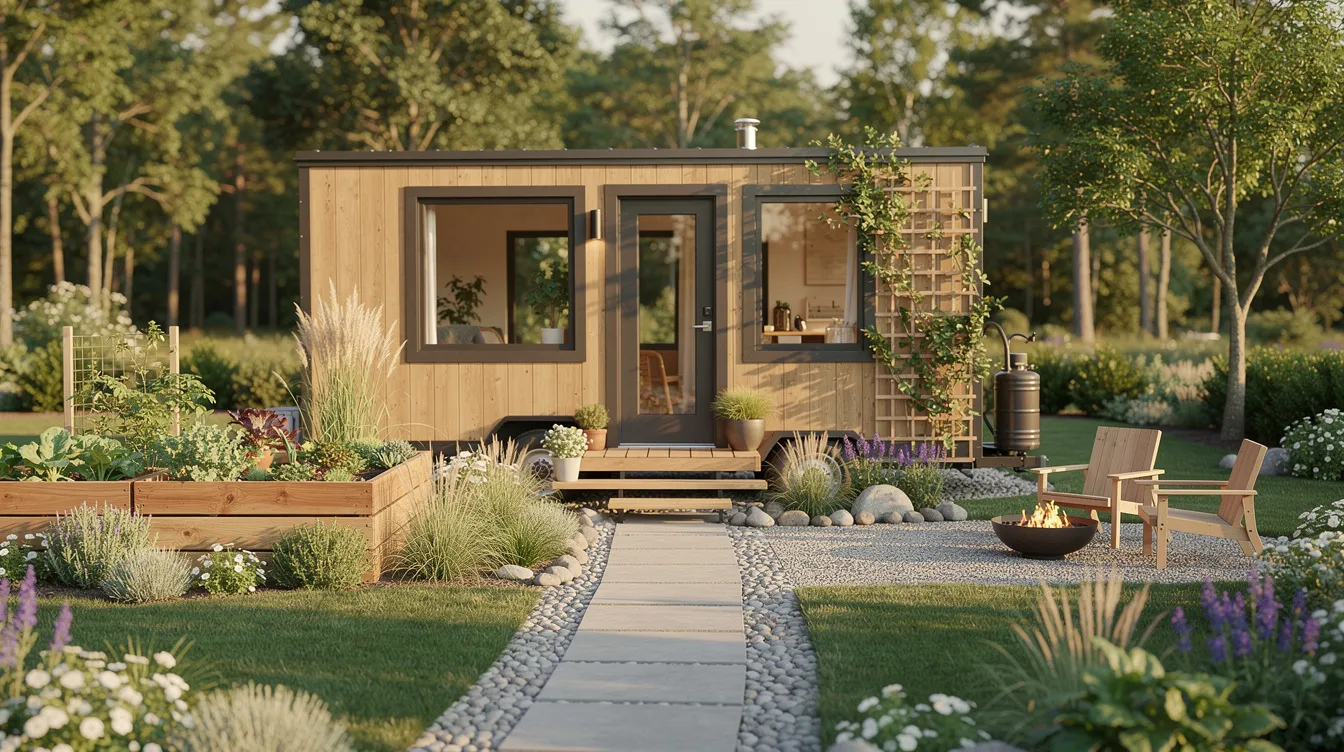
Even a 300–600 sq ft yard can be divided into clear zones: an entry path, an outdoor room, planting borders, and a small utility area for a compost bin or storage bin.
Sample micro-layouts that work:
- A 10-by-12-foot gravel patio immediately outside the main door, a 2-foot-wide stepping-stone path wrapping one side, and narrow planting strips along the fence.
- A central 6-by-8-foot deck with two raised planter boxes flanking it and minimal border plantings to keep the surrounding landscape tidy.
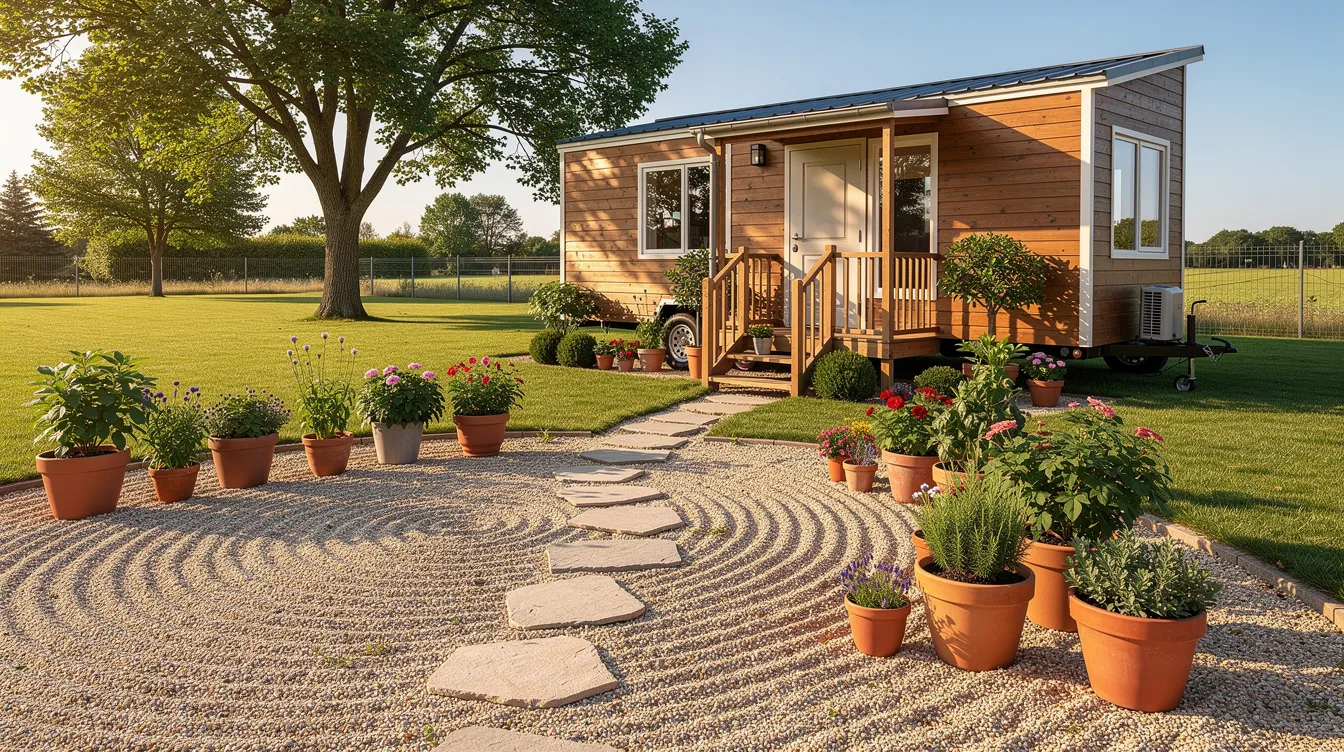
Pathway design can influence the perception of space in small yards. Keep paths at least 24–30 inches wide so people pass comfortably. Diagonal stepping stones visually lengthen a narrow lot. Studies on small yard hardscaping suggest aiming for 50–60% hardscape and 30–40% softscape-go above 70% hardscape and the space feel enclosed like a parking lot rather than a garden.
One strong focal point is beneficial for small garden designs: use sightlines from your tiny house windows to place a feature pot, fire pit, or small tree where the eye naturally lands. Adding a patio can maximize your tiny house living area, turning dead gravel into an actual room for daily use.
Grow Up, Not Out: Vertical Landscaping for Tiny Homes
When lot width is limited-common in tiny house communities and RV parks-vertical gardening maximizes small outdoor spaces effectively. Every fence, wall, and porch rafter becomes potential planting real estate.
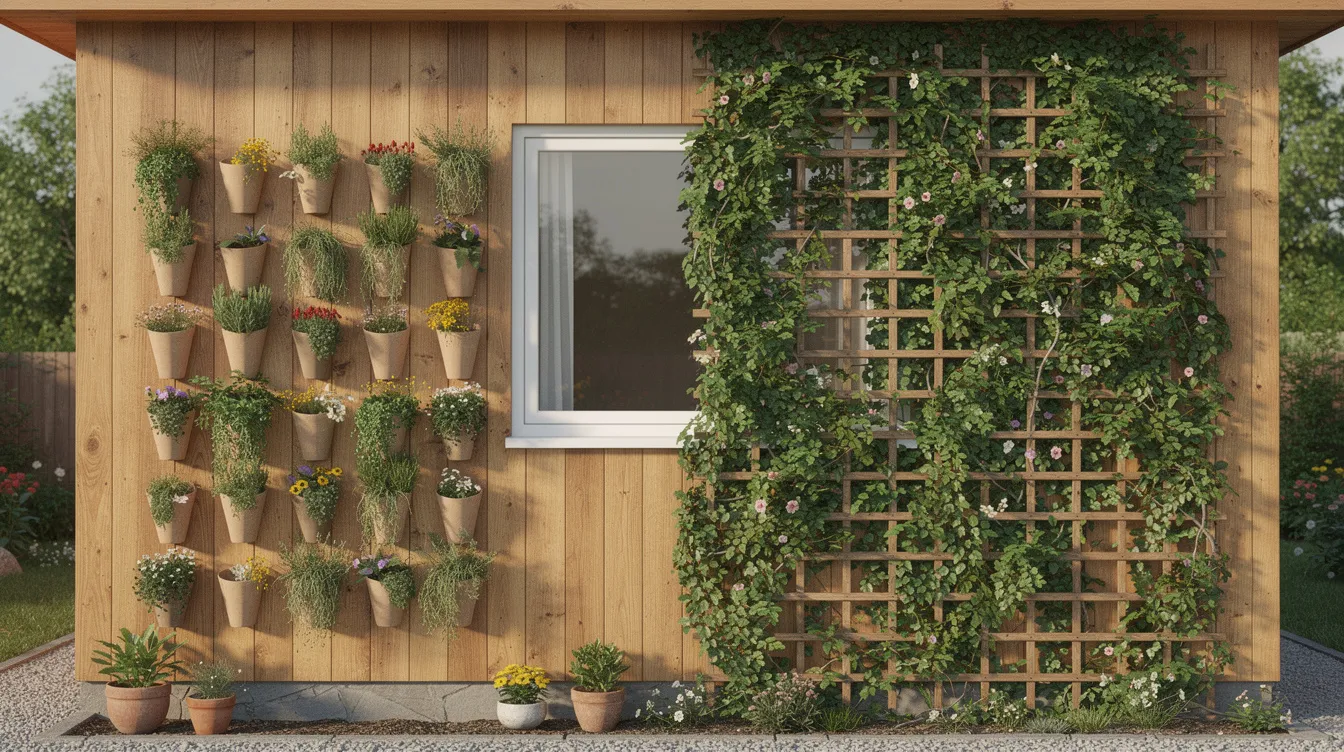
- Wall-mounted planters attached to tiny house skirting hold trailing herbs or succulents without touching the ground.
- Trellises with climbing roses, clematis, or pole beans turn a blank fence into a living wall. Use trellises and wall planters for vertical gardening as the simplest entry point.
- Hanging plants from porch rafters-ferns, trailing petunias, strawberry baskets-add layers of visual interest overhead.
- Stacked planters or tiered shelving let you fit more plants into a two-foot-wide strip along your tiny house.
- Tall potted plants like columnar junipers or Italian cypress in containers create privacy screening without eating floor space. Vertical plants create a private sanctuary in small yards where neighbors are close.
Herbs and vegetables thrive in vertical gardens too-mount a pocket planter with basil, cilantro, and chives near your kitchen door. Container gardens can enhance vertical gardening in tiny spaces by letting you rearrange as seasons shift.
For mobile tiny homes, keep vertical elements freestanding or on removable mounts so nothing interferes with towing. Frame an outdoor room adding a simple pergola or arbor over a 3–4-foot-wide entry path to define the transition between yard and house.
Pick Small Plants and the Right Scale
A standard 8-foot shrub can overwhelm a 24–30-foot tiny house facade. Landscaping should coordinate with the architecture of tiny homes, and that means choosing plants that maintain scale with the structure. Using one focal plant anchors the landscape design effectively-let one specimen shine rather than crowding ten competing shrubs.
Dwarf and compact plant varieties are ideal for tiny home landscaping:
- Dwarf hydrangeas like ‘Little Lime’ (3–5 ft tall)
- Compact boxwoods (under 2–3 ft)
- Dwarf Japanese maples in containers (6–8 ft at maturity)
- Low creeping thyme or sedum along pathways
Layering plants by height creates visual depth: start by putting smaller plants closer to paths, medium perennials behind them, and one focal shrub or understory trees as backdrop. This mimics natural woodland edges and makes a tiny yard feel deeper than it is. Dwarf varieties of classic plants stay small when mature, which means less pruning for busy tiny house dwellers. Classic plants like boxwood and hydrangea deliver familiar beauty at a fraction of the size.
If your site has mature trees, keep them. They reduce cooling costs, provide structure, and give canopy that takes decades to grow. Add smaller plants underneath-hostas, coral bells, ferns-for proper visual balance. Plant palettes should be restrained to avoid clutter in tiny gardens; choose plants that are in scale with the house and stick to a cohesive palette rather than a botanical sampler.
Choose Long-Blooming Plants for Maximum Impact
In a tiny house yard, limited planting area must work hard from spring through fall. Every dormant gap or bare spot stands out when you only have a few beds. That’s why you should choose long blooming plants that deliver continuously blooming color across multiple months.
Top long blooming perennials for tiny yards:
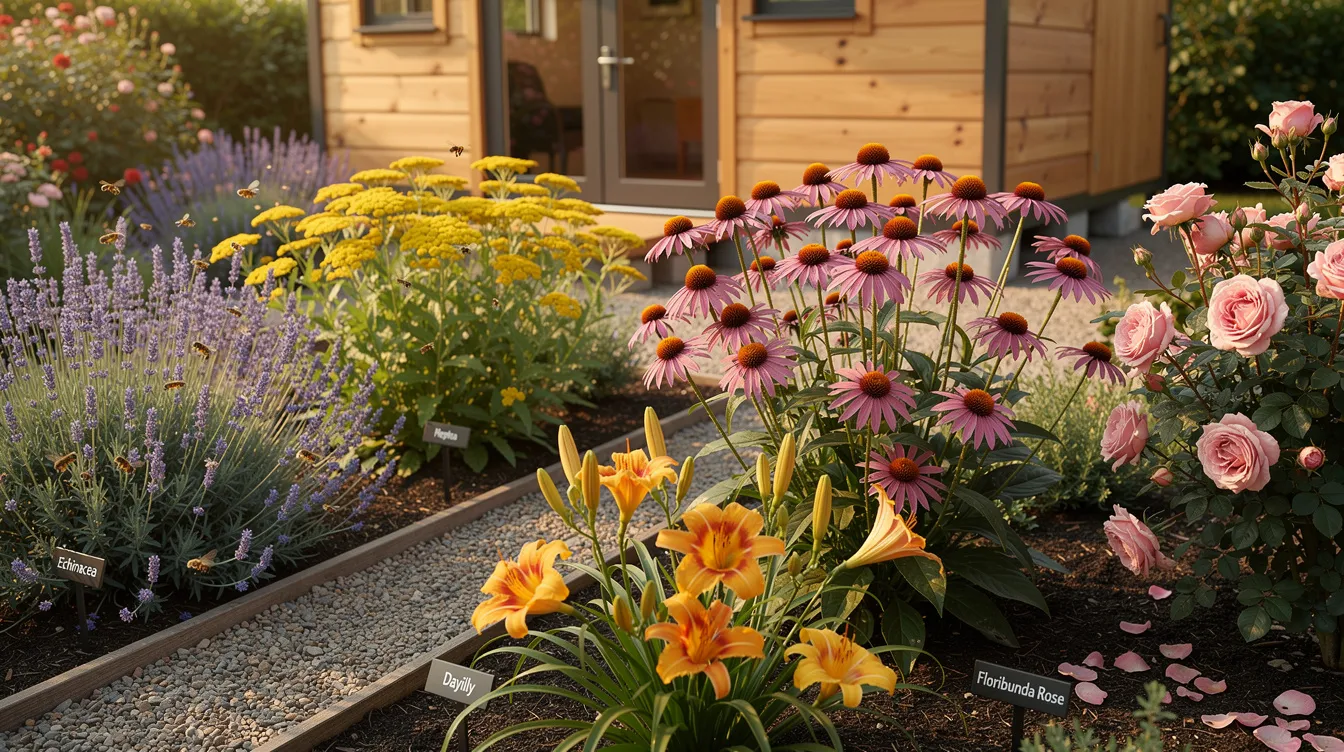
- Coneflowers (Echinacea): bloom summer through fall, drought-tolerant, attract pollinators
- Catmint (Nepeta): lavender spikes from late spring to frost with deadheading
- Yarrow (Achillea ‘Coronation Gold’): blooms mid-June through October, reaches 2–4 ft, full sun
- Reblooming daylilies: long blooming periods with minimal care
- Long-blooming roses (floribunda types): compact and repeat-flowering
Janney recommends planting perennials that deliver foliage texture even when blooms fade. Coral bells, hostas, and caladiums keep color and form going between flower flushes. A big perennial like yarrow paired with low groundcovers like creeping thyme creates an inspired garden with layers of interest. Select long-blooming perennials for year-round color, and incorporate native plants for lower maintenance and resilience-many coneflowers and yarrows are native across much of the US.
Mix a few annuals (petunias, calibrachoa in a container) with perennials to keep the outdoor space colorful all season without replanting entire beds.
Create an Outdoor Room Around Your Tiny House
An outdoor room effectively doubles the living area of a 200–400 sq ft tiny home. Think of it as an actual room with a floor, walls (plants or screens), and a ceiling (pergola, shade sail, or sky). Outdoor rooms can be used for dining or lounging-or both, depending on how you arrange the furniture.
- Surfaces: Decomposed granite, gravel edged with pavers, or a 6-by-8-foot wooden deck off a French door. These create a defined outdoor living area that feels intentional.
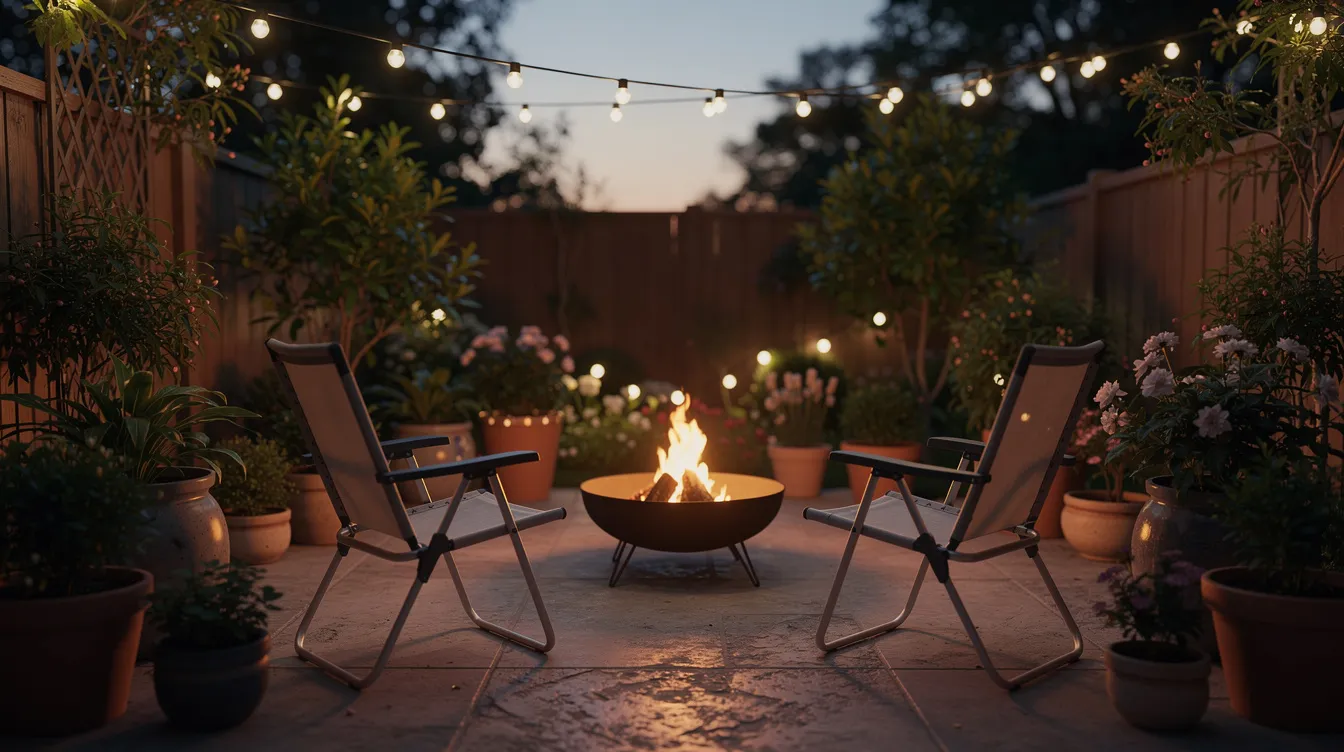
- Furniture: Use small, foldable furniture for outdoor living areas. A foldable bistro set, a storage bench with comfy seating underneath the lid, or a compact loveseat seats 2–4 without crowding. Small furniture that folds or stacks stores easily when not in use.
- Ambience: String lights overhead create ambience after sunset. A small propane fire pit adds warmth and serves as a focal point. Outdoor rugs and cushions define the space-suddenly it’s an outdoor room, not just a slab.
This matters most when you work remotely, host guests, or live in tiny house communities with shared spaces. A well-designed tiny house creates a seamless flow between indoors and out, making the small dwelling feel twice its size.
Boost Planting Space with a Container Garden
Container gardens are perfect for renters, mobile tiny homes, or gravel-only pads where in-ground planting isn’t allowed. They help pack more plants into small spaces and can travel with you when you move.
- Window boxes under tiny house windows add curb appeal and herbs within arm’s reach of the kitchen.
- Large trough planters or repurposed 5-gallon buckets wrapped in wood serve as mini raised beds.
- Stacked herb pots fit basil, rosemary, and chives in a single square foot.
- Container size guide: Small pots (0.5–2 gal) for herbs; medium (2–3 gal) for dwarf tomatoes and beans; large (4–7+ gal) for peppers and small fruit trees.
Incorporate edible plants like herbs and dwarf fruit trees alongside ornamentals-strawberries next to geraniums, basil beside petunias. Group containers in odd numbers (3 or 5) to frame doors and steps, creating a mini garden edge. This is where you can add plants rapidly and maximize small yards without committing to permanent beds.
Maintenance notes: containers dry fast in summer, so check daily. Use lightweight potting mix, consider self-watering inserts, and choose frost-proof pots if you’re in a four-season climate. For more creative tiny gardens ideas for small spaces, check our full gallery.
Sustainable and Low-Maintenance Tiny Home Landscaping
Small houses appeal to people who value sustainability, and your surrounding landscape should reflect that same ethos. A sustainability landscape around a tiny home perfectly aligns with low-input, high-reward design.
- Minimize turf lawn areas to enhance sustainability. Replace thirsty grass with groundcovers (creeping thyme, ajuga), gravel, or mulched planting beds. Turf lawn areas eat water and weekend hours that could go toward a calming garden instead.
- Use water wise tactics like drip irrigation and rain barrels. Drip systems deliver water directly to roots and save 20–50% compared to spray systems. Rain barrels under tiny house gutters capture free irrigation water.
- Incorporate edible plants: dwarf fruit trees, a small raised vegetable garden, and pollinator habitats with milkweed and coneflower support local wildlife and promote biodiversity. Native plants support local wildlife and reduce fertilizer needs.
- Edible + habitat features make your private oasis productive. Even two dwarf apple trees and a birdbath turn a tiny yard into a functioning micro-ecosystem.
Low-maintenance doesn’t mean boring. Choose resilient plants that match the tiny house aesthetic-whether modern and minimalist or rustic cabin style. Plants provide beauty, food, and habitat when chosen intentionally.
Budget-Friendly Tiny Home Landscaping Ideas
Many Explore Tiny House readers tackle their first tiny house yard on a lean budget, especially with rising housing costs pushing people toward alternative housing. Good news: a small yard costs less to landscape than a big one.
- Upcycle materials: reclaimed bricks for paths, old pallets as vertical planters, metal tubs as container gardens. A DIY gravel patio costs a fraction of poured concrete.
- Source plants cheaply: neighborhood plant swaps, cuttings from friends, nursery clearance racks, and starting perennials from seed.
- Plant small, think long-term: Buying smaller plants that fill in over 2–3 seasons is smarter in tiny spaces than buying oversized specimens. In just two weeks, a well-watered transplant establishes roots and starts growing.
- Limit your color palette for a cohesive garden design-fewer varieties purchased in multiples looks richer than one of everything.
- Phase your projects: Year 1 focuses on basic layout and a few anchor plants. Year 2–3, layer in long blooming plants and decor as budget allows.
A garden designer can help with tricky sites, but most tiny home projects are well within DIY range.
Lighting, Comfort, and Safety in Small Outdoor Spaces
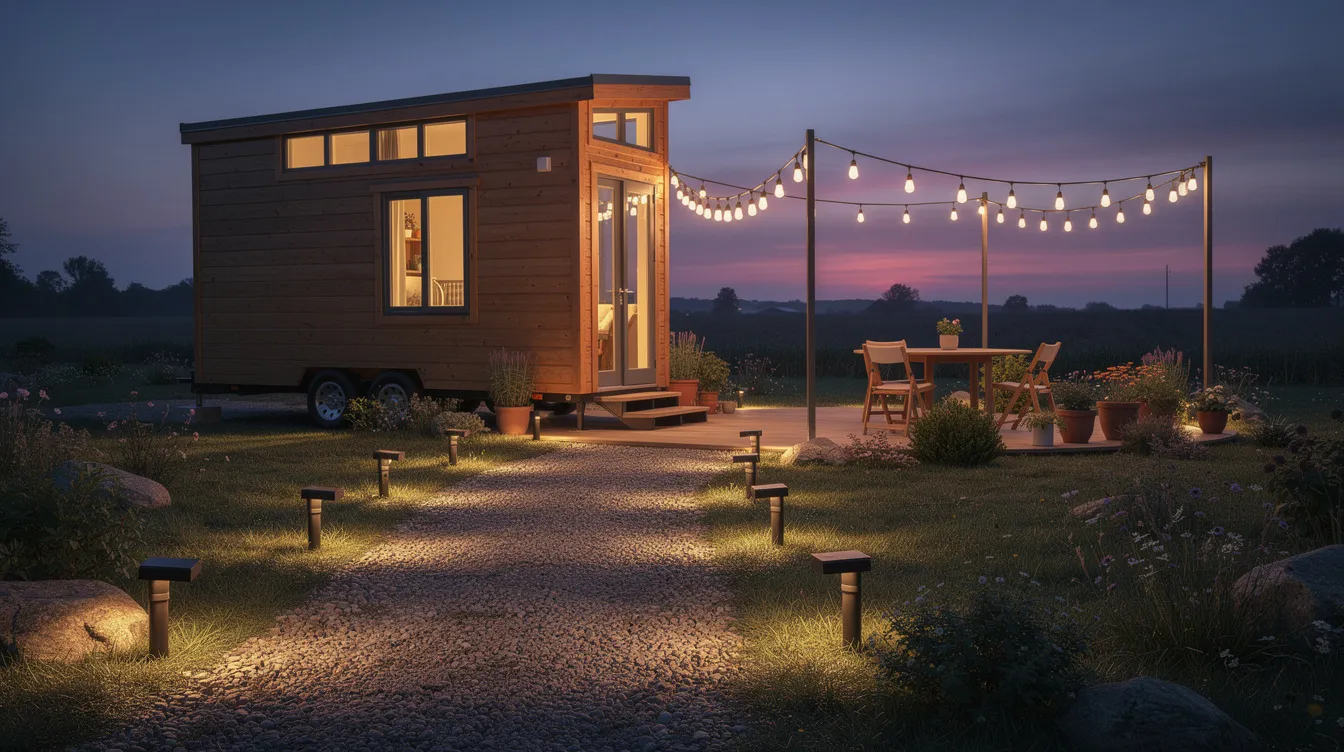
Good lighting extends your outdoor room into the evening and improves safety on small lots. Lighting can enhance curb appeal during nighttime, turning a private sanctuary into something worth showing off after dark.
- Solar path lights along a 2-foot-wide walkway guide feet safely without wiring.
- Low-voltage deck lights on steps prevent trips near trailer hitches and tiny house stairs.
- Warm string lights across a patio create ambience and make the space feel enclosed in a cozy, intentional way rather than exposed.
- Shade sails or small umbrellas handle sunny sites; outdoor cushions that store inside benches keep comfort close without clutter.
- Clearances matter: keep lights and decor clear of tiny house doors, steps, and tow points so nothing blocks movement.
These are low-skill weekend upgrades. Most tiny house owners can install solar lights and string lights in an afternoon with zero electrical work. For self-sufficient setups, solar-powered options keep energy use aligned with off-grid values.
FAQ
How small can a tiny home yard be and still feel usable?
Even a 10-by-15-foot space becomes functional with a defined seating nook, a narrow path, and a few vertical planting areas. Usability comes from clear zones and scaled plants rather than total square footage. If your site is extremely tight, prioritize one main function-dining or gardening-rather than cramming in everything. Less space doesn’t mean less impact when you design with intention.
Can I landscape if my tiny house is parked on a rented lot or RV pad?
Absolutely. A container garden, portable raised beds, and freestanding trellises are ideal for rented spaces and won’t damage the property. Check park or community rules about digging, permanent decks, and big plants before committing to in-ground work. Movable planters on wheels and roll-out outdoor rugs can travel with the tiny house when your lease ends.
What are the easiest plants for new tiny home gardeners?
Start with forgiving varieties: catmint, coneflowers, creeping thyme, dwarf boxwood, and hardy herbs like rosemary and chives. Native plants adapted to your region usually need less water and care. Begin with just 3–5 types and expand slowly as you learn what thrives in your specific outdoor space. Scaled plants matched to your climate do most of the work for you.
How do I keep my tiny yard from looking cluttered?
Limit the color palette for both plants and furniture, and repeat the same few materials throughout. One or two statement features-a fire bowl or large pot as a focal point-outperform a dozen small ornaments. Run a seasonal “declutter check” to remove dead plants, extra pots, or furniture that no longer fits the outdoor room. Keep vertical plants and more plants in groupings rather than scattered randomly.
Do I need professional help to landscape my tiny home?
Most tiny home landscaping projects are DIY-friendly with basic tools, especially container gardens, simple gravel patios, and hanging plants. A short consultation with a local garden designer can help with tricky slopes, drainage, or plant selection in extreme climates. Explore Tiny House has a growing library of design ideas and guides to get you started before hiring outside help.