
A small greenhouse doesn’t require acres of land or a massive budget. Whether you live in a tiny house on wheels, a compact urban apartment, or a small-lot property, the right greenhouse idea can transform how you grow food and nurture plants year long.
Mini greenhouses extend the growing season for plants, protect tender plants from extreme weather conditions, and allow for earlier seed starting in the season. They even enable multiple harvests of fruits or vegetables per year. The seven ideas below were selected based on space efficiency, cost, ease of construction, climate protection, and portability-the factors that matter most when every square foot counts.
How We Chose the Best Small Greenhouse Ideas
Every greenhouse idea on this list was evaluated through the lens of compact living. Here’s what we prioritized:
- Space efficiency – footprint under 100 sq ft, with options under 10 sq ft
- Cost-effectiveness – preference for recycled materials and DIY builds, since building a mini greenhouse can save money compared to buying one
- Ease of construction and maintenance – suitable for weekend projects with basic tools
- Climate protection – measurable temperature gains and season extension
- Portability – can it move with you to a new site or be stored off-season?
- Suitability for tiny house communities – no permanent foundations required for most options
Effective ventilation is crucial to prevent overheating in small greenhouses, and automatic vent openers can help regulate temperature without electricity. A rainwater collection system can also provide better water for seedlings than tap water. We factored these practical details into every recommendation.
Top 7 Small Greenhouse Ideas for Compact Living
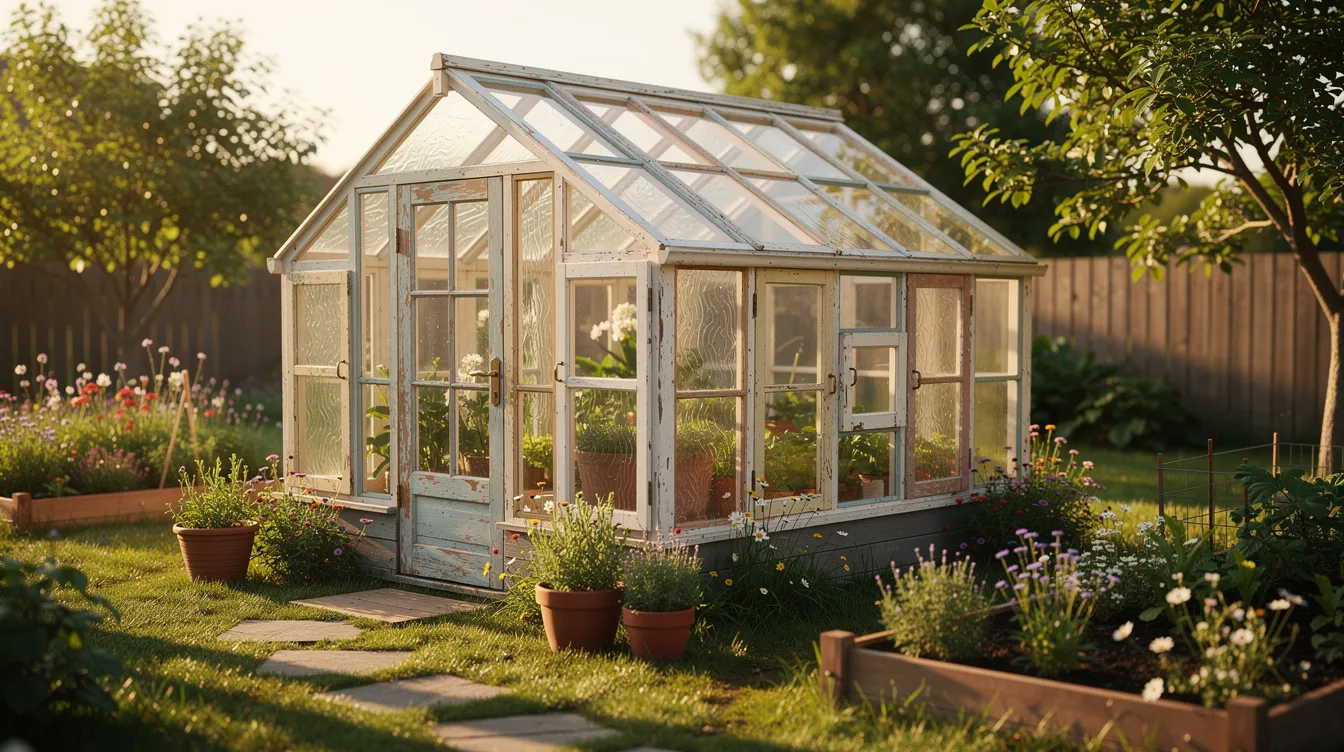
1. Upcycled Window Frame Greenhouse
Collect old windows from demolition sites, thrift stores, or online marketplaces, then construct a frame from scrap wood and plastic to create a one-of-a-kind growing space. Old windows can be used to create a unique greenhouse design that costs almost nothing.
Why It Stands Out
You can build an entire greenhouse from materials that would otherwise end up in a landfill. A documented case in Tasmania produced a functional propagation house from 1950s steel-framed windows and pallets for under AUD $100.
Best For
Eco-minded DIYers who enjoy the project of sourcing and assembling salvaged materials. This idea works well if you have access to a yard or garden corner near your tiny house.
Key Strengths
- Budget-conscious: mini greenhouses can be made from old windows and scrap wood
- Customizable size based on available windows
- Attractive vintage aesthetic that doubles as a garden feature
- Picture frames can even be repurposed into smaller greenhouse structures
Possible Limitations
- Matching window sizes takes patience
- Glass panes need sealing and weatherproofing; expect ongoing maintenance
- Roof sections should use polycarbonate or clear plastic sheeting for snow and rain runoff
2. Mini Hoop House with Plastic Sheeting
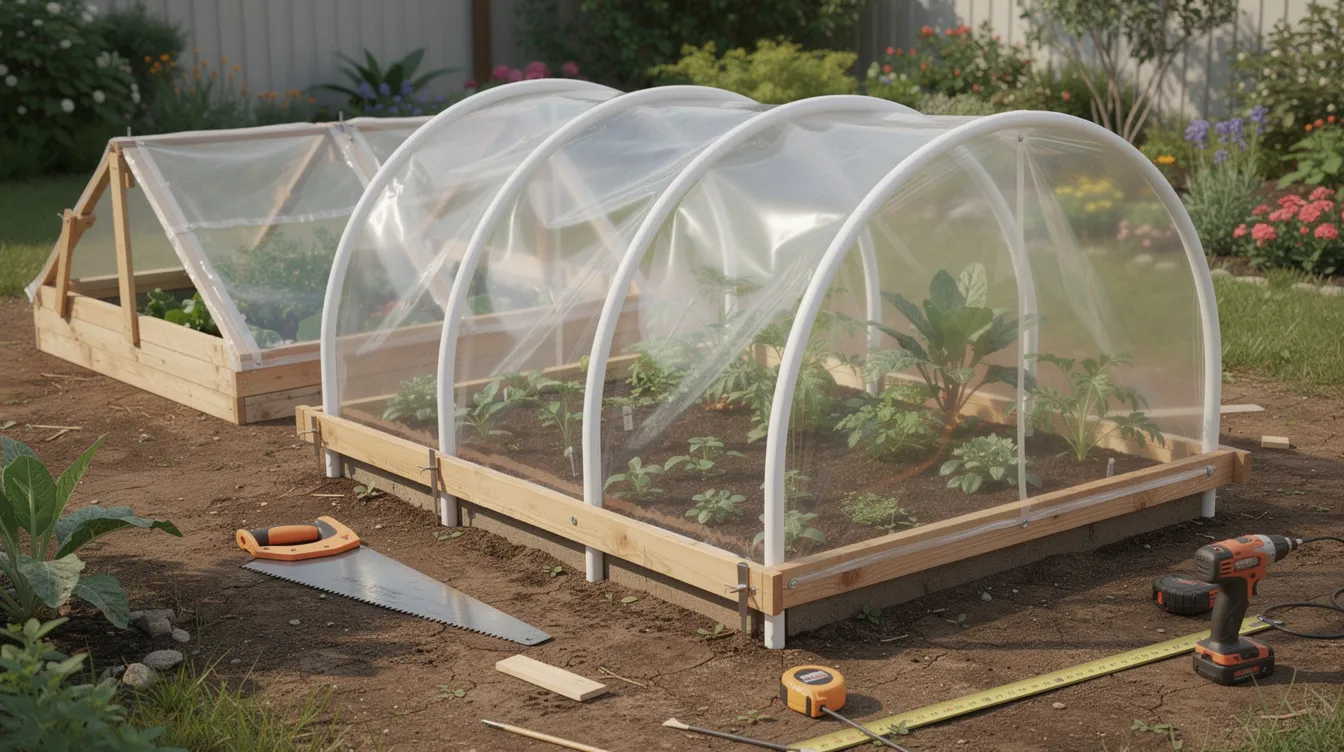
Bend pvc pipes or metal hoops into arches, push them into the ground, and cover with greenhouse plastic covers. A simple greenhouse can be made from scrap wood and plastic in a single afternoon.
Why It Stands Out
This portable greenhouse can be set up and taken down in under an hour. It raises daytime temperatures by roughly 10–15°F, giving your plants meaningful frost protection during colder weather.
Best For
Renters, tiny house dwellers on wheels, or anyone needing seasonal flexibility. Portable greenhouses can even fit on a condo balcony if sized appropriately.
Key Strengths
- Extremely lightweight and portable
- Quick setup with minimal tools
- Covers multiple plants at once across a row or raised bed
Possible Limitations
- Plastic covers degrade after 6–12 months of UV exposure
- Limited height restricts growing taller vegetables like tomatoes
- Wind vulnerability in exposed locations
3. Cold Frame Box Greenhouse
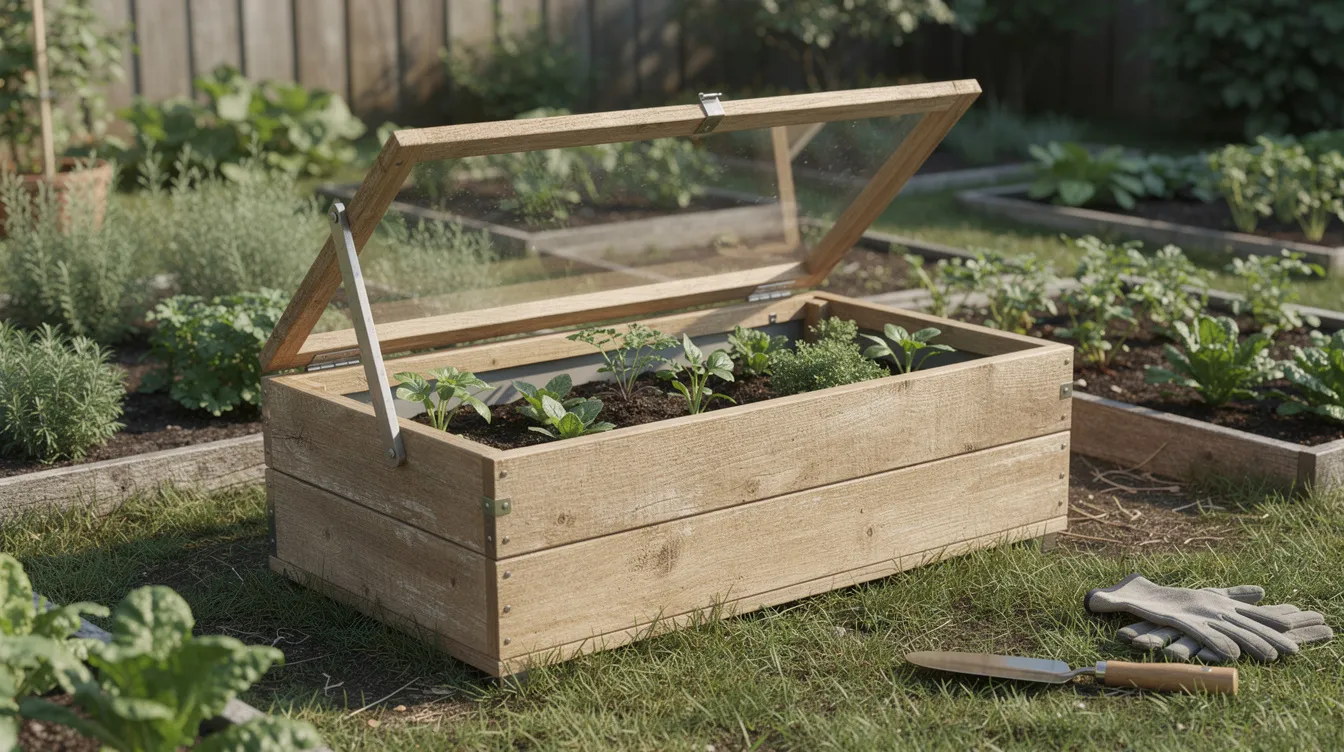
A cold frame is a simple greenhouse with a hinged glass lid set over a bottomless wood box at ground level. The angled lid captures sun and traps heat around low-growing plants.
Why It Stands Out
Cold frames can extend your growing season by 3–5 weeks beyond the last frost date, giving seedlings a head start in spring and protecting herbs well into winter.
Best For
Gardeners focused on starting seeds, growing leafy greens, or hardening off flats of seedlings before transplanting outdoors. Ideal for tiny gardens with minimal room.
Key Strengths
- Excellent way to extend the season with almost zero cost
- Minimal space requirement-fits in 2–4 sq ft
- Raised beds in greenhouses can improve water drainage and reduce back strain
Possible Limitations
- Limited to low-growing plants
- Requires daily lid opening for ventilation on sunny days
- Bending or kneeling to access soil and plants
4. Container Mini Greenhouse System
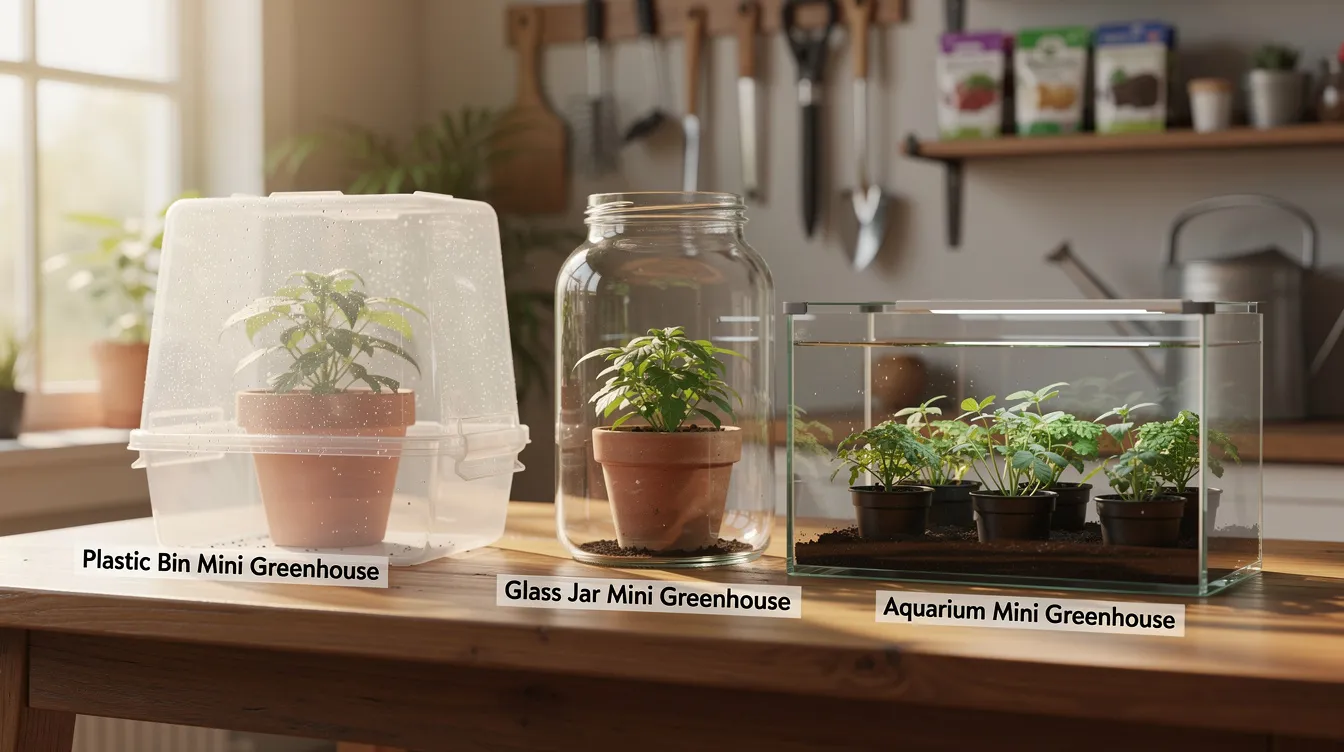
Plastic containers can serve as instant mini greenhouses. Place clear plastic storage bins, large glass jars, or even aquariums over individual pots to create micro-climates for each plant.
Why It Stands Out
Each container creates its own growing space with individual climate control. You can protect one tender herb while leaving a hardier plant uncovered-no structure required.
Best For
Apartment dwellers, balcony and patio gardeners, or anyone with extremely limited space who wants to grow flowering plants or herbs indoors or on a deck.
Key Strengths
- Perfect for balcony gardening using recycled household containers
- Clear plastic storage bins function as mini greenhouses
- Aquariums can serve as mini greenhouses for plants
- Scalable-add more containers as your stock of plants grows
Possible Limitations
- Time-consuming to manage when growing plants across many containers
- Limited room per container for larger vegetables
5. Lean-To Greenhouse Against Tiny House
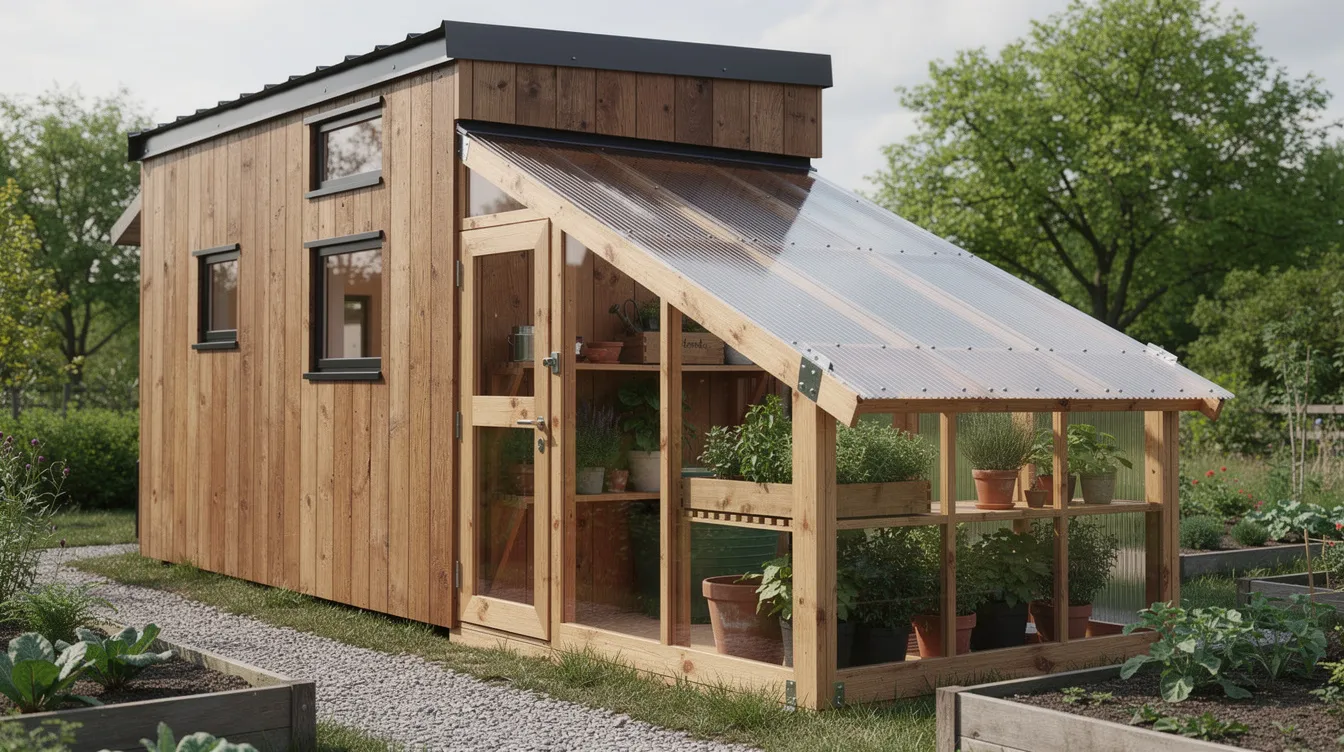
Attach a greenhouse structure directly to a south-facing wall of your house. Lean-to designs typically run 7–12 feet wide and use the existing wall as one side, saving materials and growing space simultaneously.
Why It Stands Out
A lean-to greenhouse can use the exterior wall of a building for thermal mass, absorbing heat during the day and releasing it overnight. This creates an efficient, year-round growing environment. According to the Oklahoma State Extension, these designs work best on south or east-facing walls where light exposure exceeds 5–6 hours daily.
Best For
tiny house owners on permanent foundations who want a semi-permanent garden addition. This sign of commitment pays off with the most usable growing area per footprint of any option on this list. Explore how these integrate with modern tiny house designs.
Key Strengths
- Maximizes space efficiency by using an existing wall
- Using dark paving stones inside a greenhouse can help absorb and release heat
- DIY greenhouses can incorporate natural climate regulation techniques like thermal mass
- Access to house utilities (water, electricity) for supplemental light or heat
Possible Limitations
- May require building permits and proper flashing to protect the house from moisture
- Attaching doors and polycarbonate panels to the frame demands intermediate DIY skills
6. Window Box Greenhouse Extension
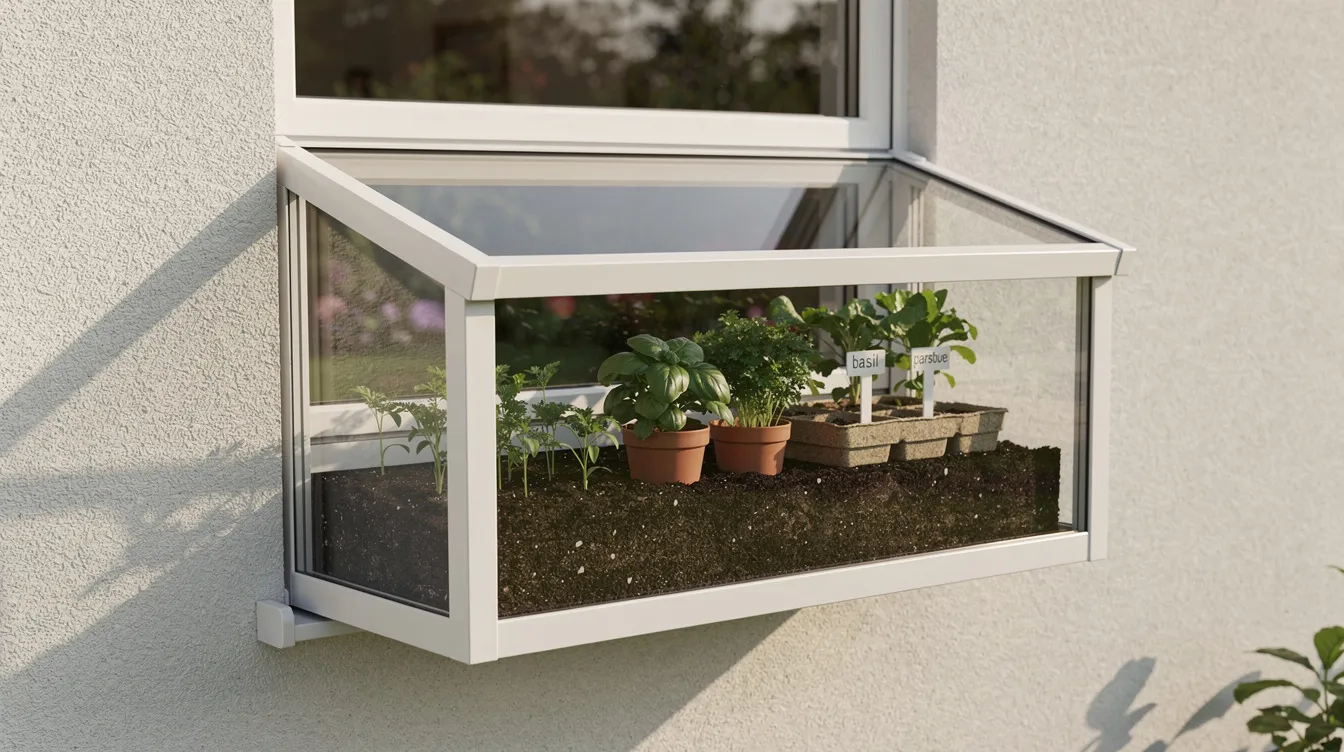
Attach a small glazed box to an existing window, extending the growing space outward without using any floor area. These work like a mini bay window filled with soil, pots, and seeds.
Why It Stands Out
Vertical gardening techniques can significantly increase usable space in small greenhouses, and window boxes apply this principle directly. You tend plants from indoors with easy access through the window.
Best For
Urban dwellers, renters, and anyone who wants herbs and small vegetables without sacrificing room inside. Hanging baskets and tiered shelving can optimize vertical space within these boxes.
Key Strengths
- No floor space required
- Easy access from inside-stand at your window to water and harvest
- Suitable for herbs, lettuce, and small starts in pots
Possible Limitations
- Very limited growing space per box
- Weight restrictions on windows and frames may apply
- Air circulation can be limited; crack open the window on warm days
7. Portable Pop-Up Greenhouse Kit
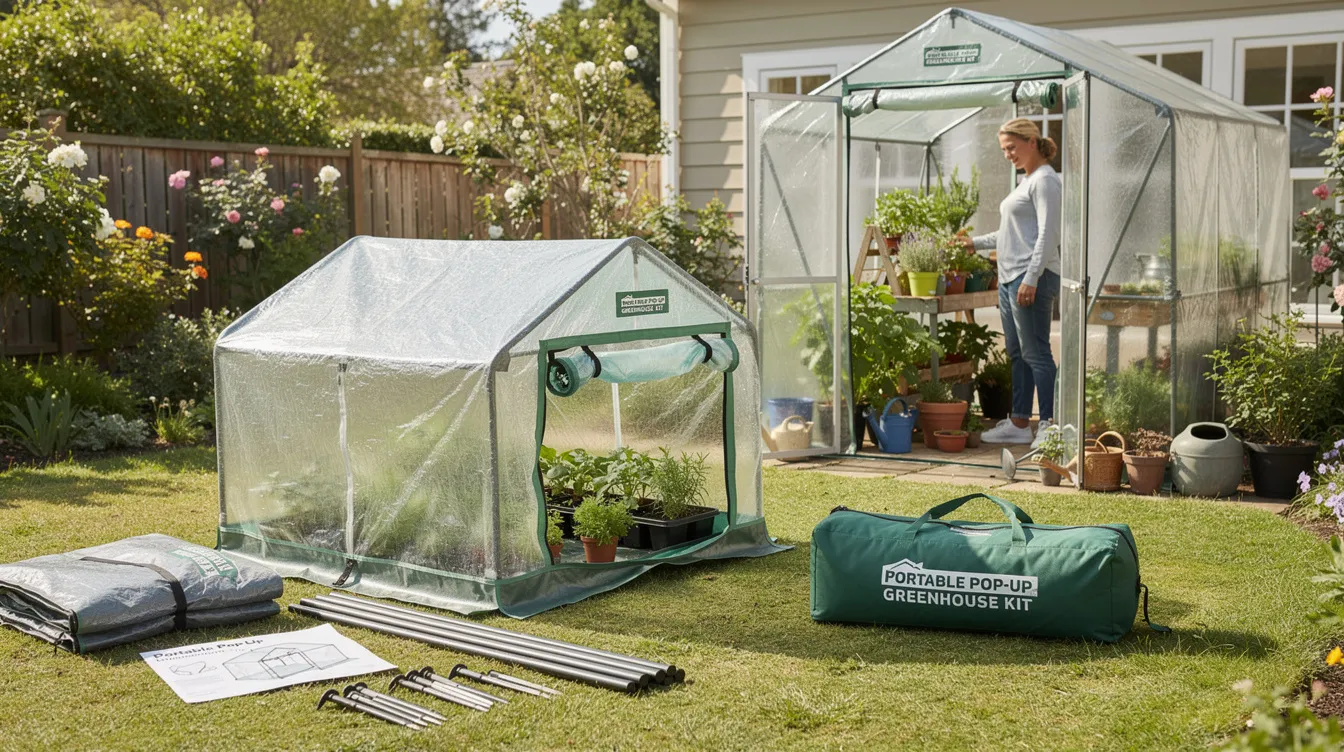
Purchase a ready-made kit that assembles in minutes without tools. Options range from the FlowerHouse SeedHouse Jr., which measures 30 inches square, to larger walk-in models.
Why It Stands Out
Professional engineering means better materials and weather protection than most DIY builds, with zero construction skills needed. Creative features can maximize limited outdoor space for a greenhouse.
Best For
Gardeners who prioritize convenience and want a free-standing structure on a patio, backyard, or deck. Also suitable for anyone who moves seasonally.
Key Strengths
- The FlowerHouse PlantHouse 4 has dimensions of 4-by-4 feet-perfect for small yards
- A 6-by-8-foot GrowIt Organic Growers Greenhouse costs over $200 but offers walk-in room
- A GeoDome greenhouse plan is lightweight and portable
- Completely portable for summer-to-winter repositioning
Possible Limitations
- Higher upfront cost than DIY alternatives
- Limited customization-you get what the kit includes
- Note: a 14-foot greenhouse can be built in a few weekends if you’d rather go custom, and an 8-by-10-foot greenhouse plan includes 13 pages of instructions for a guided build
Quick Comparison of the Best Small Greenhouse Ideas
Greenhouse Idea | Best For | Cost | Portability | Space Needed |
|---|---|---|---|---|
Upcycled Window Frame | Budget eco-friendly gardening | Very low | Low | Medium |
Mini Hoop House | Temporary seasonal protection | Low | High | Small–Medium |
Cold Frame Box | Starting seedlings, season extension | Low | Medium | Very small |
Container System | Balcony & individual plant care | Very low | High | Minimal |
Lean-To Design | Permanent tiny house addition | Moderate | None | Medium |
Window Box | Herb growing without floor space | Low–Moderate | Low | None |
Pop-Up Kit | Convenience & professional results | Moderate–High | High | Small–Medium |
How to Choose the Right Small Greenhouse Idea
Choose Based on Available Space
If you have no ground to spare, window boxes and container systems work from ledges, shelves, and windowsills. With a few square feet of patio or backyard, cold frames and pop-up kits deliver the most growing space per dollar. A full garden area opens up lean-to and upcycled window builds.
Choose Based on Budget and DIY Skills
Upcycled windows and container systems cost under $100 if you source materials creatively. Hoop houses with pvc pipes and plastic sheeting run under $50. Lean-to greenhouses and polycarbonate panels kits require more money but deliver superior insulation and durability.
Choose Based on Portability Needs
Tiny house on wheels? Container systems, hoop houses, and pop-up kits move with you. Lean-to and upcycled window greenhouses suit self-contained tiny homes on permanent foundations.
Which Small Greenhouse Idea Is Best for You?
- Choose Upcycled Window Frame if you want maximum customization on a budget and enjoy hands-on projects
- Choose Mini Hoop House if you need seasonal flexibility and a portable greenhouse you can relocate
- Choose Cold Frame if your priority is to extend your growing season for vegetables and get seedlings into the ground earlier
- Choose Container System if you live in apartments or have extremely limited space-even a windowsill works
- Choose Lean-To if you own your tiny house, have a sunny wall, and want year-round growing
- Choose Window Box if you want fresh herbs without giving up any floor space
- Choose Pop-Up Kit if you value convenience and professional-grade materials over DIY charm
Incorporating thermal mass-water containers, stone, or dark paving-into any of these designs helps regulate temperature swings between day and night.
Final Thoughts
Every small greenhouse idea on this list proves that limited space doesn’t mean limited harvests. Whether you construct a greenhouse from old windows and scrap wood for practically free or purchase a polished pop-up kit, the environmental benefits and food-growing potential are real.
The best choice depends on your space, budget, climate, and how long you plan to stay in one spot. Start with the simplest option that fits your situation-a cold frame or a few clear plastic containers over your spring seedlings-and scale up as your confidence grows.
These greenhouse ideas align naturally with the sustainability principles at the heart of tiny house living. Grow more in less space, waste fewer resources, and take control of your garden no matter the season.