
If you’ve been eyeing the tiny house movement and wondering whether you can actually build or park a tiny home in the Garden State, you’re not alone. New Jersey’s combination of high housing costs, dense development, and layered regulations makes the question more complicated than a simple yes or no. This guide breaks down what’s legal, where, and how to make it happen in 2026.
Key Takeaways
- Tiny houses are legal in New Jersey under the state’s uniform construction code, which incorporates Appendix Q of the International Residential Code for homes 400 square feet or less, excluding lofts. However, legality depends on meeting both building codes and local zoning laws in your specific town.
- New Jersey treats tiny houses on permanent foundations differently from tiny houses on wheels and park models. Foundation-built homes can qualify as primary dwellings or accessory dwelling units, while THOWs and park models are usually classified as recreational vehicles or mobile homes.
- Zoning in each local municipality – whether in Essex County, Union County, Mercer County, or elsewhere – often matters more than state law. Two towns in the same county can have completely different tiny house rules.
- Most fully legal year-round tiny homes must sit on a permanent foundation, connect to approved utilities, and be permitted as a dwelling or accessory dwelling unit.
- THOWs and park models are generally limited to RV parks, campgrounds, or mobile home parks, and rarely allowed as full-time permanent residences on residential lots.
- See the sections below for county-by-county tendencies, realistic costs, and practical building or parking options across New Jersey.
Are Tiny Houses Legal in New Jersey Right Now?
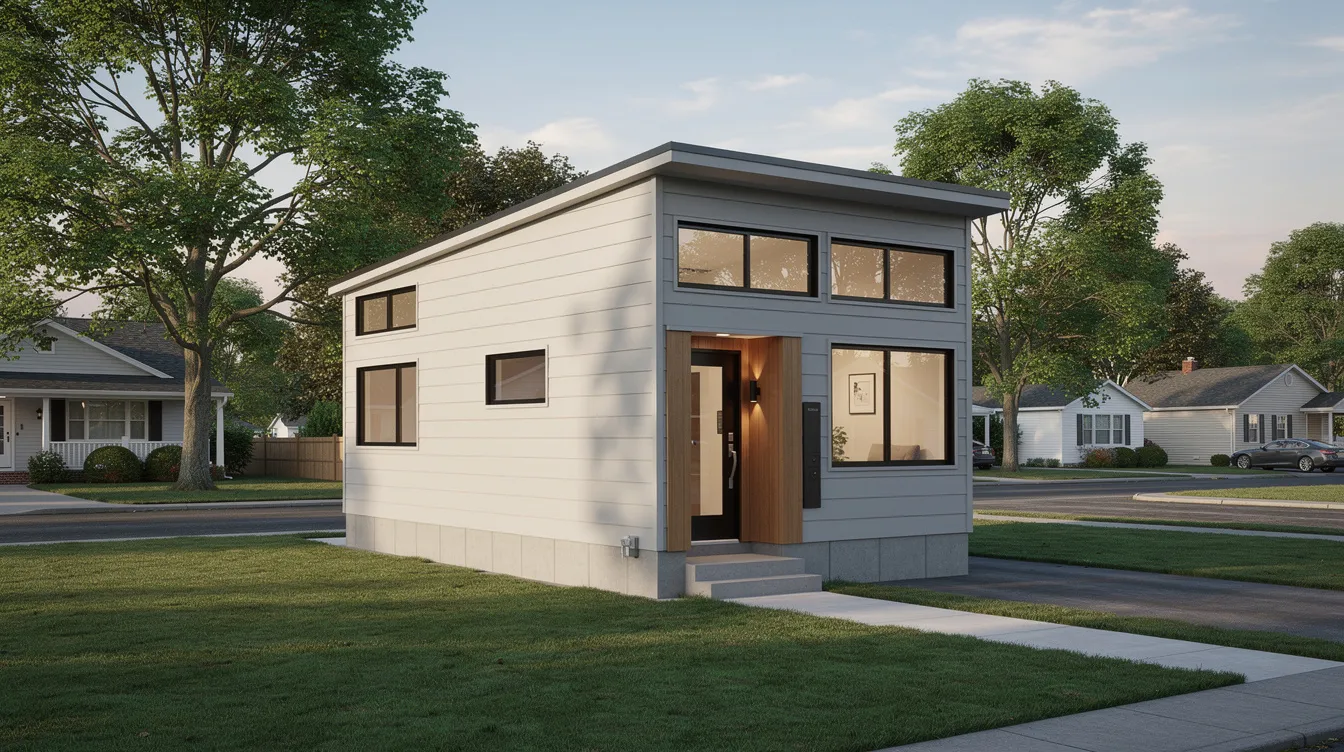
Yes, but with conditions. Tiny houses are legal in New Jersey as of 2026, provided they comply with the state’s uniform construction code – which incorporates the International Residential Code with Appendix Q – and with local zoning ordinances. New Jersey recognizes tiny houses in its building code with specific standards, which is more than many states can say.
Appendix Q is a chapter of the International Residential Code designed specifically for homes 400 square feet or less, excluding lofts. It relaxes certain requirements around minimum ceiling height, loft design, and stair dimensions while still requiring fire safety, structural integrity, and proper egress. New Jersey adopted Appendix Q into its Uniform Construction Code via N.J.A.C. 5:23-3.21, making code-compliant tiny houses on foundations a legal construction category statewide.
Here’s the critical distinction: state building codes tell you how a tiny house must be built to be safe, while local zoning laws decide where you’re allowed to place and live in that tiny house. Your local municipality’s zoning ordinance determines whether a tiny home can serve as a main house, an accessory dwelling unit, or only a temporary structure. Many municipalities in New Jersey manage zoning regulations at the local level, meaning the rules can vary block by block.
Always check both the New Jersey Department of Community Affairs construction requirements and your specific municipality’s zoning office before buying or building a house in New Jersey.
Types of Tiny Houses Allowed in New Jersey
New Jersey law recognizes several categories of tiny structures, and each one is treated differently. The three main types are tiny houses on permanent foundations, tiny houses on wheels (THOWs), and park model homes.
A tiny house that qualifies as a legal dwelling unit is one built on a permanent foundation to IRC + Appendix Q standards, permitted and inspected under local building codes. A unit classified as an RV, mobile home, or park model follows different construction standards and different placement rules.
New Jersey generally permits tiny houses as:
- Primary single family homes on qualifying lots
- Accessory dwelling units behind an existing house
- Temporary structures for seasonal or transitional use
The specifics depend entirely on how each town’s zoning ordinance is written. Manufactured tiny homes and modular units can qualify if certified to relevant codes and placed on approved foundations. DIY builds must still pass plan review and inspections under the state’s uniform construction code. Tiny homes on foundations are generally treated as single-family homes or accessory dwelling units, and many homeowners use them as small ADUs and compact backyard homes to add flexible living space or rental income.
The sections below break out each type in detail, and you can also explore a complete guide to tiny houses, small-scale living, and communities if you want broader context beyond New Jersey.
Tiny Houses on Foundations in New Jersey
Building a tiny house on a permanent foundation is the most straightforward path to full-time, legal tiny living in New Jersey. These structures are treated like any other dwelling and must meet IRC + Appendix Q standards along with local zoning regulations.
Since New Jersey adopted Appendix Q around 2019–2020 – supported by P.L. 2019, c. 490 – site-built tiny houses up to 400 square feet on the main floor can follow relaxed rules for lofts, stairs, and ceiling heights while still meeting emergency escape, smoke alarm, and structural safety requirements. New Jersey allows tiny houses under 400 square feet through this framework.
A code-compliant foundation tiny house in New Jersey must:
- Sit on an approved permanent foundation (slab, crawlspace, or basement)
- Connect to municipal water and sewer, or an approved well and septic system
- Obtain building permits and pass inspections like any other dwelling
- Meet all safety features including smoke alarms, carbon monoxide detectors, and proper egress
A building permit, zoning approval, and utility permits are typically required. Permanent tiny homes must connect to municipal utilities for water, electricity, and sewer. Foundation-based tiny homes typically incur higher costs due to site work, but they carry full legal standing.
Some NJ towns allow tiny houses as standalone primary dwellings on small lots. Others only allow tiny homes as ADUs or guest houses. Property tax applies as it would to any real estate, though homestead or senior exemptions may be available.
Tiny Houses on Wheels (THOWs) and RV-Style Units
Tiny houses on wheels are not treated as houses under New Jersey’s building code. Instead, they fall under regulations for recreational vehicles, trailers, or in some cases mobile homes. Tiny homes on wheels are classified as RVs in New Jersey, which fundamentally changes what you can do with them.
A THOW in New Jersey will typically need to:
- Be titled and registered through the NJ Motor Vehicle Commission if road-legal
- Comply with federal RV or trailer construction standards if sold commercially
- Carry RV-style insurance rather than homeowners insurance
Many local zoning regulations prohibit using RVs or THOWs as permanent, year-round permanent residences on residential lots. At most, they may be allowed for seasonal or temporary use – limited months per year or during construction of a main house. Tiny homes on wheels are often classified as RVs, affecting their costs and legal status alike.
Towns with strict enforcement sometimes issue violations or fines if a THOW is occupied full-time on a driveway or backyard, even when the owner considers it a tiny home. Local authorities in several NJ towns actively monitor for this.
If you want mobility, consider parking a THOW in an RV park or licensed campground that permits extended stays, and make sure it is safely secured by following best practices for attaching a tiny house to a trailer. Some owners also explore placing a THOW on a foundation and converting it to a permanent dwelling where local officials accept that approach.
Park Models and Mobile Homes: How New Jersey Classifies Them
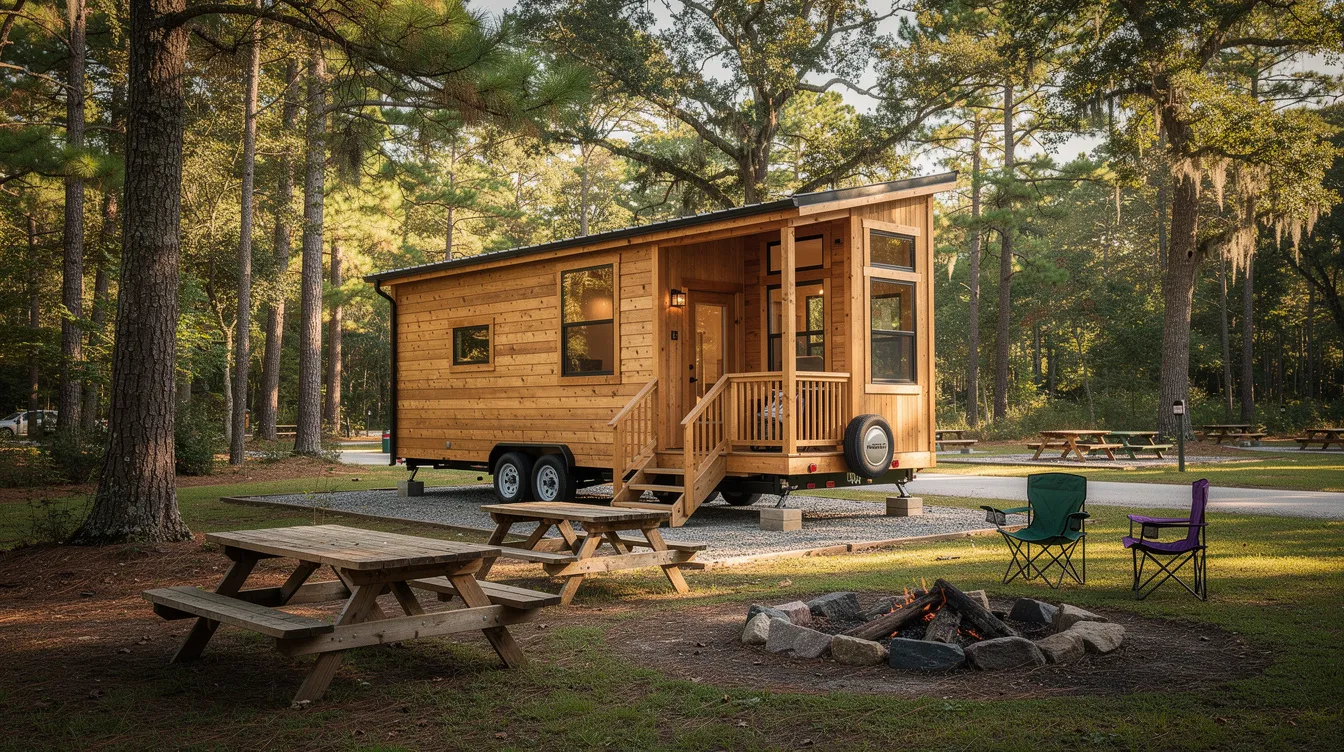
Park models are RV-type units typically under 400 square feet, often marketed as tiny homes. New Jersey usually treats them as recreational vehicles – not permanent dwellings – similar to many THOWs. Their construction standards fall under DCA and RV codes, while local zoning laws decide where they can go.
The most common placement options are RV parks, seasonal resorts, or specially zoned mobile home parks. This is distinct from HUD-code manufactured homes, which are built to federal standards on a permanent chassis and can sometimes be installed in licensed mobile home parks as primary residences.
In most New Jersey municipalities, a park model or RV-certified tiny house cannot be approved as a permanent year-round dwelling on a standard residential lot, even if connected to utility connections, unless the municipality has created a specific ordinance allowing that structure type.
If you’re interested in park models, research realistic budgets by reviewing how much a tiny house costs and the main price drivers, and then research:
- Which RV parks and mobile home parks in your target county accept them
- Whether year-round occupancy is allowed or the park closes seasonally
- How local tax assessors treat these units – often as personal property rather than real estate, meaning personal property taxes and registration fees instead of standard property tax
New Jersey Building Codes for Tiny Houses (Appendix Q Details)
New Jersey incorporated IRC Appendix Q into the Uniform Construction Code to give building officials a clear framework for approving tiny houses on foundations. Tiny houses must comply with Appendix Q of the IRC to meet state requirements. Compliance with safety, zoning, and building codes is required for tiny homes in New Jersey.
Key Appendix Q parameters:
Requirement | Standard |
|---|---|
Maximum main floor area | 400 sq ft (excluding lofts) |
Minimum ceiling height (habitable rooms) | 6 feet 8 inches |
Minimum ceiling height (kitchens/baths) | 6 feet 4 inches |
Minimum loft area | ~35 sq ft |
Loft guards and guardrails | Required at open sides |
Emergency escape openings | Required from sleeping areas |
Appendix Q relaxes some stair and ladder requirements, allowing ship’s ladders and alternating tread devices under certain conditions, but still requires safe guardrails, handrails, and headroom. Emergency escape and rescue openings remain mandatory from sleeping areas, with specific minimum opening sizes that inspectors check during framing and final inspections. Electrical systems must meet full code as well. |
Local New Jersey municipalities can adopt amendments – some impose stricter energy efficiency standards (insulation R-values, air sealing) because of the state’s cold winters. Designers should account for this in wall thickness and window selection when preparing building plans, and it also helps to understand tiny house building codes by state and the 2026 legal landscape if you may relocate or design for multiple jurisdictions.
Permanent vs. Temporary vs. Transitional Tiny Structures
New Jersey officials typically categorize small structures into three buckets:
- Permanent structure: A primary home or accessory dwelling unit on a foundation, fully permitted and inspected
- Temporary structure: A construction office, seasonal cabin, or RV used for a limited, defined duration
- Transitional housing: Short-term or emergency dwellings for disaster recovery or special programs
Permanent tiny houses must obtain full building permits, pass all inspections, and receive a Certificate of Occupancy. They are recorded as long-term improvements on the property tax record. Permanent structures carry full dwelling status.
Temporary tiny houses – often THOWs or park models – might be approved through temporary use permits with a defined end date, typically 6 to 24 months. After that window closes, they must be removed or converted to a permanent, code-compliant structure.
Transitional housing projects, sometimes sponsored by cities or nonprofits, may use clusters of small units or converted containers under special waivers. They still must meet minimum health and fire safety standards and typically cannot be sold as permanent private residences without further zoning approvals.
If you’re planning to use a temporary structure as a bridge to a permanent home, get clear written timelines and conditions from your zoning and building departments. An unexpected removal order can undo months of work.
County-Level Tiny House Trends in New Jersey
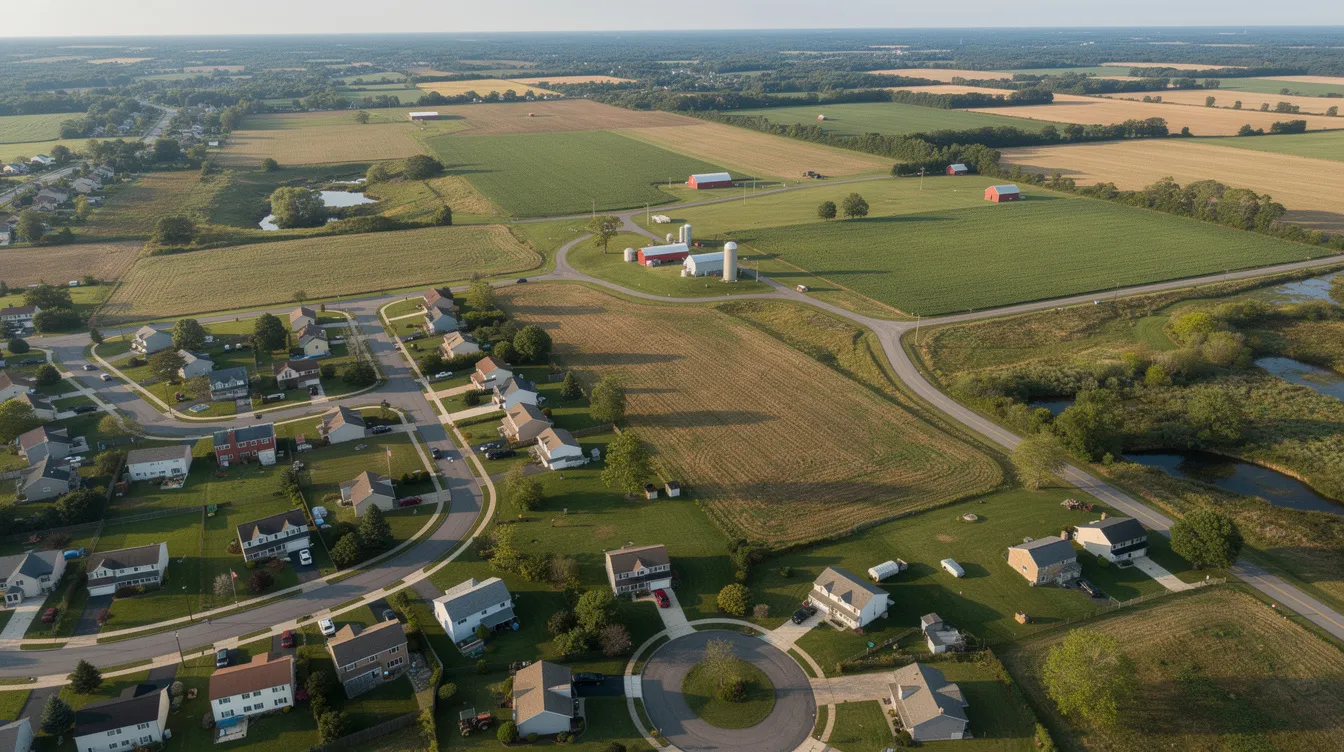
New Jersey counties do not usually pass their own building codes for tiny houses, but they influence planning priorities. Individual municipalities within each county write and enforce local zoning laws, which is why jersey tiny house regulations can differ so dramatically from one town to the next.
Overall patterns:
- Denser counties like Hudson, Essex County, and Union County tend to have strict zoning laws around lot coverage, minimum floor area, and parking
- More suburban or rural counties like Sussex County or Salem may be more flexible for a small house on larger lots or agricultural land
- Southern and coastal counties sometimes offer more room for creative housing solutions
Here’s how specific counties tend to handle things; if you’re open to moving out of state, it can also be useful to compare the best locations to build a tiny house and see how New Jersey stacks up.
- Essex County has specific zoning regulations for tiny houses. Cities like Newark may allow tiny houses as small ADUs for multigenerational housing but rarely permit free-standing THOWs as primary dwellings in a dense urban environment.
- Mercer County’s regulations vary for tiny houses based on classification. Trenton and surrounding townships have shown interest in tiny homes as affordable housing and infill development.
- Union County is mixed – some towns near Elizabeth have tight urban zoning, while others may be more open to accessory units if setbacks, parking, and design standards are met.
- Atlantic County allows tiny houses with varying municipal regulations across its towns.
- Bergen County has specific zoning regulations for tiny houses that reflect its suburban density.
- Camden County requires special permits for tiny houses in most jurisdictions.
- Cumberland County permits tiny houses as accessory dwelling units, offering one of the more accommodating frameworks.
Some regions impose density restrictions or lot size requirements for tiny homes. Local zoning laws may impose minimum size requirements as well, so always verify details for your specific municipality. Two towns in the same county can have completely different minimum square footage requirements.
City Examples: Newark, Jersey City, Trenton, and Beyond
Here’s how some major New Jersey cities currently tend to handle tiny houses – these are examples, not an exhaustive legal list.
Newark: Tiny houses are more likely to be considered as ADUs or part of pilot affordable housing projects. Long-term parking of THOWs in driveways is usually not allowed. Full code compliance with the Uniform Construction Code is required for any unit used as a dwelling. Minimum square footage rules in residential zones can be a barrier.
Jersey City: Complex zoning, high land values, and flood-zone regulations along the Hudson River mean tiny houses on foundations must often meet stricter design and elevation standards. ADUs up to a certain size may factor into affordability strategies, but RV-style units are generally banned from permanent residential use in this dense urban environment. Property lines and setbacks in urban centers leave little room for detached structures.
Trenton: As the capital within Mercer County, Trenton has discussed tiny homes as a tool to reduce vacant lots and increase affordable housing. Foundation-built tiny houses following Appendix Q may be allowed as primary dwellings or ADUs in some districts, subject to site-plan review and neighborhood feedback.
Elizabeth and Paterson: Both cities treat THOWs cautiously, limiting them to campgrounds or temporary uses, while leaving more room for code-compliant foundation tiny homes in selected zones. Local ordinances in these urban centers tend to prioritize density control.
Where Can You Build or Park a Tiny House in New Jersey?
Four main placement options exist for tiny homes in New Jersey:
1. Private land as a main house You may build a tiny house on a vacant lot as your primary residence if zoning allows a single-family dwelling, there is no minimum house size above your design, and you meet all setbacks, height, parking, and utility requirements. Tiny houses can be placed on private land with permits from the local municipality, and foundation-built units on owned land may also qualify for tiny house mortgage financing options if they meet lender requirements. Property owners should confirm their lot’s zoning district before investing in building plans.
2. Backyard ADUs Some NJ towns have updated local ordinances to allow tiny homes as detached ADUs or “granny flats.” In Asbury Park in Monmouth County, 2024 ordinances permit 1- and 2-family property owners to build ADUs with independent cooking and sanitary facilities, owner-occupancy requirements, and annual registration. Grants between $25,000 and $35,000 are available for deed-restricted affordable ADUs there.
3. RV parks and campgrounds RV parks and campgrounds allow tiny homes on wheels temporarily. THOWs, park models, and RV-certified units can often be placed in rv parks along the Jersey Shore or in wooded parts of the state. Many parks are seasonal and may not permit 12-month residency.
4. Mobile home parks and tiny house communities Some mobile home parks accept smaller manufactured units. Tiny homes can be built in designated tiny home communities. A few emerging developments provide lots, utilities, and shared amenities under park rules. Local laws and land use regulations govern what’s permitted.
Can You Put a Tiny House in Your Backyard in New Jersey?
Backyard tiny houses are sometimes legal in New Jersey, typically when permitted as accessory dwelling units or accessory structures that meet lot, setback, and utility requirements. But they remain illegal in many towns that do not recognize ADUs under local zoning.
Most towns differentiate between:
- A permanent ADU on a foundation (which might be allowed with a zoning or building permit)
- An RV or THOW parked in a yard (often prohibited except for very short stays, and almost never allowed as a year-round primary residence)
Typical approval steps:
- Confirm your zoning district allows accessory dwelling units on a single lot
- Verify your lot meets side- and rear-yard setback requirements from property lines
- Submit site plans and architectural drawings showing a code-compliant tiny house
- Obtain necessary permits and schedule inspections
Some municipalities cap ADU size as a percentage of the main dwelling or with an absolute cap such as 600–900 square feet. Truly tiny ADUs under 400 square feet almost always fit within those limits. Accessory dwelling units can include tiny homes on private properties in jurisdictions that allow tiny homes in residential zones.
If local staff are unfamiliar with the term “tiny house,” ask about accessory apartments, backyard cottages, or in-law suites – the same tiny house rules generally apply.
Tiny House Communities, RV Parks, and Mobile Home Parks in New Jersey
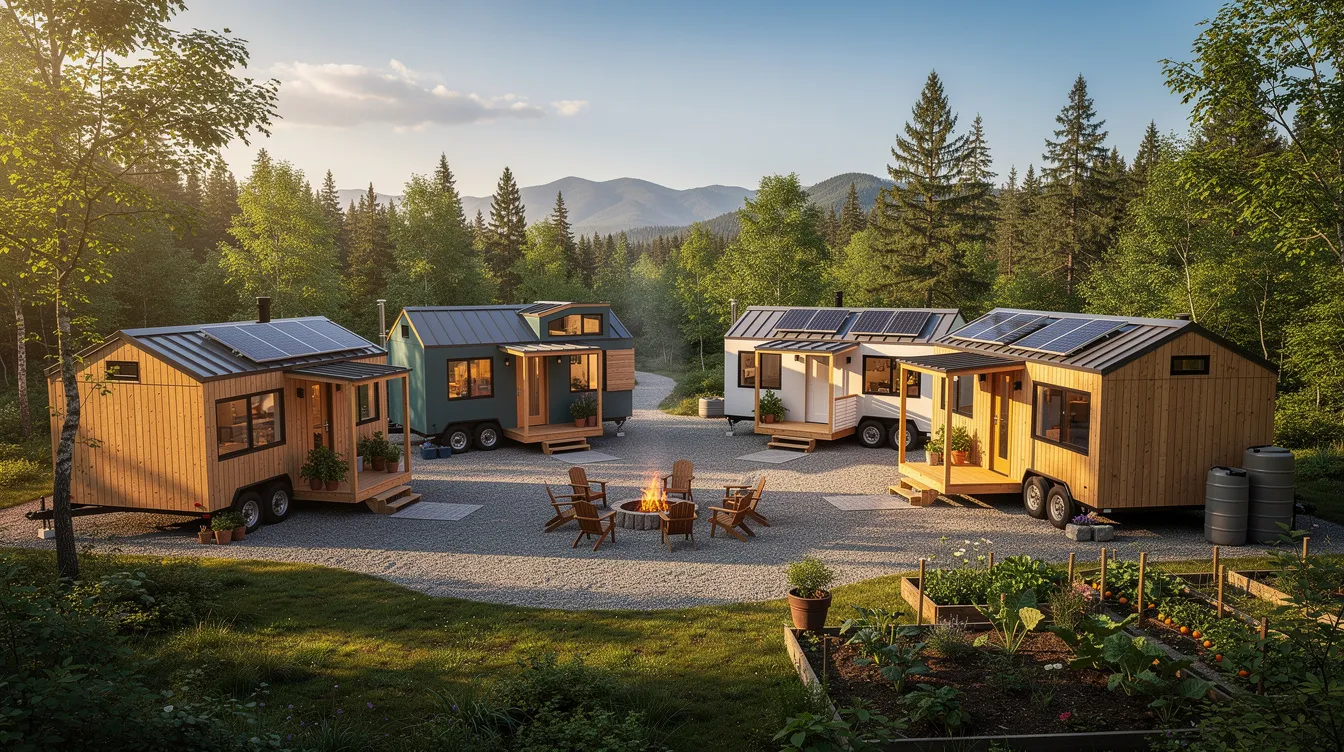
Purpose-built tiny home communities are still rare in New Jersey, but a combination of rv parks, mobile home parks, and small developments offer tiny-friendly options. New Jersey has emerging tiny home communities that are gradually expanding options for residents.
Notable examples:
- Ocean Beach III in Toms River offers a coastal tiny home community with cottage-sized homes on leased lots
- Tabor Village in Goshen is a notable tiny home community with shared amenities
- Vernon Township hosts a tiny home community focused on off-grid living in Sussex County
- Rural communities and farm stays host seasonal tiny homes and THOWs for agritourism or short-term rentals
Tiny home communities often feature shared resources and gardens, creating a cooperative living environment, and some of the best tiny house communities in New Jersey for 2026 offer amenities like shared green space, parking, and community events.
RV parks may accept THOWs or park models if units meet RV standards. Many parks limit stay duration to 6–9 months during open season. Rules on decks, skirting, and accessory sheds vary by park and town.
Mobile home parks sometimes have minimum size or HUD-code requirements that standard THOWs do not meet, but some accept smaller manufactured park model style homes if zoning and the park owner allow it.
Call park managers and local zoning offices directly to verify whether year-round living is permitted, what certifications are required (RVIA, HUD, NOAH), and whether units are treated as personal property with registration fees or as improvements affecting property tax bills.
Costs of Building and Owning a Tiny House in New Jersey
While tiny homes are generally cheaper than traditional houses in New Jersey’s high-cost market, real-world costs in 2026 are higher than many internet estimates suggest.
Realistic cost ranges:
Type | Approximate Cost Range |
|---|---|
DIY shell or basic tiny house | $30,000–$60,000 |
Professionally built THOW or park model | $50,000–$100,000+ |
Luxury tiny homes | $90,000–$100,000 |
Foundation-built (including site work, utilities, permits) | $80,000–$180,000+ |
Fully appointed models in NJ | Can exceed $200,000 |
Placing a tiny house as a legal dwelling also involves: |
- Permit fees and plan review fees
- Engineering or architectural drawings that comply with Appendix Q
- Utility connections or septic system installation, which can cost tens of thousands in some New Jersey counties
Ongoing costs include property tax if treated as real estate, lot rent in RV parks or mobile home parks, insurance (RV insurance for THOWs, homeowners insurance for foundation units), and higher per-square-foot construction costs due to compact, custom designs.
Despite these costs, tiny houses can significantly reduce monthly expenses compared to a typical house in New Jersey, especially when combined with energy-efficient design, solar power, and minimalist tiny living; many people also lean on tiny house tips, galleries, and community support to plan realistic budgets and designs. Property owners who build ADUs may also generate rental income from the additional unit.
Why New Jersey Residents Are Turning to Tiny Homes and Park Models
High housing prices, limited starter-home inventory, and rising rents – especially in North and Central New Jersey – are driving interest in tiny houses, ADUs, and park models as more affordable and flexible alternatives. The tiny house movement has found fertile ground in a state where affordability is a persistent challenge.
Economic pressures are real:
- Median rents for two-bedroom apartments in many New Jersey metros require income levels well above the state’s median wage
- Property taxes on traditional single family homes are among the highest in the United States
- Entry-level homes in desirable areas are increasingly out of reach for young professionals and retirees
Lifestyle motivations also play a role: desire for simpler living with fewer possessions, interest in smaller environmental footprints, and flexibility for remote workers who can live closer to nature or family in a smaller space.
Tiny houses in New Jersey are being used creatively:
- Backyard cottages for aging parents instead of expensive assisted living
- Small rental units as primary dwellings providing supplemental rental income
- Seasonal shore retreats using park models instead of full-size beach houses
- Farm stays and agritourism properties in rural areas
The combination of Appendix Q, evolving ADU ordinances like those in Asbury Park, and pending legislation like Senate Bill S1786 is making it gradually easier – but still not simple – to pursue tiny house living legally in New Jersey. To ensure compliance, always start with your local zoning office.
Frequently Asked Questions About Tiny Homes in New Jersey
What is the smallest legal tiny house in New Jersey?
New Jersey has no explicit statewide minimum house size, but Appendix Q defines tiny houses as up to 400 square feet, excluding lofts. The code still requires habitable rooms to be large enough for safe use – at least one room of approximately 70 square feet. Many municipalities impose their own minimum square footage requirements for dwellings or ADUs through local zoning laws, so check with your local zoning office. The minimum ceiling height for tiny homes is 6 feet 8 inches in habitable spaces under Appendix Q.
Can I live off-grid in a tiny house in New Jersey?
Truly off-grid setups without utility connections are difficult to permit in much of New Jersey. Many towns require connection to public water and sewer where available. Alternative systems like composting toilets, off-grid solar, and cisterns often need specific approvals and may be limited to rural or agricultural zones. Vernon Township in Sussex County is one example where off-grid tiny living has found some traction, but it remains the exception rather than the rule.
Do I need a certified builder for my tiny house in NJ?
The state building code does not always require RVIA or NOAH certification for a site-built foundation tiny house, but using a certified builder or RV manufacturer can make permitting, insurance, and financing significantly easier – especially for THOWs and park models treated as recreational vehicles. All foundation builds must still pass plan review and inspections under local building codes regardless of who builds them.
Can I finance a tiny house in New Jersey like a regular mortgage?
Foundation-built tiny houses on owned land may qualify for traditional mortgages or construction loans if they meet lender minimum size and appraisal standards, and some buyers even compare New Jersey with states like Tennessee tiny homes, builders, laws, costs, and communities when deciding where to invest. THOWs and park models are more often financed with RV loans, personal loans, or manufacturer financing because they are treated as personal property rather than real estate. Explore your options early – financing is one of the most common roadblocks.
Is it easier to have a tiny house in rural New Jersey than in cities?
Rural and exurban areas in counties like Sussex County or Cumberland County sometimes have more flexible zoning – larger lots, agricultural uses, fewer design controls. But this is not guaranteed. Many townships still enforce minimum dwelling sizes or limit additional units on private property. Local zoning laws vary significantly across New Jersey municipalities, so prospective owners must check each municipality’s rules even when land is plentiful. Don’t assume rural automatically means permissive.