

Living in a tiny house, micro-studio, or van conversion doesn’t mean giving up on lush greenery. Purple passion plants and compact passion flower vines bring dramatic color and life to even the tightest interiors-if you know how to work with the space you have. This guide walks through the best varieties, placement strategies, and care routines for growing these striking plants in small rooms.
Key Takeaways
- The purple passion houseplant (Gynura aurantiaca) and the passion flower vine (passiflora species like passiflora incarnata) are different plants. The houseplant is usually the easier pick for tiny rooms, while compact passion flower vines work near sunny windows or on balconies.
- Maximize vertical space with lightweight trellises, tension wires, and hanging baskets instead of spreading pots across limited floor area.
- Purple passion vine is suitable for small rooms by maximizing vertical space and using compact 4–8 inch containers.
- Both plant types need bright light, regular trimming, and containers with excellent drainage-all manageable in a minimalist, busy lifestyle.
- Seasonal rotation matters: move container-grown passion flower vines outdoors in summer, then back inside before frost, freeing up interior space when you need it most.
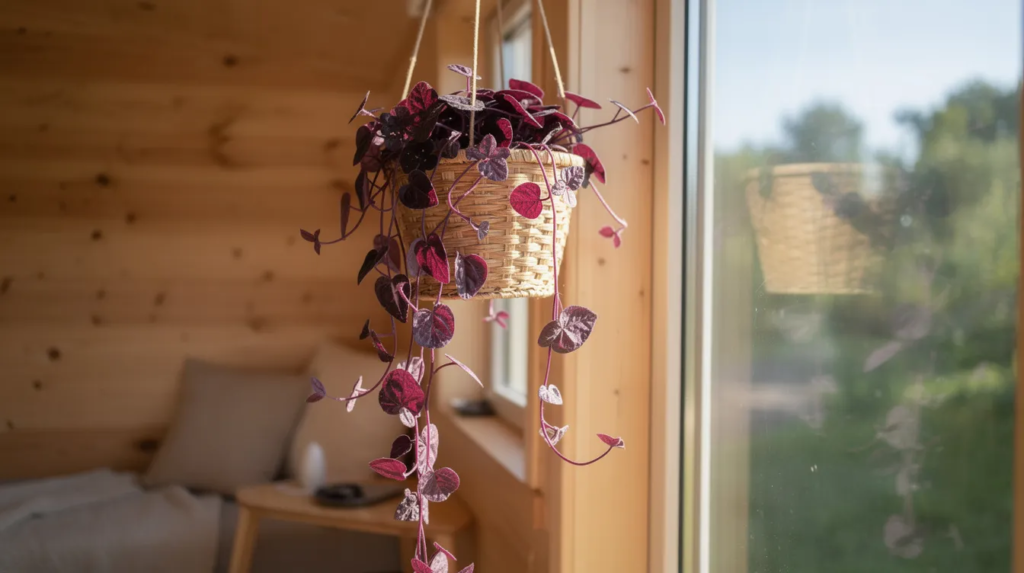
What Is “Purple Passion” – Houseplant vs. Passion Flower Vine?
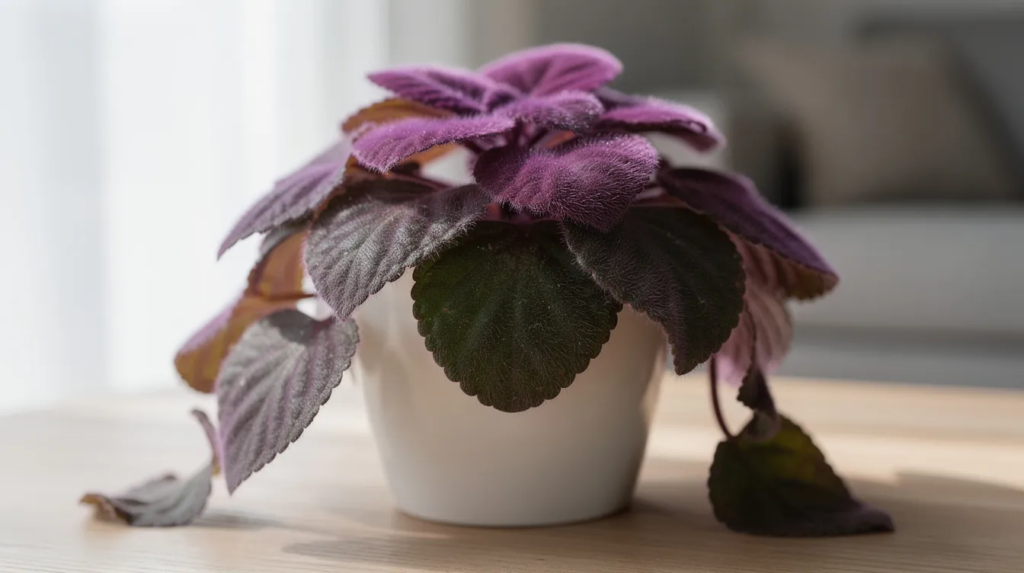
The name “purple passion” gets used for two very different plants, and the confusion trips up many small-space gardeners. The first is the purple passion houseplant-Gynura aurantiaca-a soft, trailing plant covered in velvety purple hairs that give its leaves an almost iridescent sheen. It thrives indoors, stays compact in a pot, and never needs an outdoor garden to look its best.
The second is the passion flower vine, a vigorous vine from the genus passiflora. Species like passiflora incarnata (maypop) are cold hardy and native to North America, producing unusual flowers and sometimes edible fruit. Passion fruit vines and passion flower vines are typically outdoor garden plants, but dwarf or potted versions can be adapted for bright interiors, balconies, and porches.
This article covers both. The goal isn’t a sprawling jungle-it’s vertical, contained greenery that complements minimalist tiny house design. Think single bold accent, not cluttered windowsill.
Best Purple Passion Varieties for Tiny Rooms
Not every vine or passiflora species is realistic for a 200-square-foot home. Here’s what actually works in small spaces.
Gynura aurantiaca (Purple Passion Houseplant)
- Velvety purple leaves on trailing stems; ideal for shelves and hanging pots
- Grows well in 4–8 inch containers (10–20 cm)
- Produces small orange blooms in early fall, but the flowers are pungent-most growers pinch them off
- Non-toxic to dogs and cats, making it one of the safer options for shared tiny quarters
Compact Passiflora for Indoors
- Passiflora incarnata produces fragrant flowers that attract pollinators and can yield edible fruit called maypops with a sweet tart tropical flavor
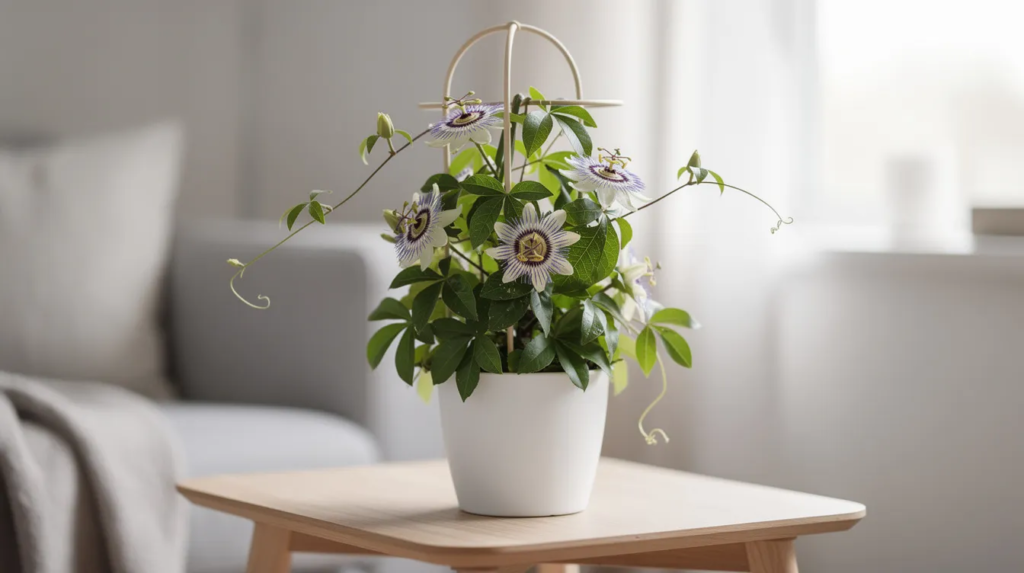
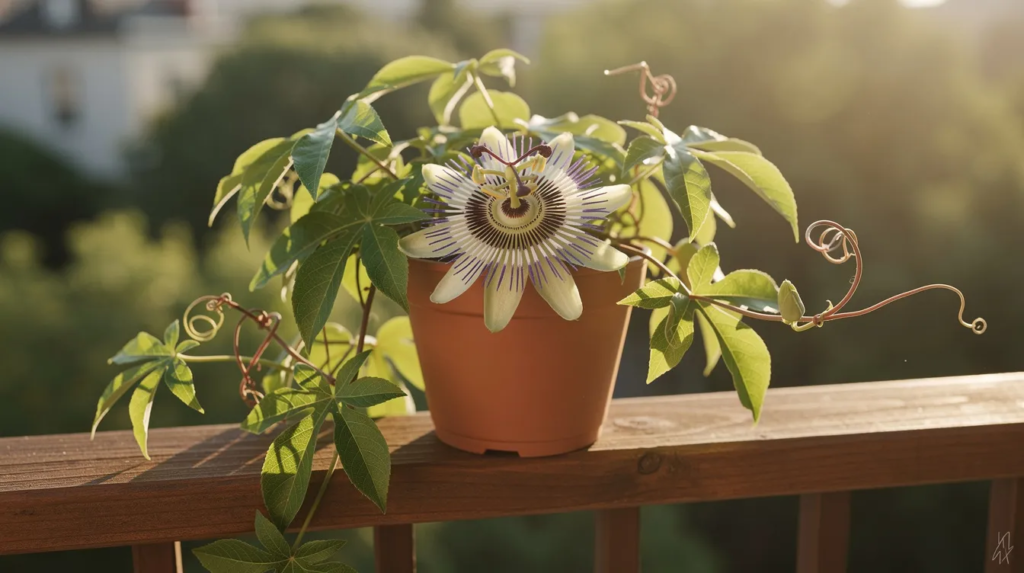
- Passiflora caerulea features showy flowers up to 4 inches across and adapts to container life near sunny windows
- Passiflora lutea, the dwarf passionflower, stays smaller and less aggressive than full-size passion fruit vines
- Passiflora alata produces large, fragrant crimson blooms and works in bright conservatory-style interiors
- Passiflora coccinea is native to South America’s Amazon basin and thrives in warm, humid conditions
- Passiflora edulis produces edible fruit in warm climates, though growing passion fruit indoors requires strong light and hand-pollination
Passion flower vines can grow up to 15 feet long, so aggressive containment and smart training are essential for growing vines in small spaces. For more options suited to compact living, check out 15 Lovely Flowering Plants Suited For Tiny Homes.
Tiny Footprint, Big Impact: Placement Ideas in Small Spaces
The trick in tiny homes is treating plants as architecture, not accessories. Instead of scattering pots everywhere, designate one “plant zone” and make it count.
Concrete placement ideas:
- Above a kitchenette window: Trail a purple passion plant along a shelf mounted just above the glass, letting stems cascade downward
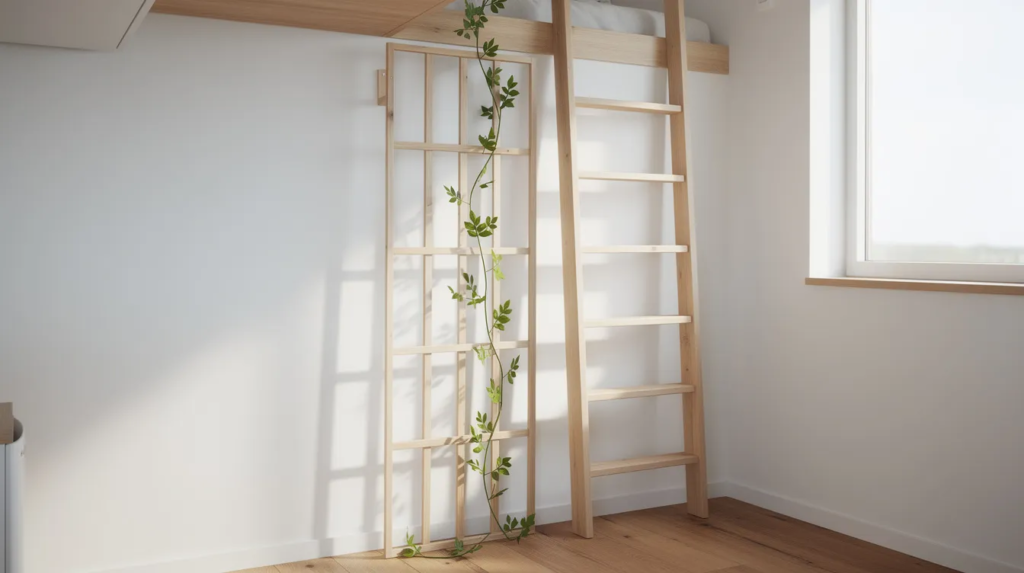
- Next to a loft ladder: Train a passion vine upward on a narrow trellis system beside the ladder, pulling the eye toward the ceiling
- Over a sofa in a 10×10 living room: Mount a hanging basket at ceiling height so purple foliage drapes without blocking headroom
- Near the entrance of a 24–30 ft tiny house on wheels: Place a single bold pot on a built-in ledge to greet visitors with color
Pair plants with slim wall-mounted shelves to keep the ground clear for multi-use living. Avoid positioning vines near high-traffic doorways or folding Murphy beds where new growth could get snagged. For more creative layout ideas, see 50 Creative Tiny Gardens Ideas for Small Spaces.
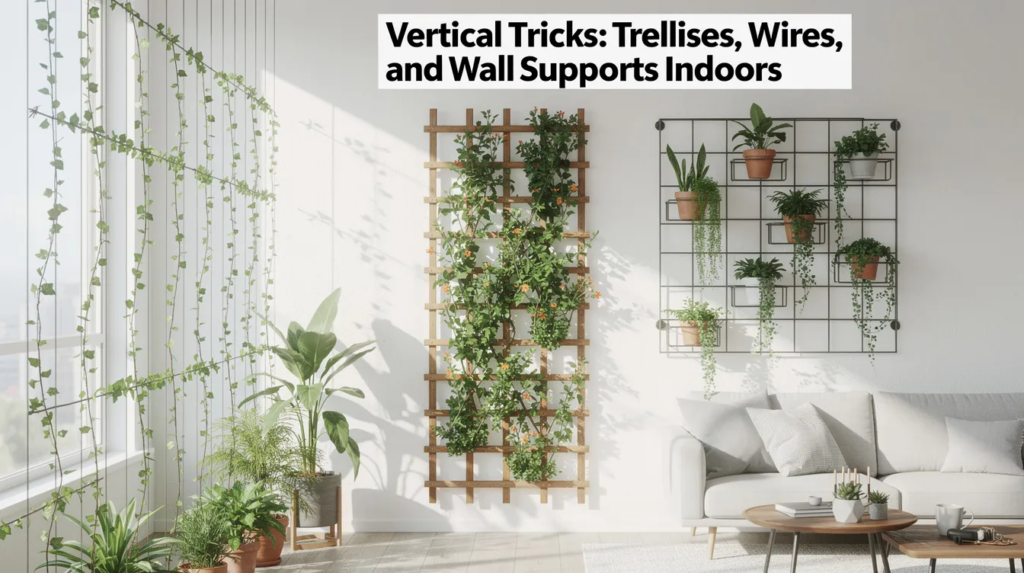
Vertical Tricks: Trellises, Wires, and Wall Supports Indoors
Tiny small rooms benefit from turning vines into vertical décor instead of letting them spread horizontally. Using vertical trellises keeps the plant’s footprint flat against surfaces, saving every inch of walkway.
Simple indoor trellis ideas:
Method | Best For | Depth from Wall |
|---|---|---|
Narrow wooden ladder | Passiflora vines, loft walls | 2–3 inches |
Tension wires (floor to ceiling) | Lightweight trailing plants | Under 1 inch |
Grid panel (wire or bamboo) | Both vine types, window backdrops | 2–3 cm |
Removable adhesive hooks + cord | Rentals, van builds | Flush to surface |
A trellis around 5 to 7 feet tall works well for gardens, but indoors, scale down to 4–6 feet behind a sofa or 2–3 feet on a countertop. Passion flower vines need a sturdy support to climb effectively, so anchor any structure that supports a passiflora vine into solid framing rather than drywall alone. Using hooks to guide vines prevents falling and keeps them organized along their intended path. For passiflora incarnata or other passion vine stems, gently wrap new shoots along cords or micro-trellises rather than heavy outdoor arbors.
Container & Hanging Solutions That Don’t Eat Floor Space
In tiny houses, floor area is premium real estate. Every container choice should protect that.
- Purple passion houseplants: Thrive in compact 4–8 inch pots on counters, desks, and stair treads in loft stairs. Hanging baskets can showcase the fuzzy purple foliage of purple passion vine beautifully from ceiling hooks or loft beams.
- Slim wall-mounted planters: Rail planters along window sills hold passion flowers without widening the room visually.
- Macramé hangers: Perfect for ceiling corners, kitchen window rails, or hooks on loft beams. Train young vines downward or sideways rather than straight out into the room.
- Large pot for heavier vines: Fruiting passion fruit vines may need a 12–15 inch container, but in a tiny home, keep them in smaller pots and prune before active growth makes them top-heavy.
Containers should have excellent drainage for optimal vine growth. Always use saucers or waterproof trays to protect wood floors and built-in cabinetry from water drips.
Light, Temperature, and Watering in Tiny Homes
Tiny spaces often have uneven light-one bright south-facing window, shaded lofts, and temperature swings from wood stoves or electric heaters.
Light
Bright light conditions enhance the purple color of purple passion vine. Research from UF/IFAS shows Gynura aurantiaca needs 150–250 foot-candles for optimal foliage color; below that, leaves turn green and lose their signature sheen. Position them near east or north windows, or a few feet back from a sunny south window to avoid scorch.
Plant passion flower in full sun for best growth and blooms. Passion flower vines need at least 4–6 hours of strong light, which often means placing them right at the brightest window or adding a small LED grow light in darker interiors.
Temperature
Gynura prefers 65–80°F (18–27°C). Most passiflora species need winter indoor temps above 50–55°F, manageable in mild climates or insulated tiny homes.
Watering
Regular watering is necessary when the top inch of soil feels dry. Water deeply when you do water, then let the surface dry slightly before the next round. Avoid letting water sit on Gynura’s fuzzy leaves-it invites fungal problems. Humidity can be increased by misting leaves or using a pebble tray, especially during dry winter months when heaters run constantly.
Pruning, Training, and Keeping Vines Contained
Pruning is the single most important habit for keeping purple passion and passion flower vines manageable in a tiny room.
Purple passion houseplant:
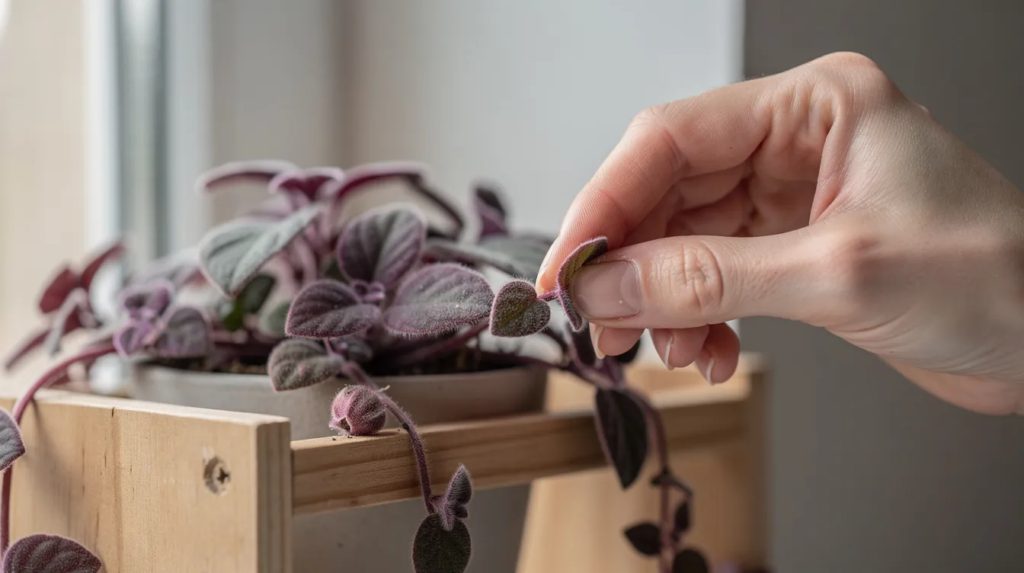
- Pinching stems back regularly helps maintain a compact growth form on desks and shelves
- Frequent pruning encourages bushier growth in small spaces instead of leggy, reaching stems
- Remove flower buds as they appear-the orange blooms smell unpleasant in closed rooms
- Purple passion plants root readily from stem cuttings for propagation, so every trim is a chance to start a new plant or gift one
Passion flower vines indoors:
- Train 1–3 main stems vertically; remove weak side shoots during the growing season
- Loop longer vines back along their trellis instead of letting them sprawl outward
- Major pruning in early spring or late winter before new growth starts; lighter trims monthly through summer
- Keep stems away from electrical outlets, heaters, and cooktops common in compact kitchens
The rule is simple: if a stem blocks a window, cupboard, or loft ladder, it gets cut. Grow quickly these vines do-so check weekly.
Ideas for Combining Purple Passion with Tiny House Decor
Purple passion foliage and passion flower blooms work best as intentional design elements, not random clutter.
- Neutral palettes: Pair purple foliage with white walls, birch plywood, or light oak-common in modern tiny house designs-to create a single bold plant feature instead of many small knickknacks
- Living headboard: Mount a thin trellis behind a sleeping loft mattress with trained vines, leaving clear space where pillows and heads rest
- Fairy light integration: Weave warm-toned LED string lights along a trellis with passion flower vines in a van build or small living room for a cozy vertical garden effect
- Color echoes: Repeat purple tones with a throw blanket, cushion, or art print so the plant feels integrated into the overall small-space design rather than an afterthought
- Nature-forward styling: Purple passion pairs beautifully with the forest interior design aesthetic popular in cabin-style tiny homes
Safety, Pets, and Practical Considerations in Small Rooms
In tiny spaces, people and pets live in close contact with every plant. Toxicity, mess, and allergies matter more when there’s no spare room to isolate a problem.
Toxicity notes:
- Gynura aurantiaca is non-toxic to dogs, cats, and horses according to the ASPCA
- Passiflora caerulea is non-toxic to dogs but can be toxic to cats
- Some passiflora species contain cyanogenic glycosides; discourage children and pets from chewing leaves or unripe fruit
Practical tips:
- Place plants out of bite range: high shelves, hanging baskets, or behind lightweight room dividers
- Use easy-to-wipe surfaces and mats under containers-falling leaves, dropped seeds, and water drips feel magnified in a 150-square-foot home
- Check local winter temps in small cabins or off-grid tiny houses before committing to frost-tender passion flower varieties
When to Take Passion Flowers Outdoors (Balconies, Porches, and Decks)
The outdoor extensions of tiny homes-balconies, porches, fold-out decks-give passion flower vines the room and sun they crave during warm months. Moving them outside in late spring after frost risk passes (typically May in much of the U.S.) frees up valuable interior space through summer.
Passiflora incarnata is a host plant for several butterfly species, including gulf fritillary butterflies that rely on passion flower as a food source for gulf fritillary caterpillars. You’ll also attract the variegated fritillary, zebra longwing butterflies, carpenter bees, hummingbirds, bees, and other pollinators. Passion flower attracts bees, butterflies, and hummingbirds readily, and its showy, fragrant blooms make nearby plants look dull by comparison.
Use balcony railings and small fence panels as trellises, mirroring outdoor garden techniques on a smaller scale. A large buried container can help control root spreading when planting outdoors temporarily. Transition gradually-increase outdoor sun exposure over 7–10 days to prevent leaf scorch on plants that spent months in lower-light corners. Bring containers back inside in early fall before temperatures drop, which also lets you enjoy the blooms through their late season indoors. For warm-climate setups, see Best Tropical Tiny Homes for Cozy Beachfront Living.
FAQ
Can passion flower vines really live full-time inside a tiny small room?
Some passion flower vines can survive indoors year-round if they receive strong light-a large south or west window delivering at least 4–6 hours of direct sun, or supplemental LED grow lights. However, most growers treat passiflora incarnata and similar species as semi-indoor plants: wintering them inside in a bright spot, then moving them to porches or balconies in spring and summer for active growth. For permanently low-light interiors, the fuzzy purple passion houseplant is a more realistic choice because it maintains its purple color at lower light levels than any passionflower vine requires.
Will indoor passion flower vines produce passion fruit in a small space?
Producing fruit indoors is possible but not guaranteed. It needs strong light, consistent warmth through the growing season, and successful pollination. In tiny homes and apartments, bees and butterflies aren’t present to pollinate, so hand-pollination with a small brush becomes a must have step. Many small-space growers focus on the flowers and foliage, treating any passion fruit as a bonus rather than the main goal. If fruit is your priority, keep the vine outside during summer in full sun, where natural pollinators can do the work.
How often should I water purple passion plants and vines in a tiny house?
Check soil every few days. Water when the top inch feels dry for purple passion houseplants, and just before the soil fully dries out for most passiflora vines. Tiny houses with wood stoves or electric heaters can dry pots faster than standard apartments, so winter watering schedules often differ from summer. Use lightweight pots with drainage holes and shallow saucers to avoid water damage to built-in cabinets and loft floors.
What’s the best trellis height for small rooms and tiny houses?
For sofas, desks, or wall features, a 4–6 foot (1.2–1.8 m) trellis works well indoors. On window sills or countertops, a 2–3 foot (0.6–0.9 m) mini-trellis is enough. In loft areas and near ladders, stop the trellis well below handholds and head height to prevent snagging. Choose trellis sizes that fit your specific tiny layout-copying full-size outdoor garden dimensions into a room with 7-foot ceilings creates more problems than shade.
Are purple passion and passion flower vines good for renters in small apartments?
Yes, with conditions. Use lightweight containers, non-permanent supports like adhesive hooks or over-door racks, and skip drilling into walls if your lease forbids it. Both plant types adapt well to life in a pot, which can move with you to the next apartment. Before buying, check the natural light in your unit-low, north-facing windows may require a small grow light to keep roots healthy and produce flowers reliably.