
Fall decorating in a tiny home means choosing pieces that earn their place. Rustic pumpkins décor brings warm, textured autumn character to spaces under 400 square feet without eating into your circulation paths or storage. Here’s how to do it with intention.
Key Takeaways
- Rustic pumpkins décor relies on muted colors, natural textures, and compact shapes that fit 200-400 sq ft tiny homes without visual clutter. Vertical displays, neutral tones, and multi-use pieces keep the look seasonal without sacrificing function.
- Every pumpkin, basket, and candle in this guide is chosen for tiny and small-space living: compact, lightweight, and easy to store off-season in a single 12-16 quart bin.
- Concrete ideas you can use today: mini white pumpkins on window ledges, a narrow crate centerpiece on a 2-person table, and a slim wall shelf styled with gourds and dried stems.
- For sustainability, source real pumpkins from local farms in autumn 2026, invest in faux pumpkins that last for years, or make DIY versions from scrap fabric or reclaimed wood to match minimalist tiny house values.
Rustic Pumpkin Basics for Small Spaces
Rustic pumpkins décor uses natural textures (burlap, raw wood, linen), muted oranges, creams, sage greens, and imperfect handmade shapes. This contrasts with glossy, bright orange mass-produced decorations. The style works well in tiny homes because most interiors already feature pine, birch, or similar wood finishes. Soft-toned pumpkins blend into those surfaces instead of competing with them.
Under IRC Appendix BB, tiny homes are defined as 400 sq ft or less in floor area, excluding lofts. Most tiny houses on wheels (THOWs) run 8.0-8.5 ft wide and 16-28 ft long, yielding more room than tiny house under 100 sq ft design concepts, but still only about 160-240 sq ft of usable floor. That means décor pieces must sit on ledges, shelves, or walls; they cannot block the 24-inch circulation path required in front of furniture and counters.
Real vs. faux pumpkins and when to choose each:
Type | Examples | Size Range | Lifespan | Storage |
|---|---|---|---|---|
Real | Baby Boo, Jack Be Little, Cinderella | 2-8 in. wide | 1-3 weeks indoors | Compost after use |
Ceramic/Wood | Lidded bowls, carved silhouettes | 3-12 in. | Years | Nest or stack |
Fabric | Stuffed flannel, linen scraps | 2-8 in. wide | Years | Pack flat |
Real pumpkins are inexpensive ($0.50-$2 for minis at farm stands) but rot within weeks. Faux pieces cost more upfront, $10-$30 for ceramic, under $5 for DIY fabric, but thanks to their durability, they pay for themselves across multiple seasons. |
For color palettes that don’t overwhelm, pair white or sage-green pumpkins with existing wood tones. A grouping of all creams and greens reads as cohesive. If you want orange, limit it to two or three small pumpkins among neutrals so it reads as an accent rather than a takeover.
Tiny house residents should prioritize décor that doubles as functional. Pumpkin-shaped lidded bowls hold snacks or small items. Hollow wooden pumpkins act as hidden storage. Pumpkin-colored textiles, throws, cushion covers, small rugs, add seasonal warmth without occupying shelf space. Pillow covers fold flat; fabric pumpkins nest inside each other. This approach aligns with Explore Tiny House’s broader design philosophy for helping readers decorate without undoing their downsizing goals.
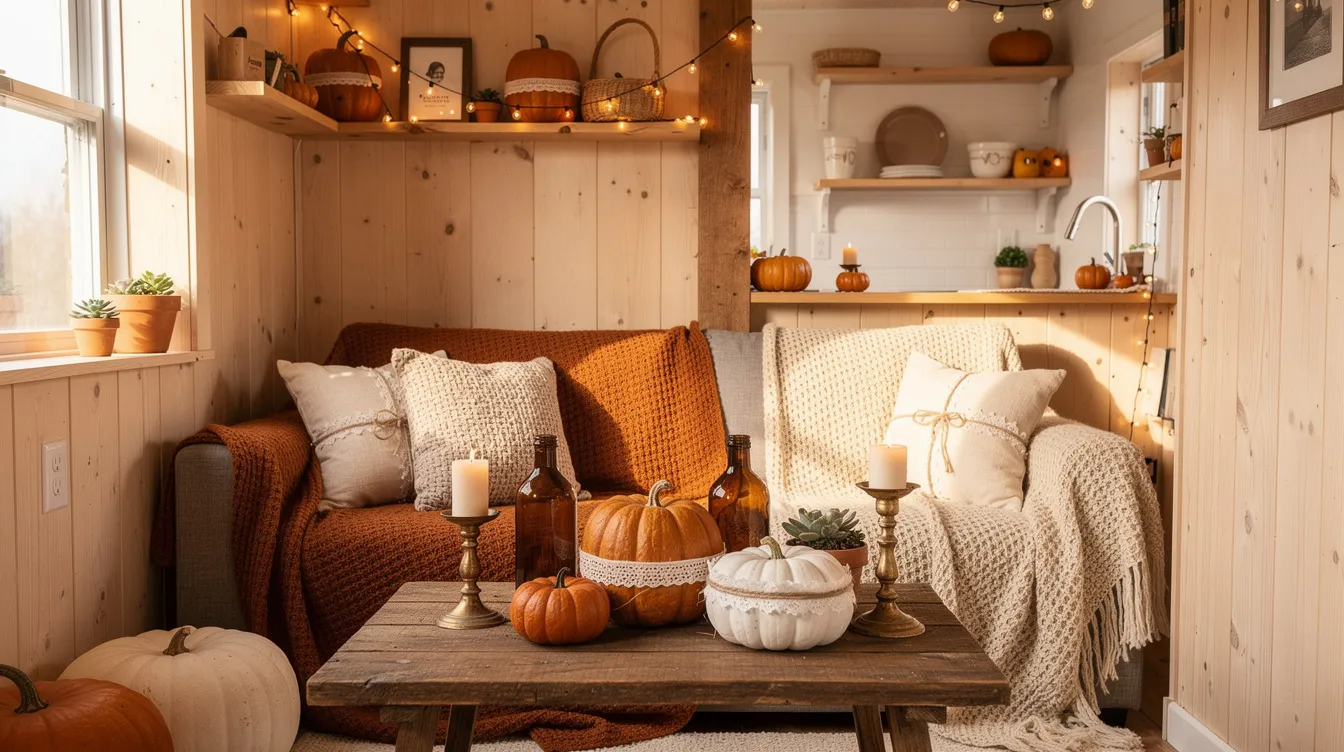
Space-Savvy Rustic Pumpkin Ideas for Every Tiny Home Zone
These ideas are tailored to the layouts common in THOWs, small cabins, studio micro-apartments, and prefab tiny homes, including many affordable tiny house buildings and designs. Each suggestion includes dimensions so you can verify fit before buying or building.
Living area
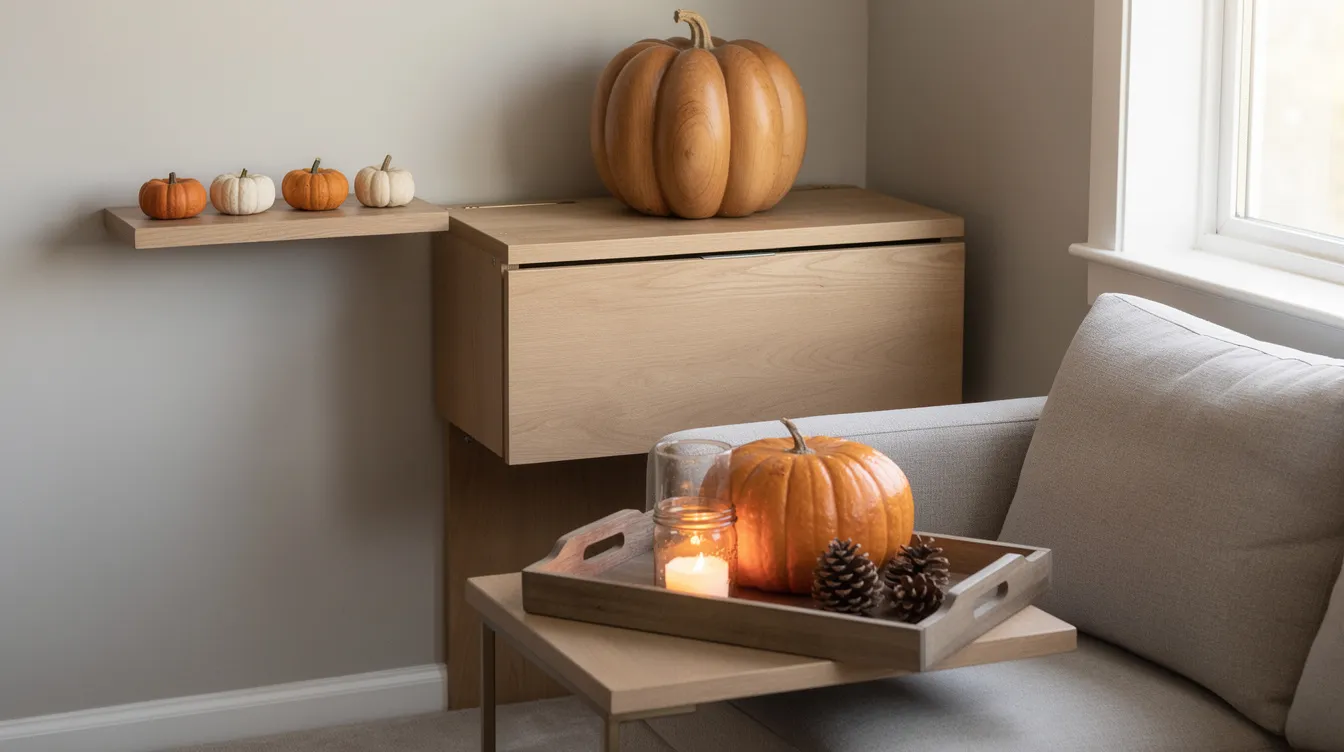
A narrow floating shelf (6-8 in. deep) mounted at eye level holds 3-5 mini pumpkins in the 1-3 in. diameter range without losing floor space. If you favor farmhouse tiny house interior styles, a single carved wooden pumpkin about 10 in. tall gives the room a focal point when the desk is up. For an ottoman or side table, a shallow tray (10×14 in.) containing one pumpkin, a mason jar candle, and a few pinecones creates a contained vignette that won’t tip.
Kitchen and dining nook
Tables in tiny homes run 24-30 in. wide, and tiny house kitchen table ideas that fold or tuck away help preserve circulation. A low wooden crate centerpiece, roughly 12×4×3 in., holds 2-3 small pumpkins and a sprig of dried eucalyptus without crowding plates. Pumpkin-colored tea towels (18×28 in.) add color at zero shelf cost. A vintage crock (5-6 in. diameter) with a painted pumpkin motif can hold utensils, pulling double duty. For more ideas on maximizing tiny kitchen surfaces, check our furniture guide.
Loft or sleeping zone
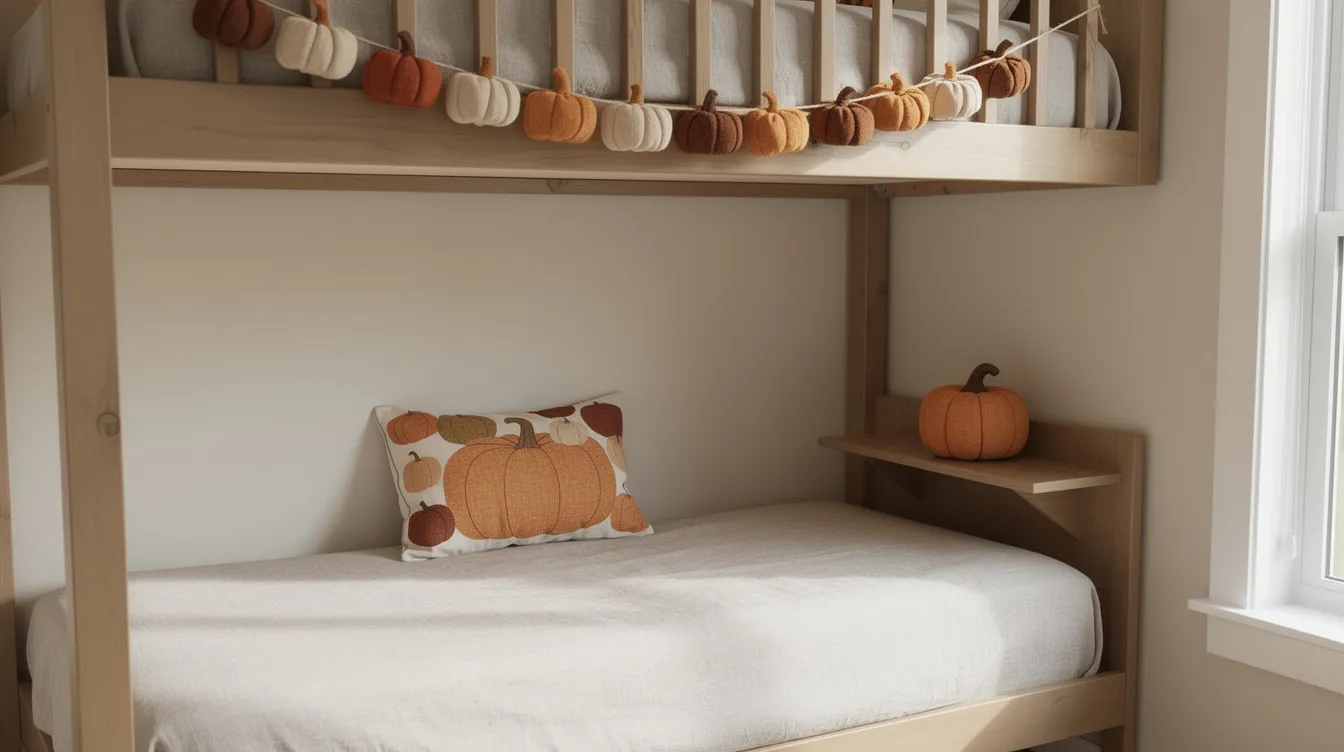
Loft ceilings typically sit at 3-5 ft, so garlands work better than standing objects, especially in more futuristic tiny homes where every inch of vertical space is optimized. String small fabric pumpkins (1 in. diameter each) across the loft railing. A lumbar pillow (12×18 in.) with a pumpkin print fits standard loft bedding. One fabric pumpkin about 4 in. tall on a built-in night shelf stays put without rolling.
Entry and exterior
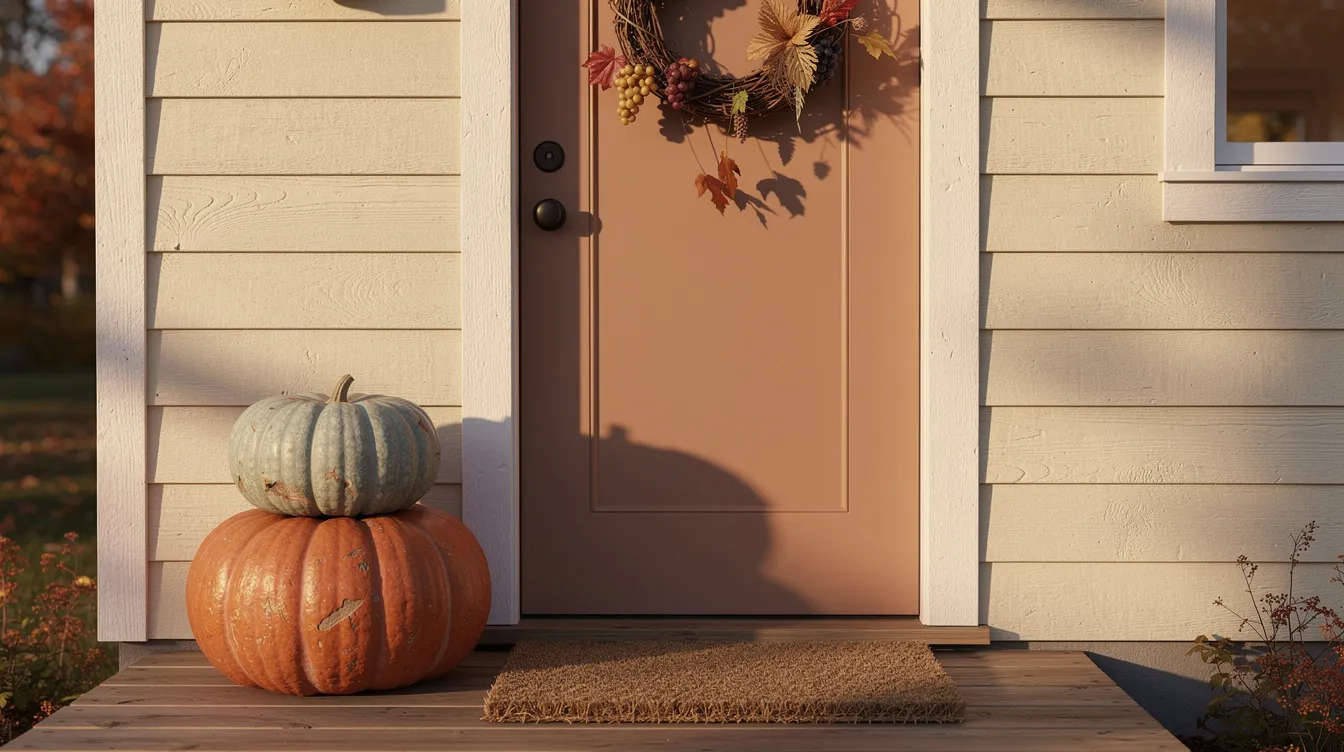
Front stoops on tiny homes are often only a few square feet, so the same discipline you use when downsizing for tiny house living applies to your porch décor. Stack two heirloom pumpkins (one 6-8 in. wide, one 10-12 in.) beside a boot tray. Hang a grapevine wreath (8 in. diameter) with a fabric pumpkin accent on the door. A lantern (8 in. tall) with tiny faux pumpkins inside works for evenings. For readers in tiny house communities, keep porch displays under about 2 sq ft, use weatherproof materials, and avoid lightweight items that wind could push into shared pathways.
DIY Rustic Pumpkin Projects that Fit Tiny House Life
DIY pumpkin décor saves money, keeps storage needs low, and lets you upcycle materials already on hand. Each project below produces pieces that store flat or nest, fitting the cottage-style sustainability that many tiny home owners value.
Fabric pumpkins from scraps
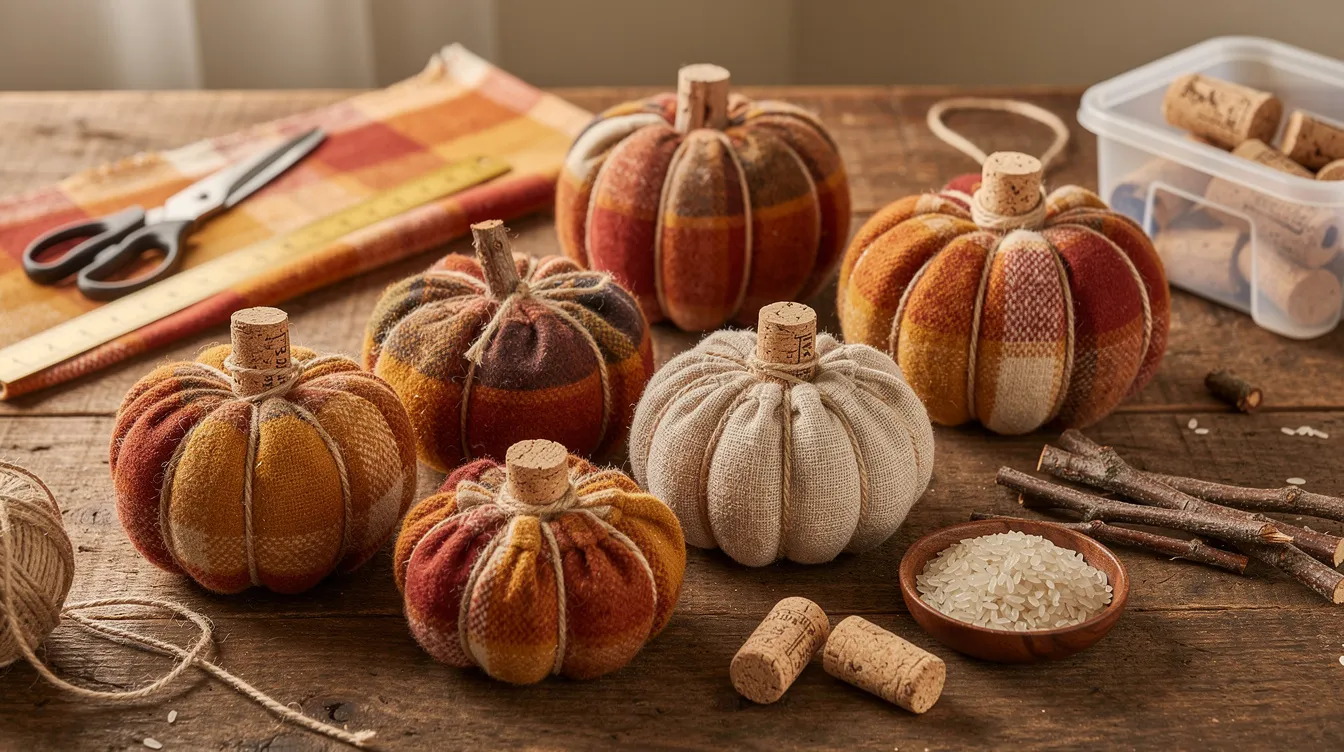
Cut a rectangle twice as long as wide: 4½×9 in. for a small pumpkin (finishes about 2 in. tall, 4 in. wide), or 6½×13 in. for a medium one. Use leftover flannel shirts, old linen, or drop cloth. Fold long sides together, sew the short ends into a tube, gather both openings, turn right side out, stuff with rice or poly-fil. Wrap jute twine 6-8 times from top to bottom to create segments. Use a twig or cork as a stem. After November, remove the stuffing and the shell packs flat into a bin.
Wooden pumpkins from reclaimed boards
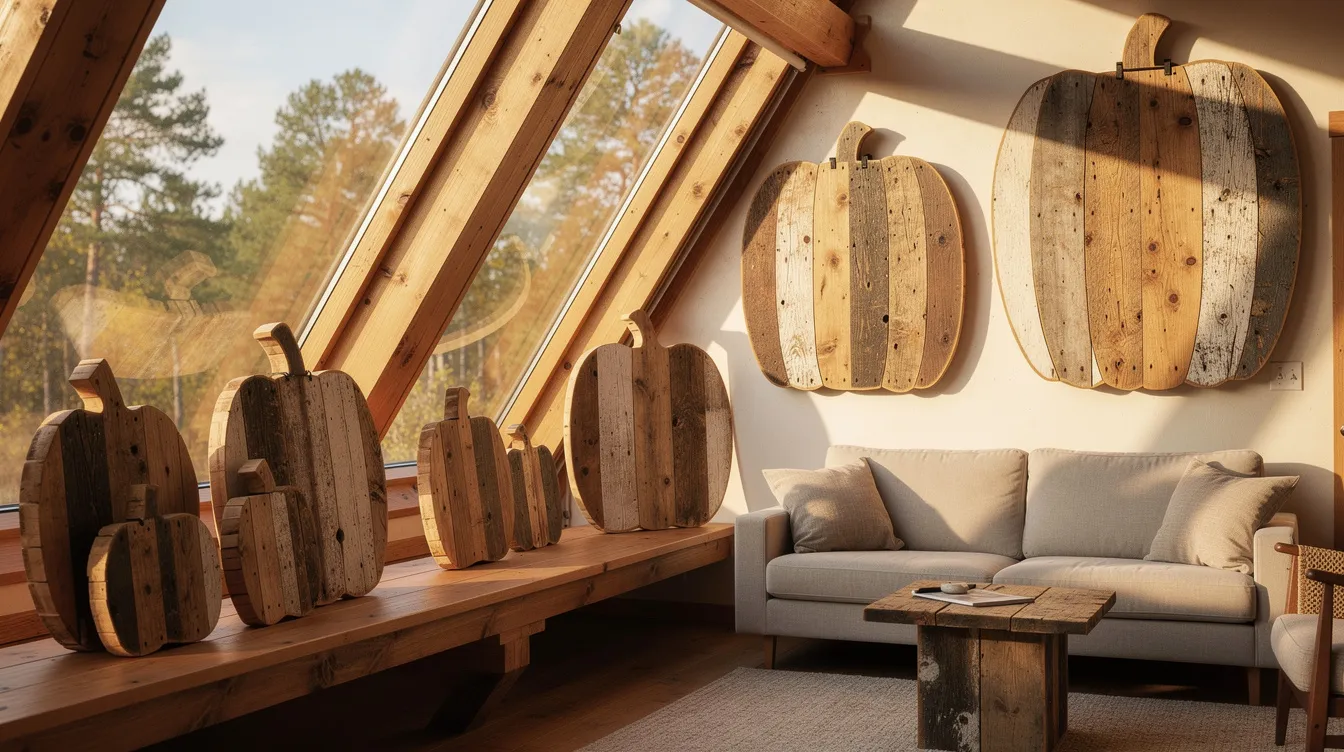
Cut pumpkin silhouettes from pallet boards or fence offcuts, ½ to ¾ in. thick. Size them to fit existing vertical spaces: 8-12 in. tall for ledges, 20-24 in. for wall hanging. Sand lightly, apply a warm stain or white-wash for a rustic finish. Mount with a sawtooth hanger or lean behind furniture. Off-season, slide them flat behind a couch or between wall gables. This is a good project for anyone already working with reclaimed wood for A-frame or cabin interiors or browsing top tiny house designs that redefine small living for rustic inspiration.
Mason jar lid or twine pumpkins
Wrap a standard canning jar ring (70 mm) in jute twine to create a pumpkin shape. These are only 1-2 in. deep, fitting window sills and vanity ledges as narrow as 3-4 in. Place an LED tealight inside for a soft glow. They protect surfaces from heat or wax since there’s no open flame involved.
Choose 1-2 projects, not all three. Measure your shelves, window sills, and countertops before crafting so each piece has a clear, intentional spot.
FAQs: Rustic Pumpkins Décor in Tiny Homes
These FAQs address tiny-house-specific concerns about safety, storage, budgeting, and seasonal timing that go beyond the main sections above.
How can I store pumpkin décor in a tiny home after fall?
Nest smaller items inside larger ones. A 12-16 quart plastic bin (roughly 14×10×8 in.) holds 3-5 small faux pumpkins and flat fabric pieces. Store the bin under a sofa, in a loft corner, or behind stair storage. Foldable DIY pieces, fabric shells without stuffing, wooden silhouettes, stack within one cubic foot of space. Limit your total fall décor to what fits in that single container, just as many great tiny homes that redefine small space living keep seasonal items on a strict storage budget.
Are real pumpkins safe in tiny homes with wood stoves?
Keep real pumpkins at least 24 inches from fireboxes. Real pumpkins retain moisture and sugars; heat accelerates decay and mold growth. Place them on non-combustible trivets or metal plates to protect wood surfaces underneath. Inspect daily for soft spots. On days when the stove runs for extended hours, swap real pumpkins for faux ones near the heat source.
What’s the most budget-friendly way to add rustic pumpkins décor in 2026?
Buy mini ornamental pumpkins from local farms for $0.50-$2 each. Check thrift stores for ceramic or wood pumpkin shapes under $10. Make 1-2 DIY fabric pumpkins from clothing you already own; material cost is effectively zero. A full rustic pumpkins décor setup for a tiny home can come in under $15 if you combine farm minis and one DIY project, even if you’re also budgeting for one of the top tiny houses that redefine small space living.
Can I keep rustic pumpkins décor up past Thanksgiving?
Remove jack-o’-lantern faces or Halloween-specific elements first. Neutral-tone pumpkins in cream, green, or muted orange transition cleanly into late fall. Pair them with winter greenery, pine sprigs, dried berries, or eucalyptus, and the display works through early December. Swap out any remaining real pumpkins by late November before they soften.
How many pumpkin décor pieces should a tiny home have?
A good ceiling is 8-12 small pieces total across all zones, including textiles. Beyond that count, most tiny home interiors start to feel cluttered rather than cozy. Choose pieces that vary in size and material but stay within a consistent 2-3 color palette to keep the look intentional, the same mindset you’d use when shortlisting cute tiny house designs for a dream home.