
Key Takeaways
- Focus on layered textures, warm lighting, and a tight color palette to make a tiny home feel instantly autumnal without adding clutter.
- Use vertical space-walls, backs of doors, and window areas-for fall decor so your limited floor and dining table surfaces stay functional.
- Lean on multi-purpose pieces (like storage benches, nesting tables, and convertible sofas) that can swap from summer to autumn with just textiles and accessories.
- Prioritize natural light during short autumn days, then supplement with dimmable lamps, candles, and fairy lights for evening hygge.
- Plan decor room by room in your tiny house (entry, living, loft, kitchen, bathroom) so every square foot works hard and still feels seasonal.
Introduction: Why Autumn Styling Matters More in a Tiny House
Picture this: it’s late September, the sun dips behind the trees by 6 PM, and the air through your tiny house windows carries that first real bite of fall. In a 200–350 square footage home, that shift from long summer evenings to shorter, cooler days isn’t subtle. You feel it everywhere-in every corner, on every surface, under every light.
That’s exactly why autumn interiors for tiny houses deserve more intention than the usual “toss a pumpkin on the counter” approach. In a small space, every object has a big impact on how the room feels. Add three things and it’s cozy. Add ten and it’s chaos. Living in a tiny home promotes financial freedom and encourages a minimalist lifestyle and decluttering, but that doesn’t mean your home should feel bare when the season shifts.
At Explore Tiny House, we help people living in tiny homes, cabins, and compact cottage builds find practical inspiration for exactly this kind of challenge. In this guide, we’ll walk through color palettes, texture layering, lighting, vertical decor, furniture layouts, dining table setups, storage strategies, and sensory details-all tailored to small spaces.
Set the Autumn Mood with a Tiny-House-Friendly Color Palette
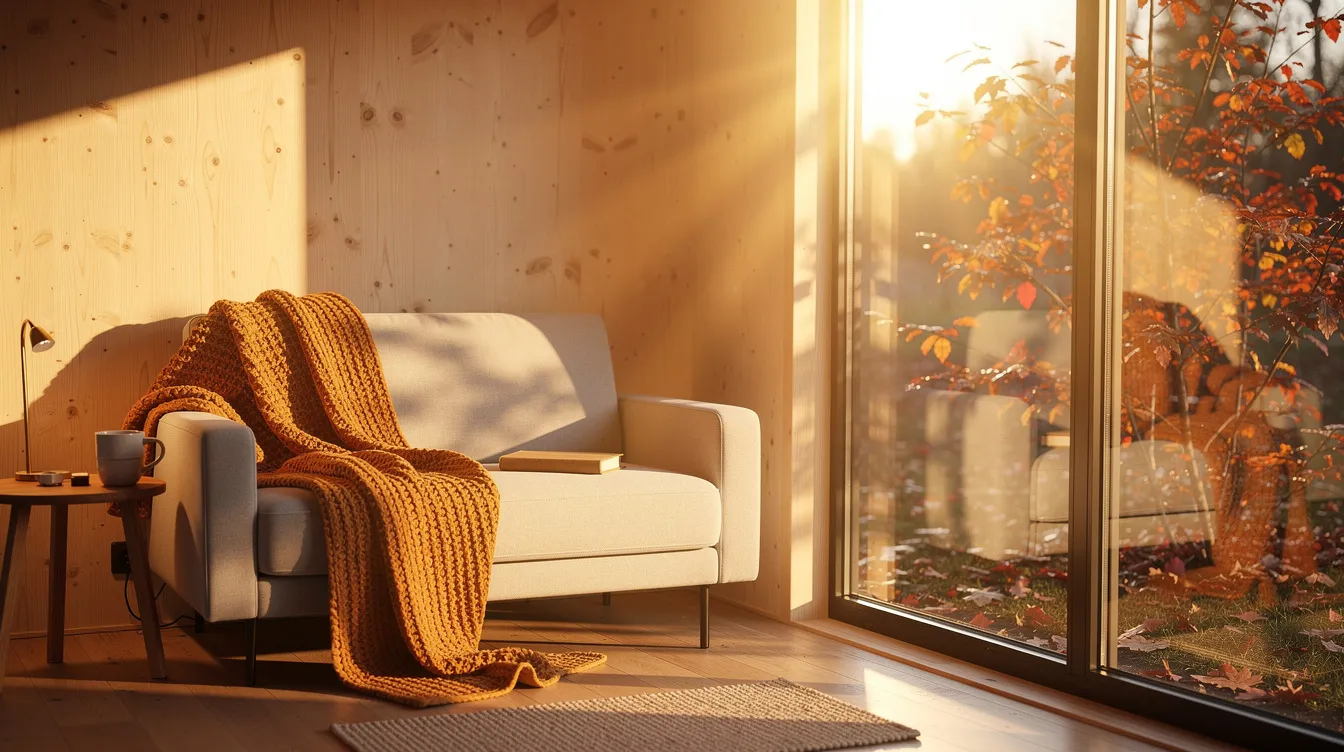
A cohesive color palette enhances cozy vibes in tiny homes more than almost any other single choice. In a 150–350 sq ft floor plan, too many competing hues create visual noise that makes the space feels cramped rather than inviting. Choose two to three main colors for a cohesive palette and stick with them across every zone.
Here are three palettes that work well in small home interiors:
- Oatmeal, caramel, and rust: Use oatmeal or warm ivory on interior walls. Introduce caramel through a sofa throw or curtain panels. Reserve rust for pillow covers, a table runner, or a single framed print.
- Warm white, olive, and terracotta: Warm white for ceiling and trim, olive green for cabinet fronts or linen cushion covers, and terracotta in ceramics or a chunky knit blanket folded on the bed.
- Sage, cream, and burnt orange: Sage on textiles and a door accent, cream as the neutral base, and burnt orange in two or three accessories only.
Use warm tones like rust, mustard, and deep green as accents, not as wall colors. Keep saturated shades on items you can swap in seconds-pillow covers, cotton napkins, a wool throw. Natural materials like wood add warmth to tiny homes and pair beautifully with these muted autumn palettes. Think linen curtain panels in “wheat” or “mushroom,” a dark green wool bed throw, or a jute rug with woven autumnal tones, all grounded in tiny house interior design ideas that maximize space and style.
Designers now recommend tying indoor colors to the landscape outside your windows-forest greens if you’re tucked among trees, warm ochres if you overlook open fields-so the interior and the view feel like one continuous scene. For more on warm, layered decorating approaches, see our cottage decor ideas guide.
Textures Over Trinkets: Cozy Layers Without Clutter
In a tiny home, every new object matters. Texture is the fastest way to evoke fall without filling shelves with decorations you’ll need to store later. Using textured pillows can instantly make a space feel cozier, and chunky knit blankets add warmth to small spaces without occupying much room when folded.
Prioritize fall-ready textures that store flat or compress well:
- Swap a smooth summer cotton duvet for a quilted cover in late September
- Add a cable-knit throw to a 2-seater sofa
- Layer a faux sheepskin over a built-in bench or reading chair
- Replace thin summer pillow covers with textured velvet or flannel versions
- Use a thick linen table runner instead of a full tablecloth
Incorporate textured pillows and chunky knit blankets as your primary seasonal swap-they’re affordable, easy to rotate, and transform a room in minutes. Using multifunctional decorative items can optimize space in small homes, so look for a throw that works on both the sofa and the bed, or a runner that fits both the dining table and a shelf top.
Use texture vertically, too. Hang a woven wall hanging at the end of a sleeping loft, mount a knit pocket organizer on the bathroom door, or drape a scarf over wall hooks near the entry. This keeps your floor area clear while adding beauty and charm to the structure.
For off-season storage, vacuum bags compress textiles by 50–70%. Tuck them under a raised bed or inside a built-in sofa. Choose pillow covers rather than full pillows-they fold flat and take almost no extra room.
Let in the Light: Using Natural Light and Warm Glow in Autumn
Shorter autumn days can make a tiny house feel cave-like unless you actively manage light. Natural light enhances the feeling of space in tiny homes, and natural light from large windows makes spaces feel larger and cozier-so protect every lumen you can get.
Maximizing daylight:
- Maximize natural light with large windows and light-colored curtains. Sheer off-white panels filter glare without blocking brightness.
- Keep window sills mostly clear. One small item is fine; a row of objects isn’t.
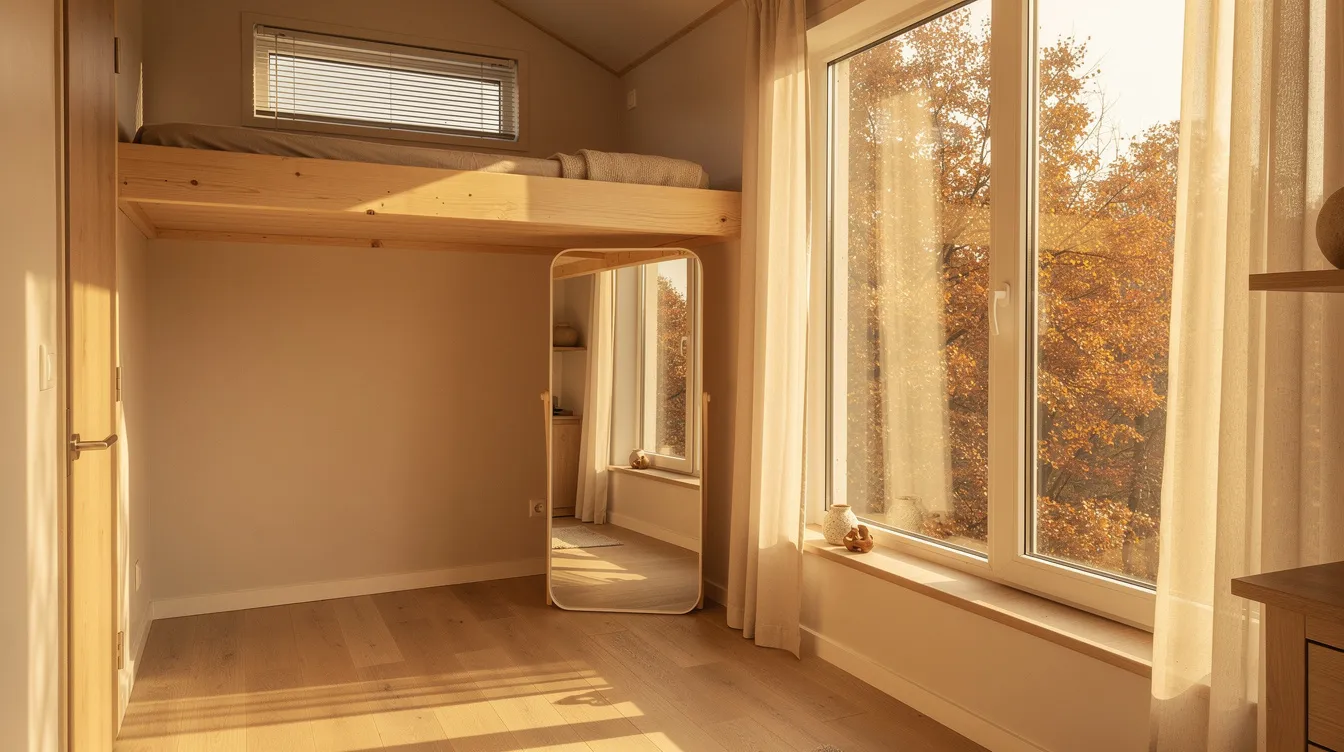
- Place a mirror opposite your largest window to bounce light deeper into the interior.
- Use slimline blinds in the sleeping loft to control morning light without eating into headroom.
By mid-October, consider light thermal curtains that keep warmth in without blocking all daylight-a balance that matters in any small home.
Layering artificial light:
Warm lighting creates a more inviting atmosphere in small rooms, and layering lighting creates warmth and ambiance in small interiors. Here’s how to do it in a tiny house:
- A warm (2200–2700K) LED strip under kitchen cabinets or shelves
- A plug-in wall sconce near the sofa for reading
- A rechargeable lantern by the front door for evenings
- Fairy lights along loft railings or a window frame
For more on tiny home lighting layouts, Tiny House Plans has a solid guide. LED candles on shelves work well for ambiance. If you use a real candle, place it in a glass hurricane on the dining table and never leave it burning unattended-fire safety in a small footprint is non-negotiable.
Use Vertical Space for Autumn Decor (and Keep Surfaces Free)
Walls, doors, and cabinet ends are prime real estate in tiny houses where counters and the dining table must stay functional. Vertical displays can save floor space in tiny homes, turning dead wall space into seasonal charm.
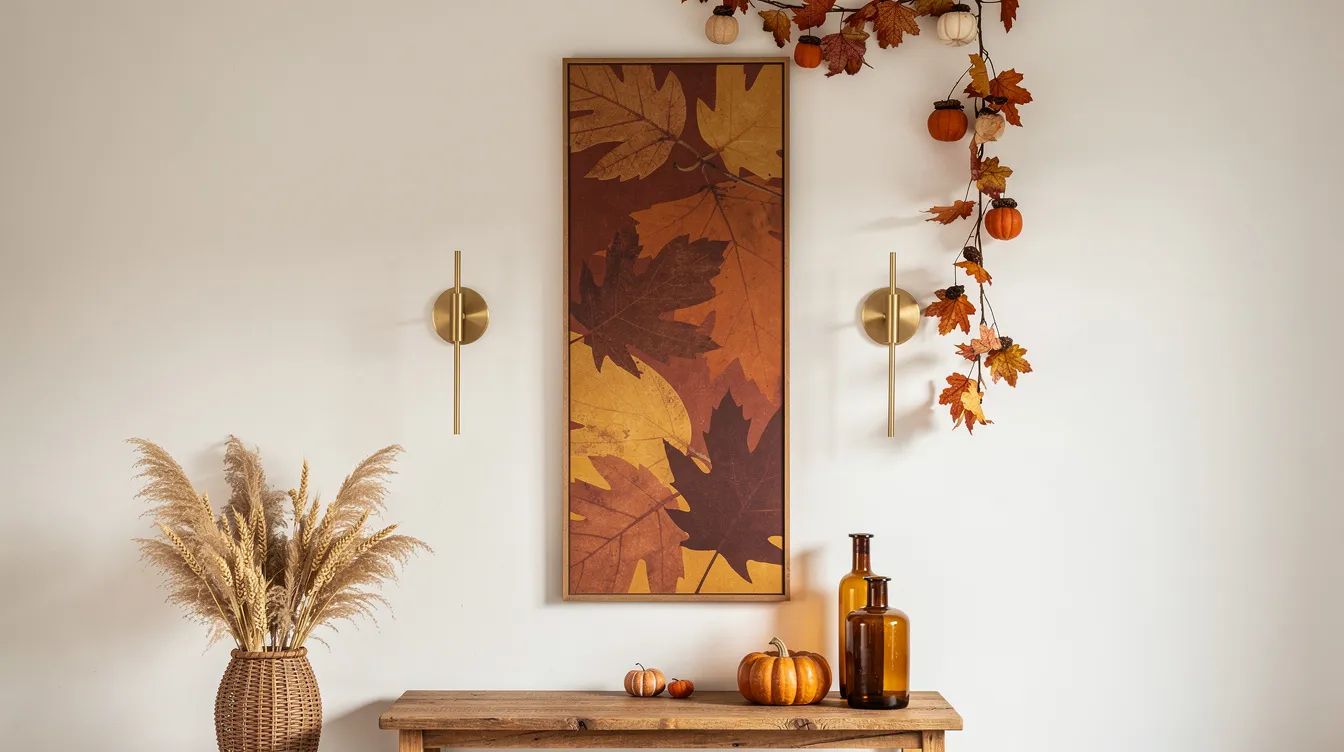
Wall ideas above built-ins: Use vertical space with floating shelves and tall cabinets. Mount a slim pine or oak shelf above a sofa or kitchen counter and style it with a few ceramic pumpkins, an amber glass bottle, and a small framed leaf print. Keep it to three or four items-enough to create a sense of fall without visual clutter.
Door and entry strategies: Hang seasonal wreaths or garlands to utilize vertical space. A flat wreath on the front door, command hooks for scarves, and a narrow peg rail for woven baskets and fall hats all brighten the entry without eating into the floor plan.
Above windows and loft edges: Simple garlands of dried orange slices, eucalyptus, or faux maple leaves work beautifully above window frames or along loft railings. Position them so they don’t interfere with natural light or headroom.
Storage-based vertical hacks: Magnetic strips in the kitchen hold utensils and free up drawer space. Pegboards painted in mustard or brick can hold mugs, tools, and even a small seasonal item or two. Wall-mounted spice racks accommodate both everyday function and a bit of autumn styling. These ideas also work well in A-frame house interiors where angled walls make vertical planning essential.
Cozy Living and Sleeping Zones: Loft Nooks, Sofas, and Bed Corners
Autumn is nesting season, and your living and sleeping zones in a tiny house should feel like compact retreats-not cramped bunkers. The key is layout, not volume, so start by looking at tiny house best design floor plans and ideas that match how you actually live day to day.
Classic tiny house configurations that work for fall:
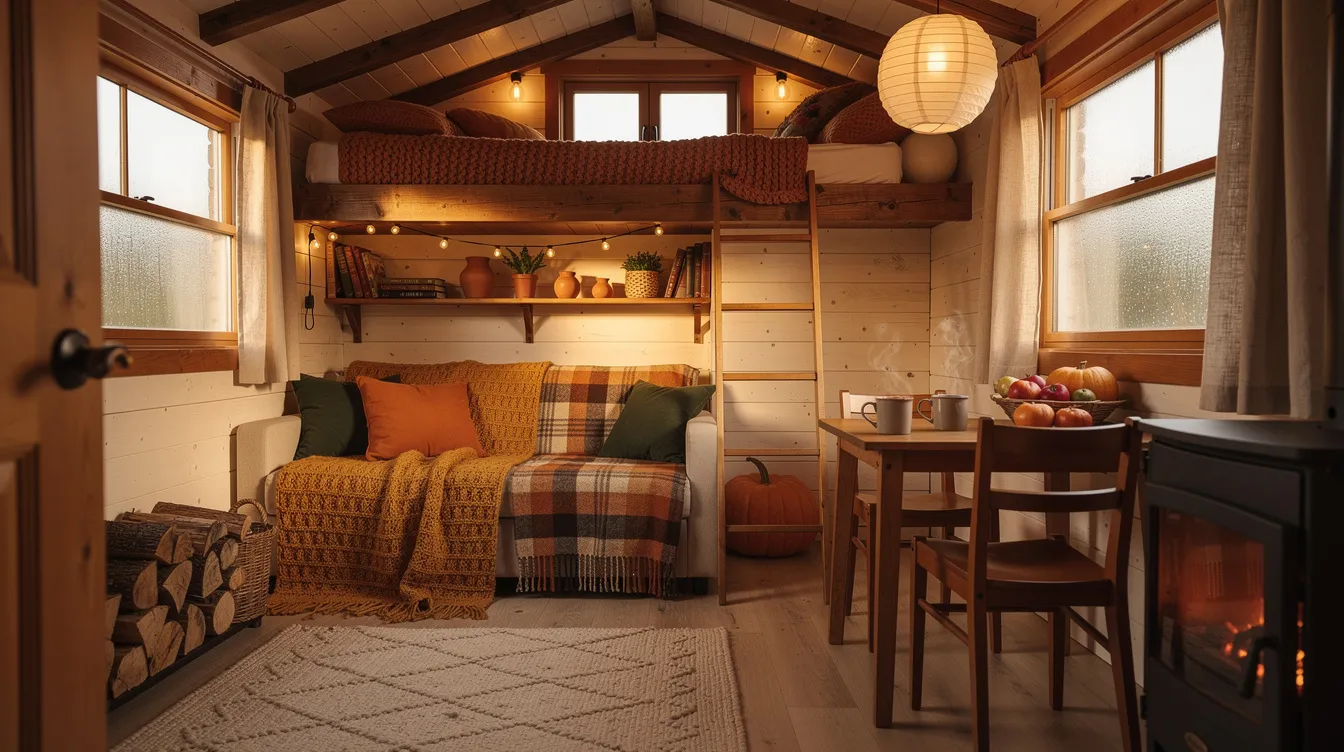
- Sofa under a large window, positioned to catch the last of the afternoon light
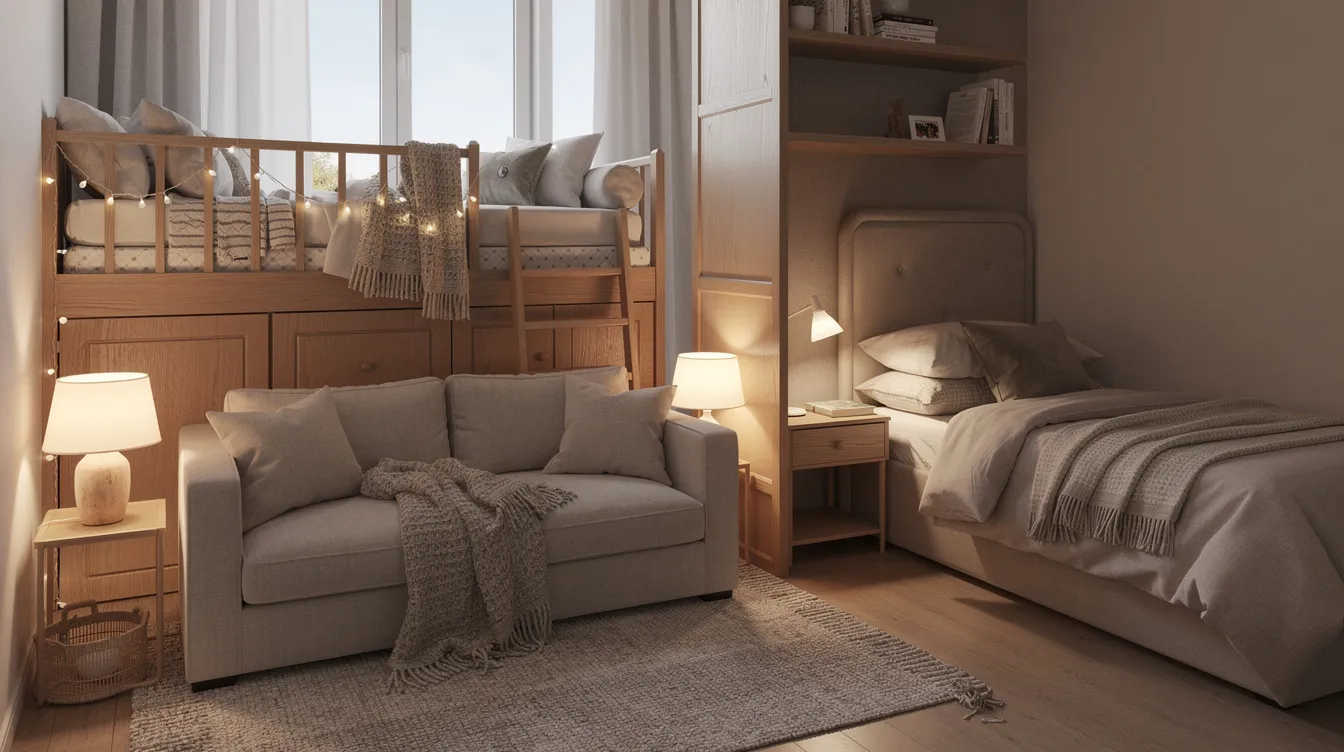
- A sleeping loft accessed by storage stairs or a loft ladder, with the living area below—an arrangement you’ll see in many tiny house floor plans with loft layouts
- A daybed against the longest wall in a 200–300 sq ft tiny home, doubling as a sofa by day and a guest bed at night
Invest in multifunctional furniture like sofa beds and storage tables. A bed that doubles as seating during the day with large, firm pillow backs and a textured throw is a hallmark of smart tiny house life. Lofting beds can create additional storage opportunities underneath-space for bins, seasonal items, or even a tucked reading nook.
Autumn upgrades:
- Add a wall-mounted reading light by the loft bed
- Use a warm flannel duvet cover from late September through March
- Layer two rugs in front of the sofa-a flatweave base plus a small wool accent on top
- Use built-in furniture to maximize nooks and crannies: storage headboards, under-bed drawers, or cubbies in the loft railing for books and devices
For more on making sleeping areas feel cozy and modern, check out our small bedroom ideas guide. The focus should always be on comfort and function in equal measure.
Autumn Dining in a Tiny Home: Tables, Nooks, and Folding Solutions
The dining table in a tiny house rarely gets to be just a dining table. It’s a desk, a prep surface, a craft station, and sometimes the center of a game night. Autumn decor on it must be easy to clear in seconds.
Table types that suit small spaces:
- A 24–32 inch round pedestal table (no corner legs to bump into)
- A wall-mounted drop-leaf near a window
- A narrow bar along a window for two people
Use a small table centerpiece for seasonal decor: a shallow tray with a small vase of dried grasses, two LED taper candles, and a single ceramic acorn dish. The tray corrals everything so you can move it in one motion when you need the surface. For more ideas, explore our tiny house kitchen table guide.
Textiles for autumn meals: A linen runner instead of a full tablecloth, cotton napkins in deep green or rust, and stackable stoneware plates that work for both everyday dining and a November dinner with friends.
Hosting in a tiny home: Store folding chairs on wall hooks. Use a bench with storage for extra seating. If weather allows, temporarily expand your dining area onto a deck or porch. Even a small apartment balcony can accommodate two extra chairs and a side table for an October evening. Vacation rentals built as tiny homes in places like upstate New York often use this strategy-extending the living area outdoors when the weather cooperates, a trick you’ll spot in many inspiring tiny house interiors that maximize every square foot.
Seasonal Storage Strategies: Rotating Decor in a Tiny House
Owning four bins of holiday decorations doesn’t work in a 200 sq ft tiny home. A capsule decor approach solves this-think of it as a capsule wardrobe for your house.
A concrete rotation system:
- Keep one or two lidded boxes (30–40 liters each) for all off-season decor
- Store them under a raised bed, in loft eaves, or inside a bench by the entry
- Choose multi-season base items in neutral materials-wood, glass, brass, black metal-that can be re-dressed for autumn with branches, mini pumpkins, or seasonal ribbon
The “one in, one out” rule helps maintain open spaces in small living environments. Every time you bring in a new piece, let something go. Tiny homes encourage a minimalist lifestyle and decluttering, and seasonal swaps are a good time to practice it, especially if you’re just beginning to embrace tiny living with tips and ideas for your journey.
Digital decluttering helps too. Keep autumn inspiration, layout sketches, and shopping lists in a notes app or Pinterest board specific to your small home. This prevents impulse buys that don’t fit the space or your stories of how you want the home to feel.
For items you’re done with, donate through local buy-nothing groups, swap with neighbors in tiny house communities, or pass them along to a co founder of your local maker space. The process keeps your home light and your conscience clear.
Bring the Outside In: Nature, Scents, and Sensory Details
Autumn interiors in tiny houses feel richer when they engage more than just sight-especially when you live close to nature or in a small urban home with limited yard space. Natural materials create a seamless connection with the outdoors, and they cost almost nothing.
Nature-based decor that won’t overcrowd:
- A single branch of colorful leaves in a tall jar
- A bowl of foraged pinecones on a middle shelf
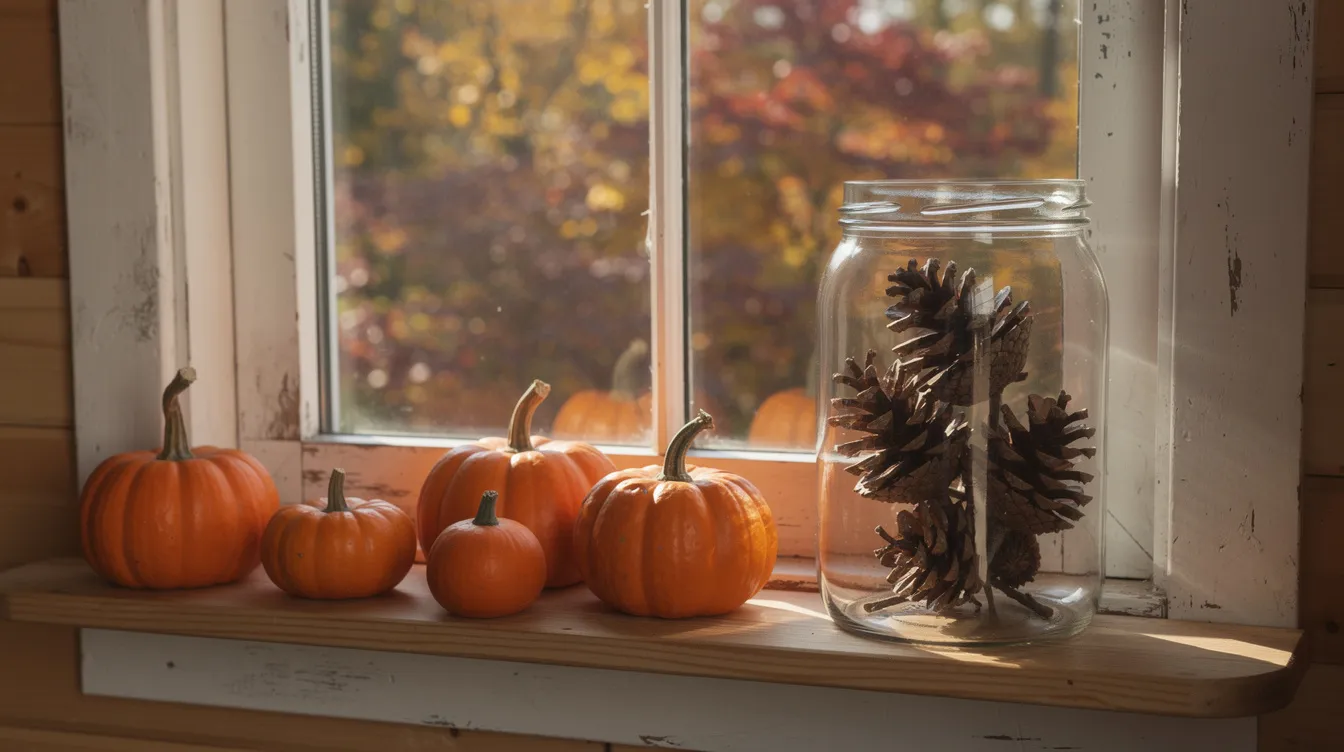
- A line of mini pumpkins on a windowsill
- A jar of acorns on a high shelf
Layer natural elements like pinecones and mini pumpkins throughout the home. Natural elements, like branches and small pumpkins, can make a space feel autumnal with almost no effort. These items are filled with texture and charm and cost nothing to forage.
Scent strategies for tiny square footage: Seasonal scents contribute to a cozy atmosphere without visual clutter. Try simmer pots on a 2-burner stove (cinnamon sticks, orange slices, cloves), essential oil diffusers with cedar or cardamom, or low-scent soy candles. In a small space, a little goes a long way-start with a single scent source and adjust.
Sound and comfort cues: A low-volume autumn acoustic playlist adds ambiance without physical space. A laptop screensaver with forest or cabin scenes keeps the mood going when the screen isn’t in use. For cold mornings, thick socks in a basket by the door, a heated throw on the sofa, and a compact entry mat to catch muddy boots all brighten daily life. If you lean rustic, you can borrow ideas from farmhouse tiny house interior styles for cozy small spaces, while those who prefer a storybook feel might draw from cute tiny house designs for a dream home. Tiny homes often require less maintenance than traditional homes, but these small comfort details make a big difference in how you experience the season.
Planning Your Autumn Tiny House Layout: Step-by-Step from Explore Tiny House
Before buying decor, assess your existing layout and list autumn needs: more seating, better lighting, a cozier bed, or extra room for coats and boots.
A simple 5-step process:
- Measure your space. Know the exact dimensions of each zone, including ceiling height in the loft.
- Sketch a quick floor plan. Even on paper-mark windows, the front door, furniture, and the spacious shower or bathroom area.
- Identify zones. Entry, kitchen, living, sleeping, bathroom. Label each.
- Decide what each zone needs. Does the living area need a reading corner? Does the entry need hooks for fall coats?
- Act on one zone at a time. Start with the room you spend the most time in.
For a 24-foot tiny house on wheels with a front door opening into the kitchen, you might simply reposition a chair near the stove and add a rug to define a reading nook. Sustainable options include bamboo and hemp wood flooring, and reclaimed wood enhances durability and aesthetic appeal for any built-in features you add. Using high-quality wood improves structural integrity in tiny homes while also serving as a design feature, as you’ll see in many of the best tiny houses that redefine small living. Tiny homes reduce utility costs significantly, and autumn upgrades that improve insulation-like thermal curtains or a door mat-pay for themselves.
Use vertical space and multifunctional furniture instead of adding new pieces. A wall-mounted desk under a window doubles as a fall tea station. Look at how great tiny homes redefine small space living for ideas on layouts where every inch works hard. A creative director of a design firm once told me the best tiny house interiors are the ones where every item earns its place-and autumn is the perfect season to test that.
At Explore Tiny House, we publish galleries, stories, and layout guides so you can see how your favorite homes handle the shift from summer to fall. For even more ideas on models and layouts, explore top tiny houses that redefine small space living. Browse our collection of elegant tiny homes for more inspiration.
FAQ: Autumn Interiors in Tiny Homes
Here are answers to the most common questions that come up once people start actually changing their tiny house for the fall season.
How early should I start decorating my tiny house for autumn?
Start with subtle changes in late August or early September-swap textiles (pillow covers, throws, duvet covers) and introduce autumn scents like cinnamon or cedar. Add more obviously autumnal pieces like pumpkins or wreaths closer to late September and October. Phasing decor in slowly helps the tiny home feel balanced rather than suddenly cluttered. A gradual process also lets you test what works in the space before committing to a full seasonal look.
Can autumn decor work if my tiny home has a very modern, minimalist style?
Absolutely. Autumn styling doesn’t have to be rustic. In a modern tiny home, lean into clean lines and a limited palette-think black, cream, and cinnamon accents. Matte black candleholders, a single rust-colored throw, smooth ceramic vases with a branch or two, and monochrome artwork with subtle fall tones all create autumn warmth without compromising a modern aesthetic. Designers increasingly favor this “soft minimalism” approach for fall.
What’s the best way to handle wet coats and muddy boots in such a small space?
Set up a micro-mudroom: a narrow boot tray or outdoor mat by the entrance, 2–4 wall hooks or a peg rail for coats, and a small lidded basket for hats and gloves. If your tiny home has a deck or small porch, an outdoor bench with storage can hold bulkier items and keep the interior cleaner. This one small investment in organization near the door makes the rest of the house easier to maintain all fall and winter.
How do I make my loft bedroom feel cozy in autumn without overheating?
Lofts in tiny houses trap heat, so focus on breathable layers: a light quilt plus a separate throw, cotton or linen sheets, and a small fan to circulate warm air in the evening. Avoid piling on heavy extra blankets that you’ll just end up storing. Instead, focus on low-bulk decor-pillow covers in autumn tones, a single wall hanging, and warm bedside lighting. These create an inviting sleeping loft without turning it into a sauna.