
Why Fall Is the Best Season for Tiny House Living
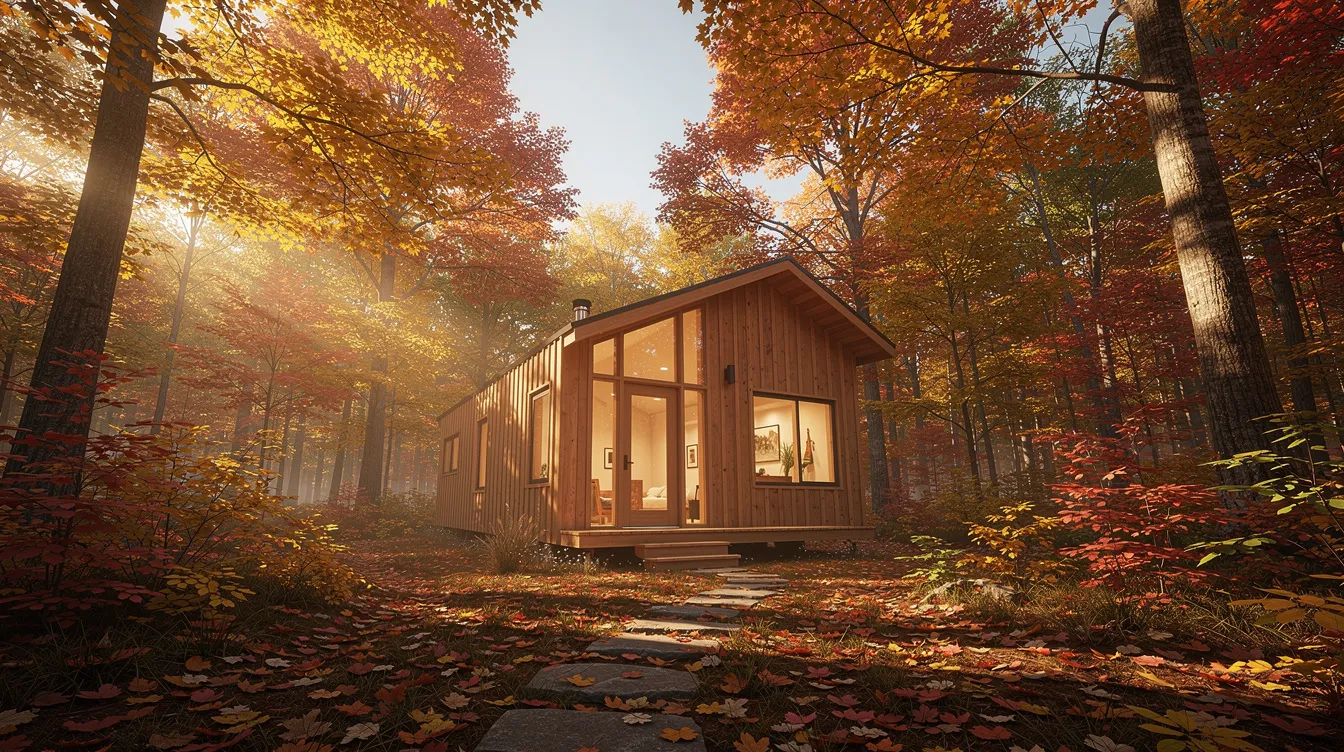
Picture a mid-October morning in the Catskills. The thermometer reads 42°F. Maples blaze red outside a picture window while steam curls off a mug of coffee on your counter. Your tiny house, all 250 square feet of it, is warm without effort because the space heats in minutes. That scene captures why autumn and tiny living fit together so well.
Tiny homes often range from 200 to 400 square feet, and that compact footprint turns fall’s challenges into advantages. A tiny house can create a cozy atmosphere with warm blankets and hot drinks that a 2,000-square-foot property simply cannot replicate at the same speed or cost. Tiny houses encourage outdoor living during the fall season, too; when the air is cool enough to sit by a firepit but mild enough to linger, a front porch or deck becomes a second living room. Tiny houses often embody minimalist living principles, and autumn’s natural push toward nesting makes that life feel less like sacrifice and more like a dream realized. Tiny homes can be built for under $50,000, putting this kind of seasonal retreat within reach.
This guide from Explore Tiny House covers practical design tips, real layout ideas (including living room, hot tub, and dining space setups), and seasonal décor to make your tiny house feel like the perfect fall retreat.
Planning a Tiny House for Fall: Climate, Location & Layout
Fall performance starts with decisions made long before you hang a wreath: climate zone, site orientation, and floor plan. If you’re planning for October nights around 35 to 45°F in the Catskills, Rockies, or Oregon’s Mt. Hood region, your walls, windows, and heating must handle freezing risk and wide day-to-night temperature swings. The Sierra Nevada foothills in California and the Blue Ridge Parkway corridor in Virginia and North Carolina also offer vivid foliage, moderate rainfall, and cool evenings ideal for tiny mountain houses. California has passed groundbreaking tiny house bills, and tiny homes are increasingly approved on residential properties across the country, making it easier to park or place a home on land you own.
Orient your main windows and living room toward the best autumn views: south or southeast captures morning sun for passive heat gain, while west-facing glass rewards you with sunsets over mountains or a lake. A 24-foot tiny house keeps towing weight low and heating demand small, but a 28-foot model adds 120 to 150 square feet for built-in storage (blankets, boots, coats), a larger kitchen, and a more comfortable dining room setup. A 28′ tiny house can include dual lofted bedrooms, giving a family or guests separate sleeping lofts while keeping a full-height main floor bedroom below. Tiny houses often feature flexible living spaces for various uses, and tiny houses can have up to 400 square feet of space in that longer format. Tiny homes can be built under national building code standards, so permitting a four-season build is straightforward in most states. Builders like Tiny Mountain Houses focus on affordability without sacrificing quality and offer homes with flexible financing options.
Insulation, Heating & Cozy Comfort
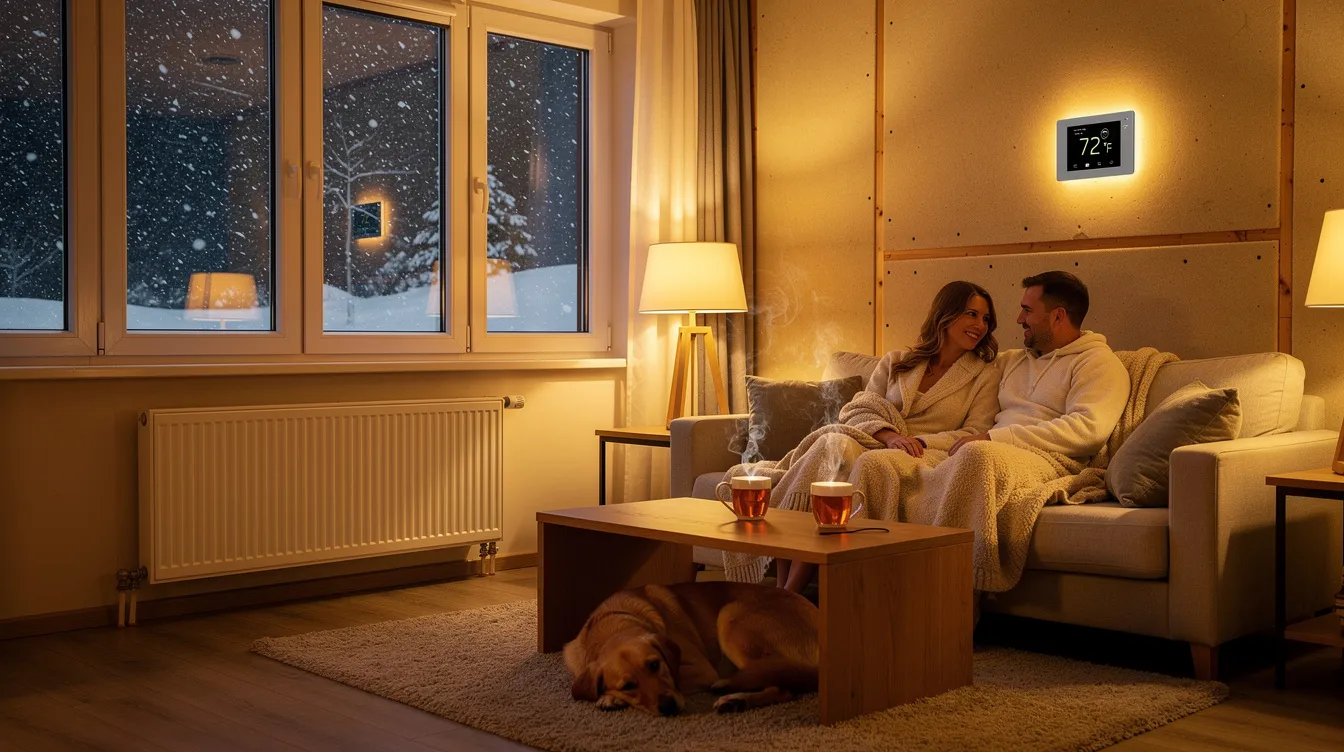
In a tiny home surrounded by forest or mountains, temperatures can drop 20°F within two hours of sunset. Walls should reach at least R-24 (R-28 to R-33 with continuous exterior rigid foam), roof insulation R-40 or higher, and floor insulation R-30. Windows need a whole-window U-factor of 0.20 or lower; triple-pane units with low-E coatings and warm-edge spacers perform best in cold climates. Closed-cell spray foam at roughly R-6 to R-7 per inch doubles as an air barrier, sealing rim joists, wall-to-ceiling seams, and window frames where heat escapes fastest. Many tiny homes utilize sustainable materials in their construction, and these insulation choices pay for themselves in lower energy bills.
For heating units in small homes, consider four options. A vented propane heater delivers quick warmth and works off-grid but adds combustion moisture and needs outside venting. A compact wood stove provides radiant heat and suits cabin aesthetics but requires safe clearances and flue maintenance. An electric mini-split heat pump (9,000 to 12,000 BTU) handles shoulder-season temperatures efficiently but needs grid or robust solar power. Radiant floor heat pairs well with thermal mass but costs more to install. Living in a tiny house during the fall maximizes energy efficiency because you’re conditioning a fraction of the volume of a standard house. Tiny homes reduce energy consumption compared to traditional houses, and many feature energy-efficient appliances and systems.
Pro tip: Size your heater at 40 to 50 BTU per square foot. A 250-square-foot tiny house needs roughly 10,000 to 12,500 BTU of heating capacity. A 26-foot tiny mountain house in Colorado runs a 9,000 BTU mini-split with a small wood stove as backup for snowy October weekends, and the combination keeps indoor temperatures at 68°F through November.
After cooking or showering with windows closed, condensation on cold surfaces causes mold and wood rot. Install a compact HRV (Heat Recovery Ventilator) for cold, dry mountain climates or an ERV (Energy Recovery Ventilator) for humid coastal regions like the Pacific Northwest. Living tiny encourages a lifestyle focused on sustainability and conservation, and proper ventilation keeps both the house and the occupants healthy. Layer wool rugs, heavy cotton throws, and thermal-lined curtains to soften acoustics, trap warmth, and make every room in your cozy home feel wonderful.
Designing a Fall-Ready Living Room in a Tiny House
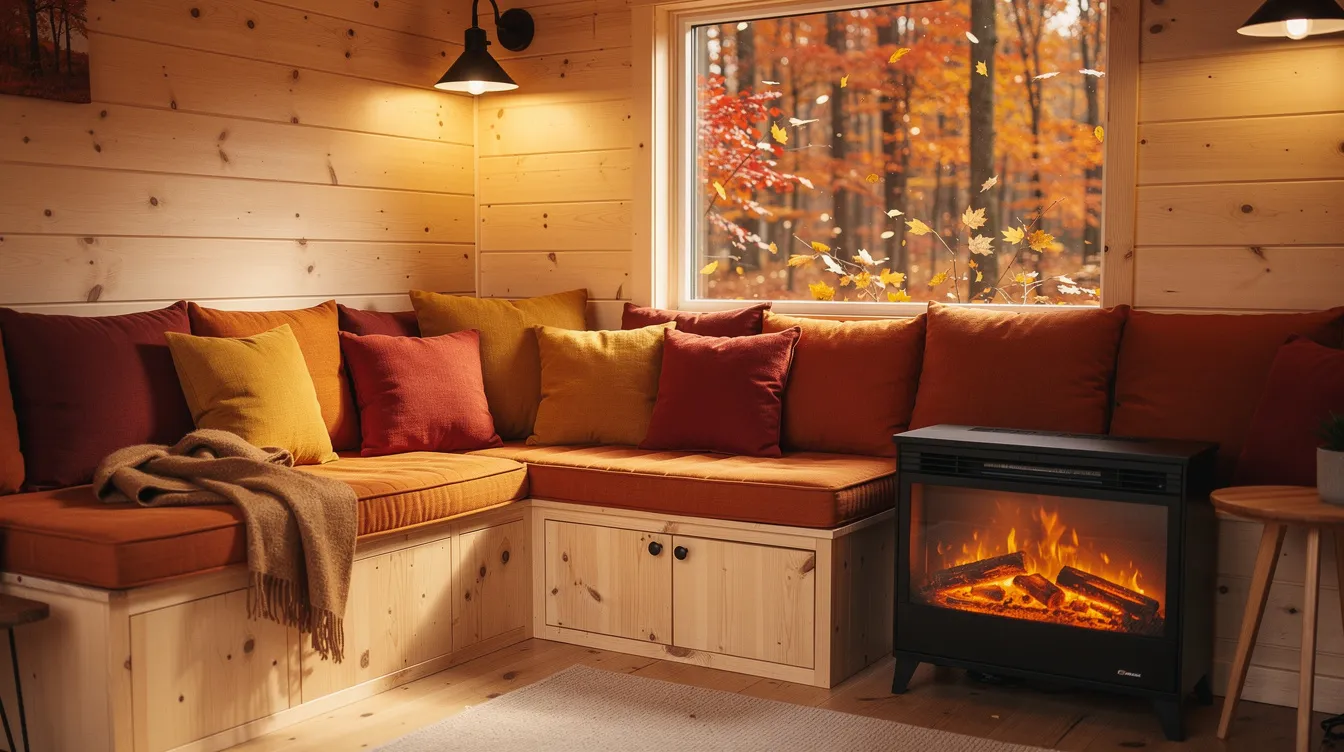
The living room is where you read, host friends, and watch autumn storms roll across the mountains. In a 28-foot tiny house, an L-shaped built-in bench under a large picture window works as a couch, a guest sleeping space, and storage: drawers beneath hold fall blankets and board games. Many tiny houses feature large windows to enjoy colorful foliage, and framing that view with oak or walnut trim and deep green or rust-colored cushions makes the space feel both mighty and intimate.
Warm lighting enhances the cozy atmosphere in a tiny house during fall evenings. Swap bright overhead fluorescents for dimmable LED wall sconces set to 2,700K, a table lamp beside the couch, and a few battery candles on a shelf. A low-profile electric fireplace under a wall-mounted TV adds radiant warmth and visual comfort without the clearance demands of a wood stove. Autumn decorations can impact small spaces without a large budget: a single woven throw in burnt orange and two textured pillows in mustard change the entire room’s character.
Multi-function furniture is critical. A wall-mounted, drop-leaf table and two nesting stools create a dining space for dinner or a workspace for a remote office, then tuck away when you need the floor open. Picture a weekend in October: you come in from a bike ride on a nearby trail, hang wet coats on a wall rack by the front door, tuck boots under the bench, and curl up in the living room with hot cider while wind rattles the last leaves outside. That’s the freedom tiny living delivers.
Fall Kitchens & Seasonal Storage in Tiny Homes
Fall cooking fills a tiny house with steam and scent: soups, roasted squash, baking bread. That puts demands on both the kitchen layout and the ventilation. An L-shaped kitchen with the sink under a window framing foliage gives you a view while you wash dishes, and a galley layout with full-depth counters on both sides packs in counter space for rolling dough or cooling pies. A vented range hood that exhausts outdoors is non-negotiable; a recirculating hood leaves moisture and odors trapped in 250 square feet.
Storage strategies matter when cooking shifts toward heavy, bulky ingredients. Deep drawers fit cast-iron skillets and Dutch ovens. A slim pull-out pantry holds autumn staples: canned tomatoes, broths, pumpkin puree. Overhead shelves with railings keep jars of oats, rice, and spices visible and accessible. A compact 10-cubic-foot refrigerator and apartment-sized range handle a family’s fall meals comfortably, and toe-kick drawers beneath the lower cabinets stash baking sheets and dinner plates. Decorating a tiny house requires smart use of space to avoid clutter, so functional kitchen items can double as seasonal decor: a wooden bowl of apples on the counter, an amber glass vase with dried branches beside the sink. Tiny living promotes minimal waste through efficient space usage, and a well-organized kitchen proves it. Tiny houses can include outdoor kitchens for seasonal use, extending your cooking options on mild autumn afternoons.
Bedrooms, Lofts & Layered Fall Sleep Spaces
Lofts trap rising heat, which keeps a sleeping loft warm without extra energy on cool nights. But if the roof slope lacks ventilation, that warmth turns stuffy. Dormer windows or operable roof vents solve this. A main-floor bedroom with a queen bed stays at a more stable temperature and offers easier access for year-round life, making it the better choice for families with kids or anyone who values a full bathroom steps away instead of a ladder climb.
A loft setup for autumn: a low platform mattress under a long dormer window, warm string lights lining the roofline, built-in cubbies for flannel pajamas and wool socks, and blackout blinds for later sunrises in October. Chunky knit blankets and flannel bedding create warmth in small spaces, and a layered bedding strategy (cotton sheet, light quilt, wool or down duvet) lets sleepers adapt to variable fall temperatures without constantly adjusting the heater. Natural decorations like pinecones and small pumpkins on a shelf add texture and make the loft feel like a cabin retreat. Seasonal decorations enhance tiny house aesthetics in fall without requiring a complete overhaul.
For families: parents sleep in the main-floor bedroom, kids claim the loft with safety rails and a short bookshelf stocked with autumn reads. Storage under beds (drawers or lift-up platforms) rotates summer gear out and keeps extra duvets, sweaters, and boots accessible. The whole arrangement turns fall evenings into something kids talk about for decades.
Outdoor Living: Decks, Firepits & Hot Tubs for Crisp Evenings
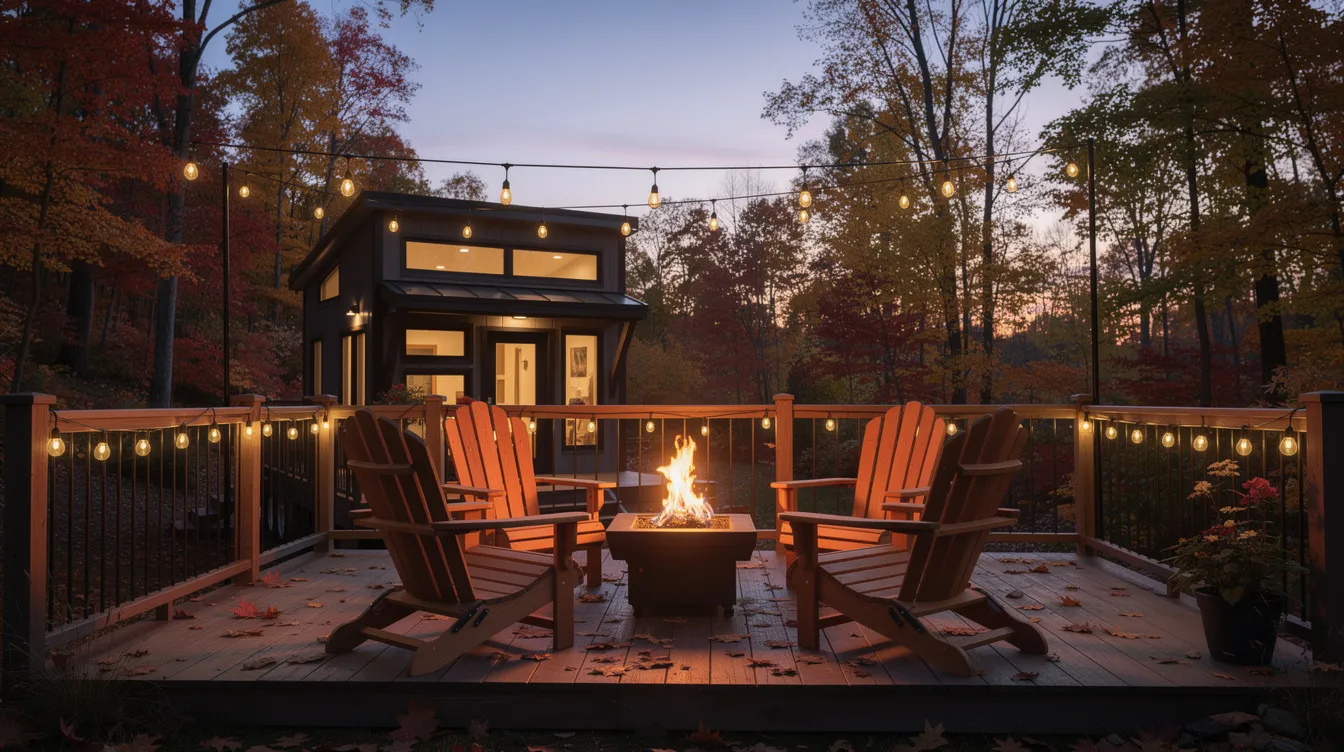
Outdoor space transforms a tiny house during autumn. A 10-to-12-foot-deep deck with railings on three sides, a small bistro table, a couple of Adirondack chairs, and a propane firepit makes crisp evenings worth spending outside. String lights overhead and a basket of blankets nearby keep guests and neighbors lingering after dark. Outdoor storage in a small deck box or shed holds firewood, outdoor cushions, and seasonal gear so the tiny interior stays uncluttered.
A two-person plug-and-play hot tub positioned off the main deck adds a layer of relaxation that feels amazing after a fall hike. Position it for privacy; add safety steps, non-slip mats, and a towel hook just inside the entry. Practical details: exterior outlets rated for the hot tub’s electrical load, a frost-proof hose bib for draining and refilling, and a plan to winterize if the house sits vacant after late November. A 28-foot riverside tiny home in Western North Carolina runs a cedar hot tub under a pergola; owners use it from September through early December, making it one of the property’s most-used features.
Some tiny house resorts expand these amenities further. One resort is located on 45 acres with a seasonal heated pool and activities year-round for guests, letting visitors discover country living without committing to a build. Swimming in early fall, soaking in a hot tub by late October, and gathering at a shared patio firepit in November; each season on the land brings its own appeal.
Fall Décor, Lighting & Minimalist Seasonal Style
Keep the base palette neutral: off-white walls, cream textiles, natural wood. Then layer in two or three accent tones like burnt orange, mustard, and forest green through pillows, throws, and one or two art pieces. Current décor trends for 2025 and 2026 favor warm earth tones in clay terracotta, deep burgundy, and moss green, all used sparingly so a compact space doesn’t feel heavy. A single wreath of dried leaves and eucalyptus on the front door, one woven basket for extra throws, and a small pumpkin arrangement on the table replace a shelf full of knickknacks.
Lighting shapes the mood more than any single piece of décor. Multiple low-intensity sources (table lamps, under-cabinet LED strips, warm-toned fairy lights) create a soft golden glow that complements early sunsets. For scent, beeswax or soy candles in cedar, clove, or cinnamon bring the outdoors inside, and of course, cooking a roasted squash dinner fills the house naturally. Minimalist living promotes simplicity and reduced clutter, and that clarity shows in a tiny home where every object earns its place. Minimalist living can enhance mental clarity and focus, a benefit anyone notices after a week in a super cute, well-edited space. Living minimally can lead to financial savings and freedom, freeing up money for experiences like fall travel. The Tiny House Expo showcases minimalist living options alongside affordable builds worth exploring.
For every new fall décor item you bring in, store or donate one non-seasonal piece. The room stays open, the photo you take looks wonderful, and you avoid the creep of stuff that defeats the purpose of going tiny.
Practical Fall Living Tips: Maintenance, Safety & Tiny House Communities
Maintaining a tiny home typically involves less seasonal maintenance than a standard house, but the tasks still matter. Before fall, inspect seals around windows and the front door; weather-strip gaps. Clear gutters of leaves to prevent ice dams. If the house is on a trailer, check tires, brakes, and wheel bearings before any move. Drain outdoor hoses and shut off exterior water if overnight lows hit freezing. For solar setups, test battery capacity and panel angle as daylight hours shrink. Preparing a tiny house for winter takes less time than for larger homes, often a single weekend.
Safety in a compact space requires attention. Carbon monoxide detectors and smoke alarms are non-negotiable, especially with combustion heating. Wood stoves need annual flue cleaning and code-compliant clearances from walls. Propane heaters require outside venting and a fresh air supply. Keep a fire extinguisher within arm’s reach of the cooking area and the bath.
Tiny house communities are gaining popularity for alternative living, and fall is a wonderful season to visit one. The Catskill Resort, 2 hours from NYC, offers shared firepits, potlucks, and trail access that make a small interior feel expansive. The 9th Annual Tiny House Expo is on November 6-8, 2025, and showcases affordable living options for anyone ready to discover what compact, intentional life looks like. California Tiny House aims to make tiny home ownership accessible, and events like the Expo connect buyers with builders under one roof. Tiny living promotes intentional lifestyles and reduces clutter, and spending time in a community reinforces that mindset.
Fall strips life down to what matters: warmth, good food, nature outside the window, and enough room to relax comfortably on the couch with people you care about. Whether you’re renting a cute weekend cabin, attending the Expo, or designing a four-season tiny mountain house on your own land, autumn proves that a well-built tiny house delivers everything a full-sized home promises, in a fraction of the space. Browse Explore Tiny House for galleries, seasonal checklists, and guides to finding your next step.