
Key Takeaways
- Light paint colors with warm or neutral undertones reflect more light and make walls recede, giving any small room an airier, more open feeling.
- A single accent wall in a deeper shade can add personality and create depth without making your tiny home feel chopped up-limit yourself to one or two across the whole interior.
- Continuous color flow between your kitchen, living area, and sleeping loft prevents visual fragmentation and helps a small space read as one cohesive room.
- Painted arches, tone-on-tone stripes, and checkerboard patterns are creative, DIY-friendly ideas that add dimension to tiny houses without requiring renovations.
- At Explore Tiny House, we focus on realistic, practical wall painting designs that work specifically in compact homes, studio apartments, and ADUs.
Intro: Why Wall Paint Matters So Much in Tiny Homes
In a tiny home under roughly 400 square feet, wall paint is one of the fastest, cheapest ways to transform how big or cramped a space feels. Shadows, light bounce, and color contrast are all magnified when every wall is within arm’s reach-so even a single paint color swap can change the entire mood of a room.
This guide is written by Explore Tiny House, a platform dedicated to tiny houses, studio apartments, and compact living of all kinds. Whether you’re working on a DIY tiny house on wheels or a fixed ADU between 150 and 600 square feet, you’ll find specific, non-generic ideas for paint colors, accent walls, and layouts that visually create depth and brightness in small rooms.
Best Paint Colors for Tiny Homes: Light vs. Dark in Small Spaces
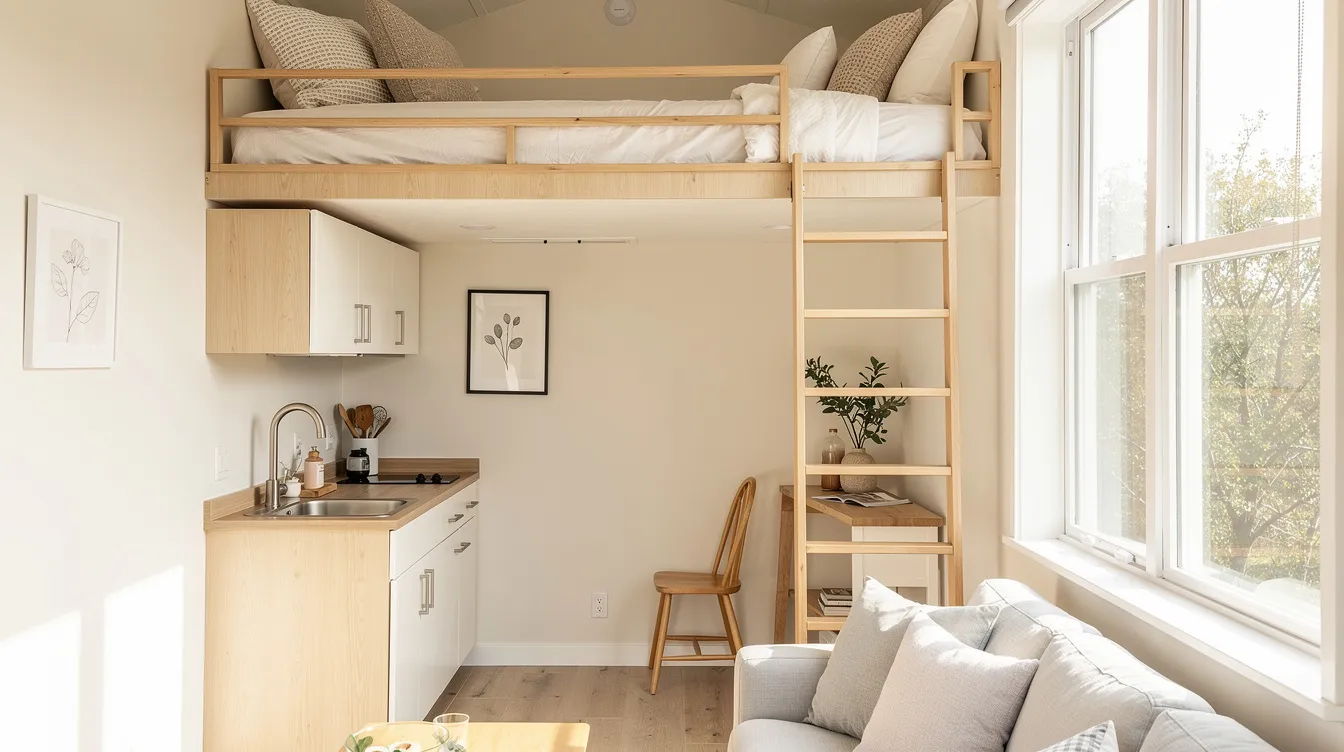
Your paint color choice directly controls perceived size, height, and brightness inside a tiny house interior. Every surface matters because there’s simply less of it.
Light paint colors make walls recede and small rooms feel airier-this isn’t opinion, it’s physics. Paints with a high Light Reflectance Value (LRV of 70–90) bounce more light around the room. Off-white paint colors reflect light and open up spaces especially well. Painting with pastels opens up small spaces visually too. Here are reliable shade types to explore:
- Warm white with a hint of cream – prevents pale walls from looking clinical in low natural light
- Cool gray with a blue undertone – crisp and modern, ideal for south-facing windows
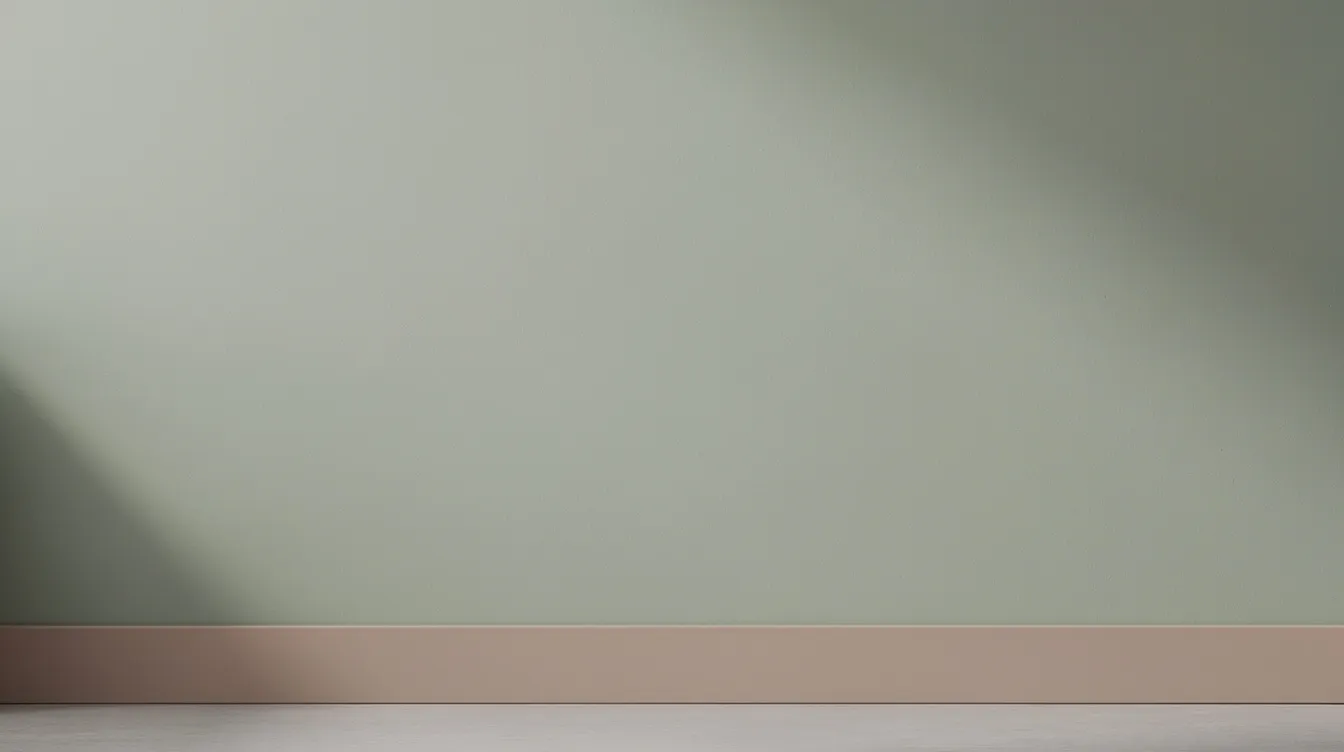
- Soft sage green with a muted gray base – earthy and calming without feeling heavy
- Pale powder blue – airy and open, best with warm wood accents
Specific color palettes built around these families maximize natural light in tiny spaces. In 2026, earthy tones like clay, sage, and muted blue-green are trending for nature-inspired tiny home aesthetics.
When do deeper shades work? Using deep hues can transform small bathrooms into colorful oases-a navy or forest green bathroom walls feel intentional, not cramped. A sleeping loft painted in a rich charcoal creates a cocoon-like feeling that’s actually restful. For more ideas on bold color choices, see our guide to colorful tiny houses.
For the best experience, stick with one continuous wall color through your living room, kitchen, and hallway. This flows smoothly and stretches the space lengthwise rather than chopping it into fragments.
Accent Walls That Work in Small Rooms (Without Shrinking the Space)
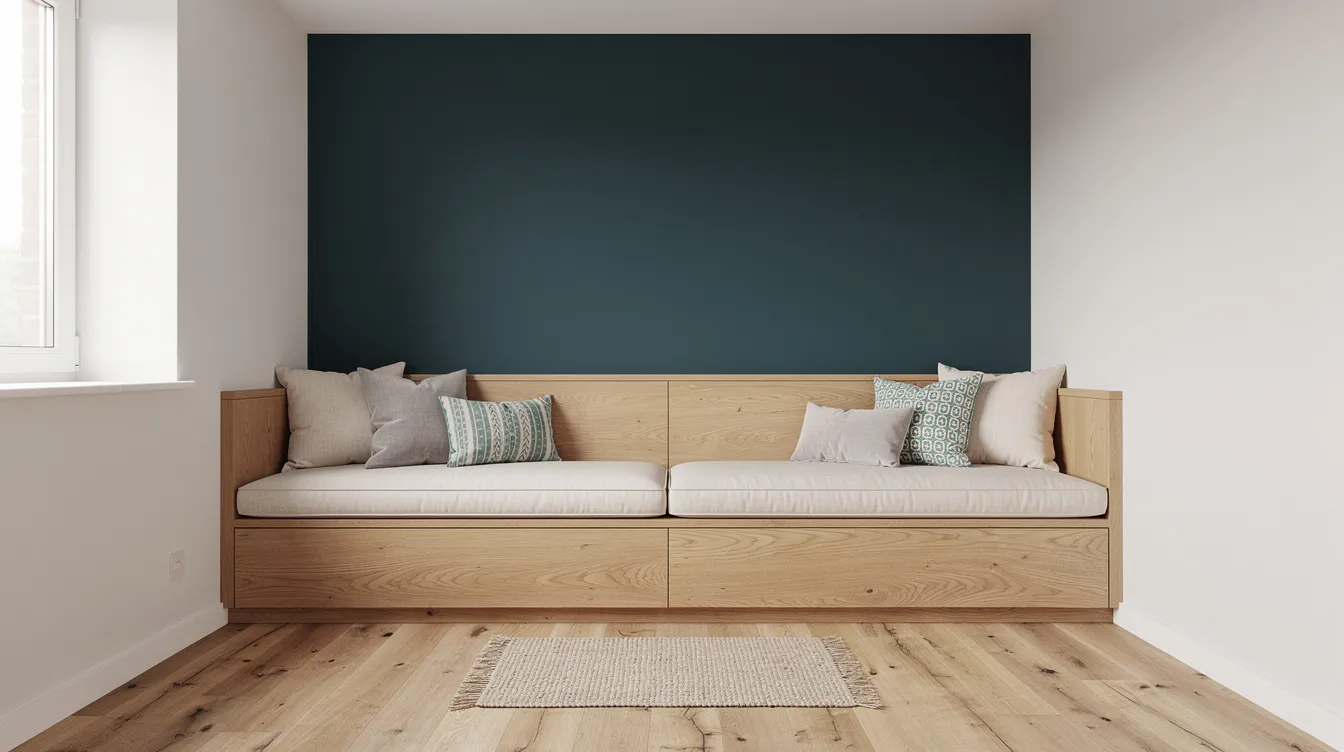
An accent wall is a single wall painted a different color, richer shade, or pattern to draw focus. In a tiny home, it can add personality and define a focal point-but only if used sparingly. Accent walls add architectural interest to small rooms and give the eye a place to land.
Where to place it: behind a sofa, bed headboard, around a large window, or along built-in shelving. These positions naturally draw the eye without fragmenting the room.
Subtle approach: use a slightly darker or richer version of your main paint color. For example, if your walls are pale sage, try a deep sage accent-this adds depth while maintaining harmony.
Bolder ideas for tiny homes:
- Deep teal behind a built-in bench or seating nook
- Terracotta painted arch behind a compact dining table
- Charcoal behind a projector screen to reduce glare and create drama
Soft ombré accent walls can introduce depth without overwhelming a small space. One statement wall with quiet surrounding walls can enhance the visual space in a tiny house-resist the urge to create competing accents. Limit yourself to one or two accents across your whole interior for cohesion. For bedroom-specific accent ideas, check out cozy modern small bedroom ideas.
Using pastel colors in art displayed on or near your accent wall opens up small spaces even further.
Ceiling Paint Tricks to Visually Raise or Lower Tiny Home Spaces
In tiny homes with lofts, A-frame roofs, or low ceilings, what you paint on the ceiling matters just as much as the walls-sometimes more.
- Raise perceived height: paint your ceilings a lighter shade or lighter tint of the wall color. This simple trick bounces light downward and makes even a 7-foot ceiling feel a bit taller.
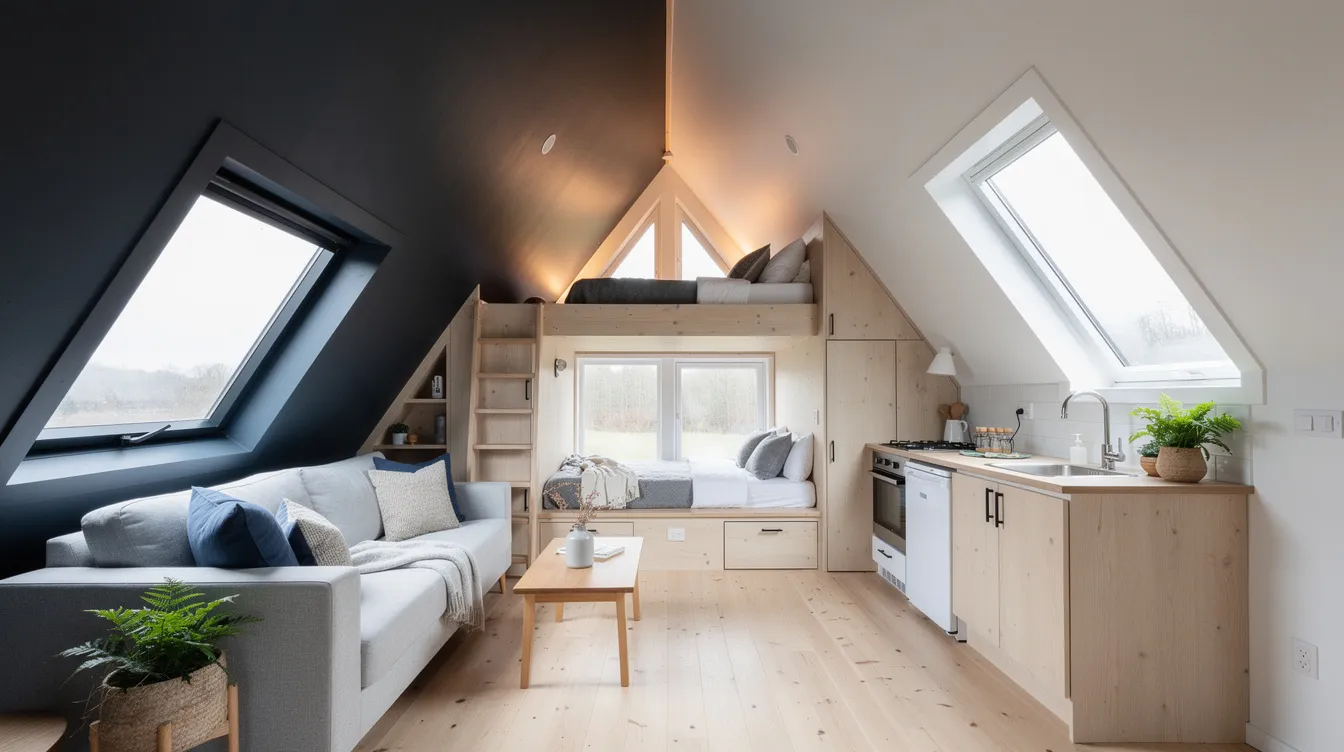
- Color-drenched loft: color drenching-painting walls, ceilings, and trim the same mid-tone-can blur room boundaries and make spaces feel cozy. This works beautifully in a sleeping loft or reading nook where you want warmth, not openness.
- A-frame contrast: picture an A-frame tiny house with navy or forest green ceiling panels and crisp white walls. The eye travels upward along the slopes, revealing the full height of the structure and emphasizing interesting architectural details.
- Zone definition: painting ceiling beams, rafters, or loft edges in a contrasting color helps define zones in a single-room tiny home without adding physical partitions. This is a practical way to separate the kitchen from the living area using nothing but paint and a brush.
Patterned Wall Ideas Scaled for Tiny Houses (Stripes, Checks, and Geometric Shapes)
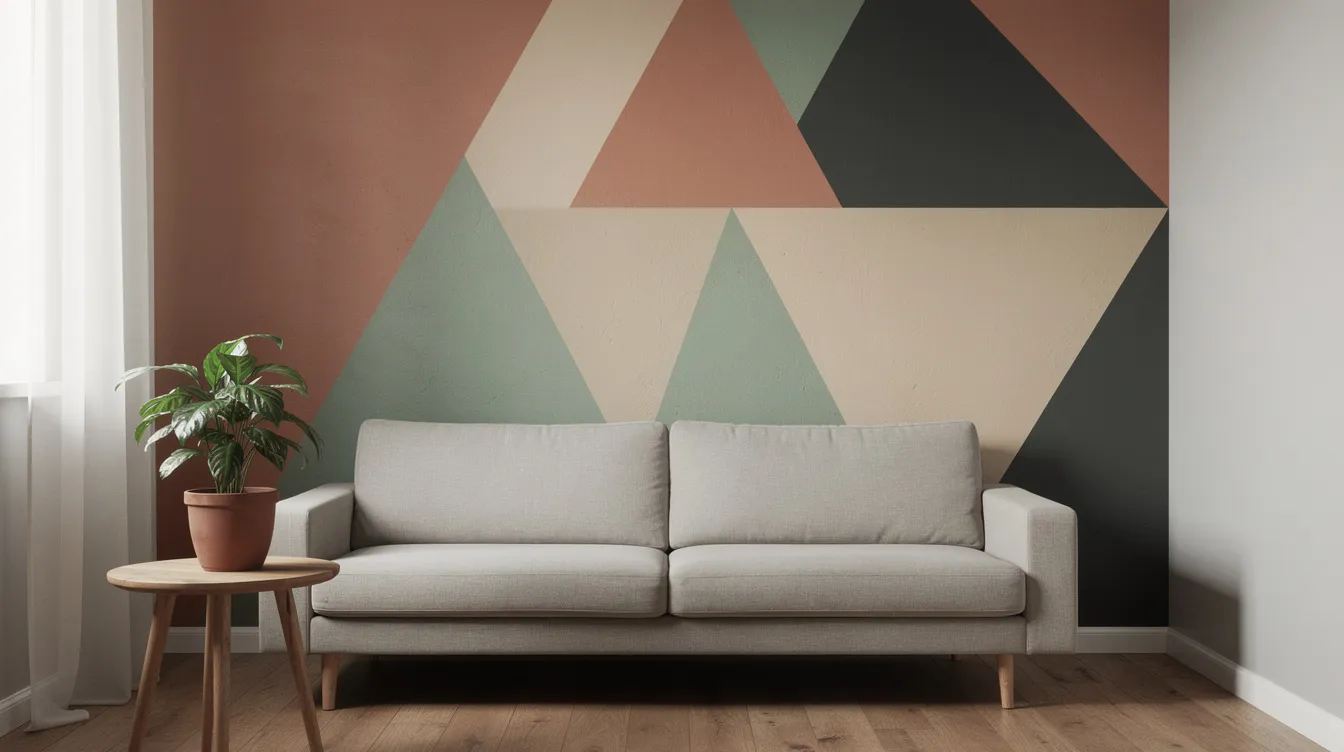
Bold painted patterns can energize a tiny home-but they must be scaled carefully so they enhance rather than fill the room with visual noise. Controlled scale and lighter palettes are key for personalizing tiny spaces without crowding.
Horizontal stripes: narrow horizontal bands in close tonal values make a short wall appear wider. Try this in a hallway or narrow living room wall. Keep colors within the same family to avoid harsh contrast.
Checkerboard or buffalo check: ideal for a mudroom corner or entry area using two or three related neutrals. A chalkboard wall in a similar zone fosters creativity and lets the space do double duty as a message board.
Vertical lines: vertical stripes in soft tones can create the illusion of higher ceilings behind a compact desk or table. Tone-on-tone execution adds subtle texture without strong contrast.
Geometric shapes: triangles, abstract panels, or checkerboard patterns work well in kid lofts or a creative studio. Limit your palette to two or three paint colors. Geometric patterns can trick the eye into perceiving larger dimensions when the scale is right. For more style inspiration, explore aesthetic tiny home styles.
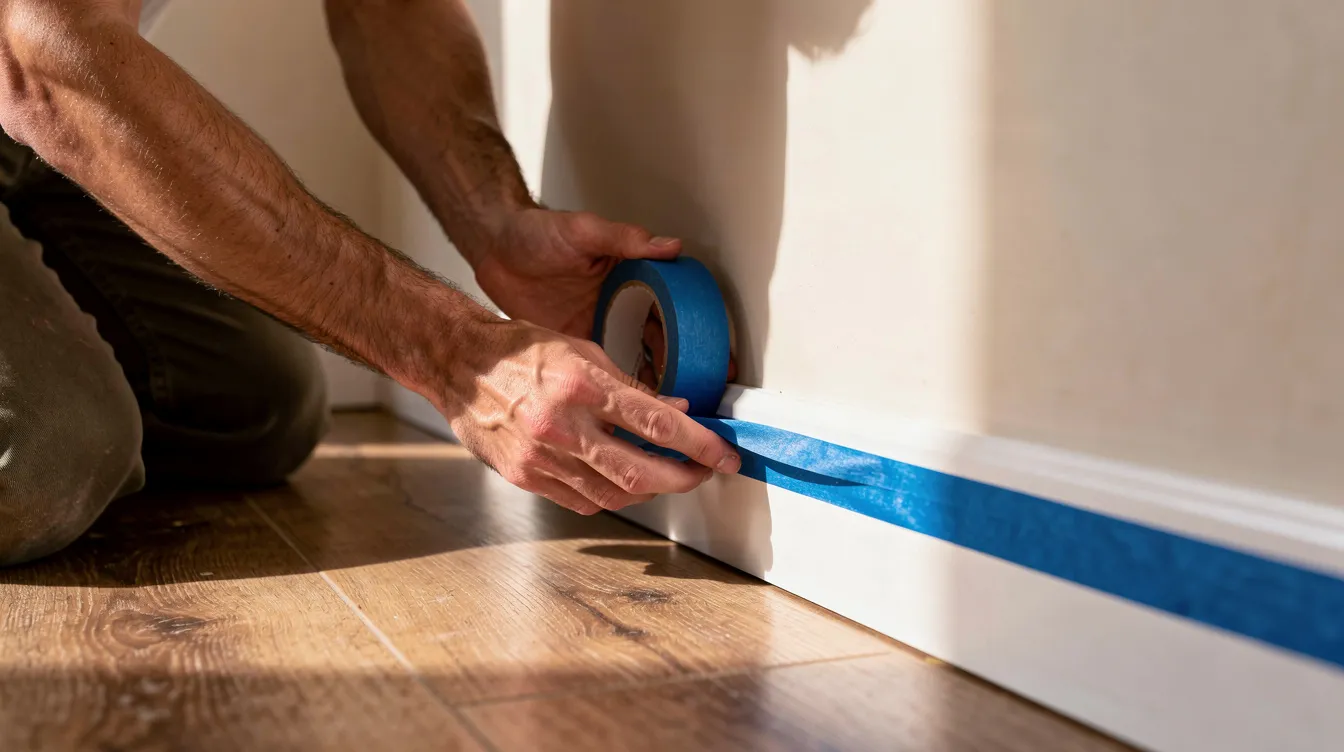
Practical tip: use painter’s tape for clean lines in wall painting, along with a level and measured marks. Test patterns on a sample board first-corners and odd angles in tiny houses exaggerate every imperfection.
Painted Arches, Murals, and Faux Architecture to Create Depth
Painted shapes can mimic built-in features like niches, arches, or headboards without consuming a single inch of floor space.
- Painted arch: frame a narrow doorway, compact reading nook, or small wall desk with a painted arch. Faux architectural arches can create visual focal points without requiring physical space-a perfect trick when every square foot counts.
- Landscape mural: a soft landscape mural can add depth and a sense of tranquility to a windowless bathroom or kitchen wall. Think stylized mountains or a forest silhouette that creates a window-like effect. Large-scale prints in mural form also create the illusion of more space.
- Painted headboard: instead of a bulky physical headboard in your loft, paint a rectangle or arch behind the mattress. This adds personality and a sense of art without sacrificing floor-to-ceiling clearance.
- Minimalist line art painted directly on walls can prevent visual clutter while reflecting light-perfect for keeping a small room open.
Keep murals and faux features in soft, blended tones that echo other walls in the house so they add dimension without chaos. For nature-inspired mural palettes, see our forest interior design guide.
Using Color Zoning to Separate Functions in a One-Room Tiny House
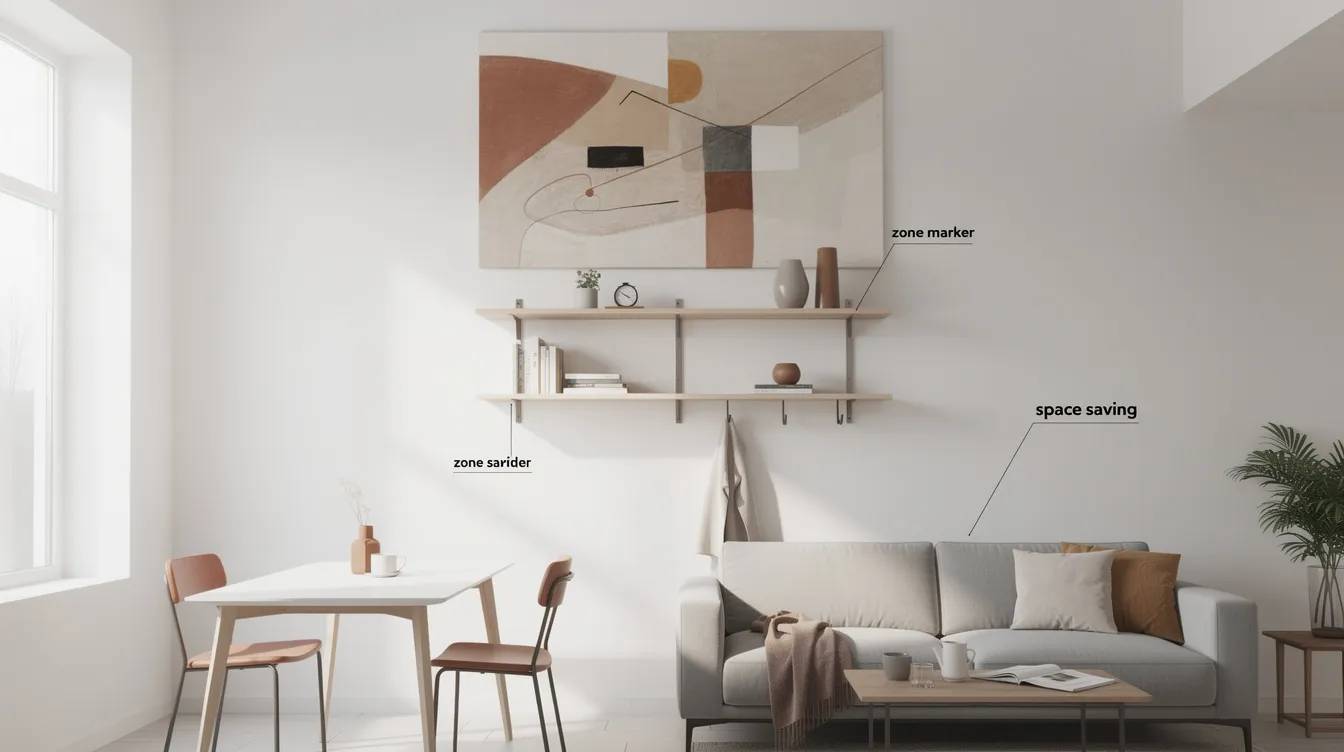
Many tiny homes combine kitchen, living, dining, and office into a single small room. Paint is one of the most effective tools for gentle zoning without building doors or partitions.
- Two-tone kitchen wall: paint the lower half a slightly darker tone for durability and to visually define the cooking zone. A two-tone horizontal split can ground a room while maintaining openness above. Two-tone walls enhance dimension and contrast in any room.
- Workspace block: apply a different color block behind a fold-down desk to mark it as a separate micro-office. This lets the same wall do double duty.
- Repeat accent colors across zones: using the same green on your kitchen backsplash wall and bathroom accent wall ties the house together while still creating distinct areas.
- Multi-functional wall art mounted at or above eye level saves space and serves as a zone marker. Hanging art above eye level makes ceilings appear taller too.
Avoid abrupt color changes at every corner. Instead, use gentle shifts within the same undertone family so the palette flows naturally. For furniture that complements color-zoned interiors, review our tiny house furniture ideas.
Practical Paint Choices and Finishes for High-Use Tiny Homes
Tiny homes concentrate moisture and daily wear on a small surface area, so the finish you choose is almost as important as the color.
Finish | Best For | Why |
|---|---|---|
Matte / Eggshell | Main living walls | Helps hide imperfections on surfaces |
Satin / Semi-Gloss | Kitchen, bathroom | Handles steam, easy to scrub |
Durable Enamel | Trim, cabinetry, doors | Defines edges, withstands contact |
Even a slight sheen difference between walls and trim helps create subtle contrast and definition without introducing a new color. Use two coats of paint for better coverage on exterior siding and high-wear interior surfaces alike.
Choose low-VOC or zero-VOC paints for compact interiors. In a small space with limited ventilation, strong fumes from traditional formulas are more noticeable and take longer to clear. California regulations set VOC limits as low as 50 g/L for interior finishes-worth targeting even outside the state.
DIY Tips: Planning, Sampling, and Maintaining Wall Paint in Small Spaces
Good planning prevents your tiny house from looking like patchwork after a few repainting projects. Here’s how to keep the process smooth:
- Sample first: test three to five paint samples directly on your walls. Sampling paint colors in natural light at different times of day helps ensure the right choice-small rooms exaggerate undertones dramatically.
- Sketch your plan: draw a simple floor plan and mark which paint color goes on each wall, ceiling, and accent area before buying full gallons. A gallon of paint covers up to 400 square feet, and two gallons of paint cover approximately 500 square feet in practice with overlap and touch-ups.
- Paint in order: work ceilings first, then walls, then trim. Use drop cloths and painter’s tape to protect compact built-ins, loft ladders, and cabinetry.
- Use proper tools: quality rollers and brushes make a visible difference on surfaces you’ll see from inches away.
- Budget your time: painting the interior of a 240-square-foot tiny home took roughly 45 hours in one real-world case-plan accordingly and don’t rush.
- Save for touch-ups: keep a clearly labeled jar of each final paint color. Scuffs and dings show quickly in high-traffic tiny homes, so having the right shade on hand prevents the need to repaint an entire wall.
For a complete overview of tiny house living, explore our tiny houses complete guide.
FAQ
What wall colors make a tiny house look bigger?
Light paint colors with warm or neutral undertones-soft white, pale beige, light gray, muted blue-reflect more light, blur wall boundaries, and make tiny homes feel more open. Light colors create an airy effect in small rooms consistently across every lighting condition. Painting trim and doors only slightly brighter than the walls (rather than stark white) reduces harsh color breaks and helps a small room read as larger.
Can I use very dark colors in a small room or tiny home?
Yes. Dark paint colors work well in tiny homes when limited to an accent wall, a loft ceiling, or a compact bathroom. A 3-by-6-foot bathroom painted in deep navy can feel like a stylish oasis rather than a closet. Balance dark walls with lighter flooring, bedding, and textiles so the overall apartment or small space doesn’t feel heavy or cave-like.
How many different paint colors should I use in a tiny house interior?
Choose one main wall color for most surfaces, one or two accent colors for features like an accent wall or painted arch, and one trim color-about three to four coordinated colors total. Reusing the same accent color in multiple zones (for example, the kitchen and bathroom) keeps a small house feeling unified rather than overwhelming.
Is wallpaper better than paint for adding character in small spaces?
Both work, but paint is usually lighter, more flexible, and easier to change in a tiny home that may move or shift with the seasons. Wallpaper can peel in high-moisture areas or during transit. Consider a single peel-and-stick mural or removable wallpaper niche if you want extra pattern, but use paint for most walls to keep your options open and let the life of each finish last longer.
How often will I need to repaint a tiny house interior?
Because every wall is high-traffic in a small space, touch-ups may be needed yearly. Full repaints depend on lifestyle-often every four to seven years with durable, washable paint. Wipe walls regularly and address condensation or moisture quickly in bathrooms and kitchens. Experiment with scrubbable satin finishes in high-contact zones to extend time between full repaints and achieve longer-lasting results.