
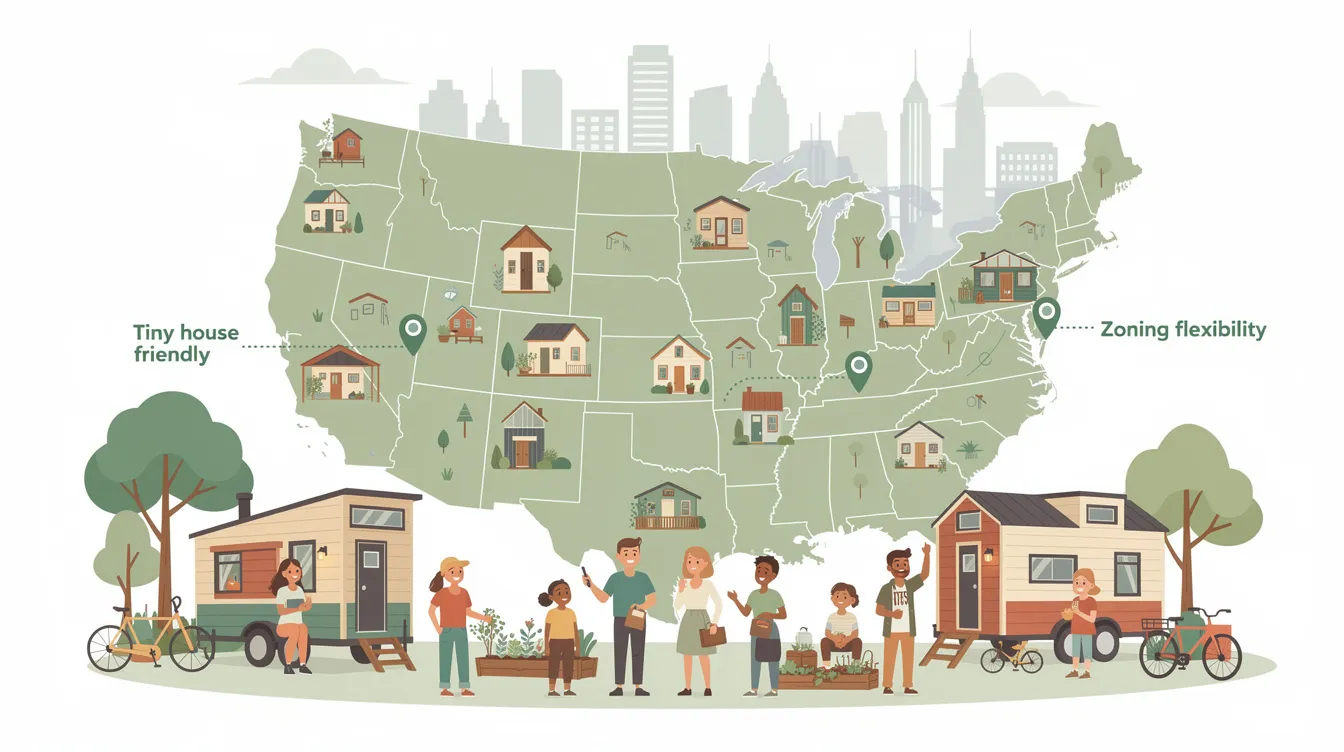
The tiny house movement continues to reshape how Americans think about housing, freedom, and what it truly means to live well. But for many tiny house hunters, the dream of living small runs headfirst into a wall of zoning laws, building codes, and size restrictions that vary wildly from one city to the next. Finding the right location means more than picking a spot on the map-it means understanding which cities actually welcome tiny homes and which ones will bury you in red tape.
Several U.S. cities have adopted progressive zoning laws for tiny houses, and cities often allow tiny houses as permanent residences under defined conditions. But zoning regulations for tiny houses vary significantly between jurisdictions, and tiny homes face different regulations based on their structure type and use. States like California, Oregon, and Washington are known for supportive tiny house reforms, but even within those states, the rules shift block by block.
This guide breaks down seven of the best tiny house friendly cities in the country, what their regulations actually look like, and how to choose the right one for your lifestyle.
How We Chose the Best Tiny House Friendly Cities
Not every city that claims to be “tiny home friendly” delivers on that promise. Here’s what we evaluated:
- Zoning ordinances that explicitly allow tiny houses on wheels and on foundations
- Minimum square footage requirements and building code accommodations-many cities relax minimum square footage requirements for tiny homes
- ADU regulations-Accessory Dwelling Units are often used to integrate tiny homes into existing neighborhoods, and movable tiny homes are sometimes classified as ADUs under certain ordinances
- Established tiny home communities or developments already on the ground
- Local government support, including reduced setbacks, lot-size requirements, and pre-approved building plans to streamline construction
- Utility connections and infrastructure support
- Cost of living and overall housing affordability
California and Oregon have enacted laws to support tiny homes and ADUs at the state level, but tiny house building codes by state still vary widely. But local implementation matters most. Tiny homes on wheels are often classified as RVs legally, and zoning laws often restrict tiny home placements-so we focused on cities where those barriers have been meaningfully addressed.
Between 2015 and 2025, ADU permit issuance increased by roughly 1,100% nationwide. The demand is real. The question is which cities are keeping up.
Top 7 Tiny House Friendly Cities in the US
1. Fresno, California
Fresno allows tiny homes as backyard cottages since 2016, making it one of the first major California cities to carve out space for tiny living in its municipal code and to clarify whether tiny houses are legal in California under specific conditions. The city defines tiny homes with specific criteria-including DMV registration, towability, and a requirement that the structure look like a conventional dwelling.
Why It Stands Out
Fresno was the first major California city to explicitly allow tiny houses on wheels in residential areas. That’s a significant distinction, since most jurisdictions treat tiny homes on wheels as recreational vehicles instead of permanent residences.
Best For
Tiny home owners seeking California living with a clear legal framework and city access.
Key Strengths
- Allows both tiny houses on wheels and foundation-built units as backyard cottages under Code section 15-2754
- Minimum 100 square foot first-floor living space with cooking, sleeping, and toileting required
- No additional parking required for the ADU
- Progressive zoning code with ongoing amendments-most recently P25-00996 in June 2025
Possible Limitations
- Must meet specific design standards (skirting, conventional appearance) and utility requirements
- Limited to residential neighborhoods with minimum lot sizes of 5,000–6,000 square feet
- Only one backyard cottage per lot, and it cannot serve as the primary dwelling
2. Rockledge, Florida
Rockledge, Florida adopted tiny housing zoning ordinances in 2015, becoming one of the first Florida cities to create specific zoning for tiny house communities. The city’s land development regulations explicitly define “tiny house,” “tiny house on wheels,” and “pocket neighborhood.
Why It Stands Out
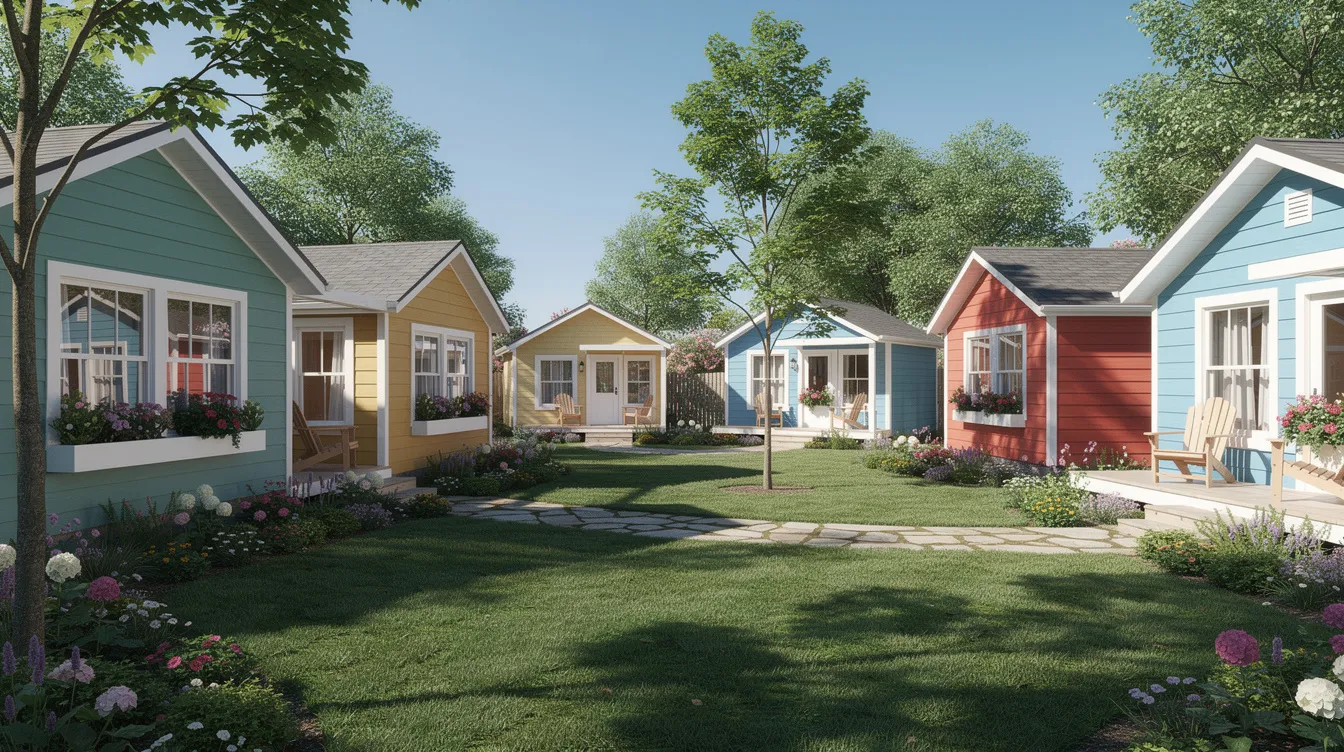
Rockledge didn’t just allow tiny homes-it designed a community framework around them. Its pocket neighborhood model clusters 4–12 tiny homes around shared spaces, creating neighborhoods built for connection.
Best For
Those wanting warm weather tiny house living with community options and shared amenities.
Key Strengths
- Rockledge legalized tiny houses in 2015 with a minimum size of 170 square feet
- Allows tiny houses in pocket neighborhoods within RMU and Planned Unit Development districts
- Up to 25% of homes in a pocket neighborhood may be on wheels
- Specific room standards: sleeping rooms require at least 70 square feet for one occupant
- Width between 8.5 and 20 feet, minimum ceiling height of 7 feet
Possible Limitations
- Must meet specific towability and DMV registration requirements for wheeled units
- Limited to designated zoning districts-you can’t build a standalone tiny house just anywhere in the city
- Engineering documentation and hurricane-resistance standards required
3. Durango, Colorado
Durango, CO allows tiny homes as accessory dwelling units since 2014, when the city updated its Land Use Code to accommodate smaller dwellings and joined a growing list of tiny house communities in Colorado. The mountain town atmosphere and outdoor recreation access make it a natural fit for those drawn to the tiny living experience.
Why It Stands Out
Durango combines a legal framework for tiny home living with one of the most scenic locations in Colorado. Escalante Village in Durango, Colorado allows tiny houses on wheels, offering one of the few purpose-built tiny home communities in the mountain west.
Best For
Outdoor enthusiasts seeking tiny house living near world-class recreation-hiking, skiing, and river access.
Key Strengths
- ADUs permitted in six different city zones
- Tiny houses accepted as primary residences when fully code-compliant
- New development like Escalante Village creating dedicated tiny home community options
- Strong local building professional engagement with tiny home projects
Possible Limitations
- Tiny houses on wheels restricted to specific manufactured home parks outside of dedicated communities
- Full plumbing required-composting toilets are not accepted under city code
- Higher cost of living due to resort town location and tourism-driven property values
4. Asheville, North Carolina
Asheville updated its ADU rules in 2015 to support alternative housing, and the city’s reputation as a creative hub has made it a magnet for people interested in the tiny home movement.
Why It Stands Out
Asheville’s arts and culture scene attracts a growing number of residents who embrace alternative lifestyles, and the city’s progressive housing policies reflect that vision.
Acony Bell Tiny Home Community spans over 50 acres in North Carolina, demonstrating the scale that tiny living development can reach in this part of the country.
Best For
Creative professionals and remote workers seeking a vibrant community with tiny house options and access to nature in the Blue Ridge Mountains.
Key Strengths
- Relaxed ADU size restrictions and zoning flexibility
- Allows ADUs on nonconforming residential parcels
- Strong cultural scene and community support for alternative housing
- Proximity to green space, hiking, and the arts district
Possible Limitations
- Tiny houses on wheels only allowed in campgrounds or RV parks-not in standard neighborhoods
- Growing housing costs due to the city’s popularity as a retreat and destination
5. Austin, Texas
Austin’s approach to alternative housing goes beyond standard ADU rules. The city’s HOME Initiative allows up to three residential dwelling units on most single-family lots, and the development of agrihood concepts combines farming with tiny house living, illustrating broader principles of where to build a tiny house that balances zoning, lifestyle, and community.
Why It Stands Out
Austin is a tech hub where innovative community development meets progressive housing policy. Places like Village Farm and Green Gate Farms in east Austin show what happens when tiny living meets sustainable agriculture-residents can access organic produce, a community garden, and green space right outside their door.
Best For
Urban professionals wanting city amenities with sustainable living options-the perfect balance of city access and village life.
Key Strengths
- Multiple tiny house villages and communities in development
- Foundation tiny homes require a minimum of just 150 square feet of habitable area
- Agrihood concepts with amenities like a general store, dog parks, and a pool
- Strong local economy supporting innovative housing solutions
Possible Limitations
- Tiny homes on wheels are treated as recreational vehicles and largely not permitted as permanent dwellings in single-family zones
- Rapidly rising property values affecting affordability
- Complex permitting process with tree protection, impervious cover limits, and compatibility requirements
6. Orlando, Florida
Orlando has become a growing hub for tiny house living in Florida, with established communities that prove this lifestyle works in a major metropolitan area.
Why It Stands Out
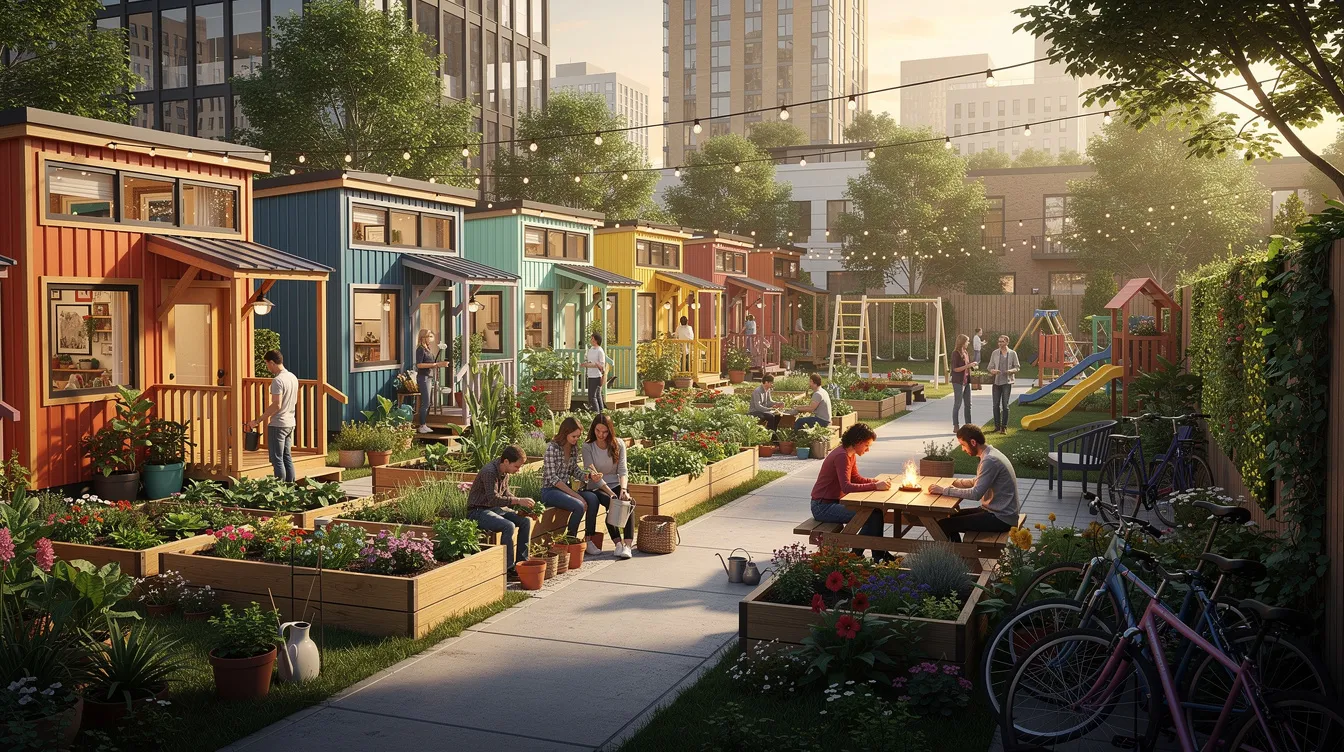
Orlando Lakefront and similar developments have created a model for how a major city can support the tiny living lifestyle, reflecting some of the best tiny house communities in Florida. Living in tiny home communities fosters strong social connections among neighbors, and residents in these communities enjoy reduced upkeep and maintenance.
Best For
Families seeking warm climate with urban amenities and a tiny house lifestyle-theme parks, nature, and neighborhoods all in one.
Key Strengths
- Multiple established tiny house communities with common areas and shared amenities like pools and gardens
- Tiny home communities reduce utility bills significantly, and many lease agreement options includes water and other basics
- Year-round warm weather supports outdoor living
- Tourist economy creates diverse housing and rent options
Possible Limitations
- Hurricane risk requiring specific building considerations and structural quality standards
- Tourist-driven economy can affect housing costs in popular areas
- Zoning for tiny homes is still evolving at the municipal level

7. Landers, California
Landers sits in the high desert of San Bernardino County, and it’s unlike any other city on this list. This small town has the highest concentration of tiny home listings of any community in the country, with many homes clustered near the smallest legal house size requirements that still meet building codes.
Why It Stands Out
Landers, CA has 28% tiny home listings-meaning more than one in four properties on the market qualifies as a tiny home. That density creates a built-in community of like-minded residents.
Best For
Those seeking affordable off-grid or rural tiny house living with space, privacy, and a desire for freedom from conventional development rules.
Key Strengths
- Over 25% of listings are tiny homes, creating a strong tiny home community by default
- Very affordable median prices around $180,000-far below California’s urban markets
- Desert landscape offers room, privacy, and potential for off-grid life
- Unincorporated area means fewer restrictive zoning rules
Possible Limitations
- Remote location with limited urban amenities-no general store on every corner
- Desert climate requiring specific building considerations (insulation, water, cooling)
- Limited financing and insurance options for non-standard dwellings
Quick Comparison of the Best Tiny House Friendly Cities
City | Best For | Min. Size | THOW Allowed? |
|---|---|---|---|
Fresno, CA | Comprehensive tiny house regulations in California | 100 sq ft | Yes |
Rockledge, FL | Designated tiny house community living | 170 sq ft | In pocket neighborhoods |
Durango, CO | Mountain living with outdoor recreation | Varies | In specific parks/communities |
Asheville, NC | Arts and culture with alternative housing | Varies | In RV parks only |
Austin, TX | Urban professionals wanting innovative communities | 150 sq ft | No (treated as RV) |
Orlando, FL | Families seeking established tiny house neighborhoods | Varies | In communities |
Landers, CA | Affordable off-grid tiny house living | Flexible | Yes (rural/unincorporated) |
How to Choose the Right Tiny House Friendly City
Choose Based on Zoning Regulations
The single biggest factor is whether your target city allows your type of tiny house. A tiny house on wheels faces entirely different rules than one on a permanent foundation. In cities like Austin, THOWs are treated as RVs and can’t serve as permanent dwellings in most residential zones. In Fresno, they’re explicitly allowed as backyard cottages with a zoning ordinance to back it up.
Many tiny house-friendly cities have reduced setbacks and lot-size requirements, but roughly 61% of small and mid-sized municipalities still require special permits or hearings for ADUs. Research the specific code before you commit any money.
Choose Based on Climate and Lifestyle Preferences
Desert living in Landers is a fundamentally different life than mountain living in Durango or coastal Florida in Orlando. Consider year-round weather, outdoor activities, and how climate affects your building needs-insulation, hurricane straps, snow loads, or cooling systems, especially if you’re planning on tiny houses on wheels for sale that you might move between regions.
Choose Based on Community and Development Options
Do you want an established park with neighbors, or a standalone property in the country? Communities like Circle Pond Tiny Community emphasize closeness to nature and community spirit, while Tiny Tranquility in Oregon is designed for sustainable living, echoing many themes from tiny houses as a complete guide to small-scale living. Cedar Springs Tiny Village is Ohio’s first exclusive tiny living community. Beyond these cities, resources on tiny house communities in Colorado and the best tiny house communities in Florida show how varied these developments can be. Ocean View, HI has tiny homes with a median list price of $102,250-proof that the market is broad.
Tiny home communities often include shared amenities like pools and gardens. That trade-off between private square footage and shared living space is what makes the lifestyle work for so many people.
Which City Is Best for You?
- Choose Fresno, CA if you want comprehensive regulations with urban access in California
- Choose Rockledge, FL if you prefer warm weather with planned tiny house communities and shared spaces
- Choose Durango, CO if outdoor recreation and mountain living are priorities
- Choose Asheville, NC if arts, culture, and a creative community matter most
- Choose Austin, TX if you want city amenities, a park, and innovative village-style development
- Choose Orlando, FL if you need established neighborhoods with family-friendly amenities
- Choose Landers, CA if you want the most affordable tiny house market with maximum freedom
Final Thoughts
The best tiny house friendly city depends entirely on your priorities-climate, regulations, community, property costs, and the kind of life you want to create. If you’re still shaping your vision, you can explore tiny house tips, galleries, and community support or dive into advice that helps you embrace tiny living with practical ideas. Tiny home living encourages a minimalist lifestyle and environmental stewardship, but tiny home communities also face challenges like economic adaptation and evolving local rules.
The tiny house movement continues growing, with a growing number of cities adopting friendly policies each year. But the benefits of living small only materialize when you’ve done the research on local building codes and many zoning laws that govern where and how you can build.
Before you sign a lease agreement or buy land, visit your top choices in person. Walk the neighborhoods. Talk to residents. Understand whether the local culture matches your vision for the future. The tiny homes offer something that traditional housing often can’t-a simpler, more intentional way of living. But the right location is what turns that dream into reality.