



Figuring out the right septic system for a tiny house is one of the least glamorous-but most critical-decisions you’ll make during your build. Get it wrong and you’re facing fines, failed inspections, or a property you can’t legally occupy. Get it right and you’ll have a reliable wastewater setup that lasts decades with minimal hassle.
This guide covers everything from conventional septic tanks to composting toilets and gray water systems, with real cost figures, current regulations, and practical installation advice for 2026.
Key Takeaways
Tiny houses can use full septic systems, compact septic options, or waterless toilets paired with grey water systems. Your specific situation-whether you’re on city water and grid power or fully off grid on rural land-determines which route makes the most sense. Most people building tiny homes in 2026 have three viable paths, and the ideal septic system for a tiny house depends on local regulations.
- Connect to an existing house septic or sewer line – cheapest if you’re placing a backyard tiny house behind a main dwelling.
- Install your own septic system – a dedicated tank and drain field sized for one to two occupants, required for standalone tiny homes on permanent foundations.
- Pair composting toilets with a gray water system – often the most affordable and practical option for off grid tiny house living, eliminating black water entirely.
Local codes and permits from county health departments will largely decide what’s legal. Regulations have been updating rapidly through 2024–2026, with more jurisdictions formally recognizing tiny houses as dwelling units.
In terms of cost, simple tiny septic or grey water systems start around $2,000–$4,000 for a DIY installation. Full engineered systems run $8,000–$20,000 or more. A composting toilet combined with a small system for gray water is often the cheapest path for off grid builds.
Understanding Tiny Houses, Wastewater & Septic Basics
The tiny house movement has surged since around 2015, driven by rising housing costs, sustainability goals, and the appeal of grid living on your own terms. By 2025, the market had grown substantially, with jurisdictions from Washington State to San Diego County creating formal building code pathways for tiny homes.
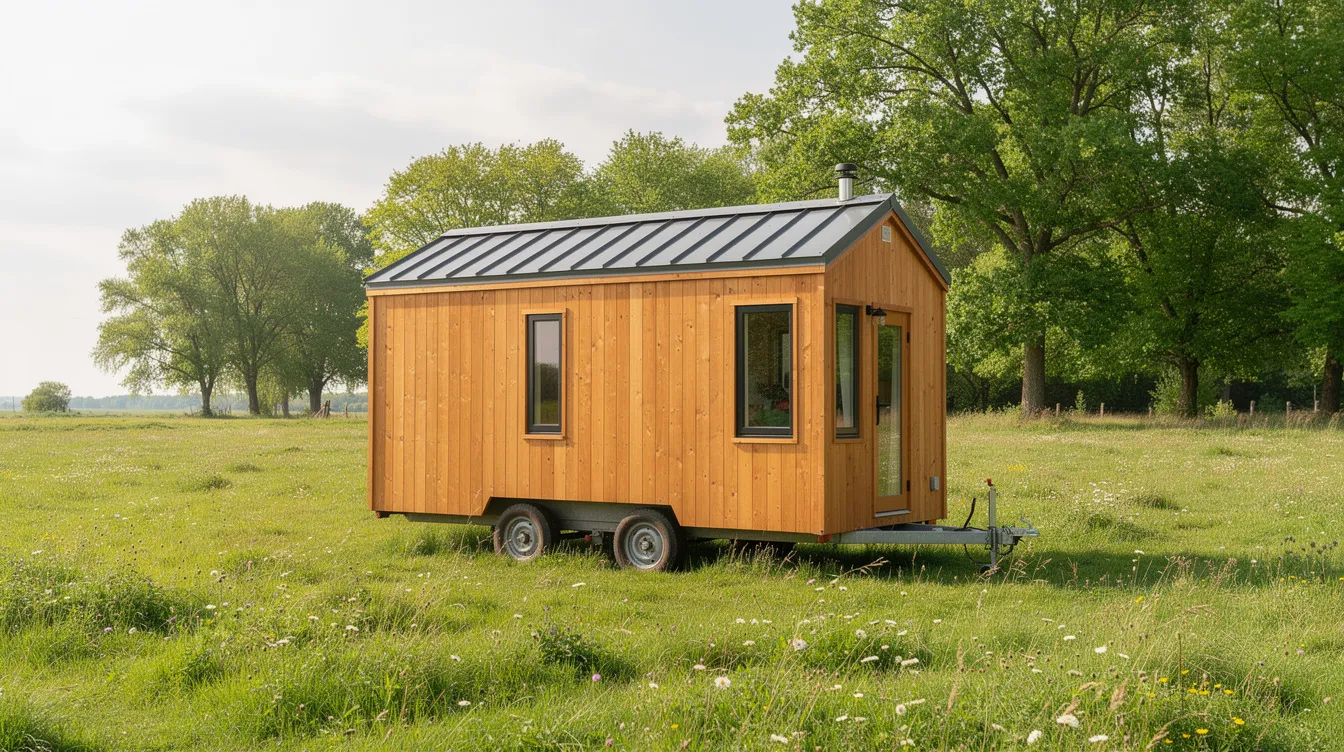
A tiny house typically ranges from 100 to 400 square feet. Tiny houses on wheels (THOWs) are treated differently from tiny homes on permanent foundations-and this distinction matters for septic planning because zoning and wastewater rules often hinge on whether your house is classified as an RV, an ADU, or a primary dwelling.
There are two types of wastewater to deal with. Black water comes from toilets and contains pathogens. Gray water comes from your shower, bathroom sink, and washing machines. Note that kitchen sink water is classified as black water in some jurisdictions due to grease and food particles.
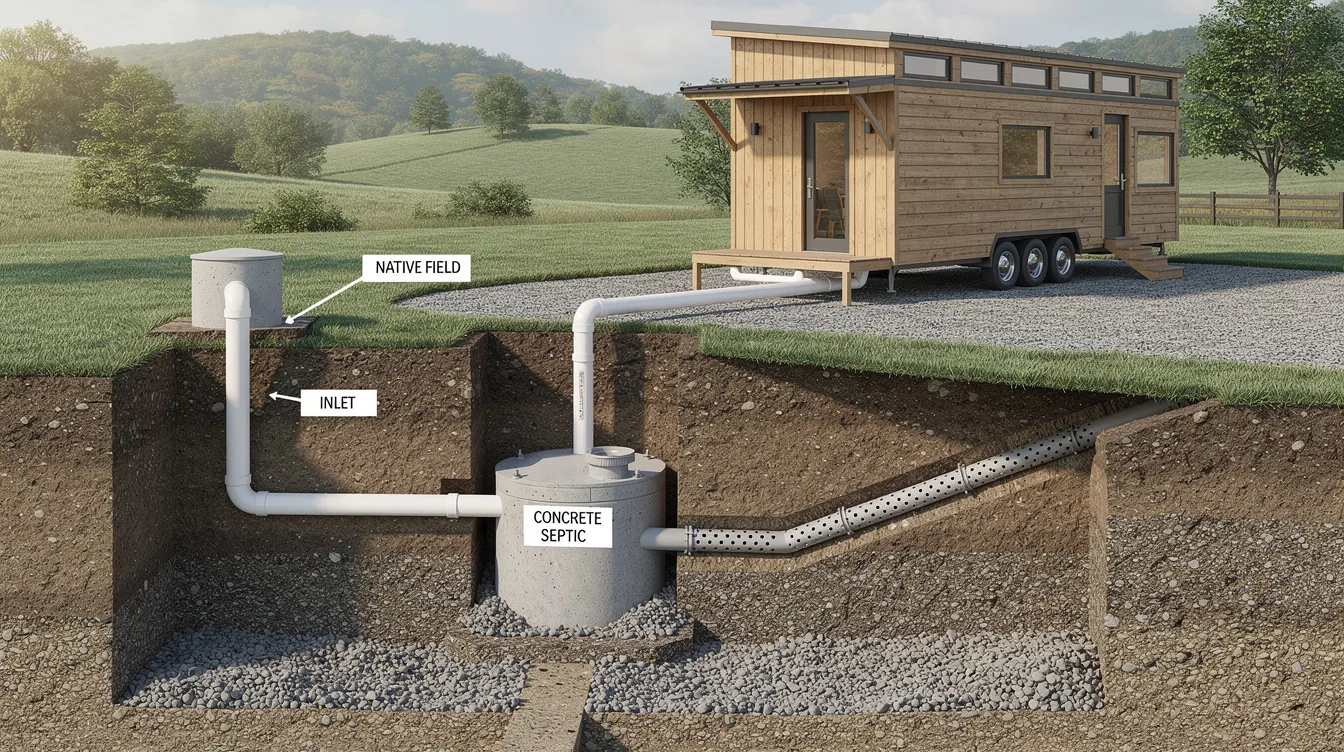
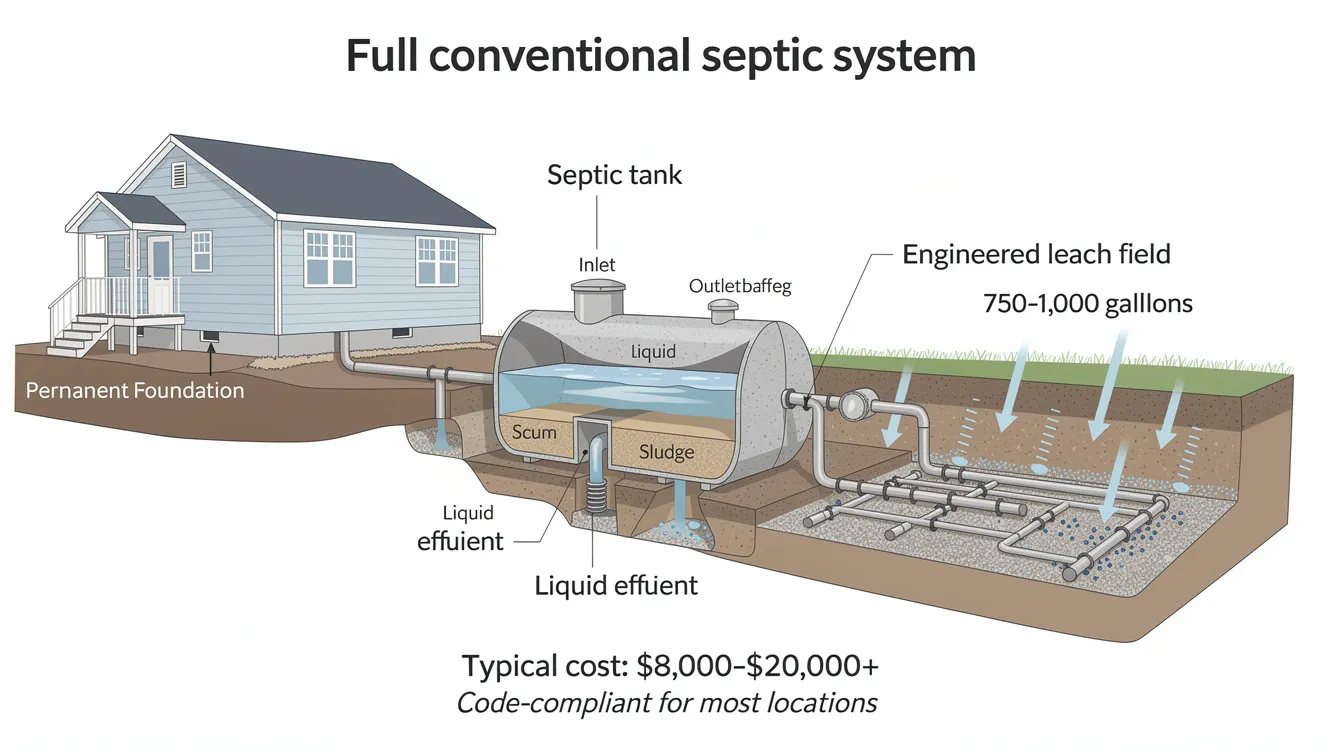
A traditional septic system uses a buried waterproof tank with inlet and outlet baffles. Solids settle as sludge, and liquids flow out through a sewer pipe to a drain field or leach field, where soil microbes provide final treatment before waste water reenters the ground. Tiny houses typically use 60 gallons of water per person daily-far less than a standard home’s 150–250 gallons-but must still follow the same health rules.
Do Tiny Houses Need a Septic System?
The direct answer: sometimes yes, sometimes no. It depends on your location, zoning classification, and whether the tiny house serves as a primary residence.
Here are the three most common scenarios:
- Backyard tiny house behind a main home – Usually must tie into the existing septic or municipal sewer. Most counties treat this like adding a bathroom to your property.
- Rural off grid tiny home as primary residence – Typically requires a permitted septic system or an approved alternative like composting toilets plus a gray water setup. This is where you’ll need to plan carefully.
- Travel-oriented THOW at RV parks – Can use RV-style hookups and dump stations. No dedicated septic needed, though holding tanks require regular vacuum pumping for wastewater disposal.
Many US states, Canadian provinces, and councils in the UK, Australia, and NZ classify tiny homes with toilets and showers as “dwellings,” triggering full septic or sewer requirements. San Diego County, for example, has recognized THOWs as dwelling units since September 2025, requiring an approved wastewater disposal plan.
Even if you install composting toilets to eliminate black water, local authorities may still require a legal gray water system for shower and sink waste. Check your county environmental health department and state on-site wastewater codes before you build.
Septic System Options for Tiny Houses
The best tiny house septic options for sustainable living include conventional tanks, aerobic treatment units, and composting alternatives. Here’s how they compare for tiny homes:
- Full conventional septic system – A tank (typically 750–1,000 gallons) plus engineered leach field. Reliable and code-compliant virtually everywhere. Cost: $8,000–$20,000+. Suitable for permanent foundations.
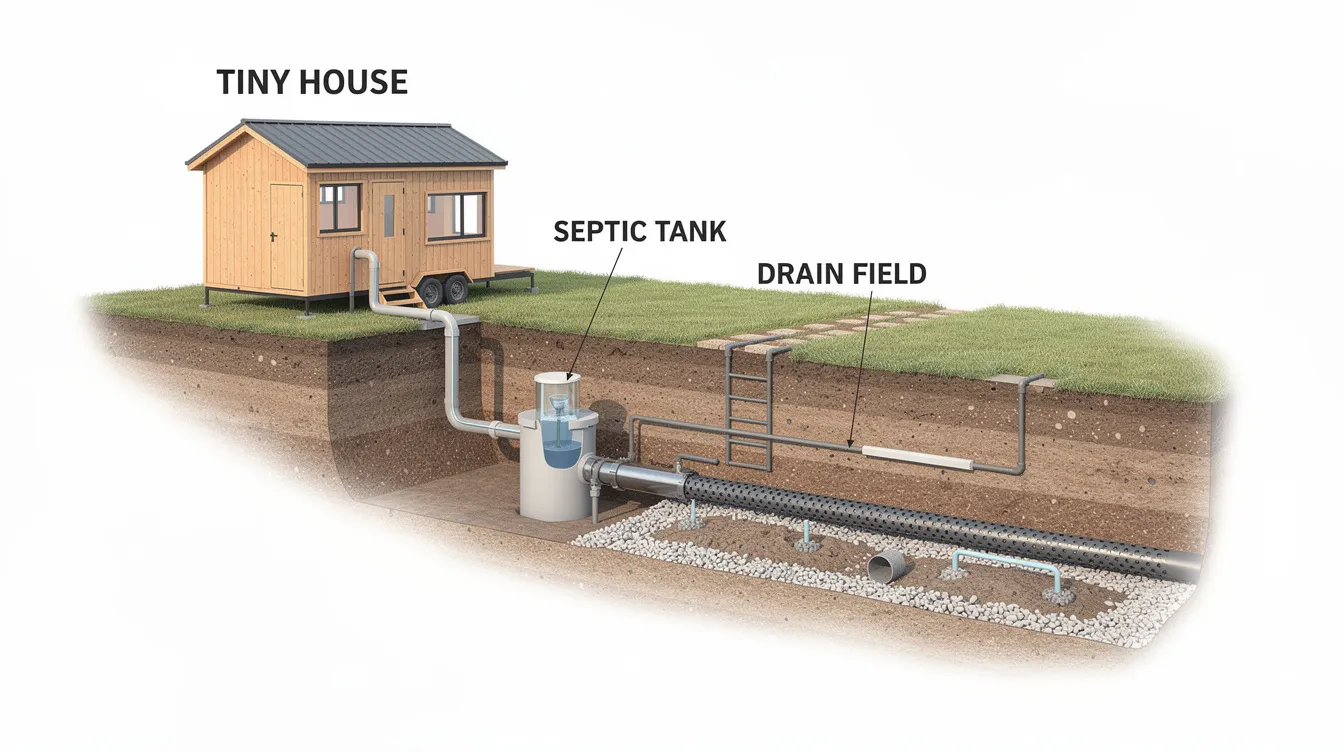
- Compact or “mini” septic tank + small drain field – Sized to actual occupancy rather than standard bedroom counts. Lower cost, smaller footprint. Requires soil evaluation and local approval.
- Holding tank – Collects all waste with no soil discharge. Must be pumped regularly, similar to an RV setup. Useful for temporary placement but expensive long-term due to hauling.
- Composting or waterless toilet + permitted gray water system – Eliminates black water entirely. The grey water system for a tiny house portion handles sink and shower liquids through a small buried infiltration system. Cost: $1,000–$4,000 DIY. Ideal for off grid life.
Aerobic treatment units treat effluent actively, resulting in higher-quality discharge, but aerated wastewater treatment systems require electricity and regular maintenance. They also require council approval for installation, making them uncommon for a single tiny house unless serving a tiny house village or multiple units.
Conventional Septic Systems for Tiny Houses
Small-scale conventional septic systems are optimal for permanent tiny homes built on foundations. In most jurisdictions, these are treated like standard residential dwellings and must meet the same on-site wastewater codes.
Tank sizing is typically based on wastewater flow and number of bedrooms. Virginia requires a minimum 750-gallon tank for a one- or two-bedroom dwelling. New Jersey mandates at least 1,000 gallons for single-family homes. These minimums often exceed what a tiny house actually needs, but codes don’t allow you to drop below them without a variance.
Common setup options include:
- Tie into existing house septic – Adding a bathroom and ensuring the tank and leach field handle the extra load. Confirm sizing with an engineer.
- Dedicated system – Separate tank and drain field, sometimes shared between multiple tiny homes on one property to justify cost.
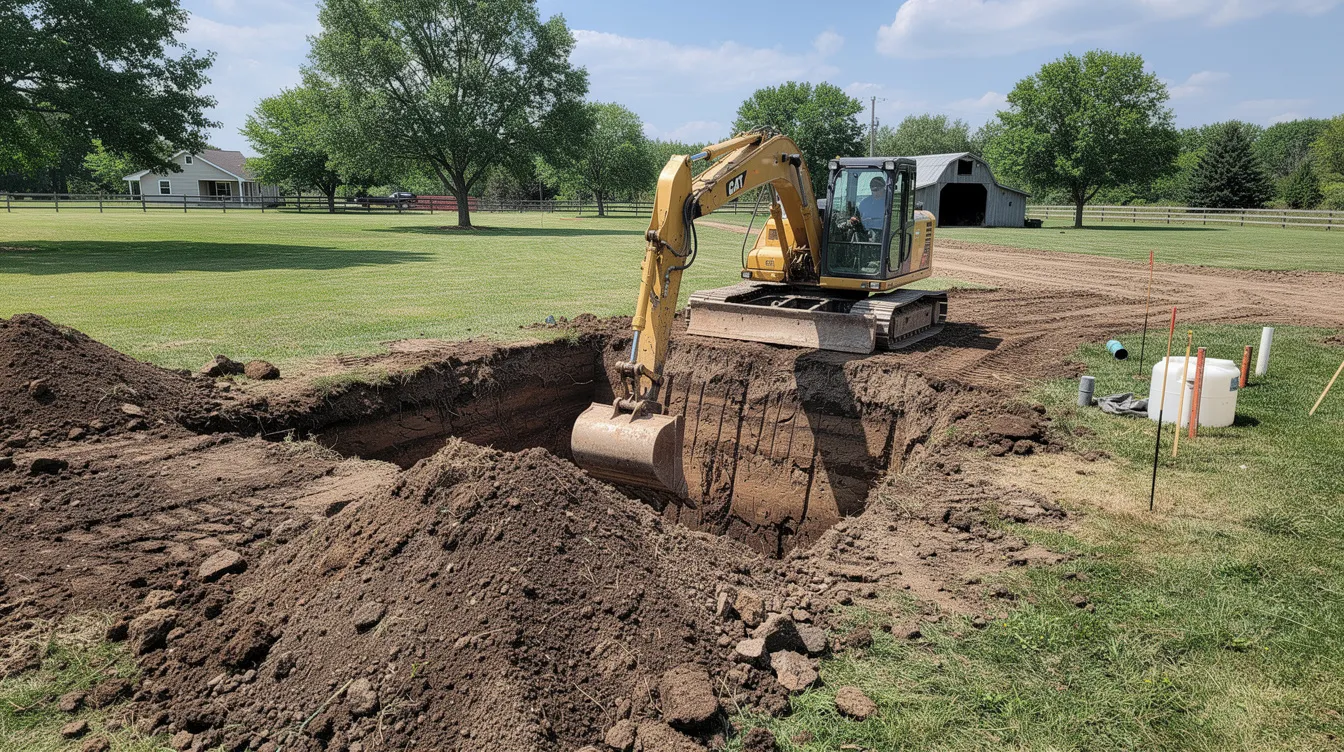
A typical installation includes excavating for the tank and constructing the drain field. You’ll need a percolation test, soil evaluation, and permits from the local health department. The efficiency of a drain field depends on the soil’s ability to absorb water, so poor soil conditions can significantly increase costs.
Realistic 2026 cost ranges: design and permits run $1,000–$3,000, while installation costs $7,000–$20,000+ depending on soil conditions, region, and whether a pressure tank or pump system is needed. These figures line up with broader Enviro septic system cost considerations, including installation quality and long-term maintenance. Septic systems must be oversized to handle unexpected water influx from guests or heavy use days.
Septic-Like Solutions for Off-Grid Tiny Homes
For tiny houses that are fully off grid-using wells, rainwater collection, or hauled water with no municipal sewer access-the approach shifts dramatically. These builds typically combine waterless toilets with carefully designed gray water disposal, drawing on a range of off grid sanitation ideas and systems.
Composting toilets eliminate black water waste entirely, making them ideal for full-time tiny living. Our guide to the best composting toilets for tiny houses explores models that fit different layouts and power setups. The 2026 market offers three main types:
- Self-contained units – Everything in one compact box, suitable for small space installations
- Central batch systems – Remote composting chamber, often placed below the house
- Urine-diverting models – Separate liquids from solids for faster composting and less odor
All composting systems need venting, a small fan (12V or 120V), bulking material like sawdust, and regular emptying. Finished compost must be aged and handled according to local rules-never spread where animals or children can access it. Keep it secure and covered during the composting process.
Incinerator toilets burn waste, leaving sterile ash behind. They require 1–2 kWh per cycle for operation, which is significant on solar. Incinerator toilets are suitable for part-time tiny homes or seasonal cabins where composting volumes wouldn’t reach critical mass.
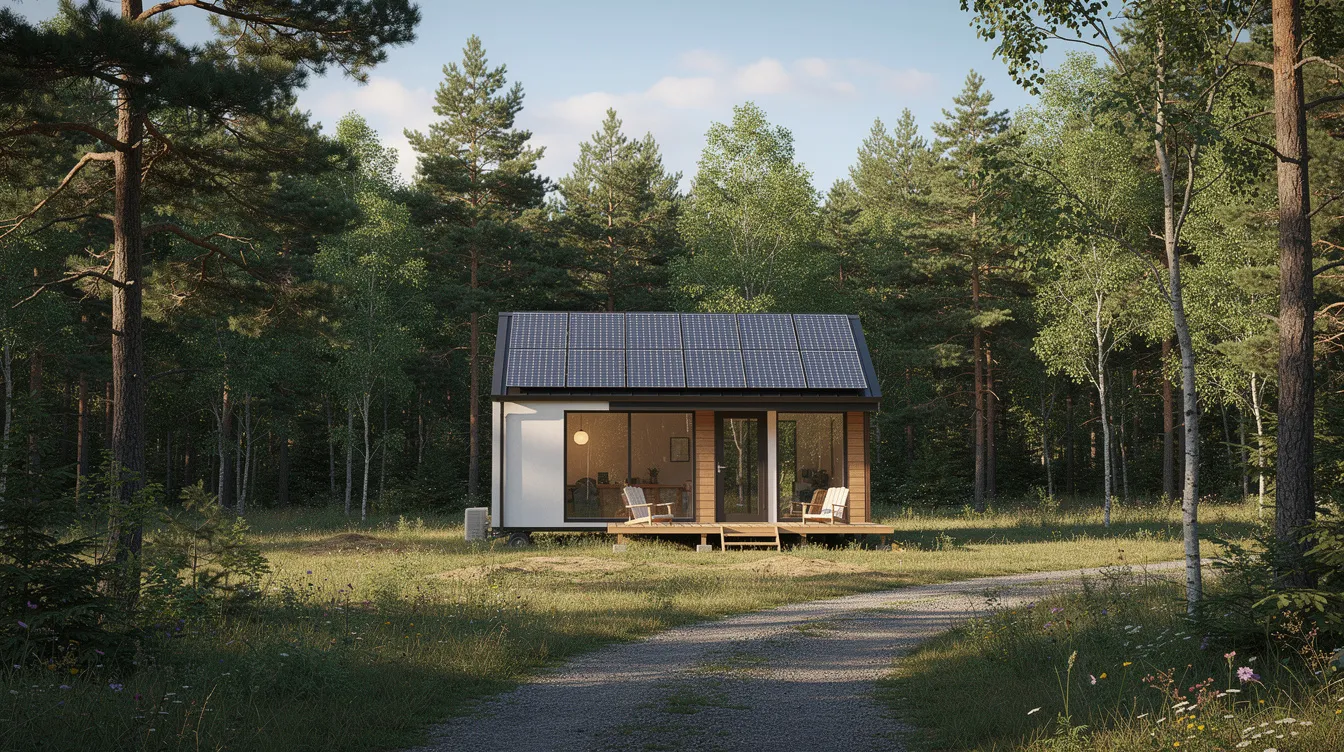
Off grid constraints shape your decision. With limited solar panels and batteries providing perhaps 5–10 kWh per day of electricity, energy-hungry systems become impractical. Water conservation is essential when your water supply comes from rainwater or hauled water tanks, so reducing wastewater generation through waterless toilets is a smart middle ground and should be planned alongside your tiny house water supply options.
Designing a Gray Water / Grey Water System for a Tiny House
Gray water septic systems handle wastewater from sinks and showers-everything except toilet waste. From a tiny house, this typically includes the shower, bathroom sink, and sometimes washing machines. Many 2024 IPC code updates exclude kitchen sink and dishwasher water from gray water definitions due to grease, so check your local rules.
Basic gray water principles fit into a broader set of tiny house waste management options that also include full septic and composting toilet approaches:
- Keep hair, food scraps, and harsh chemicals out of the system
- Use biodegradable soaps and low-salt detergents-these are recommended for gray water systems to protect soil and plants
- Minimize stagnation with short pipe runs and proper venting to prevent odors
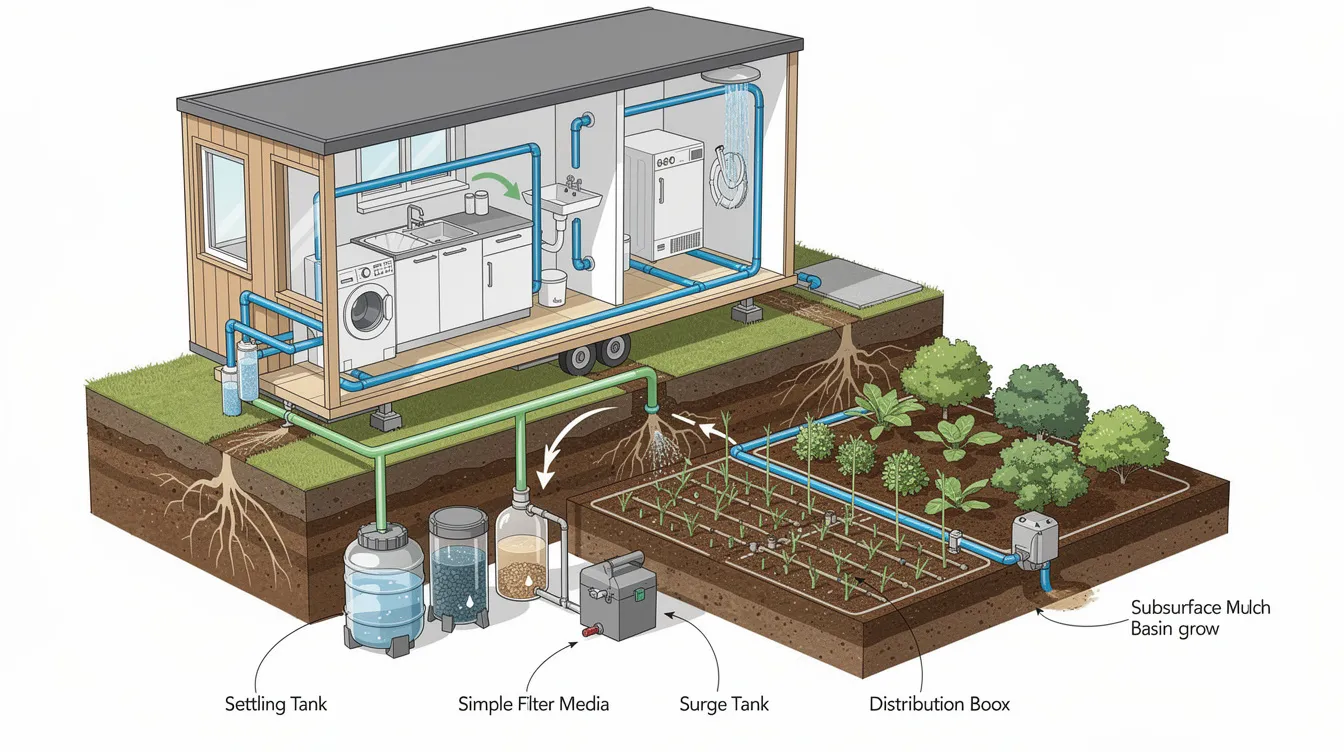
A typical gray water system can use 40 gallons per day for one to two occupants. Common tiny house gray water options include:
- Direct irrigation – Mulch basins feeding trees and landscaping where codes allow surface application
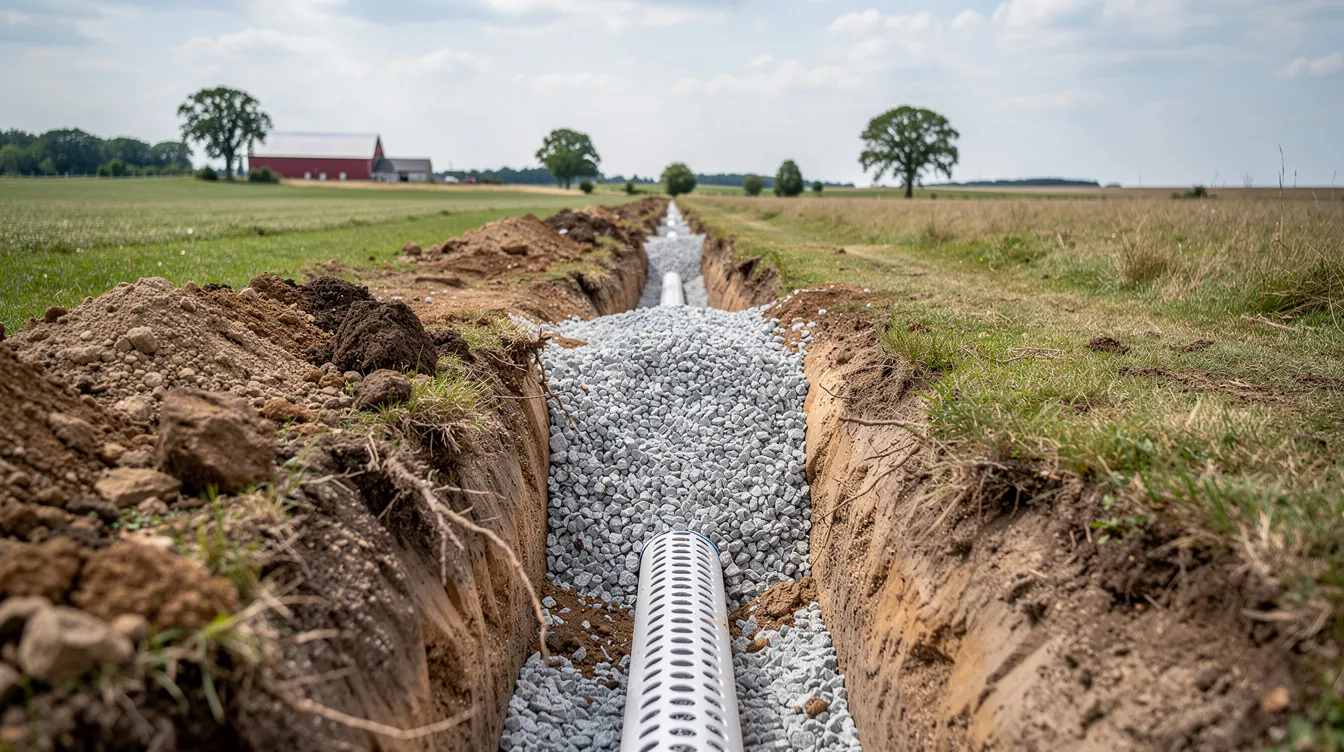
- Gravel trench or french drain – A simple hole filled with gravel, sized for low daily flow, dispersing water below ground
- Barrel-based system – Two 55-gallon drums in series: the first barrel catches solids and grease, and the second barrel distributes clarified water to a short leach line
Gray water systems can reduce fresh water demand significantly when reused for irrigation. Gray water septic systems only handle lightly used water, so they’re inherently simpler than full septic. However, you’ll still need to maintain minimum setbacks from wells, property lines, and waterways. Most jurisdictions require subsurface dispersal only-no surface discharge.
Planning & Installing a Compact Septic or Gray Water System
Consider a practical example: a 200-square-foot off grid tiny house built in 2025 on rural land, using a composting toilet and a small septic tank system for one bathroom paired with a buried gray water system. The owner produces roughly 40 gallons of gray water daily from a low-flow shower, sink, and compact washing machine. No hot water heater waste or kitchen sink water enters the gray water line since the kitchen drain feeds a separate grease trap.
Step-by-step planning:
- Confirm your tiny house classification (RV, ADU, primary dwelling) with local authorities
- Estimate daily water usage-ensure you have enough water for daily needs while minimizing wastewater
- Choose between full septic, compact septic, or grey water plus waterless toilet based on your budget and what codes allow
- Plan your water system, including drinking water filtration and fresh water storage, alongside the wastewater design
For a small buried gray water system serving one to two people:
- Dig a pit or trench approximately 7 feet long, 4 feet wide, and 5 feet deep with a gravel base
- Install a 55-gallon barrel or small poly tank with drilled distribution holes
- Lay 10–20 feet of perforated ABS pipe in gravel to disperse water without surfacing
- Maintain proper slope (about 1–2% fall) for gravity flow from the house
Septic systems must be installed at least 20 feet from water sources, including wells and streams. Proper venting and clean-outs are essential for maintenance access. Avoid soil compaction over the leach field-never park or drive over it.
In many regions, a licensed installer and inspected permit are still required even for a small system. Don’t skip this step to save money; the fine for unpermitted work can far exceed the permit cost.
Costs, Maintenance & Lifespan for Tiny House Septic Systems
Septic and gray water systems are long-term infrastructure. Good design saves money over the 20–30 year life of a system.
2026 cost ranges:
System Type | Typical Cost Range |
|---|---|
Tie-in to existing septic/sewer | $2,000–$8,000 |
New full septic for tiny home | |
Compact gray water + composting toilet (DIY) | $1,000–$4,000 |
Permit + soil testing | $700–$2,000 additional |
Maintenance is recommended for small-scale septic tanks on a regular schedule: |
- Pump conventional septic tanks every 3–5 years, though proper bacterial action can reduce the need for pumping a septic tank for 20–30 years in low-flow situations
- Inspect baffles, filters, and pump components annually
- For composting toilets: mix contents, add bulking material, and empty finished compost monthly to quarterly
- Clean gray water filters and flush lines regularly, monitoring for odors or surfacing
Drain fields typically last 20–30 years or more if not driven over or overloaded. Plastic tanks and barrels are long-lived when UV-protected and properly bedded. The idea is to invest in quality installation upfront rather than cutting corners that lead to early failure.
Regulations, Permits & Environmental Considerations
Regulations are changing quickly as of 2024–2026. More municipalities now formally recognize tiny houses, and international standards like ISO 18998:2026 are shaping future code adoptions for decentralized water reuse systems.
Key regulatory points to research for your property:
- Zoning classification – Is your tiny house an RV, dwelling, or ADU? This determines which wastewater codes apply
- On-site wastewater rules – Minimum lot size, soil percolation requirements, setbacks from wells, creeks, and property lines
- Gray water reuse permissions – Whether allowed, and under what conditions (subsurface only, no kitchen water, etc.)
- Composting toilet legality – About 20 US states explicitly permit them; others restrict use to supplemental or rural applications
Local regulations may require checking with health departments for waste disposal approval. Local codes often require permits for septic systems, and permitting requirements for septic systems vary by state and locality. Failure to comply with septic codes can lead to fines and legal issues-sometimes including mandatory removal of unpermitted systems.
Environmental best practices include avoiding discharge near streams or wetlands, choosing low-phosphate cleaning products to protect soil biology, and ensuring gray water irrigation doesn’t oversaturate any single area. Keep animals away from dispersal zones.
Talk with your local environmental health officer or council planner early in the design process. This single step can save thousands in costly redesigns.
Choosing the Right Septic or Toilet Setup for Your Tiny House
Your decision comes down to matching systems to your lifestyle, site conditions, and budget. Local health departments determine whether a conventional septic system is suitable for your property.
Scenario | Recommended Setup |
|---|---|
Full-time on rural land, no existing house | Composting toilet + gravity-fed gray water system, or full compact septic if budget allows |
Backyard ADU behind main dwelling | Tie into existing septic tank after confirming capacity with an engineer |
Traveling THOW at RV parks | Holding tank with dump station access; no dedicated septic needed |
Seasonal cabin or studio | Incinerator toilet + simple gray water trench; minimal winter maintenance |
Personal priorities matter. If lowest upfront cost is the point, composting plus gray water wins. If you want maximum convenience and never want to deal with emptying a composting bin, a conventional septic is fine-just budget accordingly. For those prioritizing sustainability and nutrient recycling, composting systems let you return organic matter to the soil in the future. |
Design your septic and water system at the same time as your floor plan, solar setup, and overall energy plan. Treating wastewater as an afterthought is the most expensive mistake in tiny house building.
FAQ: Septic Systems for Tiny Houses
These frequently asked questions address practical concerns that tiny home owners commonly raise in 2026, covering topics not fully explored in the sections above.
Can I legally live full-time in a tiny house with only a composting toilet and no septic?
Legality varies widely. Some rural counties allow certified composting toilets plus an approved gray water system as the sole wastewater treatment for a dwelling. Others still require a septic tank for any house with sinks and showers, regardless of toilet type.
As of 2026, composting toilets are explicitly permitted in roughly 20 US states, and several European regions also recognize NSF-certified units in building code. However, enforcement is handled locally, so your county health department has the final word. Composting toilets are ideal for full-time tiny living in jurisdictions that accept them.
RV parks and some off grid communities operate under their own rules, separate from standard residential codes. Always confirm with your local authority before committing to a build, because what works in one county may trigger a drop-everything removal order in the next.
How big should a septic tank be for a tiny house?
Many codes base tank size on bedrooms, with common minimums around 750–1,000 gallons even for a 200-square-foot house. A 500–750 gallon tank is generally sufficient for 1–2 occupants from a technical standpoint, but you’ll need local approval to install anything below the code minimum.
An engineer might calculate design flow at 100–150 gallons per day for one to two people using low-flow fixtures, then select a compact tank accordingly. The average water use is 60 gallons per person per day in a typical tiny house, which supports smaller sizing arguments.
Even if you use a composting toilet and only generate gray water, you may still need a small tank or surge basin. Undersizing without permit approval risks system failure and legal issues.
What’s the difference between a gray water septic and a full septic system?
A gray water “septic” is a simplified infiltration system built only for relatively clean wastewater from showers, bathroom sinks, and laundry. It handles no toilet waste and usually excludes kitchen sink water. Gray water septic systems are smaller than traditional septic systems and generally cheaper to install.
A full septic system handles both black water and gray water combined. It must manage solids, scum, and pathogens in a larger tank with baffles and proper outlet filters, then feed a properly engineered leach field sized to the entire home’s wastewater volume.
Gray water systems still need careful design to protect ground water and avoid odors, but they’re often easier to permit in jurisdictions that recognize them separately from full septic.
How do freezing temperatures affect tiny house septic and gray water systems?
Cold-climate tiny houses in northern US states, Canada, or Scandinavia must bury lines below frost depth, insulate exposed pipe sections, and often use heat tape on vulnerable runs. This adds cost but prevents catastrophic freeze-ups.
Common strategies include locating the tiny house close to the tank to minimize exposed pipe length, skirting around wheels or trailer frames and insulating the under-floor space, and designing gray water systems with drain-back valves so above-ground sections can fill with air rather than freeze solid in deep winter.
Composting toilets may need extra insulation or a small heater to keep microbes active in very cold climates. Some owners accept slower composting during winter and simply secure extra capacity in their composting chamber. If you’re using solar and batteries for electricity in a cold climate, factor in the energy draw of heat tape and ventilation fans when sizing your system.