

Find Your Tiny House in Durango, Colorado
Durango has a handful of established tiny house communities, several dozen short-term rentals starting around $90 per night, and a local zoning framework that has accommodated accessory dwelling units since 2014. Whether you want to book a weekend stay in a 204-square-foot home two miles from downtown Durango or lease a serviced lot along the Animas River for $750 to $850 per month, this guide covers what’s available, what it costs, and what the regulations look like as of late 2026.
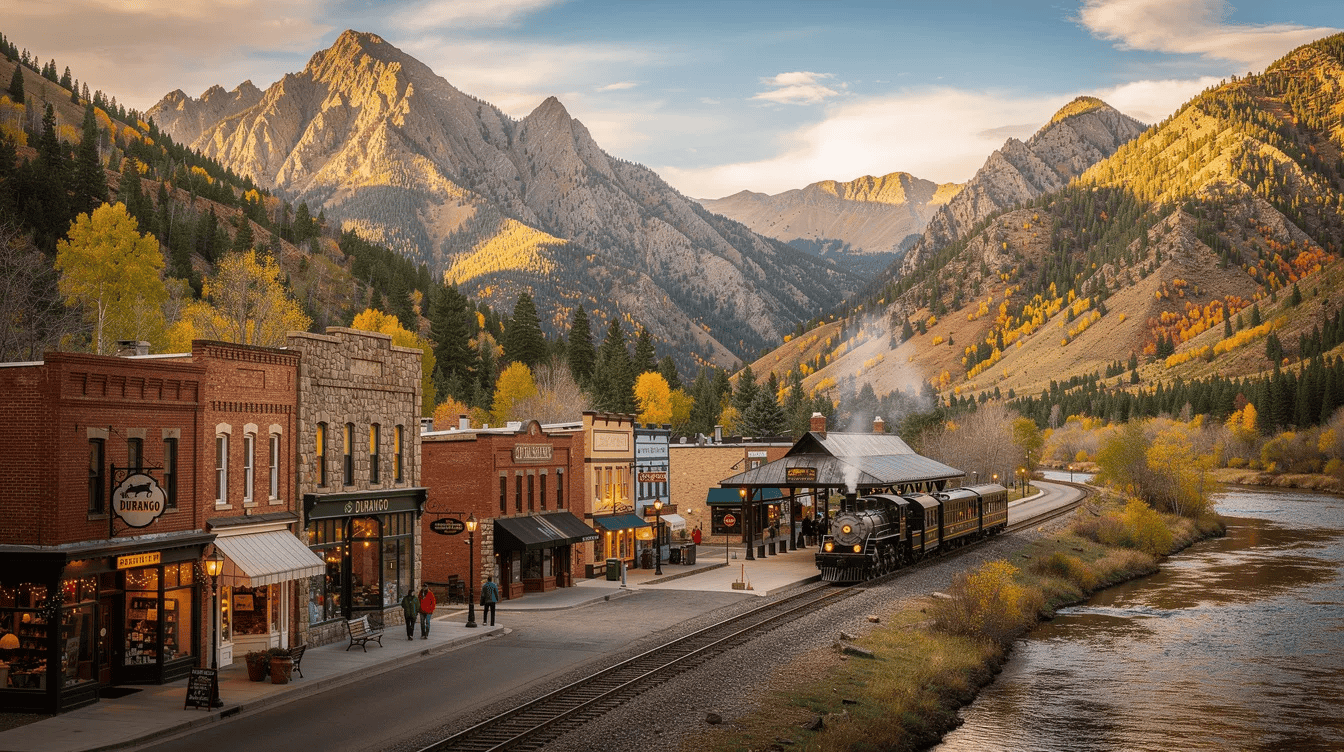
This is an informational resource from Explore Tiny House. We don’t sell or rent tiny homes. What follows is a practical overview of rentals, long-term living options, zoning basics, and climate-specific design considerations for anyone exploring tiny house life in Durango, Colorado. The town sits at 6,512 feet in the San Juan Mountains, surrounded by the San Juan National Forest, with Purgatory Resort 16 miles to the north, the Animas River running through its center, and a historic downtown that mixes Victorian architecture with a strong outdoor culture.
Why Durango, Colorado Is Perfect for Tiny House Living
Durango’s population is roughly 20,000 in the city proper and 55,000 across the metro area. That’s small enough to feel like a real community, large enough to support a hospital, a regional airport, Fort Lewis College (about 3,500 students), and a walkable downtown with restaurants, breweries, and galleries along Main Avenue. The town draws people who ski, mountain bike, raft, and hike as a default lifestyle, not a vacation activity. That orientation toward outdoor simplicity and sustainability makes tiny living a natural fit rather than an oddity.
Climate shapes every decision about tiny house design here. Durango averages 63.7 inches of snow per year, spread from October through May. January lows drop to around 13°F, while July highs reach roughly 85°F. Even in summer, nights cool down fast at elevation. That temperature swing matters: tiny house designs for cold climates should incorporate robust insulation and proper snow-load engineering, and heating efficiency becomes the single most important design variable for year-round comfort.
Compared to Denver or Boulder, Durango has less housing pressure from sheer population growth but still faces affordability constraints driven by tourism and limited buildable land. Compared to Pagosa Springs, 60 miles to the east, Durango offers more infrastructure, more services, and a more developed local economy. The pace of life runs slower than the Front Range, and the connection between town and nature is measured in minutes, not hours.
Types of Tiny Houses You’ll Find in Durango
Durango’s tiny home inventory includes vacation rentals, full-time residences on foundations, ADUs in established neighborhoods, and off-grid cabins on rural parcels throughout La Plata County.
Tiny House Vacation Rentals Near Downtown Durango
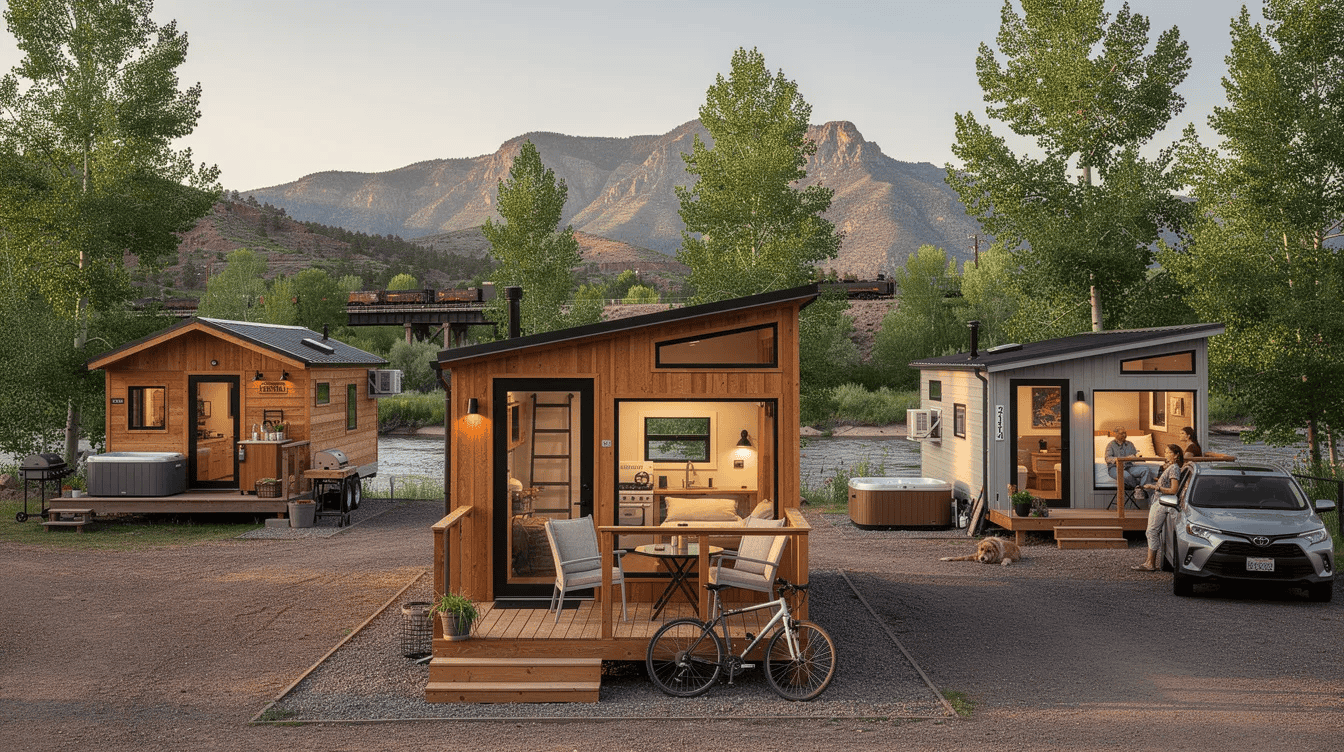
Short-term tiny house rentals in the Durango area typically range from 200 to 400 square feet. A tiny home near downtown Durango is 204 square feet and located two miles from the historic core. Another listing in Hidden Valley, about 15 minutes outside town, offers roughly 270 square feet with a full kitchen and bathroom. Guests at the tiny house in north Durango get Wi-Fi and air conditioning included.
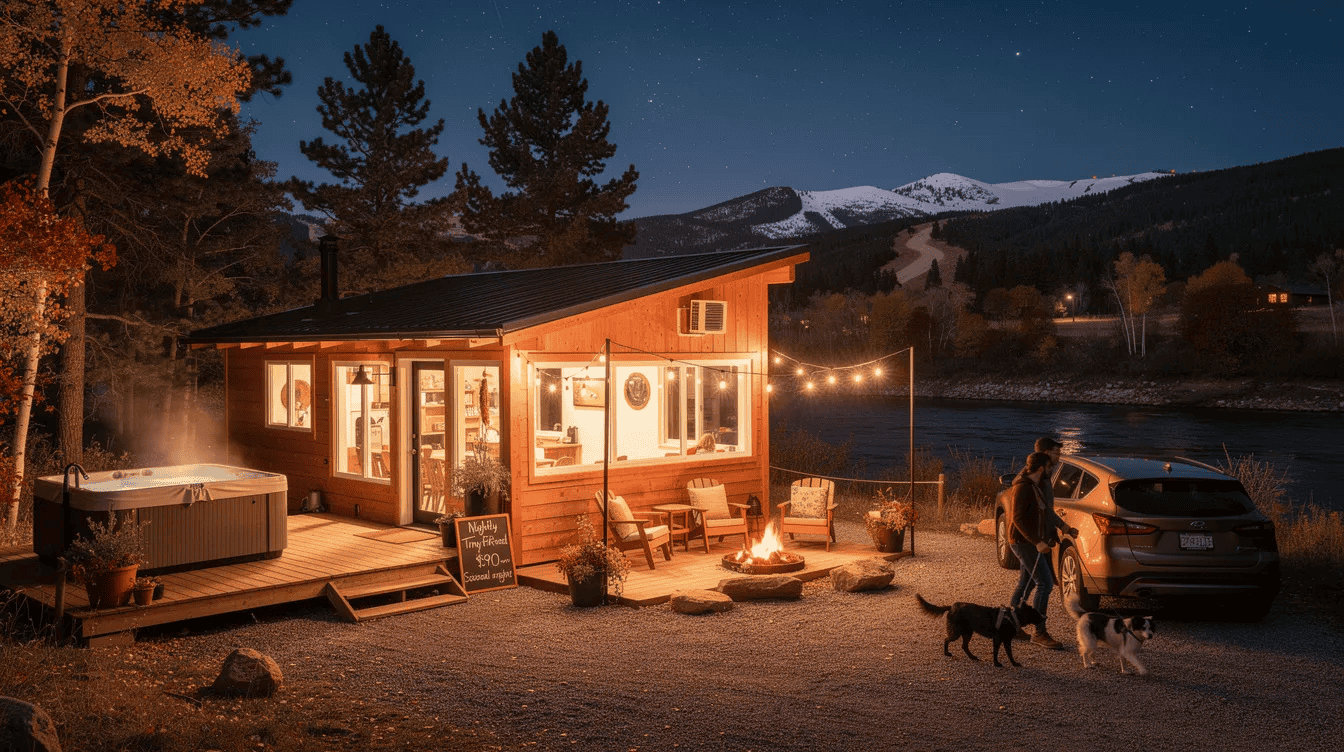
Most rentals offer full kitchenettes, a bedroom loft or convertible sleeping area, a private bathroom, heating, and a small deck or patio. Many sit within biking distance of the Animas River Trail, which runs nearly 13 miles through town, and several are a short drive from the Durango & Silverton Narrow Gauge Railroad depot. Nightly prices on platforms like Airbnb start around $90 before fees and taxes, with amenities like hot tubs, river access, and pet-friendly policies pushing rates higher.
Full-Time Tiny Homes and ADUs in Durango Neighborhoods
Some Durango residents live full-time in tiny homes on permanent foundations or in accessory dwelling units built behind primary homes. Tiny houses on permanent foundations are generally regulated like traditional single-family homes or Accessory Dwelling Units (ADUs). Homeowners considering this route can benefit from a deeper look at small ADUs and how to plan compact backyard homes, including permits, design, and financing. The City of Durango has been proactive in accommodating alternative housing options like ADUs; accessory dwelling units have been legal in Durango since 2014, with relaxed restrictions introduced in 2022 that eliminated minimum lot sizes for attached or integrated ADUs in most residential zones.
Common areas where small infill units or backyard cottages appear include neighborhoods near the Fort Lewis College hillside, the west side along Lightner Creek, and county parcels north of town. Typical full-time tiny homes in Durango run 300 to 600 square feet, with design features suited to the climate: steep roof pitches for snow shedding, double- or triple-pane windows, and efficient heating via mini-split heat pumps or small wood stoves.
Off-Grid and Rural Tiny Cabins Around Durango
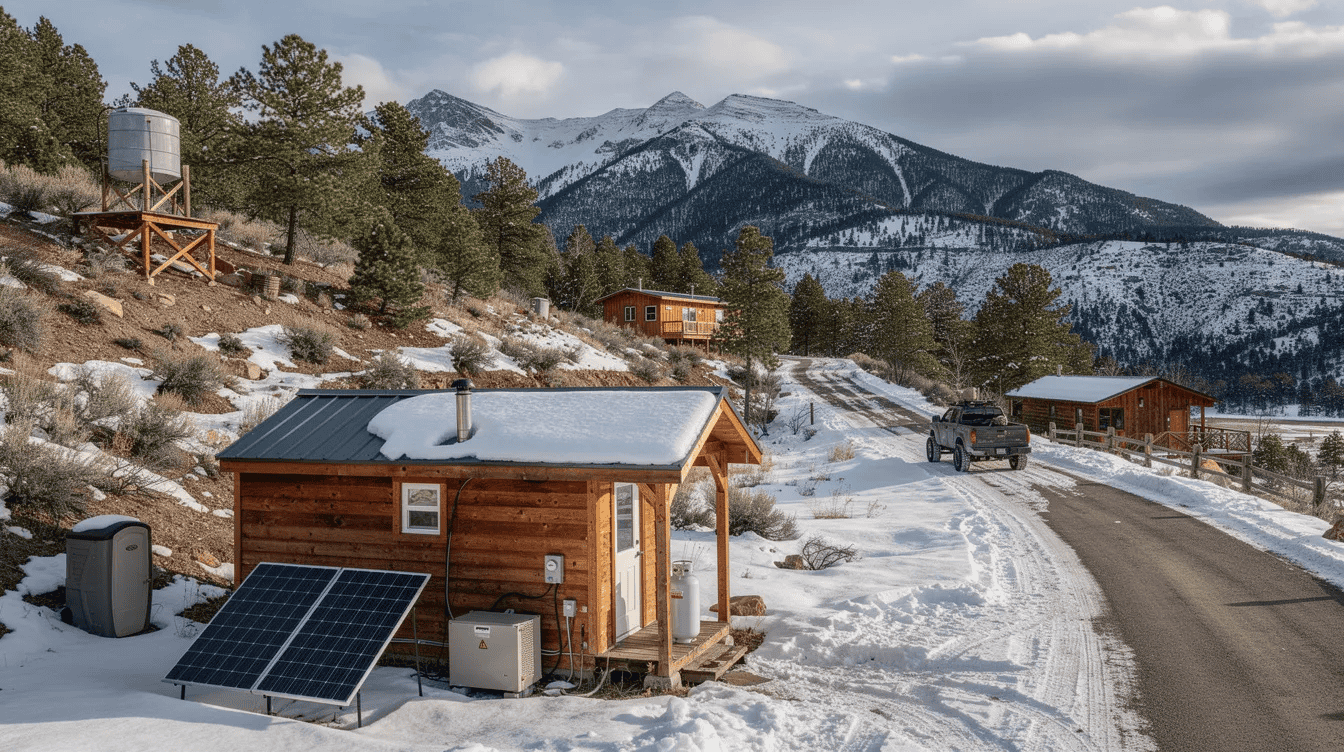
North toward Purgatory Resort, west toward Hesperus, and along La Plata County backroads, you’ll find tiny cabins operating partially or fully off-grid. Common off-grid features include solar arrays with battery storage, composting toilets, gravity-fed or hauled water systems, and propane for cooking and hot water. Durango averages about 5.3 peak sun hours daily, which supports solar generation, though winter snow cover reduces output during the months when energy demand is highest.
Seasonal access is the practical constraint. Snow-packed roads between November and April can require four-wheel drive or regular plowing, and some rural parcels become difficult to reach during heavy storms. Year-round living in a remote cabin north of town demands realistic planning around road maintenance, propane delivery schedules, and emergency access.
Tiny House Living in Durango: What It Actually Feels Like
A typical morning in a Durango tiny home might start in a sleeping loft six feet above the kitchen, with frost on the windows and coffee brewing on a two-burner stove. By 8 a.m. you’re on the Animas River Trail for a run. By afternoon, Purgatory is a 20-minute drive for skiing, or you’re pedaling singletrack at Horse Gulch. Evenings land at a brewery on Main Avenue or under dark skies at your own front door.
Adopting a minimalist lifestyle is central to living in a tiny house, emphasizing fewer belongings and simpler living, and many people find that embracing tiny living with practical tips and ideas helps them make that transition. Daily routines revolve around gear management: rotating skis, bikes, and rafting equipment through limited space, drying wet layers after a snow day, and storing seasonal items in under-bed compartments or exterior lockers. Storage and layout flexibility are crucial factors in designing functional tiny living spaces, and people who live tiny in Durango learn to think of outdoor storage and covered porches as extensions of their home’s square footage.
Noise and proximity depend on your site. A tiny home near downtown Durango means train whistles from the Narrow Gauge Railroad, weekend event crowds, and foot traffic. A rural property north of town means elk in the yard at dawn, dark skies, and silence broken by coyotes. Both have trade-offs: the town site offers walkability and internet reliability; the rural place offers solitude but may require satellite internet and a longer drive for groceries.
Four distinct seasons each bring their own texture. Summer days are warm and dry, but wildfire smoke can settle into the valley during July and August. Fall brings clear skies, golden aspens, and cooler nights. Winter means shoveling small decks and steps, managing ice on tiny roofs, and keeping pipes from freezing. Spring is mud season: wet ground, variable temperatures, and the transition from heating to ventilation.
Durango Tiny House Zoning, Rules, and Where They’re Allowed
Regulations for tiny homes in Durango depend on whether the structure is on wheels or on a foundation, whether it’s inside city limits or in unincorporated La Plata County, and what zone the property sits in. Legal requirements for tiny homes depend on whether they are on wheels or built on a foundation. Rules change; verify everything with the City of Durango planning department and La Plata County before committing to a purchase, build, or move.
Inside Durango City Limits
Zoning rules in Durango dictate allowable uses, setbacks, height, and other requirements for tiny houses. The city’s Land Use & Development Code defines what can be built where, including overlay zones like the River Corridor Overlay Zone along the Animas River and historic preservation districts on East Third Avenue.
Permanent tiny houses must comply with local residential building codes and secure proper permits. Any accessory building over 120 square feet requires a building permit, and new single-family residences or duplexes need full permits regardless of size. Colorado has adopted the 2018 International Residential Code with amendments for tiny house standards, which provides a regulatory framework for small dwellings on foundations.
Tiny houses on wheels may not be permitted for full-time residence unless located in designated communities or parks. Within Durango city limits, tiny houses are often classified as recreational vehicles or temporary structures under municipal zoning rules. The city’s code restricts full-time RV occupancy to licensed mobile home parks or RV campgrounds in most zones, so parking a THOW in a residential backyard for permanent living is generally not allowed. Contact the city planning department and ask about THOWs, ADUs, and RV occupancy rules for the specific zone you’re considering.
The ADU program, expanded in August 2022, removed minimum lot sizes for most residential zones and allows on-street parking to count toward parking requirements. Property owners in covenant-restricted neighborhoods can now seek city approval for ADUs even if HOA covenants would otherwise block them. For a deeper look at ADU regulations and design, see our guide to prefab ADUs.
La Plata County and Rural Parcels Around Durango
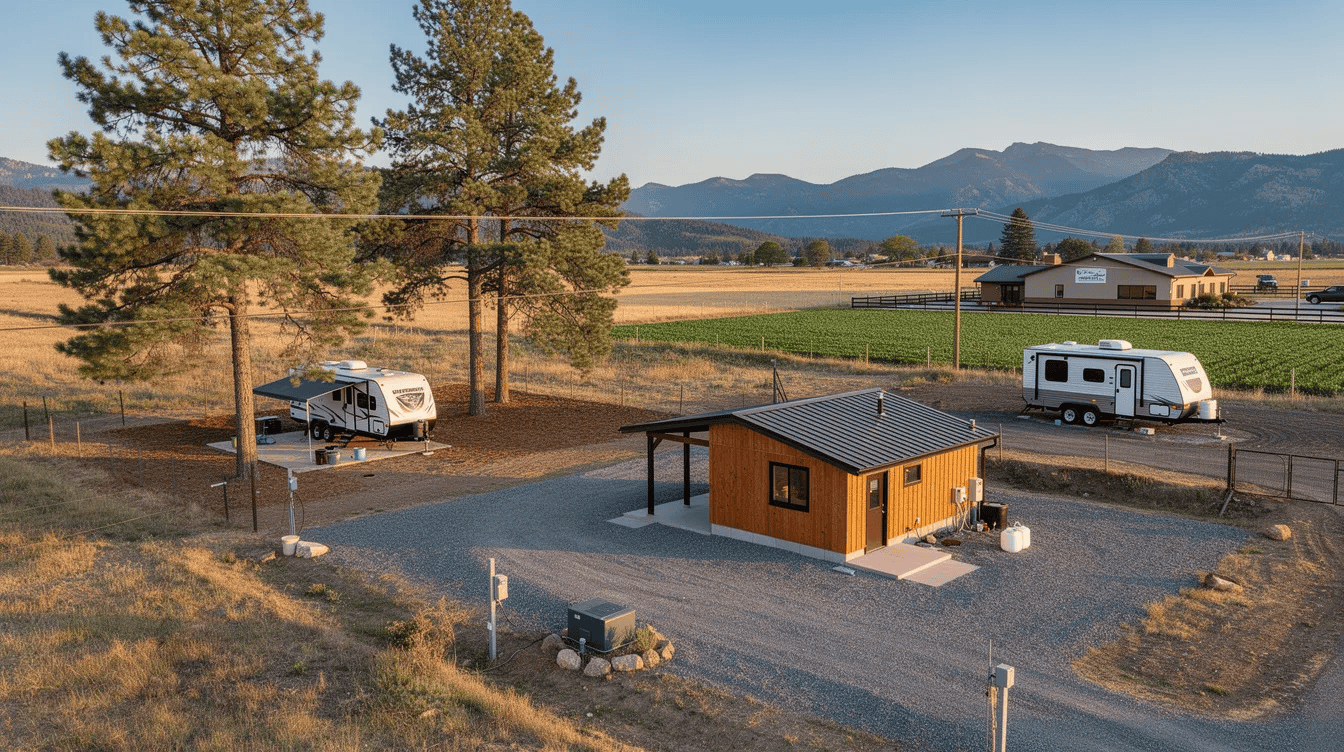
County rules differ from city rules in several ways. On larger agricultural or rural parcels, permanent small cabins on foundations face fewer density restrictions, though they still require building permits and must meet structural codes. Seasonal or accessory RV use is sometimes permitted on rural lots, but full-time THOW living outside a licensed park can run into building code, utility, and wastewater enforcement.
Well permits, septic system approvals, and off-grid utility configurations all require La Plata County health department sign-off. Finding legal land for tiny homes in Colorado is difficult, and rural parcels that seem ideal may have deed restrictions, HOA covenants, or access easement limitations that complicate tiny home placement. Questions about the smallest legal house size and related code limits often come up at this stage, and answers depend heavily on local rules. Contact La Plata County planning and building departments before purchasing any property with tiny home intentions.
Short-Term Tiny House Rentals and Local Rules
Most tiny house vacation rentals operate under the same short-term rental regulations that apply to any listing on Airbnb or VRBO within Durango. The city enforces distance separation rules: a vacation rental cannot be located within 500 feet of another vacation rental outside certain commercial zones. Licensing, tax collection, and house rules around noise and occupancy all apply. Owners considering renting out a tiny home should check current STR permit availability and compliance requirements before investing.
Costs: Renting or Owning a Tiny House in Durango
Durango’s popularity as a resort and college town makes land and housing more expensive than many rural Colorado areas. A tiny house can reduce costs compared to a standard home, but land, lot rent, and winterization expenses add up.
Nightly Tiny House Rental Prices
Nightly prices for tiny house rentals in Durango start around $90 before cleaning fees and taxes. Peak summer and fall dates (July through October) and holiday ski weekends command the highest prices. Shoulder seasons and midweek winter stays tend to cost less. What affects the price: hot tub access, riverfront or trail adjacency, pet-friendly policies, the number of guests a listing can accommodate, and proximity to downtown Durango or Purgatory Resort. Check reviews and booking details on current listings before confirming dates; availability changes season to season.
Long-Term Tiny House Living Costs
For someone living tiny in Durango full-time, the main expense categories break down as follows:
- Lot rent or land payment. Residents lease serviced lots in Escalante Village for $750 to $850 monthly. At Animas Mountain Vista, lot rent runs $700 to $800 per month for lots fitting 20- to 40-foot homes, with water, sewer, and electric hookups available but billed separately. Hermosa Orchards Village offers about 22 leased spaces for homes under 400 square feet.
- Utilities. Grid-tied electricity through La Plata Electric Association, propane for heating or cooking, water and sewer (or hauling costs on rural parcels), and internet service. Fiber-optic internet is available in some tiny home communities.
- Maintenance. Snow removal around the home, roof upkeep, heating system servicing, and periodic re-sealing of windows and exterior surfaces.
Compared to a typical Durango apartment rental or small house, a tiny home with lot rent and utilities can cost less per month, though the gap narrows once you account for land lease fees and the upfront cost of the home itself. Understanding tiny houses as a complete small-scale living option can help you weigh these trade-offs in the context of your broader financial and lifestyle goals.
Buying or Building a Tiny House for Durango Conditions
Prefab or factory-built tiny homes built to RV code (RVIA-certified) generally cost less than custom builds designed to residential building code, but they may not meet the structural requirements for Durango’s snow loads without modifications. Custom builds engineered for heavy snow and high-altitude performance cost more upfront; budget for R-30 or better wall insulation, R-50+ ceiling insulation, quality double- or triple-pane windows, and a heating system rated for sustained sub-zero temperatures. Winterization is crucial for tiny homes in high-altitude areas like Durango due to harsh winter conditions. For an overview of what makes a tiny house work in all four seasons, check our dedicated guide.
Design Tips: Tiny Houses That Work in Durango’s Climate
Designing a tiny home for Durango means planning around four-season weather extremes and a lifestyle that generates a lot of outdoor gear.
Climate-Smart Layout and Insulation
Exterior gear storage and dedicated mudroom space can enhance functionality in tiny homes in Durango. Even in a 200- to 300-square-foot layout, dedicating a 15- to 20-square-foot entry zone for boots, jackets, and ski gear keeps the rest of the space livable. A bench with under-seat storage and wall hooks near the door makes the difference between a functional home and a cluttered one.
Loft sleeping works well in summer when heat rises naturally, but in winter, lofts can be either too warm (if the heating system pushes air upward) or drafty if insulation at the roofline is inadequate. Ground-floor sleeping arrangements simplify temperature control but consume more floor space. Windows on south-facing walls capture passive solar heat during Durango’s sunny winters; triple-pane glass on north-facing exposures reduces heat loss. Thermal curtains add another layer of insulation at night. Ceiling R-values of R-50 or better and wall R-values of R-30 or better are practical targets for this elevation and climate.
Heating, Cooling, and Off-Grid Systems
Mini-split heat pumps rated for cold climates (down to -15°F or lower) are the most common primary heating choice in Durango tiny homes. Propane wall heaters serve as reliable backup, and small wood stoves provide both heat and ambiance but require clearance space that eats into a tiny floor plan. For off-grid setups, a 6 kW solar system in Durango costs roughly $18,000 before incentives and about $12,600 after the 30% federal tax credit, with a payback period around 9 to 10 years. See our guide to solar panels for tiny houses for sizing and equipment recommendations.
Summer cooling in Durango rarely requires a full AC system. Roof overhangs, shade trees, operable windows for cross-ventilation, and a ceiling fan handle most warm days. The real concern is wildfire smoke season in July and August, when opening windows isn’t advisable; a small portable air purifier and a sealed-up house become more practical than passive ventilation during those weeks.
Storage for Outdoor Gear and Everyday Living
Durango’s tiny home residents tend to accumulate skis, snowboards, bikes, climbing gear, rafting equipment, and camping supplies. Vertical wall-mounted racks inside or on a covered porch handle skis and boards without consuming floor space. Exterior lockers or small detached sheds (where allowed by local code; structures over 120 square feet need a permit) keep bulky gear out of the main living area. Under-sofa and under-bed compartments work for seasonal clothing and sleeping bags. For more ideas, see our roundup of tiny house furniture solutions.
Where to Stay: Notable Tiny House Rentals in the Durango Area
This section is informational only. Explore Tiny House does not own, manage, or host any of these properties. Check current listings, reviews, and availability directly before booking.
Tiny Homes Along the Animas River
Several tiny home rentals cluster along the Animas River corridor one to three miles north of downtown Durango. Lakefront or riverfront locations typically hold added appeal for tiny home communities in Durango, and these properties offer direct river access, proximity to the Animas River Trail, and a short drive to local hot springs. Escalante Village is located on the banks of the Animas River and was Colorado’s first fully approved tiny home village, built in 2018 in Durango, Colorado. Escalante Village offers legal, fully serviced lots for tiny homes, and residents lease land in Escalante Village for $750 to $850 per month. Tiny house communities provide shared spaces and amenities for residents, including community gardens and shared outdoor areas.
Mountain-Side Cabins Toward Purgatory Resort
Staying north of Durango toward Purgatory means higher elevation, cooler temperatures, and more snow in winter. You’re closer to skiing, high-altitude hiking, and mountain biking trailheads. The trade-off: roads between Durango and Purgatory can be icy from November through March, and four-wheel drive is recommended during storm cycles. Mountain views from these cabins are expansive, but the remoteness means fewer walkable amenities and longer drives for groceries or dining.
In-Town Studio and Micro-Apartment Options
Some travelers and long-term renters choose micro-apartments or tiny studio units near Main Avenue as a “tiny living” alternative to a standalone tiny home. The value here is walkability: restaurants, Fort Lewis College shuttles, galleries, and live music within a few blocks, no car needed for daily errands. These units tend to be slightly larger than a typical THOW (300 to 500 square feet) but deliver a similar experience of compact, intentional living in a nice downtown location.
How to Start Your Tiny House Journey in Durango
Step 1: Test-Drive Tiny Living With a Short Stay
Book a two- to seven-night stay in a Durango tiny house during the season you’d expect to live there. A mid-January stay reveals how heating performs, how snow accumulates on the roof, and how it feels to manage a 200-square-foot space when it’s 13°F outside. A July stay shows how sun heats the interior, how smoke season affects air quality, and how gear storage works when you’re biking and rafting daily. Keep notes on what felt cramped, what worked, and what you’d change in your own design.
Step 2: Research Local Rules and Potential Locations
Start with the City of Durango planning department and La Plata County building department websites. Call or email with specific questions: Can I place a THOW on this parcel? What ADU rules apply in this zone? What permits do I need for a foundation-built tiny home? Drive different neighborhoods and rural roads to get a sense of where you’d actually want to live, considering commute distance, road conditions in winter, and proximity to the things you use daily.
For a broader overview of tiny home codes and legal requirements, our national guide covers the framework that applies across Colorado and other states.
Step 3: Design or Choose a Tiny House for Durango Conditions
Work with a builder experienced in mountain climates and snow loads, or select a prefab model proven in similar high-altitude locations. If you plan to do much of the work yourself, a step-by-step resource on how to build a tiny house from planning through construction can keep the project realistic and code-compliant. Prioritize insulation, heating, and storage over purely aesthetic upgrades. Tiny homes generally require fewer building materials, resulting in a reduced environmental footprint, but cutting corners on thermal performance at 6,500 feet will cost more in energy bills than the savings on materials.
Plan a realistic budget that includes land or pad rent, permits, utility connections, and ongoing winter operations like snow removal and propane delivery. Browse our top tiny house designs for models that balance form and function in demanding climates.
Tiny House Communities, Resources, and Support in Durango
Durango doesn’t have a single massive tiny house village, but it has multiple pockets of established community. The tiny home community built in 2018 in Durango, Escalante Village, offers tiny homes for $750 to $850 monthly and provides prepared sites with included utilities. Leasing land in Escalante Village provides legal and stable living along the Animas River. For a statewide view of tiny house communities in Colorado and their features, you can compare Durango’s options with other mountain and riverfront locations. Island Cove Park, a 15-acre site at 485 Florida Road, hosts 69 spaces including tiny homes, mobile homes, and container homes, with roughly 1,000 feet of Animas River frontage. Animas Mountain Vista offers about 20 lots with hookups, community garden access, fiber-optic internet, and snow removal. Hermosa Orchards Village, a 7-acre community in the Animas River Valley, provides lots ranging from 3,600 to over 6,000 square feet, giving space for decks, gardens, and outdoor living areas.
Local hardware stores and lumber yards are accustomed to small custom builds, and electricians and plumbers in the area have experience with off-grid and compact systems. Online community groups for tiny living, van life, and off-grid residents in the Four Corners area connect people who share practical knowledge about well permits, septic challenges, and winter maintenance. Responsible integration matters: respecting neighbors, following fire restrictions during dry seasons, and complying with local water rules are all part of tiny living in a mountain town where resources are shared.
Frequently Asked Questions About Tiny Houses in Durango, Colorado
These are the questions people most often ask before deciding whether Durango works for their tiny house plans.
Can I legally live full-time in a tiny house on wheels in Durango?
Within Durango city limits, full-time THOW occupancy is restricted to licensed mobile home parks or RV campgrounds in most zones. Parking a tiny house on wheels in a residential backyard for permanent living generally violates the city’s code of ordinances. On rural La Plata County land, there’s more flexibility, but you still need an approved septic or waste system and compliance with county building regulations. Confirm with current local code enforcement before committing to any site. For a state-by-state overview, see our guide to tiny house building codes.
What size tiny house works best for Durango’s climate and lifestyle?
For individuals or couples, 250 to 350 square feet provides enough room for a functional kitchen, bathroom, sleeping area, and a small entry zone for gear. Going below 200 square feet is feasible for seasonal use or a second home but creates real challenges in winter: condensation, limited drying space for wet gear, and storage constraints that compound over months of cold weather. Families typically need 400 square feet or more. Durango’s tiny homes are attractive for their proximity to outdoor recreational activities like skiing and hiking, and that gear-heavy lifestyle demands more storage than a tiny home in a mild climate would need.
Is it hard to heat and cool a tiny house in Durango?
Durango’s sunny winters and compact tiny home volumes actually favor efficient heating if the home is well-insulated and air-sealed. A mini-split heat pump rated for cold climates can handle most winter nights; propane or wood backup covers the coldest stretches. Cooling is less of a concern: Durango summer nights cool into the 50s, and cross-ventilation handles most warm days. The risk is overheating on sunny afternoons in a poorly ventilated space, not sustained summer heat.
How does snow and winter weather affect tiny houses there?
With 63.7 inches of average annual snowfall, roofs need to be engineered for snow loads and pitched steeply enough for snow to shed safely, away from entry doors and decks. Water and drain lines are vulnerable to freezing; insulated skirting, heat tape on pipes, and keeping interior temperatures above freezing at all times are non-negotiable. Steps, decks, and paths require regular shoveling and de-icing. Rural access roads may need plowing or four-wheel-drive capability from November through April.
Is Durango a good place to try tiny living before committing?
Yes. Multiple tiny rentals and micro-spaces let you sample the lifestyle in different seasons and settings, from riverfront communities to mountain cabins. Book at least one winter stay and one peak-summer stay before making a permanent decision. A January week in a 250-square-foot cabin will tell you more about whether you can live tiny in Durango than any amount of online research.
Plan Your Tiny House Experience in Durango
Durango offers mountain access, a walkable downtown, established tiny home communities along the Animas River, and a local government that has taken concrete steps to accommodate small-scale housing. The combination of outdoor culture, natural beauty, and existing infrastructure makes it one of the more practical places in Colorado to explore tiny living, especially when paired with broader Explore Tiny House tips, galleries, and community resources that can support your planning.
Use Explore Tiny House to browse tiny house design ideas suited to mountain climates, learn about off-grid and self-contained systems, and explore top tiny house designs that redefine small living if you’re comparing different layouts and models. If you’re drawn to nature-focused stays, our guides to tiny house nature retreats that immerse you in the outdoors and mountain tiny house getaways in scenic ranges like the Rockies offer inspiration for how Durango fits into a bigger travel and lifestyle picture. Research local rules, book a test stay in the season that matters to you, and run the numbers on whether a Durango tiny house fits your budget and the life you want to live.