
A tiny house trailer is the single most important component of any tiny house build – it’s the foundation, the chassis, and the road-legal vehicle all in one. Tiny house trailer builders specialize in engineering and fabricating these purpose-built platforms, and choosing the right one directly affects your home’s structural integrity, safety on the road, code compliance, and long-term durability. This guide breaks down the types of builders available, what separates quality trailer companies from the rest, and how to match the right trailer to your specific needs.
Types of Tiny House Trailer Builders
The builder landscape divides into three meaningful categories, each suited to different stages of planning and levels of hands-on involvement.
Custom Trailer Manufacturers
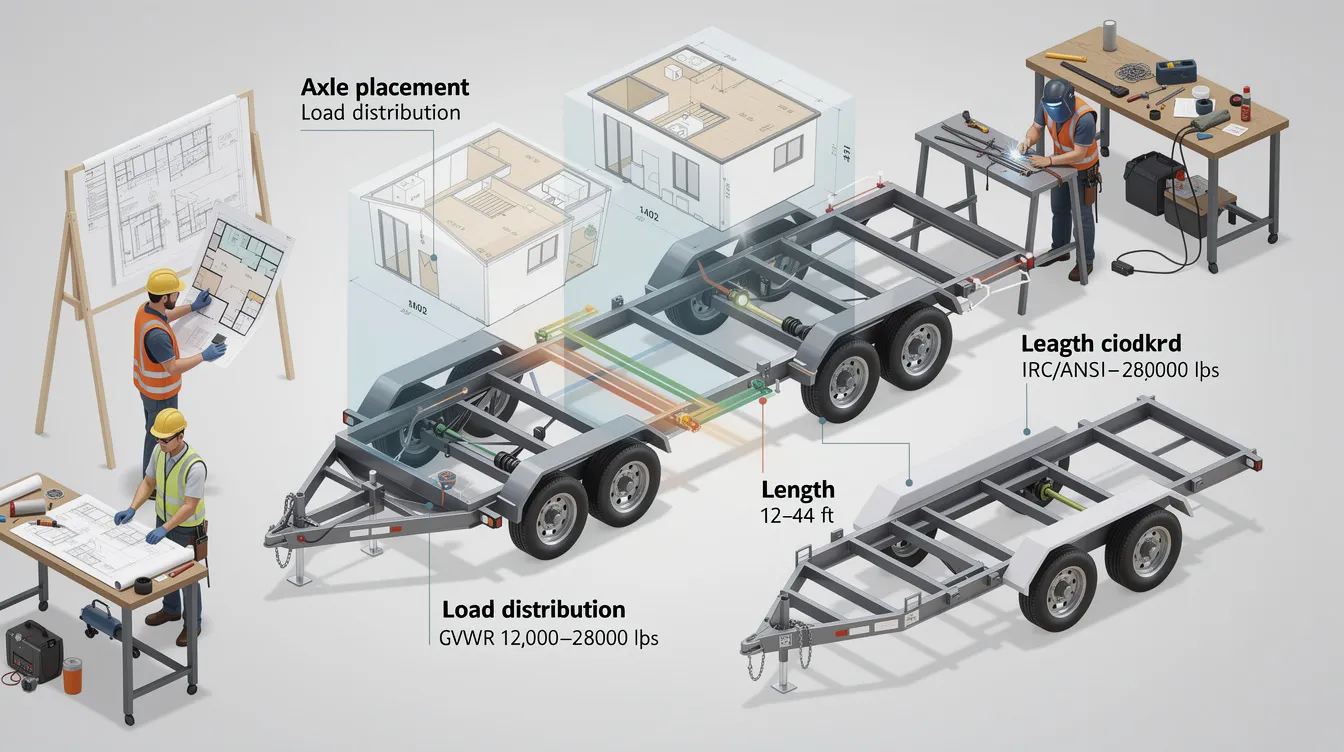
Custom trailer manufacturers design and fabricate trailers from scratch to match specific tiny house plans. They handle structural engineering – calculating proper axle placement, load distribution, and GVWR – so that every trailer frame aligns precisely with the home’s framing, floor joists, and wall connection points. Builders like Trailer Made engineer each trailer to meet specific project needs, with stamped engineering and alignment to IRC and ANSI standards. Custom trailers can be built with specific axle placements for optimal balance, and GVWR ratings range from 12,000 to 28,000 lbs on lengths from 12 to 44 feet. This category is ideal for anyone with a unique floor plan, non-standard dimensions, or full-time residential intent.
Standardized Kit Providers
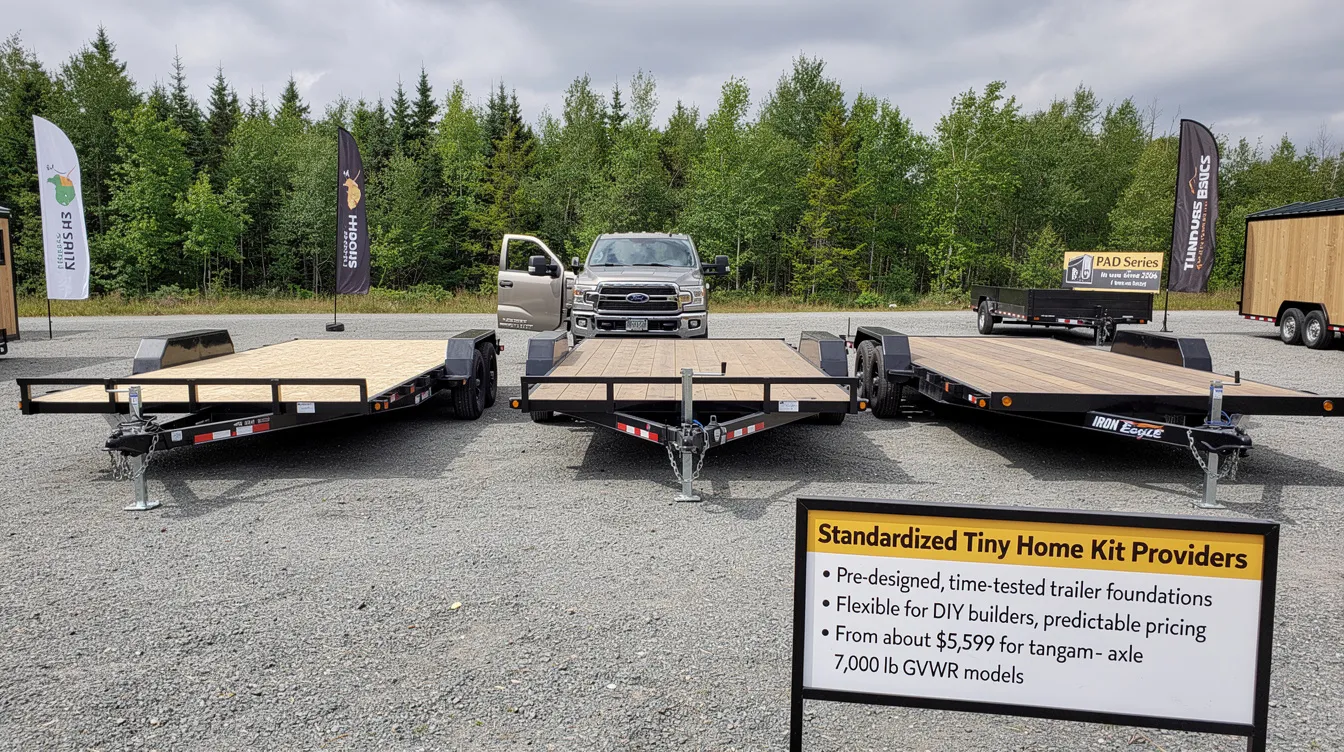
These companies offer pre-designed tiny home trailers with proven, time tested designs and limited but meaningful customization options. Tiny House Basics is a leading example, offering custom bumper pull and gooseneck models with deck styles ranging from standard deck (26″ deck height), drop-axle (22″), and deckover (36″). Tiny House Basics offers trailers in widths up to 12ft, with box-tube construction and heavy-duty recessed crossmembers spaced 16 inches on center for insulation. Iron Eagle trailers feature optional front bumpout designs for extra space, and the PAD Series trailers have been used since 2006. Kit providers deliver maximum flexibility for DIY builders who want a solid foundation without commissioning full engineering – pricing is more predictable, starting around $5,599 for tandem-axle 7,000-lb GVWR models.
Full-Service Tiny House Companies
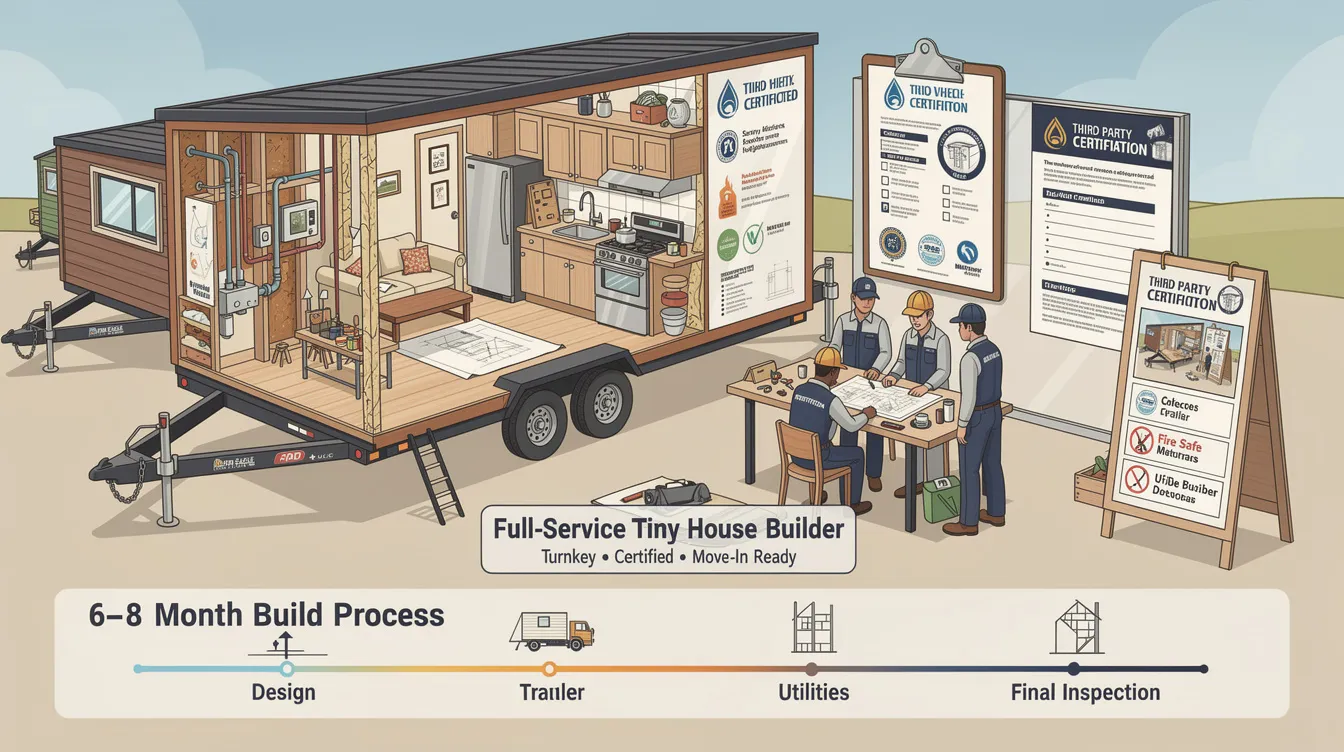
Full-service tiny home builders provide trailers as part of complete, turnkey tiny house building services. These firms handle everything from the trailer foundation through to finished interiors, appliances, plumbing, and electrical – delivering a move-in ready home. Companies like Cahill Works use purpose-built Iron Eagle PAD Series trailers with full welds and high-quality steel, then build homes engineered for thermal efficiency, fire safety, and third-party certification through programs like NOAH. This path suits buyers who want professional construction, broader warranties, and documentation that facilitates financing and insurance. Lead times are longer – often 6–8 months for turnkey builds – but the entire project is managed under one roof.
What to Look For in Tiny House Trailer Builders
Not all builders deliver the same level of engineering, materials, or support. These attributes separate reliable trailer companies from risky ones.
Experience and Track Record
Builders with years in the industry and hundreds or thousands of trailers completed have refined their designs, welding quality, and supplier relationships. Tiny Home Builders, for instance, has built over 2,200 tiny house trailers since 2012 – a significant reason to trust their engineering and production consistency. Resources that highlight the best tiny house trailer brands can further clarify which companies consistently deliver safe, engineered foundations. Look for verifiable customer testimonials, warranty terms, and whether the builder offers lifetime support or consulting. Experienced builders also understand real-world issues like how roof overhangs and siding thickness affect total width beyond the standard frame width, which can trigger special trip permits during transport.
Engineering and Safety Standards
A dedicated tiny house trailer must support unique weight distribution across walls, lofts, fixtures, and roof loads – loads that standard cargo trailers were never designed to carry. Proper axle placement ensures optimal balance and safe towing characteristics, preventing the stability challenges that pose balance problems during highway travel. Trailers should comply with DOT requirements for safety, including VIN tagging, electric brakes, emergency break-away kits, and proper lighting. All trailers feature LED lighting for energy efficiency, replacing older incandescent lights that draw more power. Tiny houses on wheels require certification for safety standards – emerging frameworks like ASTM E06.26 and ICC 1215 are creating formal specifications for tiny houses typically built on trailer chassis, while certification bodies like CERTAFI (launched January 1, 2026) offer Enhanced Building Standards with remote inspections and photo documentation. Certification may facilitate financing and insurance for tiny homes.
Material Quality and Construction Methods
The main frame material and construction method determine how long a trailer lasts and how well it performs. Box-tube steel framing offers superior rigidity compared to C-channel, with more weldable surfaces and less flat-spotting. Tiny House Basics trailers feature fully insulated floors and recessed crossmembers designed to eliminate thermal bridging and moisture problems – tiny houses on wheels face unique challenges like weight distribution and moisture management. Trailers include perimeter flanges for wall support, and Tiny House Basics trailers include threaded rods for wall securing, allowing you to permanently attach the house to the trailer frame. Look for full welds over spot welds, galvanization or powder coating to create a completely sealed surface against corrosion, and high-load radial tires that save weight while improving road performance. Proper insulation like closed-cell spray foam improves energy efficiency in tiny homes when integrated at the trailer level.
How to Choose the Right Tiny House Trailer Builder
Turning features into decisions comes down to matching your circumstances to the right builder type. Tiny house trailers can be 10 to 50 feet long with a maximum width of 102 inches for towing without permits, and tiny house trailers can be customized for specific project needs – so the variables are significant. As you weigh these variables, it often helps to zoom out and follow a step-by-step overview of how to build a tiny house from foundation through finishes.
- Purpose and occupancy – A full-time new home demands higher GVWR, better insulation, and stricter code compliance than a weekend retreat. Define whether your tiny house will serve as a permanent residence, ADU, or travel unit before contacting builders, especially if you’re leaning toward custom tiny homes tailored to your lifestyle.
- Budget considerations – Standard trailers from kit providers start around $5,500–$9,000 in 2026; custom trailers with gooseneck designs, wider decks, and stamped engineering push past $10,000–$20,000. The trailer typically represents about 10–15% of a complete tiny home build cost. Using a tiny home cost calculator to model total project expenses will help you see how different trailer choices affect your overall budget. A good tiny house trailer should have proper axle sizing and weight calculations – don’t cut corners on the perfect foundation to save on the first step.
- Geographic location – Delivery costs vary significantly by distance from the builder. Some trailer companies ship nationwide; others offer factory pickup to reduce cost. Regional steel prices and labor rates also affect pricing, so request quotes from builders in the US and Canada, and when possible look into top tiny house builders in your state or region who already understand local conditions and regulations.
- Timeline requirements – Tiny house trailers can be built within 4–6 weeks for standard models. Custom or full-service builds take considerably longer – Backcountry Tiny Homes quotes 6–8 months for turnkey delivery and 5–7 months for shell construction. If you’re hoping to move into your tiny home by a specific date, browsing the best tiny homes for sale in 2025 can give you a sense of what’s available now versus what requires a full custom build. Plan your journey accordingly.
- Support level needed – DIY builders may only need a quality flat deck trailer with standard features, while first-time builders benefit from companies offering guides, workshops, videos, and lifetime consulting. Others may gravitate toward structured solutions like Home Depot tiny house kits for simplified DIY projects, which bundle many decisions but still require a proper trailer foundation. Legal contracts should include details about materials, timelines, and warranties. Choosing the right trailer impacts towing ease and safety for the life of your home.
Frequently Asked Questions
How much does a custom tiny house trailer cost compared to standard models?
Standard pre-designed tiny house trailers typically range from $5,000–$10,000 depending on length, axle count, and GVWR. Tiny House Basics lists tandem-axle 7,000-lb models starting at $5,599, with triple-axle 21,000-lb models for 36–40 ft trailers reaching $12,000–$13,999. Custom trailers – with engineered deck layouts, gooseneck hitches, wider frames, and premium coatings – can add $2,000–$5,000 or more above standard pricing. When you pair these costs with inspiring tiny house designs for your dream home, it becomes easier to decide where to invest more in the chassis versus the structure. High-quality trailers are essential for tiny houses on wheels, and the investment in a properly engineered trailer pays back in structural integrity, insurance eligibility, and resale value across your entire project.
What’s the typical lead time for ordering a tiny house trailer?
Kit-style trailers from providers like Tiny House Basics are typically fabricated in 4–6 weeks. Custom engineered trailers take longer – often 8–12 weeks depending on complexity, width, and current demand. Full-service turnkey tiny home builds that include the trailer run 5–8 months from design through delivery. If you’re on a tight budget and timeline, exploring tiny homes under $20K that are available now can reveal options with shorter waits than full custom builds. Supply chain constraints and steel price fluctuations can extend these timelines, so confirm current lead times and ground your schedule in writing.
Do I need a custom trailer or can I use a standard cargo trailer?
Standard cargo or equipment trailers are not recommended as a tiny house foundation. They typically lack the GVWR to support walls, roof, fixtures, and live loads; they often have wood decks, open rails, and axle configurations not suited for residential weight and shear forces. Equipment trailers may also include dovetails or ramps and use thinner steel that compromises structural integrity. A purpose-built tiny house trailer delivers the right trailer with proper connection points, correct axle placement for balance, DOT-compliant braking and lighting, and perimeter flanges engineered to carry your home safely. If you’re still weighing mobile living options overall, it helps to compare tiny house vs RV pros and cons before committing to a trailer-based build. The upfront savings of a repurposed trailer rarely outweigh the safety, regulatory, and maintenance risks.
Start Building with Confidence
Selecting the right tiny house trailer builder is the first step toward your dream home on wheels. Research builders thoroughly – compare their engineering standards, material quality, and track record – and request detailed quotes that cover delivery, warranty, and certification. Whether you choose a custom manufacturer, a standardized kit provider, or a full-service company, the perfect place to start is with a builder whose trailer gives your tiny home the solid foundation it deserves.