
Choosing a fireplace for your tiny home means balancing warmth, safety, and every square inch of living space. This post walks through the best fireplace types, sizing rules, design ideas, and installation basics so you can find the perfect heating option for your small space.
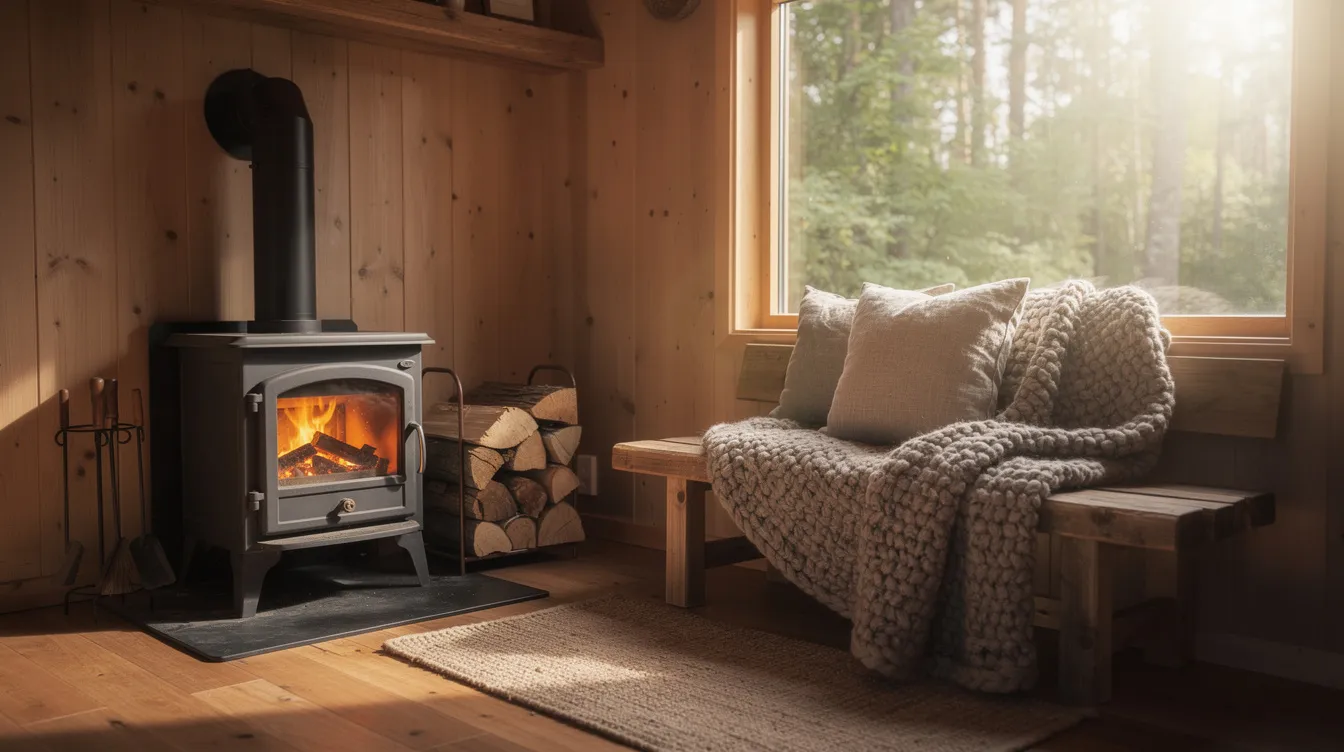
Quick-start guide: choosing a tiny home fireplace
If you love the idea of a fireplace but just want a fast answer for your tiny house or tiny home, start here. These are the primary options worth considering before you read the details below.
- A compact wood burning stove delivers radiant warmth, works off-grid, and lets you cook on top. Wood-burning stoves provide off-grid heating independence, making them powerful for remote living.
- A direct-vent propane or gas fireplace offers clean, controllable flame with sealed combustion. Propane fireplaces are ideal for houses up to 32 feet long where gas or LP is accessible.
- A wall-mounted electric fireplace is the easy, plug-and-play option for tiny homes parked with reliable grid electricity, giving you heat with virtually zero installation hassle.
- Very small wood stoves designed for boats or cabins stand out for tiny homes. Models in the 12–19 inch width range, like the Jøtul 602 class at just 12 inches wide, can heat effectively despite their small size. A properly sized wood or pellet stove can effectively heat tiny homes without dominating your floor plan.
- Match BTU output to your square footage. A lofted tiny house of 100–150 sq ft typically needs only 4,000–8,000 BTU/hr; a larger park model of 300–400 sq ft may need 10,000–20,000 BTU/hr. Oversizing leads to overheating in minutes.
- If your tiny house is off-grid and in a cold climate, lean toward a certified woodstove. If it’s parked with easy utilities, gas or electricity can be simpler day to day.
Types of tiny home fireplaces (wood, gas, propane, electric)
Tiny home fireplaces include any heating appliance sized for structures under roughly 400 sq ft. The main categories are compact wood stoves, direct-vent gas and propane fireplaces, and electric units designed for cabins, RVs, and small houses. Efficient fireplace options prioritize compact footprints and high efficiency.
- Tiny house wood stoves: Typical models run 12–20 inches wide and 18–24 inches tall. Boat-style cast-iron stoves and small cabin stoves in the Jøtul 602 size class (the Jøtul 602 wood stove is 12 inches wide) are popular choices. Wood stoves are efficient heating solutions for tiny homes: they produce dry heat, and wood stoves generate dry heat that helps reduce condensation in tight building envelopes. Mini wood stoves produce efficient radiant heat, and EPA-certified wood stoves offer high efficiency and cleaner burning. You can also use the cooktop surface for cooking. Ventless bioethanol options exist but require careful fuel handling and are less common.
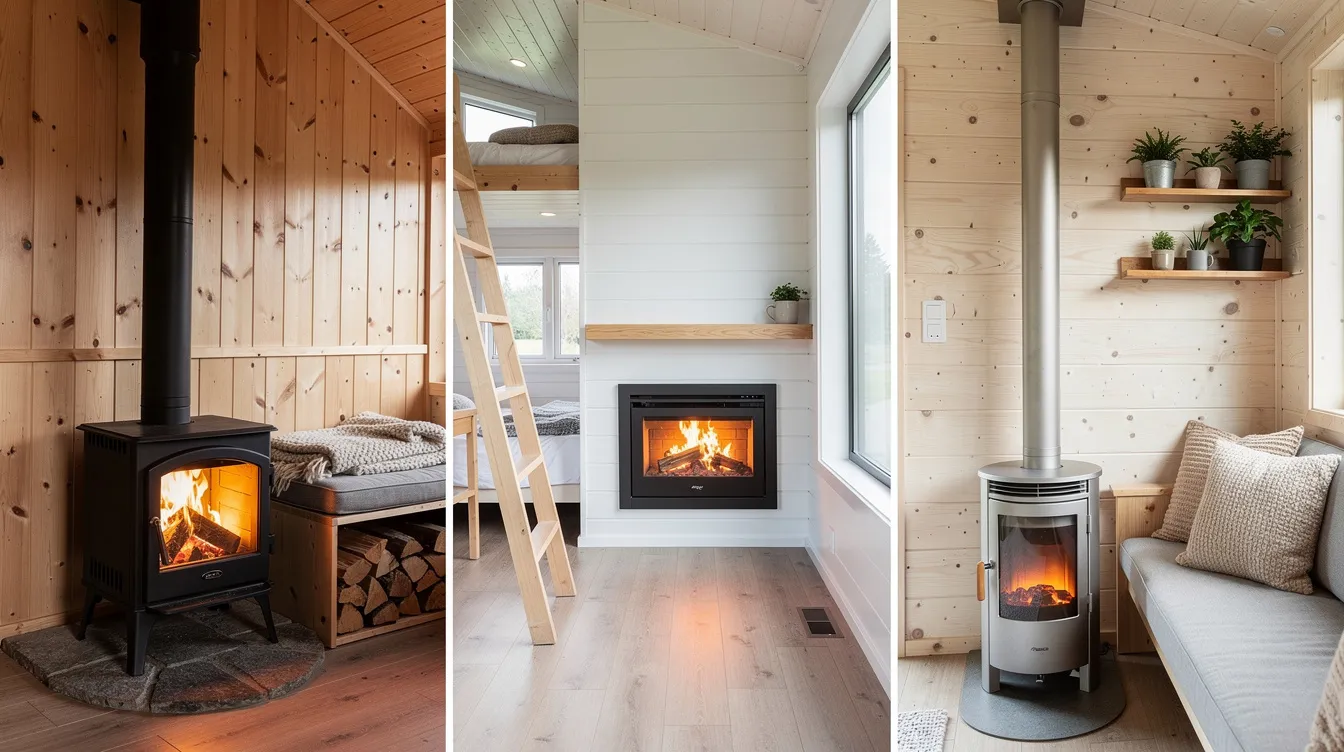
- Gas and propane fireplaces: Direct-vent propane fireplaces require outside air for combustion and exhaust through sealed vents, keeping indoor air clean. BTU ranges of 7,000–15,000 BTU/hr work for most tiny houses, and selecting the best propane heater for tiny house living means paying close attention to these output ranges. The Cottage Mini Soapstone Gas Stove produces 8,000 BTU/hr, a unique fit for small rooms. The ONE6 Slim-Line Built-In has a BTU rate range of 13,500 to 7,500/hr, and the SÓLAS ONE6 fireplace has a steady state efficiency of 79.0%. The SÓLAS ONE6 Wall-Mount fireplace takes up zero floor space. Freestanding mini stoves, slim built-ins, and wall-hung units all work as space-efficient options.
- Electric fireplaces: Ideal for homes on reliable grid power, these models come in wall-mounted and fireplace insert styles that slide into a shallow recess or under a TV. Electric fireplaces convert 100% of electricity to heat, typically maxing around 1,500W (~5,100 BTU/hr) on a standard 120V circuit. Electric heaters cost much less than wood or gas stoves upfront and are often part of the top heating units for small homes when you factor in efficiency and ease of installation.
- Fuel cost comparison: Wood can be cheap if locally sourced but takes labor. Propane runs higher per BTU than natural gas, and a safe tiny house propane setup also needs regulators, proper piping, and outdoor tank placement. Electricity is the cleanest locally but expensive in some regions.
- Always check appliance clearances and ventilation requirements before committing to a category. Proper venting is essential for combustion appliances in any home, especially one this small.
Key sizing & safety considerations for tiny house fireplaces
In tiny homes, getting fireplace size and safety right is more critical than in full-size houses. The room is small, insulation is tight, and thermal mass is low, so mistakes affect the entire space immediately. Tiny homes often require special considerations for weight limits and structural integrity when adding a stove or fireplace.
- Calculating heat needs: Use 20–30 BTU per square foot for a well-insulated tiny house. A 200 sq ft home with a loft often needs only 4,000–6,000 BTU/hr of steady output. Installing a 25,000 BTU appliance would be excessive and impossible to run comfortably, especially if you’re designing a winter tiny home for colder climates where insulation and air sealing do much of the heavy lifting.
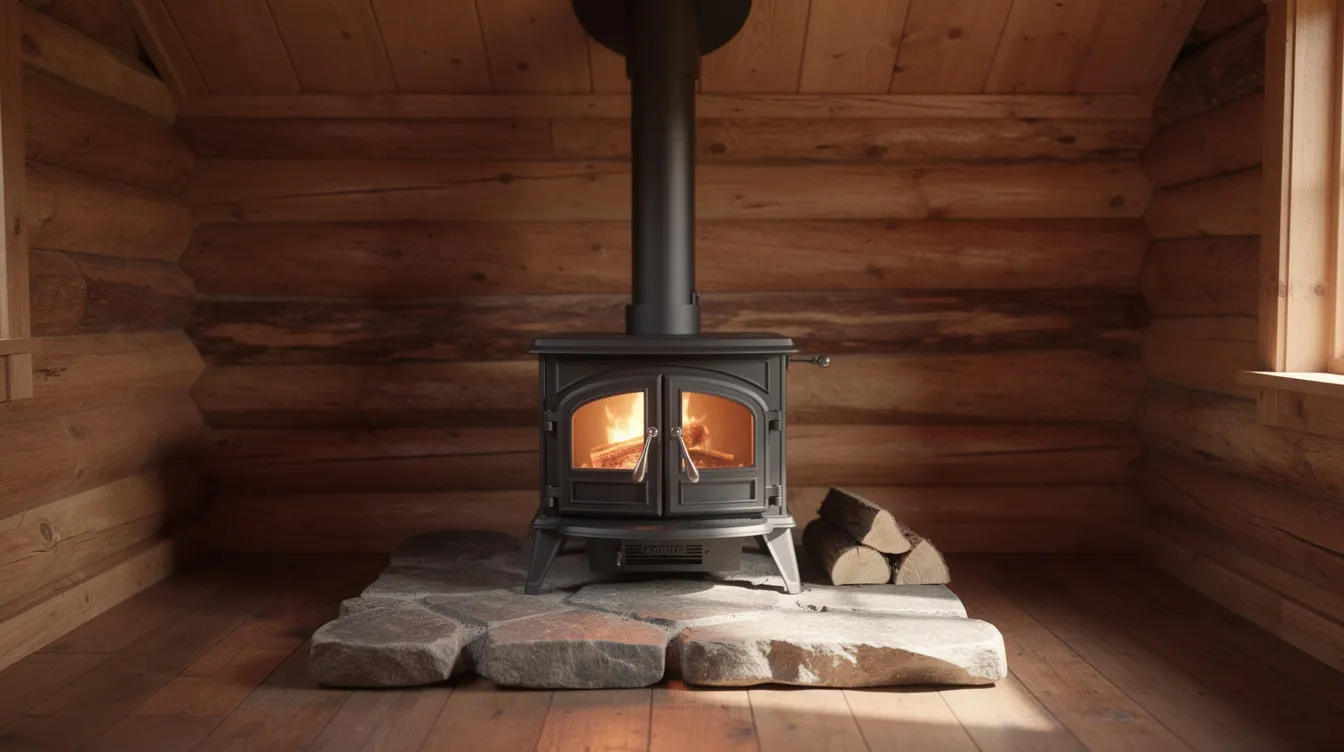
- Clearance and shielding: Compact wood stoves and gas stoves typically require 6–18 inches from combustible walls depending on shielding. The Hobbit stove can sit 8 inches from the wall with shielding, while the Hobbit stove requires 12 inches clearance without shielding. Use wall shields made of tile, metal panels, or cement board, plus a non-combustible hearth pad extending at least 18 inches in front.
- Ventilation and indoor air quality: A wood stove or unvented heater in a tiny house shell without active ventilation is a serious risk. Choose direct-vent units or fully vented wood stoves. Add mechanical ventilation like a small HRV or exhaust fan, and avoid unvented combustion near sleeping lofts.
- Building codes and certification: Fireplace installations need to comply with safety codes and clearance requirements. Choose appliances tested to EPA, CSA, or UL standards. Follow manufacturer instructions for pipe diameter and vent routing without exception.
- Fire safety equipment: Every tiny home needs at least one ABC fire extinguisher, a smoke alarm, and a CO detector mounted near sleeping areas, especially when you’re running a wood stove for tiny house heating as your primary heat source.
- Work with a licensed installer or experienced tiny home builder when penetrating the roof or wall for a flue. Errors here cause leaks, structural damage, or fire.
Design & placement ideas for fireplaces in tiny homes
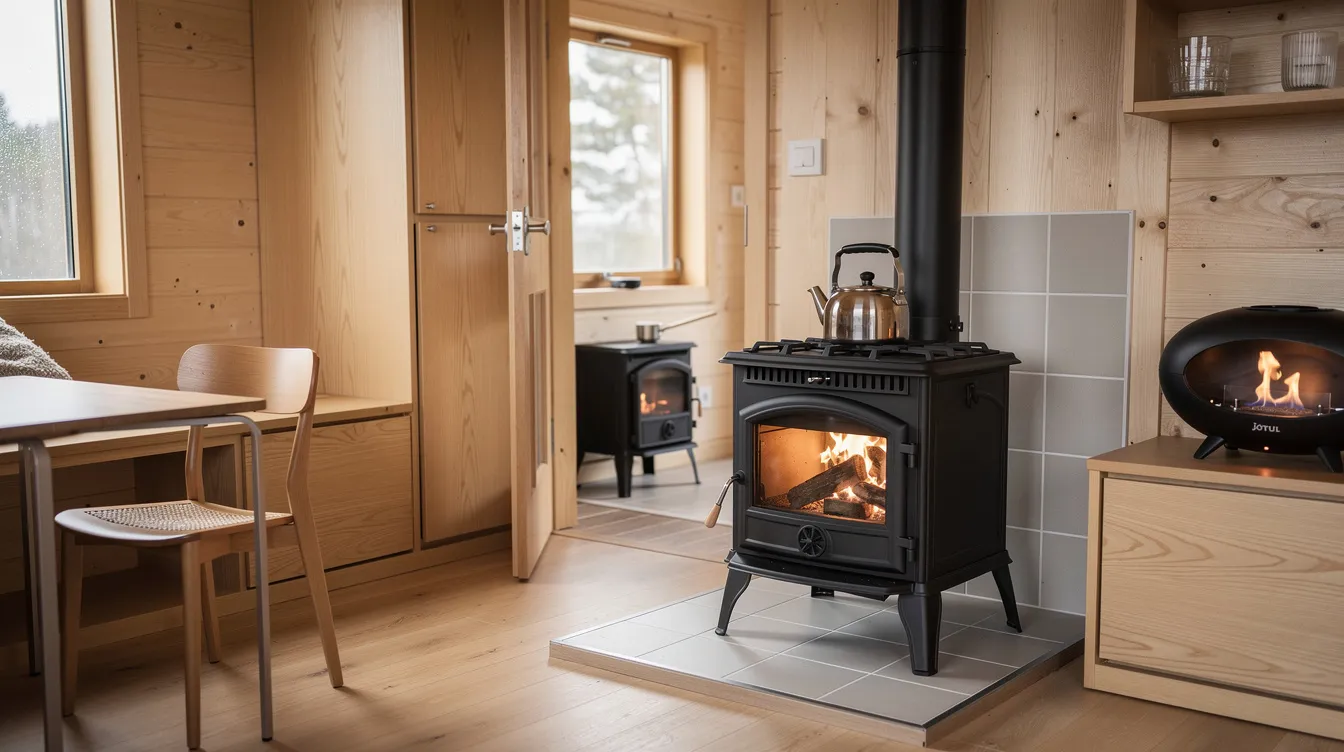
A tiny house fireplace should heat efficiently while doubling as a visual focal point. The best designs treat the stove or fireplace as furniture, not just a utility. Collect pictures and inspiration from modern tiny homes built between 2015 and 2025 to see how people integrate fireplaces into stairs, media walls, and loft bases in unique ways, and how different aesthetic tiny home styles influence the look and placement of the hearth.
- Best locations: Placing a stove near the center of the floor plan distributes heat more evenly than an end wall. In lofted tiny homes, positioning the stove under the loft keeps the flue run short and efficient, though you need to monitor loft temperatures to prevent overheating.
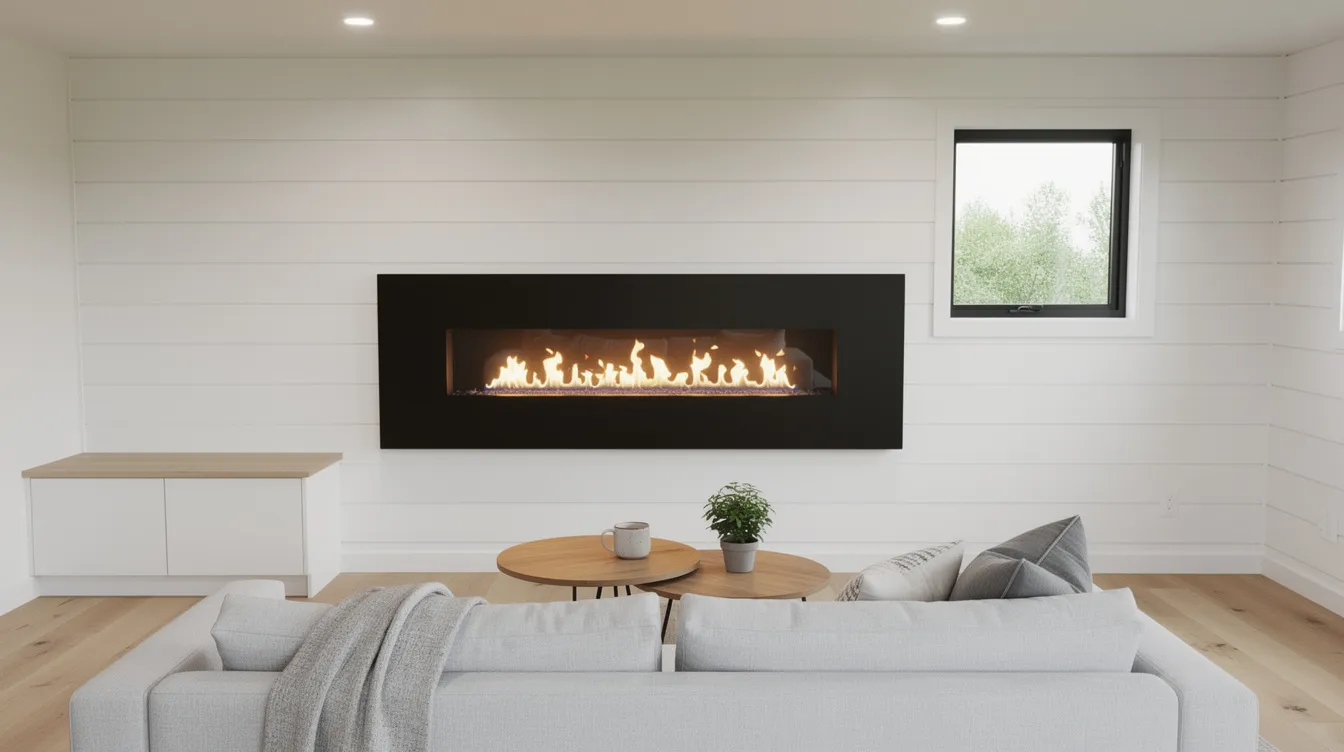
- Space-saving formats: Wall-mount gas or electric fireplaces sit only a few inches off the wall and preserve floor area. Slim built-in fireplaces can recess into a 2×6 or 2×4 interior wall with minimal depth of around 7–12 inches.
- Combining storage with the hearth: Build benches with storage drawers beside the stove, or add shallow bookcases flanking a built-in fireplace. Hearth benches that double as wood storage are a popular solution.
- Style choices: Minimalist Scandinavian-inspired tiny homes pair a black steel stove with white shiplap walls for clean lines. Rustic cabins use stone-look surrounds and visible stovepipe for a portable, farmhouse tiny house interior style.
- Windows and doors: Maintain required clearances from windows and doors. Cross-breezes from operable windows help move heat through the room and prevent hot spots.
Installation, maintenance & long-term use in tiny homes
In tiny houses and tiny homes, good installation and maintenance are non-negotiable. Any issue with smoke, fumes, or leaks affects the entire space in seconds, not minutes. Take the time to get this right from the start.
- Professional vs DIY: Use a professional for vented gas, propane, and wood stove installation, especially when cutting roof or wall penetrations. Many electric fireplaces are DIY-friendly and only need proper electrical circuits and clearances to install, which you can plan alongside essential appliances for a tiny house like compact cooktops and fridges.
- Venting routes: For a wood stove, plan a vertical flue through the roof with proper flashing, storm collar, and spark arrestor. For direct-vent gas or propane, a short horizontal termination through a side wall is a space-efficient option where local codes allow it, and it’s one of the reasons these systems often rank among the top heating units for small homes.
- Routine maintenance: Schedule annual chimney cleaning for wood stoves to remove creosote. Inspect gas or propane connections, gaskets, and pilot assemblies yearly. Dust filters and fans on electric fireplaces to keep them quiet and efficient.
- Living day to day: Store wood in covered boxes on the porch or slim racks beside the door. The dry heat from a wood stove helps manage humidity and condensation in tight building envelopes, which many people find is one of the ways a fireplace improves daily living beyond just warmth, similar to how well-insulated Swedish tiny houses for cozy living balance comfort and efficiency in cold climates.
- A correctly sized, well-installed tiny home fireplace can safely provide reliable heat through entire winters. In northern climates, expect to run your stove October through March. In milder regions, occasional shoulder-season use may be all it takes to keep things cozy.
Read through your appliance manuals, check your local codes, and don’t skip the professional consultation for combustion appliances. The right fireplace turns a tiny home from a small shelter into a place you love coming back to every day.