
TL;DR: Small house insulation options include fiberglass batts, spray foam, rigid foam boards, and mineral wool. Each material has a different R-value, cost, and best-fit use case. The right choice depends on your climate zone, budget, and whether you’re insulating walls, roof, or floor.
Small house insulation options are the first thing to get right if you want a cozy, energy-efficient home. A small home might seem easy to keep warm or cool—but it actually loses heat faster than a large one. The ratio of walls, floors, and roof to your total living space is higher. That means every gap, thin wall, or missing layer costs you more per square foot. The good news? You don’t need a big budget to fix it. The right insulation material, in the right spots, can cut your heating and cooling bills by up to 40 percent. This guide covers every option, cost, and area that matters.
What Are Small House Insulation Options?
Small house insulation options are materials placed inside walls, under floors, and above ceilings to slow the movement of heat. In summer, good insulation keeps hot air out. In winter, it traps warm air inside.
R-value is the key number you need to know. It measures how well a material resists heat flow. The higher the R-value, the better the insulation. For a small home, targeting the right R-value in each area—walls, roof, and floor—is more critical than in a large home because you have less thermal mass to buffer temperature changes.
Small homes, including tiny houses and compact builds, face a unique challenge: shallow wall cavities, limited roof depth, and the need to keep weight manageable. That means high R-value per inch matters more than raw thickness.
Types of Insulation for Small Homes
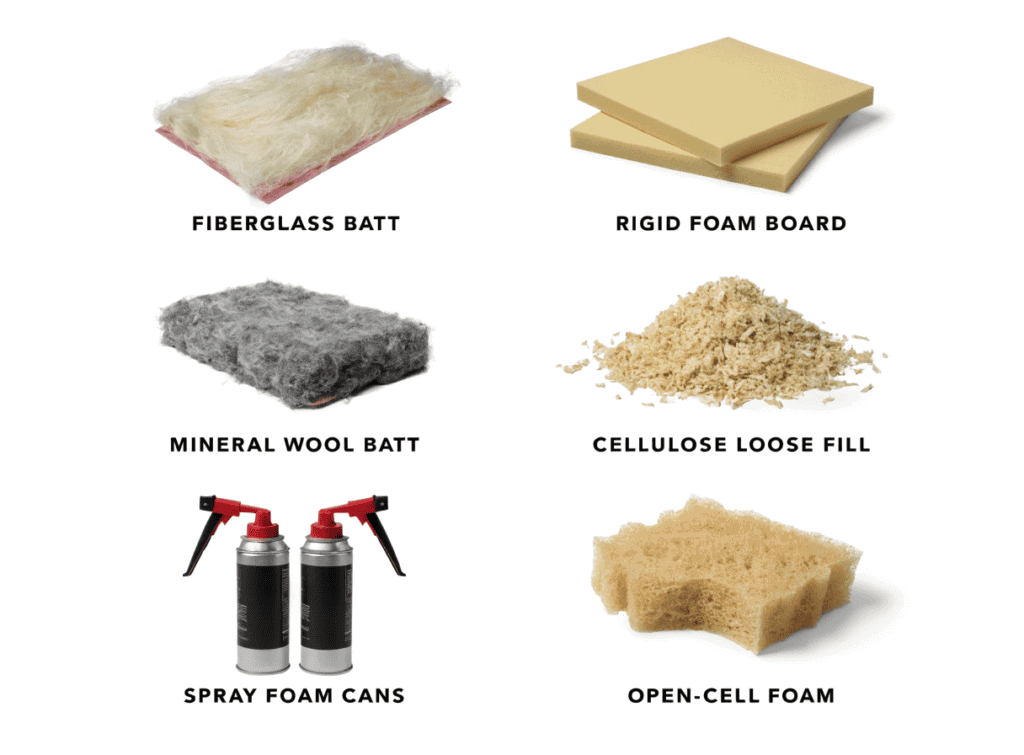
1. Fiberglass Batts
Fiberglass is the most common insulation material in the U.S. It comes in pre-cut panels that fit between wall studs and roof joists, making it a natural fit for budget-friendly tiny house insulation with fiberglass batts.
- R-value: R-2.9 to R-3.8 per inch
- Cost: $0.30 to $0.80 per square foot
- Best for: Walls and attic floors, DIY projects
- Pros: Lightweight, affordable, widely available
- Cons: Gaps and compression hurt performance significantly; requires careful installation
A standard R-13 fiberglass batt fills a 2×4 wall cavity at 3.5 inches thick. It works well in mild climates but may fall short in colder regions without added exterior insulation.
2. Mineral Wool (Rock Wool)
Mineral wool—also called rock wool—is made from volcanic rock or slag. It’s denser than fiberglass and holds its shape better over time.
- R-value: R-3.2 to R-4.1 per inch
- Cost: $1.00 to $2.50 per square foot
- Best for: Walls near heat sources, areas needing fire resistance or soundproofing
- Pros: Fire-resistant, moisture-resistant, better acoustic performance than fiberglass
- Cons: Heavier than fiberglass; pricier upfront
Rock wool is a strong pick for small homes with wood stoves or metal roofing. It won’t sag over time, which keeps your R-value intact for years.
3. Closed-Cell Spray Foam
Closed-cell spray foam is the high-performance option. It expands to fill cavities and hardens into a rigid, airtight layer, which is why it’s often considered the ideal closed-cell spray foam for tiny houses.
- R-value: R-5.6 to R-8.0 per inch
- Cost: $0.90 to $1.10 per board foot
- Best for: Walls, roof undersides, rim joists, anywhere air sealing is critical
- Pros: Highest R-value per inch, acts as an air and moisture barrier, adds structural rigidity
- Cons: Needs professional installation, higher upfront cost
Closed-cell spray foam reduces monthly energy costs by about 30 percent, according to data from small home build comparisons. For a tiny or compact house where wall cavities are only 3.5 inches deep, getting R-20 or more from spray foam in that same cavity is a significant advantage.
4. Open-Cell Spray Foam
Open-cell spray foam is softer and more flexible than closed-cell. It expands more aggressively, filling irregular shapes and gaps with ease.
- R-value: R-3.5 to R-3.7 per inch
- Cost: $0.30 to $0.60 per square foot
- Best for: Interior walls, sound dampening, mild-climate builds
- Pros: Cheaper than closed-cell, excellent for sound absorption, great coverage
- Cons: Vapor-permeable (not ideal in humid climates without a vapor control layer), lower R-value per inch
Filling a 2×6 wall cavity (5.5 inches) with open-cell foam delivers around R-19 to R-20—solid performance for most mixed-climate small homes.
5. Rigid Foam Boards
Rigid foam panels come in sheets you cut to size. They’re used on exterior walls, under floors, and above roof decks to add continuous insulation and cut thermal bridging.
- R-value: R-3.8 to R-6.5 per inch depending on type (EPS, XPS, or polyiso)
- Cost: $0.25 to $0.75 per square foot
- Best for: Exterior walls, under-slab floors, roof assemblies
- Pros: Versatile, easy to cut, controls thermal bridging
- Cons: Must be taped and sealed at joints; needs protective coating if exposed
Adding just 1.5 inches of polyiso (R-9) over a standard 2×4 wall with R-15 batts pushes your effective wall R-value into the mid-20s—a major upgrade for small cold-climate homes.
6. Cellulose
Cellulose is made from recycled paper products and blown into walls or attic cavities. It’s eco-friendly and provides good all-around performance.
- R-value: R-3.2 to R-3.8 per inch
- Cost: $0.50 to $1.00 per square foot
- Best for: Attics, retrofitting existing wall cavities
- Pros: Sustainable material, good soundproofing, affordable
- Cons: Can settle over time (reducing R-value), moisture can cause mold if not managed
Best Small House Insulation Options by Area
Different parts of your home lose heat at different rates. Small house insulation options need to match the demands of each zone.
Walls
Walls account for 20 to 30 percent of total heat loss in a small home. Most small home walls use 2×4 framing, giving you just 3.5 inches of cavity depth, so it pays to understand tiny house wall thickness and its impact on insulation.
Target R-values:
- Warm climates (Zones 1–3): R-13 to R-15
- Cold climates (Zones 4–6): R-19 to R-21
- Very cold climates (Zones 7–8): R-20+
Best materials: Closed-cell spray foam (for max R per inch), fiberglass or rock wool batts (for budget builds), or a combination of batts plus exterior rigid foam board.
Roof and Ceiling
The roof is where most heat escapes—up to 30 to 40 percent of total heat loss. Insulating it well is non-negotiable, especially if you’re designing a winter tiny home for colder climates.
Target R-values:
- Warm climates: R-30 minimum
- Cold climates: R-38 to R-49
- Very cold climates: R-49 to R-60
Best materials: Closed-cell spray foam delivers R-21 in just 3 inches—excellent for shallow roof assemblies. Combine with exterior rigid foam board to reduce thermal bridging through rafters.
Floor
In small homes built over crawl spaces, open trailers, or unheated basements, the floor can feel like a cold slab in winter if it’s under-insulated.
Target R-values:
- Mild climates: R-19 minimum
- Cold climates: R-25 to R-30+
Best materials: Rigid foam boards cut between joists, fiberglass batts supported by mesh, or closed-cell spray foam applied directly to the underside of the floor frame.
Windows and Doors
Even with R-30 roof insulation, a few poor-quality windows can undo all your work. Use double-pane, low-E, argon-filled windows at a minimum. Target U-0.28 or lower (about R-3.6 or better). Seal frames with low-expansion spray foam to close air gaps.
R-Value and Energy Bills: Why It Matters for Small Homes
R-value measures thermal resistance—how well a material stops heat from passing through. Higher R-value equals better insulation. The U.S. Department of Energy recommends different R-values based on your climate zone.
Here’s a quick reference chart for small home targets:
Area | Warm Zones (1–3) | Mixed/Cold Zones (4–6) | Very Cold Zones (7–8) |
|---|---|---|---|
Walls | R-13 to R-15 | R-19 to R-21 | R-20+ |
Roof | R-30 | R-38 to R-49 | R-49 to R-60 |
Floor | R-13 to R-19 | R-19 to R-30 | R-30 to R-38 |
Source: Explore Tiny House, U.S. DOE Climate Zone Guidelines |
One thing to keep in mind: R-value only measures conductive heat flow. Air leaks bypass insulation entirely. Seal gaps first, then insulate.
Cost Comparison of Insulation Types
Here’s a clear breakdown of what each material costs per square foot:
Material | Cost per Sq Ft | R-Value per Inch |
|---|---|---|
Fiberglass batts | $0.30–$0.80 | R-2.9 to R-3.8 |
Cellulose | $0.50–$1.00 | R-3.2 to R-3.8 |
Rigid foam board | $0.25–$0.75 | R-3.8 to R-6.5 |
Open-cell spray foam | $0.30–$0.60 | R-3.5 to R-3.7 |
Mineral wool | $1.00–$2.50 | R-3.2 to R-4.1 |
Closed-cell spray foam | $0.90–$1.10/board ft | R-5.6 to R-8.0 |
Source: Explore Tiny House 2026 Cost Data, Leyton Insulation Buyer Guide 2026 |
Upgrading from minimal to high-performance insulation in a small home adds roughly $2,000 to your build cost. That investment typically pays back within 3 to 5 years through reduced heating and cooling bills, and it should be factored into your overall tiny house cost breakdown.
DIY vs. Professional Installation
Some insulation types are DIY-friendly. Others require a professional.
Go DIY with:
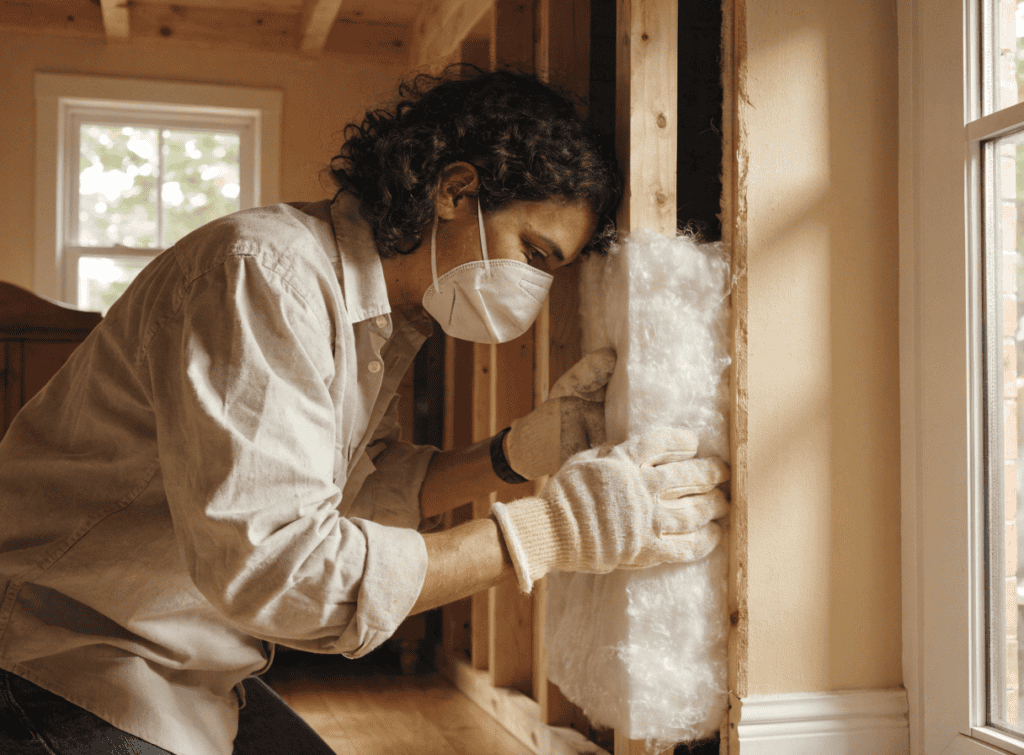
- Fiberglass batts (wear gloves, a mask, and eye protection)
- Rigid foam board panels (cut with a utility knife or circular saw)
- Cellulose (rent a blower at most hardware stores)
Hire a pro for:
- Closed-cell spray foam (requires commercial equipment and training)
- Open-cell spray foam (same equipment requirements)
- Any large-scale air sealing project in hard-to-reach spaces
A DIY fiberglass batt install can save you 40 to 60 percent in labor costs. That said, poor installation is one of the top reasons insulation underperforms. Gaps, compression, and missed air leaks all cut real-world R-value significantly. If you go DIY, take your time and make sure those savings fit into your tiny home cost calculator planning.
Tips for Choosing the Right Insulation
Here are the key factors to work through before you buy:
- Know your climate zone. Your local DOE zone determines target R-values. A Zone 3 home in Texas needs very different specs than a Zone 6 home in Minnesota. Check the DOE climate zone map before anything else.
- Prioritize high-R-per-inch materials if wall space is tight. For small house insulation options where depth is limited, closed-cell spray foam or rigid polyiso board will give you more thermal resistance in less thickness, and multi-functional fixes can help optimize space in compact living areas.
- Combine materials strategically. A single material rarely solves every problem. Pair cavity insulation (batts or spray foam) with continuous exterior rigid foam to cut thermal bridging through studs and framing. You may also find that reflective radiator panels behind a radiator help push heat back into the room. If you inspect carefully, you can create tighter performance by adding outlet and switch plate gaskets to stop cold air from micro-leaks and sealing small holes around penetrations; these strategies pair well with cold-climate tiny home design principles.
- Seal before you insulate. Air sealing costs very little and makes a dramatic difference. Caulk around electrical boxes, use low-expansion foam around window frames, and tape sheathing seams. We recommend doing this first, since a little extra sealing goes a long way and improves your chances of better comfort. A leaky home underperforms no matter how high the R-value.
- Factor in weight if your home is mobile. Mineral wool and dense-pack materials add real load to a structure on wheels. Fiberglass and open-cell foam are much lighter choices for mobile tiny homes, which is worth taking into account, especially when pairing insulation with energy-efficient mini split systems for tiny houses.
- Check for energy rebates. Many states and utilities offer incentives for high-performance home insulation upgrades. The ENERGY STAR rebate finder is a good place to start, thanks to its state-by-state listings.
- Think about moisture. Vapor control is just as important as R-value. In cold climates, use a vapor retarder on the warm side of walls. In hot-humid climates, choose more vapor-open wall assemblies to let walls dry out.
Make the Most of Your Small House Insulation Options
Good insulation is one of the smartest investments you can make in a small home. It works 24 hours a day, every day, with no moving parts and no maintenance. Done right, it pays for itself within a few years and keeps your home comfortable for decades, especially when combined with top tiny house designs that maximize small living.
The real key is thinking in systems. Pick insulation materials that work together—cavity fill, continuous exterior board, air sealing, and proper vapor control. Don’t chase a single big R-value number in one area while ignoring the rest of the envelope.
Start with your roof and air sealing. Then work through the walls and floor. Prioritize where heat loss is greatest, and match your material choice to your budget, climate, and whether your home moves or stays put.
For a deeper look at how R-values apply specifically to tiny and compact builds, the Explore Tiny House insulation R-value guide is a great next read.
The right small house insulation options are out there—pick the ones that fit your home, your climate, and your goals.
FAQ: Small House Insulation Options
What is the best insulation for a small house?
There is no single best option for every home. Closed-cell spray foam delivers the highest R-value per inch (R-5.6 to R-8.0) and acts as an air and moisture barrier, making it the top choice for tight wall cavities. Fiberglass batts offer the most budget-friendly entry point at R-2.9 to R-3.8 per inch. Choose closed-cell spray foam if R-value per inch is the priority; choose fiberglass or rock wool if budget matters more than thickness.
What R-value does a small home need?
It depends on your climate zone. As a general guide, target R-13 to R-21 for walls, R-30 to R-60 for the roof, and R-13 to R-38 for floors. Colder climates need higher R-values. The U.S. Department of Energy publishes specific recommendations by climate zone that are worth checking before you buy any insulation material.
Can I insulate a small house myself?
Yes—for some materials. Fiberglass batts, rigid foam boards, and cellulose are all DIY-friendly. Spray foam requires professional equipment and training, so closed-cell or open-cell spray foam jobs should be handled by a licensed contractor. A bad DIY spray foam job is expensive to fix, so don’t cut corners there.
How much does it cost to insulate a small house?
Costs vary based on material, climate zone, and home size. Fiberglass batts run $0.30 to $0.80 per square foot—the most affordable option. Mineral wool ranges from $1.00 to $2.50 per square foot. Closed-cell spray foam costs $0.90 to $1.10 per board foot. Upgrading from basic to high-performance insulation in a small home typically adds about $2,000 to the total build cost, with payback in 3 to 5 years.
What is thermal bridging and why does it matter in small homes?
Thermal bridging happens when heat bypasses insulation through solid structural materials—like wood studs, metal trailer frames, or rim joists. In a small home, thermal bridging can reduce effective wall R-value by 15 to 30 percent and is especially important to consider when evaluating top tiny houses that redefine small space living or other great tiny homes that showcase efficient design. Adding continuous exterior rigid foam board is the most effective way to cut thermal bridging without thickening interior walls.
Yes. Mineral wool and open-cell spray foam are especially good at absorbing sound. Mineral wool is non-combustible and offers strong acoustic performance, making it a great pick for shared walls, home offices, or areas near appliances. Fiberglass batts also help with soundproofing but less effectively than mineral wool or foam.
How do I know if my small house is poorly insulated?
Common signs include rooms that heat up fast in summer, cold floors in winter, high energy bills, and visible moisture or condensation on interior walls. A thermal camera or a smoke pen test around windows, doors, and electrical boxes can reveal exactly where air is escaping. If you’re losing 30 to 40 percent more heat than expected, air leaks combined with thin insulation are usually the cause, and prolonged condensation can also lead to mold growth. In very small homes, quilts or curtains can create an insulated sleeping nook in the coldest part of the house.